


For many years, Europe has been one of the most balanced retail CFD markets, with trading activity spread across a wide range of asset classes. Unlike many other regions, European traders have traditionally favored capital market instruments, with indices and shares leading the way, followed by forex, commodities, and other assets. However, the past year has significantly changed these preferences, with commodities becoming the dominant trading category.
Throughout 2025, commodities accounted for 43.7% of the trading volume generated by European CFD clients. In the first quarter of 2026, however, their share surged to an extraordinary 88.5%. Such a dramatic shift is highly unusual for the European market. The figures come from XTB, one of Europe's largest multi-asset brokers, which publishes a detailed breakdown of client trading activity in its financial reports.
- DGCX Reports Record Trading Volume Due to Emerging Markets Volatility in May
- XM Joins Retail Brokers Expanding Seven-Day Gold CFD Trading
- CMC Markets Brings Weekend Gold CFDs to Australia Two Months After UK Rollout
How Regional Habits Shaped Global CFD Markets
Historically, retail trading preferences have differed significantly across regions. These differences are shaped by several factors, including local investment culture, market maturity, and financial literacy. The regulatory environment also plays an important role, a topic we discuss later in this article.
Data collected by Finance Magnates Intelligence over the past ten years points to several clear trends. Across Asia (excluding Japan), gold has consistently been the most popular trading instrument among retail CFD traders, reflecting both cultural preferences and the region's long-standing affinity for the precious metal.
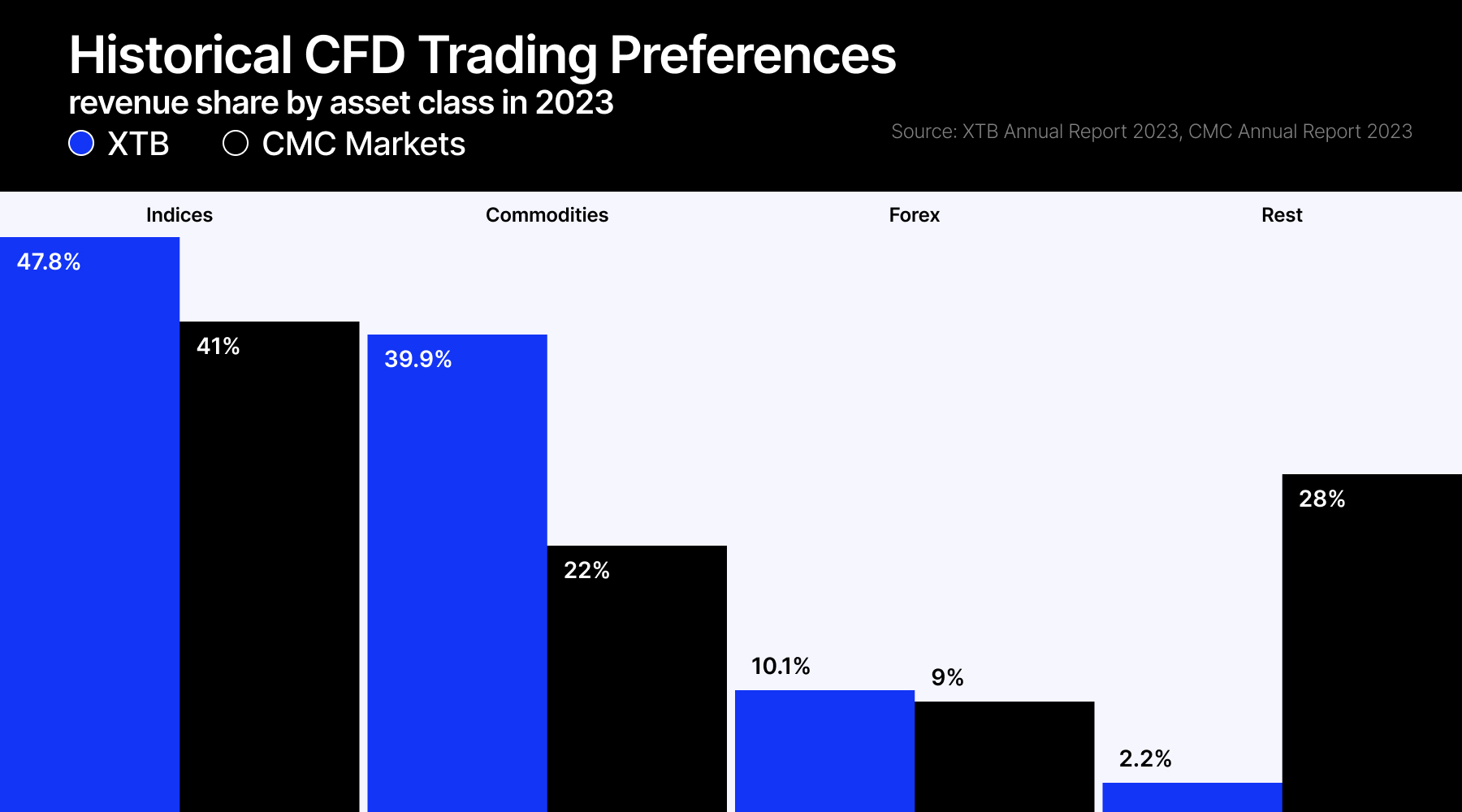
Europe has traditionally shown a much more balanced trading profile. Retail traders have generally favoured indices and shares, followed by forex and commodities, reflecting the region's well-developed capital markets and higher levels of financial literacy.
By contrast, the United States is a unique case. Retail OTC brokers are largely limited to offering forex products, meaning regulation has a direct impact on trading preferences. While the US has the world's largest futures markets, where investors can trade a broad range of asset classes, this analysis focuses exclusively on the retail FX/CFD industry.
How Gold Flipped the European CFD Market
Over the past year, this long-established pattern has changed dramatically. To illustrate the shift, we used data published by one of Europe's largest multi-asset brokers, which serves clients across the continent and maintains offices in several countries. As such, its figures provide a good indication of broader trends among European retail traders.
Read the full analysis on Finance Magnates Intelligence to find out whether this is a structural change or simply a temporary market reaction.


