

The Australian Securities and Investments Commission (ASIC ) removed more than 19,400 online scams in fiscal 2026, up 182% year over year, it said today (Monday). It warned that generative AI lets criminals build linked fake endorsements, websites and reviews.
Scammers also reuse Australian financial services license details and impersonate legitimate businesses. That exposes brokers and investment platforms to copied brands while making a basic web search less useful to clients trying to check an offer.
ASIC said Scamwatch reports linked the most impersonated public figures to A$7.4 million (about $5.2 million) in reported losses during FY26.
Prime Minister Anthony Albanese, market commentators Tom Piotrowski and Alan Kohler, and politicians Jacqui Lambie and Angus Taylor were among the names used.
Scammers Build Their Own Search Results
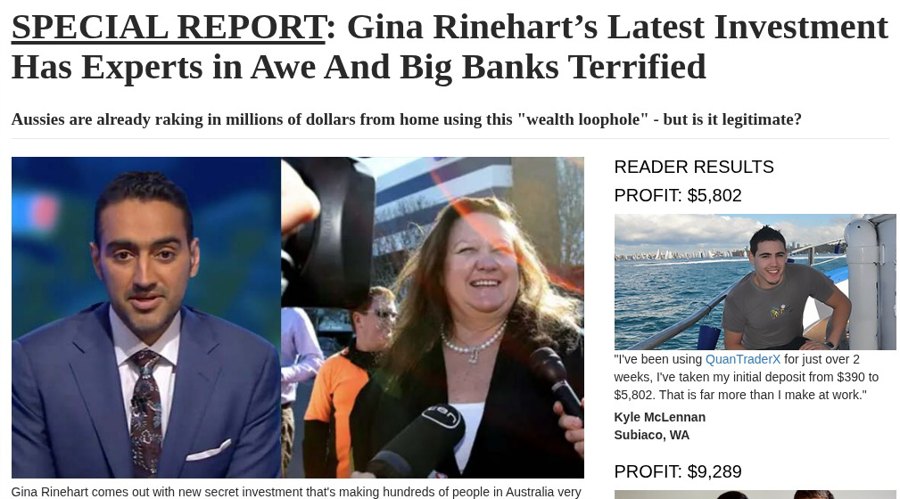
The schemes can start with an advertisement on a well-known platform. A click takes the target to a fabricated news story containing a celebrity endorsement and fake public comments, according to ASIC.
Criminals create a scam brand, repeat distinctive phrases and fill search results with supportive articles, positive reviews and related websites. Each item appears independent. The same network controls it.

"AI is making investment scams more convincing and harder to detect," ASIC Chairwoman Sarah Court said.
- ASIC Flags Onboarding and Disclosure Gaps in Nine-Broker Review
- ASIC Says Yepbit Falsely Blamed Regulator for Frozen Investor Funds
- ASIC Wants the CFD Capital Floor Frozen Until 2032
After a target submits contact details, callers follow a script and direct the person to a fake investment platform. Some victims receive a small payment shown as profit before the scammers seek larger transfers. The underlying investment may not exist.
FinanceMagnates.com described a similar deepfake funnel in 2024. Fraudulent platforms used names including Quantum AI and Immediate Edge, displayed invented account profits and demanded additional fees when clients tried to withdraw.
The current warning adds a search manipulation problem. A consumer may find several apparently independent references to the same offer, so the regulator wants users to verify the business through records they reach independently.
Phishing Links and Fake Platforms Drive the Increase
ASIC removed 5,476 phishing links in FY26, a 279% increase from the previous year. It also took down 7,051 fake investment platforms, up 151% year over year, and 3,106 cryptocurrency investment scams, up almost 30% year over year.
The regulator removed 6,915 websites, social media advertisements, phishing links and crypto investment scams in FY25. ASIC has also published totals for calendar-year windows, so those figures are not directly comparable with FY26.
In April, FinanceMagnates.com reported that ASIC had removed 11,964 scams during calendar 2025, 90% more than in the prior 12 months. The regulator also removed more than 1,100 scam advertisements from social media that year.
ASIC cited A$2.18 billion of total reported Australian scam losses in 2025. Investment scams accounted for A$837.7 million. Those calendar-year figures cover a much wider set of cases than the FY26 celebrity impersonation amount.
Celebrity impersonation was already a recurring part of that activity. ASIC took down more than 330 fake celebrity investment sites in the first part of 2025, FinanceMagnates.com reported last August.
An Australian financial services license number alone is not proof that the promoter owns it. ASIC said criminals may claim another entity's number or copy the identity of a licensed financial services business.


