>
MetaTrader Continues Its Retail Dominance; ThinkForex Explains The Need For Diversity
MetaTrader Continues Its Retail Dominance; ThinkForex Explains The Need For Diversity
Friday,16/08/2013|12:41GMTby
Andrew Saks McLeod
MetaTrader 4 has enjoyed a clear run of the retail FX market for a number of years, however although it remains a benchmark among retail traders, there is an increasing demand for other platforms. ThinkForex details why.
Whilst MetaTrader 4 continues to dominate among retail FX brokers and clients alike, with more and more companies continuing down what is now a very well established path, there is also a widening scope for new platforms for which some retail brokers are demonstrating support.
To reinforce MetaTrader's continued importance, IG Group succumbed to MetaTrader's popularity and included the ubiquitous platform in its armory last month. Aside from this, brokers which already provide their traders with MetaTrader 4-based trading accounts have been incrementally refining their service without eschewing MetaQuotes as a platform provider.
This year, in the run up to the iFXEXPO in Cyprus, MetaQuotes began to show its disdain for the third party ecosystem that had been built up around its platform which was originally designed for market makers, and as the STP non dealing desk model gained popularity among retail clients, a wide range of solutions made their way onto the market to adapt the platform for this purpose.
Nauman Anees, Managing Director ThinkForex
Subsequently, MetaQuotes announced its own third party software marketplace at the iFXEXPO in order that developers can submit their solutions to MetaQuotes for vetting and provide them via MetaQuotes rather than seperately.
Despite this dynamic, and the unrelenting demand from clients for MetaTrader in the retail FX market, there is an increasing support for new platforms emerging.
Generally, the institutional space is a breeding ground for new and interesting innovations, with banks keen to support new projects such as ParFX earlier this year, and as a case in point, London's FX markets, being more CFD and spread betting focused, are less geared toward MetaTrader 4 with many brokers such as ETX Capital and AFX Capital Markets expending resources on developing and supporting their own in-house platforms.
cTrader Goes Global
One particular platform which has risen to prominence recently is Spotware Systems' cTrader, which was described just as recently as May this year by many senior figures among the retail sector as a 'work in progress' among discussions at the iFXEXPO.
One of the most recent retail FX brokers to demonstrate its support and identify a need for a different platform offering is Australia's ThinkForex, which recently began to offer cTrader alongside its existing MetaTrader 4 offering.
"We’ve had a long history of success offering MetaTrader 4 to our clients and for many clients when it comes to trading Forex, especially when starting out, MetaTrader 4 is the way to go" explained Nauman Anees, ThinkForex's Managing Director to Forex Magnates today.
"Almost every major broker offers it, and there is a wealth of education material out there for it meaning our clients can learn quickly. However, just because a platform is used by the majority of retail FX traders, it doesn’t mean it is necessarily the best and it certainly isn’t the only option" he continued.
"There is a growing percentage of the MetaTrader 4 user base that is ready to adopt their trading strategies to a new platform. Over recent months we’ve been determined to offer a more rounded offering to our clients, featuring additional features and trading tools, and the platform is key to that. We have sampled many trading platforms and talked to our clients to find out what they want. In short, cTrader was the best fit for us and more importantly, our clients."
Demand For Variety Of Features
According to Mr. Anees, one of the factors driving this demand is the requirement for futher features.
"We feel that cTrader fits all the right requirements in the current marketplace for traders that are looking for a feature rich platform that will allow them to access ECNs" he said.
"We also wanted a platform which would be easy to use and have a familiar look and feel but at the same time opened clients up to an alternative style of trading. MetaTrader 4 has become very much the platform for beginners and for those wanting to trade using EAs and automated strategies."
" cTrader offers something a little different. Whilst it has the ability to trade using automated algorithmic trading strategies, and is very easy to pick up and use, it also offers a great feel and methods of placing orders which many would argue go above the standard MT4 options."
Ergonomics Paramount
At the iFXEXPO in Cyprus, industry executives discussed the virtues of customizable software solutions as opposed to off the shelf ones. Opting for off the shelf solutions provides brokers with a very straight forward means of taking their offering to market, with often a fixed cost involved, whereas customization provides a unique selling point, but can be time consuming and add to costs, which in a market with increasingly narrow spreads could prove to be a bugbear in itself.
Mr. Anees explained to Forex Magnates that "cTrader allows clients to trade using very simple order types such as buying or selling at market or with limit and stop orders, but it also features more advanced options, such as trading within the spread and direct from the market depth."
" The market depth features in cTrader allow a trader, regardless of the order size, look for the level where there order will be filled, and then place it directly into the depth. This is especially important for larger size orders because so often when no depth is available, the bid and ask prices highlighted in the spread do not give a true reflection of where an order may be filled once it is sent to the market."
"cTrader is a purely non dealing desk platform, and all servers are hosted directly by Spotware in London at Equinix, on the same grid as the major banks, meaning the latency is at a minimum and trade execution is virtually instantaneous" explained Mr. Anees.
As internet connections and connectivity becomes faster, the number of web-based platforms have increased. This could demonstrate a correlation between the retail FX sector's predeliction for mobile platforms. Retail traders when away from their own computer can log on via a web based platform elsewhere, thus generating more volume for the broker.
On this basis, cTrader also offers a fully functional web based platform, and unlike many web equivalents, it has the full range of features usually only offered by a downloadable solution. It is also possible to save your layouts and profiles, and save them in the cloud, and then download them in seconds to another location.
In terms of potential client base, Forex Magnates asked ThinkForex whether a different type of client is expected to be attracted to the cTrader offering.
Mr. Anees explained this insofar as: "Like the ThinkForex MetaTrader 4, cTrader attracts clients from across the globe and the vast range of features mean it is suitable for virtually every type of trader."
" We feel that cTrader will continue to gain market share in Europe but we plan to introduce cTrader to our strong client base in the Asia-Pacific region.
"As MT4 user base matures in Asia Pacific and emerging markets we feel trader will eventually be looking for a multi-platform offering. Spotware have already integrated cTrader with leading third parties such as MyFXBook meaning that traders will still have the ability to upload reports and statements for sharing purposes. By doing this it means clients choosing to leave MT4 for cTrader are not losing out or missing anything and we believe that the added execution benefits of cTrader have the potential to make a big difference to a client’s overall experience.".
There is a concensus within ThinkForex that there are many brokers offering MetaTrader 4 who are finding it a challenge to go beyond just a low spread and that these brokers don’t usually last long.
Bearing in mind that ThinkForex is based in Australia, a region whereby many clients in the Asia Pacific region are from the Far East and often drive a hard bargain when it comes to low spreads and IB commissions, leaving very small margins for the broker's profit. Many brokers consider that this is still viable as long as alot of volume is conducted, but it could prove a white elephant once the cost of integration and endless negotiation over spreads and IB agreements has been conducted.
"Having a diverse offering of brokerage products, multiple platforms, and good API offering is what we are going after. As we have seen tremendous growth in our user base and volume since we’ve established. The need is not only due to growth but also the limitations on MT4 to support it" stated Mr. Aneees.
Cost Model Compared To MetaTrader 4
Forex Magnates asked Mr. Anees if the operation of cTrader platform will carry a different cost model to that which surrounds MetaTrader 4, including statistics relating to the cost-per-million and spread markup compared to that of MetaTrader 4.
Mr. Anees confirmed that cTrader has execution methods which suit beginners as well as professional traders, and that it uses an institutional style method for calculating commissions.
Unlike MetaTrader 4, which charges a commission rate at a simple dollar per lot rate, cTrader charges it on a cost per million basis.
"Our standard MetaTrader 4 commission for a round turn lot on Pro accounts is $6, whereas cTrader charges is as 3 units per million. That equates to the same $6 per round turn lot when trading some pairs, but of course not every pair is in USD, and trading NZDUSD will effectively cost you less because it would work out to only NZ$6" confirmed Mr. Anees.
Ultimately, the difference is not great, but ThinkForex offsets this by offering reduced commission rates to its larger volume clients meaning the cost per million can be significantly reduced.
In addition, global scope is of importance, and with such a crowded retail space in the Asia Pacific region, despite its highly respected capital markets economy and large number of retail traders, Mr. Anees concedes that a global view must be taken to remain competitive these days.
He concluded by explaining that: "We have clients from across the world including Europe, Asia and South America we have offices scheduled to open in a number of regions over the coming months meaning we will continue to grow and attract an even greater number of clients from all corners of the globe. As we continue to expand our user base we want to offer them a diverse range of products and services that they cannot find anywhere else."
It is becoming to appear clear that whilst MetaTrader is here to stay, plurality and diversity plays an increasing part in today's global retail industry.
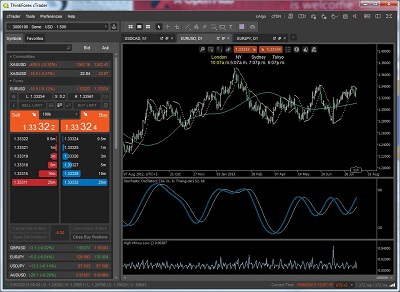
cTrader Platform Provided By ThinkForex
Whilst MetaTrader 4 continues to dominate among retail FX brokers and clients alike, with more and more companies continuing down what is now a very well established path, there is also a widening scope for new platforms for which some retail brokers are demonstrating support.
To reinforce MetaTrader's continued importance, IG Group succumbed to MetaTrader's popularity and included the ubiquitous platform in its armory last month. Aside from this, brokers which already provide their traders with MetaTrader 4-based trading accounts have been incrementally refining their service without eschewing MetaQuotes as a platform provider.
This year, in the run up to the iFXEXPO in Cyprus, MetaQuotes began to show its disdain for the third party ecosystem that had been built up around its platform which was originally designed for market makers, and as the STP non dealing desk model gained popularity among retail clients, a wide range of solutions made their way onto the market to adapt the platform for this purpose.
Nauman Anees, Managing Director ThinkForex
Subsequently, MetaQuotes announced its own third party software marketplace at the iFXEXPO in order that developers can submit their solutions to MetaQuotes for vetting and provide them via MetaQuotes rather than seperately.
Despite this dynamic, and the unrelenting demand from clients for MetaTrader in the retail FX market, there is an increasing support for new platforms emerging.
Generally, the institutional space is a breeding ground for new and interesting innovations, with banks keen to support new projects such as ParFX earlier this year, and as a case in point, London's FX markets, being more CFD and spread betting focused, are less geared toward MetaTrader 4 with many brokers such as ETX Capital and AFX Capital Markets expending resources on developing and supporting their own in-house platforms.
cTrader Goes Global
One particular platform which has risen to prominence recently is Spotware Systems' cTrader, which was described just as recently as May this year by many senior figures among the retail sector as a 'work in progress' among discussions at the iFXEXPO.
One of the most recent retail FX brokers to demonstrate its support and identify a need for a different platform offering is Australia's ThinkForex, which recently began to offer cTrader alongside its existing MetaTrader 4 offering.
"We’ve had a long history of success offering MetaTrader 4 to our clients and for many clients when it comes to trading Forex, especially when starting out, MetaTrader 4 is the way to go" explained Nauman Anees, ThinkForex's Managing Director to Forex Magnates today.
"Almost every major broker offers it, and there is a wealth of education material out there for it meaning our clients can learn quickly. However, just because a platform is used by the majority of retail FX traders, it doesn’t mean it is necessarily the best and it certainly isn’t the only option" he continued.
"There is a growing percentage of the MetaTrader 4 user base that is ready to adopt their trading strategies to a new platform. Over recent months we’ve been determined to offer a more rounded offering to our clients, featuring additional features and trading tools, and the platform is key to that. We have sampled many trading platforms and talked to our clients to find out what they want. In short, cTrader was the best fit for us and more importantly, our clients."
Demand For Variety Of Features
According to Mr. Anees, one of the factors driving this demand is the requirement for futher features.
"We feel that cTrader fits all the right requirements in the current marketplace for traders that are looking for a feature rich platform that will allow them to access ECNs" he said.
"We also wanted a platform which would be easy to use and have a familiar look and feel but at the same time opened clients up to an alternative style of trading. MetaTrader 4 has become very much the platform for beginners and for those wanting to trade using EAs and automated strategies."
" cTrader offers something a little different. Whilst it has the ability to trade using automated algorithmic trading strategies, and is very easy to pick up and use, it also offers a great feel and methods of placing orders which many would argue go above the standard MT4 options."
Ergonomics Paramount
At the iFXEXPO in Cyprus, industry executives discussed the virtues of customizable software solutions as opposed to off the shelf ones. Opting for off the shelf solutions provides brokers with a very straight forward means of taking their offering to market, with often a fixed cost involved, whereas customization provides a unique selling point, but can be time consuming and add to costs, which in a market with increasingly narrow spreads could prove to be a bugbear in itself.
Mr. Anees explained to Forex Magnates that "cTrader allows clients to trade using very simple order types such as buying or selling at market or with limit and stop orders, but it also features more advanced options, such as trading within the spread and direct from the market depth."
" The market depth features in cTrader allow a trader, regardless of the order size, look for the level where there order will be filled, and then place it directly into the depth. This is especially important for larger size orders because so often when no depth is available, the bid and ask prices highlighted in the spread do not give a true reflection of where an order may be filled once it is sent to the market."
"cTrader is a purely non dealing desk platform, and all servers are hosted directly by Spotware in London at Equinix, on the same grid as the major banks, meaning the latency is at a minimum and trade execution is virtually instantaneous" explained Mr. Anees.
As internet connections and connectivity becomes faster, the number of web-based platforms have increased. This could demonstrate a correlation between the retail FX sector's predeliction for mobile platforms. Retail traders when away from their own computer can log on via a web based platform elsewhere, thus generating more volume for the broker.
On this basis, cTrader also offers a fully functional web based platform, and unlike many web equivalents, it has the full range of features usually only offered by a downloadable solution. It is also possible to save your layouts and profiles, and save them in the cloud, and then download them in seconds to another location.
In terms of potential client base, Forex Magnates asked ThinkForex whether a different type of client is expected to be attracted to the cTrader offering.
Mr. Anees explained this insofar as: "Like the ThinkForex MetaTrader 4, cTrader attracts clients from across the globe and the vast range of features mean it is suitable for virtually every type of trader."
" We feel that cTrader will continue to gain market share in Europe but we plan to introduce cTrader to our strong client base in the Asia-Pacific region.
"As MT4 user base matures in Asia Pacific and emerging markets we feel trader will eventually be looking for a multi-platform offering. Spotware have already integrated cTrader with leading third parties such as MyFXBook meaning that traders will still have the ability to upload reports and statements for sharing purposes. By doing this it means clients choosing to leave MT4 for cTrader are not losing out or missing anything and we believe that the added execution benefits of cTrader have the potential to make a big difference to a client’s overall experience.".
There is a concensus within ThinkForex that there are many brokers offering MetaTrader 4 who are finding it a challenge to go beyond just a low spread and that these brokers don’t usually last long.
Bearing in mind that ThinkForex is based in Australia, a region whereby many clients in the Asia Pacific region are from the Far East and often drive a hard bargain when it comes to low spreads and IB commissions, leaving very small margins for the broker's profit. Many brokers consider that this is still viable as long as alot of volume is conducted, but it could prove a white elephant once the cost of integration and endless negotiation over spreads and IB agreements has been conducted.
"Having a diverse offering of brokerage products, multiple platforms, and good API offering is what we are going after. As we have seen tremendous growth in our user base and volume since we’ve established. The need is not only due to growth but also the limitations on MT4 to support it" stated Mr. Aneees.
Cost Model Compared To MetaTrader 4
Forex Magnates asked Mr. Anees if the operation of cTrader platform will carry a different cost model to that which surrounds MetaTrader 4, including statistics relating to the cost-per-million and spread markup compared to that of MetaTrader 4.
Mr. Anees confirmed that cTrader has execution methods which suit beginners as well as professional traders, and that it uses an institutional style method for calculating commissions.
Unlike MetaTrader 4, which charges a commission rate at a simple dollar per lot rate, cTrader charges it on a cost per million basis.
"Our standard MetaTrader 4 commission for a round turn lot on Pro accounts is $6, whereas cTrader charges is as 3 units per million. That equates to the same $6 per round turn lot when trading some pairs, but of course not every pair is in USD, and trading NZDUSD will effectively cost you less because it would work out to only NZ$6" confirmed Mr. Anees.
Ultimately, the difference is not great, but ThinkForex offsets this by offering reduced commission rates to its larger volume clients meaning the cost per million can be significantly reduced.
In addition, global scope is of importance, and with such a crowded retail space in the Asia Pacific region, despite its highly respected capital markets economy and large number of retail traders, Mr. Anees concedes that a global view must be taken to remain competitive these days.
He concluded by explaining that: "We have clients from across the world including Europe, Asia and South America we have offices scheduled to open in a number of regions over the coming months meaning we will continue to grow and attract an even greater number of clients from all corners of the globe. As we continue to expand our user base we want to offer them a diverse range of products and services that they cannot find anywhere else."
It is becoming to appear clear that whilst MetaTrader is here to stay, plurality and diversity plays an increasing part in today's global retail industry.
The AI Trade Is Crowded: Where Retail Money Can Go beyond Nvidia
Featured Videos
Plus500 Plans US Super-App; Investec to Offer IG Platform
Plus500 Plans US Super-App; Investec to Offer IG Platform
Plus500 Plans US Super-App; Investec to Offer IG Platform
Plus500 Plans US Super-App; Investec to Offer IG Platform
Today’s financial news recap covers Plus500 plans a US trading super-app, Investec partners with IG, Trade Republic reports a sevenfold profit jump, and BingX adds thousands of US stocks.
Finance Magnates Daily Recap brings you the latest news from forex and CFD brokers, fintech, payments, cryptocurrency, digital assets, trading platforms, financial regulation and global markets.
Get the key company news, executive moves, deals, regulatory updates and market developments of the day, in just a few minutes. New episodes published every weekday.
Read more: https://www.financemagnates.com
#FinanceMagnates #ForexNews #FintechNews
Today’s financial news recap covers Plus500 plans a US trading super-app, Investec partners with IG, Trade Republic reports a sevenfold profit jump, and BingX adds thousands of US stocks.
Finance Magnates Daily Recap brings you the latest news from forex and CFD brokers, fintech, payments, cryptocurrency, digital assets, trading platforms, financial regulation and global markets.
Get the key company news, executive moves, deals, regulatory updates and market developments of the day, in just a few minutes. New episodes published every weekday.
Read more: https://www.financemagnates.com
#FinanceMagnates #ForexNews #FintechNews
Today’s financial news recap covers Plus500 plans a US trading super-app, Investec partners with IG, Trade Republic reports a sevenfold profit jump, and BingX adds thousands of US stocks.
Finance Magnates Daily Recap brings you the latest news from forex and CFD brokers, fintech, payments, cryptocurrency, digital assets, trading platforms, financial regulation and global markets.
Get the key company news, executive moves, deals, regulatory updates and market developments of the day, in just a few minutes. New episodes published every weekday.
Read more: https://www.financemagnates.com
#FinanceMagnates #ForexNews #FintechNews
Today’s financial news recap covers Plus500 plans a US trading super-app, Investec partners with IG, Trade Republic reports a sevenfold profit jump, and BingX adds thousands of US stocks.
Finance Magnates Daily Recap brings you the latest news from forex and CFD brokers, fintech, payments, cryptocurrency, digital assets, trading platforms, financial regulation and global markets.
Get the key company news, executive moves, deals, regulatory updates and market developments of the day, in just a few minutes. New episodes published every weekday.
Read more: https://www.financemagnates.com
#FinanceMagnates #ForexNews #FintechNews
FXCM UK Holds $110m in Client Money; IG CEO Questions Prediction Market Volumes
FXCM UK Holds $110m in Client Money; IG CEO Questions Prediction Market Volumes
FXCM UK Holds $110m in Client Money; IG CEO Questions Prediction Market Volumes
FXCM UK Holds $110m in Client Money; IG CEO Questions Prediction Market Volumes
FXCM UK Holds $110m in Client Money; IG CEO Questions Prediction Market Volumes
FXCM UK Holds $110m in Client Money; IG CEO Questions Prediction Market Volumes
Today’s financial news recap covers FXCM's UK arm holds $110 million in client money ahead of its sale to Trade Nation, Citadel Securities' UK profit falls 38 per cent, and Kraken secures its final Dubai crypto licence.
Finance Magnates Daily Recap brings you the latest news from forex and CFD brokers, fintech, payments, cryptocurrency, digital assets, trading platforms, financial regulation and global markets.
Get the key company news, executive moves, deals, regulatory updates and market developments of the day, in just a few minutes. New episodes published every weekday.
Read more: https://www.financemagnates.com
#FinanceMagnates #ForexNews #FintechNews
Today’s financial news recap covers FXCM's UK arm holds $110 million in client money ahead of its sale to Trade Nation, Citadel Securities' UK profit falls 38 per cent, and Kraken secures its final Dubai crypto licence.
Finance Magnates Daily Recap brings you the latest news from forex and CFD brokers, fintech, payments, cryptocurrency, digital assets, trading platforms, financial regulation and global markets.
Get the key company news, executive moves, deals, regulatory updates and market developments of the day, in just a few minutes. New episodes published every weekday.
Read more: https://www.financemagnates.com
#FinanceMagnates #ForexNews #FintechNews
Today’s financial news recap covers FXCM's UK arm holds $110 million in client money ahead of its sale to Trade Nation, Citadel Securities' UK profit falls 38 per cent, and Kraken secures its final Dubai crypto licence.
Finance Magnates Daily Recap brings you the latest news from forex and CFD brokers, fintech, payments, cryptocurrency, digital assets, trading platforms, financial regulation and global markets.
Get the key company news, executive moves, deals, regulatory updates and market developments of the day, in just a few minutes. New episodes published every weekday.
Read more: https://www.financemagnates.com
#FinanceMagnates #ForexNews #FintechNews
Today’s financial news recap covers FXCM's UK arm holds $110 million in client money ahead of its sale to Trade Nation, Citadel Securities' UK profit falls 38 per cent, and Kraken secures its final Dubai crypto licence.
Finance Magnates Daily Recap brings you the latest news from forex and CFD brokers, fintech, payments, cryptocurrency, digital assets, trading platforms, financial regulation and global markets.
Get the key company news, executive moves, deals, regulatory updates and market developments of the day, in just a few minutes. New episodes published every weekday.
Read more: https://www.financemagnates.com
#FinanceMagnates #ForexNews #FintechNews
Today’s financial news recap covers FXCM's UK arm holds $110 million in client money ahead of its sale to Trade Nation, Citadel Securities' UK profit falls 38 per cent, and Kraken secures its final Dubai crypto licence.
Finance Magnates Daily Recap brings you the latest news from forex and CFD brokers, fintech, payments, cryptocurrency, digital assets, trading platforms, financial regulation and global markets.
Get the key company news, executive moves, deals, regulatory updates and market developments of the day, in just a few minutes. New episodes published every weekday.
Read more: https://www.financemagnates.com
#FinanceMagnates #ForexNews #FintechNews
Today’s financial news recap covers FXCM's UK arm holds $110 million in client money ahead of its sale to Trade Nation, Citadel Securities' UK profit falls 38 per cent, and Kraken secures its final Dubai crypto licence.
Finance Magnates Daily Recap brings you the latest news from forex and CFD brokers, fintech, payments, cryptocurrency, digital assets, trading platforms, financial regulation and global markets.
Get the key company news, executive moves, deals, regulatory updates and market developments of the day, in just a few minutes. New episodes published every weekday.
Read more: https://www.financemagnates.com
#FinanceMagnates #ForexNews #FintechNews
AvaTrade to Acquire Most of FXCM; NAGA Raises $8M
AvaTrade to Acquire Most of FXCM; NAGA Raises $8M
AvaTrade to Acquire Most of FXCM; NAGA Raises $8M
AvaTrade to Acquire Most of FXCM; NAGA Raises $8M
AvaTrade to Acquire Most of FXCM; NAGA Raises $8M
AvaTrade to Acquire Most of FXCM; NAGA Raises $8M
Today’s financial news recap covers AvaTrade agrees to acquire most of FXCM, NAGA secures eight million dollars in new financing, and Wise seeks a tax settlement in the UK.
Finance Magnates Daily Recap brings you the latest news from forex and CFD brokers, fintech, payments, cryptocurrency, digital assets, trading platforms, financial regulation and global markets.
Get the key company news, executive moves, deals, regulatory updates and market developments of the day, in just a few minutes. New episodes published every weekday.
Read more: https://www.financemagnates.com
#FinanceMagnates #ForexNews #FintechNews
Today’s financial news recap covers AvaTrade agrees to acquire most of FXCM, NAGA secures eight million dollars in new financing, and Wise seeks a tax settlement in the UK.
Finance Magnates Daily Recap brings you the latest news from forex and CFD brokers, fintech, payments, cryptocurrency, digital assets, trading platforms, financial regulation and global markets.
Get the key company news, executive moves, deals, regulatory updates and market developments of the day, in just a few minutes. New episodes published every weekday.
Read more: https://www.financemagnates.com
#FinanceMagnates #ForexNews #FintechNews
Today’s financial news recap covers AvaTrade agrees to acquire most of FXCM, NAGA secures eight million dollars in new financing, and Wise seeks a tax settlement in the UK.
Finance Magnates Daily Recap brings you the latest news from forex and CFD brokers, fintech, payments, cryptocurrency, digital assets, trading platforms, financial regulation and global markets.
Get the key company news, executive moves, deals, regulatory updates and market developments of the day, in just a few minutes. New episodes published every weekday.
Read more: https://www.financemagnates.com
#FinanceMagnates #ForexNews #FintechNews
Today’s financial news recap covers AvaTrade agrees to acquire most of FXCM, NAGA secures eight million dollars in new financing, and Wise seeks a tax settlement in the UK.
Finance Magnates Daily Recap brings you the latest news from forex and CFD brokers, fintech, payments, cryptocurrency, digital assets, trading platforms, financial regulation and global markets.
Get the key company news, executive moves, deals, regulatory updates and market developments of the day, in just a few minutes. New episodes published every weekday.
Read more: https://www.financemagnates.com
#FinanceMagnates #ForexNews #FintechNews
Today’s financial news recap covers AvaTrade agrees to acquire most of FXCM, NAGA secures eight million dollars in new financing, and Wise seeks a tax settlement in the UK.
Finance Magnates Daily Recap brings you the latest news from forex and CFD brokers, fintech, payments, cryptocurrency, digital assets, trading platforms, financial regulation and global markets.
Get the key company news, executive moves, deals, regulatory updates and market developments of the day, in just a few minutes. New episodes published every weekday.
Read more: https://www.financemagnates.com
#FinanceMagnates #ForexNews #FintechNews
Today’s financial news recap covers AvaTrade agrees to acquire most of FXCM, NAGA secures eight million dollars in new financing, and Wise seeks a tax settlement in the UK.
Finance Magnates Daily Recap brings you the latest news from forex and CFD brokers, fintech, payments, cryptocurrency, digital assets, trading platforms, financial regulation and global markets.
Get the key company news, executive moves, deals, regulatory updates and market developments of the day, in just a few minutes. New episodes published every weekday.
Read more: https://www.financemagnates.com
#FinanceMagnates #ForexNews #FintechNews
XTB Adds Overnight US Stock Trading; Nasdaq Ventures Invests in One Trading
XTB Adds Overnight US Stock Trading; Nasdaq Ventures Invests in One Trading
XTB Adds Overnight US Stock Trading; Nasdaq Ventures Invests in One Trading
XTB Adds Overnight US Stock Trading; Nasdaq Ventures Invests in One Trading
XTB Adds Overnight US Stock Trading; Nasdaq Ventures Invests in One Trading
XTB Adds Overnight US Stock Trading; Nasdaq Ventures Invests in One Trading
Today’s financial news recap covers XTB expands overnight US stock trading, Fortrade reports higher revenue, Nasdaq backs One Trading, and Vest Labs raises 13 million dollars.
Finance Magnates Daily Recap brings you the latest news from forex and CFD brokers, fintech, payments, cryptocurrency, digital assets, trading platforms, financial regulation and global markets.
Get the key company news, executive moves, deals, regulatory updates and market developments of the day, in just a few minutes. New episodes published every weekday.
Read more: https://www.financemagnates.com
#FinanceMagnates #ForexNews #FintechNews
Today’s financial news recap covers XTB expands overnight US stock trading, Fortrade reports higher revenue, Nasdaq backs One Trading, and Vest Labs raises 13 million dollars.
Finance Magnates Daily Recap brings you the latest news from forex and CFD brokers, fintech, payments, cryptocurrency, digital assets, trading platforms, financial regulation and global markets.
Get the key company news, executive moves, deals, regulatory updates and market developments of the day, in just a few minutes. New episodes published every weekday.
Read more: https://www.financemagnates.com
#FinanceMagnates #ForexNews #FintechNews
Today’s financial news recap covers XTB expands overnight US stock trading, Fortrade reports higher revenue, Nasdaq backs One Trading, and Vest Labs raises 13 million dollars.
Finance Magnates Daily Recap brings you the latest news from forex and CFD brokers, fintech, payments, cryptocurrency, digital assets, trading platforms, financial regulation and global markets.
Get the key company news, executive moves, deals, regulatory updates and market developments of the day, in just a few minutes. New episodes published every weekday.
Read more: https://www.financemagnates.com
#FinanceMagnates #ForexNews #FintechNews
Today’s financial news recap covers XTB expands overnight US stock trading, Fortrade reports higher revenue, Nasdaq backs One Trading, and Vest Labs raises 13 million dollars.
Finance Magnates Daily Recap brings you the latest news from forex and CFD brokers, fintech, payments, cryptocurrency, digital assets, trading platforms, financial regulation and global markets.
Get the key company news, executive moves, deals, regulatory updates and market developments of the day, in just a few minutes. New episodes published every weekday.
Read more: https://www.financemagnates.com
#FinanceMagnates #ForexNews #FintechNews
Today’s financial news recap covers XTB expands overnight US stock trading, Fortrade reports higher revenue, Nasdaq backs One Trading, and Vest Labs raises 13 million dollars.
Finance Magnates Daily Recap brings you the latest news from forex and CFD brokers, fintech, payments, cryptocurrency, digital assets, trading platforms, financial regulation and global markets.
Get the key company news, executive moves, deals, regulatory updates and market developments of the day, in just a few minutes. New episodes published every weekday.
Read more: https://www.financemagnates.com
#FinanceMagnates #ForexNews #FintechNews
Today’s financial news recap covers XTB expands overnight US stock trading, Fortrade reports higher revenue, Nasdaq backs One Trading, and Vest Labs raises 13 million dollars.
Finance Magnates Daily Recap brings you the latest news from forex and CFD brokers, fintech, payments, cryptocurrency, digital assets, trading platforms, financial regulation and global markets.
Get the key company news, executive moves, deals, regulatory updates and market developments of the day, in just a few minutes. New episodes published every weekday.
Read more: https://www.financemagnates.com
#FinanceMagnates #ForexNews #FintechNews
CMC Founder Downplays Volatility Hit; Devexperts Names CEO
CMC Founder Downplays Volatility Hit; Devexperts Names CEO
CMC Founder Downplays Volatility Hit; Devexperts Names CEO
CMC Founder Downplays Volatility Hit; Devexperts Names CEO
CMC Founder Downplays Volatility Hit; Devexperts Names CEO
CMC Founder Downplays Volatility Hit; Devexperts Names CEO
Today’s financial news recap covers low volatility pressures brokers, Devexperts names a new CEO, Saxo cuts onboarding time, and OKX reaches a 25 billion dollar valuation.
Finance Magnates Daily Recap brings you the latest news from forex and CFD brokers, fintech, payments, cryptocurrency, digital assets, trading platforms, financial regulation and global markets.
Get the key company news, executive moves, deals, regulatory updates and market developments of the day, in just a few minutes. New episodes published every weekday.
Read more: https://www.financemagnates.com
#FinanceMagnates #ForexNews #FintechNews
Today’s financial news recap covers low volatility pressures brokers, Devexperts names a new CEO, Saxo cuts onboarding time, and OKX reaches a 25 billion dollar valuation.
Finance Magnates Daily Recap brings you the latest news from forex and CFD brokers, fintech, payments, cryptocurrency, digital assets, trading platforms, financial regulation and global markets.
Get the key company news, executive moves, deals, regulatory updates and market developments of the day, in just a few minutes. New episodes published every weekday.
Read more: https://www.financemagnates.com
#FinanceMagnates #ForexNews #FintechNews
Today’s financial news recap covers low volatility pressures brokers, Devexperts names a new CEO, Saxo cuts onboarding time, and OKX reaches a 25 billion dollar valuation.
Finance Magnates Daily Recap brings you the latest news from forex and CFD brokers, fintech, payments, cryptocurrency, digital assets, trading platforms, financial regulation and global markets.
Get the key company news, executive moves, deals, regulatory updates and market developments of the day, in just a few minutes. New episodes published every weekday.
Read more: https://www.financemagnates.com
#FinanceMagnates #ForexNews #FintechNews
Today’s financial news recap covers low volatility pressures brokers, Devexperts names a new CEO, Saxo cuts onboarding time, and OKX reaches a 25 billion dollar valuation.
Finance Magnates Daily Recap brings you the latest news from forex and CFD brokers, fintech, payments, cryptocurrency, digital assets, trading platforms, financial regulation and global markets.
Get the key company news, executive moves, deals, regulatory updates and market developments of the day, in just a few minutes. New episodes published every weekday.
Read more: https://www.financemagnates.com
#FinanceMagnates #ForexNews #FintechNews
Today’s financial news recap covers low volatility pressures brokers, Devexperts names a new CEO, Saxo cuts onboarding time, and OKX reaches a 25 billion dollar valuation.
Finance Magnates Daily Recap brings you the latest news from forex and CFD brokers, fintech, payments, cryptocurrency, digital assets, trading platforms, financial regulation and global markets.
Get the key company news, executive moves, deals, regulatory updates and market developments of the day, in just a few minutes. New episodes published every weekday.
Read more: https://www.financemagnates.com
#FinanceMagnates #ForexNews #FintechNews
Today’s financial news recap covers low volatility pressures brokers, Devexperts names a new CEO, Saxo cuts onboarding time, and OKX reaches a 25 billion dollar valuation.
Finance Magnates Daily Recap brings you the latest news from forex and CFD brokers, fintech, payments, cryptocurrency, digital assets, trading platforms, financial regulation and global markets.
Get the key company news, executive moves, deals, regulatory updates and market developments of the day, in just a few minutes. New episodes published every weekday.
Read more: https://www.financemagnates.com
#FinanceMagnates #ForexNews #FintechNews