Admirals is in the process of opening offices in Jordan, Canada and South Africa later this year.
Amirals logo
Finance Magnates had the chance to set up an interview with Alexander Tsikhilov, Chairman of the Supervisory Board and Co-founder of Admiral Markets.
The multi-regulated brokerage is rolling out a new brand name on Friday. And, Mr Tsikhilov explains how rebranding as Admirals will provide more consistent brand messaging for consumers and make both internal and external business processes easier.
We sat down with Mr Tsikhilov to get his take on recent developments and discover more about what it takes to secure a slice in the highly competitive industry. What follows is the summary of our conversation.
First of all, could you please share with us a little bit of your professional background and a quick overview of your recent roles?
I entered the online trading space in 1999 after having been active in the internet service industry for many years. At that time, I held an engineering degree, from a university in St. Petersburg, Russia but had to learn about the world of finance, starting from the basics.
Never before, had I positioned myself as a specialist in finance, but I made it my mission to educate myself in this discipline. I continued my education in the field of business administration and subsequently earned two master's degrees and a doctorate in business management (DBA) from a business school in Zurich, Switzerland where I completed my thesis on employee incentive management for financial brokerage firms.
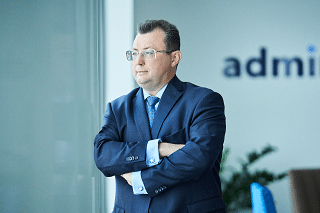
Alexander Tsikhilov
I served as CEO of the Admirals Group until the end of 2016, after which I handed the operational reins to my younger colleagues. With this 'change of management generations', those who founded the company and had been at the helm since the beginning, transitioned to the Board of Directors, focusing on strategic issues for further development.
What is the importance of this rebrand for current and prospective clients? Will you introduce any new services, launch products or announce any executive moves with the change.
This evolution should be reflected in our company name. The word 'Markets' in Admiral Markets stands for the financial markets and does not adequately reflect the scope of what we do currently. Early in 2021, we introduced our AM Card, a virtual card powered by Visa. The physical variant will be launched soon.
This is not a trading product and a prime example of what our clients can expect in the near future. While we will be introducing other such personal finance products and services, we are building from the solid basis of experience we have built over the past 20 years. Trading will always be an important part of our identity and our clients will continue to receive the best quality and conditions in the sector.
We set out to ensure that your trading experience will be even better, while also allowing you to access our new personal finance services. Admirals is a financial hub, offering a wide range of products and services which make personal finance transparent and accessible.
Where else do you hope to expand from the Admirals’ product offerings?
Let’s start with what we already have in the pipeline. We are on the cusp of introducing our new service 'CopyTrading'. With this, a client with no prior trading experience, education or time can actively trade the markets by copying other successful traders.
By choosing a ‘trade leader’ to follow, their trades can automatically be copied to the account of the client. The client can adjust settings such as trading volume and personalise the trading decisions according to their preference.
While we have many exciting product launches planned, we are also revolutionising and improving our current offering. We will be offering ‘Microlot Digital Currency trading’, by which a person can start trading from only 0.01 lot BTC USD, for example.
Constant improvement is at the heart of how we run our business. We are continuously introducing new and innovative features on our Native trading app which is an in-house developed application, tailor-made for our trading offer.
Trading so-called meme stocks rocked clearinghouses and forced brokerages to protect themselves by raising margin requirements and, sometimes even, banning microcap stocks. How did you handle this phenomenon?
Meme stocks is a term for a new market phenomenon by which stocks of small US companies are hyped to the point where their value skyrockets. Recent developments have shown that some of these companies can be expected to go 'out of business' sooner or later, but not before surging 100 or even 200 % plus in a single day. Whether this is desirable or not, every person has to answer for themselves.
However, the by-effect is this brought on a huge spike in interest in trading. It has brought trading to the attention of a wider range of people, which is in fact a positive for the brokerage industry. So-called neobrokers are taking advantage of aggressive marketing campaigns, promising 'commission-free' trading offers.
In the end, we know that there is no such thing as a 'free lunch'. All operational costs have to be covered; 'low cost' however is possible. Established Forex & CFD brokers have headed in this direction for many years prior to this phenomenon. Offering clients the possibility to trade FX without commissions, just the spread.
The core difference is that we did not market this as heavily as these neobrokers are doing now. Highlighting it in all their marketing in a clear and easy-to-understand manner. This has, however, made it abundantly clear how many people are interested in benefiting from trading the financial markets. One thing that is easily bypassed in such marketing is that trading involves risk. 200% moves in a single day points to a huge amount of volatility and thus associated risks. Yet, using opportunities in demand to achieve X or Y percent per week in a more sustainable manner is possible.
In February, Admiral Markets decided to abandon the no-fee offering on selected stocks and exchange-traded funds (ETFs). What prompted this decision? Do you think other brokers will follow suit?
To be precise, we are renowned for offering the option to invest in real stocks at a low price point, starting from 1 Euro. Where we made changes was in our CFD offering, where clients can trade stocks (as a CFD) at a very small fee. Furthermore, they can trade in both directions, long and short and use leverage.
Historically, we have offered commission-free trading on US and EU-based Stock CFDs, and now we introduced a very low fee, also starting from just 1 Euro. Compared to some notable competing brokers, who start from 10 EUR for stock CFDs, you can trade with us at 10% of the commission fees.
Related, given that penny stocks are no longer available on Admiral Markets, how are you planning to evolve your non-FX offering in 2021?
Again, I’d like to make the distinction that clients can still invest in 'real' stocks of the likes of GME and Co. Via our Invest.MT5 account type clients can invest in real stocks - no leverage, no short trading.
Also, let's keep in mind that the majority of CFD brokers never offered such a wide range of stock CFDs. Many just offer Forex pairs, indices and Commodities and so on.
The fact is, that we see most of the trading volume on instruments such as EURUSD, DJI30, Gold and DAX30. Especially, the leading indices DAX and DOW are some of our most popular, non-Forex offers. This is a growing trend; year-by-year we see an increase in interest and volume.
The global indices are mostly on or near an all-time-high; a U-turn after the big downtrend in spring 2020, the start of the COVID-19 pandemic. We will focus on the index offering to ensure we have (one of) the most appealing offers in the competitive space. We are setting up to simplify and streamline our services and trading offer, via many new options such as our native trading App and our new Copy Trading service mentioned before.
So, to sum up, the offering will not dramatically change - but it will be improved according to our clients' interest. Services will be simplified and more accessible on all device types and operating systems Desktop, Mac, Mobile and Browser.
Given the way that the industry has changed over the past two years, how do evaluate the EU regulators’ approach toward retail trading? Do you agree that ESMA’s efforts to protect traders have done anything other than pushing business/clients offshore?
We have always been at the forefront of implementing protective measures. Many regulatory standards, which were recently introduced for all EU brokers from 2018, we were already offering as additional services well before these were obligatory.
For example, for many years we have been offering a Negative Account Balance Protection Policy under Admiral Markets UK, at no additional cost to our clients.
What is reasonable and what isn’t, is always an open discussion. If you ask about my personal opinion, I would be happy to introduce a 3rd client classification category in the future. A middle ground such as an 'experienced trader' category, with access to higher leverage.
There are noises that with a new modified Mifid framework the regulatory site is working on something like this, which would have great advantages. To split people into just two available, Retail or Professional is too restrictive. The world is not just black and white. In my opinion, at least one more classification is needed.
If we ask our clients, the most common feedback is that they know what they are doing and are aware of the risk so would like to have more free choice in the leverage they apply. The 'Gamestop' scenario taught us that people are willing to carry risks and lose money - for the fair option of increasing potential profits. People are aware and accepting the risk if the offer is fair and risks can be limited.
Many clients inquired about Offshore-offers, and some of them may be moved to this option. But, the majority of traders in the EU stayed and adjusted their trading activities in accordance with new regulatory limitations. But, whether they are happy with it or not - freedom vs. security - is another question. We, at Admirals, are very, very, very transparent. We provide balanced information and education about profit and loss. If a client is aware of this - I personally believe more freedom of choice should be available.
Admiral Markets had shut down its branch in Poland last year. Do you have further plans to eventually exit/expand to other jurisdictions?
Poland is still an important market for us, and we continue to service Polish clients up to the same standards as before.
We closed the Polish Admiral Markets UK related office mostly because of the upcoming regulatory circumstances. We plan to open in this year a new office there under our new operating company for EU, Admiral Markets Cyprus. And, all the time we made sure to support all our clients in Poland and in their language, just from another destination or desk. We open new offices 'on the ground' every year, but also have to close or adjust the setup of existing branches from time to time following regulatory, legal or other requirements.
We are in the process of opening or activating offices in Jordan and Canada and South Africa later this year too, so our global expansion is on its way.
Finance Magnates had the chance to set up an interview with Alexander Tsikhilov, Chairman of the Supervisory Board and Co-founder of Admiral Markets.
The multi-regulated brokerage is rolling out a new brand name on Friday. And, Mr Tsikhilov explains how rebranding as Admirals will provide more consistent brand messaging for consumers and make both internal and external business processes easier.
We sat down with Mr Tsikhilov to get his take on recent developments and discover more about what it takes to secure a slice in the highly competitive industry. What follows is the summary of our conversation.
First of all, could you please share with us a little bit of your professional background and a quick overview of your recent roles?
I entered the online trading space in 1999 after having been active in the internet service industry for many years. At that time, I held an engineering degree, from a university in St. Petersburg, Russia but had to learn about the world of finance, starting from the basics.
Never before, had I positioned myself as a specialist in finance, but I made it my mission to educate myself in this discipline. I continued my education in the field of business administration and subsequently earned two master's degrees and a doctorate in business management (DBA) from a business school in Zurich, Switzerland where I completed my thesis on employee incentive management for financial brokerage firms.
Alexander Tsikhilov
I served as CEO of the Admirals Group until the end of 2016, after which I handed the operational reins to my younger colleagues. With this 'change of management generations', those who founded the company and had been at the helm since the beginning, transitioned to the Board of Directors, focusing on strategic issues for further development.
What is the importance of this rebrand for current and prospective clients? Will you introduce any new services, launch products or announce any executive moves with the change.
This evolution should be reflected in our company name. The word 'Markets' in Admiral Markets stands for the financial markets and does not adequately reflect the scope of what we do currently. Early in 2021, we introduced our AM Card, a virtual card powered by Visa. The physical variant will be launched soon.
This is not a trading product and a prime example of what our clients can expect in the near future. While we will be introducing other such personal finance products and services, we are building from the solid basis of experience we have built over the past 20 years. Trading will always be an important part of our identity and our clients will continue to receive the best quality and conditions in the sector.
We set out to ensure that your trading experience will be even better, while also allowing you to access our new personal finance services. Admirals is a financial hub, offering a wide range of products and services which make personal finance transparent and accessible.
Where else do you hope to expand from the Admirals’ product offerings?
Let’s start with what we already have in the pipeline. We are on the cusp of introducing our new service 'CopyTrading'. With this, a client with no prior trading experience, education or time can actively trade the markets by copying other successful traders.
By choosing a ‘trade leader’ to follow, their trades can automatically be copied to the account of the client. The client can adjust settings such as trading volume and personalise the trading decisions according to their preference.
While we have many exciting product launches planned, we are also revolutionising and improving our current offering. We will be offering ‘Microlot Digital Currency trading’, by which a person can start trading from only 0.01 lot BTC USD, for example.
Constant improvement is at the heart of how we run our business. We are continuously introducing new and innovative features on our Native trading app which is an in-house developed application, tailor-made for our trading offer.
Trading so-called meme stocks rocked clearinghouses and forced brokerages to protect themselves by raising margin requirements and, sometimes even, banning microcap stocks. How did you handle this phenomenon?
Meme stocks is a term for a new market phenomenon by which stocks of small US companies are hyped to the point where their value skyrockets. Recent developments have shown that some of these companies can be expected to go 'out of business' sooner or later, but not before surging 100 or even 200 % plus in a single day. Whether this is desirable or not, every person has to answer for themselves.
However, the by-effect is this brought on a huge spike in interest in trading. It has brought trading to the attention of a wider range of people, which is in fact a positive for the brokerage industry. So-called neobrokers are taking advantage of aggressive marketing campaigns, promising 'commission-free' trading offers.
In the end, we know that there is no such thing as a 'free lunch'. All operational costs have to be covered; 'low cost' however is possible. Established Forex & CFD brokers have headed in this direction for many years prior to this phenomenon. Offering clients the possibility to trade FX without commissions, just the spread.
The core difference is that we did not market this as heavily as these neobrokers are doing now. Highlighting it in all their marketing in a clear and easy-to-understand manner. This has, however, made it abundantly clear how many people are interested in benefiting from trading the financial markets. One thing that is easily bypassed in such marketing is that trading involves risk. 200% moves in a single day points to a huge amount of volatility and thus associated risks. Yet, using opportunities in demand to achieve X or Y percent per week in a more sustainable manner is possible.
In February, Admiral Markets decided to abandon the no-fee offering on selected stocks and exchange-traded funds (ETFs). What prompted this decision? Do you think other brokers will follow suit?
To be precise, we are renowned for offering the option to invest in real stocks at a low price point, starting from 1 Euro. Where we made changes was in our CFD offering, where clients can trade stocks (as a CFD) at a very small fee. Furthermore, they can trade in both directions, long and short and use leverage.
Historically, we have offered commission-free trading on US and EU-based Stock CFDs, and now we introduced a very low fee, also starting from just 1 Euro. Compared to some notable competing brokers, who start from 10 EUR for stock CFDs, you can trade with us at 10% of the commission fees.
Related, given that penny stocks are no longer available on Admiral Markets, how are you planning to evolve your non-FX offering in 2021?
Again, I’d like to make the distinction that clients can still invest in 'real' stocks of the likes of GME and Co. Via our Invest.MT5 account type clients can invest in real stocks - no leverage, no short trading.
Also, let's keep in mind that the majority of CFD brokers never offered such a wide range of stock CFDs. Many just offer Forex pairs, indices and Commodities and so on.
The fact is, that we see most of the trading volume on instruments such as EURUSD, DJI30, Gold and DAX30. Especially, the leading indices DAX and DOW are some of our most popular, non-Forex offers. This is a growing trend; year-by-year we see an increase in interest and volume.
The global indices are mostly on or near an all-time-high; a U-turn after the big downtrend in spring 2020, the start of the COVID-19 pandemic. We will focus on the index offering to ensure we have (one of) the most appealing offers in the competitive space. We are setting up to simplify and streamline our services and trading offer, via many new options such as our native trading App and our new Copy Trading service mentioned before.
So, to sum up, the offering will not dramatically change - but it will be improved according to our clients' interest. Services will be simplified and more accessible on all device types and operating systems Desktop, Mac, Mobile and Browser.
Given the way that the industry has changed over the past two years, how do evaluate the EU regulators’ approach toward retail trading? Do you agree that ESMA’s efforts to protect traders have done anything other than pushing business/clients offshore?
We have always been at the forefront of implementing protective measures. Many regulatory standards, which were recently introduced for all EU brokers from 2018, we were already offering as additional services well before these were obligatory.
For example, for many years we have been offering a Negative Account Balance Protection Policy under Admiral Markets UK, at no additional cost to our clients.
What is reasonable and what isn’t, is always an open discussion. If you ask about my personal opinion, I would be happy to introduce a 3rd client classification category in the future. A middle ground such as an 'experienced trader' category, with access to higher leverage.
There are noises that with a new modified Mifid framework the regulatory site is working on something like this, which would have great advantages. To split people into just two available, Retail or Professional is too restrictive. The world is not just black and white. In my opinion, at least one more classification is needed.
If we ask our clients, the most common feedback is that they know what they are doing and are aware of the risk so would like to have more free choice in the leverage they apply. The 'Gamestop' scenario taught us that people are willing to carry risks and lose money - for the fair option of increasing potential profits. People are aware and accepting the risk if the offer is fair and risks can be limited.
Many clients inquired about Offshore-offers, and some of them may be moved to this option. But, the majority of traders in the EU stayed and adjusted their trading activities in accordance with new regulatory limitations. But, whether they are happy with it or not - freedom vs. security - is another question. We, at Admirals, are very, very, very transparent. We provide balanced information and education about profit and loss. If a client is aware of this - I personally believe more freedom of choice should be available.
Admiral Markets had shut down its branch in Poland last year. Do you have further plans to eventually exit/expand to other jurisdictions?
Poland is still an important market for us, and we continue to service Polish clients up to the same standards as before.
We closed the Polish Admiral Markets UK related office mostly because of the upcoming regulatory circumstances. We plan to open in this year a new office there under our new operating company for EU, Admiral Markets Cyprus. And, all the time we made sure to support all our clients in Poland and in their language, just from another destination or desk. We open new offices 'on the ground' every year, but also have to close or adjust the setup of existing branches from time to time following regulatory, legal or other requirements.
We are in the process of opening or activating offices in Jordan and Canada and South Africa later this year too, so our global expansion is on its way.
Mitrade Hires Former TD Ameritrade and Capital.com Singapore Chief as Markets Advisor
Featured Videos
AvaTrade to Acquire Most of FXCM; NAGA Raises $8M
AvaTrade to Acquire Most of FXCM; NAGA Raises $8M
AvaTrade to Acquire Most of FXCM; NAGA Raises $8M
AvaTrade to Acquire Most of FXCM; NAGA Raises $8M
Today’s financial news recap covers AvaTrade agrees to acquire most of FXCM, NAGA secures eight million dollars in new financing, and Wise seeks a tax settlement in the UK.
Finance Magnates Daily Recap brings you the latest news from forex and CFD brokers, fintech, payments, cryptocurrency, digital assets, trading platforms, financial regulation and global markets.
Get the key company news, executive moves, deals, regulatory updates and market developments of the day, in just a few minutes. New episodes published every weekday.
Read more: https://www.financemagnates.com
#FinanceMagnates #ForexNews #FintechNews
Today’s financial news recap covers AvaTrade agrees to acquire most of FXCM, NAGA secures eight million dollars in new financing, and Wise seeks a tax settlement in the UK.
Finance Magnates Daily Recap brings you the latest news from forex and CFD brokers, fintech, payments, cryptocurrency, digital assets, trading platforms, financial regulation and global markets.
Get the key company news, executive moves, deals, regulatory updates and market developments of the day, in just a few minutes. New episodes published every weekday.
Read more: https://www.financemagnates.com
#FinanceMagnates #ForexNews #FintechNews
Today’s financial news recap covers AvaTrade agrees to acquire most of FXCM, NAGA secures eight million dollars in new financing, and Wise seeks a tax settlement in the UK.
Finance Magnates Daily Recap brings you the latest news from forex and CFD brokers, fintech, payments, cryptocurrency, digital assets, trading platforms, financial regulation and global markets.
Get the key company news, executive moves, deals, regulatory updates and market developments of the day, in just a few minutes. New episodes published every weekday.
Read more: https://www.financemagnates.com
#FinanceMagnates #ForexNews #FintechNews
Today’s financial news recap covers AvaTrade agrees to acquire most of FXCM, NAGA secures eight million dollars in new financing, and Wise seeks a tax settlement in the UK.
Finance Magnates Daily Recap brings you the latest news from forex and CFD brokers, fintech, payments, cryptocurrency, digital assets, trading platforms, financial regulation and global markets.
Get the key company news, executive moves, deals, regulatory updates and market developments of the day, in just a few minutes. New episodes published every weekday.
Read more: https://www.financemagnates.com
#FinanceMagnates #ForexNews #FintechNews
XTB Adds Overnight US Stock Trading; Nasdaq Ventures Invests in One Trading
XTB Adds Overnight US Stock Trading; Nasdaq Ventures Invests in One Trading
XTB Adds Overnight US Stock Trading; Nasdaq Ventures Invests in One Trading
XTB Adds Overnight US Stock Trading; Nasdaq Ventures Invests in One Trading
XTB Adds Overnight US Stock Trading; Nasdaq Ventures Invests in One Trading
XTB Adds Overnight US Stock Trading; Nasdaq Ventures Invests in One Trading
Today’s financial news recap covers XTB expands overnight US stock trading, Fortrade reports higher revenue, Nasdaq backs One Trading, and Vest Labs raises 13 million dollars.
Finance Magnates Daily Recap brings you the latest news from forex and CFD brokers, fintech, payments, cryptocurrency, digital assets, trading platforms, financial regulation and global markets.
Get the key company news, executive moves, deals, regulatory updates and market developments of the day, in just a few minutes. New episodes published every weekday.
Read more: https://www.financemagnates.com
#FinanceMagnates #ForexNews #FintechNews
Today’s financial news recap covers XTB expands overnight US stock trading, Fortrade reports higher revenue, Nasdaq backs One Trading, and Vest Labs raises 13 million dollars.
Finance Magnates Daily Recap brings you the latest news from forex and CFD brokers, fintech, payments, cryptocurrency, digital assets, trading platforms, financial regulation and global markets.
Get the key company news, executive moves, deals, regulatory updates and market developments of the day, in just a few minutes. New episodes published every weekday.
Read more: https://www.financemagnates.com
#FinanceMagnates #ForexNews #FintechNews
Today’s financial news recap covers XTB expands overnight US stock trading, Fortrade reports higher revenue, Nasdaq backs One Trading, and Vest Labs raises 13 million dollars.
Finance Magnates Daily Recap brings you the latest news from forex and CFD brokers, fintech, payments, cryptocurrency, digital assets, trading platforms, financial regulation and global markets.
Get the key company news, executive moves, deals, regulatory updates and market developments of the day, in just a few minutes. New episodes published every weekday.
Read more: https://www.financemagnates.com
#FinanceMagnates #ForexNews #FintechNews
Today’s financial news recap covers XTB expands overnight US stock trading, Fortrade reports higher revenue, Nasdaq backs One Trading, and Vest Labs raises 13 million dollars.
Finance Magnates Daily Recap brings you the latest news from forex and CFD brokers, fintech, payments, cryptocurrency, digital assets, trading platforms, financial regulation and global markets.
Get the key company news, executive moves, deals, regulatory updates and market developments of the day, in just a few minutes. New episodes published every weekday.
Read more: https://www.financemagnates.com
#FinanceMagnates #ForexNews #FintechNews
Today’s financial news recap covers XTB expands overnight US stock trading, Fortrade reports higher revenue, Nasdaq backs One Trading, and Vest Labs raises 13 million dollars.
Finance Magnates Daily Recap brings you the latest news from forex and CFD brokers, fintech, payments, cryptocurrency, digital assets, trading platforms, financial regulation and global markets.
Get the key company news, executive moves, deals, regulatory updates and market developments of the day, in just a few minutes. New episodes published every weekday.
Read more: https://www.financemagnates.com
#FinanceMagnates #ForexNews #FintechNews
Today’s financial news recap covers XTB expands overnight US stock trading, Fortrade reports higher revenue, Nasdaq backs One Trading, and Vest Labs raises 13 million dollars.
Finance Magnates Daily Recap brings you the latest news from forex and CFD brokers, fintech, payments, cryptocurrency, digital assets, trading platforms, financial regulation and global markets.
Get the key company news, executive moves, deals, regulatory updates and market developments of the day, in just a few minutes. New episodes published every weekday.
Read more: https://www.financemagnates.com
#FinanceMagnates #ForexNews #FintechNews
CMC Founder Downplays Volatility Hit; Devexperts Names CEO
CMC Founder Downplays Volatility Hit; Devexperts Names CEO
CMC Founder Downplays Volatility Hit; Devexperts Names CEO
CMC Founder Downplays Volatility Hit; Devexperts Names CEO
CMC Founder Downplays Volatility Hit; Devexperts Names CEO
CMC Founder Downplays Volatility Hit; Devexperts Names CEO
Today’s financial news recap covers low volatility pressures brokers, Devexperts names a new CEO, Saxo cuts onboarding time, and OKX reaches a 25 billion dollar valuation.
Finance Magnates Daily Recap brings you the latest news from forex and CFD brokers, fintech, payments, cryptocurrency, digital assets, trading platforms, financial regulation and global markets.
Get the key company news, executive moves, deals, regulatory updates and market developments of the day, in just a few minutes. New episodes published every weekday.
Read more: https://www.financemagnates.com
#FinanceMagnates #ForexNews #FintechNews
Today’s financial news recap covers low volatility pressures brokers, Devexperts names a new CEO, Saxo cuts onboarding time, and OKX reaches a 25 billion dollar valuation.
Finance Magnates Daily Recap brings you the latest news from forex and CFD brokers, fintech, payments, cryptocurrency, digital assets, trading platforms, financial regulation and global markets.
Get the key company news, executive moves, deals, regulatory updates and market developments of the day, in just a few minutes. New episodes published every weekday.
Read more: https://www.financemagnates.com
#FinanceMagnates #ForexNews #FintechNews
Today’s financial news recap covers low volatility pressures brokers, Devexperts names a new CEO, Saxo cuts onboarding time, and OKX reaches a 25 billion dollar valuation.
Finance Magnates Daily Recap brings you the latest news from forex and CFD brokers, fintech, payments, cryptocurrency, digital assets, trading platforms, financial regulation and global markets.
Get the key company news, executive moves, deals, regulatory updates and market developments of the day, in just a few minutes. New episodes published every weekday.
Read more: https://www.financemagnates.com
#FinanceMagnates #ForexNews #FintechNews
Today’s financial news recap covers low volatility pressures brokers, Devexperts names a new CEO, Saxo cuts onboarding time, and OKX reaches a 25 billion dollar valuation.
Finance Magnates Daily Recap brings you the latest news from forex and CFD brokers, fintech, payments, cryptocurrency, digital assets, trading platforms, financial regulation and global markets.
Get the key company news, executive moves, deals, regulatory updates and market developments of the day, in just a few minutes. New episodes published every weekday.
Read more: https://www.financemagnates.com
#FinanceMagnates #ForexNews #FintechNews
Today’s financial news recap covers low volatility pressures brokers, Devexperts names a new CEO, Saxo cuts onboarding time, and OKX reaches a 25 billion dollar valuation.
Finance Magnates Daily Recap brings you the latest news from forex and CFD brokers, fintech, payments, cryptocurrency, digital assets, trading platforms, financial regulation and global markets.
Get the key company news, executive moves, deals, regulatory updates and market developments of the day, in just a few minutes. New episodes published every weekday.
Read more: https://www.financemagnates.com
#FinanceMagnates #ForexNews #FintechNews
Today’s financial news recap covers low volatility pressures brokers, Devexperts names a new CEO, Saxo cuts onboarding time, and OKX reaches a 25 billion dollar valuation.
Finance Magnates Daily Recap brings you the latest news from forex and CFD brokers, fintech, payments, cryptocurrency, digital assets, trading platforms, financial regulation and global markets.
Get the key company news, executive moves, deals, regulatory updates and market developments of the day, in just a few minutes. New episodes published every weekday.
Read more: https://www.financemagnates.com
#FinanceMagnates #ForexNews #FintechNews
Today’s financial news recap covers Trade Nation buys FXCM's UK client book, Trading 212 reports higher revenue, the CFTC's move to allow perpetual index futures.
Finance Magnates Daily Recap brings you the latest news from forex and CFD brokers, fintech, payments, cryptocurrency, digital assets, trading platforms, financial regulation and global markets.
Get the key company news, executive moves, deals, regulatory updates and market developments of the day, in just a few minutes. New episodes published every weekday.
Read more: https://www.financemagnates.com
#FinanceMagnates #ForexNews #FintechNews
Today’s financial news recap covers Trade Nation buys FXCM's UK client book, Trading 212 reports higher revenue, the CFTC's move to allow perpetual index futures.
Finance Magnates Daily Recap brings you the latest news from forex and CFD brokers, fintech, payments, cryptocurrency, digital assets, trading platforms, financial regulation and global markets.
Get the key company news, executive moves, deals, regulatory updates and market developments of the day, in just a few minutes. New episodes published every weekday.
Read more: https://www.financemagnates.com
#FinanceMagnates #ForexNews #FintechNews
Today’s financial news recap covers Trade Nation buys FXCM's UK client book, Trading 212 reports higher revenue, the CFTC's move to allow perpetual index futures.
Finance Magnates Daily Recap brings you the latest news from forex and CFD brokers, fintech, payments, cryptocurrency, digital assets, trading platforms, financial regulation and global markets.
Get the key company news, executive moves, deals, regulatory updates and market developments of the day, in just a few minutes. New episodes published every weekday.
Read more: https://www.financemagnates.com
#FinanceMagnates #ForexNews #FintechNews
Today’s financial news recap covers Trade Nation buys FXCM's UK client book, Trading 212 reports higher revenue, the CFTC's move to allow perpetual index futures.
Finance Magnates Daily Recap brings you the latest news from forex and CFD brokers, fintech, payments, cryptocurrency, digital assets, trading platforms, financial regulation and global markets.
Get the key company news, executive moves, deals, regulatory updates and market developments of the day, in just a few minutes. New episodes published every weekday.
Read more: https://www.financemagnates.com
#FinanceMagnates #ForexNews #FintechNews
Today’s financial news recap covers Trade Nation buys FXCM's UK client book, Trading 212 reports higher revenue, the CFTC's move to allow perpetual index futures.
Finance Magnates Daily Recap brings you the latest news from forex and CFD brokers, fintech, payments, cryptocurrency, digital assets, trading platforms, financial regulation and global markets.
Get the key company news, executive moves, deals, regulatory updates and market developments of the day, in just a few minutes. New episodes published every weekday.
Read more: https://www.financemagnates.com
#FinanceMagnates #ForexNews #FintechNews
Today’s financial news recap covers Trade Nation buys FXCM's UK client book, Trading 212 reports higher revenue, the CFTC's move to allow perpetual index futures.
Finance Magnates Daily Recap brings you the latest news from forex and CFD brokers, fintech, payments, cryptocurrency, digital assets, trading platforms, financial regulation and global markets.
Get the key company news, executive moves, deals, regulatory updates and market developments of the day, in just a few minutes. New episodes published every weekday.
Read more: https://www.financemagnates.com
#FinanceMagnates #ForexNews #FintechNews
Your career isn’t a linear path.
Your career isn’t a linear path.
Your career isn’t a linear path.
Your career isn’t a linear path.
Your career isn’t a linear path.
Your career isn’t a linear path.
Roles change. Career goals change. Sometimes you want a completely new challenge.
But the skills and knowledge you build along the way can stay with you and give you something to build on.
For Jeff Patterson, that continued growth is key to long-term career development.
You bring the skills. FM Academy helps you build the knowledge.
#FMAcademy #FinanceMagnates #FinanceCareers #ProfessionalDevelopment #Fintech
Roles change. Career goals change. Sometimes you want a completely new challenge.
But the skills and knowledge you build along the way can stay with you and give you something to build on.
For Jeff Patterson, that continued growth is key to long-term career development.
You bring the skills. FM Academy helps you build the knowledge.
#FMAcademy #FinanceMagnates #FinanceCareers #ProfessionalDevelopment #Fintech
Roles change. Career goals change. Sometimes you want a completely new challenge.
But the skills and knowledge you build along the way can stay with you and give you something to build on.
For Jeff Patterson, that continued growth is key to long-term career development.
You bring the skills. FM Academy helps you build the knowledge.
#FMAcademy #FinanceMagnates #FinanceCareers #ProfessionalDevelopment #Fintech
Roles change. Career goals change. Sometimes you want a completely new challenge.
But the skills and knowledge you build along the way can stay with you and give you something to build on.
For Jeff Patterson, that continued growth is key to long-term career development.
You bring the skills. FM Academy helps you build the knowledge.
#FMAcademy #FinanceMagnates #FinanceCareers #ProfessionalDevelopment #Fintech
Roles change. Career goals change. Sometimes you want a completely new challenge.
But the skills and knowledge you build along the way can stay with you and give you something to build on.
For Jeff Patterson, that continued growth is key to long-term career development.
You bring the skills. FM Academy helps you build the knowledge.
#FMAcademy #FinanceMagnates #FinanceCareers #ProfessionalDevelopment #Fintech
Roles change. Career goals change. Sometimes you want a completely new challenge.
But the skills and knowledge you build along the way can stay with you and give you something to build on.
For Jeff Patterson, that continued growth is key to long-term career development.
You bring the skills. FM Academy helps you build the knowledge.
#FMAcademy #FinanceMagnates #FinanceCareers #ProfessionalDevelopment #Fintech