Bitcoin drops 14% to $91,281 as Trump announces 25% tariffs on Canada and Mexico.
Altcoins face a severe bloodbath, with ETH down 20% and XRP 30%, triggering mass liquidations.
However, technical analysis shows strong BTC support at $92K, with potential recovery signals.
Bitcoin
(BTC) price continues its fourth day of decline, testing the lowest levels in
nearly a month on Monday, February 3, 2025. Since last Friday, the drops
reached almost 14% at one point, reacting to reports about new tariff plans
from the new-old U.S. President Donald Trump.
The sudden
BTC slump also triggered panic in altcoins, causing a temporary flash crash.
Let's examine why Bitcoin is falling and what caused such a strong reaction in
the cryptocurrency market.
Why Is Bitcoin Price Down
Today? Trump's Tariffs Shake Markets
Donald
Trump announced on Sunday that he's imposing 25% tariffs on neighboring Canada
and Mexico. The new rules are set to take effect on Tuesday, and the president
simultaneously announced that similar trade fees will soon be imposed on the
European Union (EU).
In
response, Wall Street futures contracts recorded a significant decline: Dow
dropped 1.4% (over 600 points), and S&P 500 futures fell 1.9%. The
tech-heavy Nasdaq slid 2.4%. The U.S. dollar automatically surged, rising 1%
against a weighted basket of currencies.
Given this
market configuration and panic, Bitcoin's decline was almost inevitable.
"The
recent tariff announcements, which introduced higher tariffs on Canada, Mexico,
and China, underscore the impact of geopolitical shifts on global markets. In
the short term, such measures can introduce significant volatility - just as we
saw when Bitcoin plummeted following similar tariffs and trade
tensions in the past," commented Sumit Gupta, the Co-Founder at CoinDCX.
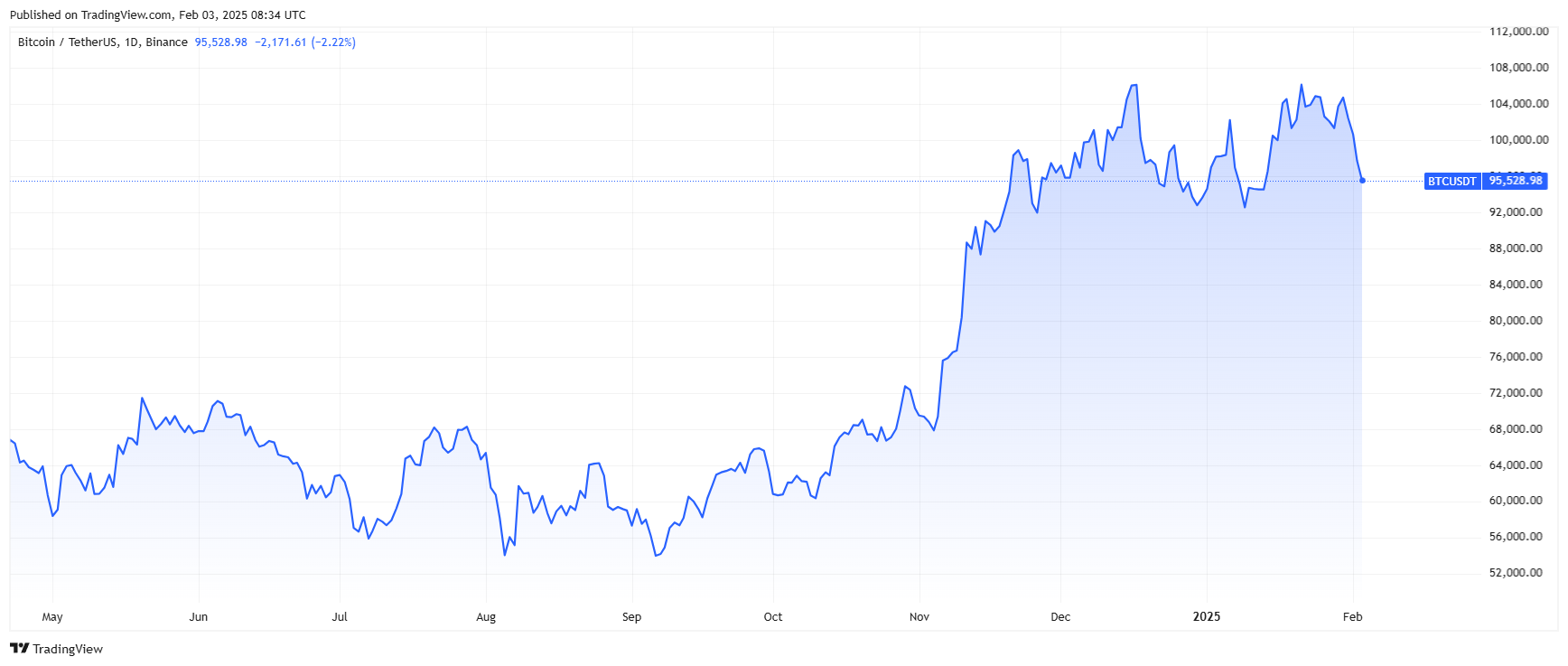
Bitcoin price recorded a strong decline on Monday. Source: Tradingview.com
Bitcoin is
currently trading at $95,700, down 2.3% compared to Sunday's close. However,
the decline was much steeper, reaching almost 7% at one point overnight.
Bitcoin is now in its fourth consecutive day of decline, during which it has
fallen about 14%, and is testing the $91,281 level, the lowest since January 13.
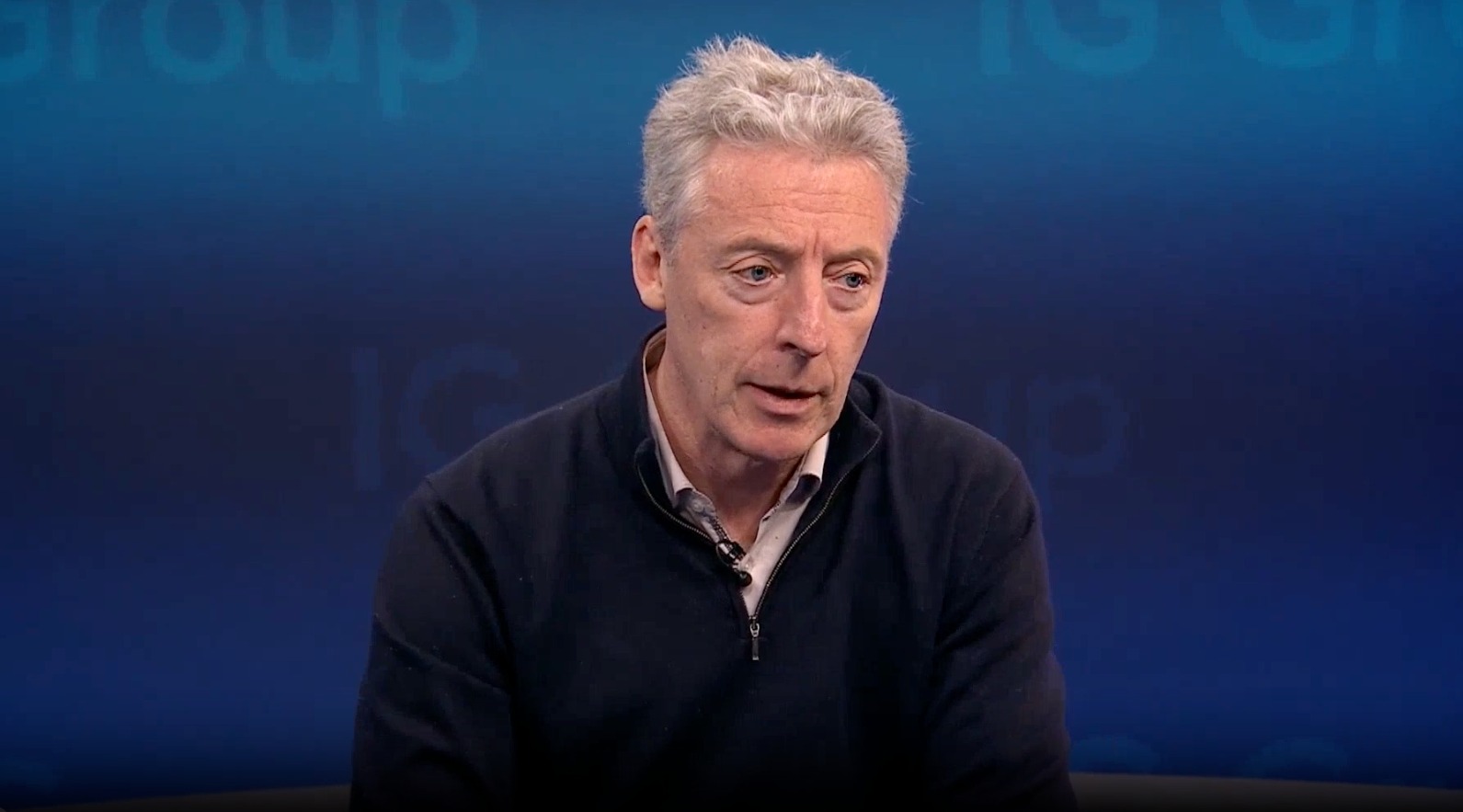
Nigel Green, founder and CEO, deVere Group
“The
writing was on the wall,” said Nigel Green, the CEO of financial firm deVere Group. “This was entirely foreseeable. Yet, too
many market participants buried their heads in the sand, convinced that the
worst wouldn’t materialize. Now, the consequences are here, and investors need
to act—fast.”
Will Bitcoin Fall? BTC Technical
Analysis Shows Strong Support
Despite
Monday's decline triggering panic in the cryptocurrency market and a wave of
leveraged position liquidations, Bitcoin still maintains strong support. For
over two months, BTC has held above $92,000, which marks the lower boundary of
the current consolidation.
This level
has been tested eight times, most actively at the turn of the year, each time
providing bulls with a defense line. The last test, appearing
as a bullish pin bar two weeks ago, was a signal for growth that pushed
Bitcoin to new historical highs on
January 20 at $109,312.
Investors
should closely watch how Monday’s session closes. If the $92,000 level holds
and the session ends significantly higher—around current levels, for example—it
will signal that buyers are ready to defend this level and accumulate BTC in
its vicinity.
92K level still acts as the main support zone for Bitcoin price. Source: Tradingview.com
But what if
a breakout occurs? In that case, the $83,000 area will become critical, as it
aligns with the 200 EMA, which serves as both support and an indicator that the
uptrend has remained intact since October. Only a drop below this moving
average would signal to me that sellers are gaining momentum.
“The markets will remain highly reactive
in the coming days and weeks. Investors must position themselves strategically
to mitigate risks and seize opportunities as assets reprice,” Green added.
Altcoin Bloodbath: Ethereum,
XRP, DOGE and TRUMP Down
The scale
of the decline in the cryptocurrency market is perfectly illustrated by leveraged
position liquidation data. Over the last 24 hours, $2.26 billion in leveraged
positions were wiped out, including $1.88 billion in long positions. The most
liquidations were observed not in Bitcoin ($411.8 million) but in Ethereum
($611.6 million), which experienced one of the most severe drops.
Source: CoinGlass.com
The fear
and greed index automatically fell to 39 points, indicating fear among
cryptocurrency investors. The total ecosystem volume shrank to $3.11 trillion,
falling to the lowest levels since November.
Bitcoin Price, FAQ
Why is the Bitcoin price
falling?
The primary
catalyst has been Donald Trump's announcement of new trade tariffs, which
sparked broader market uncertainty. The cryptocurrency market, increasingly
correlated with traditional financial markets, reacted strongly to this news.
Additionally, the strengthening U.S. dollar and declining stock futures have
created a risk-off environment where investors are moving away from volatile
assets like cryptocurrencies.
Will BTC rise again?
The
cryptocurrency maintains strong technical support at around $92,000, which has
proven to be a reliable defense line over the past two months. The upcoming
Bitcoin halving event in 2024, combined with increasing institutional adoption
and the success of spot Bitcoin ETFs, provides a solid foundation for potential
future growth. However, short-term volatility should be expected as the market
digests current geopolitical and economic uncertainties.
What is causing crypto to
fall today?
The current
crypto market downturn is primarily driven by macroeconomic factors and market
sentiment. Trump's protectionist trade policies have triggered a broader market
sell-off, affecting both traditional and crypto markets. This has led to
significant liquidations of leveraged positions, particularly in altcoins,
creating a cascade effect across the cryptocurrency ecosystem. The fear and
greed index dropping to 39 points reflects the current market anxiety,
contributing to the selling pressure.
What will the price of
Bitcoin in 2025 be?
While some
analysts project potential prices ranging from $150,000 to $250,000 by 2025,
citing institutional adoption and scarcity after the halving, these predictions
should be viewed with caution.
Bitcoin
(BTC) price continues its fourth day of decline, testing the lowest levels in
nearly a month on Monday, February 3, 2025. Since last Friday, the drops
reached almost 14% at one point, reacting to reports about new tariff plans
from the new-old U.S. President Donald Trump.
The sudden
BTC slump also triggered panic in altcoins, causing a temporary flash crash.
Let's examine why Bitcoin is falling and what caused such a strong reaction in
the cryptocurrency market.
Why Is Bitcoin Price Down
Today? Trump's Tariffs Shake Markets
Donald
Trump announced on Sunday that he's imposing 25% tariffs on neighboring Canada
and Mexico. The new rules are set to take effect on Tuesday, and the president
simultaneously announced that similar trade fees will soon be imposed on the
European Union (EU).
In
response, Wall Street futures contracts recorded a significant decline: Dow
dropped 1.4% (over 600 points), and S&P 500 futures fell 1.9%. The
tech-heavy Nasdaq slid 2.4%. The U.S. dollar automatically surged, rising 1%
against a weighted basket of currencies.
Given this
market configuration and panic, Bitcoin's decline was almost inevitable.
"The
recent tariff announcements, which introduced higher tariffs on Canada, Mexico,
and China, underscore the impact of geopolitical shifts on global markets. In
the short term, such measures can introduce significant volatility - just as we
saw when Bitcoin plummeted following similar tariffs and trade
tensions in the past," commented Sumit Gupta, the Co-Founder at CoinDCX.
Bitcoin price recorded a strong decline on Monday. Source: Tradingview.com
Bitcoin is
currently trading at $95,700, down 2.3% compared to Sunday's close. However,
the decline was much steeper, reaching almost 7% at one point overnight.
Bitcoin is now in its fourth consecutive day of decline, during which it has
fallen about 14%, and is testing the $91,281 level, the lowest since January 13.
Nigel Green, founder and CEO, deVere Group
“The
writing was on the wall,” said Nigel Green, the CEO of financial firm deVere Group. “This was entirely foreseeable. Yet, too
many market participants buried their heads in the sand, convinced that the
worst wouldn’t materialize. Now, the consequences are here, and investors need
to act—fast.”
Will Bitcoin Fall? BTC Technical
Analysis Shows Strong Support
Despite
Monday's decline triggering panic in the cryptocurrency market and a wave of
leveraged position liquidations, Bitcoin still maintains strong support. For
over two months, BTC has held above $92,000, which marks the lower boundary of
the current consolidation.
This level
has been tested eight times, most actively at the turn of the year, each time
providing bulls with a defense line. The last test, appearing
as a bullish pin bar two weeks ago, was a signal for growth that pushed
Bitcoin to new historical highs on
January 20 at $109,312.
Investors
should closely watch how Monday’s session closes. If the $92,000 level holds
and the session ends significantly higher—around current levels, for example—it
will signal that buyers are ready to defend this level and accumulate BTC in
its vicinity.
92K level still acts as the main support zone for Bitcoin price. Source: Tradingview.com
But what if
a breakout occurs? In that case, the $83,000 area will become critical, as it
aligns with the 200 EMA, which serves as both support and an indicator that the
uptrend has remained intact since October. Only a drop below this moving
average would signal to me that sellers are gaining momentum.
“The markets will remain highly reactive
in the coming days and weeks. Investors must position themselves strategically
to mitigate risks and seize opportunities as assets reprice,” Green added.
Altcoin Bloodbath: Ethereum,
XRP, DOGE and TRUMP Down
The scale
of the decline in the cryptocurrency market is perfectly illustrated by leveraged
position liquidation data. Over the last 24 hours, $2.26 billion in leveraged
positions were wiped out, including $1.88 billion in long positions. The most
liquidations were observed not in Bitcoin ($411.8 million) but in Ethereum
($611.6 million), which experienced one of the most severe drops.
Source: CoinGlass.com
The fear
and greed index automatically fell to 39 points, indicating fear among
cryptocurrency investors. The total ecosystem volume shrank to $3.11 trillion,
falling to the lowest levels since November.
Bitcoin Price, FAQ
Why is the Bitcoin price
falling?
The primary
catalyst has been Donald Trump's announcement of new trade tariffs, which
sparked broader market uncertainty. The cryptocurrency market, increasingly
correlated with traditional financial markets, reacted strongly to this news.
Additionally, the strengthening U.S. dollar and declining stock futures have
created a risk-off environment where investors are moving away from volatile
assets like cryptocurrencies.
Will BTC rise again?
The
cryptocurrency maintains strong technical support at around $92,000, which has
proven to be a reliable defense line over the past two months. The upcoming
Bitcoin halving event in 2024, combined with increasing institutional adoption
and the success of spot Bitcoin ETFs, provides a solid foundation for potential
future growth. However, short-term volatility should be expected as the market
digests current geopolitical and economic uncertainties.
What is causing crypto to
fall today?
The current
crypto market downturn is primarily driven by macroeconomic factors and market
sentiment. Trump's protectionist trade policies have triggered a broader market
sell-off, affecting both traditional and crypto markets. This has led to
significant liquidations of leveraged positions, particularly in altcoins,
creating a cascade effect across the cryptocurrency ecosystem. The fear and
greed index dropping to 39 points reflects the current market anxiety,
contributing to the selling pressure.
What will the price of
Bitcoin in 2025 be?
While some
analysts project potential prices ranging from $150,000 to $250,000 by 2025,
citing institutional adoption and scarcity after the halving, these predictions
should be viewed with caution.
Damian Chmiel is a Senior Analyst & Editor at Finance Magnates with more than 15 years of experience in the CFD and online trading industry. Active as both a trader and journalist since 2010, he focuses on broker coverage, fintech innovation, and regulatory developments across Europe, the Middle East, and Asia.
His work includes interviews with C-level leaders at major brokerages and fintech platforms, as well as co-authoring Finance Magnates’ quarterly industry benchmarking reports. Damian’s reporting is data-driven, market-aware, and grounded in direct industry engagement. His analysis and commentary have also been cited by external media outlets, including Investing.com, Binance, The Asset, Stockhead, and Dispatch.
Education:
MA in Finance and Accounting, Cracow University of Economics
Kraken Steps Up Speed Race with New Equinix Colocation Service for Crypto Traders
FP Markets Winner Spotlight 🏆 | Global Broker of the Year 2025 #Trading #Broker #Innovation #Shorts
FP Markets Winner Spotlight 🏆 | Global Broker of the Year 2025 #Trading #Broker #Innovation #Shorts
FP Markets takes the spotlight as Global Broker of the Year 2025 at the Finance Magnates Awards.
Martin Stoilov, Head of Client Experience, shares that trust, innovation, and people played a key role in the company’s success, supported by a strong foundation of integrity and client-centricity.
Following this milestone, FP Markets continues to focus on growth, technology investment, and its core values of transparency and excellence.
👉 Be part of FM Awards 2026: https://awards.financemagnates.com/#nominate
FP Markets takes the spotlight as Global Broker of the Year 2025 at the Finance Magnates Awards.
Martin Stoilov, Head of Client Experience, shares that trust, innovation, and people played a key role in the company’s success, supported by a strong foundation of integrity and client-centricity.
Following this milestone, FP Markets continues to focus on growth, technology investment, and its core values of transparency and excellence.
👉 Be part of FM Awards 2026: https://awards.financemagnates.com/#nominate
In this video, we review @HolaPrimeMarketsOfficial, a multi-asset forex and CFDs broker offering different account types, trading platforms, and flexible trading conditions.
We cover the broker’s overall offering, including account options, trading environment, platforms like MT4 and MT5, and additional services such as managed accounts and fast withdrawals.
Watch the full video to see if Hola Prime Markets fits your trading needs.
📣 Stay up to date with the latest in finance and trading. Follow Finance Magnates for industry news, insights, and global event coverage.
Connect with us:
🔗 LinkedIn: /financemagnates
👍 Facebook: /financemagnates
📸 Instagram: https://www.instagram.com/financemagnates
🐦 X: https://x.com/financemagnates
🎥 TikTok: https://www.tiktok.com/tag/financemagnates
▶️ YouTube: /@financemagnates_official
#HolaPrime #ForexBroker #CFDTrading #FinanceMagnates #Trading #Forex #BrokerReview
In this video, we review @HolaPrimeMarketsOfficial, a multi-asset forex and CFDs broker offering different account types, trading platforms, and flexible trading conditions.
We cover the broker’s overall offering, including account options, trading environment, platforms like MT4 and MT5, and additional services such as managed accounts and fast withdrawals.
Watch the full video to see if Hola Prime Markets fits your trading needs.
📣 Stay up to date with the latest in finance and trading. Follow Finance Magnates for industry news, insights, and global event coverage.
Connect with us:
🔗 LinkedIn: /financemagnates
👍 Facebook: /financemagnates
📸 Instagram: https://www.instagram.com/financemagnates
🐦 X: https://x.com/financemagnates
🎥 TikTok: https://www.tiktok.com/tag/financemagnates
▶️ YouTube: /@financemagnates_official
#HolaPrime #ForexBroker #CFDTrading #FinanceMagnates #Trading #Forex #BrokerReview
Hola Prime Review: What You Need to Know | Full Breakdown by Finance Magnates
Hola Prime Review: What You Need to Know | Full Breakdown by Finance Magnates
In this video, we review @HolaPrime_Global, a proprietary trading firm offering evaluation programs and performance-based payouts in simulated market environments.
We cover how the challenge model works, including account types, profit splits (up to 95%), trading rules, and what it takes to reach a funded account. You’ll also learn about available platforms like MT4, MT5, cTrader, and more, along with insights into payouts, support, and trading conditions.
Watch the full video to see if Hola Prime fits your trading style.
📣 Stay up to date with the latest in finance and trading. Follow Finance Magnates for industry news, insights, and global event coverage.
Connect with us:
🔗 LinkedIn: /financemagnates
👍 Facebook: /financemagnates
📸 Instagram: https://www.instagram.com/financemagnates
🐦 X: https://x.com/financemagnates
🎥 TikTok: https://www.tiktok.com/tag/financemagnates
▶️ YouTube: /@financemagnates_official
#HolaPrime #PropFirm #Trading #FinanceMagnates #Forex #FuturesTrading #TradingReview #PropFirmReview
In this video, we review @HolaPrime_Global, a proprietary trading firm offering evaluation programs and performance-based payouts in simulated market environments.
We cover how the challenge model works, including account types, profit splits (up to 95%), trading rules, and what it takes to reach a funded account. You’ll also learn about available platforms like MT4, MT5, cTrader, and more, along with insights into payouts, support, and trading conditions.
Watch the full video to see if Hola Prime fits your trading style.
📣 Stay up to date with the latest in finance and trading. Follow Finance Magnates for industry news, insights, and global event coverage.
Connect with us:
🔗 LinkedIn: /financemagnates
👍 Facebook: /financemagnates
📸 Instagram: https://www.instagram.com/financemagnates
🐦 X: https://x.com/financemagnates
🎥 TikTok: https://www.tiktok.com/tag/financemagnates
▶️ YouTube: /@financemagnates_official
#HolaPrime #PropFirm #Trading #FinanceMagnates #Forex #FuturesTrading #TradingReview #PropFirmReview
Axi Winner Spotlight 🏆 | Global Most Innovative Broker 2025 #Innovation #Trading #Fintech #Broker
Axi Winner Spotlight 🏆 | Global Most Innovative Broker 2025 #Innovation #Trading #Fintech #Broker
Axi takes the spotlight at the Finance Magnates Awards, winning Global Most Innovative Broker 2025.
Olivia Xenofontos and Ivanna Openko share how the team will feel: proud, motivated, and ready to keep delivering.
They also describe the night as well-organized, focused, and enjoyable for all.
👉 Be part of FM Awards 2026.
Axi takes the spotlight at the Finance Magnates Awards, winning Global Most Innovative Broker 2025.
Olivia Xenofontos and Ivanna Openko share how the team will feel: proud, motivated, and ready to keep delivering.
They also describe the night as well-organized, focused, and enjoyable for all.
👉 Be part of FM Awards 2026.
Recognition that matters.
Built on transparency.
Driven by the industry.
The Finance Magnates Awards 2026.
Nominations are now open.
🔗 https://awards.financemagnates.com/?utm_source=SM&utm_medium=social&utm_campaign=recognition-matters
Recognition that matters.
Built on transparency.
Driven by the industry.
The Finance Magnates Awards 2026.
Nominations are now open.
🔗 https://awards.financemagnates.com/?utm_source=SM&utm_medium=social&utm_campaign=recognition-matters