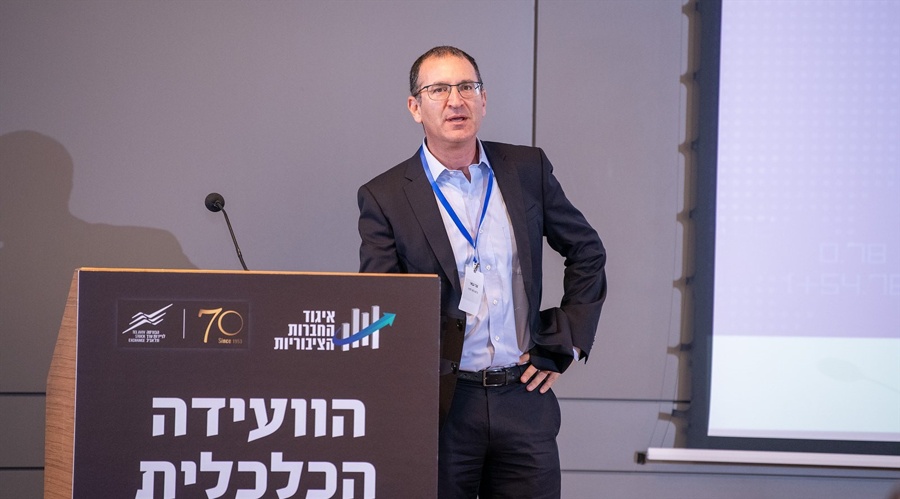
In the two-part interview, Dr. Gabbay discusses the approach of the SEC towards crypto regulation from a legal point of view.
"What's amazing is that they go ahead and file a complaint against Kraken, which shows that they're not hearing the message”.
“The SEC's approach is wrong, and I think that they're already paying for it," stated Dr. Zvi Gabbay, a partner and the head of the Capital Markets Department at the Barnea & Co. law firm, in a critical commentary on the US Securities and Exchange Commission's (SEC) current strategy in dealing with the cryptocurrency market.
This sentiment, expressed in a two-part interview with Finance Magnates, comes in the wake of the SEC's aggressive legal actions against key players like Coinbase, Kraken, and Binance, despite their notable loss against Ripple.
Gabbay's remarks reflect the growing tension between the regulatory body and the crypto industry. He added, "What's amazing is that even though they're paying for it, they go ahead and file a complaint against Kraken, which basically shows that they're not hearing the message.”
This unfolding scenario highlights a significant battle, with the SEC on one side and, seemingly, the entire cryptocurrency sector on the other, casting doubts about the future alignment between regulatory efforts and industry interests.
"A Terrible Loss"
Dr. Gabbay started his career as a prosecutor for the Tel Aviv District Attorney’s office. Later, he received the equivalent of a PhD in law from Columbia University. During his time in New York, he specialized in defense work related to the SEC, CFTC, and DoJ. Upon his return to Israel, he assumed the role of Head of Enforcement at the Israel Securities Authority. Subsequently, he transitioned into private practice focusing on capital market financial regulation and enforcement.
Today, the SEC filed a complaint alleging that Kraken operates as an unregistered national securities exchange, broker, and clearing house. We disagree with their claims and plan to vigorously defend our position. https://t.co/a0C4wzBo3f
There has been a succession of legal battles between crypto entities and the SEC, and, referring to the Commission being denied, in October, an interlocutory appeal in its case against Ripple, Dr Gabbay explained: “Maybe to the average reader these are not dramatic decisions, but when I’m looking at the legal war in general, these are battles that matter a lot. This loss is a terrible loss for the SEC.”
And, it appears that courts and federal agencies that are usually inclined to side with regulators are not doing so when it comes to the SEC’s position on crypto.
“The SEC is doing things because they believe that they're right and they believe that's the way to do things. But, you see they're running into these little counter positions from other arms of government … there are other federal agencies that are not on board. There are courts that are not necessarily on board, and half of Congress is also not on board.”
There is also the issue, for crypto firms, of reputational damage, or the lack of it, from fighting the SEC.
“[The SEC] settles the vast majority of their cases because defendants – this could be companies or individuals – either can't afford or don't want to pay the legal fees for the battle. And, more importantly, in many cases, they don't know if they'll be able to stay alive, in that you’re poison once you have these types of proceedings [against you] … but Coinbase, Kraken and Binance are fighting for their lives. There is no alternative, and because there is no alternative, they're going to fight.”
Gabbay. Pic: Yariv Dagan/The Israeli Association of Publicly Traded Companies
Furthermore, the big crypto platforms may have an advantage in terms of legal personnel and tactics.
“Their legal teams are comprised of former heads of the SEC enforcement division. And, with Ripple, it's a former chairman of the SEC. It’s super senior people. In many cases, these are stronger legal teams than the SEC's team."
"The combination of these three factors leads me to believe that the SEC’s chances of winning are not the usual chances that they’re used to.”
Having said that, Dr Gabbay also explained the possible necessity for both regulators and crypto firms to accept compromises: “Binance paid the money they did [a $4.3 billion fine in November] so that they can continue doing business, and that's a mighty big commitment to the business. So, if at the end of the day, they can avoid a legal battle and in exchange have a legal regulatory path to continue doing business in the United States, I think they're going to take it."
"And, you have other regulatory frameworks being developed: the SEC understands the economic ramifications of companies moving their businesses to Europe, Hong Kong, Singapore. And, by that time we’ll already have bitcoin-based ETFs, so in a way the SEC is going to get its feet wet."
"The third point is the risk of losing. [The SEC] are in this for good reasons, they want to protect investors, but if they lose and there is a judgment that says tokens are not securities, and the SEC has no business regulating, then the damage is huge… and then you have these players that are literally not supervised, so the ramifications of losing – both for the SEC and for the industry – are huge, and sometimes under those conditions you have agreements because no side can afford to lose.”
Dr Gabbay further drew important distinctions between the crypto exchanges involved: “In Binance, the complaint refers to a few things: the SEC is saying ‘you operated a security exchange without the relevant permits, but also, you are not cool in your conduct, you commingled clients’ assets, you misappropriated clients’ assets.’"
"But, with Coinbase and Kraken that's not what they're saying, it’s a very clean, analytical, regulatory statement: ‘You guys operate an exchange and don't have the relevant permits’, and I think that's where, in my mind, they went too far.”
SEC vs. the Cryptocurrency Industry
In a court filing on December 12, Binance contested the SEC’s effort to include the crypto exchange's settlement with the Department of Justice in the ongoing civil lawsuit. The crypto exchange asserted: “The SEC Notice is an impermissible supplemental brief that identifies no new 'authority' and instead attempts to introduce new factual information and arguments. This alone is a reason to disregard it.”
What’s more, exchanges are directly challenging the SEC’s authority. “With the SEC, Binance is saying, there’s no merit to these arguments, we’re not regulated by you, we’re not supposed to be regulated by you, because we never operated a securities exchange.”
Ultimately, the points raised by Dr. Gabbay all seem to be leading towards a crux issue, which is whether or not crypto tokens are securities.
"It’s arguable, then, that the Howey Test – as used by the SEC to determine whether or not an asset is a security – is not relevant to crypto, and that its application can have unintended consequences."
“This [use of the Howey Test] leads to some weird things. For example, one of the Howey conditions is an 'investment contract'. The SEC views the token as such. The judge in the Ripple case, on the other hand, viewed this condition as a transaction. A token can’t be both a transaction and the underlying asset of that transaction. This is an analytical glitch, which needs to be addressed by legislation and regulation, not interpretation of a 1948 court decision."
"Another example can be found in statements made by a few senior members of the SEC who said you may have a token that starts off its life cycle as a security, and at a certain point it stops being a security.”
The most important part of this ruling:
“XRP, as a digital token, is not in and of itself a “contract, transaction[,] or scheme” that embodies the Howey requirements of an investment contract.”
And accordingly, “that's a very troubling and weird analytical position, and if you're creating weird and strange analytical definitions, then you're getting it wrong. That's not how you legislate and that's not how you regulate.”
The SEC has declined to comment on Zvi Gabbay’s remarks but directed us to the Chair's, Gary Gensler, comments in testimony, and in a speech reiterating his view that crypto markets should be subject to securities regulation.
“The SEC's approach is wrong, and I think that they're already paying for it," stated Dr. Zvi Gabbay, a partner and the head of the Capital Markets Department at the Barnea & Co. law firm, in a critical commentary on the US Securities and Exchange Commission's (SEC) current strategy in dealing with the cryptocurrency market.
This sentiment, expressed in a two-part interview with Finance Magnates, comes in the wake of the SEC's aggressive legal actions against key players like Coinbase, Kraken, and Binance, despite their notable loss against Ripple.
Gabbay's remarks reflect the growing tension between the regulatory body and the crypto industry. He added, "What's amazing is that even though they're paying for it, they go ahead and file a complaint against Kraken, which basically shows that they're not hearing the message.”
This unfolding scenario highlights a significant battle, with the SEC on one side and, seemingly, the entire cryptocurrency sector on the other, casting doubts about the future alignment between regulatory efforts and industry interests.
"A Terrible Loss"
Dr. Gabbay started his career as a prosecutor for the Tel Aviv District Attorney’s office. Later, he received the equivalent of a PhD in law from Columbia University. During his time in New York, he specialized in defense work related to the SEC, CFTC, and DoJ. Upon his return to Israel, he assumed the role of Head of Enforcement at the Israel Securities Authority. Subsequently, he transitioned into private practice focusing on capital market financial regulation and enforcement.
Today, the SEC filed a complaint alleging that Kraken operates as an unregistered national securities exchange, broker, and clearing house. We disagree with their claims and plan to vigorously defend our position. https://t.co/a0C4wzBo3f
There has been a succession of legal battles between crypto entities and the SEC, and, referring to the Commission being denied, in October, an interlocutory appeal in its case against Ripple, Dr Gabbay explained: “Maybe to the average reader these are not dramatic decisions, but when I’m looking at the legal war in general, these are battles that matter a lot. This loss is a terrible loss for the SEC.”
And, it appears that courts and federal agencies that are usually inclined to side with regulators are not doing so when it comes to the SEC’s position on crypto.
“The SEC is doing things because they believe that they're right and they believe that's the way to do things. But, you see they're running into these little counter positions from other arms of government … there are other federal agencies that are not on board. There are courts that are not necessarily on board, and half of Congress is also not on board.”
There is also the issue, for crypto firms, of reputational damage, or the lack of it, from fighting the SEC.
“[The SEC] settles the vast majority of their cases because defendants – this could be companies or individuals – either can't afford or don't want to pay the legal fees for the battle. And, more importantly, in many cases, they don't know if they'll be able to stay alive, in that you’re poison once you have these types of proceedings [against you] … but Coinbase, Kraken and Binance are fighting for their lives. There is no alternative, and because there is no alternative, they're going to fight.”
Gabbay. Pic: Yariv Dagan/The Israeli Association of Publicly Traded Companies
Furthermore, the big crypto platforms may have an advantage in terms of legal personnel and tactics.
“Their legal teams are comprised of former heads of the SEC enforcement division. And, with Ripple, it's a former chairman of the SEC. It’s super senior people. In many cases, these are stronger legal teams than the SEC's team."
"The combination of these three factors leads me to believe that the SEC’s chances of winning are not the usual chances that they’re used to.”
Having said that, Dr Gabbay also explained the possible necessity for both regulators and crypto firms to accept compromises: “Binance paid the money they did [a $4.3 billion fine in November] so that they can continue doing business, and that's a mighty big commitment to the business. So, if at the end of the day, they can avoid a legal battle and in exchange have a legal regulatory path to continue doing business in the United States, I think they're going to take it."
"And, you have other regulatory frameworks being developed: the SEC understands the economic ramifications of companies moving their businesses to Europe, Hong Kong, Singapore. And, by that time we’ll already have bitcoin-based ETFs, so in a way the SEC is going to get its feet wet."
"The third point is the risk of losing. [The SEC] are in this for good reasons, they want to protect investors, but if they lose and there is a judgment that says tokens are not securities, and the SEC has no business regulating, then the damage is huge… and then you have these players that are literally not supervised, so the ramifications of losing – both for the SEC and for the industry – are huge, and sometimes under those conditions you have agreements because no side can afford to lose.”
Dr Gabbay further drew important distinctions between the crypto exchanges involved: “In Binance, the complaint refers to a few things: the SEC is saying ‘you operated a security exchange without the relevant permits, but also, you are not cool in your conduct, you commingled clients’ assets, you misappropriated clients’ assets.’"
"But, with Coinbase and Kraken that's not what they're saying, it’s a very clean, analytical, regulatory statement: ‘You guys operate an exchange and don't have the relevant permits’, and I think that's where, in my mind, they went too far.”
SEC vs. the Cryptocurrency Industry
In a court filing on December 12, Binance contested the SEC’s effort to include the crypto exchange's settlement with the Department of Justice in the ongoing civil lawsuit. The crypto exchange asserted: “The SEC Notice is an impermissible supplemental brief that identifies no new 'authority' and instead attempts to introduce new factual information and arguments. This alone is a reason to disregard it.”
What’s more, exchanges are directly challenging the SEC’s authority. “With the SEC, Binance is saying, there’s no merit to these arguments, we’re not regulated by you, we’re not supposed to be regulated by you, because we never operated a securities exchange.”
Ultimately, the points raised by Dr. Gabbay all seem to be leading towards a crux issue, which is whether or not crypto tokens are securities.
"It’s arguable, then, that the Howey Test – as used by the SEC to determine whether or not an asset is a security – is not relevant to crypto, and that its application can have unintended consequences."
“This [use of the Howey Test] leads to some weird things. For example, one of the Howey conditions is an 'investment contract'. The SEC views the token as such. The judge in the Ripple case, on the other hand, viewed this condition as a transaction. A token can’t be both a transaction and the underlying asset of that transaction. This is an analytical glitch, which needs to be addressed by legislation and regulation, not interpretation of a 1948 court decision."
"Another example can be found in statements made by a few senior members of the SEC who said you may have a token that starts off its life cycle as a security, and at a certain point it stops being a security.”
The most important part of this ruling:
“XRP, as a digital token, is not in and of itself a “contract, transaction[,] or scheme” that embodies the Howey requirements of an investment contract.”
And accordingly, “that's a very troubling and weird analytical position, and if you're creating weird and strange analytical definitions, then you're getting it wrong. That's not how you legislate and that's not how you regulate.”
The SEC has declined to comment on Zvi Gabbay’s remarks but directed us to the Chair's, Gary Gensler, comments in testimony, and in a speech reiterating his view that crypto markets should be subject to securities regulation.
Sam White is a writer and journalist from the UK who covers cryptocurrencies and web3, with a particular interest in NFTs and the crossover between art and finance. His work, on a wide variety of topics, has appeared on platforms including The Spectator, Vice and Hacker Noon.
Ledger Probes Reseller Supply Chain as Analysts Track $86 Million in Suspected Drains
Featured Videos
FXCM UK Holds $110m in Client Money; IG CEO Questions Prediction Market Volumes
FXCM UK Holds $110m in Client Money; IG CEO Questions Prediction Market Volumes
FXCM UK Holds $110m in Client Money; IG CEO Questions Prediction Market Volumes
FXCM UK Holds $110m in Client Money; IG CEO Questions Prediction Market Volumes
Today’s financial news recap covers FXCM's UK arm holds $110 million in client money ahead of its sale to Trade Nation, Citadel Securities' UK profit falls 38 per cent, and Kraken secures its final Dubai crypto licence.
Finance Magnates Daily Recap brings you the latest news from forex and CFD brokers, fintech, payments, cryptocurrency, digital assets, trading platforms, financial regulation and global markets.
Get the key company news, executive moves, deals, regulatory updates and market developments of the day, in just a few minutes. New episodes published every weekday.
Read more: https://www.financemagnates.com
#FinanceMagnates #ForexNews #FintechNews
Today’s financial news recap covers FXCM's UK arm holds $110 million in client money ahead of its sale to Trade Nation, Citadel Securities' UK profit falls 38 per cent, and Kraken secures its final Dubai crypto licence.
Finance Magnates Daily Recap brings you the latest news from forex and CFD brokers, fintech, payments, cryptocurrency, digital assets, trading platforms, financial regulation and global markets.
Get the key company news, executive moves, deals, regulatory updates and market developments of the day, in just a few minutes. New episodes published every weekday.
Read more: https://www.financemagnates.com
#FinanceMagnates #ForexNews #FintechNews
Today’s financial news recap covers FXCM's UK arm holds $110 million in client money ahead of its sale to Trade Nation, Citadel Securities' UK profit falls 38 per cent, and Kraken secures its final Dubai crypto licence.
Finance Magnates Daily Recap brings you the latest news from forex and CFD brokers, fintech, payments, cryptocurrency, digital assets, trading platforms, financial regulation and global markets.
Get the key company news, executive moves, deals, regulatory updates and market developments of the day, in just a few minutes. New episodes published every weekday.
Read more: https://www.financemagnates.com
#FinanceMagnates #ForexNews #FintechNews
Today’s financial news recap covers FXCM's UK arm holds $110 million in client money ahead of its sale to Trade Nation, Citadel Securities' UK profit falls 38 per cent, and Kraken secures its final Dubai crypto licence.
Finance Magnates Daily Recap brings you the latest news from forex and CFD brokers, fintech, payments, cryptocurrency, digital assets, trading platforms, financial regulation and global markets.
Get the key company news, executive moves, deals, regulatory updates and market developments of the day, in just a few minutes. New episodes published every weekday.
Read more: https://www.financemagnates.com
#FinanceMagnates #ForexNews #FintechNews
Today’s financial news recap covers AvaTrade agrees to acquire most of FXCM, NAGA secures eight million dollars in new financing, and Wise seeks a tax settlement in the UK.
Finance Magnates Daily Recap brings you the latest news from forex and CFD brokers, fintech, payments, cryptocurrency, digital assets, trading platforms, financial regulation and global markets.
Get the key company news, executive moves, deals, regulatory updates and market developments of the day, in just a few minutes. New episodes published every weekday.
Read more: https://www.financemagnates.com
#FinanceMagnates #ForexNews #FintechNews
Today’s financial news recap covers AvaTrade agrees to acquire most of FXCM, NAGA secures eight million dollars in new financing, and Wise seeks a tax settlement in the UK.
Finance Magnates Daily Recap brings you the latest news from forex and CFD brokers, fintech, payments, cryptocurrency, digital assets, trading platforms, financial regulation and global markets.
Get the key company news, executive moves, deals, regulatory updates and market developments of the day, in just a few minutes. New episodes published every weekday.
Read more: https://www.financemagnates.com
#FinanceMagnates #ForexNews #FintechNews
Today’s financial news recap covers AvaTrade agrees to acquire most of FXCM, NAGA secures eight million dollars in new financing, and Wise seeks a tax settlement in the UK.
Finance Magnates Daily Recap brings you the latest news from forex and CFD brokers, fintech, payments, cryptocurrency, digital assets, trading platforms, financial regulation and global markets.
Get the key company news, executive moves, deals, regulatory updates and market developments of the day, in just a few minutes. New episodes published every weekday.
Read more: https://www.financemagnates.com
#FinanceMagnates #ForexNews #FintechNews
Today’s financial news recap covers AvaTrade agrees to acquire most of FXCM, NAGA secures eight million dollars in new financing, and Wise seeks a tax settlement in the UK.
Finance Magnates Daily Recap brings you the latest news from forex and CFD brokers, fintech, payments, cryptocurrency, digital assets, trading platforms, financial regulation and global markets.
Get the key company news, executive moves, deals, regulatory updates and market developments of the day, in just a few minutes. New episodes published every weekday.
Read more: https://www.financemagnates.com
#FinanceMagnates #ForexNews #FintechNews
Today’s financial news recap covers AvaTrade agrees to acquire most of FXCM, NAGA secures eight million dollars in new financing, and Wise seeks a tax settlement in the UK.
Finance Magnates Daily Recap brings you the latest news from forex and CFD brokers, fintech, payments, cryptocurrency, digital assets, trading platforms, financial regulation and global markets.
Get the key company news, executive moves, deals, regulatory updates and market developments of the day, in just a few minutes. New episodes published every weekday.
Read more: https://www.financemagnates.com
#FinanceMagnates #ForexNews #FintechNews
Today’s financial news recap covers AvaTrade agrees to acquire most of FXCM, NAGA secures eight million dollars in new financing, and Wise seeks a tax settlement in the UK.
Finance Magnates Daily Recap brings you the latest news from forex and CFD brokers, fintech, payments, cryptocurrency, digital assets, trading platforms, financial regulation and global markets.
Get the key company news, executive moves, deals, regulatory updates and market developments of the day, in just a few minutes. New episodes published every weekday.
Read more: https://www.financemagnates.com
#FinanceMagnates #ForexNews #FintechNews
XTB Adds Overnight US Stock Trading; Nasdaq Ventures Invests in One Trading
XTB Adds Overnight US Stock Trading; Nasdaq Ventures Invests in One Trading
XTB Adds Overnight US Stock Trading; Nasdaq Ventures Invests in One Trading
XTB Adds Overnight US Stock Trading; Nasdaq Ventures Invests in One Trading
XTB Adds Overnight US Stock Trading; Nasdaq Ventures Invests in One Trading
XTB Adds Overnight US Stock Trading; Nasdaq Ventures Invests in One Trading
Today’s financial news recap covers XTB expands overnight US stock trading, Fortrade reports higher revenue, Nasdaq backs One Trading, and Vest Labs raises 13 million dollars.
Finance Magnates Daily Recap brings you the latest news from forex and CFD brokers, fintech, payments, cryptocurrency, digital assets, trading platforms, financial regulation and global markets.
Get the key company news, executive moves, deals, regulatory updates and market developments of the day, in just a few minutes. New episodes published every weekday.
Read more: https://www.financemagnates.com
#FinanceMagnates #ForexNews #FintechNews
Today’s financial news recap covers XTB expands overnight US stock trading, Fortrade reports higher revenue, Nasdaq backs One Trading, and Vest Labs raises 13 million dollars.
Finance Magnates Daily Recap brings you the latest news from forex and CFD brokers, fintech, payments, cryptocurrency, digital assets, trading platforms, financial regulation and global markets.
Get the key company news, executive moves, deals, regulatory updates and market developments of the day, in just a few minutes. New episodes published every weekday.
Read more: https://www.financemagnates.com
#FinanceMagnates #ForexNews #FintechNews
Today’s financial news recap covers XTB expands overnight US stock trading, Fortrade reports higher revenue, Nasdaq backs One Trading, and Vest Labs raises 13 million dollars.
Finance Magnates Daily Recap brings you the latest news from forex and CFD brokers, fintech, payments, cryptocurrency, digital assets, trading platforms, financial regulation and global markets.
Get the key company news, executive moves, deals, regulatory updates and market developments of the day, in just a few minutes. New episodes published every weekday.
Read more: https://www.financemagnates.com
#FinanceMagnates #ForexNews #FintechNews
Today’s financial news recap covers XTB expands overnight US stock trading, Fortrade reports higher revenue, Nasdaq backs One Trading, and Vest Labs raises 13 million dollars.
Finance Magnates Daily Recap brings you the latest news from forex and CFD brokers, fintech, payments, cryptocurrency, digital assets, trading platforms, financial regulation and global markets.
Get the key company news, executive moves, deals, regulatory updates and market developments of the day, in just a few minutes. New episodes published every weekday.
Read more: https://www.financemagnates.com
#FinanceMagnates #ForexNews #FintechNews
Today’s financial news recap covers XTB expands overnight US stock trading, Fortrade reports higher revenue, Nasdaq backs One Trading, and Vest Labs raises 13 million dollars.
Finance Magnates Daily Recap brings you the latest news from forex and CFD brokers, fintech, payments, cryptocurrency, digital assets, trading platforms, financial regulation and global markets.
Get the key company news, executive moves, deals, regulatory updates and market developments of the day, in just a few minutes. New episodes published every weekday.
Read more: https://www.financemagnates.com
#FinanceMagnates #ForexNews #FintechNews
Today’s financial news recap covers XTB expands overnight US stock trading, Fortrade reports higher revenue, Nasdaq backs One Trading, and Vest Labs raises 13 million dollars.
Finance Magnates Daily Recap brings you the latest news from forex and CFD brokers, fintech, payments, cryptocurrency, digital assets, trading platforms, financial regulation and global markets.
Get the key company news, executive moves, deals, regulatory updates and market developments of the day, in just a few minutes. New episodes published every weekday.
Read more: https://www.financemagnates.com
#FinanceMagnates #ForexNews #FintechNews
CMC Founder Downplays Volatility Hit; Devexperts Names CEO
CMC Founder Downplays Volatility Hit; Devexperts Names CEO
CMC Founder Downplays Volatility Hit; Devexperts Names CEO
CMC Founder Downplays Volatility Hit; Devexperts Names CEO
CMC Founder Downplays Volatility Hit; Devexperts Names CEO
CMC Founder Downplays Volatility Hit; Devexperts Names CEO
Today’s financial news recap covers low volatility pressures brokers, Devexperts names a new CEO, Saxo cuts onboarding time, and OKX reaches a 25 billion dollar valuation.
Finance Magnates Daily Recap brings you the latest news from forex and CFD brokers, fintech, payments, cryptocurrency, digital assets, trading platforms, financial regulation and global markets.
Get the key company news, executive moves, deals, regulatory updates and market developments of the day, in just a few minutes. New episodes published every weekday.
Read more: https://www.financemagnates.com
#FinanceMagnates #ForexNews #FintechNews
Today’s financial news recap covers low volatility pressures brokers, Devexperts names a new CEO, Saxo cuts onboarding time, and OKX reaches a 25 billion dollar valuation.
Finance Magnates Daily Recap brings you the latest news from forex and CFD brokers, fintech, payments, cryptocurrency, digital assets, trading platforms, financial regulation and global markets.
Get the key company news, executive moves, deals, regulatory updates and market developments of the day, in just a few minutes. New episodes published every weekday.
Read more: https://www.financemagnates.com
#FinanceMagnates #ForexNews #FintechNews
Today’s financial news recap covers low volatility pressures brokers, Devexperts names a new CEO, Saxo cuts onboarding time, and OKX reaches a 25 billion dollar valuation.
Finance Magnates Daily Recap brings you the latest news from forex and CFD brokers, fintech, payments, cryptocurrency, digital assets, trading platforms, financial regulation and global markets.
Get the key company news, executive moves, deals, regulatory updates and market developments of the day, in just a few minutes. New episodes published every weekday.
Read more: https://www.financemagnates.com
#FinanceMagnates #ForexNews #FintechNews
Today’s financial news recap covers low volatility pressures brokers, Devexperts names a new CEO, Saxo cuts onboarding time, and OKX reaches a 25 billion dollar valuation.
Finance Magnates Daily Recap brings you the latest news from forex and CFD brokers, fintech, payments, cryptocurrency, digital assets, trading platforms, financial regulation and global markets.
Get the key company news, executive moves, deals, regulatory updates and market developments of the day, in just a few minutes. New episodes published every weekday.
Read more: https://www.financemagnates.com
#FinanceMagnates #ForexNews #FintechNews
Today’s financial news recap covers low volatility pressures brokers, Devexperts names a new CEO, Saxo cuts onboarding time, and OKX reaches a 25 billion dollar valuation.
Finance Magnates Daily Recap brings you the latest news from forex and CFD brokers, fintech, payments, cryptocurrency, digital assets, trading platforms, financial regulation and global markets.
Get the key company news, executive moves, deals, regulatory updates and market developments of the day, in just a few minutes. New episodes published every weekday.
Read more: https://www.financemagnates.com
#FinanceMagnates #ForexNews #FintechNews
Today’s financial news recap covers low volatility pressures brokers, Devexperts names a new CEO, Saxo cuts onboarding time, and OKX reaches a 25 billion dollar valuation.
Finance Magnates Daily Recap brings you the latest news from forex and CFD brokers, fintech, payments, cryptocurrency, digital assets, trading platforms, financial regulation and global markets.
Get the key company news, executive moves, deals, regulatory updates and market developments of the day, in just a few minutes. New episodes published every weekday.
Read more: https://www.financemagnates.com
#FinanceMagnates #ForexNews #FintechNews
Today’s financial news recap covers Trade Nation buys FXCM's UK client book, Trading 212 reports higher revenue, the CFTC's move to allow perpetual index futures.
Finance Magnates Daily Recap brings you the latest news from forex and CFD brokers, fintech, payments, cryptocurrency, digital assets, trading platforms, financial regulation and global markets.
Get the key company news, executive moves, deals, regulatory updates and market developments of the day, in just a few minutes. New episodes published every weekday.
Read more: https://www.financemagnates.com
#FinanceMagnates #ForexNews #FintechNews
Today’s financial news recap covers Trade Nation buys FXCM's UK client book, Trading 212 reports higher revenue, the CFTC's move to allow perpetual index futures.
Finance Magnates Daily Recap brings you the latest news from forex and CFD brokers, fintech, payments, cryptocurrency, digital assets, trading platforms, financial regulation and global markets.
Get the key company news, executive moves, deals, regulatory updates and market developments of the day, in just a few minutes. New episodes published every weekday.
Read more: https://www.financemagnates.com
#FinanceMagnates #ForexNews #FintechNews
Today’s financial news recap covers Trade Nation buys FXCM's UK client book, Trading 212 reports higher revenue, the CFTC's move to allow perpetual index futures.
Finance Magnates Daily Recap brings you the latest news from forex and CFD brokers, fintech, payments, cryptocurrency, digital assets, trading platforms, financial regulation and global markets.
Get the key company news, executive moves, deals, regulatory updates and market developments of the day, in just a few minutes. New episodes published every weekday.
Read more: https://www.financemagnates.com
#FinanceMagnates #ForexNews #FintechNews
Today’s financial news recap covers Trade Nation buys FXCM's UK client book, Trading 212 reports higher revenue, the CFTC's move to allow perpetual index futures.
Finance Magnates Daily Recap brings you the latest news from forex and CFD brokers, fintech, payments, cryptocurrency, digital assets, trading platforms, financial regulation and global markets.
Get the key company news, executive moves, deals, regulatory updates and market developments of the day, in just a few minutes. New episodes published every weekday.
Read more: https://www.financemagnates.com
#FinanceMagnates #ForexNews #FintechNews
Today’s financial news recap covers Trade Nation buys FXCM's UK client book, Trading 212 reports higher revenue, the CFTC's move to allow perpetual index futures.
Finance Magnates Daily Recap brings you the latest news from forex and CFD brokers, fintech, payments, cryptocurrency, digital assets, trading platforms, financial regulation and global markets.
Get the key company news, executive moves, deals, regulatory updates and market developments of the day, in just a few minutes. New episodes published every weekday.
Read more: https://www.financemagnates.com
#FinanceMagnates #ForexNews #FintechNews
Today’s financial news recap covers Trade Nation buys FXCM's UK client book, Trading 212 reports higher revenue, the CFTC's move to allow perpetual index futures.
Finance Magnates Daily Recap brings you the latest news from forex and CFD brokers, fintech, payments, cryptocurrency, digital assets, trading platforms, financial regulation and global markets.
Get the key company news, executive moves, deals, regulatory updates and market developments of the day, in just a few minutes. New episodes published every weekday.
Read more: https://www.financemagnates.com
#FinanceMagnates #ForexNews #FintechNews