Crypto innovations built on unsafe or unregulated bases, like houses built on sand, are likely to collapse.
The market watchdog aims for “a crypto sector that's built on reliable, sturdy foundations” instead.
Sand castle in Armação dos Búzios, Brazil. Source: Unsplash
The UK's
Financial Conduct Authority (FCA) has defended its “too tough” approach to
registering cryptocurrency firms, arguing that robust standards are essential
for building a sustainable and trustworthy digital asset sector.
In a
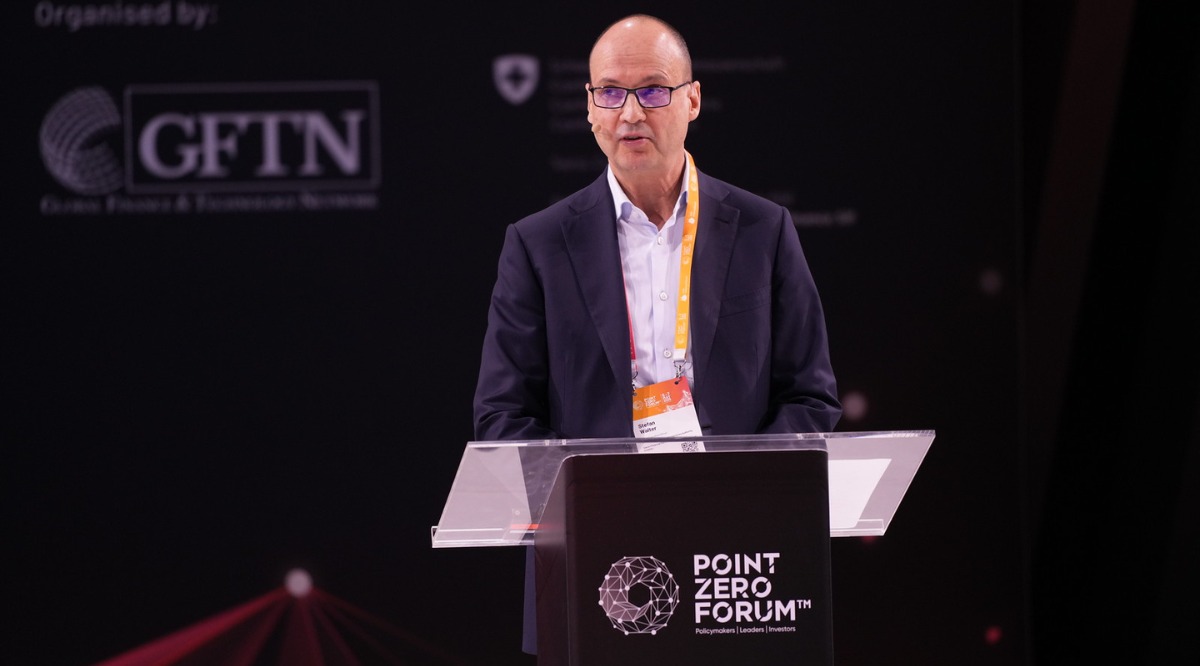
statement released today (Monday), Val Smith, Head of Payments and Digital
Assets at the FCA's authorizations division, addressed criticism that the
regulator's stringent requirements could potentially stifle innovation in the
crypto industry and that the bar for registration is set “too high.”
Crypto Companies Want to
Build on Sand. FCA Wants to Build on “Sturdy Foundations”
Val Smith Head of payments and digital assets at FCA
“Innovations
built quickly on unsafe, unregulated and untrusted foundations become a house
built on sand—likely to collapse,” Smith warned. “Instead, we want
to closely collaborate with partners across government, industry and other jurisdictions
to develop a crypto sector that's built on reliable, sturdy foundations.”
The FCA has
faced scrutiny over the relatively low number of crypto firms it has registered
under the UK's Money Laundering Regulations (MLRs). Some industry observers
have suggested the regulator's standards may be too high, potentially
jeopardizing the UK's position as a global financial leader.
Smith
pushed back against these claims, emphasizing that the FCA never dismisses
applications outright and takes the risk of financial crime seriously.
“Allowing illicit money to flow freely can destroy lives,” she
stated, citing concerns about terrorism, organized crime, sanctions evasion,
and human trafficking.
It is
undeniable, however, that the FCA takes a strict approach to regulating the
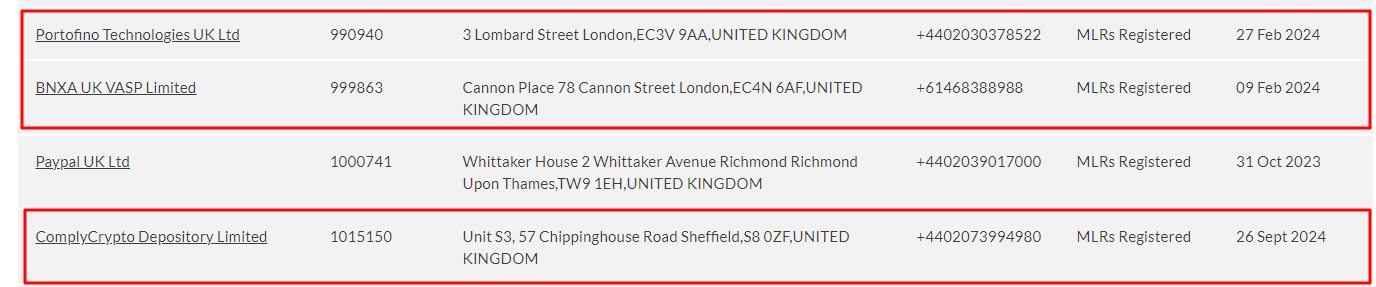
industry. Since 2020, the watchdog has received around 360 registration
applications, approving barely 50 of them. The full list of registered
cryptoasset firms is available on the institution’s website. In 2024, only
three entities were added to the list.
Source: FCA
In
September, Finance Magnates reported that nearly 9 out of 10 crypto
registration applications failed to meet AML standards. On the other hand, the
FCA has been effective in tracking dishonest firms in the sector. According to
an August report, the institution issued 1,000 warnings and removed 48
potentially suspicious applications since October of last year.
FCA “Actively Wants to
Work with You”
The
regulator stressed its commitment to working with crypto firms throughout the
application process, offering pre-application meetings and practical support.
Smith acknowledged that the crypto industry is still developing and that
adapting to new regulatory processes can be challenging.
“We
actively want to work with you,” Smith said, encouraging firms to engage
with the FCA early and utilize the available resources.
While the
number of registered crypto firms remains a topic of interest, Smith insisted
that the FCA's focus must remain on protecting consumers and maintaining the
integrity of the financial system. She argued that upholding high regulatory
standards is crucial for creating a “healthy, globally competitive and
vibrant crypto sector in the UK.”
Another
issue is the number of people employed by the FCA in the cryptocurrency sector.
According to Quant, the UK may face a “crypto catastrophe” due to
staff shortages. In an email sent to Finance Magnates, a spokesperson
for the regulator answered these allegations, stating, “Crypto is an
area of work that spans the entire FCA, and our increased staffing levels
reflect our investment in these priorities.”
The UK's
Financial Conduct Authority (FCA) has defended its “too tough” approach to
registering cryptocurrency firms, arguing that robust standards are essential
for building a sustainable and trustworthy digital asset sector.
In a
statement released today (Monday), Val Smith, Head of Payments and Digital
Assets at the FCA's authorizations division, addressed criticism that the
regulator's stringent requirements could potentially stifle innovation in the
crypto industry and that the bar for registration is set “too high.”
Crypto Companies Want to
Build on Sand. FCA Wants to Build on “Sturdy Foundations”
Val Smith Head of payments and digital assets at FCA
“Innovations
built quickly on unsafe, unregulated and untrusted foundations become a house
built on sand—likely to collapse,” Smith warned. “Instead, we want
to closely collaborate with partners across government, industry and other jurisdictions
to develop a crypto sector that's built on reliable, sturdy foundations.”
The FCA has
faced scrutiny over the relatively low number of crypto firms it has registered
under the UK's Money Laundering Regulations (MLRs). Some industry observers
have suggested the regulator's standards may be too high, potentially
jeopardizing the UK's position as a global financial leader.
Smith
pushed back against these claims, emphasizing that the FCA never dismisses
applications outright and takes the risk of financial crime seriously.
“Allowing illicit money to flow freely can destroy lives,” she
stated, citing concerns about terrorism, organized crime, sanctions evasion,
and human trafficking.
It is
undeniable, however, that the FCA takes a strict approach to regulating the
industry. Since 2020, the watchdog has received around 360 registration
applications, approving barely 50 of them. The full list of registered
cryptoasset firms is available on the institution’s website. In 2024, only
three entities were added to the list.
Source: FCA
In
September, Finance Magnates reported that nearly 9 out of 10 crypto
registration applications failed to meet AML standards. On the other hand, the
FCA has been effective in tracking dishonest firms in the sector. According to
an August report, the institution issued 1,000 warnings and removed 48
potentially suspicious applications since October of last year.
FCA “Actively Wants to
Work with You”
The
regulator stressed its commitment to working with crypto firms throughout the
application process, offering pre-application meetings and practical support.
Smith acknowledged that the crypto industry is still developing and that
adapting to new regulatory processes can be challenging.
“We
actively want to work with you,” Smith said, encouraging firms to engage
with the FCA early and utilize the available resources.
While the
number of registered crypto firms remains a topic of interest, Smith insisted
that the FCA's focus must remain on protecting consumers and maintaining the
integrity of the financial system. She argued that upholding high regulatory
standards is crucial for creating a “healthy, globally competitive and
vibrant crypto sector in the UK.”
Another
issue is the number of people employed by the FCA in the cryptocurrency sector.
According to Quant, the UK may face a “crypto catastrophe” due to
staff shortages. In an email sent to Finance Magnates, a spokesperson
for the regulator answered these allegations, stating, “Crypto is an
area of work that spans the entire FCA, and our increased staffing levels
reflect our investment in these priorities.”
Damian Chmiel is a Senior Analyst & Editor at Finance Magnates with more than 15 years of experience in the CFD and online trading industry. Active as both a trader and journalist since 2010, he focuses on broker coverage, fintech innovation, and regulatory developments across Europe, the Middle East, and Asia.
His work includes interviews with C-level leaders at major brokerages and fintech platforms, as well as co-authoring Finance Magnates’ quarterly industry benchmarking reports. Damian’s reporting is data-driven, market-aware, and grounded in direct industry engagement. His analysis and commentary have also been cited by external media outlets, including Investing.com, Binance, The Asset, Stockhead, and Dispatch.
Education:
MA in Finance and Accounting, Cracow University of Economics
Kraken Steps Up Speed Race with New Equinix Colocation Service for Crypto Traders
FP Markets Winner Spotlight 🏆 | Global Broker of the Year 2025 #Trading #Broker #Innovation #Shorts
FP Markets Winner Spotlight 🏆 | Global Broker of the Year 2025 #Trading #Broker #Innovation #Shorts
FP Markets takes the spotlight as Global Broker of the Year 2025 at the Finance Magnates Awards.
Martin Stoilov, Head of Client Experience, shares that trust, innovation, and people played a key role in the company’s success, supported by a strong foundation of integrity and client-centricity.
Following this milestone, FP Markets continues to focus on growth, technology investment, and its core values of transparency and excellence.
👉 Be part of FM Awards 2026: https://awards.financemagnates.com/#nominate
FP Markets takes the spotlight as Global Broker of the Year 2025 at the Finance Magnates Awards.
Martin Stoilov, Head of Client Experience, shares that trust, innovation, and people played a key role in the company’s success, supported by a strong foundation of integrity and client-centricity.
Following this milestone, FP Markets continues to focus on growth, technology investment, and its core values of transparency and excellence.
👉 Be part of FM Awards 2026: https://awards.financemagnates.com/#nominate
In this video, we review @HolaPrimeMarketsOfficial, a multi-asset forex and CFDs broker offering different account types, trading platforms, and flexible trading conditions.
We cover the broker’s overall offering, including account options, trading environment, platforms like MT4 and MT5, and additional services such as managed accounts and fast withdrawals.
Watch the full video to see if Hola Prime Markets fits your trading needs.
📣 Stay up to date with the latest in finance and trading. Follow Finance Magnates for industry news, insights, and global event coverage.
Connect with us:
🔗 LinkedIn: /financemagnates
👍 Facebook: /financemagnates
📸 Instagram: https://www.instagram.com/financemagnates
🐦 X: https://x.com/financemagnates
🎥 TikTok: https://www.tiktok.com/tag/financemagnates
▶️ YouTube: /@financemagnates_official
#HolaPrime #ForexBroker #CFDTrading #FinanceMagnates #Trading #Forex #BrokerReview
In this video, we review @HolaPrimeMarketsOfficial, a multi-asset forex and CFDs broker offering different account types, trading platforms, and flexible trading conditions.
We cover the broker’s overall offering, including account options, trading environment, platforms like MT4 and MT5, and additional services such as managed accounts and fast withdrawals.
Watch the full video to see if Hola Prime Markets fits your trading needs.
📣 Stay up to date with the latest in finance and trading. Follow Finance Magnates for industry news, insights, and global event coverage.
Connect with us:
🔗 LinkedIn: /financemagnates
👍 Facebook: /financemagnates
📸 Instagram: https://www.instagram.com/financemagnates
🐦 X: https://x.com/financemagnates
🎥 TikTok: https://www.tiktok.com/tag/financemagnates
▶️ YouTube: /@financemagnates_official
#HolaPrime #ForexBroker #CFDTrading #FinanceMagnates #Trading #Forex #BrokerReview
Hola Prime Review: What You Need to Know | Full Breakdown by Finance Magnates
Hola Prime Review: What You Need to Know | Full Breakdown by Finance Magnates
In this video, we review @HolaPrime_Global, a proprietary trading firm offering evaluation programs and performance-based payouts in simulated market environments.
We cover how the challenge model works, including account types, profit splits (up to 95%), trading rules, and what it takes to reach a funded account. You’ll also learn about available platforms like MT4, MT5, cTrader, and more, along with insights into payouts, support, and trading conditions.
Watch the full video to see if Hola Prime fits your trading style.
📣 Stay up to date with the latest in finance and trading. Follow Finance Magnates for industry news, insights, and global event coverage.
Connect with us:
🔗 LinkedIn: /financemagnates
👍 Facebook: /financemagnates
📸 Instagram: https://www.instagram.com/financemagnates
🐦 X: https://x.com/financemagnates
🎥 TikTok: https://www.tiktok.com/tag/financemagnates
▶️ YouTube: /@financemagnates_official
#HolaPrime #PropFirm #Trading #FinanceMagnates #Forex #FuturesTrading #TradingReview #PropFirmReview
In this video, we review @HolaPrime_Global, a proprietary trading firm offering evaluation programs and performance-based payouts in simulated market environments.
We cover how the challenge model works, including account types, profit splits (up to 95%), trading rules, and what it takes to reach a funded account. You’ll also learn about available platforms like MT4, MT5, cTrader, and more, along with insights into payouts, support, and trading conditions.
Watch the full video to see if Hola Prime fits your trading style.
📣 Stay up to date with the latest in finance and trading. Follow Finance Magnates for industry news, insights, and global event coverage.
Connect with us:
🔗 LinkedIn: /financemagnates
👍 Facebook: /financemagnates
📸 Instagram: https://www.instagram.com/financemagnates
🐦 X: https://x.com/financemagnates
🎥 TikTok: https://www.tiktok.com/tag/financemagnates
▶️ YouTube: /@financemagnates_official
#HolaPrime #PropFirm #Trading #FinanceMagnates #Forex #FuturesTrading #TradingReview #PropFirmReview
Axi Winner Spotlight 🏆 | Global Most Innovative Broker 2025 #Innovation #Trading #Fintech #Broker
Axi Winner Spotlight 🏆 | Global Most Innovative Broker 2025 #Innovation #Trading #Fintech #Broker
Axi takes the spotlight at the Finance Magnates Awards, winning Global Most Innovative Broker 2025.
Olivia Xenofontos and Ivanna Openko share how the team will feel: proud, motivated, and ready to keep delivering.
They also describe the night as well-organized, focused, and enjoyable for all.
👉 Be part of FM Awards 2026.
Axi takes the spotlight at the Finance Magnates Awards, winning Global Most Innovative Broker 2025.
Olivia Xenofontos and Ivanna Openko share how the team will feel: proud, motivated, and ready to keep delivering.
They also describe the night as well-organized, focused, and enjoyable for all.
👉 Be part of FM Awards 2026.
Recognition that matters.
Built on transparency.
Driven by the industry.
The Finance Magnates Awards 2026.
Nominations are now open.
🔗 https://awards.financemagnates.com/?utm_source=SM&utm_medium=social&utm_campaign=recognition-matters
Recognition that matters.
Built on transparency.
Driven by the industry.
The Finance Magnates Awards 2026.
Nominations are now open.
🔗 https://awards.financemagnates.com/?utm_source=SM&utm_medium=social&utm_campaign=recognition-matters