Bitcoin and Taxation: An Introductory Guide for Crypto Investors
Monday,13/08/2018|11:07GMTby
Bogdan Kagan
A breakdown of the way Bitcoin and Tax are linked, and how to approach the issues posed by the IRS.
FM
Ever since Bitcoin appeared on the radar of investors, the issue of if and how to tax revenues from Bitcoin investments arose. Although most first-time investors don't give a second thought to taxation, it is a topic that should be approached with the seriousness it deserves.
Which Kind of Trading Account Is the Best Option for Me?
Ultimately, you need to remember that when it comes to taxation, it is your task to understand your responsibilities in tracking and reporting your earnings. However, since Bitcoin and other cryptocurrencies are still a relatively new investment vehicle, finding accurate information on how to treat your crypto investments is somewhat tricky. Familiarize yourself with the kinds of accounts on the market and which ones will ultimately serve your needs best.
Clarify for yourself what your goal with Bitcoin is. Are you looking to invest in Bitcoin for long-term gain? Do you want to actively use Bitcoin to purchase goods and services? Or are you most interested in Bitcoin mining? All of these activities are taxable, and the answers to these questions will guide you in the right direction. Once you know what you want to do with your Bitcoin, you can take the proper steps to avoid trouble with your tax office.
How Do I Report Bitcoin Earnings?
As mentioned before, how you need to report your Bitcoin revenues largely depends on how you earned them.
For example, if you're reporting Bitcoin earnings that you have made from buying and selling cryptocurrency, you will be making prominent usage of schedule D, which is found as an attachment to form 1040. The next step of the process, however, will depend on how long you have had the cryptocurrency, which is why you will need to keep records of when you originally purchased your Bitcoin.
If you purchased and held cryptocurrency for less than a year, but kept it for investment, then you would need to report the cryptocurrency as ordinary income tax as well as state income tax. The same would apply if you received Bitcoin in return for the provision of particular goods or services. However, if you held Bitcoin for over a year, then matters become more complicated as you would need to pay the capital gains tax as well as an additional 3.8 percent if you fall into the top three tax brackets.
If your account is held abroad, you will have to report it to the US treasury through the FinCEN form 114 as well as to the IRS using form 8938. This, however, only applies to US citizens with more than $10,000 worth of assets. Also, this is only necessary if the private keys to your wallets are held directly by the exchange in question.
Reuters
What’s the Best Way to Keep Track of my BTC Earnings?
If you're exclusively using Coinbase for your Bitcoin transactions, then the site does provide you with records of your transactions. For users with a low transaction volume, getting access to these records can, however, prove difficult. Keep a watchful eye on your transaction history which automatically computes your profits and losses as well as giving you a helpful way of monitoring transactions. Keep in mind that exclusively trusting a third-party service with your record keeping can be dangerous. Be sure to make regular backups of your transaction history, or use more than one service to keep track.
If you're on top of all your receipts and ensure that you maintain a record of every single transaction you make, your life will be much more comfortable. The IRS does offer some leeway regarding keeping track of the exact transaction values, but you will need to keep track of the approximate value of each movement. Maintaining spreadsheets and detailed data of your own can go a long way if you conduct numerous transactions via Bitcoin and want to avoid any issues with the IRS.
Do I Have to Pay Taxes on Currencies I’ve Earned as a Result of a BTC Fork (i.e. Bitcoin Cash)?
Even if a currency that you use does fork, like Bitcoin and Bitcoin Cash, you are still liable to pay taxes in this event. The new cryptocurrency created by the fork will be treated in the same manner as the currency from which it originated. In the eyes of the IRS, even "found money," which is what a fork could be perceived as, still needs to be taxed.
Regardless of whether you purchased Bitcoin Cash or not, you would still have to pay taxes on it if you had obtained it via a fork. Given the complexity of cryptocurrency forks, there is, however, still a degree of speculation involved when talking about their tax implications. So be sure to inform yourself of new rules and regulations on the topic before declaring your taxes.
Do I Have to Pay Taxes on Bitcoin That I’ve Mined?
This is an interesting one, given the fact that when you've mined Bitcoin, it would perhaps seem that by adding the Cryptocurrency into the ecosystem you may somehow bypass taxation. However, concerning IRS regulations, you must be aware that this is still a taxable process. Mining for Bitcoin and being unsuccessful with it, however, does not mean you have to pay taxes on the process. Instead, the implications for taxation stem from whether you have successfully been able to obtain money from the given transaction. Thus, the mining process would either be seen as a hobby or a form of self-employment.
To be aware of your status, the IRS does offer some helpful pointers to make you aware of the legal implications of what you're doing. The IRS will look at the experience that you have with mining as well as how often you mine. The bigger your earnings, the more likely you are to be liable to pay tax. Remember that the value of the currency that you're mining will need to be properly reflected on your tax returns and that underselling the value of your coins in any way would constitute tax fraud.
In reality, regardless of whether you're income from mining is a hobby or a business, you're still liable for taxation. In the case of the former, you're able to label it as miscellaneous expenses while in the latter case you would need to properly indicate this on the form. Taxation on earnings from a hobby is significantly lower than the 15.3 percent you would need to pay if you were a commercial miner, but at the same time, you can also deduct smaller sums.
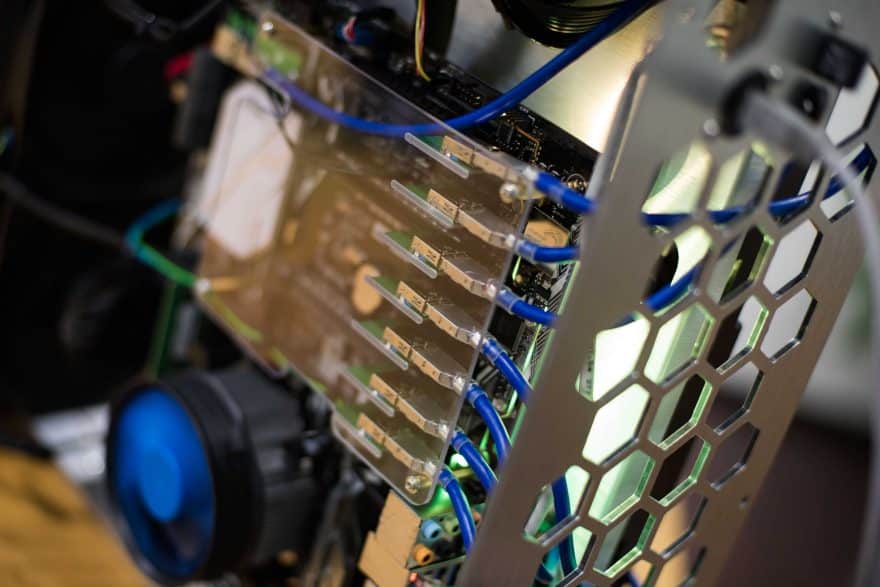
The Comino crypto miner/heater
“I Bought a Product or Service Using Bitcoin. Are There Tax Implications?”
The short answer is yes. Since cryptocurrency is an asset, the IRS views your transaction like any other trade of an asset for another asset. If you hypothetically traded Bitcoin for a computer, the IRS would see this the same as you selling Bitcoin for cash for which you then bought a computer. This take on cryptocurrencies is quite similar to the way that the IRS deals with the stock market.
Trading Bitcoin for goods is thus the same as trading it for cash, and there is virtually no distinction as you would be liable to be taxed the same amount. The only way, in which this is different is if you were to donate Bitcoin to charity at which point the IRS does not require you to pay capital gains tax on the given transaction. This means that if you were planning on donating a significant amount of money at some point, doing so in Bitcoin can be an effective way of circumventing taxation.
Do I Have to Pay Taxes If I Never Converted My Earnings to Fiat?
In this scenario, you do not have to pay tax. The US government, in its taxation guidelines, chooses to view Bitcoin as a property. Thus, if you purchase Bitcoin and sit on it, you're not liable to taxation. The moment you sell your Bitcoin for fiat currency (or any other coin), however, you have withdrawn your earnings from your crypto investment and are liable for taxation. However, this issue is not as simple as it sounds and does require some explanation.
If you purchase Bitcoin and save it for a prolonged period, seeing it rise in value, you become liable to the capital gains tax which is applied to long-term capital. As such, it is vital to keep track of the value of the Bitcoin you had when you originally bought it, and monitor its rise in value. The process is even more complicated if you conduct numerous transactions using cryptocurrency and continue to trade back and forth. As mentioned before, keeping good records can be the difference between whether you will have issues with the IRS or not.
Be aware that trading your Bitcoin for another coin is seen as trading an asset for another. It's helpful to think of this in the same context as you would if you bought stock. Trading Facebook shares for Google shares is liable to taxation, and thus trading Bitcoin for Ether would have the same effect.
In the short term, however, if you never convert your earnings into fiat, taxation is not an issue. It is well worth remembering that legislation concerning Bitcoin is at best a little vague, and taxation is one of the areas where this is most glaringly obvious.
From a legal perspective, you need to be most diligent about keeping good records, as this is the best way to avoid potentially tricky situations. Also be aware of any changes in legislation and keep up to date with the latest crypto news. After all, this is an area which is likely to see future changes in laws and legislation so it would be wise to stay on top of this.
Ever since Bitcoin appeared on the radar of investors, the issue of if and how to tax revenues from Bitcoin investments arose. Although most first-time investors don't give a second thought to taxation, it is a topic that should be approached with the seriousness it deserves.
Which Kind of Trading Account Is the Best Option for Me?
Ultimately, you need to remember that when it comes to taxation, it is your task to understand your responsibilities in tracking and reporting your earnings. However, since Bitcoin and other cryptocurrencies are still a relatively new investment vehicle, finding accurate information on how to treat your crypto investments is somewhat tricky. Familiarize yourself with the kinds of accounts on the market and which ones will ultimately serve your needs best.
Clarify for yourself what your goal with Bitcoin is. Are you looking to invest in Bitcoin for long-term gain? Do you want to actively use Bitcoin to purchase goods and services? Or are you most interested in Bitcoin mining? All of these activities are taxable, and the answers to these questions will guide you in the right direction. Once you know what you want to do with your Bitcoin, you can take the proper steps to avoid trouble with your tax office.
How Do I Report Bitcoin Earnings?
As mentioned before, how you need to report your Bitcoin revenues largely depends on how you earned them.
For example, if you're reporting Bitcoin earnings that you have made from buying and selling cryptocurrency, you will be making prominent usage of schedule D, which is found as an attachment to form 1040. The next step of the process, however, will depend on how long you have had the cryptocurrency, which is why you will need to keep records of when you originally purchased your Bitcoin.
If you purchased and held cryptocurrency for less than a year, but kept it for investment, then you would need to report the cryptocurrency as ordinary income tax as well as state income tax. The same would apply if you received Bitcoin in return for the provision of particular goods or services. However, if you held Bitcoin for over a year, then matters become more complicated as you would need to pay the capital gains tax as well as an additional 3.8 percent if you fall into the top three tax brackets.
If your account is held abroad, you will have to report it to the US treasury through the FinCEN form 114 as well as to the IRS using form 8938. This, however, only applies to US citizens with more than $10,000 worth of assets. Also, this is only necessary if the private keys to your wallets are held directly by the exchange in question.
Reuters
What’s the Best Way to Keep Track of my BTC Earnings?
If you're exclusively using Coinbase for your Bitcoin transactions, then the site does provide you with records of your transactions. For users with a low transaction volume, getting access to these records can, however, prove difficult. Keep a watchful eye on your transaction history which automatically computes your profits and losses as well as giving you a helpful way of monitoring transactions. Keep in mind that exclusively trusting a third-party service with your record keeping can be dangerous. Be sure to make regular backups of your transaction history, or use more than one service to keep track.
If you're on top of all your receipts and ensure that you maintain a record of every single transaction you make, your life will be much more comfortable. The IRS does offer some leeway regarding keeping track of the exact transaction values, but you will need to keep track of the approximate value of each movement. Maintaining spreadsheets and detailed data of your own can go a long way if you conduct numerous transactions via Bitcoin and want to avoid any issues with the IRS.
Do I Have to Pay Taxes on Currencies I’ve Earned as a Result of a BTC Fork (i.e. Bitcoin Cash)?
Even if a currency that you use does fork, like Bitcoin and Bitcoin Cash, you are still liable to pay taxes in this event. The new cryptocurrency created by the fork will be treated in the same manner as the currency from which it originated. In the eyes of the IRS, even "found money," which is what a fork could be perceived as, still needs to be taxed.
Regardless of whether you purchased Bitcoin Cash or not, you would still have to pay taxes on it if you had obtained it via a fork. Given the complexity of cryptocurrency forks, there is, however, still a degree of speculation involved when talking about their tax implications. So be sure to inform yourself of new rules and regulations on the topic before declaring your taxes.
Do I Have to Pay Taxes on Bitcoin That I’ve Mined?
This is an interesting one, given the fact that when you've mined Bitcoin, it would perhaps seem that by adding the Cryptocurrency into the ecosystem you may somehow bypass taxation. However, concerning IRS regulations, you must be aware that this is still a taxable process. Mining for Bitcoin and being unsuccessful with it, however, does not mean you have to pay taxes on the process. Instead, the implications for taxation stem from whether you have successfully been able to obtain money from the given transaction. Thus, the mining process would either be seen as a hobby or a form of self-employment.
To be aware of your status, the IRS does offer some helpful pointers to make you aware of the legal implications of what you're doing. The IRS will look at the experience that you have with mining as well as how often you mine. The bigger your earnings, the more likely you are to be liable to pay tax. Remember that the value of the currency that you're mining will need to be properly reflected on your tax returns and that underselling the value of your coins in any way would constitute tax fraud.
In reality, regardless of whether you're income from mining is a hobby or a business, you're still liable for taxation. In the case of the former, you're able to label it as miscellaneous expenses while in the latter case you would need to properly indicate this on the form. Taxation on earnings from a hobby is significantly lower than the 15.3 percent you would need to pay if you were a commercial miner, but at the same time, you can also deduct smaller sums.
The Comino crypto miner/heater
“I Bought a Product or Service Using Bitcoin. Are There Tax Implications?”
The short answer is yes. Since cryptocurrency is an asset, the IRS views your transaction like any other trade of an asset for another asset. If you hypothetically traded Bitcoin for a computer, the IRS would see this the same as you selling Bitcoin for cash for which you then bought a computer. This take on cryptocurrencies is quite similar to the way that the IRS deals with the stock market.
Trading Bitcoin for goods is thus the same as trading it for cash, and there is virtually no distinction as you would be liable to be taxed the same amount. The only way, in which this is different is if you were to donate Bitcoin to charity at which point the IRS does not require you to pay capital gains tax on the given transaction. This means that if you were planning on donating a significant amount of money at some point, doing so in Bitcoin can be an effective way of circumventing taxation.
Do I Have to Pay Taxes If I Never Converted My Earnings to Fiat?
In this scenario, you do not have to pay tax. The US government, in its taxation guidelines, chooses to view Bitcoin as a property. Thus, if you purchase Bitcoin and sit on it, you're not liable to taxation. The moment you sell your Bitcoin for fiat currency (or any other coin), however, you have withdrawn your earnings from your crypto investment and are liable for taxation. However, this issue is not as simple as it sounds and does require some explanation.
If you purchase Bitcoin and save it for a prolonged period, seeing it rise in value, you become liable to the capital gains tax which is applied to long-term capital. As such, it is vital to keep track of the value of the Bitcoin you had when you originally bought it, and monitor its rise in value. The process is even more complicated if you conduct numerous transactions using cryptocurrency and continue to trade back and forth. As mentioned before, keeping good records can be the difference between whether you will have issues with the IRS or not.
Be aware that trading your Bitcoin for another coin is seen as trading an asset for another. It's helpful to think of this in the same context as you would if you bought stock. Trading Facebook shares for Google shares is liable to taxation, and thus trading Bitcoin for Ether would have the same effect.
In the short term, however, if you never convert your earnings into fiat, taxation is not an issue. It is well worth remembering that legislation concerning Bitcoin is at best a little vague, and taxation is one of the areas where this is most glaringly obvious.
From a legal perspective, you need to be most diligent about keeping good records, as this is the best way to avoid potentially tricky situations. Also be aware of any changes in legislation and keep up to date with the latest crypto news. After all, this is an area which is likely to see future changes in laws and legislation so it would be wise to stay on top of this.
Binance Launches Retail AI Assistant, Repackages Existing Trading Tools
Featured Videos
AvaTrade to Acquire Most of FXCM; NAGA Raises $8M
AvaTrade to Acquire Most of FXCM; NAGA Raises $8M
AvaTrade to Acquire Most of FXCM; NAGA Raises $8M
AvaTrade to Acquire Most of FXCM; NAGA Raises $8M
Today’s financial news recap covers AvaTrade agrees to acquire most of FXCM, NAGA secures eight million dollars in new financing, and Wise seeks a tax settlement in the UK.
Finance Magnates Daily Recap brings you the latest news from forex and CFD brokers, fintech, payments, cryptocurrency, digital assets, trading platforms, financial regulation and global markets.
Get the key company news, executive moves, deals, regulatory updates and market developments of the day, in just a few minutes. New episodes published every weekday.
Read more: https://www.financemagnates.com
#FinanceMagnates #ForexNews #FintechNews
Today’s financial news recap covers AvaTrade agrees to acquire most of FXCM, NAGA secures eight million dollars in new financing, and Wise seeks a tax settlement in the UK.
Finance Magnates Daily Recap brings you the latest news from forex and CFD brokers, fintech, payments, cryptocurrency, digital assets, trading platforms, financial regulation and global markets.
Get the key company news, executive moves, deals, regulatory updates and market developments of the day, in just a few minutes. New episodes published every weekday.
Read more: https://www.financemagnates.com
#FinanceMagnates #ForexNews #FintechNews
Today’s financial news recap covers AvaTrade agrees to acquire most of FXCM, NAGA secures eight million dollars in new financing, and Wise seeks a tax settlement in the UK.
Finance Magnates Daily Recap brings you the latest news from forex and CFD brokers, fintech, payments, cryptocurrency, digital assets, trading platforms, financial regulation and global markets.
Get the key company news, executive moves, deals, regulatory updates and market developments of the day, in just a few minutes. New episodes published every weekday.
Read more: https://www.financemagnates.com
#FinanceMagnates #ForexNews #FintechNews
Today’s financial news recap covers AvaTrade agrees to acquire most of FXCM, NAGA secures eight million dollars in new financing, and Wise seeks a tax settlement in the UK.
Finance Magnates Daily Recap brings you the latest news from forex and CFD brokers, fintech, payments, cryptocurrency, digital assets, trading platforms, financial regulation and global markets.
Get the key company news, executive moves, deals, regulatory updates and market developments of the day, in just a few minutes. New episodes published every weekday.
Read more: https://www.financemagnates.com
#FinanceMagnates #ForexNews #FintechNews
XTB Adds Overnight US Stock Trading; Nasdaq Ventures Invests in One Trading
XTB Adds Overnight US Stock Trading; Nasdaq Ventures Invests in One Trading
XTB Adds Overnight US Stock Trading; Nasdaq Ventures Invests in One Trading
XTB Adds Overnight US Stock Trading; Nasdaq Ventures Invests in One Trading
XTB Adds Overnight US Stock Trading; Nasdaq Ventures Invests in One Trading
XTB Adds Overnight US Stock Trading; Nasdaq Ventures Invests in One Trading
Today’s financial news recap covers XTB expands overnight US stock trading, Fortrade reports higher revenue, Nasdaq backs One Trading, and Vest Labs raises 13 million dollars.
Finance Magnates Daily Recap brings you the latest news from forex and CFD brokers, fintech, payments, cryptocurrency, digital assets, trading platforms, financial regulation and global markets.
Get the key company news, executive moves, deals, regulatory updates and market developments of the day, in just a few minutes. New episodes published every weekday.
Read more: https://www.financemagnates.com
#FinanceMagnates #ForexNews #FintechNews
Today’s financial news recap covers XTB expands overnight US stock trading, Fortrade reports higher revenue, Nasdaq backs One Trading, and Vest Labs raises 13 million dollars.
Finance Magnates Daily Recap brings you the latest news from forex and CFD brokers, fintech, payments, cryptocurrency, digital assets, trading platforms, financial regulation and global markets.
Get the key company news, executive moves, deals, regulatory updates and market developments of the day, in just a few minutes. New episodes published every weekday.
Read more: https://www.financemagnates.com
#FinanceMagnates #ForexNews #FintechNews
Today’s financial news recap covers XTB expands overnight US stock trading, Fortrade reports higher revenue, Nasdaq backs One Trading, and Vest Labs raises 13 million dollars.
Finance Magnates Daily Recap brings you the latest news from forex and CFD brokers, fintech, payments, cryptocurrency, digital assets, trading platforms, financial regulation and global markets.
Get the key company news, executive moves, deals, regulatory updates and market developments of the day, in just a few minutes. New episodes published every weekday.
Read more: https://www.financemagnates.com
#FinanceMagnates #ForexNews #FintechNews
Today’s financial news recap covers XTB expands overnight US stock trading, Fortrade reports higher revenue, Nasdaq backs One Trading, and Vest Labs raises 13 million dollars.
Finance Magnates Daily Recap brings you the latest news from forex and CFD brokers, fintech, payments, cryptocurrency, digital assets, trading platforms, financial regulation and global markets.
Get the key company news, executive moves, deals, regulatory updates and market developments of the day, in just a few minutes. New episodes published every weekday.
Read more: https://www.financemagnates.com
#FinanceMagnates #ForexNews #FintechNews
Today’s financial news recap covers XTB expands overnight US stock trading, Fortrade reports higher revenue, Nasdaq backs One Trading, and Vest Labs raises 13 million dollars.
Finance Magnates Daily Recap brings you the latest news from forex and CFD brokers, fintech, payments, cryptocurrency, digital assets, trading platforms, financial regulation and global markets.
Get the key company news, executive moves, deals, regulatory updates and market developments of the day, in just a few minutes. New episodes published every weekday.
Read more: https://www.financemagnates.com
#FinanceMagnates #ForexNews #FintechNews
Today’s financial news recap covers XTB expands overnight US stock trading, Fortrade reports higher revenue, Nasdaq backs One Trading, and Vest Labs raises 13 million dollars.
Finance Magnates Daily Recap brings you the latest news from forex and CFD brokers, fintech, payments, cryptocurrency, digital assets, trading platforms, financial regulation and global markets.
Get the key company news, executive moves, deals, regulatory updates and market developments of the day, in just a few minutes. New episodes published every weekday.
Read more: https://www.financemagnates.com
#FinanceMagnates #ForexNews #FintechNews
CMC Founder Downplays Volatility Hit; Devexperts Names CEO
CMC Founder Downplays Volatility Hit; Devexperts Names CEO
CMC Founder Downplays Volatility Hit; Devexperts Names CEO
CMC Founder Downplays Volatility Hit; Devexperts Names CEO
CMC Founder Downplays Volatility Hit; Devexperts Names CEO
CMC Founder Downplays Volatility Hit; Devexperts Names CEO
Today’s financial news recap covers low volatility pressures brokers, Devexperts names a new CEO, Saxo cuts onboarding time, and OKX reaches a 25 billion dollar valuation.
Finance Magnates Daily Recap brings you the latest news from forex and CFD brokers, fintech, payments, cryptocurrency, digital assets, trading platforms, financial regulation and global markets.
Get the key company news, executive moves, deals, regulatory updates and market developments of the day, in just a few minutes. New episodes published every weekday.
Read more: https://www.financemagnates.com
#FinanceMagnates #ForexNews #FintechNews
Today’s financial news recap covers low volatility pressures brokers, Devexperts names a new CEO, Saxo cuts onboarding time, and OKX reaches a 25 billion dollar valuation.
Finance Magnates Daily Recap brings you the latest news from forex and CFD brokers, fintech, payments, cryptocurrency, digital assets, trading platforms, financial regulation and global markets.
Get the key company news, executive moves, deals, regulatory updates and market developments of the day, in just a few minutes. New episodes published every weekday.
Read more: https://www.financemagnates.com
#FinanceMagnates #ForexNews #FintechNews
Today’s financial news recap covers low volatility pressures brokers, Devexperts names a new CEO, Saxo cuts onboarding time, and OKX reaches a 25 billion dollar valuation.
Finance Magnates Daily Recap brings you the latest news from forex and CFD brokers, fintech, payments, cryptocurrency, digital assets, trading platforms, financial regulation and global markets.
Get the key company news, executive moves, deals, regulatory updates and market developments of the day, in just a few minutes. New episodes published every weekday.
Read more: https://www.financemagnates.com
#FinanceMagnates #ForexNews #FintechNews
Today’s financial news recap covers low volatility pressures brokers, Devexperts names a new CEO, Saxo cuts onboarding time, and OKX reaches a 25 billion dollar valuation.
Finance Magnates Daily Recap brings you the latest news from forex and CFD brokers, fintech, payments, cryptocurrency, digital assets, trading platforms, financial regulation and global markets.
Get the key company news, executive moves, deals, regulatory updates and market developments of the day, in just a few minutes. New episodes published every weekday.
Read more: https://www.financemagnates.com
#FinanceMagnates #ForexNews #FintechNews
Today’s financial news recap covers low volatility pressures brokers, Devexperts names a new CEO, Saxo cuts onboarding time, and OKX reaches a 25 billion dollar valuation.
Finance Magnates Daily Recap brings you the latest news from forex and CFD brokers, fintech, payments, cryptocurrency, digital assets, trading platforms, financial regulation and global markets.
Get the key company news, executive moves, deals, regulatory updates and market developments of the day, in just a few minutes. New episodes published every weekday.
Read more: https://www.financemagnates.com
#FinanceMagnates #ForexNews #FintechNews
Today’s financial news recap covers low volatility pressures brokers, Devexperts names a new CEO, Saxo cuts onboarding time, and OKX reaches a 25 billion dollar valuation.
Finance Magnates Daily Recap brings you the latest news from forex and CFD brokers, fintech, payments, cryptocurrency, digital assets, trading platforms, financial regulation and global markets.
Get the key company news, executive moves, deals, regulatory updates and market developments of the day, in just a few minutes. New episodes published every weekday.
Read more: https://www.financemagnates.com
#FinanceMagnates #ForexNews #FintechNews
Today’s financial news recap covers Trade Nation buys FXCM's UK client book, Trading 212 reports higher revenue, the CFTC's move to allow perpetual index futures.
Finance Magnates Daily Recap brings you the latest news from forex and CFD brokers, fintech, payments, cryptocurrency, digital assets, trading platforms, financial regulation and global markets.
Get the key company news, executive moves, deals, regulatory updates and market developments of the day, in just a few minutes. New episodes published every weekday.
Read more: https://www.financemagnates.com
#FinanceMagnates #ForexNews #FintechNews
Today’s financial news recap covers Trade Nation buys FXCM's UK client book, Trading 212 reports higher revenue, the CFTC's move to allow perpetual index futures.
Finance Magnates Daily Recap brings you the latest news from forex and CFD brokers, fintech, payments, cryptocurrency, digital assets, trading platforms, financial regulation and global markets.
Get the key company news, executive moves, deals, regulatory updates and market developments of the day, in just a few minutes. New episodes published every weekday.
Read more: https://www.financemagnates.com
#FinanceMagnates #ForexNews #FintechNews
Today’s financial news recap covers Trade Nation buys FXCM's UK client book, Trading 212 reports higher revenue, the CFTC's move to allow perpetual index futures.
Finance Magnates Daily Recap brings you the latest news from forex and CFD brokers, fintech, payments, cryptocurrency, digital assets, trading platforms, financial regulation and global markets.
Get the key company news, executive moves, deals, regulatory updates and market developments of the day, in just a few minutes. New episodes published every weekday.
Read more: https://www.financemagnates.com
#FinanceMagnates #ForexNews #FintechNews
Today’s financial news recap covers Trade Nation buys FXCM's UK client book, Trading 212 reports higher revenue, the CFTC's move to allow perpetual index futures.
Finance Magnates Daily Recap brings you the latest news from forex and CFD brokers, fintech, payments, cryptocurrency, digital assets, trading platforms, financial regulation and global markets.
Get the key company news, executive moves, deals, regulatory updates and market developments of the day, in just a few minutes. New episodes published every weekday.
Read more: https://www.financemagnates.com
#FinanceMagnates #ForexNews #FintechNews
Today’s financial news recap covers Trade Nation buys FXCM's UK client book, Trading 212 reports higher revenue, the CFTC's move to allow perpetual index futures.
Finance Magnates Daily Recap brings you the latest news from forex and CFD brokers, fintech, payments, cryptocurrency, digital assets, trading platforms, financial regulation and global markets.
Get the key company news, executive moves, deals, regulatory updates and market developments of the day, in just a few minutes. New episodes published every weekday.
Read more: https://www.financemagnates.com
#FinanceMagnates #ForexNews #FintechNews
Today’s financial news recap covers Trade Nation buys FXCM's UK client book, Trading 212 reports higher revenue, the CFTC's move to allow perpetual index futures.
Finance Magnates Daily Recap brings you the latest news from forex and CFD brokers, fintech, payments, cryptocurrency, digital assets, trading platforms, financial regulation and global markets.
Get the key company news, executive moves, deals, regulatory updates and market developments of the day, in just a few minutes. New episodes published every weekday.
Read more: https://www.financemagnates.com
#FinanceMagnates #ForexNews #FintechNews
Your career isn’t a linear path.
Your career isn’t a linear path.
Your career isn’t a linear path.
Your career isn’t a linear path.
Your career isn’t a linear path.
Your career isn’t a linear path.
Roles change. Career goals change. Sometimes you want a completely new challenge.
But the skills and knowledge you build along the way can stay with you and give you something to build on.
For Jeff Patterson, that continued growth is key to long-term career development.
You bring the skills. FM Academy helps you build the knowledge.
#FMAcademy #FinanceMagnates #FinanceCareers #ProfessionalDevelopment #Fintech
Roles change. Career goals change. Sometimes you want a completely new challenge.
But the skills and knowledge you build along the way can stay with you and give you something to build on.
For Jeff Patterson, that continued growth is key to long-term career development.
You bring the skills. FM Academy helps you build the knowledge.
#FMAcademy #FinanceMagnates #FinanceCareers #ProfessionalDevelopment #Fintech
Roles change. Career goals change. Sometimes you want a completely new challenge.
But the skills and knowledge you build along the way can stay with you and give you something to build on.
For Jeff Patterson, that continued growth is key to long-term career development.
You bring the skills. FM Academy helps you build the knowledge.
#FMAcademy #FinanceMagnates #FinanceCareers #ProfessionalDevelopment #Fintech
Roles change. Career goals change. Sometimes you want a completely new challenge.
But the skills and knowledge you build along the way can stay with you and give you something to build on.
For Jeff Patterson, that continued growth is key to long-term career development.
You bring the skills. FM Academy helps you build the knowledge.
#FMAcademy #FinanceMagnates #FinanceCareers #ProfessionalDevelopment #Fintech
Roles change. Career goals change. Sometimes you want a completely new challenge.
But the skills and knowledge you build along the way can stay with you and give you something to build on.
For Jeff Patterson, that continued growth is key to long-term career development.
You bring the skills. FM Academy helps you build the knowledge.
#FMAcademy #FinanceMagnates #FinanceCareers #ProfessionalDevelopment #Fintech
Roles change. Career goals change. Sometimes you want a completely new challenge.
But the skills and knowledge you build along the way can stay with you and give you something to build on.
For Jeff Patterson, that continued growth is key to long-term career development.
You bring the skills. FM Academy helps you build the knowledge.
#FMAcademy #FinanceMagnates #FinanceCareers #ProfessionalDevelopment #Fintech