
In effect, it is a string of characters that can be used in the encryption or decryption of a given algorithm. These keys have been a key part of crypto transactions since 2008, although wallets that have been developed more recently have been built with methods that allow users to operate them without having to understand the complexity of this software.

Sample private key.
Guard Them With Your Life!
In essence, the ownership of the private key of a wallet means that you are the owner of that wallet. In other words, anyone who has access to a wallet's private keys can use it to send a transaction. Any entity who possesses a private key can create a valid transaction.
Many opportunities are available for those who want to steal private keys. The most common tend to be storage media and communications channels. Because of this, one must be very cautious whenever storing or transmitting private keys.
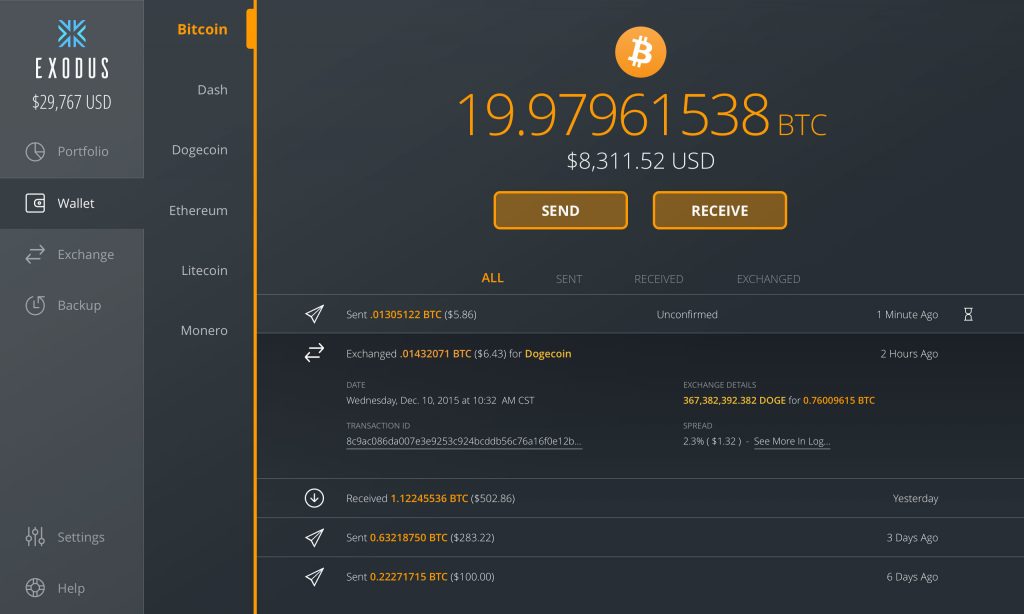
Software wallets normally take care of private keys in a “wallet file” that can be kept anywhere data is stored. By default, a computer will store this file in a standard, well-known directory when the wallet software is installed, making it a primary target for malware that targets crypto.
To combat this threat, software wallets provide users with the opportunity to encrypt the wallet file. Any hacker attempting to gain access to the wallet file would then need to decrypt it. The complexity of doing this varies on the quality of the encryption and strength of the password being utilized. Most wallet files can be encrypted on software wallets via the simple addition of a password.
Private Keys are Used to Sign and Send Crypto Transactions
To prevent forgery, the Bitcoin network ensures that each transaction has a "digital signature". This signature, like a private key, is just a number selected from a very large range. Wallet software produces a signature by mathematically putting forward a transaction together with the appropriate private key.
This system is functional because anyone with a transaction and its signature can be sure of the authenticity of a message. However, a transaction signature is almost impossible to fake. The possible way to create a valid signature for a given transaction is to utilize the appropriate private key.
As opposed to a signature you would write in real life, a transaction signature changes if the transaction changes even a little bit. The way the signature will change is impossible to predict, making sure that only a person in possession of a private key can provide the correct signature.
Private Keys Are Used to Make Public Addresses
Public key cryptography is often utilized to secure electronic communication over an environment with an open network, an example being the Internet, without having to rely on a hidden channel. They make messages unreadable, working with private keys to ensure security.
A public key comes from encrypting a private key with a set of mathematical equations. They work together in a sort of mathematical trapdoor, something you can function that’s easy to perform in one direction, but cannot in the other. This uni-directional trapdoor is at the core of Bitcoin’s security model.
No network is required at any point in the creation of a private key or the address. Every computer on the Bitcoin network is aware of the complex mathematical relationship between public and private keys. This enables every member of the network to choose private keys and sign transactions in separation to the Bitcoin network. The huge private keyspace enables that any properly-selected key will be unique.
In effect, it is a string of characters that can be used in the encryption or decryption of a given algorithm. These keys have been a key part of crypto transactions since 2008, although wallets that have been developed more recently have been built with methods that allow users to operate them without having to understand the complexity of this software.
Sample private key.
Guard Them With Your Life!
In essence, the ownership of the private key of a wallet means that you are the owner of that wallet. In other words, anyone who has access to a wallet's private keys can use it to send a transaction. Any entity who possesses a private key can create a valid transaction.
Many opportunities are available for those who want to steal private keys. The most common tend to be storage media and communications channels. Because of this, one must be very cautious whenever storing or transmitting private keys.
Software wallets normally take care of private keys in a “wallet file” that can be kept anywhere data is stored. By default, a computer will store this file in a standard, well-known directory when the wallet software is installed, making it a primary target for malware that targets crypto.
To combat this threat, software wallets provide users with the opportunity to encrypt the wallet file. Any hacker attempting to gain access to the wallet file would then need to decrypt it. The complexity of doing this varies on the quality of the encryption and strength of the password being utilized. Most wallet files can be encrypted on software wallets via the simple addition of a password.
Private Keys are Used to Sign and Send Crypto Transactions
To prevent forgery, the Bitcoin network ensures that each transaction has a "digital signature". This signature, like a private key, is just a number selected from a very large range. Wallet software produces a signature by mathematically putting forward a transaction together with the appropriate private key.
This system is functional because anyone with a transaction and its signature can be sure of the authenticity of a message. However, a transaction signature is almost impossible to fake. The possible way to create a valid signature for a given transaction is to utilize the appropriate private key.
As opposed to a signature you would write in real life, a transaction signature changes if the transaction changes even a little bit. The way the signature will change is impossible to predict, making sure that only a person in possession of a private key can provide the correct signature.
Private Keys Are Used to Make Public Addresses
Public key cryptography is often utilized to secure electronic communication over an environment with an open network, an example being the Internet, without having to rely on a hidden channel. They make messages unreadable, working with private keys to ensure security.
A public key comes from encrypting a private key with a set of mathematical equations. They work together in a sort of mathematical trapdoor, something you can function that’s easy to perform in one direction, but cannot in the other. This uni-directional trapdoor is at the core of Bitcoin’s security model.
No network is required at any point in the creation of a private key or the address. Every computer on the Bitcoin network is aware of the complex mathematical relationship between public and private keys. This enables every member of the network to choose private keys and sign transactions in separation to the Bitcoin network. The huge private keyspace enables that any properly-selected key will be unique.
iForex posts its first annual results as a listed broker. Also ahead: CFI Financial secures a Brazil license, and prediction markets have a big week, with new ETF launches and fresh Polymarket loss data. It's Thursday, the thirtieth of April 2026. You're listening to the Finance Magnates Daily Brief.
FM Daily Brief - 29 April 2026
XTB and Robinhood both post first-quarter earnings. But the numbers point in very different directions. Also ahead: Capital.com pushes into three new markets and signals a move into payments.
It's Wednesday, the 29th of April 2026. You're listening to the Finance Magnates Daily Brief.
XTB and Robinhood both post first-quarter earnings. But the numbers point in very different directions. Also ahead: Capital.com pushes into three new markets and signals a move into payments.
It's Wednesday, the 29th of April 2026. You're listening to the Finance Magnates Daily Brief.
XTB and Robinhood both post first-quarter earnings. But the numbers point in very different directions. Also ahead: Capital.com pushes into three new markets and signals a move into payments.
It's Wednesday, the 29th of April 2026. You're listening to the Finance Magnates Daily Brief.
XTB and Robinhood both post first-quarter earnings. But the numbers point in very different directions. Also ahead: Capital.com pushes into three new markets and signals a move into payments.
It's Wednesday, the 29th of April 2026. You're listening to the Finance Magnates Daily Brief.
XTB and Robinhood both post first-quarter earnings. But the numbers point in very different directions. Also ahead: Capital.com pushes into three new markets and signals a move into payments.
It's Wednesday, the 29th of April 2026. You're listening to the Finance Magnates Daily Brief.
XTB and Robinhood both post first-quarter earnings. But the numbers point in very different directions. Also ahead: Capital.com pushes into three new markets and signals a move into payments.
It's Wednesday, the 29th of April 2026. You're listening to the Finance Magnates Daily Brief.
FM Daily Brief - 28 April 2026
Startrader posts three-point-one trillion dollars in first-quarter volume — up three hundred and forty percent from a year ago. Also ahead: Fintokei claims sub-second trader payouts, and eToro opens its premium subscription tier to all investors.
FM Daily Brief - 27 April 2026
Finance Magnates spoke with IG Group's MENA CEO. Also ahead: EC Markets posts a record five-point-one-three trillion dollar first quarter. Plus Hola Prime brings in Deloitte to audit prop firm payouts.