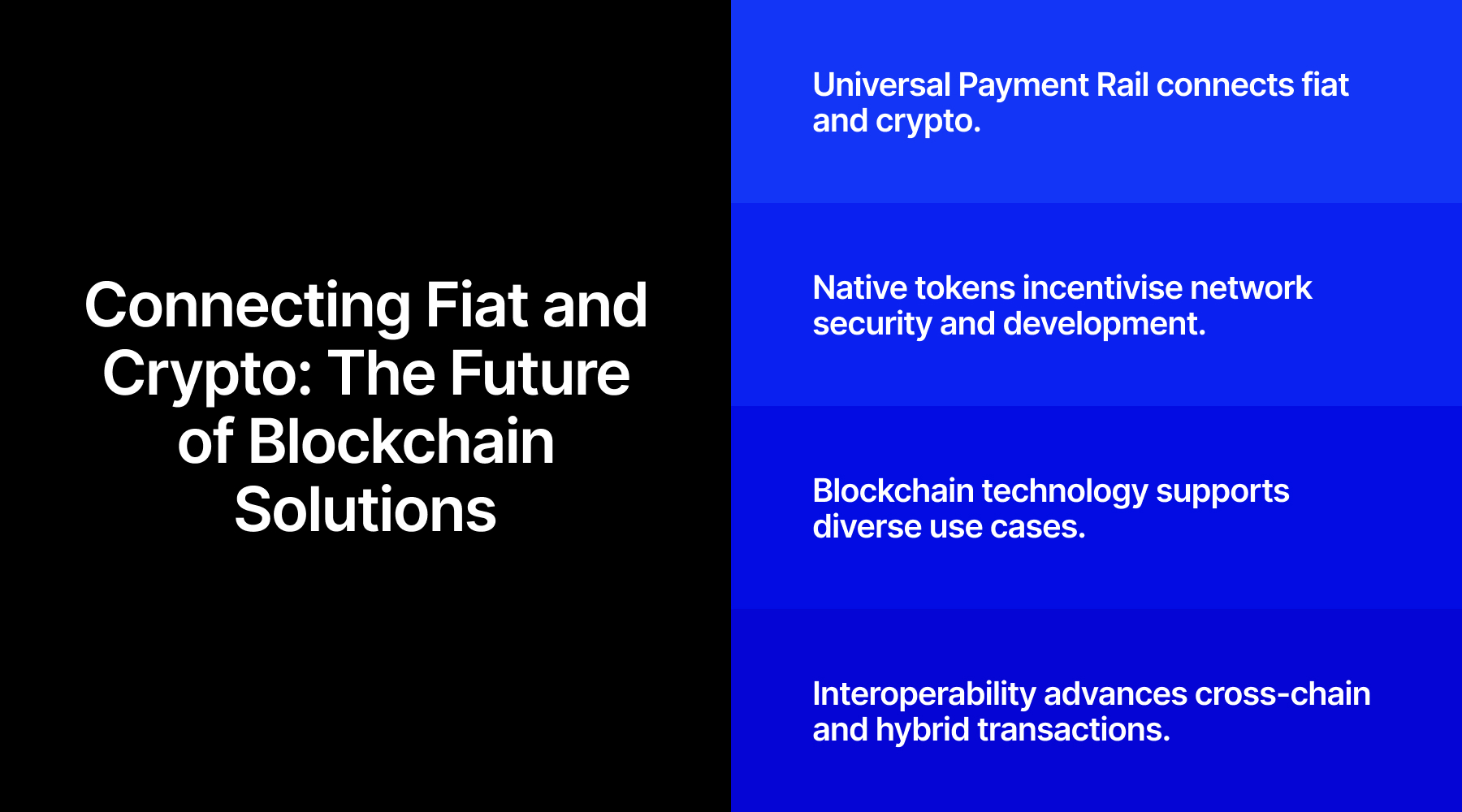
With DeFi’s TVL surpassing $125 billion, the UPR addresses liquidity fragmentation between blockchains.
Kima’s protocol supports applications such as cross-border transfers and Web3 gaming, improving blockchain interoperability.
Bitcoin’s recent surge past the $100,000 mark is no small
feat, considering 18 months ago many pundits thought the industry was dying or
would fade into obscurity. Despite Bitcoin hitting $108,000 in December before
falling to under $95,000, one need only look at its price on January 1, 2024
($42,500) to see just how far the original cryptocurrency has risen.
Rising crypto prices aren’t simply a reflection of the asset
class’s usual ebbs and flows, but rather the result of a matured industry ready
for growth. As 2024 winds down, decentralized finance’s (DeFi)
total value locked (TVL) has increased to over $125 billion, while intriguing
AI use cases and real-world asset (RWA) tokenization highlight crypto’s growth.
The Interoperability Challenge in Blockchain Technology
However, as the industry expands and successes pile up, more
DeFi protocols and blockchains are launched regularly. This isn’t inherently
bad, but these additions further separate the industry’s liquidity—highlighting its failure to develop genuine interoperability despite being
widely viewed as a top priority.
Cross-chain bridges like the Synapse Protocol help pairs of
blockchains speak the same language, enabling native tokens from one chain to
be transferred to the other. Unfortunately, building a bridge
between every blockchain inadvertently further fragments DeFi’s liquidity.
The proliferation of competing bridges and blockchains not
only increases fragmentation; it also disrupts the user experience in terms of
consistent interfaces, supported tokens, and security standards. This
ultimately limits scalability while inviting hackers to try to
exploit an ever-expanding number of attack vectors where faulty coding and
other vulnerabilities have already led to billions being drained from
cross-chain protocols.
The complex user experience and potential security threats
alone create a barrier to mass adoption. Solving these issues requires
addressing the need for ecosystem-wide standardization, not patchwork solutions
like bridges.
Artificial Intelligence and blockchain are revolutionizing the future of technology on the @injective Protocol.
In this video, we explore the integration of AI agents with Web3, how blockchain enhances AI with decentralization, security, and interoperability, and why Injective… pic.twitter.com/u62ZrM3ImE
As interoperability becomes an increasingly pressing
challenge, one company’s recent progress provides the entire ecosystem with a
crucial infrastructural solution. Kima, an asset-agnostic, peer-to-peer money
transfer and payment protocol, launched its blockchain in early October,
creating a platform to advance intra-blockchain transactions and set a new
standard for asset transfers that even includes fiat.
What makes Kima’s protocol unique is its ability to break
the link between currency and payment rails. It does this with its Universal
Payment Rail (UPR) and Liquidity Cloud. The UPR connects to a vast network of
fiat systems such as bank accounts and digital wallets across a growing number
of blockchains, including Bitcoin, Ethereum, Solana, and TRON.
Complementing Kima’s mainnet is the native KIMA utility
token that powers the interoperable blockchain’s security through staking. The
KIMA token also incentivizes network validators, allowing its decentralized
settlement layer to facilitate ecosystem development, transaction payments, and
liquidity processing.
Expanding Use Cases and Broader Impact
Kima’s underlying technology is capable of supporting an
expanding list of applications that include cross-border transfers, hybrid
credit cards, tokenized RWAs, borrowing and lending, Web3 gaming, Bitcoin DeFi,
cross-chain wallets, and more.
Before Kima, transferring money or digital assets between
different blockchains or between crypto and banks required intermediaries like
centralized exchanges, making the process slow, expensive, and risky. Kima’s
ability to facilitate a wide range of use cases provides more than just a
solution to unify the blockchain ecosystem; it also creates a decentralized
link between two competing ecosystems, benefiting both institutions and Web3
organizations.
Bitcoin’s recent surge past the $100,000 mark is no small
feat, considering 18 months ago many pundits thought the industry was dying or
would fade into obscurity. Despite Bitcoin hitting $108,000 in December before
falling to under $95,000, one need only look at its price on January 1, 2024
($42,500) to see just how far the original cryptocurrency has risen.
Rising crypto prices aren’t simply a reflection of the asset
class’s usual ebbs and flows, but rather the result of a matured industry ready
for growth. As 2024 winds down, decentralized finance’s (DeFi)
total value locked (TVL) has increased to over $125 billion, while intriguing
AI use cases and real-world asset (RWA) tokenization highlight crypto’s growth.
The Interoperability Challenge in Blockchain Technology
However, as the industry expands and successes pile up, more
DeFi protocols and blockchains are launched regularly. This isn’t inherently
bad, but these additions further separate the industry’s liquidity—highlighting its failure to develop genuine interoperability despite being
widely viewed as a top priority.
Cross-chain bridges like the Synapse Protocol help pairs of
blockchains speak the same language, enabling native tokens from one chain to
be transferred to the other. Unfortunately, building a bridge
between every blockchain inadvertently further fragments DeFi’s liquidity.
The proliferation of competing bridges and blockchains not
only increases fragmentation; it also disrupts the user experience in terms of
consistent interfaces, supported tokens, and security standards. This
ultimately limits scalability while inviting hackers to try to
exploit an ever-expanding number of attack vectors where faulty coding and
other vulnerabilities have already led to billions being drained from
cross-chain protocols.
The complex user experience and potential security threats
alone create a barrier to mass adoption. Solving these issues requires
addressing the need for ecosystem-wide standardization, not patchwork solutions
like bridges.
Artificial Intelligence and blockchain are revolutionizing the future of technology on the @injective Protocol.
In this video, we explore the integration of AI agents with Web3, how blockchain enhances AI with decentralization, security, and interoperability, and why Injective… pic.twitter.com/u62ZrM3ImE
As interoperability becomes an increasingly pressing
challenge, one company’s recent progress provides the entire ecosystem with a
crucial infrastructural solution. Kima, an asset-agnostic, peer-to-peer money
transfer and payment protocol, launched its blockchain in early October,
creating a platform to advance intra-blockchain transactions and set a new
standard for asset transfers that even includes fiat.
What makes Kima’s protocol unique is its ability to break
the link between currency and payment rails. It does this with its Universal
Payment Rail (UPR) and Liquidity Cloud. The UPR connects to a vast network of
fiat systems such as bank accounts and digital wallets across a growing number
of blockchains, including Bitcoin, Ethereum, Solana, and TRON.
Complementing Kima’s mainnet is the native KIMA utility
token that powers the interoperable blockchain’s security through staking. The
KIMA token also incentivizes network validators, allowing its decentralized
settlement layer to facilitate ecosystem development, transaction payments, and
liquidity processing.
Expanding Use Cases and Broader Impact
Kima’s underlying technology is capable of supporting an
expanding list of applications that include cross-border transfers, hybrid
credit cards, tokenized RWAs, borrowing and lending, Web3 gaming, Bitcoin DeFi,
cross-chain wallets, and more.
Before Kima, transferring money or digital assets between
different blockchains or between crypto and banks required intermediaries like
centralized exchanges, making the process slow, expensive, and risky. Kima’s
ability to facilitate a wide range of use cases provides more than just a
solution to unify the blockchain ecosystem; it also creates a decentralized
link between two competing ecosystems, benefiting both institutions and Web3
organizations.
iForex posts its first annual results as a listed broker. Also ahead: CFI Financial secures a Brazil license, and prediction markets have a big week, with new ETF launches and fresh Polymarket loss data. It's Thursday, the thirtieth of April 2026. You're listening to the Finance Magnates Daily Brief.
FM Daily Brief - 29 April 2026
XTB and Robinhood both post first-quarter earnings. But the numbers point in very different directions. Also ahead: Capital.com pushes into three new markets and signals a move into payments.
It's Wednesday, the 29th of April 2026. You're listening to the Finance Magnates Daily Brief.
XTB and Robinhood both post first-quarter earnings. But the numbers point in very different directions. Also ahead: Capital.com pushes into three new markets and signals a move into payments.
It's Wednesday, the 29th of April 2026. You're listening to the Finance Magnates Daily Brief.
XTB and Robinhood both post first-quarter earnings. But the numbers point in very different directions. Also ahead: Capital.com pushes into three new markets and signals a move into payments.
It's Wednesday, the 29th of April 2026. You're listening to the Finance Magnates Daily Brief.
XTB and Robinhood both post first-quarter earnings. But the numbers point in very different directions. Also ahead: Capital.com pushes into three new markets and signals a move into payments.
It's Wednesday, the 29th of April 2026. You're listening to the Finance Magnates Daily Brief.
XTB and Robinhood both post first-quarter earnings. But the numbers point in very different directions. Also ahead: Capital.com pushes into three new markets and signals a move into payments.
It's Wednesday, the 29th of April 2026. You're listening to the Finance Magnates Daily Brief.
XTB and Robinhood both post first-quarter earnings. But the numbers point in very different directions. Also ahead: Capital.com pushes into three new markets and signals a move into payments.
It's Wednesday, the 29th of April 2026. You're listening to the Finance Magnates Daily Brief.
FM Daily Brief - 28 April 2026
Startrader posts three-point-one trillion dollars in first-quarter volume — up three hundred and forty percent from a year ago. Also ahead: Fintokei claims sub-second trader payouts, and eToro opens its premium subscription tier to all investors.
FM Daily Brief - 27 April 2026
Finance Magnates spoke with IG Group's MENA CEO. Also ahead: EC Markets posts a record five-point-one-three trillion dollar first quarter. Plus Hola Prime brings in Deloitte to audit prop firm payouts.