The average cost of retail investment products is falling across the EU, but there is a disparity in accessibility cost.
Although ETFs are growing in popularity, retail demand for actively managed funds persists.
Bloomberg
Economies of scale remain a key factor in determining retail investment product costs across Europe, although a lack of harmonisation in national regulation and inflation are also contributing to cost disparity.
The headline finding from the sixth market report on the costs and performance of EU retail investment products published by the European Securities and Markets Authority (ESMA) last month was that despite a fall in the average costs of investing, there are significant differences across the continent.
Funds domiciled in the Netherlands and Sweden exhibited the lowest total costs, while the highest cost levels were observed for Italy, Austria, Luxembourg and Portugal. The difference in costs over a one-year investment horizon ranged from 0.9pp for bond funds to 1.6pp in the case of equity funds, fuelled by differences in distribution channels.
Challenges of Europe
Although the EU is nominally a single marketplace, the most attractive markets are inevitably the largest and wealthiest. There are fixed costs in operating a trading platform and customer support infrastructure in other languages, so the potential revenue needs to be more attractive to offer a similar service to smaller markets.
Nick Saunders, CEO of Webull UK
“More opportunity also means more competition,” says Nick Saunders, the CEO of Webull UK. “The one caveat to this is the availability of payment for order flow. Where this is permitted it provides an additional revenue source to the broker who can reduce costs to the end client.”
The importance of scale is underlined by the comparison between the US and EU fund markets where the smaller average fund size in the latter market attracts higher costs.
Whilst passporting makes the distribution of eligible products easier across EU countries, each state has its own rules and regulations surrounding the distribution of products, increasing the cost of compliance.
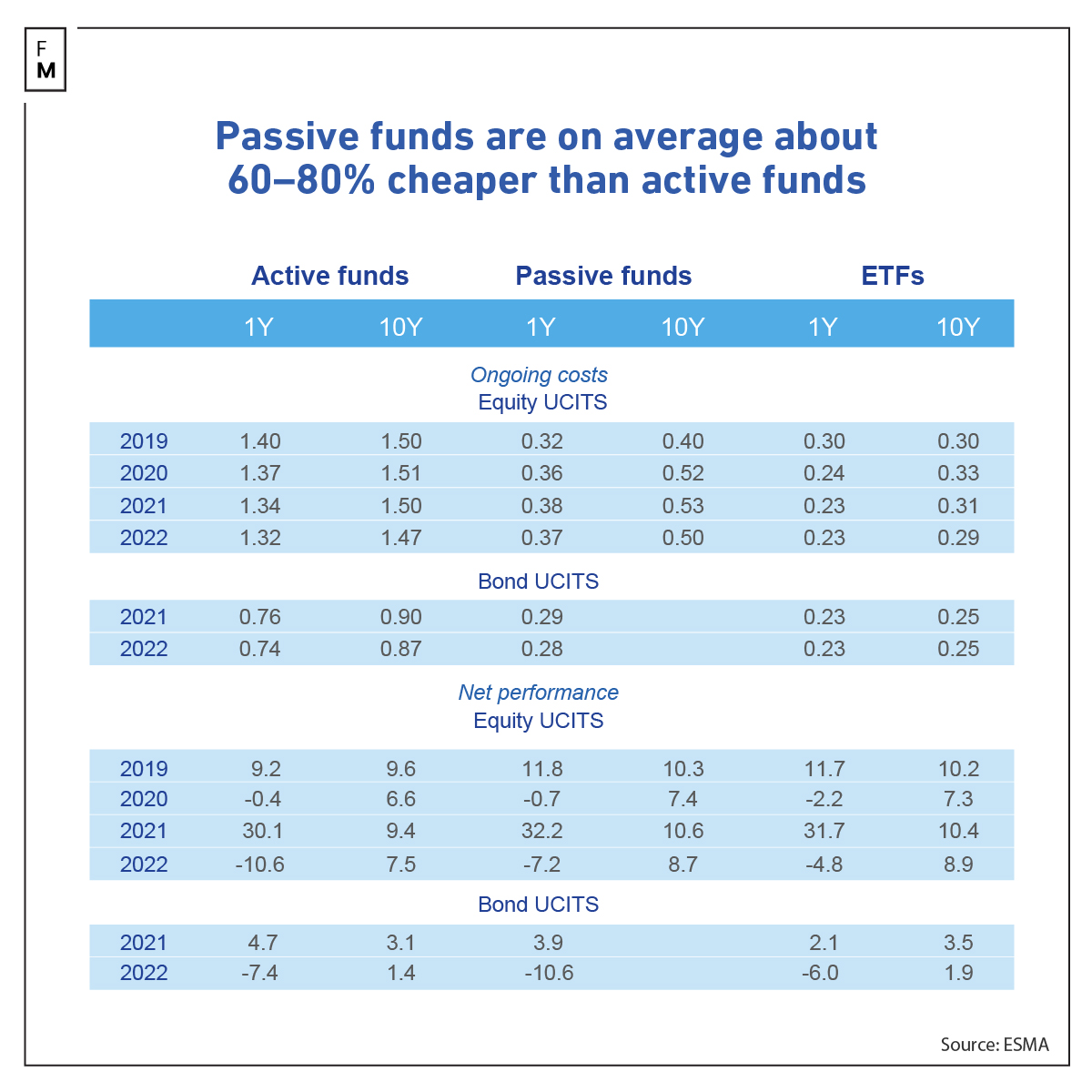
Although active equity fund costs have decreased, this category of funds remains more expensive than passive funds and ETFs, and net performance was therefore on average lower in comparison. The report noted an increase in costs for most types of structured retail products, although they vary substantially by geography.
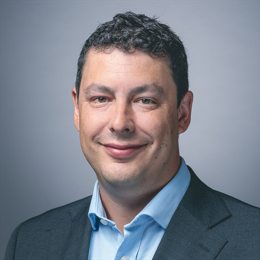
Hal Cook, Senior Investment Analyst at Hargreaves Lansdown
“Passive investing (including via ETFs) is the growing part of the market,” stated Hal Cook, the Senior Investment Analyst at Hargreaves Lansdown. “However, if we are in an environment of higher inflation and higher interest rates - where the cost of capital for businesses is structurally higher - it will naturally be more challenging for some businesses to survive, which could bring active managers and their stock selection abilities back to the fore.”
With ETFs enjoying good liquidity and accessible on low-cost trading platforms, retail clients are asking why they are paying 1.5% for management that frequently fails to outperform the benchmark according to Saunders.
“Robo-advisors enable diverse, risk-graded portfolios to be constructed significantly cheaper from ETFs than the management fees charged by an active manager,” he said. “Active fund managers have failed to convince investors that the performance improvement over an exchange traded product is greater than the management charge.”

Maksim Shymanovich, Senior Manager International Growth at TradingView
Maksim Shymanovich, a Senior Manager of International Growth at TradingView agreed that active equity funds have found it tough to beat market benchmarks consistently. One of the possible reasons for this is that key indices are mostly dominated by a handful of big stocks, making it challenging for active funds to beat these benchmarks unless they focus heavily on the largest stocks.
“However, recent trends suggest a potential shift with active management offering better opportunities due to the concentrated nature of indices and valuation disparities,” he mentioned.
This development, coupled with the success robo-advisors have enjoyed in attracting retail investment in passive ETFs, has led to increased interest in active ETFs.
“It seems like people are getting more into active management within the ETF world, driven by the opportunity for higher returns and new investment strategies,” added Shymanovich.
Alternative Investment Funds Dominate
The ESMA report also found that the alternative investment funds market is still dominated by professional investors. When asked what fund managers can do to make these funds more appealing to non-professional market participants, Cook observed that the challenge lies in explaining what these funds do and what they can add to an investment portfolio.
Professional investors tend to alter their usage of alternative funds in response to market cycles. They often increase exposure to these funds during periods of uncertainty, but reduce their exposure when markets are expected to rally. For example, alternative funds may be used as a source of funds if markets experience a shock, so as to buy equities and bonds when they are cheap.
“Retail investors are less likely to invest in this way as it is difficult to sell something that has held its value during a sell off and buy things that are still falling in price,” explained Cook. “This reduces the appeal of these funds because typically their long term returns are lower than a global equity fund.”
The Necessity of Simplicity
It is also the case that many of these funds are hard for retail clients to understand and at times performance simply doesn't align with retail investors' expectations. In 2022, for instance, numerous alternative funds failed to provide the desired protection during the extended bond market sell-off.
Fund managers need to reduce their management charges as it is hard to justify a percentage charge rather than a fixed fee suggests Saunders.
“The next step is education to convince investors of the benefits of a diversified portfolio,” he said. “In addition, many managers rely on IFAs to distribute their funds, ignoring the self-directed platforms entirely. These platforms find it easier to offer ETFs because the integration work is largely done.”
Government policy also has a role to play. Programs like the UK’s enterprise investment scheme and seed enterprise investment scheme provide tax incentives to ordinary investors, encouraging start up and scale up companies attract capital. Additionally, France has plans to introduce similar programmes.
“Asset managers who offer funds that comply with these regimes will attract a wider range of investors, rather than just wealthy or professional angel investors who can afford to write larger cheques,” suggested Nicholas Miller, the Director of UK partnerships at TradingView.
Economies of scale remain a key factor in determining retail investment product costs across Europe, although a lack of harmonisation in national regulation and inflation are also contributing to cost disparity.
The headline finding from the sixth market report on the costs and performance of EU retail investment products published by the European Securities and Markets Authority (ESMA) last month was that despite a fall in the average costs of investing, there are significant differences across the continent.
Funds domiciled in the Netherlands and Sweden exhibited the lowest total costs, while the highest cost levels were observed for Italy, Austria, Luxembourg and Portugal. The difference in costs over a one-year investment horizon ranged from 0.9pp for bond funds to 1.6pp in the case of equity funds, fuelled by differences in distribution channels.
Challenges of Europe
Although the EU is nominally a single marketplace, the most attractive markets are inevitably the largest and wealthiest. There are fixed costs in operating a trading platform and customer support infrastructure in other languages, so the potential revenue needs to be more attractive to offer a similar service to smaller markets.
Nick Saunders, CEO of Webull UK
“More opportunity also means more competition,” says Nick Saunders, the CEO of Webull UK. “The one caveat to this is the availability of payment for order flow. Where this is permitted it provides an additional revenue source to the broker who can reduce costs to the end client.”
The importance of scale is underlined by the comparison between the US and EU fund markets where the smaller average fund size in the latter market attracts higher costs.
Whilst passporting makes the distribution of eligible products easier across EU countries, each state has its own rules and regulations surrounding the distribution of products, increasing the cost of compliance.
Although active equity fund costs have decreased, this category of funds remains more expensive than passive funds and ETFs, and net performance was therefore on average lower in comparison. The report noted an increase in costs for most types of structured retail products, although they vary substantially by geography.
Hal Cook, Senior Investment Analyst at Hargreaves Lansdown
“Passive investing (including via ETFs) is the growing part of the market,” stated Hal Cook, the Senior Investment Analyst at Hargreaves Lansdown. “However, if we are in an environment of higher inflation and higher interest rates - where the cost of capital for businesses is structurally higher - it will naturally be more challenging for some businesses to survive, which could bring active managers and their stock selection abilities back to the fore.”
With ETFs enjoying good liquidity and accessible on low-cost trading platforms, retail clients are asking why they are paying 1.5% for management that frequently fails to outperform the benchmark according to Saunders.
“Robo-advisors enable diverse, risk-graded portfolios to be constructed significantly cheaper from ETFs than the management fees charged by an active manager,” he said. “Active fund managers have failed to convince investors that the performance improvement over an exchange traded product is greater than the management charge.”
Maksim Shymanovich, Senior Manager International Growth at TradingView
Maksim Shymanovich, a Senior Manager of International Growth at TradingView agreed that active equity funds have found it tough to beat market benchmarks consistently. One of the possible reasons for this is that key indices are mostly dominated by a handful of big stocks, making it challenging for active funds to beat these benchmarks unless they focus heavily on the largest stocks.
“However, recent trends suggest a potential shift with active management offering better opportunities due to the concentrated nature of indices and valuation disparities,” he mentioned.
This development, coupled with the success robo-advisors have enjoyed in attracting retail investment in passive ETFs, has led to increased interest in active ETFs.
“It seems like people are getting more into active management within the ETF world, driven by the opportunity for higher returns and new investment strategies,” added Shymanovich.
Alternative Investment Funds Dominate
The ESMA report also found that the alternative investment funds market is still dominated by professional investors. When asked what fund managers can do to make these funds more appealing to non-professional market participants, Cook observed that the challenge lies in explaining what these funds do and what they can add to an investment portfolio.
Professional investors tend to alter their usage of alternative funds in response to market cycles. They often increase exposure to these funds during periods of uncertainty, but reduce their exposure when markets are expected to rally. For example, alternative funds may be used as a source of funds if markets experience a shock, so as to buy equities and bonds when they are cheap.
“Retail investors are less likely to invest in this way as it is difficult to sell something that has held its value during a sell off and buy things that are still falling in price,” explained Cook. “This reduces the appeal of these funds because typically their long term returns are lower than a global equity fund.”
The Necessity of Simplicity
It is also the case that many of these funds are hard for retail clients to understand and at times performance simply doesn't align with retail investors' expectations. In 2022, for instance, numerous alternative funds failed to provide the desired protection during the extended bond market sell-off.
Fund managers need to reduce their management charges as it is hard to justify a percentage charge rather than a fixed fee suggests Saunders.
“The next step is education to convince investors of the benefits of a diversified portfolio,” he said. “In addition, many managers rely on IFAs to distribute their funds, ignoring the self-directed platforms entirely. These platforms find it easier to offer ETFs because the integration work is largely done.”
Government policy also has a role to play. Programs like the UK’s enterprise investment scheme and seed enterprise investment scheme provide tax incentives to ordinary investors, encouraging start up and scale up companies attract capital. Additionally, France has plans to introduce similar programmes.
“Asset managers who offer funds that comply with these regimes will attract a wider range of investors, rather than just wealthy or professional angel investors who can afford to write larger cheques,” suggested Nicholas Miller, the Director of UK partnerships at TradingView.
Paul Golden is an experienced freelance financial journalist with a strong institutional background. Over the past two decades, he has written for globally recognised financial publications, covering topics such as market structure, regulation, trading behaviour, and economic policy.
“Prop Isn’t Finished, but If You’re Coming into Prop Now, You Are,” FMLS:25 Takeaways
Featured Videos
Exness expands its presence in Africa: Inside our interview with Paul Margarites in Cape Town
Finance Magnates met with Paul Margarites, Exness regional commercial director for Sub-Saharan Africa, during a visit to the firm’s office opening in Cape Town. In this talk, led by Andrea Badiola Mateos, Co-CEO at Finance Magnates, Paul shares views on the South African trading space, local user behavior, mobile trends, regulation, team growth, and how Exness plans to grow in more markets across the region. @Exness
Read the article at: https://www.financemagnates.com/thought-leadership/exness-expands-its-presence-in-africa-inside-our-interview-with-paul-margarites/
#exness #financemagnates #exnesstrading #CFDtrading #tradeonline #africanews #capetown
Finance Magnates met with Paul Margarites, Exness regional commercial director for Sub-Saharan Africa, during a visit to the firm’s office opening in Cape Town. In this talk, led by Andrea Badiola Mateos, Co-CEO at Finance Magnates, Paul shares views on the South African trading space, local user behavior, mobile trends, regulation, team growth, and how Exness plans to grow in more markets across the region. @Exness
Read the article at: https://www.financemagnates.com/thought-leadership/exness-expands-its-presence-in-africa-inside-our-interview-with-paul-margarites/
#exness #financemagnates #exnesstrading #CFDtrading #tradeonline #africanews #capetown
Finance Magnates met with Paul Margarites, Exness regional commercial director for Sub-Saharan Africa, during a visit to the firm’s office opening in Cape Town. In this talk, led by Andrea Badiola Mateos, Co-CEO at Finance Magnates, Paul shares views on the South African trading space, local user behavior, mobile trends, regulation, team growth, and how Exness plans to grow in more markets across the region. @Exness
Read the article at: https://www.financemagnates.com/thought-leadership/exness-expands-its-presence-in-africa-inside-our-interview-with-paul-margarites/
#exness #financemagnates #exnesstrading #CFDtrading #tradeonline #africanews #capetown
Finance Magnates met with Paul Margarites, Exness regional commercial director for Sub-Saharan Africa, during a visit to the firm’s office opening in Cape Town. In this talk, led by Andrea Badiola Mateos, Co-CEO at Finance Magnates, Paul shares views on the South African trading space, local user behavior, mobile trends, regulation, team growth, and how Exness plans to grow in more markets across the region. @Exness
Read the article at: https://www.financemagnates.com/thought-leadership/exness-expands-its-presence-in-africa-inside-our-interview-with-paul-margarites/
#exness #financemagnates #exnesstrading #CFDtrading #tradeonline #africanews #capetown
Interview with Jas Shah
Builder | Adviser | Fintech Writer | Product Strategist
In this episode, Jonathan Fine sat down with Jas Shah, one of the most thoughtful voices in global fintech. Known for his work across advisory, product, stablecoins, and his widely read writing, Jas brings a rare combination of industry insight and plain-spoken clarity.
We talk about his first impression of the Summit, the projects that keep him busy today, and how they connect to the stablecoin panel he joined. Jas shares his view on the link between fintech, wealthtech and retail brokers, especially as firms like Revolut, eToro and Trading212 blur long-standing lines in the market.
We also explore what stablecoin adoption might look like for retail investment platforms, including a few product and UX angles that are not obvious at first glance.
To close, Jas explains how he thinks about writing, and how he approaches “shipping” pieces that spark debate across the industry.
Interview with Jas Shah
Builder | Adviser | Fintech Writer | Product Strategist
In this episode, Jonathan Fine sat down with Jas Shah, one of the most thoughtful voices in global fintech. Known for his work across advisory, product, stablecoins, and his widely read writing, Jas brings a rare combination of industry insight and plain-spoken clarity.
We talk about his first impression of the Summit, the projects that keep him busy today, and how they connect to the stablecoin panel he joined. Jas shares his view on the link between fintech, wealthtech and retail brokers, especially as firms like Revolut, eToro and Trading212 blur long-standing lines in the market.
We also explore what stablecoin adoption might look like for retail investment platforms, including a few product and UX angles that are not obvious at first glance.
To close, Jas explains how he thinks about writing, and how he approaches “shipping” pieces that spark debate across the industry.
Interview with Jas Shah
Builder | Adviser | Fintech Writer | Product Strategist
In this episode, Jonathan Fine sat down with Jas Shah, one of the most thoughtful voices in global fintech. Known for his work across advisory, product, stablecoins, and his widely read writing, Jas brings a rare combination of industry insight and plain-spoken clarity.
We talk about his first impression of the Summit, the projects that keep him busy today, and how they connect to the stablecoin panel he joined. Jas shares his view on the link between fintech, wealthtech and retail brokers, especially as firms like Revolut, eToro and Trading212 blur long-standing lines in the market.
We also explore what stablecoin adoption might look like for retail investment platforms, including a few product and UX angles that are not obvious at first glance.
To close, Jas explains how he thinks about writing, and how he approaches “shipping” pieces that spark debate across the industry.
Interview with Jas Shah
Builder | Adviser | Fintech Writer | Product Strategist
In this episode, Jonathan Fine sat down with Jas Shah, one of the most thoughtful voices in global fintech. Known for his work across advisory, product, stablecoins, and his widely read writing, Jas brings a rare combination of industry insight and plain-spoken clarity.
We talk about his first impression of the Summit, the projects that keep him busy today, and how they connect to the stablecoin panel he joined. Jas shares his view on the link between fintech, wealthtech and retail brokers, especially as firms like Revolut, eToro and Trading212 blur long-standing lines in the market.
We also explore what stablecoin adoption might look like for retail investment platforms, including a few product and UX angles that are not obvious at first glance.
To close, Jas explains how he thinks about writing, and how he approaches “shipping” pieces that spark debate across the industry.
Interview with Jas Shah
Builder | Adviser | Fintech Writer | Product Strategist
In this episode, Jonathan Fine sat down with Jas Shah, one of the most thoughtful voices in global fintech. Known for his work across advisory, product, stablecoins, and his widely read writing, Jas brings a rare combination of industry insight and plain-spoken clarity.
We talk about his first impression of the Summit, the projects that keep him busy today, and how they connect to the stablecoin panel he joined. Jas shares his view on the link between fintech, wealthtech and retail brokers, especially as firms like Revolut, eToro and Trading212 blur long-standing lines in the market.
We also explore what stablecoin adoption might look like for retail investment platforms, including a few product and UX angles that are not obvious at first glance.
To close, Jas explains how he thinks about writing, and how he approaches “shipping” pieces that spark debate across the industry.
Interview with Jas Shah
Builder | Adviser | Fintech Writer | Product Strategist
In this episode, Jonathan Fine sat down with Jas Shah, one of the most thoughtful voices in global fintech. Known for his work across advisory, product, stablecoins, and his widely read writing, Jas brings a rare combination of industry insight and plain-spoken clarity.
We talk about his first impression of the Summit, the projects that keep him busy today, and how they connect to the stablecoin panel he joined. Jas shares his view on the link between fintech, wealthtech and retail brokers, especially as firms like Revolut, eToro and Trading212 blur long-standing lines in the market.
We also explore what stablecoin adoption might look like for retail investment platforms, including a few product and UX angles that are not obvious at first glance.
To close, Jas explains how he thinks about writing, and how he approaches “shipping” pieces that spark debate across the industry.
Vitalii Bulynin Talks About Versus Trade, New Pairs, and Big Plans
In this interview, Versus Trade Co-Founder Vitalii Bulynin explains how the company got its license fast, why its trading pairs are fresh and fun, and what the team will build next.
He also discusses the most active pairs, the IB and MIB plans, and hiring needs for new markets.
Watch the whole talk to learn more about how Versus Trade works and where it is heading.
#financemagnates #VersusTrade #TradingPairs #BTCvsGold #goldtrading #innovation
In this interview, Versus Trade Co-Founder Vitalii Bulynin explains how the company got its license fast, why its trading pairs are fresh and fun, and what the team will build next.
He also discusses the most active pairs, the IB and MIB plans, and hiring needs for new markets.
Watch the whole talk to learn more about how Versus Trade works and where it is heading.
#financemagnates #VersusTrade #TradingPairs #BTCvsGold #goldtrading #innovation
In this interview, Versus Trade Co-Founder Vitalii Bulynin explains how the company got its license fast, why its trading pairs are fresh and fun, and what the team will build next.
He also discusses the most active pairs, the IB and MIB plans, and hiring needs for new markets.
Watch the whole talk to learn more about how Versus Trade works and where it is heading.
#financemagnates #VersusTrade #TradingPairs #BTCvsGold #goldtrading #innovation
In this interview, Versus Trade Co-Founder Vitalii Bulynin explains how the company got its license fast, why its trading pairs are fresh and fun, and what the team will build next.
He also discusses the most active pairs, the IB and MIB plans, and hiring needs for new markets.
Watch the whole talk to learn more about how Versus Trade works and where it is heading.
#financemagnates #VersusTrade #TradingPairs #BTCvsGold #goldtrading #innovation
In this interview, Versus Trade Co-Founder Vitalii Bulynin explains how the company got its license fast, why its trading pairs are fresh and fun, and what the team will build next.
He also discusses the most active pairs, the IB and MIB plans, and hiring needs for new markets.
Watch the whole talk to learn more about how Versus Trade works and where it is heading.
#financemagnates #VersusTrade #TradingPairs #BTCvsGold #goldtrading #innovation
In this interview, Versus Trade Co-Founder Vitalii Bulynin explains how the company got its license fast, why its trading pairs are fresh and fun, and what the team will build next.
He also discusses the most active pairs, the IB and MIB plans, and hiring needs for new markets.
Watch the whole talk to learn more about how Versus Trade works and where it is heading.
#financemagnates #VersusTrade #TradingPairs #BTCvsGold #goldtrading #innovation
Marketing in 2026 Audiences, Costs, and Smarter AI
As brokers eye B2B business and compete with fintechs and crypto exchanges alike, marketers need to act wisely with often limited budgets. AI can offer scalable solutions, but only if used properly.
Join seasoned marketing executives and specialists as they discuss the main challenges they identify in financial services in 2026 and how they address them.
Attendees of this session will walk away with:
- A nuts-and-bolts account of acquisition costs across platforms and geos
- Analysis of today’s multi-layered audience segments and differences in behaviour
- First-hand account of how global brokers balance consistency and local flavour
- Notes from the field about intelligently using AI and automation in marketing
Speakers:
-Yam Yehoshua, Editor-In-Chief at Finance Magnates
-Federico Paderni, Managing Director for Growth Markets in Europe at X
-Jo Benton, Chief Marketing Officer, Consulting | Fractional CMO
-Itai Levitan, Head of Strategy at investingLive
-Roberto Napolitano, CMO at Innovate Finance
-Tony Cross, Director at Monk Communications
#fmls #fmls25 #fmevents #FintechMarketing #AI #DigitalStrategy #Fintech #Innovation
Connect with us at:
🔗 LinkedIn: / financemagnates-events
👍 Facebook: / financemagnatesevents
📸 Instagram: / fmevents_official
🐦 Twitter: / f_m_events
🎥 TikTok: / fmevents_official
As brokers eye B2B business and compete with fintechs and crypto exchanges alike, marketers need to act wisely with often limited budgets. AI can offer scalable solutions, but only if used properly.
Join seasoned marketing executives and specialists as they discuss the main challenges they identify in financial services in 2026 and how they address them.
Attendees of this session will walk away with:
- A nuts-and-bolts account of acquisition costs across platforms and geos
- Analysis of today’s multi-layered audience segments and differences in behaviour
- First-hand account of how global brokers balance consistency and local flavour
- Notes from the field about intelligently using AI and automation in marketing
Speakers:
-Yam Yehoshua, Editor-In-Chief at Finance Magnates
-Federico Paderni, Managing Director for Growth Markets in Europe at X
-Jo Benton, Chief Marketing Officer, Consulting | Fractional CMO
-Itai Levitan, Head of Strategy at investingLive
-Roberto Napolitano, CMO at Innovate Finance
-Tony Cross, Director at Monk Communications
#fmls #fmls25 #fmevents #FintechMarketing #AI #DigitalStrategy #Fintech #Innovation
Connect with us at:
🔗 LinkedIn: / financemagnates-events
👍 Facebook: / financemagnatesevents
📸 Instagram: / fmevents_official
🐦 Twitter: / f_m_events
🎥 TikTok: / fmevents_official
As brokers eye B2B business and compete with fintechs and crypto exchanges alike, marketers need to act wisely with often limited budgets. AI can offer scalable solutions, but only if used properly.
Join seasoned marketing executives and specialists as they discuss the main challenges they identify in financial services in 2026 and how they address them.
Attendees of this session will walk away with:
- A nuts-and-bolts account of acquisition costs across platforms and geos
- Analysis of today’s multi-layered audience segments and differences in behaviour
- First-hand account of how global brokers balance consistency and local flavour
- Notes from the field about intelligently using AI and automation in marketing
Speakers:
-Yam Yehoshua, Editor-In-Chief at Finance Magnates
-Federico Paderni, Managing Director for Growth Markets in Europe at X
-Jo Benton, Chief Marketing Officer, Consulting | Fractional CMO
-Itai Levitan, Head of Strategy at investingLive
-Roberto Napolitano, CMO at Innovate Finance
-Tony Cross, Director at Monk Communications
#fmls #fmls25 #fmevents #FintechMarketing #AI #DigitalStrategy #Fintech #Innovation
Connect with us at:
🔗 LinkedIn: / financemagnates-events
👍 Facebook: / financemagnatesevents
📸 Instagram: / fmevents_official
🐦 Twitter: / f_m_events
🎥 TikTok: / fmevents_official
As brokers eye B2B business and compete with fintechs and crypto exchanges alike, marketers need to act wisely with often limited budgets. AI can offer scalable solutions, but only if used properly.
Join seasoned marketing executives and specialists as they discuss the main challenges they identify in financial services in 2026 and how they address them.
Attendees of this session will walk away with:
- A nuts-and-bolts account of acquisition costs across platforms and geos
- Analysis of today’s multi-layered audience segments and differences in behaviour
- First-hand account of how global brokers balance consistency and local flavour
- Notes from the field about intelligently using AI and automation in marketing
Speakers:
-Yam Yehoshua, Editor-In-Chief at Finance Magnates
-Federico Paderni, Managing Director for Growth Markets in Europe at X
-Jo Benton, Chief Marketing Officer, Consulting | Fractional CMO
-Itai Levitan, Head of Strategy at investingLive
-Roberto Napolitano, CMO at Innovate Finance
-Tony Cross, Director at Monk Communications
#fmls #fmls25 #fmevents #FintechMarketing #AI #DigitalStrategy #Fintech #Innovation
Connect with us at:
🔗 LinkedIn: / financemagnates-events
👍 Facebook: / financemagnatesevents
📸 Instagram: / fmevents_official
🐦 Twitter: / f_m_events
🎥 TikTok: / fmevents_official
As brokers eye B2B business and compete with fintechs and crypto exchanges alike, marketers need to act wisely with often limited budgets. AI can offer scalable solutions, but only if used properly.
Join seasoned marketing executives and specialists as they discuss the main challenges they identify in financial services in 2026 and how they address them.
Attendees of this session will walk away with:
- A nuts-and-bolts account of acquisition costs across platforms and geos
- Analysis of today’s multi-layered audience segments and differences in behaviour
- First-hand account of how global brokers balance consistency and local flavour
- Notes from the field about intelligently using AI and automation in marketing
Speakers:
-Yam Yehoshua, Editor-In-Chief at Finance Magnates
-Federico Paderni, Managing Director for Growth Markets in Europe at X
-Jo Benton, Chief Marketing Officer, Consulting | Fractional CMO
-Itai Levitan, Head of Strategy at investingLive
-Roberto Napolitano, CMO at Innovate Finance
-Tony Cross, Director at Monk Communications
#fmls #fmls25 #fmevents #FintechMarketing #AI #DigitalStrategy #Fintech #Innovation
Connect with us at:
🔗 LinkedIn: / financemagnates-events
👍 Facebook: / financemagnatesevents
📸 Instagram: / fmevents_official
🐦 Twitter: / f_m_events
🎥 TikTok: / fmevents_official
As brokers eye B2B business and compete with fintechs and crypto exchanges alike, marketers need to act wisely with often limited budgets. AI can offer scalable solutions, but only if used properly.
Join seasoned marketing executives and specialists as they discuss the main challenges they identify in financial services in 2026 and how they address them.
Attendees of this session will walk away with:
- A nuts-and-bolts account of acquisition costs across platforms and geos
- Analysis of today’s multi-layered audience segments and differences in behaviour
- First-hand account of how global brokers balance consistency and local flavour
- Notes from the field about intelligently using AI and automation in marketing
Speakers:
-Yam Yehoshua, Editor-In-Chief at Finance Magnates
-Federico Paderni, Managing Director for Growth Markets in Europe at X
-Jo Benton, Chief Marketing Officer, Consulting | Fractional CMO
-Itai Levitan, Head of Strategy at investingLive
-Roberto Napolitano, CMO at Innovate Finance
-Tony Cross, Director at Monk Communications
#fmls #fmls25 #fmevents #FintechMarketing #AI #DigitalStrategy #Fintech #Innovation
Connect with us at:
🔗 LinkedIn: / financemagnates-events
👍 Facebook: / financemagnatesevents
📸 Instagram: / fmevents_official
🐦 Twitter: / f_m_events
🎥 TikTok: / fmevents_official
Fail Better Trading Tech to Tackle Industry Risks
Much like their traders in the market, brokers must diversify to manage risk and stay resilient. But that can get costly, clunky, and lengthy.
This candid panel brings together builders across the trading infrastructure space to uncover the shifting dynamics behind tools, interfaces, and full-stack ambitions.
Attendees will hear:
-Why platform dependency has become one of the most overlooked risks in the trading business?
-Buy vs. build: What do hybrid models look like, and why are industry graveyards filled with failed ‘killer apps’?
-How AI is already changing execution, risk, and reporting—and what’s next?
-Which features, assets, and tools gain the most traction, and where brokers should look for tech-driven retention?
Speakers:
-Stephen Miles, Chief Revenue Officer at FYNXT
-John Morris, Co-Founder at FXBlue
-Matthew Smith, Group Chair & CEO at EC Markets
-Tom Higgins, Founder & CEO at Gold-i
-Gil Ben Hur, Founder at 5% Group
#fmls #fmls25 #fmevents #Brokers #Trading #Fintech #FintechInnovation #TradingTechnology #Innovation
Connect with us at:
🔗 LinkedIn: / financemagnates-events
👍 Facebook: / financemagnatesevents
📸 Instagram: / fmevents_official
🐦 Twitter: / f_m_events
🎥 TikTok: / fmevents_official
Much like their traders in the market, brokers must diversify to manage risk and stay resilient. But that can get costly, clunky, and lengthy.
This candid panel brings together builders across the trading infrastructure space to uncover the shifting dynamics behind tools, interfaces, and full-stack ambitions.
Attendees will hear:
-Why platform dependency has become one of the most overlooked risks in the trading business?
-Buy vs. build: What do hybrid models look like, and why are industry graveyards filled with failed ‘killer apps’?
-How AI is already changing execution, risk, and reporting—and what’s next?
-Which features, assets, and tools gain the most traction, and where brokers should look for tech-driven retention?
Speakers:
-Stephen Miles, Chief Revenue Officer at FYNXT
-John Morris, Co-Founder at FXBlue
-Matthew Smith, Group Chair & CEO at EC Markets
-Tom Higgins, Founder & CEO at Gold-i
-Gil Ben Hur, Founder at 5% Group
#fmls #fmls25 #fmevents #Brokers #Trading #Fintech #FintechInnovation #TradingTechnology #Innovation
Connect with us at:
🔗 LinkedIn: / financemagnates-events
👍 Facebook: / financemagnatesevents
📸 Instagram: / fmevents_official
🐦 Twitter: / f_m_events
🎥 TikTok: / fmevents_official
Much like their traders in the market, brokers must diversify to manage risk and stay resilient. But that can get costly, clunky, and lengthy.
This candid panel brings together builders across the trading infrastructure space to uncover the shifting dynamics behind tools, interfaces, and full-stack ambitions.
Attendees will hear:
-Why platform dependency has become one of the most overlooked risks in the trading business?
-Buy vs. build: What do hybrid models look like, and why are industry graveyards filled with failed ‘killer apps’?
-How AI is already changing execution, risk, and reporting—and what’s next?
-Which features, assets, and tools gain the most traction, and where brokers should look for tech-driven retention?
Speakers:
-Stephen Miles, Chief Revenue Officer at FYNXT
-John Morris, Co-Founder at FXBlue
-Matthew Smith, Group Chair & CEO at EC Markets
-Tom Higgins, Founder & CEO at Gold-i
-Gil Ben Hur, Founder at 5% Group
#fmls #fmls25 #fmevents #Brokers #Trading #Fintech #FintechInnovation #TradingTechnology #Innovation
Connect with us at:
🔗 LinkedIn: / financemagnates-events
👍 Facebook: / financemagnatesevents
📸 Instagram: / fmevents_official
🐦 Twitter: / f_m_events
🎥 TikTok: / fmevents_official
Much like their traders in the market, brokers must diversify to manage risk and stay resilient. But that can get costly, clunky, and lengthy.
This candid panel brings together builders across the trading infrastructure space to uncover the shifting dynamics behind tools, interfaces, and full-stack ambitions.
Attendees will hear:
-Why platform dependency has become one of the most overlooked risks in the trading business?
-Buy vs. build: What do hybrid models look like, and why are industry graveyards filled with failed ‘killer apps’?
-How AI is already changing execution, risk, and reporting—and what’s next?
-Which features, assets, and tools gain the most traction, and where brokers should look for tech-driven retention?
Speakers:
-Stephen Miles, Chief Revenue Officer at FYNXT
-John Morris, Co-Founder at FXBlue
-Matthew Smith, Group Chair & CEO at EC Markets
-Tom Higgins, Founder & CEO at Gold-i
-Gil Ben Hur, Founder at 5% Group
#fmls #fmls25 #fmevents #Brokers #Trading #Fintech #FintechInnovation #TradingTechnology #Innovation
Connect with us at:
🔗 LinkedIn: / financemagnates-events
👍 Facebook: / financemagnatesevents
📸 Instagram: / fmevents_official
🐦 Twitter: / f_m_events
🎥 TikTok: / fmevents_official
Much like their traders in the market, brokers must diversify to manage risk and stay resilient. But that can get costly, clunky, and lengthy.
This candid panel brings together builders across the trading infrastructure space to uncover the shifting dynamics behind tools, interfaces, and full-stack ambitions.
Attendees will hear:
-Why platform dependency has become one of the most overlooked risks in the trading business?
-Buy vs. build: What do hybrid models look like, and why are industry graveyards filled with failed ‘killer apps’?
-How AI is already changing execution, risk, and reporting—and what’s next?
-Which features, assets, and tools gain the most traction, and where brokers should look for tech-driven retention?
Speakers:
-Stephen Miles, Chief Revenue Officer at FYNXT
-John Morris, Co-Founder at FXBlue
-Matthew Smith, Group Chair & CEO at EC Markets
-Tom Higgins, Founder & CEO at Gold-i
-Gil Ben Hur, Founder at 5% Group
#fmls #fmls25 #fmevents #Brokers #Trading #Fintech #FintechInnovation #TradingTechnology #Innovation
Connect with us at:
🔗 LinkedIn: / financemagnates-events
👍 Facebook: / financemagnatesevents
📸 Instagram: / fmevents_official
🐦 Twitter: / f_m_events
🎥 TikTok: / fmevents_official
Much like their traders in the market, brokers must diversify to manage risk and stay resilient. But that can get costly, clunky, and lengthy.
This candid panel brings together builders across the trading infrastructure space to uncover the shifting dynamics behind tools, interfaces, and full-stack ambitions.
Attendees will hear:
-Why platform dependency has become one of the most overlooked risks in the trading business?
-Buy vs. build: What do hybrid models look like, and why are industry graveyards filled with failed ‘killer apps’?
-How AI is already changing execution, risk, and reporting—and what’s next?
-Which features, assets, and tools gain the most traction, and where brokers should look for tech-driven retention?
Speakers:
-Stephen Miles, Chief Revenue Officer at FYNXT
-John Morris, Co-Founder at FXBlue
-Matthew Smith, Group Chair & CEO at EC Markets
-Tom Higgins, Founder & CEO at Gold-i
-Gil Ben Hur, Founder at 5% Group
#fmls #fmls25 #fmevents #Brokers #Trading #Fintech #FintechInnovation #TradingTechnology #Innovation
Connect with us at:
🔗 LinkedIn: / financemagnates-events
👍 Facebook: / financemagnatesevents
📸 Instagram: / fmevents_official
🐦 Twitter: / f_m_events
🎥 TikTok: / fmevents_official