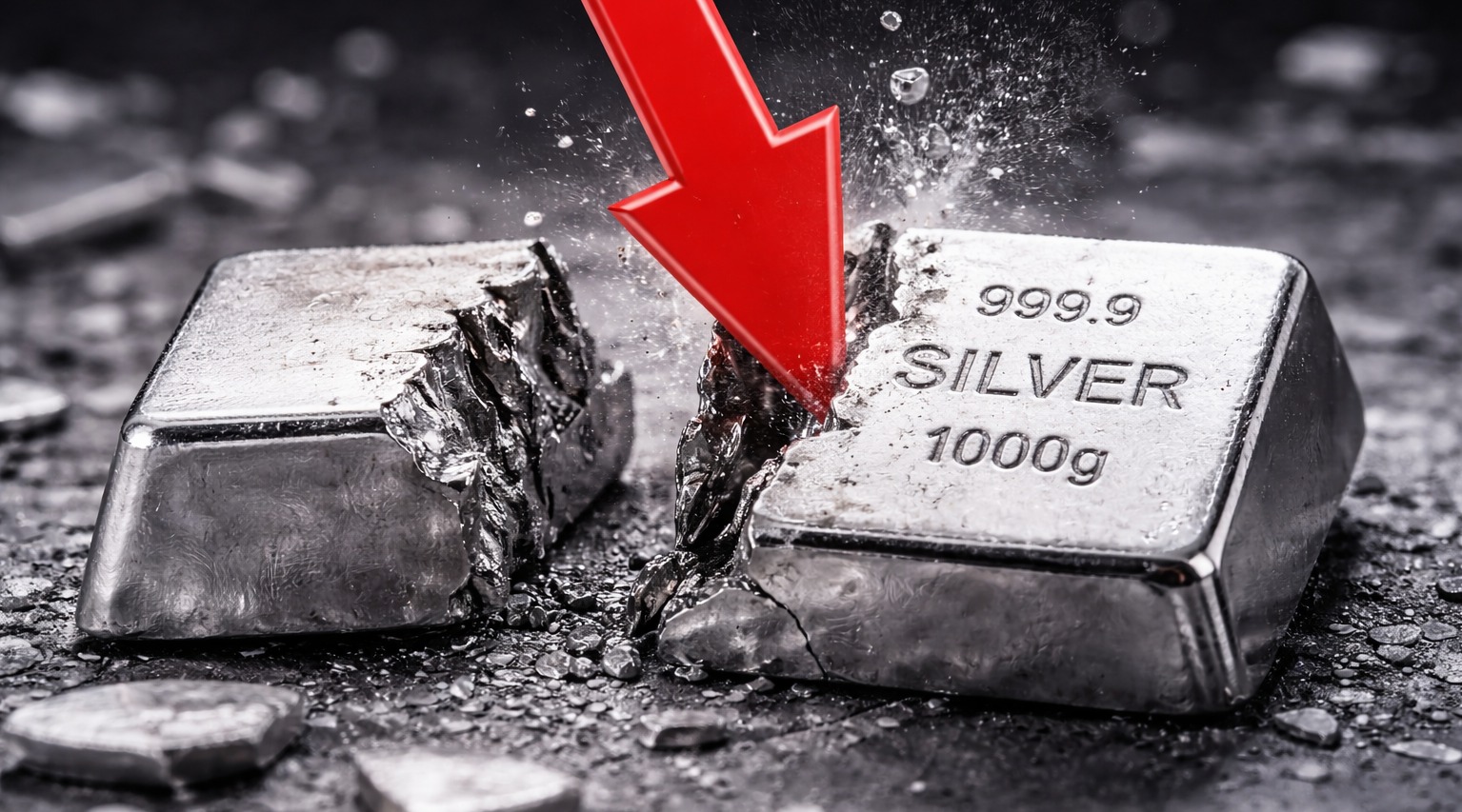
Silver crashed nearly 33% in a single trading session on January 30, 2026, plunging from above $121 per ounce to $76. This marks one of the most violent selloffs in precious metals history, wiping out weeks of gains in just 48 hours.
The crash was triggered by a perfect storm of hawkish Fed nomination news, aggressive dollar strength, and cascading forced liquidations across commodity markets.
What Triggered the Silver Price Massacre?
"The precious metals market turned into a slaughterhouse when, in just 48 hours, silver crashed from historic peaks above $121 to $76, posting a nearly 33% decline," said Max Bączkowski, independent analyst and trader in comments to FinanceMagnates.com.
He attributed the collapse to Kevin Warsh's Fed nomination, the resulting dollar rally, and mass forced liquidations triggered by unclear Reuters communication about market conditions.
President Trump announced Friday morning his intention to nominate Kevin Warsh as the next Federal Reserve chair, a candidate markets perceive as significantly more hawkish than alternatives. This nomination sent shockwaves through precious metals markets. Warsh, a former Fed governor, is viewed as less dovish on monetary policy, which immediately strengthened the US dollar and pressured dollar-denominated commodities like silver.
The Bloomberg Dollar Spot Index rallied 0.4% on the news, gaining against all major peers. Since silver trades inversely to dollar strength, this currency move amplified selling pressure. Treasury yields also jumped, 10-year rates climbed three basis points while 30-year yields surged five basis points, making non-yielding assets like silver less attractive.
Forced Liquidations Created Market Chaos
Reuters published an "Exclusive" report citing anonymous sources claiming the end of US government support for strategic metals, triggering algorithmic trading systems to immediately dump positions.
"Trading algorithms, programmed to detect negative signals from key agencies, began selling in a fraction of a second," Bączkowski explained, noting that capital fled from commodities to the dollar before anyone could verify the story's fragile
The Energy Department told Reuters in a statement after the story was published that the article was “false and relies on unnamed sources that are either misinformed or deliberately misleading.”
The selloff didn't spare other precious metals. Gold tumbled 10% to below $4,700 per ounce after reaching record highs above $5,100 earlier in the week. Platinum and palladium also collapsed, creating what Bączkowski called an "abyss" that swallowed the entire precious metals complex.
- Why Gold Is Falling With Silver Today? The Strongest XAU and XAG Selloff in 13 Years
- Why Silver Is Surging With Gold and Why Analyst Predicts $375 Price in 2026
- A Bright Crisis: Silver Surges to $92 ATH on Fed Drama, China Curbs and Supply Squeeze
Month-end positioning exacerbated volatility. Friday, January 30 marked the final trading day of the month, when liquidity typically thins and price moves become exaggerated. Profit-taking after silver's parabolic 57% January rally created additional downward pressure.
Technical Analysis: Where Silver Found Support
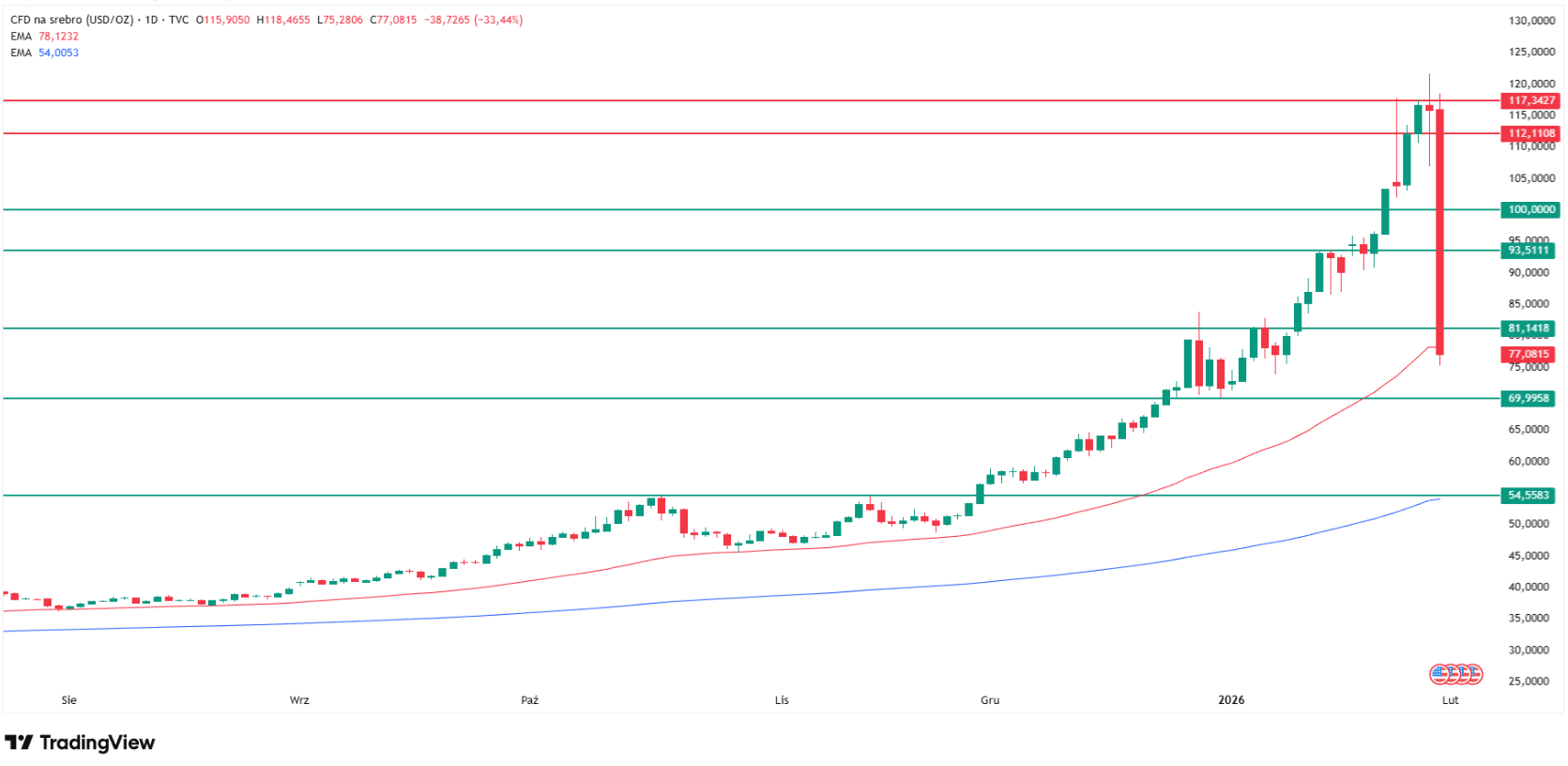
In my earlier article published today, I noted silver was down about 17%, but by day's end, losses had doubled to over 32%. The white metal crashed from $115 to below $78, eventually stabilizing near the 50-day exponential moving average (50 EMA) and a critical support zone at $70.81 per ounce.
This support level coincides with historical peaks from the turn of 2025/2026, creating a strong technical floor. If silver holds this area through the weekend and allows markets to calm, I'd expect a demand response rather than supply pressure next week.
Even if selling continues, silver has substantial support ahead, most importantly at $55 per ounce, which aligns with the 200-day exponential moving average (200 EMA).
What's Next for Silver Investors?
Despite the brutal one-day move, silver's long-term fundamentals remain intact. Supply deficits continue as industrial demand, particularly from solar panels and electric vehicles, hits record levels. Geopolitical uncertainties that drove the initial rally haven't disappeared; they've simply been overwhelmed by short-term dollar dynamics.
The 200 EMA at $55 represents the ultimate line in the sand for bulls. A close above $80 would suggest the worst is over and buyers are returning. Conversely, a break below $70 could trigger another leg down toward that 200-day average, though physical market tightness may limit downside.
Volatility will likely persist in coming sessions as leveraged positions unwind and the market digests Warsh's nomination implications. The Fed chair transition won't occur until Powell's term expires in May 2026, giving markets months to price in potential policy shifts.
Silver Price Analysis, FAQ
Why did silver crash today?
Kevin Warsh's hawkish Fed chair nomination strengthened the dollar and triggered forced liquidations across precious metals markets.
Where is silver finding support?
Silver stabilized at the 50 EMA near $70.81, with major support at the 200 EMA around $55 per ounce.
Is this a buying opportunity?
Yes. If silver holds above $70 through the weekend, technical analysis suggests potential for a demand response next week, though volatility remains elevated.
Will silver ever go up again?
Technical analysis suggests silver found strong support at the 50-day exponential moving average near $70.81, which coincides with historical peaks from late 2025. If this level holds through the weekend, a demand response is likely next week.