The SEC filed an appeal-related brief on January 15, just before Chair Gensler’s departure.
Paul Atkins’ SEC Chair nomination raises questions on market-driven crypto regulation.
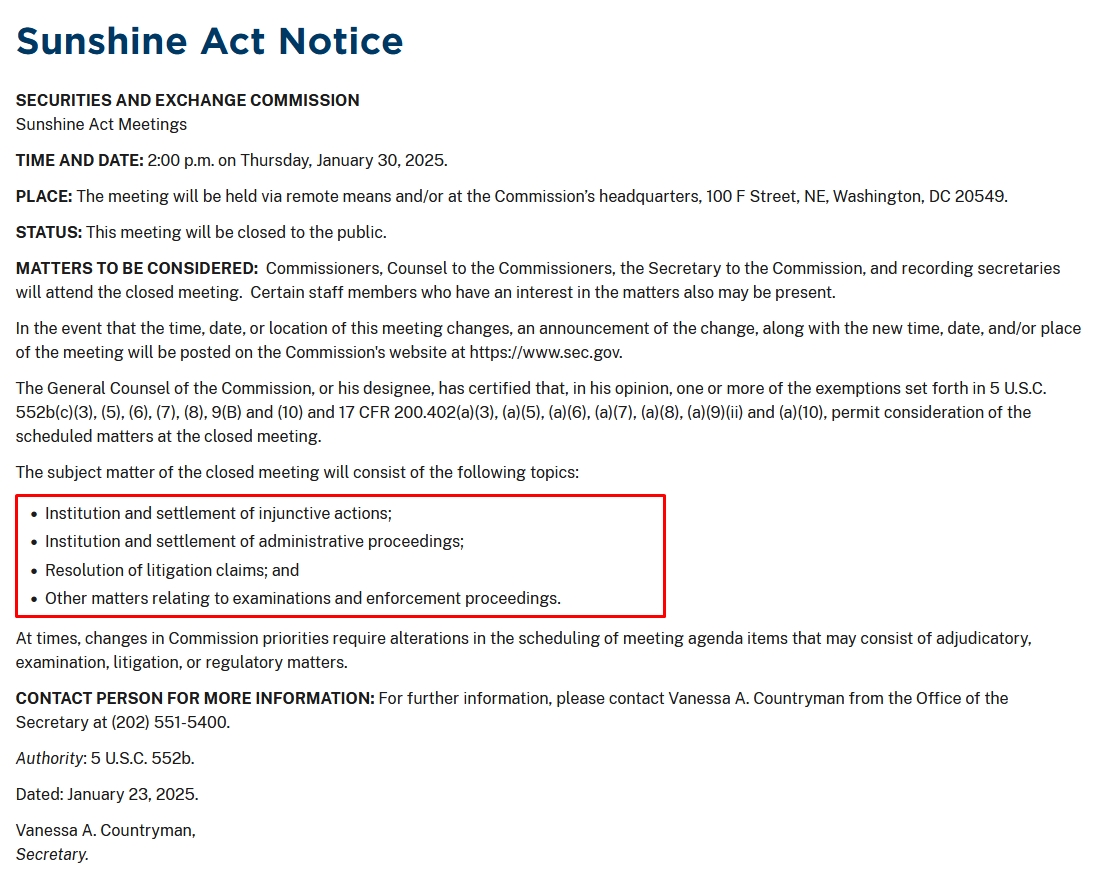
The US Securities and Exchange Commission (SEC) is holding a
closed-door meeting today (Thursday). The meeting will include discussions on
litigation claims, settlements, enforcement actions, and administrative
proceedings.
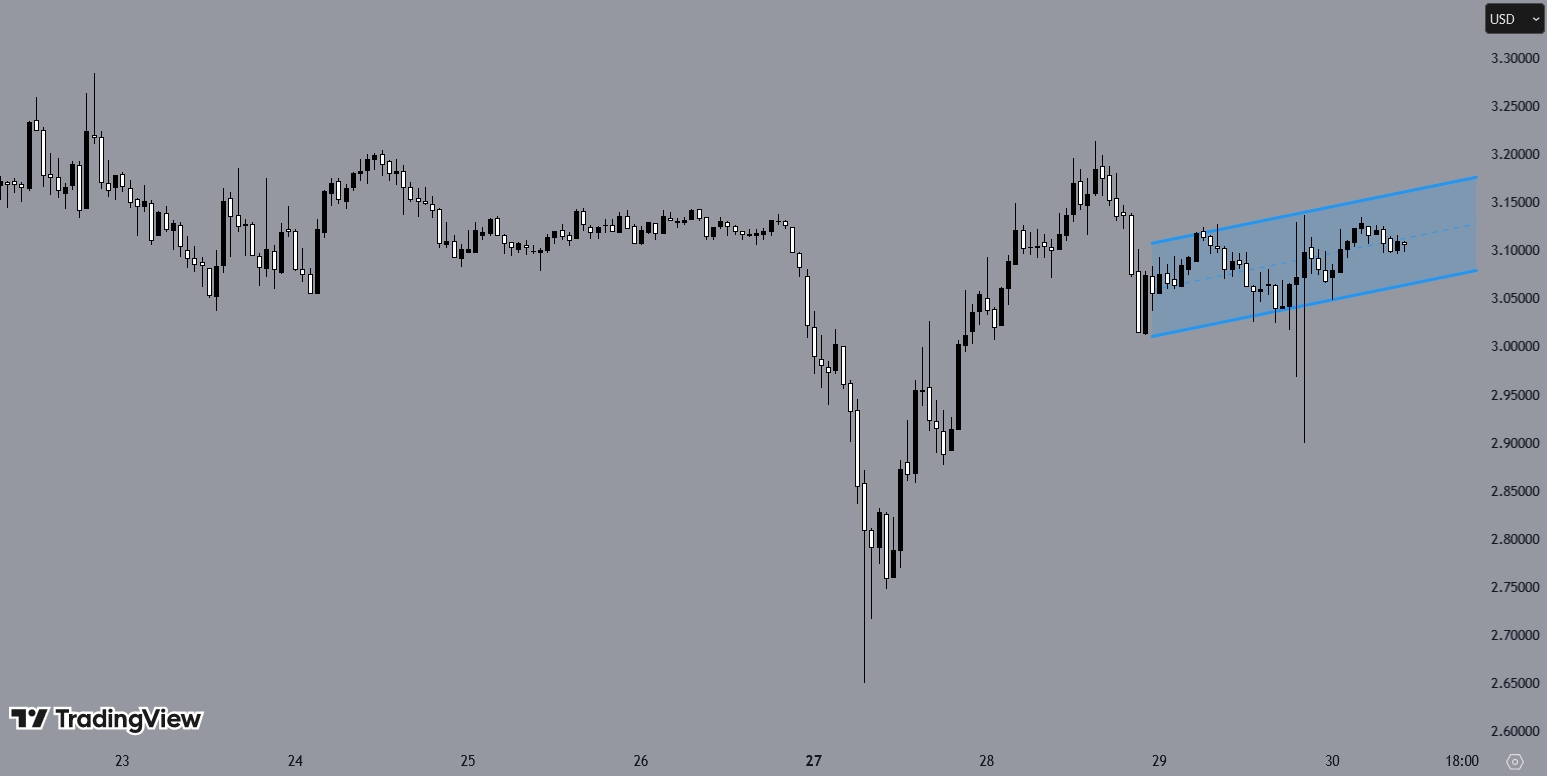
Meanwhile, XRPUSD has been consolidating within a channel on
the H1 chart, awaiting a breakout to determine its next direction.
SEC Meeting Sparks Speculation on Ripple Case
The SEC’s lawsuit against Ripple Labs is among the ongoing
cases the agency is handling. The meeting agenda includes “litigation claims,”
leading some in the cryptocurrency community to speculate that the Ripple case
could be discussed. The meeting will take place remotely or at the SEC
headquarters in Washington, DC, and only SEC officials, commissioners, their
counsel, and staff members will be present.
The
SEC recently filed an appeal-related opening brief on January 15. This was
just before Chair Gary Gensler stepped down. His departure has fuelled
speculation about a shift in leadership and regulatory policy. President Trump
has nominated Paul Atkins as the new SEC Chair. Atkins is known for his
market-driven approach and has previously voiced scepticism about strict crypto
regulations.
The XRPUSD H1 chart indicates that after a bearish
correction, the price has been contained within an Equidistant Channel. The
3.20000 level has acted as a strong resistance. A bullish breakout at the
channel's resistance could potentially lead to a breakout at the 3.20000 level.
Conversely, a bearish breakout at the channel's support may push the price
lower, likely with slower momentum.
XRPUSD, H1 Chart, Source: TradingView
Investors Watch SEC for Ripple Policy Shift
John Reed Stark, a former SEC enforcement official, has
pointed to Atkins’ preference for free markets and minimal government
intervention. Acting Chair Uyeda shares a similar stance. Some analysts believe
this could impact the SEC’s approach to crypto enforcement, including its legal
battle with Ripple.
The SEC has not confirmed whether the Ripple case will be
discussed at the meeting. However, given the recent legal developments,
investors are watching closely for any signals of a policy change.
Ripple's Legal Outlook and Strategic Growth Drive XRP’s
Potential
DeepSeek AI has analyzed Ripple's legal situation, adoption
of its On-Demand Liquidity (ODL) platform, and market trends to develop
predictions. The
model estimates XRP could trade between $3.50 and $5.00 by the end of 2025,
with a 70% probability of a favourable legal outcome.
Ripple has recently been involved in several developments. The
company donated $100,000 in XRP to support communities affected by
California wildfires, contributing to organizations like World Central Kitchen
and GiveDirectly through The Giving Block platform.
Ripple
is also making progress in Japan, with expectations that banks will adopt
the XRP Ledger by 2025, as announced by SBI CEO Yoshitaka Kitao. This move aims
to improve cross-border payments and currency conversions for remittances.
The debate over the inclusion of XRP in a US crypto reserve
continues, with allegations of centralization complicating the discussion. In
response, Ripple’s Chief Technology Officer, David Schwartz, has defended the
decentralization of the XRP Ledger, emphasizing its resilience against
manipulation.
The US Securities and Exchange Commission (SEC) is holding a
closed-door meeting today (Thursday). The meeting will include discussions on
litigation claims, settlements, enforcement actions, and administrative
proceedings.
Meanwhile, XRPUSD has been consolidating within a channel on
the H1 chart, awaiting a breakout to determine its next direction.
SEC Meeting Sparks Speculation on Ripple Case
The SEC’s lawsuit against Ripple Labs is among the ongoing
cases the agency is handling. The meeting agenda includes “litigation claims,”
leading some in the cryptocurrency community to speculate that the Ripple case
could be discussed. The meeting will take place remotely or at the SEC
headquarters in Washington, DC, and only SEC officials, commissioners, their
counsel, and staff members will be present.
The
SEC recently filed an appeal-related opening brief on January 15. This was
just before Chair Gary Gensler stepped down. His departure has fuelled
speculation about a shift in leadership and regulatory policy. President Trump
has nominated Paul Atkins as the new SEC Chair. Atkins is known for his
market-driven approach and has previously voiced scepticism about strict crypto
regulations.
The XRPUSD H1 chart indicates that after a bearish
correction, the price has been contained within an Equidistant Channel. The
3.20000 level has acted as a strong resistance. A bullish breakout at the
channel's resistance could potentially lead to a breakout at the 3.20000 level.
Conversely, a bearish breakout at the channel's support may push the price
lower, likely with slower momentum.
XRPUSD, H1 Chart, Source: TradingView
Investors Watch SEC for Ripple Policy Shift
John Reed Stark, a former SEC enforcement official, has
pointed to Atkins’ preference for free markets and minimal government
intervention. Acting Chair Uyeda shares a similar stance. Some analysts believe
this could impact the SEC’s approach to crypto enforcement, including its legal
battle with Ripple.
The SEC has not confirmed whether the Ripple case will be
discussed at the meeting. However, given the recent legal developments,
investors are watching closely for any signals of a policy change.
Ripple's Legal Outlook and Strategic Growth Drive XRP’s
Potential
DeepSeek AI has analyzed Ripple's legal situation, adoption
of its On-Demand Liquidity (ODL) platform, and market trends to develop
predictions. The
model estimates XRP could trade between $3.50 and $5.00 by the end of 2025,
with a 70% probability of a favourable legal outcome.
Ripple has recently been involved in several developments. The
company donated $100,000 in XRP to support communities affected by
California wildfires, contributing to organizations like World Central Kitchen
and GiveDirectly through The Giving Block platform.
Ripple
is also making progress in Japan, with expectations that banks will adopt
the XRP Ledger by 2025, as announced by SBI CEO Yoshitaka Kitao. This move aims
to improve cross-border payments and currency conversions for remittances.
The debate over the inclusion of XRP in a US crypto reserve
continues, with allegations of centralization complicating the discussion. In
response, Ripple’s Chief Technology Officer, David Schwartz, has defended the
decentralization of the XRP Ledger, emphasizing its resilience against
manipulation.
Tareq is a financial writer with 15 years of experience covering global markets. His work spans technical analysis, forex broker reviews, and market sentiment, with a focus on topics relevant to retail traders. He joined Finance Magnates in 2023.
At Finance Magnates, he serves as News Editor, covering retail forex and CFD brokers, cryptocurrency exchanges, fintech firms, and regulatory developments shaping the trading industry. He holds an Honours degree in Information Technology from Anfell College, London.
Education:
Honours degree Information Technology, Anfell College, London
Inside the Prediction Markets: $1.6B Institutional Inflow Meets a Federal Crackdown
FP Markets Winner Spotlight 🏆 | Global Broker of the Year 2025 #Trading #Broker #Innovation #Shorts
FP Markets Winner Spotlight 🏆 | Global Broker of the Year 2025 #Trading #Broker #Innovation #Shorts
FP Markets takes the spotlight as Global Broker of the Year 2025 at the Finance Magnates Awards.
Martin Stoilov, Head of Client Experience, shares that trust, innovation, and people played a key role in the company’s success, supported by a strong foundation of integrity and client-centricity.
Following this milestone, FP Markets continues to focus on growth, technology investment, and its core values of transparency and excellence.
👉 Be part of FM Awards 2026: https://awards.financemagnates.com/#nominate
FP Markets takes the spotlight as Global Broker of the Year 2025 at the Finance Magnates Awards.
Martin Stoilov, Head of Client Experience, shares that trust, innovation, and people played a key role in the company’s success, supported by a strong foundation of integrity and client-centricity.
Following this milestone, FP Markets continues to focus on growth, technology investment, and its core values of transparency and excellence.
👉 Be part of FM Awards 2026: https://awards.financemagnates.com/#nominate
In this video, we review @HolaPrimeMarketsOfficial, a multi-asset forex and CFDs broker offering different account types, trading platforms, and flexible trading conditions.
We cover the broker’s overall offering, including account options, trading environment, platforms like MT4 and MT5, and additional services such as managed accounts and fast withdrawals.
Watch the full video to see if Hola Prime Markets fits your trading needs.
📣 Stay up to date with the latest in finance and trading. Follow Finance Magnates for industry news, insights, and global event coverage.
Connect with us:
🔗 LinkedIn: /financemagnates
👍 Facebook: /financemagnates
📸 Instagram: https://www.instagram.com/financemagnates
🐦 X: https://x.com/financemagnates
🎥 TikTok: https://www.tiktok.com/tag/financemagnates
▶️ YouTube: /@financemagnates_official
#HolaPrime #ForexBroker #CFDTrading #FinanceMagnates #Trading #Forex #BrokerReview
In this video, we review @HolaPrimeMarketsOfficial, a multi-asset forex and CFDs broker offering different account types, trading platforms, and flexible trading conditions.
We cover the broker’s overall offering, including account options, trading environment, platforms like MT4 and MT5, and additional services such as managed accounts and fast withdrawals.
Watch the full video to see if Hola Prime Markets fits your trading needs.
📣 Stay up to date with the latest in finance and trading. Follow Finance Magnates for industry news, insights, and global event coverage.
Connect with us:
🔗 LinkedIn: /financemagnates
👍 Facebook: /financemagnates
📸 Instagram: https://www.instagram.com/financemagnates
🐦 X: https://x.com/financemagnates
🎥 TikTok: https://www.tiktok.com/tag/financemagnates
▶️ YouTube: /@financemagnates_official
#HolaPrime #ForexBroker #CFDTrading #FinanceMagnates #Trading #Forex #BrokerReview
Hola Prime Review: What You Need to Know | Full Breakdown by Finance Magnates
Hola Prime Review: What You Need to Know | Full Breakdown by Finance Magnates
In this video, we review @HolaPrime_Global, a proprietary trading firm offering evaluation programs and performance-based payouts in simulated market environments.
We cover how the challenge model works, including account types, profit splits (up to 95%), trading rules, and what it takes to reach a funded account. You’ll also learn about available platforms like MT4, MT5, cTrader, and more, along with insights into payouts, support, and trading conditions.
Watch the full video to see if Hola Prime fits your trading style.
📣 Stay up to date with the latest in finance and trading. Follow Finance Magnates for industry news, insights, and global event coverage.
Connect with us:
🔗 LinkedIn: /financemagnates
👍 Facebook: /financemagnates
📸 Instagram: https://www.instagram.com/financemagnates
🐦 X: https://x.com/financemagnates
🎥 TikTok: https://www.tiktok.com/tag/financemagnates
▶️ YouTube: /@financemagnates_official
#HolaPrime #PropFirm #Trading #FinanceMagnates #Forex #FuturesTrading #TradingReview #PropFirmReview
In this video, we review @HolaPrime_Global, a proprietary trading firm offering evaluation programs and performance-based payouts in simulated market environments.
We cover how the challenge model works, including account types, profit splits (up to 95%), trading rules, and what it takes to reach a funded account. You’ll also learn about available platforms like MT4, MT5, cTrader, and more, along with insights into payouts, support, and trading conditions.
Watch the full video to see if Hola Prime fits your trading style.
📣 Stay up to date with the latest in finance and trading. Follow Finance Magnates for industry news, insights, and global event coverage.
Connect with us:
🔗 LinkedIn: /financemagnates
👍 Facebook: /financemagnates
📸 Instagram: https://www.instagram.com/financemagnates
🐦 X: https://x.com/financemagnates
🎥 TikTok: https://www.tiktok.com/tag/financemagnates
▶️ YouTube: /@financemagnates_official
#HolaPrime #PropFirm #Trading #FinanceMagnates #Forex #FuturesTrading #TradingReview #PropFirmReview
Axi Winner Spotlight 🏆 | Global Most Innovative Broker 2025 #Innovation #Trading #Fintech #Broker
Axi Winner Spotlight 🏆 | Global Most Innovative Broker 2025 #Innovation #Trading #Fintech #Broker
Axi takes the spotlight at the Finance Magnates Awards, winning Global Most Innovative Broker 2025.
Olivia Xenofontos and Ivanna Openko share how the team will feel: proud, motivated, and ready to keep delivering.
They also describe the night as well-organized, focused, and enjoyable for all.
👉 Be part of FM Awards 2026.
Axi takes the spotlight at the Finance Magnates Awards, winning Global Most Innovative Broker 2025.
Olivia Xenofontos and Ivanna Openko share how the team will feel: proud, motivated, and ready to keep delivering.
They also describe the night as well-organized, focused, and enjoyable for all.
👉 Be part of FM Awards 2026.
Recognition that matters.
Built on transparency.
Driven by the industry.
The Finance Magnates Awards 2026.
Nominations are now open.
🔗 https://awards.financemagnates.com/?utm_source=SM&utm_medium=social&utm_campaign=recognition-matters
Recognition that matters.
Built on transparency.
Driven by the industry.
The Finance Magnates Awards 2026.
Nominations are now open.
🔗 https://awards.financemagnates.com/?utm_source=SM&utm_medium=social&utm_campaign=recognition-matters