DoJ and SEC join Fed in examining the SVB's crisis.
Investigations include reviewing SVB Financial executives' shares sales before the collapse.
After the
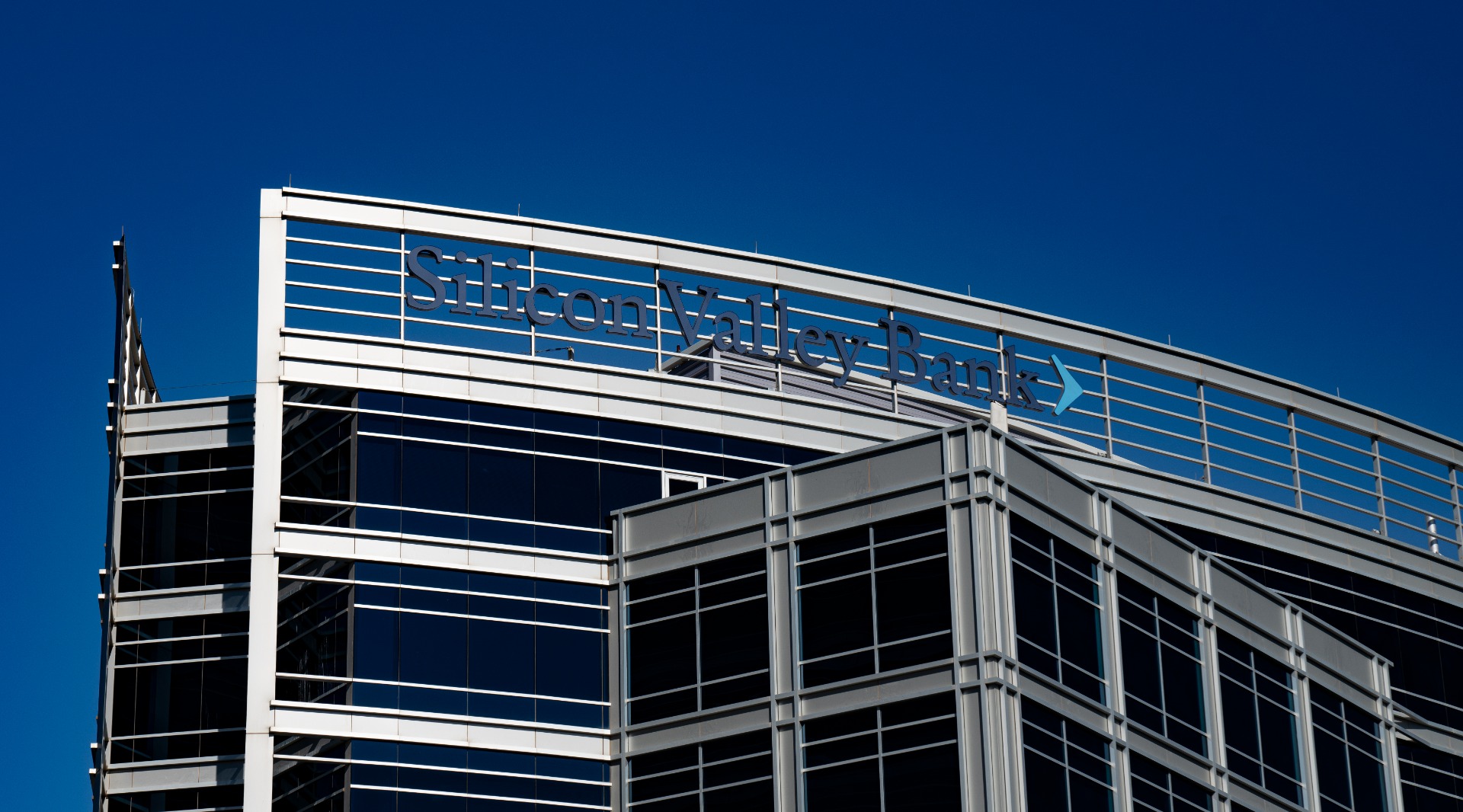
US Federal Reserve (Fed) declared an internal probe following the collapse of Silicon
Valley Bank (SVB) last week, two more US government bodies want to scrutinize
the causes of the run on the institution's deposits that put it on the brink of
bankruptcy, as stated in The Wall Street Journal (WSJ) report.
SEC and DoJ to Investigate
Silicon Valley Bank Collapse
The
Securities and Exchange Commission (SEC) and the Justice Department (DoJ) have
launched investigations into SVB. According to people familiar with the matter
who wished to remain anonymous, the inspections are in the preliminary stages
and may not necessarily lead to charges.
Conducting
such investigations are often practiced when large financial institutions face
sudden liquidity problems. For example, the purpose of the SEC's and DoJ's probes
may be to identify issues that have arisen at SVB to ensure that they will not
be repeated in the future.
Additionally,
the ongoing investigations are looking into stock sales made by officers of
SVB Financial shortly before the bank's failure. According to the sources, the
Justice Department's fraud prosecutors in both Washington and San Francisco are
involved in the probe.
Shares of SVB Financial, the former owner of SVB, plunged more than 60% during Thursday's session. Thus, the stock exchange decided to halt their quotes due to the increased volatility on Wall Street since Friday.
The dynamic fall
stopped at $106 per share, well below the pandemic 2020 low, testing levels
last seen in 2016. In the
aftermath, the share price of local First Republic Bank also slumped over 60% and Credit Suisse stocks reached a new all-time low. However, Tuesday’s session
brought a visible rebound and a bullish correction of banking shares.
SIVB Shares Tanked More Than 60%. Source: Tradingview.com
Earlier on
Tuesday, Finance Magnates reported that the Fed had launched its own
internal investigation into the collapse of the SVB. Michael S. Barr, the Vice
Chair for Supervision at the central bank, and his team will review how SVB was
regulated and supervised by Fed before its collapse in search of potential
negligence that could explain the reasons for the sudden bankruptcy of the
institution. The final results will be released to the public by 1 May 2023.
What
Happened at Silicon Valley Bank?
Silicon
Valley Bank was established in 1983 to cater to the banking needs of the tech
industry in Silicon Valley. It quickly became one of the largest banking institutions
in the US, offering a variety of products, such as deposit services, loans,
investment products, cash management, and commercial finance.
The bank
saw a significant increase in deposits, reaching $198 billion by the end of the
first quarter of 2022, which was three times more than it had at the end of
2019. This growth was primarily due to the bank's close-knit customer base in
the tech industry. SVB invested in 5-year bonds and 10-year mortgage-backed
securities, generating a fixed return of about 1.5%. However, these investments
turned sour when interest rates increased, and the bank failed to manage its
risks.
The bank's
problems worsened when some of its customers started withdrawing their
deposits, leading to a feedback loop that caused a significant drop in deposits
from $198 billion in March 2022 to $165 billion in February 2023, which is a decrease of
16%. This bank run ultimately led to the SVB's failure. The previous Chief Risk
Officer left in April 2022 and was replaced in January 2023, but it was too
late to save the bank.
After the
US Federal Reserve (Fed) declared an internal probe following the collapse of Silicon
Valley Bank (SVB) last week, two more US government bodies want to scrutinize
the causes of the run on the institution's deposits that put it on the brink of
bankruptcy, as stated in The Wall Street Journal (WSJ) report.
SEC and DoJ to Investigate
Silicon Valley Bank Collapse
The
Securities and Exchange Commission (SEC) and the Justice Department (DoJ) have
launched investigations into SVB. According to people familiar with the matter
who wished to remain anonymous, the inspections are in the preliminary stages
and may not necessarily lead to charges.
Conducting
such investigations are often practiced when large financial institutions face
sudden liquidity problems. For example, the purpose of the SEC's and DoJ's probes
may be to identify issues that have arisen at SVB to ensure that they will not
be repeated in the future.
Additionally,
the ongoing investigations are looking into stock sales made by officers of
SVB Financial shortly before the bank's failure. According to the sources, the
Justice Department's fraud prosecutors in both Washington and San Francisco are
involved in the probe.
Shares of SVB Financial, the former owner of SVB, plunged more than 60% during Thursday's session. Thus, the stock exchange decided to halt their quotes due to the increased volatility on Wall Street since Friday.
The dynamic fall
stopped at $106 per share, well below the pandemic 2020 low, testing levels
last seen in 2016. In the
aftermath, the share price of local First Republic Bank also slumped over 60% and Credit Suisse stocks reached a new all-time low. However, Tuesday’s session
brought a visible rebound and a bullish correction of banking shares.
SIVB Shares Tanked More Than 60%. Source: Tradingview.com
Earlier on
Tuesday, Finance Magnates reported that the Fed had launched its own
internal investigation into the collapse of the SVB. Michael S. Barr, the Vice
Chair for Supervision at the central bank, and his team will review how SVB was
regulated and supervised by Fed before its collapse in search of potential
negligence that could explain the reasons for the sudden bankruptcy of the
institution. The final results will be released to the public by 1 May 2023.
What
Happened at Silicon Valley Bank?
Silicon
Valley Bank was established in 1983 to cater to the banking needs of the tech
industry in Silicon Valley. It quickly became one of the largest banking institutions
in the US, offering a variety of products, such as deposit services, loans,
investment products, cash management, and commercial finance.
The bank
saw a significant increase in deposits, reaching $198 billion by the end of the
first quarter of 2022, which was three times more than it had at the end of
2019. This growth was primarily due to the bank's close-knit customer base in
the tech industry. SVB invested in 5-year bonds and 10-year mortgage-backed
securities, generating a fixed return of about 1.5%. However, these investments
turned sour when interest rates increased, and the bank failed to manage its
risks.
The bank's
problems worsened when some of its customers started withdrawing their
deposits, leading to a feedback loop that caused a significant drop in deposits
from $198 billion in March 2022 to $165 billion in February 2023, which is a decrease of
16%. This bank run ultimately led to the SVB's failure. The previous Chief Risk
Officer left in April 2022 and was replaced in January 2023, but it was too
late to save the bank.
Damian Chmiel is a Senior Analyst & Editor at Finance Magnates with more than 15 years of experience in the CFD and online trading industry. Active as both a trader and journalist since 2010, he focuses on broker coverage, fintech innovation, and regulatory developments across Europe, the Middle East, and Asia.
His work includes interviews with C-level leaders at major brokerages and fintech platforms, as well as co-authoring Finance Magnates’ quarterly industry benchmarking reports. Damian’s reporting is data-driven, market-aware, and grounded in direct industry engagement. His analysis and commentary have also been cited by external media outlets, including Investing.com, Binance, The Asset, Stockhead, and Dispatch.
Education:
MA in Finance and Accounting, Cracow University of Economics
MetaTrader 5 Brokers Gain Direct Access to Vantage Liquidity via MetaQuotes’ Ultency
FP Markets Winner Spotlight 🏆 | Global Broker of the Year 2025 #Trading #Broker #Innovation #Shorts
FP Markets Winner Spotlight 🏆 | Global Broker of the Year 2025 #Trading #Broker #Innovation #Shorts
FP Markets takes the spotlight as Global Broker of the Year 2025 at the Finance Magnates Awards.
Martin Stoilov, Head of Client Experience, shares that trust, innovation, and people played a key role in the company’s success, supported by a strong foundation of integrity and client-centricity.
Following this milestone, FP Markets continues to focus on growth, technology investment, and its core values of transparency and excellence.
👉 Be part of FM Awards 2026: https://awards.financemagnates.com/#nominate
FP Markets takes the spotlight as Global Broker of the Year 2025 at the Finance Magnates Awards.
Martin Stoilov, Head of Client Experience, shares that trust, innovation, and people played a key role in the company’s success, supported by a strong foundation of integrity and client-centricity.
Following this milestone, FP Markets continues to focus on growth, technology investment, and its core values of transparency and excellence.
👉 Be part of FM Awards 2026: https://awards.financemagnates.com/#nominate
In this video, we review @HolaPrimeMarketsOfficial, a multi-asset forex and CFDs broker offering different account types, trading platforms, and flexible trading conditions.
We cover the broker’s overall offering, including account options, trading environment, platforms like MT4 and MT5, and additional services such as managed accounts and fast withdrawals.
Watch the full video to see if Hola Prime Markets fits your trading needs.
📣 Stay up to date with the latest in finance and trading. Follow Finance Magnates for industry news, insights, and global event coverage.
Connect with us:
🔗 LinkedIn: /financemagnates
👍 Facebook: /financemagnates
📸 Instagram: https://www.instagram.com/financemagnates
🐦 X: https://x.com/financemagnates
🎥 TikTok: https://www.tiktok.com/tag/financemagnates
▶️ YouTube: /@financemagnates_official
#HolaPrime #ForexBroker #CFDTrading #FinanceMagnates #Trading #Forex #BrokerReview
In this video, we review @HolaPrimeMarketsOfficial, a multi-asset forex and CFDs broker offering different account types, trading platforms, and flexible trading conditions.
We cover the broker’s overall offering, including account options, trading environment, platforms like MT4 and MT5, and additional services such as managed accounts and fast withdrawals.
Watch the full video to see if Hola Prime Markets fits your trading needs.
📣 Stay up to date with the latest in finance and trading. Follow Finance Magnates for industry news, insights, and global event coverage.
Connect with us:
🔗 LinkedIn: /financemagnates
👍 Facebook: /financemagnates
📸 Instagram: https://www.instagram.com/financemagnates
🐦 X: https://x.com/financemagnates
🎥 TikTok: https://www.tiktok.com/tag/financemagnates
▶️ YouTube: /@financemagnates_official
#HolaPrime #ForexBroker #CFDTrading #FinanceMagnates #Trading #Forex #BrokerReview
Hola Prime Review: What You Need to Know | Full Breakdown by Finance Magnates
Hola Prime Review: What You Need to Know | Full Breakdown by Finance Magnates
In this video, we review @HolaPrime_Global, a proprietary trading firm offering evaluation programs and performance-based payouts in simulated market environments.
We cover how the challenge model works, including account types, profit splits (up to 95%), trading rules, and what it takes to reach a funded account. You’ll also learn about available platforms like MT4, MT5, cTrader, and more, along with insights into payouts, support, and trading conditions.
Watch the full video to see if Hola Prime fits your trading style.
📣 Stay up to date with the latest in finance and trading. Follow Finance Magnates for industry news, insights, and global event coverage.
Connect with us:
🔗 LinkedIn: /financemagnates
👍 Facebook: /financemagnates
📸 Instagram: https://www.instagram.com/financemagnates
🐦 X: https://x.com/financemagnates
🎥 TikTok: https://www.tiktok.com/tag/financemagnates
▶️ YouTube: /@financemagnates_official
#HolaPrime #PropFirm #Trading #FinanceMagnates #Forex #FuturesTrading #TradingReview #PropFirmReview
In this video, we review @HolaPrime_Global, a proprietary trading firm offering evaluation programs and performance-based payouts in simulated market environments.
We cover how the challenge model works, including account types, profit splits (up to 95%), trading rules, and what it takes to reach a funded account. You’ll also learn about available platforms like MT4, MT5, cTrader, and more, along with insights into payouts, support, and trading conditions.
Watch the full video to see if Hola Prime fits your trading style.
📣 Stay up to date with the latest in finance and trading. Follow Finance Magnates for industry news, insights, and global event coverage.
Connect with us:
🔗 LinkedIn: /financemagnates
👍 Facebook: /financemagnates
📸 Instagram: https://www.instagram.com/financemagnates
🐦 X: https://x.com/financemagnates
🎥 TikTok: https://www.tiktok.com/tag/financemagnates
▶️ YouTube: /@financemagnates_official
#HolaPrime #PropFirm #Trading #FinanceMagnates #Forex #FuturesTrading #TradingReview #PropFirmReview
Axi Winner Spotlight 🏆 | Global Most Innovative Broker 2025 #Innovation #Trading #Fintech #Broker
Axi Winner Spotlight 🏆 | Global Most Innovative Broker 2025 #Innovation #Trading #Fintech #Broker
Axi takes the spotlight at the Finance Magnates Awards, winning Global Most Innovative Broker 2025.
Olivia Xenofontos and Ivanna Openko share how the team will feel: proud, motivated, and ready to keep delivering.
They also describe the night as well-organized, focused, and enjoyable for all.
👉 Be part of FM Awards 2026.
Axi takes the spotlight at the Finance Magnates Awards, winning Global Most Innovative Broker 2025.
Olivia Xenofontos and Ivanna Openko share how the team will feel: proud, motivated, and ready to keep delivering.
They also describe the night as well-organized, focused, and enjoyable for all.
👉 Be part of FM Awards 2026.
Recognition that matters.
Built on transparency.
Driven by the industry.
The Finance Magnates Awards 2026.
Nominations are now open.
🔗 https://awards.financemagnates.com/?utm_source=SM&utm_medium=social&utm_campaign=recognition-matters
Recognition that matters.
Built on transparency.
Driven by the industry.
The Finance Magnates Awards 2026.
Nominations are now open.
🔗 https://awards.financemagnates.com/?utm_source=SM&utm_medium=social&utm_campaign=recognition-matters