NYSE Owner Starts Gold Futures in London, a Market Without One Since 2022

Tuesday, 06/10/2026 | 05:48 GMT by Damian Chmiel
  • The contracts are priced off the daily London auctions ICE runs and also cover silver, platinum and palladium.
  • CME, the New York incumbent, averaged about $125 billion a day in gold in the first half of the year.
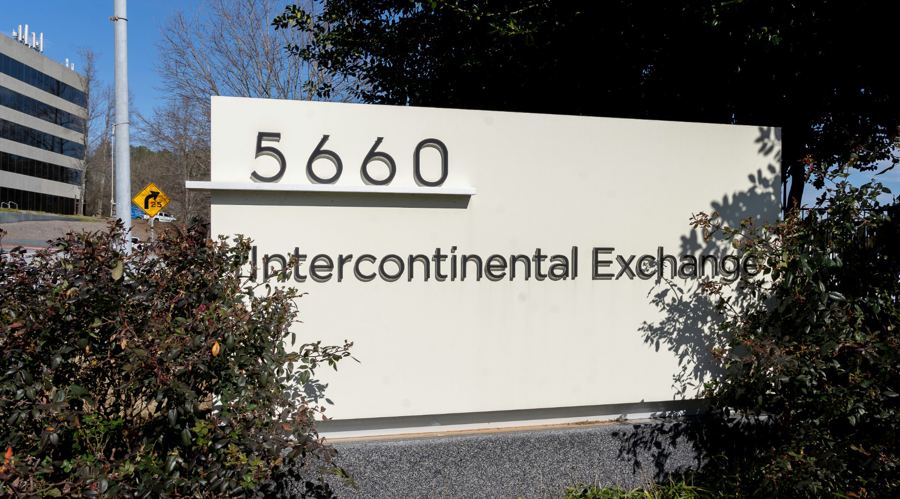
Intercontinental Exchange. Source: Shutterstock

Intercontinental Exchange (ICE) has begun trading gold futures in London, the Financial Times reported today (Tuesday). The New York Stock Exchange owner launched the contracts alongside futures on silver, platinum and palladium.

The contracts are priced off the daily London auctions that ICE runs to set benchmark prices for the four metals, according to the FT. They cover delivery from a single day up to six months ahead and clear through ICE's London arm, which also clears the Brent crude oil contract.

London's trading industry is coming home!

London handles nearly $190 billion a day in over-the-counter gold deals and holds about $1.4 trillion of the metal in its vaults, the newspaper said. Yet the city has had no gold futures contract since the London Metal Exchange (LME) shut its own in 2022 because of low volumes.

The metal also carries much of the retail market. Metals made up more than 60% of global CFD broker volumes in the first half of 2025, and gold accounted for close to 80% of that metals business.

A Contract Tied to the Auction Price

ICE took over the London gold price in 2015, when its benchmark unit replaced a bank-run fixing dating back to 1919 with an electronic auction.

Auction participants have grown from four to 20 since then, including Jane Street, DRW, Goldman Sachs and Citi, the FT reported. Average daily auction volume has risen by more than 30% since 2015, to more than 424,000 ounces.

Chris Rhodes, president of ICE Futures Europe

"Derivatives markets generally are there to support the physical market," Chris Rhodes, president of ICE Futures Europe, told the FT.

New York Holds the Volume

CME Group is the venue ICE has to compete with. Its gold futures in New York averaged roughly $125 billion in daily trading in the first six months of the year, while ICE's own US gold market trails both CME and Shanghai, according to the FT.

CME has also extended trading hours for smaller gold contracts. Its one-ounce gold futures drew about $60 million in notional value during their first weekend of round-the-clock trading in July.

London's earlier attempts did not last. The LME's contract ran for five years, and the London Gold Futures Market failed to gain traction in the mid-1980s. Last year the London Bullion Market Association called for gold futures trading to return to Britain.

ICE's US exchange already lists a 100-ounce Gold Daily Futures contract delivered into London vaults, which auction participants use to move positions into clearing at ICE Clear U.S., according to the exchange 's website.

The London version, set out in a September 17 notice from ICE Futures Europe, keeps the listing and the clearing in the UK.

Prices in the two cities split after US tariff announcements in April 2025. New York futures traded above London physical prices, and traders shipped large quantities of gold to the US.

A futures market operating next to London's vaults could make such dislocations less likely, the FT said.

Central banks have also been moving bullion. De Nederlandsche Bank, the Dutch central bank, transferred more than 78 tonnes of gold from New York to London last month, citing increasing geopolitical unrest.

Intercontinental Exchange (ICE) has begun trading gold futures in London, the Financial Times reported today (Tuesday). The New York Stock Exchange owner launched the contracts alongside futures on silver, platinum and palladium.

The contracts are priced off the daily London auctions that ICE runs to set benchmark prices for the four metals, according to the FT. They cover delivery from a single day up to six months ahead and clear through ICE's London arm, which also clears the Brent crude oil contract.

London's trading industry is coming home!

London handles nearly $190 billion a day in over-the-counter gold deals and holds about $1.4 trillion of the metal in its vaults, the newspaper said. Yet the city has had no gold futures contract since the London Metal Exchange (LME) shut its own in 2022 because of low volumes.

The metal also carries much of the retail market. Metals made up more than 60% of global CFD broker volumes in the first half of 2025, and gold accounted for close to 80% of that metals business.

A Contract Tied to the Auction Price

ICE took over the London gold price in 2015, when its benchmark unit replaced a bank-run fixing dating back to 1919 with an electronic auction.

Auction participants have grown from four to 20 since then, including Jane Street, DRW, Goldman Sachs and Citi, the FT reported. Average daily auction volume has risen by more than 30% since 2015, to more than 424,000 ounces.

Chris Rhodes, president of ICE Futures Europe

"Derivatives markets generally are there to support the physical market," Chris Rhodes, president of ICE Futures Europe, told the FT.

New York Holds the Volume

CME Group is the venue ICE has to compete with. Its gold futures in New York averaged roughly $125 billion in daily trading in the first six months of the year, while ICE's own US gold market trails both CME and Shanghai, according to the FT.

CME has also extended trading hours for smaller gold contracts. Its one-ounce gold futures drew about $60 million in notional value during their first weekend of round-the-clock trading in July.

London's earlier attempts did not last. The LME's contract ran for five years, and the London Gold Futures Market failed to gain traction in the mid-1980s. Last year the London Bullion Market Association called for gold futures trading to return to Britain.

ICE's US exchange already lists a 100-ounce Gold Daily Futures contract delivered into London vaults, which auction participants use to move positions into clearing at ICE Clear U.S., according to the exchange 's website.

The London version, set out in a September 17 notice from ICE Futures Europe, keeps the listing and the clearing in the UK.

Prices in the two cities split after US tariff announcements in April 2025. New York futures traded above London physical prices, and traders shipped large quantities of gold to the US.

A futures market operating next to London's vaults could make such dislocations less likely, the FT said.

Central banks have also been moving bullion. De Nederlandsche Bank, the Dutch central bank, transferred more than 78 tonnes of gold from New York to London last month, citing increasing geopolitical unrest.

About the Author: Damian Chmiel
Damian Chmiel
  • 4008 Articles
  • 117 Followers
About the Author: Damian Chmiel
Damian Chmiel is a Senior Analyst & Editor at Finance Magnates with more than 15 years of experience in the CFD and online trading industry. Active as both a trader and journalist since 2010, he focuses on broker coverage, fintech innovation, and regulatory developments across Europe, the Middle East, and Asia. His work includes interviews with C-level leaders at major brokerages and fintech platforms, as well as co-authoring Finance Magnates’ quarterly industry benchmarking reports. Damian’s reporting is data-driven, market-aware, and grounded in direct industry engagement. His analysis and commentary have also been cited by external media outlets, including Investing.com, Binance, The Asset, Stockhead, and Dispatch. Education: MA in Finance and Accounting, Cracow University of Economics
  • 4008 Articles
  • 117 Followers

More from the Author

Institutional FX

!"#$%&'()*+,-./0123456789:;<=>?@ABCDEFGHIJKLMNOPQRSTUVWXYZ[\]^_`abcdefghijklmnopqrstuvwxyz{|} !"#$%&'()*+,-./0123456789:;<=>?@ABCDEFGHIJKLMNOPQRSTUVWXYZ[\]^_`abcdefghijklmnopqrstuvwxyz{|}