Singapore Exchange December highs and lows, across its multi-asset offerings, as its clearing activities grew, while mixed results combined for slower securities volumes, and higher open interest in FX Futures by 20%
A key gateway to Asia, the Singapore Exchange (SGX), has today announced that its derivatives trading reached new highs in 2013, while certain reported metrics in the same segments declined during the same period, across its product lines and in other asset classes such as securities and bonds.
According to its December totals which summed last years trading results for Singapore's largest bourse, the final month of the year saw drops of as much as 56% year-on-year (YoY) for exchange traded funds (ETF) turnover, whereas FX Futures along with other futures and options business grew by 20% YoY.
However, on a yearly basis (for the 12 months ending December 31,2013), SGX's ETF turnover tripled to $3.2 billion, when compared to the previous full-year total, using this product segment as a contrasting example. The volume of Nikkei 225 futures trading also hit a record year high of 39 million contracts, on the SGX, as the underlying index had its largest annual gain since 1972.
In addition to the mixed results on both a month-over-month (MoM) basis, and YoY, growth was noted in its clearing business as the SGX wrapped up the year squeezing in an approval by the CFTC for its cross-border activities into the US, announced at the end of December when it became the first Asian Derivatives Clearing Organization (DCO) approved in the US.
SGX Stock Trading Volumes Down in December
Securities daily average value (SDAV) declined 20% YoY to S$951 million in December, and securities turnover was down 16% to $20 billion also compared to December 2012.
ETF turnover in December 2013 of $199 million was down 56% YoY, as mentioned above.
There was only one IPO that raised $62 million, noted as 9 times higher than funds raised from initial public offerings in 2012.
There were 39 new bond listings, raising S$6.1 billion, an increase of 9% YoY.
Derivatives trading in December at SGX Higher
Derivatives daily average volume (DDAV) increased 6% YoY to 426,582 contracts respectively, and derivatives total volume grew 12% to 8.9 million contracts in December 2013.
China A50 futures trading increased 23% to 2.1 million contracts YoY, and Nikkei 225 futures volume was up 9% YoY at 2.9 million contracts, as the Nikkei Index closed at a six-year high. MSCI Taiwan futures activity increased 39% to 1.4 million contracts from a year earlier.
Nifty futures trading increased 12% to 1.3 million contracts year-on-year. MSCI Indonesia Index futures more than doubled to 21,210 contracts.
Volume of new OTC financial derivatives transactions cleared was S$3.7 billion, up 61% YoY.
Volume of OTC commodities cleared grew 77% YoY to 39,112 contracts.
Volume of iron ore swaps cleared almost doubled to 36,130 contracts from a year earlier.
SGX had several key months, with exceptional growth, as previously covered by Forex Magnates, such as in July. Shares of Singapore Exchange Ltd, traded on the SGX, under the symbol SP, closed up 1.11% on Monday in Asia.
An excerpt of items summarized highlights in the official press release can be seen below.
SGX Full-Year 2013 Highlights:
Stock market capitalisation declined 0.6% to S$940 billion. On a total return basis, including dividends, the Straits Times Index was up 3.26%.
Total equity fund-raising grew 40% to S$6.3 billion. There were 27 and 26 IPOs in 2013 and 2012 respectively.
Total bond fund-raising decreased 4% to S$176 billion. There were 465 and 390 new bonds listed in 2013 and 2012 respectively.
Securities daily average value (SDAV) increased 10% to S$1.4 billion.
ETF turnover tripled to S$3.2 billion.
Derivatives total volume and daily average volume (DDAV) increased 40% to 112 million and 459,362 contracts respectively.
Volume of SGX AsiaClear commodities almost doubled to 660,372 contracts and volume of iron ore swaps, futures and options cleared more than doubled to 590,648 contracts.
Trading in China A50 and India Nifty futures reached a record year volume of 21 million and 16 million contracts respectively. Volume of Nikkei 225 futures trading also hit a record year high of 39 million contracts.
Mixed Across Derivatives, Securities, and Clearing
The exchange reported mixed results for the prior month which despite tapering off from November's figures - reached record levels for some of its product lines, including FX futures - among other asset classes offered via SGX, as it had recently launched several new offerings in Foreign Exchange related products.
Its FX business, still in its infancy, has room for development if can be justified by volumes , and client demand, and for now remains entirely Asian-FX futures for deliverable and non-deliverable Asian currencies in the following six currency pairs including the AUD/USD, AUD/JPY, USD/SGD, INR/USD, KRW/USD and KRW/JPY, as per the latest SGX product fact-sheet.
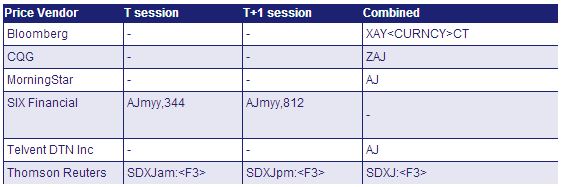
The following price vendors are listed as contributing to SGX's FX Futures products:
Source: SGX FX Futures specifications regarding Price vendors
The modernized infrastructure in Singapore supports the Monetary Authority of Singapore (MAS), and provides the framework for cross-border cooperation between businesses as evidenced by the SGX's many collaborations with international providers, including strong-ties with regional countries such as Malaysia, where nearly 1 in 5 company's listed on SGX are Malaysian based, as per a recent SGX announcement that noted IMF research.
Aspects of a harmonized and efficient international market-place (or market-places), whether venue specific, or decentralized like in OTC foreign exchange, shares parallels of globalization when governments agree on and take positions on major issues and rules -which provide certain benefits to participants.
This harmony can also occur due to ease of technology integration, or be a result of both. Meanwhile, when sovereign bodies take opposite stances, on something like Bitcoin, then regulatory arbitrage allows the market to evolve along with future rulings, and is often a needed step in its early development.
However, even for mature or modernizations countries or venue, such steps can be repeated during cycles of tightening rules - followed by a more freely operated market-place that would lead to differences based on technology and company's own-choices of how to operates and not necessarily based on external authority.
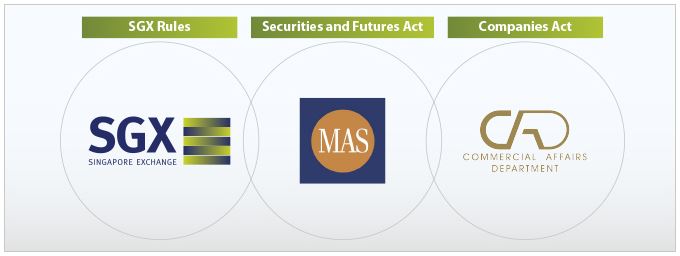
The graphic below, excerpted from the SGX website regarding its regulatory responsibilities - pinpoints the importance of synergies between Corporate Laws, Financial Regulations and Exchange Rules , in order to harmonize internal market efficiency within a country (domestically).
While no guarantee of success, this is something every country must strive for in order to easily engage in foreign trade cooperation, MOUs, and cross-border related collaborations, permissions, licensing, exemptions, etc..
A key gateway to Asia, the Singapore Exchange (SGX), has today announced that its derivatives trading reached new highs in 2013, while certain reported metrics in the same segments declined during the same period, across its product lines and in other asset classes such as securities and bonds.
According to its December totals which summed last years trading results for Singapore's largest bourse, the final month of the year saw drops of as much as 56% year-on-year (YoY) for exchange traded funds (ETF) turnover, whereas FX Futures along with other futures and options business grew by 20% YoY.
However, on a yearly basis (for the 12 months ending December 31,2013), SGX's ETF turnover tripled to $3.2 billion, when compared to the previous full-year total, using this product segment as a contrasting example. The volume of Nikkei 225 futures trading also hit a record year high of 39 million contracts, on the SGX, as the underlying index had its largest annual gain since 1972.
In addition to the mixed results on both a month-over-month (MoM) basis, and YoY, growth was noted in its clearing business as the SGX wrapped up the year squeezing in an approval by the CFTC for its cross-border activities into the US, announced at the end of December when it became the first Asian Derivatives Clearing Organization (DCO) approved in the US.
SGX Stock Trading Volumes Down in December
Securities daily average value (SDAV) declined 20% YoY to S$951 million in December, and securities turnover was down 16% to $20 billion also compared to December 2012.
ETF turnover in December 2013 of $199 million was down 56% YoY, as mentioned above.
There was only one IPO that raised $62 million, noted as 9 times higher than funds raised from initial public offerings in 2012.
There were 39 new bond listings, raising S$6.1 billion, an increase of 9% YoY.
Derivatives trading in December at SGX Higher
Derivatives daily average volume (DDAV) increased 6% YoY to 426,582 contracts respectively, and derivatives total volume grew 12% to 8.9 million contracts in December 2013.
China A50 futures trading increased 23% to 2.1 million contracts YoY, and Nikkei 225 futures volume was up 9% YoY at 2.9 million contracts, as the Nikkei Index closed at a six-year high. MSCI Taiwan futures activity increased 39% to 1.4 million contracts from a year earlier.
Nifty futures trading increased 12% to 1.3 million contracts year-on-year. MSCI Indonesia Index futures more than doubled to 21,210 contracts.
Volume of new OTC financial derivatives transactions cleared was S$3.7 billion, up 61% YoY.
Volume of OTC commodities cleared grew 77% YoY to 39,112 contracts.
Volume of iron ore swaps cleared almost doubled to 36,130 contracts from a year earlier.
SGX had several key months, with exceptional growth, as previously covered by Forex Magnates, such as in July. Shares of Singapore Exchange Ltd, traded on the SGX, under the symbol SP, closed up 1.11% on Monday in Asia.
An excerpt of items summarized highlights in the official press release can be seen below.
SGX Full-Year 2013 Highlights:
Stock market capitalisation declined 0.6% to S$940 billion. On a total return basis, including dividends, the Straits Times Index was up 3.26%.
Total equity fund-raising grew 40% to S$6.3 billion. There were 27 and 26 IPOs in 2013 and 2012 respectively.
Total bond fund-raising decreased 4% to S$176 billion. There were 465 and 390 new bonds listed in 2013 and 2012 respectively.
Securities daily average value (SDAV) increased 10% to S$1.4 billion.
ETF turnover tripled to S$3.2 billion.
Derivatives total volume and daily average volume (DDAV) increased 40% to 112 million and 459,362 contracts respectively.
Volume of SGX AsiaClear commodities almost doubled to 660,372 contracts and volume of iron ore swaps, futures and options cleared more than doubled to 590,648 contracts.
Trading in China A50 and India Nifty futures reached a record year volume of 21 million and 16 million contracts respectively. Volume of Nikkei 225 futures trading also hit a record year high of 39 million contracts.
Mixed Across Derivatives, Securities, and Clearing
The exchange reported mixed results for the prior month which despite tapering off from November's figures - reached record levels for some of its product lines, including FX futures - among other asset classes offered via SGX, as it had recently launched several new offerings in Foreign Exchange related products.
Its FX business, still in its infancy, has room for development if can be justified by volumes , and client demand, and for now remains entirely Asian-FX futures for deliverable and non-deliverable Asian currencies in the following six currency pairs including the AUD/USD, AUD/JPY, USD/SGD, INR/USD, KRW/USD and KRW/JPY, as per the latest SGX product fact-sheet.
The following price vendors are listed as contributing to SGX's FX Futures products:
Source: SGX FX Futures specifications regarding Price vendors
The modernized infrastructure in Singapore supports the Monetary Authority of Singapore (MAS), and provides the framework for cross-border cooperation between businesses as evidenced by the SGX's many collaborations with international providers, including strong-ties with regional countries such as Malaysia, where nearly 1 in 5 company's listed on SGX are Malaysian based, as per a recent SGX announcement that noted IMF research.
Aspects of a harmonized and efficient international market-place (or market-places), whether venue specific, or decentralized like in OTC foreign exchange, shares parallels of globalization when governments agree on and take positions on major issues and rules -which provide certain benefits to participants.
This harmony can also occur due to ease of technology integration, or be a result of both. Meanwhile, when sovereign bodies take opposite stances, on something like Bitcoin, then regulatory arbitrage allows the market to evolve along with future rulings, and is often a needed step in its early development.
However, even for mature or modernizations countries or venue, such steps can be repeated during cycles of tightening rules - followed by a more freely operated market-place that would lead to differences based on technology and company's own-choices of how to operates and not necessarily based on external authority.
The graphic below, excerpted from the SGX website regarding its regulatory responsibilities - pinpoints the importance of synergies between Corporate Laws, Financial Regulations and Exchange Rules , in order to harmonize internal market efficiency within a country (domestically).
While no guarantee of success, this is something every country must strive for in order to easily engage in foreign trade cooperation, MOUs, and cross-border related collaborations, permissions, licensing, exemptions, etc..
GTC Prime Adds Centroid Bridge as Multi-Asset Liquidity Distribution Channel
Featured Videos
AvaTrade to Acquire Most of FXCM; NAGA Raises $8M
AvaTrade to Acquire Most of FXCM; NAGA Raises $8M
AvaTrade to Acquire Most of FXCM; NAGA Raises $8M
AvaTrade to Acquire Most of FXCM; NAGA Raises $8M
Today’s financial news recap covers AvaTrade agrees to acquire most of FXCM, NAGA secures eight million dollars in new financing, and Wise seeks a tax settlement in the UK.
Finance Magnates Daily Recap brings you the latest news from forex and CFD brokers, fintech, payments, cryptocurrency, digital assets, trading platforms, financial regulation and global markets.
Get the key company news, executive moves, deals, regulatory updates and market developments of the day, in just a few minutes. New episodes published every weekday.
Read more: https://www.financemagnates.com
#FinanceMagnates #ForexNews #FintechNews
Today’s financial news recap covers AvaTrade agrees to acquire most of FXCM, NAGA secures eight million dollars in new financing, and Wise seeks a tax settlement in the UK.
Finance Magnates Daily Recap brings you the latest news from forex and CFD brokers, fintech, payments, cryptocurrency, digital assets, trading platforms, financial regulation and global markets.
Get the key company news, executive moves, deals, regulatory updates and market developments of the day, in just a few minutes. New episodes published every weekday.
Read more: https://www.financemagnates.com
#FinanceMagnates #ForexNews #FintechNews
Today’s financial news recap covers AvaTrade agrees to acquire most of FXCM, NAGA secures eight million dollars in new financing, and Wise seeks a tax settlement in the UK.
Finance Magnates Daily Recap brings you the latest news from forex and CFD brokers, fintech, payments, cryptocurrency, digital assets, trading platforms, financial regulation and global markets.
Get the key company news, executive moves, deals, regulatory updates and market developments of the day, in just a few minutes. New episodes published every weekday.
Read more: https://www.financemagnates.com
#FinanceMagnates #ForexNews #FintechNews
Today’s financial news recap covers AvaTrade agrees to acquire most of FXCM, NAGA secures eight million dollars in new financing, and Wise seeks a tax settlement in the UK.
Finance Magnates Daily Recap brings you the latest news from forex and CFD brokers, fintech, payments, cryptocurrency, digital assets, trading platforms, financial regulation and global markets.
Get the key company news, executive moves, deals, regulatory updates and market developments of the day, in just a few minutes. New episodes published every weekday.
Read more: https://www.financemagnates.com
#FinanceMagnates #ForexNews #FintechNews
XTB Adds Overnight US Stock Trading; Nasdaq Ventures Invests in One Trading
XTB Adds Overnight US Stock Trading; Nasdaq Ventures Invests in One Trading
XTB Adds Overnight US Stock Trading; Nasdaq Ventures Invests in One Trading
XTB Adds Overnight US Stock Trading; Nasdaq Ventures Invests in One Trading
XTB Adds Overnight US Stock Trading; Nasdaq Ventures Invests in One Trading
XTB Adds Overnight US Stock Trading; Nasdaq Ventures Invests in One Trading
Today’s financial news recap covers XTB expands overnight US stock trading, Fortrade reports higher revenue, Nasdaq backs One Trading, and Vest Labs raises 13 million dollars.
Finance Magnates Daily Recap brings you the latest news from forex and CFD brokers, fintech, payments, cryptocurrency, digital assets, trading platforms, financial regulation and global markets.
Get the key company news, executive moves, deals, regulatory updates and market developments of the day, in just a few minutes. New episodes published every weekday.
Read more: https://www.financemagnates.com
#FinanceMagnates #ForexNews #FintechNews
Today’s financial news recap covers XTB expands overnight US stock trading, Fortrade reports higher revenue, Nasdaq backs One Trading, and Vest Labs raises 13 million dollars.
Finance Magnates Daily Recap brings you the latest news from forex and CFD brokers, fintech, payments, cryptocurrency, digital assets, trading platforms, financial regulation and global markets.
Get the key company news, executive moves, deals, regulatory updates and market developments of the day, in just a few minutes. New episodes published every weekday.
Read more: https://www.financemagnates.com
#FinanceMagnates #ForexNews #FintechNews
Today’s financial news recap covers XTB expands overnight US stock trading, Fortrade reports higher revenue, Nasdaq backs One Trading, and Vest Labs raises 13 million dollars.
Finance Magnates Daily Recap brings you the latest news from forex and CFD brokers, fintech, payments, cryptocurrency, digital assets, trading platforms, financial regulation and global markets.
Get the key company news, executive moves, deals, regulatory updates and market developments of the day, in just a few minutes. New episodes published every weekday.
Read more: https://www.financemagnates.com
#FinanceMagnates #ForexNews #FintechNews
Today’s financial news recap covers XTB expands overnight US stock trading, Fortrade reports higher revenue, Nasdaq backs One Trading, and Vest Labs raises 13 million dollars.
Finance Magnates Daily Recap brings you the latest news from forex and CFD brokers, fintech, payments, cryptocurrency, digital assets, trading platforms, financial regulation and global markets.
Get the key company news, executive moves, deals, regulatory updates and market developments of the day, in just a few minutes. New episodes published every weekday.
Read more: https://www.financemagnates.com
#FinanceMagnates #ForexNews #FintechNews
Today’s financial news recap covers XTB expands overnight US stock trading, Fortrade reports higher revenue, Nasdaq backs One Trading, and Vest Labs raises 13 million dollars.
Finance Magnates Daily Recap brings you the latest news from forex and CFD brokers, fintech, payments, cryptocurrency, digital assets, trading platforms, financial regulation and global markets.
Get the key company news, executive moves, deals, regulatory updates and market developments of the day, in just a few minutes. New episodes published every weekday.
Read more: https://www.financemagnates.com
#FinanceMagnates #ForexNews #FintechNews
Today’s financial news recap covers XTB expands overnight US stock trading, Fortrade reports higher revenue, Nasdaq backs One Trading, and Vest Labs raises 13 million dollars.
Finance Magnates Daily Recap brings you the latest news from forex and CFD brokers, fintech, payments, cryptocurrency, digital assets, trading platforms, financial regulation and global markets.
Get the key company news, executive moves, deals, regulatory updates and market developments of the day, in just a few minutes. New episodes published every weekday.
Read more: https://www.financemagnates.com
#FinanceMagnates #ForexNews #FintechNews
CMC Founder Downplays Volatility Hit; Devexperts Names CEO
CMC Founder Downplays Volatility Hit; Devexperts Names CEO
CMC Founder Downplays Volatility Hit; Devexperts Names CEO
CMC Founder Downplays Volatility Hit; Devexperts Names CEO
CMC Founder Downplays Volatility Hit; Devexperts Names CEO
CMC Founder Downplays Volatility Hit; Devexperts Names CEO
Today’s financial news recap covers low volatility pressures brokers, Devexperts names a new CEO, Saxo cuts onboarding time, and OKX reaches a 25 billion dollar valuation.
Finance Magnates Daily Recap brings you the latest news from forex and CFD brokers, fintech, payments, cryptocurrency, digital assets, trading platforms, financial regulation and global markets.
Get the key company news, executive moves, deals, regulatory updates and market developments of the day, in just a few minutes. New episodes published every weekday.
Read more: https://www.financemagnates.com
#FinanceMagnates #ForexNews #FintechNews
Today’s financial news recap covers low volatility pressures brokers, Devexperts names a new CEO, Saxo cuts onboarding time, and OKX reaches a 25 billion dollar valuation.
Finance Magnates Daily Recap brings you the latest news from forex and CFD brokers, fintech, payments, cryptocurrency, digital assets, trading platforms, financial regulation and global markets.
Get the key company news, executive moves, deals, regulatory updates and market developments of the day, in just a few minutes. New episodes published every weekday.
Read more: https://www.financemagnates.com
#FinanceMagnates #ForexNews #FintechNews
Today’s financial news recap covers low volatility pressures brokers, Devexperts names a new CEO, Saxo cuts onboarding time, and OKX reaches a 25 billion dollar valuation.
Finance Magnates Daily Recap brings you the latest news from forex and CFD brokers, fintech, payments, cryptocurrency, digital assets, trading platforms, financial regulation and global markets.
Get the key company news, executive moves, deals, regulatory updates and market developments of the day, in just a few minutes. New episodes published every weekday.
Read more: https://www.financemagnates.com
#FinanceMagnates #ForexNews #FintechNews
Today’s financial news recap covers low volatility pressures brokers, Devexperts names a new CEO, Saxo cuts onboarding time, and OKX reaches a 25 billion dollar valuation.
Finance Magnates Daily Recap brings you the latest news from forex and CFD brokers, fintech, payments, cryptocurrency, digital assets, trading platforms, financial regulation and global markets.
Get the key company news, executive moves, deals, regulatory updates and market developments of the day, in just a few minutes. New episodes published every weekday.
Read more: https://www.financemagnates.com
#FinanceMagnates #ForexNews #FintechNews
Today’s financial news recap covers low volatility pressures brokers, Devexperts names a new CEO, Saxo cuts onboarding time, and OKX reaches a 25 billion dollar valuation.
Finance Magnates Daily Recap brings you the latest news from forex and CFD brokers, fintech, payments, cryptocurrency, digital assets, trading platforms, financial regulation and global markets.
Get the key company news, executive moves, deals, regulatory updates and market developments of the day, in just a few minutes. New episodes published every weekday.
Read more: https://www.financemagnates.com
#FinanceMagnates #ForexNews #FintechNews
Today’s financial news recap covers low volatility pressures brokers, Devexperts names a new CEO, Saxo cuts onboarding time, and OKX reaches a 25 billion dollar valuation.
Finance Magnates Daily Recap brings you the latest news from forex and CFD brokers, fintech, payments, cryptocurrency, digital assets, trading platforms, financial regulation and global markets.
Get the key company news, executive moves, deals, regulatory updates and market developments of the day, in just a few minutes. New episodes published every weekday.
Read more: https://www.financemagnates.com
#FinanceMagnates #ForexNews #FintechNews
Today’s financial news recap covers Trade Nation buys FXCM's UK client book, Trading 212 reports higher revenue, the CFTC's move to allow perpetual index futures.
Finance Magnates Daily Recap brings you the latest news from forex and CFD brokers, fintech, payments, cryptocurrency, digital assets, trading platforms, financial regulation and global markets.
Get the key company news, executive moves, deals, regulatory updates and market developments of the day, in just a few minutes. New episodes published every weekday.
Read more: https://www.financemagnates.com
#FinanceMagnates #ForexNews #FintechNews
Today’s financial news recap covers Trade Nation buys FXCM's UK client book, Trading 212 reports higher revenue, the CFTC's move to allow perpetual index futures.
Finance Magnates Daily Recap brings you the latest news from forex and CFD brokers, fintech, payments, cryptocurrency, digital assets, trading platforms, financial regulation and global markets.
Get the key company news, executive moves, deals, regulatory updates and market developments of the day, in just a few minutes. New episodes published every weekday.
Read more: https://www.financemagnates.com
#FinanceMagnates #ForexNews #FintechNews
Today’s financial news recap covers Trade Nation buys FXCM's UK client book, Trading 212 reports higher revenue, the CFTC's move to allow perpetual index futures.
Finance Magnates Daily Recap brings you the latest news from forex and CFD brokers, fintech, payments, cryptocurrency, digital assets, trading platforms, financial regulation and global markets.
Get the key company news, executive moves, deals, regulatory updates and market developments of the day, in just a few minutes. New episodes published every weekday.
Read more: https://www.financemagnates.com
#FinanceMagnates #ForexNews #FintechNews
Today’s financial news recap covers Trade Nation buys FXCM's UK client book, Trading 212 reports higher revenue, the CFTC's move to allow perpetual index futures.
Finance Magnates Daily Recap brings you the latest news from forex and CFD brokers, fintech, payments, cryptocurrency, digital assets, trading platforms, financial regulation and global markets.
Get the key company news, executive moves, deals, regulatory updates and market developments of the day, in just a few minutes. New episodes published every weekday.
Read more: https://www.financemagnates.com
#FinanceMagnates #ForexNews #FintechNews
Today’s financial news recap covers Trade Nation buys FXCM's UK client book, Trading 212 reports higher revenue, the CFTC's move to allow perpetual index futures.
Finance Magnates Daily Recap brings you the latest news from forex and CFD brokers, fintech, payments, cryptocurrency, digital assets, trading platforms, financial regulation and global markets.
Get the key company news, executive moves, deals, regulatory updates and market developments of the day, in just a few minutes. New episodes published every weekday.
Read more: https://www.financemagnates.com
#FinanceMagnates #ForexNews #FintechNews
Today’s financial news recap covers Trade Nation buys FXCM's UK client book, Trading 212 reports higher revenue, the CFTC's move to allow perpetual index futures.
Finance Magnates Daily Recap brings you the latest news from forex and CFD brokers, fintech, payments, cryptocurrency, digital assets, trading platforms, financial regulation and global markets.
Get the key company news, executive moves, deals, regulatory updates and market developments of the day, in just a few minutes. New episodes published every weekday.
Read more: https://www.financemagnates.com
#FinanceMagnates #ForexNews #FintechNews
Your career isn’t a linear path.
Your career isn’t a linear path.
Your career isn’t a linear path.
Your career isn’t a linear path.
Your career isn’t a linear path.
Your career isn’t a linear path.
Roles change. Career goals change. Sometimes you want a completely new challenge.
But the skills and knowledge you build along the way can stay with you and give you something to build on.
For Jeff Patterson, that continued growth is key to long-term career development.
You bring the skills. FM Academy helps you build the knowledge.
#FMAcademy #FinanceMagnates #FinanceCareers #ProfessionalDevelopment #Fintech
Roles change. Career goals change. Sometimes you want a completely new challenge.
But the skills and knowledge you build along the way can stay with you and give you something to build on.
For Jeff Patterson, that continued growth is key to long-term career development.
You bring the skills. FM Academy helps you build the knowledge.
#FMAcademy #FinanceMagnates #FinanceCareers #ProfessionalDevelopment #Fintech
Roles change. Career goals change. Sometimes you want a completely new challenge.
But the skills and knowledge you build along the way can stay with you and give you something to build on.
For Jeff Patterson, that continued growth is key to long-term career development.
You bring the skills. FM Academy helps you build the knowledge.
#FMAcademy #FinanceMagnates #FinanceCareers #ProfessionalDevelopment #Fintech
Roles change. Career goals change. Sometimes you want a completely new challenge.
But the skills and knowledge you build along the way can stay with you and give you something to build on.
For Jeff Patterson, that continued growth is key to long-term career development.
You bring the skills. FM Academy helps you build the knowledge.
#FMAcademy #FinanceMagnates #FinanceCareers #ProfessionalDevelopment #Fintech
Roles change. Career goals change. Sometimes you want a completely new challenge.
But the skills and knowledge you build along the way can stay with you and give you something to build on.
For Jeff Patterson, that continued growth is key to long-term career development.
You bring the skills. FM Academy helps you build the knowledge.
#FMAcademy #FinanceMagnates #FinanceCareers #ProfessionalDevelopment #Fintech
Roles change. Career goals change. Sometimes you want a completely new challenge.
But the skills and knowledge you build along the way can stay with you and give you something to build on.
For Jeff Patterson, that continued growth is key to long-term career development.
You bring the skills. FM Academy helps you build the knowledge.
#FMAcademy #FinanceMagnates #FinanceCareers #ProfessionalDevelopment #Fintech