The company
says the update, which includes a redesigned sidebar order-entry panel, a new
fixed home workspace, an overhauled mobile order-entry screen, and REST API
settings management, will improve usability and reduce manual work for brokers
running the platform.
Jon Light, Senior Director of Product Management at Devexperts
“We are
always looking at ways we can evolve and improve DXtrade,” said Jon Light,
Senior Director of Product Management, “guaranteeing that both our clients and
their traders are receiving a market-leading experience at all times.”
One Panel Meant to Rule
the Web Terminal
The most
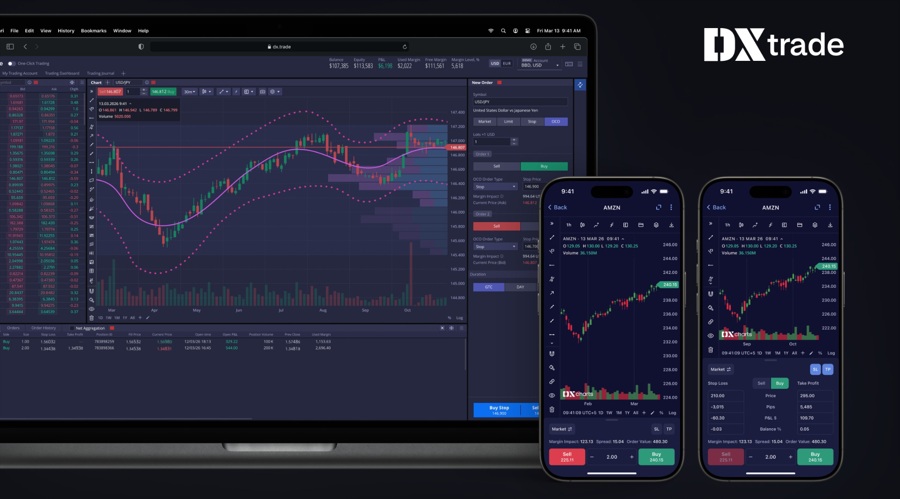
visible change on the web side is the sidebar order entry redesign. Devexperts
says the update consolidates all trading workflows: new orders, modifications,
closes, and cancellations into a single panel on the right side of the web
terminal, arguing this removes the need for traders to navigate multiple areas
of the interface to carry out basic actions.
The new
sidebar purportedly supports Market, Limit, Stop, and OCO order types, with
Stop Loss and Take Profit settings delivered through what the company calls a
"four-parameter logic" system. Devexperts also claims the Positions
and Orders widgets are now connected to the platform's color-coded instrument
linking system, keeping instrument displays synchronized across linked widgets.
“The
relationships we form with our clients are for the long term and ensuring the
platform is supported and optimized with the latest updates is absolutely part
of this process,” Light added.
“We hope firms and traders alike enjoy this
latest new and improved iteration of DXtrade, and look forward to introducing
further updates in due course.”
Alongside
the sidebar, DXtrade is introducing what the company calls a fixed home
workspace for the web terminal, which Devexperts says will provide a cleaner
default environment built around essential widgets only, with the stated goal
of reducing interface clutter for newer traders.
Mobile Order Entry Pitched
as a Single-Screen Experience
On the
mobile side, Devexperts has redesigned the trade and order entry screen for its
native app. The company says opening an instrument from the watchlist will now
launch a single dedicated screen combining both the chart and the order entry
panel, rather than requiring traders to switch between views.
The
redesigned view reportedly presents order type selection, volume, margin
impact, spread, and order value in one place. Stop Loss and Take Profit inputs
sit behind expandable controls to keep the default screen uncluttered, while
landscape mode now purportedly offers a split-screen layout with the chart and
order panel side by side, Devexperts said.
The
previous July, Devexperts rolled out a
mobile web interface for DXtrade that the company said would let traders access core functions
through a phone browser without needing the native app installed.
REST API Access Targets
Broker Overhead
The update
most likely to attract attention from larger operations is the new REST API
support for settings management. Devexperts claims this will allow firms to
automate profile configuration and settings changes across multiple
environments without manual input from dealing teams, a pain point the company
says affects brokers managing several concurrent setups.
Devexperts
has been steadily adding broker-facing integrations to DXtrade. In January, the
company connected the
platform to Arizet Labs' PropTech suite, saying it would give prop firm clients access
to CRM, risk management, and payout automation tools from within the same
environment.
The company
says the update, which includes a redesigned sidebar order-entry panel, a new
fixed home workspace, an overhauled mobile order-entry screen, and REST API
settings management, will improve usability and reduce manual work for brokers
running the platform.
Jon Light, Senior Director of Product Management at Devexperts
“We are
always looking at ways we can evolve and improve DXtrade,” said Jon Light,
Senior Director of Product Management, “guaranteeing that both our clients and
their traders are receiving a market-leading experience at all times.”
One Panel Meant to Rule
the Web Terminal
The most
visible change on the web side is the sidebar order entry redesign. Devexperts
says the update consolidates all trading workflows: new orders, modifications,
closes, and cancellations into a single panel on the right side of the web
terminal, arguing this removes the need for traders to navigate multiple areas
of the interface to carry out basic actions.
The new
sidebar purportedly supports Market, Limit, Stop, and OCO order types, with
Stop Loss and Take Profit settings delivered through what the company calls a
"four-parameter logic" system. Devexperts also claims the Positions
and Orders widgets are now connected to the platform's color-coded instrument
linking system, keeping instrument displays synchronized across linked widgets.
“The
relationships we form with our clients are for the long term and ensuring the
platform is supported and optimized with the latest updates is absolutely part
of this process,” Light added.
“We hope firms and traders alike enjoy this
latest new and improved iteration of DXtrade, and look forward to introducing
further updates in due course.”
Alongside
the sidebar, DXtrade is introducing what the company calls a fixed home
workspace for the web terminal, which Devexperts says will provide a cleaner
default environment built around essential widgets only, with the stated goal
of reducing interface clutter for newer traders.
Mobile Order Entry Pitched
as a Single-Screen Experience
On the
mobile side, Devexperts has redesigned the trade and order entry screen for its
native app. The company says opening an instrument from the watchlist will now
launch a single dedicated screen combining both the chart and the order entry
panel, rather than requiring traders to switch between views.
The
redesigned view reportedly presents order type selection, volume, margin
impact, spread, and order value in one place. Stop Loss and Take Profit inputs
sit behind expandable controls to keep the default screen uncluttered, while
landscape mode now purportedly offers a split-screen layout with the chart and
order panel side by side, Devexperts said.
The
previous July, Devexperts rolled out a
mobile web interface for DXtrade that the company said would let traders access core functions
through a phone browser without needing the native app installed.
REST API Access Targets
Broker Overhead
The update
most likely to attract attention from larger operations is the new REST API
support for settings management. Devexperts claims this will allow firms to
automate profile configuration and settings changes across multiple
environments without manual input from dealing teams, a pain point the company
says affects brokers managing several concurrent setups.
Devexperts
has been steadily adding broker-facing integrations to DXtrade. In January, the
company connected the
platform to Arizet Labs' PropTech suite, saying it would give prop firm clients access
to CRM, risk management, and payout automation tools from within the same
environment.
Damian Chmiel is a Senior Analyst & Editor at Finance Magnates with more than 15 years of experience in the CFD and online trading industry. Active as both a trader and journalist since 2010, he focuses on broker coverage, fintech innovation, and regulatory developments across Europe, the Middle East, and Asia.
His work includes interviews with C-level leaders at major brokerages and fintech platforms, as well as co-authoring Finance Magnates’ quarterly industry benchmarking reports. Damian’s reporting is data-driven, market-aware, and grounded in direct industry engagement. His analysis and commentary have also been cited by external media outlets, including Investing.com, Binance, The Asset, Stockhead, and Dispatch.
Education:
MA in Finance and Accounting, Cracow University of Economics
The Engine and the Fuel: How AI & Data Drives African Future
If AI is the engine, data is the fuel. Without quality, accessible data, AI cannot work well; and without the right mindset, data remains just numbers instead of insight. In this session, leading experts will explore how AI and data are democratizing opportunities for businesses and personal growth. Discover practical ways to make AI accessible today, anticipate its transformative impact on African markets, and learn actionable steps to prepare for what's next. Let's talk about:
-How AI and data drive business efficiency and innovation in trading and fintech
-AI tools to elevate trading or business strategies
-How to access and maximise the power of data and AI
-Emerging AI and data trends in Africa and their economic ripple effects
If AI is the engine, data is the fuel. Without quality, accessible data, AI cannot work well; and without the right mindset, data remains just numbers instead of insight. In this session, leading experts will explore how AI and data are democratizing opportunities for businesses and personal growth. Discover practical ways to make AI accessible today, anticipate its transformative impact on African markets, and learn actionable steps to prepare for what's next. Let's talk about:
-How AI and data drive business efficiency and innovation in trading and fintech
-AI tools to elevate trading or business strategies
-How to access and maximise the power of data and AI
-Emerging AI and data trends in Africa and their economic ripple effects
If AI is the engine, data is the fuel. Without quality, accessible data, AI cannot work well; and without the right mindset, data remains just numbers instead of insight. In this session, leading experts will explore how AI and data are democratizing opportunities for businesses and personal growth. Discover practical ways to make AI accessible today, anticipate its transformative impact on African markets, and learn actionable steps to prepare for what's next. Let's talk about:
-How AI and data drive business efficiency and innovation in trading and fintech
-AI tools to elevate trading or business strategies
-How to access and maximise the power of data and AI
-Emerging AI and data trends in Africa and their economic ripple effects
If AI is the engine, data is the fuel. Without quality, accessible data, AI cannot work well; and without the right mindset, data remains just numbers instead of insight. In this session, leading experts will explore how AI and data are democratizing opportunities for businesses and personal growth. Discover practical ways to make AI accessible today, anticipate its transformative impact on African markets, and learn actionable steps to prepare for what's next. Let's talk about:
-How AI and data drive business efficiency and innovation in trading and fintech
-AI tools to elevate trading or business strategies
-How to access and maximise the power of data and AI
-Emerging AI and data trends in Africa and their economic ripple effects
Most market post-mortems describe what happened to prices. Few describe what happened in the trading room while the position was open: the entry conviction, the moments that tested it, and the exit decision that closed the book.
This session brings one seasoned trader to the stage for an unfiltered account of the position that still defines how they think about markets.
Attendees will walk away with:
-A first-hand account of how a conviction trade is built, from thesis and entry through position management and exit
-Understanding of what turns a market observation into a live position, and what holds it when conditions shift
-Insight into how timing, execution quality, and market structure shaped the final result
-Perspective on what the trade revealed about edge, risk tolerance, and when to hold through a position moving against you
-Clarity on what separates a well-built trade from a well-timed one
Most market post-mortems describe what happened to prices. Few describe what happened in the trading room while the position was open: the entry conviction, the moments that tested it, and the exit decision that closed the book.
This session brings one seasoned trader to the stage for an unfiltered account of the position that still defines how they think about markets.
Attendees will walk away with:
-A first-hand account of how a conviction trade is built, from thesis and entry through position management and exit
-Understanding of what turns a market observation into a live position, and what holds it when conditions shift
-Insight into how timing, execution quality, and market structure shaped the final result
-Perspective on what the trade revealed about edge, risk tolerance, and when to hold through a position moving against you
-Clarity on what separates a well-built trade from a well-timed one
Most market post-mortems describe what happened to prices. Few describe what happened in the trading room while the position was open: the entry conviction, the moments that tested it, and the exit decision that closed the book.
This session brings one seasoned trader to the stage for an unfiltered account of the position that still defines how they think about markets.
Attendees will walk away with:
-A first-hand account of how a conviction trade is built, from thesis and entry through position management and exit
-Understanding of what turns a market observation into a live position, and what holds it when conditions shift
-Insight into how timing, execution quality, and market structure shaped the final result
-Perspective on what the trade revealed about edge, risk tolerance, and when to hold through a position moving against you
-Clarity on what separates a well-built trade from a well-timed one
Most market post-mortems describe what happened to prices. Few describe what happened in the trading room while the position was open: the entry conviction, the moments that tested it, and the exit decision that closed the book.
This session brings one seasoned trader to the stage for an unfiltered account of the position that still defines how they think about markets.
Attendees will walk away with:
-A first-hand account of how a conviction trade is built, from thesis and entry through position management and exit
-Understanding of what turns a market observation into a live position, and what holds it when conditions shift
-Insight into how timing, execution quality, and market structure shaped the final result
-Perspective on what the trade revealed about edge, risk tolerance, and when to hold through a position moving against you
-Clarity on what separates a well-built trade from a well-timed one
Most market post-mortems describe what happened to prices. Few describe what happened in the trading room while the position was open: the entry conviction, the moments that tested it, and the exit decision that closed the book.
This session brings one seasoned trader to the stage for an unfiltered account of the position that still defines how they think about markets.
Attendees will walk away with:
-A first-hand account of how a conviction trade is built, from thesis and entry through position management and exit
-Understanding of what turns a market observation into a live position, and what holds it when conditions shift
-Insight into how timing, execution quality, and market structure shaped the final result
-Perspective on what the trade revealed about edge, risk tolerance, and when to hold through a position moving against you
-Clarity on what separates a well-built trade from a well-timed one
Most market post-mortems describe what happened to prices. Few describe what happened in the trading room while the position was open: the entry conviction, the moments that tested it, and the exit decision that closed the book.
This session brings one seasoned trader to the stage for an unfiltered account of the position that still defines how they think about markets.
Attendees will walk away with:
-A first-hand account of how a conviction trade is built, from thesis and entry through position management and exit
-Understanding of what turns a market observation into a live position, and what holds it when conditions shift
-Insight into how timing, execution quality, and market structure shaped the final result
-Perspective on what the trade revealed about edge, risk tolerance, and when to hold through a position moving against you
-Clarity on what separates a well-built trade from a well-timed one
Agentic Inequality: Democratizing Financial Access Through AI & Blockchain
As crypto and CFD trading continue to expand across Africa, access to advanced tools and market insights remains uneven. This session explores how AI and blockchain can bridge that gap by empowering informal traders and underserved communities to participate more effectively in digital financial markets. The discussion will focus on practical applications of technology to improve accessibility, education, and investment outcomes in both formal and informal sectors.
In this discussion, we will explore:
-The role of AI in democratizing access to trading tools, insights, and strategy development
-How crypto and blockchain can enable broader participation beyond traditional financial systems
-Addressing access barriers: infrastructure, education, and affordability in underserved communities
-Opportunities for brokers and platforms to tap into the informal trading economy
As crypto and CFD trading continue to expand across Africa, access to advanced tools and market insights remains uneven. This session explores how AI and blockchain can bridge that gap by empowering informal traders and underserved communities to participate more effectively in digital financial markets. The discussion will focus on practical applications of technology to improve accessibility, education, and investment outcomes in both formal and informal sectors.
In this discussion, we will explore:
-The role of AI in democratizing access to trading tools, insights, and strategy development
-How crypto and blockchain can enable broader participation beyond traditional financial systems
-Addressing access barriers: infrastructure, education, and affordability in underserved communities
-Opportunities for brokers and platforms to tap into the informal trading economy
As crypto and CFD trading continue to expand across Africa, access to advanced tools and market insights remains uneven. This session explores how AI and blockchain can bridge that gap by empowering informal traders and underserved communities to participate more effectively in digital financial markets. The discussion will focus on practical applications of technology to improve accessibility, education, and investment outcomes in both formal and informal sectors.
In this discussion, we will explore:
-The role of AI in democratizing access to trading tools, insights, and strategy development
-How crypto and blockchain can enable broader participation beyond traditional financial systems
-Addressing access barriers: infrastructure, education, and affordability in underserved communities
-Opportunities for brokers and platforms to tap into the informal trading economy
As crypto and CFD trading continue to expand across Africa, access to advanced tools and market insights remains uneven. This session explores how AI and blockchain can bridge that gap by empowering informal traders and underserved communities to participate more effectively in digital financial markets. The discussion will focus on practical applications of technology to improve accessibility, education, and investment outcomes in both formal and informal sectors.
In this discussion, we will explore:
-The role of AI in democratizing access to trading tools, insights, and strategy development
-How crypto and blockchain can enable broader participation beyond traditional financial systems
-Addressing access barriers: infrastructure, education, and affordability in underserved communities
-Opportunities for brokers and platforms to tap into the informal trading economy
As crypto and CFD trading continue to expand across Africa, access to advanced tools and market insights remains uneven. This session explores how AI and blockchain can bridge that gap by empowering informal traders and underserved communities to participate more effectively in digital financial markets. The discussion will focus on practical applications of technology to improve accessibility, education, and investment outcomes in both formal and informal sectors.
In this discussion, we will explore:
-The role of AI in democratizing access to trading tools, insights, and strategy development
-How crypto and blockchain can enable broader participation beyond traditional financial systems
-Addressing access barriers: infrastructure, education, and affordability in underserved communities
-Opportunities for brokers and platforms to tap into the informal trading economy
As crypto and CFD trading continue to expand across Africa, access to advanced tools and market insights remains uneven. This session explores how AI and blockchain can bridge that gap by empowering informal traders and underserved communities to participate more effectively in digital financial markets. The discussion will focus on practical applications of technology to improve accessibility, education, and investment outcomes in both formal and informal sectors.
In this discussion, we will explore:
-The role of AI in democratizing access to trading tools, insights, and strategy development
-How crypto and blockchain can enable broader participation beyond traditional financial systems
-Addressing access barriers: infrastructure, education, and affordability in underserved communities
-Opportunities for brokers and platforms to tap into the informal trading economy
Track Record? IBs & Brokers Between Automation and Trust
A WhatsApp group, a YouTube channel, a referral link: Most retail traders in Africa found their broker through an IB, and the relationship with brokers can become complex. This session pulls back the curtain on how IBs are tracked, paid, and incentivised, and what that means for the trader on the other side of the referral link.
You will learn:
-How IB compensation works (CPA vs. revenue share) and why it shapes the advice they give
-What brokers actually track: cookies, partner tags, MT4 manager accounts, and sub-IB networks
-Which platform perks are genuine trader value and which are IB marketing dressed up as benefits
-How to evaluate an IB before you deposit and what questions to ask when something feels off
A WhatsApp group, a YouTube channel, a referral link: Most retail traders in Africa found their broker through an IB, and the relationship with brokers can become complex. This session pulls back the curtain on how IBs are tracked, paid, and incentivised, and what that means for the trader on the other side of the referral link.
You will learn:
-How IB compensation works (CPA vs. revenue share) and why it shapes the advice they give
-What brokers actually track: cookies, partner tags, MT4 manager accounts, and sub-IB networks
-Which platform perks are genuine trader value and which are IB marketing dressed up as benefits
-How to evaluate an IB before you deposit and what questions to ask when something feels off
A WhatsApp group, a YouTube channel, a referral link: Most retail traders in Africa found their broker through an IB, and the relationship with brokers can become complex. This session pulls back the curtain on how IBs are tracked, paid, and incentivised, and what that means for the trader on the other side of the referral link.
You will learn:
-How IB compensation works (CPA vs. revenue share) and why it shapes the advice they give
-What brokers actually track: cookies, partner tags, MT4 manager accounts, and sub-IB networks
-Which platform perks are genuine trader value and which are IB marketing dressed up as benefits
-How to evaluate an IB before you deposit and what questions to ask when something feels off
A WhatsApp group, a YouTube channel, a referral link: Most retail traders in Africa found their broker through an IB, and the relationship with brokers can become complex. This session pulls back the curtain on how IBs are tracked, paid, and incentivised, and what that means for the trader on the other side of the referral link.
You will learn:
-How IB compensation works (CPA vs. revenue share) and why it shapes the advice they give
-What brokers actually track: cookies, partner tags, MT4 manager accounts, and sub-IB networks
-Which platform perks are genuine trader value and which are IB marketing dressed up as benefits
-How to evaluate an IB before you deposit and what questions to ask when something feels off
A WhatsApp group, a YouTube channel, a referral link: Most retail traders in Africa found their broker through an IB, and the relationship with brokers can become complex. This session pulls back the curtain on how IBs are tracked, paid, and incentivised, and what that means for the trader on the other side of the referral link.
You will learn:
-How IB compensation works (CPA vs. revenue share) and why it shapes the advice they give
-What brokers actually track: cookies, partner tags, MT4 manager accounts, and sub-IB networks
-Which platform perks are genuine trader value and which are IB marketing dressed up as benefits
-How to evaluate an IB before you deposit and what questions to ask when something feels off
A WhatsApp group, a YouTube channel, a referral link: Most retail traders in Africa found their broker through an IB, and the relationship with brokers can become complex. This session pulls back the curtain on how IBs are tracked, paid, and incentivised, and what that means for the trader on the other side of the referral link.
You will learn:
-How IB compensation works (CPA vs. revenue share) and why it shapes the advice they give
-What brokers actually track: cookies, partner tags, MT4 manager accounts, and sub-IB networks
-Which platform perks are genuine trader value and which are IB marketing dressed up as benefits
-How to evaluate an IB before you deposit and what questions to ask when something feels off
gRAND Plans: Trading South Africa's Most Volatile Asset
The Rand is one of the world's most politically sensitive currencies. Budget speeches, credit rating reviews, MPC decisions, election results — each one moves it. For South African traders, the ZAR is home ground; it is not safe ground. This panel asks the practical question: how do you trade a currency you live in?
Attendees will walk away with:
-A clear view of which domestic events have the most consistent impact on ZAR across recent cycles
-Understanding of how global risk appetite and dollar strength amplify or dampen local triggers
-Insight into how institutional positioning around SA credit events differs from retail assumptions
-Perspective on the risk management challenge of trading your own currency with leverage
The Rand is one of the world's most politically sensitive currencies. Budget speeches, credit rating reviews, MPC decisions, election results — each one moves it. For South African traders, the ZAR is home ground; it is not safe ground. This panel asks the practical question: how do you trade a currency you live in?
Attendees will walk away with:
-A clear view of which domestic events have the most consistent impact on ZAR across recent cycles
-Understanding of how global risk appetite and dollar strength amplify or dampen local triggers
-Insight into how institutional positioning around SA credit events differs from retail assumptions
-Perspective on the risk management challenge of trading your own currency with leverage
The Rand is one of the world's most politically sensitive currencies. Budget speeches, credit rating reviews, MPC decisions, election results — each one moves it. For South African traders, the ZAR is home ground; it is not safe ground. This panel asks the practical question: how do you trade a currency you live in?
Attendees will walk away with:
-A clear view of which domestic events have the most consistent impact on ZAR across recent cycles
-Understanding of how global risk appetite and dollar strength amplify or dampen local triggers
-Insight into how institutional positioning around SA credit events differs from retail assumptions
-Perspective on the risk management challenge of trading your own currency with leverage
The Rand is one of the world's most politically sensitive currencies. Budget speeches, credit rating reviews, MPC decisions, election results — each one moves it. For South African traders, the ZAR is home ground; it is not safe ground. This panel asks the practical question: how do you trade a currency you live in?
Attendees will walk away with:
-A clear view of which domestic events have the most consistent impact on ZAR across recent cycles
-Understanding of how global risk appetite and dollar strength amplify or dampen local triggers
-Insight into how institutional positioning around SA credit events differs from retail assumptions
-Perspective on the risk management challenge of trading your own currency with leverage
The Rand is one of the world's most politically sensitive currencies. Budget speeches, credit rating reviews, MPC decisions, election results — each one moves it. For South African traders, the ZAR is home ground; it is not safe ground. This panel asks the practical question: how do you trade a currency you live in?
Attendees will walk away with:
-A clear view of which domestic events have the most consistent impact on ZAR across recent cycles
-Understanding of how global risk appetite and dollar strength amplify or dampen local triggers
-Insight into how institutional positioning around SA credit events differs from retail assumptions
-Perspective on the risk management challenge of trading your own currency with leverage
The Rand is one of the world's most politically sensitive currencies. Budget speeches, credit rating reviews, MPC decisions, election results — each one moves it. For South African traders, the ZAR is home ground; it is not safe ground. This panel asks the practical question: how do you trade a currency you live in?
Attendees will walk away with:
-A clear view of which domestic events have the most consistent impact on ZAR across recent cycles
-Understanding of how global risk appetite and dollar strength amplify or dampen local triggers
-Insight into how institutional positioning around SA credit events differs from retail assumptions
-Perspective on the risk management challenge of trading your own currency with leverage