Regulator alleges Unity Funds failed to properly vet investors for mortgage scheme despite collecting questionnaires.
According to ASIC, 307 customers were accepted without proper screening, with some losing significant money when underlying loans failed.
Australia's
corporate watchdog has launched legal action against Australian Unity Funds
Management, claiming the company issued investment products to retail
clients without properly checking if they were suitable candidates.
ASIC Takes Australian
Unity to Court Over Investment Screening Failures
The
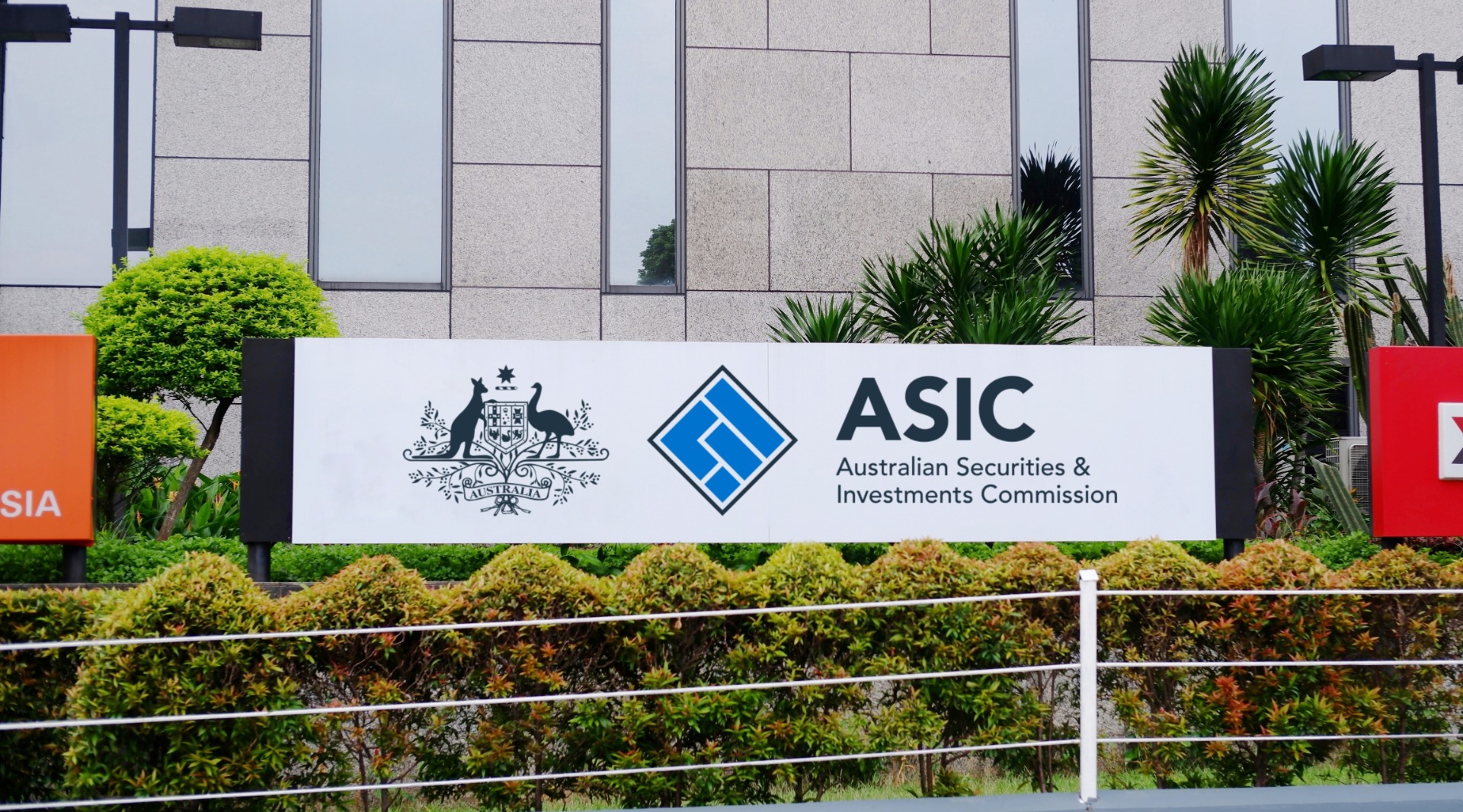
Australian Securities and Investments Commission (ASIC) filed
court papers in Melbourne's Federal Court on Tuesday, alleging
Australian Unity violated design and distribution laws by failing to
review investor questionnaires for nearly two years while continuing to
sell interests in its Select Income Fund.
Court
documents show ASIC is seeking financial penalties and public
disclosure orders against the fund manager, which operates as part of
the broader Australian Unity group that reported revenue of $2.17 billion
in 2024.
The case
centers on Australian Unity's handling of its Select Income Fund, a
mortgage investment scheme that pools investor money into first
mortgage loans. Between October 2021 and October 2023, the company
was required to ensure new investors matched specific criteria outlined in
target market determinations.
According
to ASIC's court filing, Australian Unity created questionnaires
asking potential investors about their financial goals, risk tolerance,
and investment timeframes. The surveys were designed to
help determine whether applicants fit the fund's target market
of income-seeking investors with medium to high risk profiles.
However,
the regulator alleges the company failed to review these
questionnaires from October 2021 until August 2023. During this
period, at least 307 retail investors submitted applications to join the
fund, with 220 completing questionnaires and up to 144
providing responses suggesting they fell outside the target market.
The
court documents reveal that 87 investors were accepted into the fund
without completing any questionnaire at all during the early months
of the relevant period.
ASIC Deputy Chairwoman, Sarah Court
"The
design and distribution obligations are there to help make sure consumers
get appropriate financial products aligned with their
objectives, financial situation and needs," said ASIC
Deputy Chair Sarah Court. "Issuers do not meet these obligations
just by issuing a questionnaire. They need to actively review
investor responses."
The alleged
screening failures exposed investors to substantial financial losses when
some of the fund's underlying mortgage investments soured. Court documents
detail three specific mortgage syndicates where investors lost money:
The Studley Park Road syndicate
saw 23 new investors contribute $1.75 million, only to lose
approximately 35% of their capital when the underlying loan failed
In the Cheng and
Lok Company syndicate, 76 investors put in $8.67 million and are
estimated to have lost 3.3% of their investment
A third Glen Iris project
involving 33 investors and $1.25 million has stopped making distributions
entirely
The Select
Income Fund operates by taking investor money and lending it out as
first mortgages on property developments. Investors receive monthly
interest payments during the loan term, with their principal returned when
the borrower repays.
“Product
issuers must take reasonable steps to ensure that investors are within the
target market before they issue interests in a product,” Court added.
Australian Unity's
wealth and capital markets division manages $18.7 billion in funds and
generated $232.5 million in revenue last year, according to the court
filing.
ASIC is
asking the Federal Court to declare that Australian Unity breached its
legal obligations on 307 separate occasions by issuing fund interests
without proper target market screening. The regulator wants financial
penalties imposed and is seeking orders requiring the company to publicly
disclose the contraventions.
The case
highlights ongoing regulatory scrutiny of Australia's design and distribution
obligations, which came into effect in October 2021 to prevent
unsuitable financial products being sold to retail investors.
Australian
Unity has been served with the court papers and must file a
defense if it intends to contest the allegations.
Australia's
corporate watchdog has launched legal action against Australian Unity Funds
Management, claiming the company issued investment products to retail
clients without properly checking if they were suitable candidates.
ASIC Takes Australian
Unity to Court Over Investment Screening Failures
The
Australian Securities and Investments Commission (ASIC) filed
court papers in Melbourne's Federal Court on Tuesday, alleging
Australian Unity violated design and distribution laws by failing to
review investor questionnaires for nearly two years while continuing to
sell interests in its Select Income Fund.
Court
documents show ASIC is seeking financial penalties and public
disclosure orders against the fund manager, which operates as part of
the broader Australian Unity group that reported revenue of $2.17 billion
in 2024.
The case
centers on Australian Unity's handling of its Select Income Fund, a
mortgage investment scheme that pools investor money into first
mortgage loans. Between October 2021 and October 2023, the company
was required to ensure new investors matched specific criteria outlined in
target market determinations.
According
to ASIC's court filing, Australian Unity created questionnaires
asking potential investors about their financial goals, risk tolerance,
and investment timeframes. The surveys were designed to
help determine whether applicants fit the fund's target market
of income-seeking investors with medium to high risk profiles.
However,
the regulator alleges the company failed to review these
questionnaires from October 2021 until August 2023. During this
period, at least 307 retail investors submitted applications to join the
fund, with 220 completing questionnaires and up to 144
providing responses suggesting they fell outside the target market.
The
court documents reveal that 87 investors were accepted into the fund
without completing any questionnaire at all during the early months
of the relevant period.
ASIC Deputy Chairwoman, Sarah Court
"The
design and distribution obligations are there to help make sure consumers
get appropriate financial products aligned with their
objectives, financial situation and needs," said ASIC
Deputy Chair Sarah Court. "Issuers do not meet these obligations
just by issuing a questionnaire. They need to actively review
investor responses."
The alleged
screening failures exposed investors to substantial financial losses when
some of the fund's underlying mortgage investments soured. Court documents
detail three specific mortgage syndicates where investors lost money:
The Studley Park Road syndicate
saw 23 new investors contribute $1.75 million, only to lose
approximately 35% of their capital when the underlying loan failed
In the Cheng and
Lok Company syndicate, 76 investors put in $8.67 million and are
estimated to have lost 3.3% of their investment
A third Glen Iris project
involving 33 investors and $1.25 million has stopped making distributions
entirely
The Select
Income Fund operates by taking investor money and lending it out as
first mortgages on property developments. Investors receive monthly
interest payments during the loan term, with their principal returned when
the borrower repays.
“Product
issuers must take reasonable steps to ensure that investors are within the
target market before they issue interests in a product,” Court added.
Australian Unity's
wealth and capital markets division manages $18.7 billion in funds and
generated $232.5 million in revenue last year, according to the court
filing.
ASIC is
asking the Federal Court to declare that Australian Unity breached its
legal obligations on 307 separate occasions by issuing fund interests
without proper target market screening. The regulator wants financial
penalties imposed and is seeking orders requiring the company to publicly
disclose the contraventions.
The case
highlights ongoing regulatory scrutiny of Australia's design and distribution
obligations, which came into effect in October 2021 to prevent
unsuitable financial products being sold to retail investors.
Australian
Unity has been served with the court papers and must file a
defense if it intends to contest the allegations.
Damian Chmiel is a Senior Analyst & Editor at Finance Magnates with more than 15 years of experience in the CFD and online trading industry. Active as both a trader and journalist since 2010, he focuses on broker coverage, fintech innovation, and regulatory developments across Europe, the Middle East, and Asia.
His work includes interviews with C-level leaders at major brokerages and fintech platforms, as well as co-authoring Finance Magnates’ quarterly industry benchmarking reports. Damian’s reporting is data-driven, market-aware, and grounded in direct industry engagement. His analysis and commentary have also been cited by external media outlets, including Investing.com, Binance, The Asset, Stockhead, and Dispatch.
Education:
MA in Finance and Accounting, Cracow University of Economics
Retail Traders Can Now Access Prediction Markets Through Binance Wallet
FP Markets Winner Spotlight 🏆 | Global Broker of the Year 2025 #Trading #Broker #Innovation #Shorts
FP Markets Winner Spotlight 🏆 | Global Broker of the Year 2025 #Trading #Broker #Innovation #Shorts
FP Markets takes the spotlight as Global Broker of the Year 2025 at the Finance Magnates Awards.
Martin Stoilov, Head of Client Experience, shares that trust, innovation, and people played a key role in the company’s success, supported by a strong foundation of integrity and client-centricity.
Following this milestone, FP Markets continues to focus on growth, technology investment, and its core values of transparency and excellence.
👉 Be part of FM Awards 2026: https://awards.financemagnates.com/#nominate
FP Markets takes the spotlight as Global Broker of the Year 2025 at the Finance Magnates Awards.
Martin Stoilov, Head of Client Experience, shares that trust, innovation, and people played a key role in the company’s success, supported by a strong foundation of integrity and client-centricity.
Following this milestone, FP Markets continues to focus on growth, technology investment, and its core values of transparency and excellence.
👉 Be part of FM Awards 2026: https://awards.financemagnates.com/#nominate
In this video, we review @HolaPrimeMarketsOfficial, a multi-asset forex and CFDs broker offering different account types, trading platforms, and flexible trading conditions.
We cover the broker’s overall offering, including account options, trading environment, platforms like MT4 and MT5, and additional services such as managed accounts and fast withdrawals.
Watch the full video to see if Hola Prime Markets fits your trading needs.
📣 Stay up to date with the latest in finance and trading. Follow Finance Magnates for industry news, insights, and global event coverage.
Connect with us:
🔗 LinkedIn: /financemagnates
👍 Facebook: /financemagnates
📸 Instagram: https://www.instagram.com/financemagnates
🐦 X: https://x.com/financemagnates
🎥 TikTok: https://www.tiktok.com/tag/financemagnates
▶️ YouTube: /@financemagnates_official
#HolaPrime #ForexBroker #CFDTrading #FinanceMagnates #Trading #Forex #BrokerReview
In this video, we review @HolaPrimeMarketsOfficial, a multi-asset forex and CFDs broker offering different account types, trading platforms, and flexible trading conditions.
We cover the broker’s overall offering, including account options, trading environment, platforms like MT4 and MT5, and additional services such as managed accounts and fast withdrawals.
Watch the full video to see if Hola Prime Markets fits your trading needs.
📣 Stay up to date with the latest in finance and trading. Follow Finance Magnates for industry news, insights, and global event coverage.
Connect with us:
🔗 LinkedIn: /financemagnates
👍 Facebook: /financemagnates
📸 Instagram: https://www.instagram.com/financemagnates
🐦 X: https://x.com/financemagnates
🎥 TikTok: https://www.tiktok.com/tag/financemagnates
▶️ YouTube: /@financemagnates_official
#HolaPrime #ForexBroker #CFDTrading #FinanceMagnates #Trading #Forex #BrokerReview
Hola Prime Review: What You Need to Know | Full Breakdown by Finance Magnates
Hola Prime Review: What You Need to Know | Full Breakdown by Finance Magnates
In this video, we review @HolaPrime_Global, a proprietary trading firm offering evaluation programs and performance-based payouts in simulated market environments.
We cover how the challenge model works, including account types, profit splits (up to 95%), trading rules, and what it takes to reach a funded account. You’ll also learn about available platforms like MT4, MT5, cTrader, and more, along with insights into payouts, support, and trading conditions.
Watch the full video to see if Hola Prime fits your trading style.
📣 Stay up to date with the latest in finance and trading. Follow Finance Magnates for industry news, insights, and global event coverage.
Connect with us:
🔗 LinkedIn: /financemagnates
👍 Facebook: /financemagnates
📸 Instagram: https://www.instagram.com/financemagnates
🐦 X: https://x.com/financemagnates
🎥 TikTok: https://www.tiktok.com/tag/financemagnates
▶️ YouTube: /@financemagnates_official
#HolaPrime #PropFirm #Trading #FinanceMagnates #Forex #FuturesTrading #TradingReview #PropFirmReview
In this video, we review @HolaPrime_Global, a proprietary trading firm offering evaluation programs and performance-based payouts in simulated market environments.
We cover how the challenge model works, including account types, profit splits (up to 95%), trading rules, and what it takes to reach a funded account. You’ll also learn about available platforms like MT4, MT5, cTrader, and more, along with insights into payouts, support, and trading conditions.
Watch the full video to see if Hola Prime fits your trading style.
📣 Stay up to date with the latest in finance and trading. Follow Finance Magnates for industry news, insights, and global event coverage.
Connect with us:
🔗 LinkedIn: /financemagnates
👍 Facebook: /financemagnates
📸 Instagram: https://www.instagram.com/financemagnates
🐦 X: https://x.com/financemagnates
🎥 TikTok: https://www.tiktok.com/tag/financemagnates
▶️ YouTube: /@financemagnates_official
#HolaPrime #PropFirm #Trading #FinanceMagnates #Forex #FuturesTrading #TradingReview #PropFirmReview
Axi Winner Spotlight 🏆 | Global Most Innovative Broker 2025 #Innovation #Trading #Fintech #Broker
Axi Winner Spotlight 🏆 | Global Most Innovative Broker 2025 #Innovation #Trading #Fintech #Broker
Axi takes the spotlight at the Finance Magnates Awards, winning Global Most Innovative Broker 2025.
Olivia Xenofontos and Ivanna Openko share how the team will feel: proud, motivated, and ready to keep delivering.
They also describe the night as well-organized, focused, and enjoyable for all.
👉 Be part of FM Awards 2026.
Axi takes the spotlight at the Finance Magnates Awards, winning Global Most Innovative Broker 2025.
Olivia Xenofontos and Ivanna Openko share how the team will feel: proud, motivated, and ready to keep delivering.
They also describe the night as well-organized, focused, and enjoyable for all.
👉 Be part of FM Awards 2026.
Recognition that matters.
Built on transparency.
Driven by the industry.
The Finance Magnates Awards 2026.
Nominations are now open.
🔗 https://awards.financemagnates.com/?utm_source=SM&utm_medium=social&utm_campaign=recognition-matters
Recognition that matters.
Built on transparency.
Driven by the industry.
The Finance Magnates Awards 2026.
Nominations are now open.
🔗 https://awards.financemagnates.com/?utm_source=SM&utm_medium=social&utm_campaign=recognition-matters