MetaQuotes has been increasingly enforcing a clause in its contract to restrict brokers from integrating with third-party platforms, such as TradingView.
An industry expert believes that MetaQuotes “does not want traders getting used to any other front ends.”
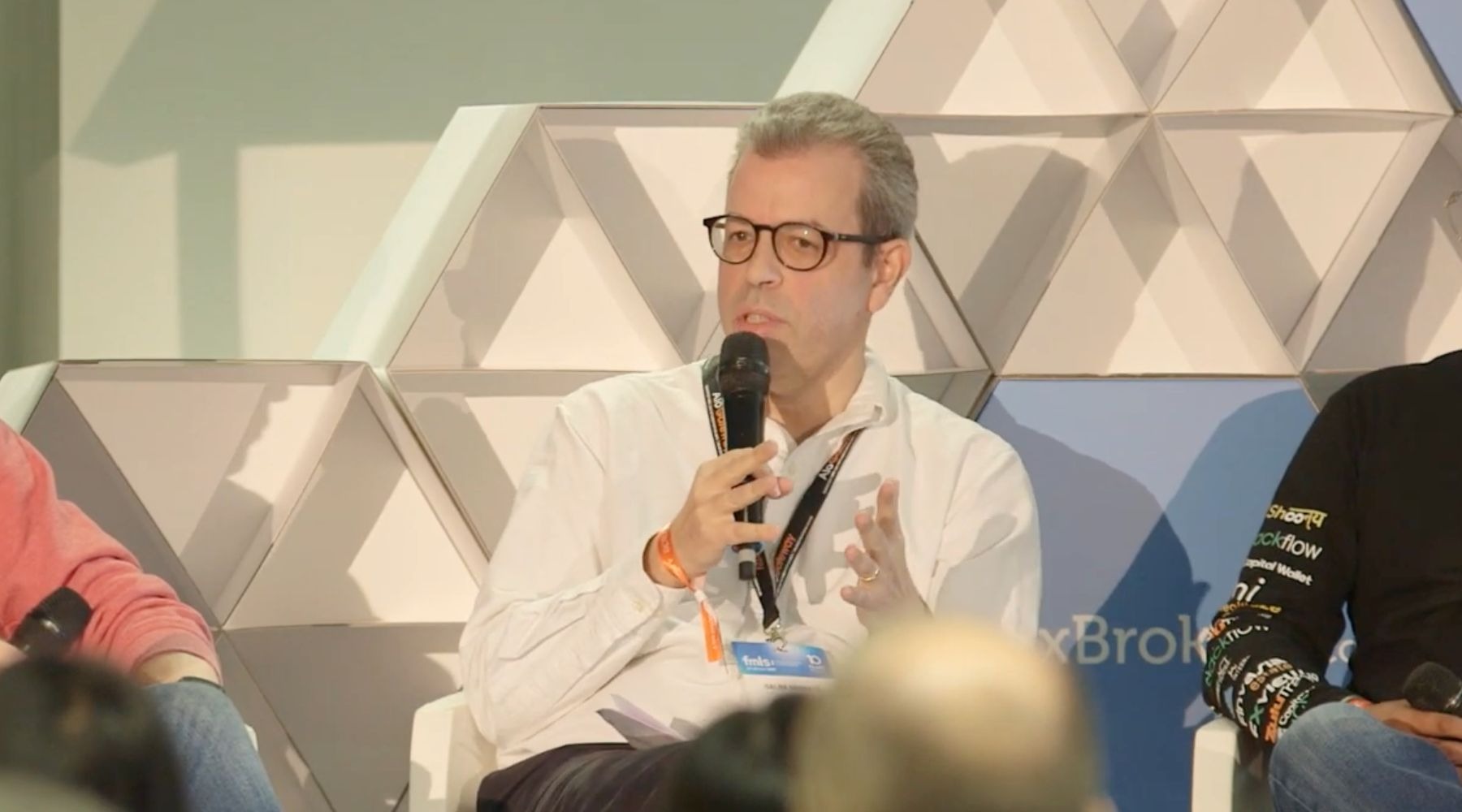
MetaQuotes booth at FMLS:24
MetaQuotes, the developer of the two MetaTrader platforms, is restricting brokers from integrating TradingView with the support of MT4 and MT5 on the backend. The company has restricted multiple brokers from using MetaTrader with TradingView, Finance Magnates has learned from several industry sources.
Third-Party Integration Is Forbidden
The technology giant has crafted the clauses in MetaTrader platforms' usage terms and conditions to restrict brokers from integrating with other third-party platforms, Finance Magnates verified. The terms do not specifically mention TradingView but cover all non-MetaTrader trading environments.
One of the brokers cited its contract with MetaQuotes and told Finance Magnates that “any trading apps that do not rely on MetaQuotes’ API cannot be connected to MetaTrader. Such third-party connections would be a violation of the contract.”
Although it is unclear when exactly MetaQuotes began to expedite the enforcement of the restrictions, industry insiders estimate that it started sometime last year.
“We do not think there is a reason to implement any restrictive measure from either side,” Rauan Khassan, TradingView’s Vice President of International Growth, told Finance Magnates. “At TradingView, we are open to working across asset classes, brokerages, and platforms.”
Technically, TradingView integration using MetaTrader is still indirectly possible with the support of another third-party technology stack between the two platforms. However, one such platform confirmed to Finance Magnates that it always asks brokers to seek approval from MetaQuotes first, before proceeding with any such indirect integration.
“There are a few dozen brokers supporting TradingView alongside MetaTrader. We are not aware of any integration connected to its solution, though,” Khassan added.
A Platform with Over 90 Million Users
Unlike other popular trading platforms, TradingView acts more like a front-end platform. Known for its charting tools, the platform allows traders with integrated brokers to execute trades directly from the charting environment but requires the support of another trading platform on the backend.
As a broker explained, “The TradingView platform is technically a chart + ‘send order’ function; everything else is handled by the broker, whether through their proprietary platforms or third-party platforms.”
However, TradingView’s popularity in the trading industry is another factor behind brokers’ willingness to integrate their services. At the time of writing, 83 brokers and other trading platforms, including stocks and CFD brokers, and cryptocurrency exchanges, are integrated with TradingView. According to TradingView, it has over 90 million users, who are traders and investors, while SimilarWeb estimated the total visits to the platform to be 218.2 million in November.
A screenshot of the list of some brokers that have integrated TradingView
As traders and investors are already on the platform, using its charting tools, it is very logical for brokers to offer trade execution directly from their platform to their clients.
One broker also highlighted that TradingView integrations would bring the best value for brokers. However, it was forced to scrap such plans due to its agreement with MetaQuotes.
MetaTrader is also a dominant player in CFD trading. Its legacy platform, MT4, has dominated the industry for about two decades, but the company is now pushing to adopt its newer MT5 platform. As Finance Magnates Intelligence forecasted, trading volumes on MT5 will soon surpass those on MT4.
The limitations imposed by MetaQuotes for using MetaTrader with other platforms show that the tech giant is hesitant to make traders accustomed to other front-ends.
“MetaQuotes does not want traders getting used to any other front ends,” explained Jon Light, Head of OTC Platform at Devexperts, the software developer behind DXtrade. A brokerage representative also pointed out that “TradingView is versatile and is the only platform that can challenge MetaTrader’s dominance.”
Meanwhile, MetaQuotes has also decided to increase the licensing fees for MT4 and MT5 starting next month. Although the company did not provide details, an industry insider estimated the increase to be at least 20 per cent.
Trading Platforms See Value in TradingView Integration
While MetaQuotes is hesitant to integrate its platforms with TradingView, other third-party trading platforms see the benefits of such integration.
“We’ve already seen that this approach brings net positive added value,” TradingView’s Khassan added. “We do not distribute the same audience between an increasing partner list but rather actively increase the total participating audience volume and number.”
Finance Magnates reached out to MetaQuotes but received no reply.
MetaQuotes, the developer of the two MetaTrader platforms, is restricting brokers from integrating TradingView with the support of MT4 and MT5 on the backend. The company has restricted multiple brokers from using MetaTrader with TradingView, Finance Magnates has learned from several industry sources.
Third-Party Integration Is Forbidden
The technology giant has crafted the clauses in MetaTrader platforms' usage terms and conditions to restrict brokers from integrating with other third-party platforms, Finance Magnates verified. The terms do not specifically mention TradingView but cover all non-MetaTrader trading environments.
One of the brokers cited its contract with MetaQuotes and told Finance Magnates that “any trading apps that do not rely on MetaQuotes’ API cannot be connected to MetaTrader. Such third-party connections would be a violation of the contract.”
Although it is unclear when exactly MetaQuotes began to expedite the enforcement of the restrictions, industry insiders estimate that it started sometime last year.
“We do not think there is a reason to implement any restrictive measure from either side,” Rauan Khassan, TradingView’s Vice President of International Growth, told Finance Magnates. “At TradingView, we are open to working across asset classes, brokerages, and platforms.”
Technically, TradingView integration using MetaTrader is still indirectly possible with the support of another third-party technology stack between the two platforms. However, one such platform confirmed to Finance Magnates that it always asks brokers to seek approval from MetaQuotes first, before proceeding with any such indirect integration.
“There are a few dozen brokers supporting TradingView alongside MetaTrader. We are not aware of any integration connected to its solution, though,” Khassan added.
A Platform with Over 90 Million Users
Unlike other popular trading platforms, TradingView acts more like a front-end platform. Known for its charting tools, the platform allows traders with integrated brokers to execute trades directly from the charting environment but requires the support of another trading platform on the backend.
As a broker explained, “The TradingView platform is technically a chart + ‘send order’ function; everything else is handled by the broker, whether through their proprietary platforms or third-party platforms.”
However, TradingView’s popularity in the trading industry is another factor behind brokers’ willingness to integrate their services. At the time of writing, 83 brokers and other trading platforms, including stocks and CFD brokers, and cryptocurrency exchanges, are integrated with TradingView. According to TradingView, it has over 90 million users, who are traders and investors, while SimilarWeb estimated the total visits to the platform to be 218.2 million in November.
A screenshot of the list of some brokers that have integrated TradingView
As traders and investors are already on the platform, using its charting tools, it is very logical for brokers to offer trade execution directly from their platform to their clients.
One broker also highlighted that TradingView integrations would bring the best value for brokers. However, it was forced to scrap such plans due to its agreement with MetaQuotes.
MetaTrader is also a dominant player in CFD trading. Its legacy platform, MT4, has dominated the industry for about two decades, but the company is now pushing to adopt its newer MT5 platform. As Finance Magnates Intelligence forecasted, trading volumes on MT5 will soon surpass those on MT4.
The limitations imposed by MetaQuotes for using MetaTrader with other platforms show that the tech giant is hesitant to make traders accustomed to other front-ends.
“MetaQuotes does not want traders getting used to any other front ends,” explained Jon Light, Head of OTC Platform at Devexperts, the software developer behind DXtrade. A brokerage representative also pointed out that “TradingView is versatile and is the only platform that can challenge MetaTrader’s dominance.”
Meanwhile, MetaQuotes has also decided to increase the licensing fees for MT4 and MT5 starting next month. Although the company did not provide details, an industry insider estimated the increase to be at least 20 per cent.
Trading Platforms See Value in TradingView Integration
While MetaQuotes is hesitant to integrate its platforms with TradingView, other third-party trading platforms see the benefits of such integration.
“We’ve already seen that this approach brings net positive added value,” TradingView’s Khassan added. “We do not distribute the same audience between an increasing partner list but rather actively increase the total participating audience volume and number.”
Finance Magnates reached out to MetaQuotes but received no reply.
Yam Yehoshua is Editor-in-Chief, leading coverage of the global online trading, fintech, and digital assets sectors. He sets editorial direction and oversees how major developments are reported and explained for industry professionals.
Under his leadership, the newsroom focuses on the structural trends affecting brokers, trading platforms, and market infrastructure, including regulation, licensing, consolidation, and the evolution of CFD and crypto business models. The editorial approach prioritises clarity, financial accuracy, and relevance for decision-makers.
Yam has a background in both print and digital journalism and works closely with executives, regulators, and operators across key jurisdictions. His work is focused on separating market narrative from financial reality and ensuring coverage reflects how the industry operates in practice, not just how it is marketed.
Education:
Journalism and Communication Studies (Diploma Program)
Headline College, Tel Aviv, Israel
Arnab Shome is an electronics engineer-turned-financial editor. He holds a Bachelor of Technology from the National Institute of Technology, Agartala. He entered the retail trading industry about a decade ago, covering the cryptocurrency market for Finance Magnates, and later expanded his coverage to include forex and CFDs as well.
His work at Finance Magnates includes C-level interviews, data-driven analysis, opinion pieces, and scoops of industry exclusives. He also contributes to Finance Magnates’ quarterly industry report.
Area of coverage:
1. CFD broker-related news
2. Industry-related Regulatory updates and developments
3. New retail trading trends
4. Prop trading industry updates
5. Executive interviews
Education:
Bachelor of Technology - National Institute of Technology, Agartala (India)
In this video, we review @HolaPrimeMarketsOfficial, a multi-asset forex and CFDs broker offering different account types, trading platforms, and flexible trading conditions.
We cover the broker’s overall offering, including account options, trading environment, platforms like MT4 and MT5, and additional services such as managed accounts and fast withdrawals.
Watch the full video to see if Hola Prime Markets fits your trading needs.
📣 Stay up to date with the latest in finance and trading. Follow Finance Magnates for industry news, insights, and global event coverage.
Connect with us:
🔗 LinkedIn: /financemagnates
👍 Facebook: /financemagnates
📸 Instagram: https://www.instagram.com/financemagnates
🐦 X: https://x.com/financemagnates
🎥 TikTok: https://www.tiktok.com/tag/financemagnates
▶️ YouTube: /@financemagnates_official
#HolaPrime #ForexBroker #CFDTrading #FinanceMagnates #Trading #Forex #BrokerReview
In this video, we review @HolaPrimeMarketsOfficial, a multi-asset forex and CFDs broker offering different account types, trading platforms, and flexible trading conditions.
We cover the broker’s overall offering, including account options, trading environment, platforms like MT4 and MT5, and additional services such as managed accounts and fast withdrawals.
Watch the full video to see if Hola Prime Markets fits your trading needs.
📣 Stay up to date with the latest in finance and trading. Follow Finance Magnates for industry news, insights, and global event coverage.
Connect with us:
🔗 LinkedIn: /financemagnates
👍 Facebook: /financemagnates
📸 Instagram: https://www.instagram.com/financemagnates
🐦 X: https://x.com/financemagnates
🎥 TikTok: https://www.tiktok.com/tag/financemagnates
▶️ YouTube: /@financemagnates_official
#HolaPrime #ForexBroker #CFDTrading #FinanceMagnates #Trading #Forex #BrokerReview
Hola Prime Review: What You Need to Know | Full Breakdown by Finance Magnates
Hola Prime Review: What You Need to Know | Full Breakdown by Finance Magnates
In this video, we review @HolaPrime_Global, a proprietary trading firm offering evaluation programs and performance-based payouts in simulated market environments.
We cover how the challenge model works, including account types, profit splits (up to 95%), trading rules, and what it takes to reach a funded account. You’ll also learn about available platforms like MT4, MT5, cTrader, and more, along with insights into payouts, support, and trading conditions.
Watch the full video to see if Hola Prime fits your trading style.
📣 Stay up to date with the latest in finance and trading. Follow Finance Magnates for industry news, insights, and global event coverage.
Connect with us:
🔗 LinkedIn: /financemagnates
👍 Facebook: /financemagnates
📸 Instagram: https://www.instagram.com/financemagnates
🐦 X: https://x.com/financemagnates
🎥 TikTok: https://www.tiktok.com/tag/financemagnates
▶️ YouTube: /@financemagnates_official
#HolaPrime #PropFirm #Trading #FinanceMagnates #Forex #FuturesTrading #TradingReview #PropFirmReview
In this video, we review @HolaPrime_Global, a proprietary trading firm offering evaluation programs and performance-based payouts in simulated market environments.
We cover how the challenge model works, including account types, profit splits (up to 95%), trading rules, and what it takes to reach a funded account. You’ll also learn about available platforms like MT4, MT5, cTrader, and more, along with insights into payouts, support, and trading conditions.
Watch the full video to see if Hola Prime fits your trading style.
📣 Stay up to date with the latest in finance and trading. Follow Finance Magnates for industry news, insights, and global event coverage.
Connect with us:
🔗 LinkedIn: /financemagnates
👍 Facebook: /financemagnates
📸 Instagram: https://www.instagram.com/financemagnates
🐦 X: https://x.com/financemagnates
🎥 TikTok: https://www.tiktok.com/tag/financemagnates
▶️ YouTube: /@financemagnates_official
#HolaPrime #PropFirm #Trading #FinanceMagnates #Forex #FuturesTrading #TradingReview #PropFirmReview
Axi Winner Spotlight 🏆 | Global Most Innovative Broker 2025 #Innovation #Trading #Fintech #Broker
Axi Winner Spotlight 🏆 | Global Most Innovative Broker 2025 #Innovation #Trading #Fintech #Broker
Axi takes the spotlight at the Finance Magnates Awards, winning Global Most Innovative Broker 2025.
Olivia Xenofontos and Ivanna Openko share how the team will feel: proud, motivated, and ready to keep delivering.
They also describe the night as well-organized, focused, and enjoyable for all.
👉 Be part of FM Awards 2026.
Axi takes the spotlight at the Finance Magnates Awards, winning Global Most Innovative Broker 2025.
Olivia Xenofontos and Ivanna Openko share how the team will feel: proud, motivated, and ready to keep delivering.
They also describe the night as well-organized, focused, and enjoyable for all.
👉 Be part of FM Awards 2026.
Recognition that matters.
Built on transparency.
Driven by the industry.
The Finance Magnates Awards 2026.
Nominations are now open.
🔗 https://awards.financemagnates.com/?utm_source=SM&utm_medium=social&utm_campaign=recognition-matters
Recognition that matters.
Built on transparency.
Driven by the industry.
The Finance Magnates Awards 2026.
Nominations are now open.
🔗 https://awards.financemagnates.com/?utm_source=SM&utm_medium=social&utm_campaign=recognition-matters
Tickmill Winner Spotlight | Broker of the Year 2025 (LATAM) 🏆 | Finance Magnates Awards #Trading
Tickmill Winner Spotlight | Broker of the Year 2025 (LATAM) 🏆 | Finance Magnates Awards #Trading
What helped Tickmill stand out this year?
In this Winner Spotlight, Johnny Khalil, Executive Director at Tickmill Europe, shares how listening closely to clients and delivering strong trading conditions made the difference.
A big thank you to the community whose support continues to drive progress every day.
👉 Think your brand has what it takes? Nominate for the 2026 Finance Magnates Awards: https://awards.financemagnates.com/#nominate
What helped Tickmill stand out this year?
In this Winner Spotlight, Johnny Khalil, Executive Director at Tickmill Europe, shares how listening closely to clients and delivering strong trading conditions made the difference.
A big thank you to the community whose support continues to drive progress every day.
👉 Think your brand has what it takes? Nominate for the 2026 Finance Magnates Awards: https://awards.financemagnates.com/#nominate