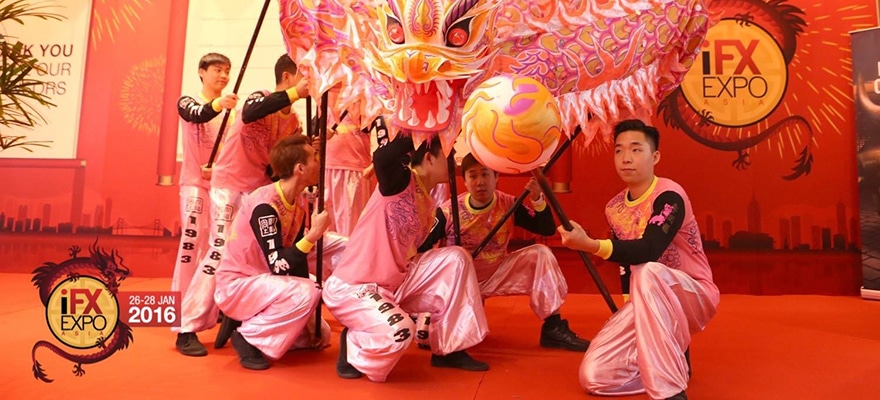
In part two of the review of the iFX Expo, we take a look at the importance of being a global brand, automation and lack of regulation.
FM
In part two of the ‘What I Learned at the iFX Expo’ series we continue to delve into some of the interesting revelations emanating from the event. Part one focused on why localization is important for the sales and marketing process for brokers, how MT4 is growing without localization and what is hampering the existence of a killer mobile app.
Why? Well one of the surprising things to me was that Chinese traders are valuing global brands ahead of foreign players. In actuality, this shouldn’t be such a surprise when we take into account the demand for products from globally recognized brands such as Apple, Rolex, Versace and Tiffany.
This has led to a trend of brokers in China opening up offices in other countries to become regulated there. A few years ago NZ was the prime destination, but this has evolved to Australia, Cyprus and the UK.
Automation
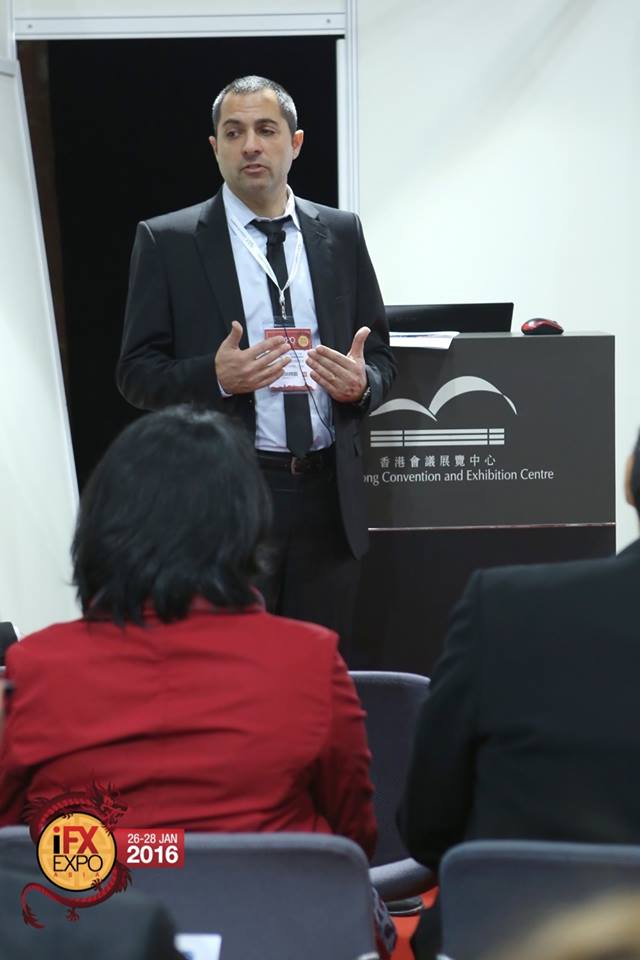
Oded Sheffer, CEO, cPattern, presenting at the iFX Expo
An interesting debate is how technology advanced Asia. Strolling around Hong Kong, there is a feeling that you are living in the future. So, there is no denying that technology is not only being embraced, but is being led by the East.
But, one area the region seems to be catching up in is in relation to big data, automation, and algo trading. For example, with the exception of a few platforms such as from Traders Securities, algo trading is limited in Japan's retail market. This is despite the country leading the world in retail forex volumes.
Elsewhere, in a conversation with cPattern CEO Oded Sheffer, he cited seeing similar findings from brokers in Asia that his firm has been communicating with. Sheffer found that while brokers are able to scale their business quickly and adopt new products, areas such as automated marketing through emails and targeted behavior initiated notifications are lacking.
This trend also emerged during the CEO panel. When asked how some of the world's largest brokers including Saxo Bank, GAIN Capital, OANDA and Alpari are marketing in China, they are overwhelmingly focusing on partnerships.
This was interesting as participating on the marketing panel was Frankie Ho, general manager of Baidu. Within the panel he discussed data based search engine marketing opportunities that are available for brokers to acquire customers in China. As such, it appears that at least for the forex industry, there are areas of Asia where use of data is either being ignored, or information isn't complete enough to use it to base decisions on.
Growth in no regulation
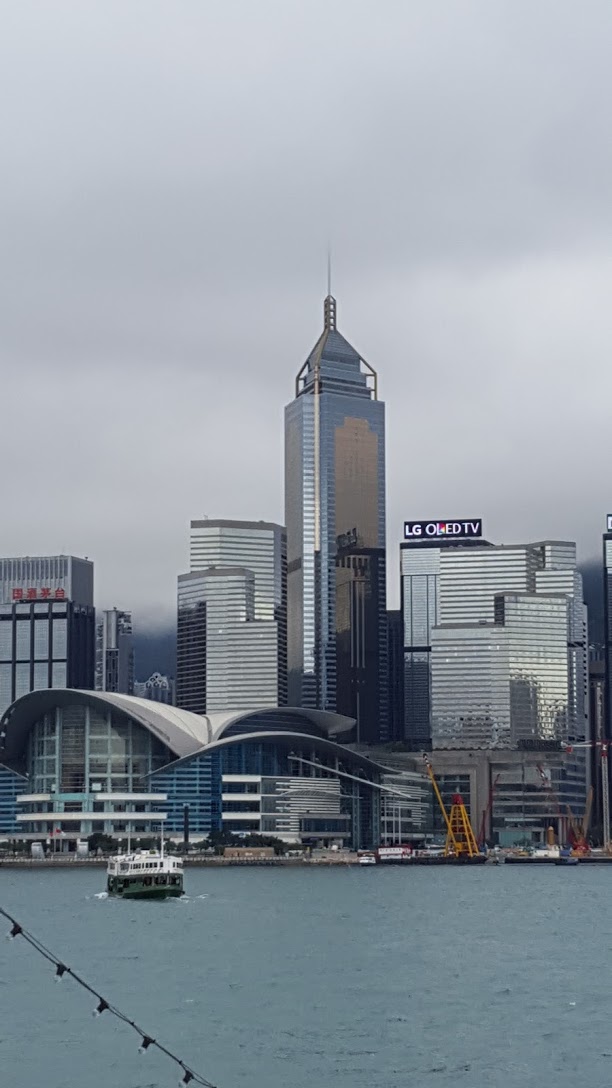
Hong Kong Convention Center, home of the iFX Expo
Can you guess what two countries were cited as the most interesting in Asia? The names I heard the most often were China and Malaysia. China is desirable for the massive size of its market and Malaysia because of the adoption of multilevel marketing which has enabled brokers to find willing partners in the country.
But, neither has formal forex regulation in place. In Malaysia’s case, they banned it a few years back. This has resulted in local firms scaling back their operations, but foreigners coming in to market.
In China, there is no formal opinion from the government of their view towards forex and binary options. What does exist are overall business rules requiring foreign businesses to partner with local firms to operate in the county. Except for that facet of operating in China, everyone seems to have an opinion about everything else including the future of forex and binary options, but who knows what really is going to happen there.
The bottom line is that the two countries viewed as having the most growth in Asia, may also provide the largest problems in the future for brokers operating there.
In part two of the ‘What I Learned at the iFX Expo’ series we continue to delve into some of the interesting revelations emanating from the event. Part one focused on why localization is important for the sales and marketing process for brokers, how MT4 is growing without localization and what is hampering the existence of a killer mobile app.
Why? Well one of the surprising things to me was that Chinese traders are valuing global brands ahead of foreign players. In actuality, this shouldn’t be such a surprise when we take into account the demand for products from globally recognized brands such as Apple, Rolex, Versace and Tiffany.
This has led to a trend of brokers in China opening up offices in other countries to become regulated there. A few years ago NZ was the prime destination, but this has evolved to Australia, Cyprus and the UK.
Automation
Oded Sheffer, CEO, cPattern, presenting at the iFX Expo
An interesting debate is how technology advanced Asia. Strolling around Hong Kong, there is a feeling that you are living in the future. So, there is no denying that technology is not only being embraced, but is being led by the East.
But, one area the region seems to be catching up in is in relation to big data, automation, and algo trading. For example, with the exception of a few platforms such as from Traders Securities, algo trading is limited in Japan's retail market. This is despite the country leading the world in retail forex volumes.
Elsewhere, in a conversation with cPattern CEO Oded Sheffer, he cited seeing similar findings from brokers in Asia that his firm has been communicating with. Sheffer found that while brokers are able to scale their business quickly and adopt new products, areas such as automated marketing through emails and targeted behavior initiated notifications are lacking.
This trend also emerged during the CEO panel. When asked how some of the world's largest brokers including Saxo Bank, GAIN Capital, OANDA and Alpari are marketing in China, they are overwhelmingly focusing on partnerships.
This was interesting as participating on the marketing panel was Frankie Ho, general manager of Baidu. Within the panel he discussed data based search engine marketing opportunities that are available for brokers to acquire customers in China. As such, it appears that at least for the forex industry, there are areas of Asia where use of data is either being ignored, or information isn't complete enough to use it to base decisions on.
Growth in no regulation
Hong Kong Convention Center, home of the iFX Expo
Can you guess what two countries were cited as the most interesting in Asia? The names I heard the most often were China and Malaysia. China is desirable for the massive size of its market and Malaysia because of the adoption of multilevel marketing which has enabled brokers to find willing partners in the country.
But, neither has formal forex regulation in place. In Malaysia’s case, they banned it a few years back. This has resulted in local firms scaling back their operations, but foreigners coming in to market.
In China, there is no formal opinion from the government of their view towards forex and binary options. What does exist are overall business rules requiring foreign businesses to partner with local firms to operate in the county. Except for that facet of operating in China, everyone seems to have an opinion about everything else including the future of forex and binary options, but who knows what really is going to happen there.
The bottom line is that the two countries viewed as having the most growth in Asia, may also provide the largest problems in the future for brokers operating there.
iForex posts its first annual results as a listed broker. Also ahead: CFI Financial secures a Brazil license, and prediction markets have a big week, with new ETF launches and fresh Polymarket loss data. It's Thursday, the thirtieth of April 2026. You're listening to the Finance Magnates Daily Brief.
FM Daily Brief - 29 April 2026
XTB and Robinhood both post first-quarter earnings. But the numbers point in very different directions. Also ahead: Capital.com pushes into three new markets and signals a move into payments.
It's Wednesday, the 29th of April 2026. You're listening to the Finance Magnates Daily Brief.
XTB and Robinhood both post first-quarter earnings. But the numbers point in very different directions. Also ahead: Capital.com pushes into three new markets and signals a move into payments.
It's Wednesday, the 29th of April 2026. You're listening to the Finance Magnates Daily Brief.
XTB and Robinhood both post first-quarter earnings. But the numbers point in very different directions. Also ahead: Capital.com pushes into three new markets and signals a move into payments.
It's Wednesday, the 29th of April 2026. You're listening to the Finance Magnates Daily Brief.
XTB and Robinhood both post first-quarter earnings. But the numbers point in very different directions. Also ahead: Capital.com pushes into three new markets and signals a move into payments.
It's Wednesday, the 29th of April 2026. You're listening to the Finance Magnates Daily Brief.
XTB and Robinhood both post first-quarter earnings. But the numbers point in very different directions. Also ahead: Capital.com pushes into three new markets and signals a move into payments.
It's Wednesday, the 29th of April 2026. You're listening to the Finance Magnates Daily Brief.
XTB and Robinhood both post first-quarter earnings. But the numbers point in very different directions. Also ahead: Capital.com pushes into three new markets and signals a move into payments.
It's Wednesday, the 29th of April 2026. You're listening to the Finance Magnates Daily Brief.
FM Daily Brief - 28 April 2026
Startrader posts three-point-one trillion dollars in first-quarter volume — up three hundred and forty percent from a year ago. Also ahead: Fintokei claims sub-second trader payouts, and eToro opens its premium subscription tier to all investors.
FM Daily Brief - 27 April 2026
Finance Magnates spoke with IG Group's MENA CEO. Also ahead: EC Markets posts a record five-point-one-three trillion dollar first quarter. Plus Hola Prime brings in Deloitte to audit prop firm payouts.