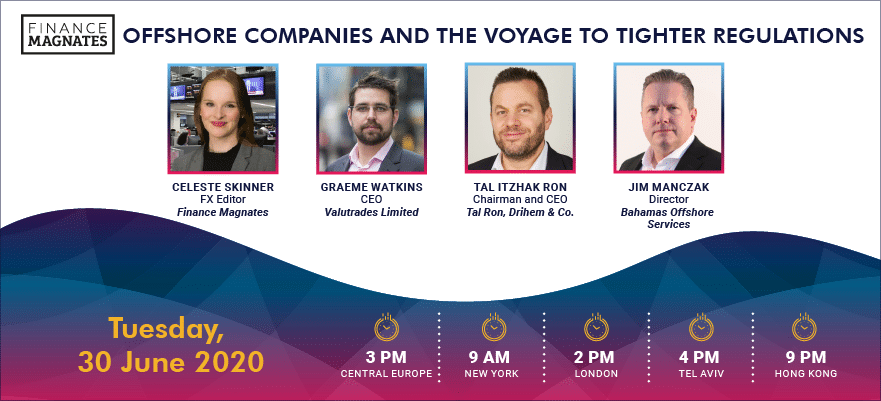
Finance Magnates met with three industry experts to discuss the future of offshore jurisdictions.
FM
Ever since the European Securities and Markets Authority (ESMA) implemented its product intervention measures back in 2018, the landscape of offshore jurisdictions has been changing.
With more brokers operating in island nations and outside of Tier 1 regulatory jurisdictions, local regulators have been paying attention, with some, such as the Securities Commission of The Bahamas making big moves to try and regulate and control the booming industry within its country.
On Tuesday, June 30th, Finance Magnates caught up with regulation experts Jim Manczak and Tal Itzhak Ron, as well as Valutrades’ Graeme Watkins, to discuss offshore jurisdictions - what’s the situation now, what does the future hold, and more. The following is an excerpt of the discussion that has been edited for clarity and length.
To listen to the full panel discussion, which was entitled ‘Offshore Companies and the Voyage to Tighter Regulations,” click the SoundCloud or YouTube links.
The Bahamas implements leverage restrictions
Recently, the Securities Commission of The Bahamas introduced a suite of new regulation - leverage restrictions, the banning of binary options, and a new free structure which has significantly increased the cost of securing and maintaining a CFD licence within the country.
The new fees for CFD providers dramatically increase the annual cost of having a Bahamas licence to more than $230,000 per year, which is almost 15 times more than the previous cost of around $16,500.
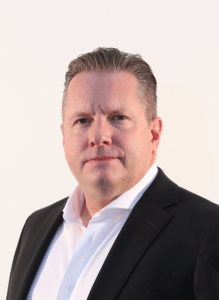
Jim Manczak, Director of Bahamas Offshore Services
Jim Manczak, Director of Bahamas Offshore Services, has worked closely with the local regulator for years, and pointed out the regulator acknowledged that it was not prepared for the mass immigration of clients and brokers since ESMA and that it would need to update its rules.
“The Securities Commission of The Bahamas is making a statement that they are a premium jurisdiction, that they’re not like other offshore jurisdiction that have either a light touch or very little regulation.”
A long-term strategy
Graeme Watkins, the CEO at Valutrades Limited, which has operations in the UK licensed by the FCA, and an entity in Seychelles, believes that the new regulation is a good long-term move for the country.
Graeme Watkins, the CEO at Valutrades Limited
“I think in the short-term they’re going to see a lot less applications as, particular straight after ESMA, and even continuing now, it’s not so much that a broker is choosing where they want to be regulated, and more they’re just running to ‘give me the regulatory stamp, let me do whatever I want’. So in the short-term, I am sure they will see less applications and brokers will continue to look for where they can get the highest leverage, the least restrictions.
“But actually, for the medium and long term, I think it’s probably a reasonably strong move because what we’re worried about is, if there are no restrictions, you’re going to let bad players in. The more bad players you let in, eventually, you have some form of blow-up, scandal, someone’s run away with client money and then that’s going to taint the whole jurisdiction and possibly bring more foreign restrictions on that jurisdiction and how they can operate.
“So I think right now, everyone is still chasing the higher leverage, the less restrictions, but over time I am sure there will be a gradual preference to those jurisdictions that can hold on to some form of good control premium perspective in the market.”
The Bahamas is trying to keep brokers out
However, Tal Itzhak Ron, Chairman and CEO at legal firm Tal Ron, Drihem & Co. believes the move from The Bahamas will see its popularity fall off, and no longer be a sought-after jurisdiction.
Tal Itzhak Ron, Chairman and CEO at legal firm Tal Ron, Drihem & Co.
“The Bahamas was very useful. But now, when the cost is so high, when the leverage restrictions makes it unpractical for many brokers, I don’t find it a very good move,” he said.
“I do understand the idea to regulate the industry, I do understand the idea why to safeguard the funds and make them segregated and, as Graeme said, all the bad boys will go out. But I don’t believe that many people will continue working with The Bahamas, even though in the industry they now place them on a very high level, I don’t think at the end of the day, it will be very practical for brokers.”
However, as pointed out by Jim, these new regulations were implemented deliberately: “This has been purposefully done by The Bahamas to cap the number of brokers at no more than 40. They do not want The Bahamas to become like another Cyprus. They don’t want to be the Vanuatu of offshore businesses here.
“The Securities Commission itself doesn’t have the experience to regulate this space very well, and so this is something they are doing in order for them to be playing catch up and perhaps, in the future as more offshore jurisdictions either catch up on regulations or get trashed by the bad operators, this will become the new norm.”
Is this a money grab?
As Graeme queried, could this move from The Bahamas be a money grab? By charging more fees for their licences, could the local regulator be looking to make money off the offshore migration with minimal effort?
In response, Tal pointed out that in Vanuatu, the regulator also increased its fees and capital requirements as the industry started to grow within the country. He believes that, as Jim pointed out, the move from the regulator in The Bahamas is to limit the industry, as opposed to a money grab, and the changes will probably do exactly that.
“All of these jurisdictions are underresourced, the securities regulators are less experienced, they are certainly not up to the quality that a UK FCA licence would have,” Jim added. “But what I have noticed in the industry, is that there has been a change, like Graeme said, brokers are going out and getting licences wherever they can, because they’re trying to keep ahead of the regulatory change, they don’t want to get caught behind in another ESMA situation.
“But the bottom line is the brokers are only going to be able to serve the clients that want to come to their trading conditions. The only way that they are able to do this is to go to offshore jurisdictions.”
The black hole of offshore jurisdictions - banking
As pointed out by Tal, when it comes to offshore jurisdictions, banking can feel like a black hole, as it can be hard to find reputable banks willing to open up bank accounts of entities based in an offshore company. This can often be a defining factor as to which offshore company legitimate brokers will choose.
Because of this, and in terms of changing regulation, he explains that it is important to get as many licences a broker can - whether it be CFD licences, banking licences and more - “there can never be enough”, he outlined.
In response, Graeme explained that when trying to open a bank for its offshore entity in Seychelles, a lot of banks will look at whether brokers have better regulation or better processes elsewhere, if so, then they will open banking for the offshore entity.
“I slightly worry that in theory right now, you have, in our case, a UK entity that is established under FCA rules and following them very clearly. We have a Seychelles entity that is established under FSA rules in Seychelles and following those, operating in non-European jurisdictions only. So the two should be very separate, but because of the banking and payments, we are being forced to move them closer and closer together.
“Is there a danger in say two or three years time, they’re as good as the same and then ESMA wakes up again and says ‘hold up a second, I couldn’t stop you from doing something in Seychelles, but I can definitely stop your UK or Cyprus entity working with Seychelles.”
In response, Tal outlined: “Absolutely, this happened in the gambling industry exactly. What happened, if you had a regulated company under European regulation and you had also a closely connected Curaçao or Caribbean regulated entity, that really warrants regulators around the world that you’re in big trouble.
“That happened in the gambling industry, exactly what you said now. In some cases, if you were a provider, providing services, as a European regulated entity, you could not do it with clients who are not based in the EU… We are very close to having a problem with that situation as well.”
Which is the best offshore jurisdiction?
During the webinar, a decisive question was asked from the audience - which is the best offshore jurisdiction? According to Tal, Vanuatu is the most popular, with Cayman Islands coming in at number two and Seychelles as the third most popular.
Before the recent regulations, Graeme’s list was The Bahamas, Cayman Islands and Seychelles, but following the new regulations and fee structure, The Bahamas has been removed from his list.
Jim, however, offered a different point of view: “They’re all going to become the most popular because broker’s are just going to need to get one licence in another jurisdiction right after another because they need to stay ahead of any regulatory changes. They always need to have the ace in the hole in order to serve their clients.”
The Middle East is a region to watch
In terms of which offshore jurisdictions are up and coming, both Tal and Graeme pointed to the Middle East.
“If you see Dubai, the DFSA, we had some clients, we helped them to get their regulation there. Some of them have a really nice Arab-speaking desk and they want to target Arab speaking countries in the gulf area, some of them came from other places - the UK, from Australia, from Cyprus and they wanted to have a lucrative DFSA licence,” Tal said.
“I think that’s it’s not that usual, but I recommend, specifically for brokers with a large presence in Arab speaking countries to get a DFSA licence. That’s not very popular yet but it might be more popular.”
“I would second that,” Graeme added. “I think another sort of interesting trend is with Hong Kong more realigning with China, it’s removing one of the global banking centres. Singapore is seemingly constantly trying to maintain Tier 1 and so also removing some of its banking services.
“So I would say the whole Middle East region is an interesting area that has some reasonably well-developed local banks, some reasonably well-developed regulations and would be an interesting place for more people to explore.”
Jim continued by adding that he had seen an increase in licences from South Africa and Kenya, but also offered a completely different trend he expects to come to pass: “I think the trend will be coming back to those Tier 1 jurisdictions simply because the infrastructure is there and the clients are going to realise that’s where their money is safe.”
Ever since the European Securities and Markets Authority (ESMA) implemented its product intervention measures back in 2018, the landscape of offshore jurisdictions has been changing.
With more brokers operating in island nations and outside of Tier 1 regulatory jurisdictions, local regulators have been paying attention, with some, such as the Securities Commission of The Bahamas making big moves to try and regulate and control the booming industry within its country.
On Tuesday, June 30th, Finance Magnates caught up with regulation experts Jim Manczak and Tal Itzhak Ron, as well as Valutrades’ Graeme Watkins, to discuss offshore jurisdictions - what’s the situation now, what does the future hold, and more. The following is an excerpt of the discussion that has been edited for clarity and length.
To listen to the full panel discussion, which was entitled ‘Offshore Companies and the Voyage to Tighter Regulations,” click the SoundCloud or YouTube links.
The Bahamas implements leverage restrictions
Recently, the Securities Commission of The Bahamas introduced a suite of new regulation - leverage restrictions, the banning of binary options, and a new free structure which has significantly increased the cost of securing and maintaining a CFD licence within the country.
The new fees for CFD providers dramatically increase the annual cost of having a Bahamas licence to more than $230,000 per year, which is almost 15 times more than the previous cost of around $16,500.
Jim Manczak, Director of Bahamas Offshore Services
Jim Manczak, Director of Bahamas Offshore Services, has worked closely with the local regulator for years, and pointed out the regulator acknowledged that it was not prepared for the mass immigration of clients and brokers since ESMA and that it would need to update its rules.
“The Securities Commission of The Bahamas is making a statement that they are a premium jurisdiction, that they’re not like other offshore jurisdiction that have either a light touch or very little regulation.”
A long-term strategy
Graeme Watkins, the CEO at Valutrades Limited, which has operations in the UK licensed by the FCA, and an entity in Seychelles, believes that the new regulation is a good long-term move for the country.
Graeme Watkins, the CEO at Valutrades Limited
“I think in the short-term they’re going to see a lot less applications as, particular straight after ESMA, and even continuing now, it’s not so much that a broker is choosing where they want to be regulated, and more they’re just running to ‘give me the regulatory stamp, let me do whatever I want’. So in the short-term, I am sure they will see less applications and brokers will continue to look for where they can get the highest leverage, the least restrictions.
“But actually, for the medium and long term, I think it’s probably a reasonably strong move because what we’re worried about is, if there are no restrictions, you’re going to let bad players in. The more bad players you let in, eventually, you have some form of blow-up, scandal, someone’s run away with client money and then that’s going to taint the whole jurisdiction and possibly bring more foreign restrictions on that jurisdiction and how they can operate.
“So I think right now, everyone is still chasing the higher leverage, the less restrictions, but over time I am sure there will be a gradual preference to those jurisdictions that can hold on to some form of good control premium perspective in the market.”
The Bahamas is trying to keep brokers out
However, Tal Itzhak Ron, Chairman and CEO at legal firm Tal Ron, Drihem & Co. believes the move from The Bahamas will see its popularity fall off, and no longer be a sought-after jurisdiction.
Tal Itzhak Ron, Chairman and CEO at legal firm Tal Ron, Drihem & Co.
“The Bahamas was very useful. But now, when the cost is so high, when the leverage restrictions makes it unpractical for many brokers, I don’t find it a very good move,” he said.
“I do understand the idea to regulate the industry, I do understand the idea why to safeguard the funds and make them segregated and, as Graeme said, all the bad boys will go out. But I don’t believe that many people will continue working with The Bahamas, even though in the industry they now place them on a very high level, I don’t think at the end of the day, it will be very practical for brokers.”
However, as pointed out by Jim, these new regulations were implemented deliberately: “This has been purposefully done by The Bahamas to cap the number of brokers at no more than 40. They do not want The Bahamas to become like another Cyprus. They don’t want to be the Vanuatu of offshore businesses here.
“The Securities Commission itself doesn’t have the experience to regulate this space very well, and so this is something they are doing in order for them to be playing catch up and perhaps, in the future as more offshore jurisdictions either catch up on regulations or get trashed by the bad operators, this will become the new norm.”
Is this a money grab?
As Graeme queried, could this move from The Bahamas be a money grab? By charging more fees for their licences, could the local regulator be looking to make money off the offshore migration with minimal effort?
In response, Tal pointed out that in Vanuatu, the regulator also increased its fees and capital requirements as the industry started to grow within the country. He believes that, as Jim pointed out, the move from the regulator in The Bahamas is to limit the industry, as opposed to a money grab, and the changes will probably do exactly that.
“All of these jurisdictions are underresourced, the securities regulators are less experienced, they are certainly not up to the quality that a UK FCA licence would have,” Jim added. “But what I have noticed in the industry, is that there has been a change, like Graeme said, brokers are going out and getting licences wherever they can, because they’re trying to keep ahead of the regulatory change, they don’t want to get caught behind in another ESMA situation.
“But the bottom line is the brokers are only going to be able to serve the clients that want to come to their trading conditions. The only way that they are able to do this is to go to offshore jurisdictions.”
The black hole of offshore jurisdictions - banking
As pointed out by Tal, when it comes to offshore jurisdictions, banking can feel like a black hole, as it can be hard to find reputable banks willing to open up bank accounts of entities based in an offshore company. This can often be a defining factor as to which offshore company legitimate brokers will choose.
Because of this, and in terms of changing regulation, he explains that it is important to get as many licences a broker can - whether it be CFD licences, banking licences and more - “there can never be enough”, he outlined.
In response, Graeme explained that when trying to open a bank for its offshore entity in Seychelles, a lot of banks will look at whether brokers have better regulation or better processes elsewhere, if so, then they will open banking for the offshore entity.
“I slightly worry that in theory right now, you have, in our case, a UK entity that is established under FCA rules and following them very clearly. We have a Seychelles entity that is established under FSA rules in Seychelles and following those, operating in non-European jurisdictions only. So the two should be very separate, but because of the banking and payments, we are being forced to move them closer and closer together.
“Is there a danger in say two or three years time, they’re as good as the same and then ESMA wakes up again and says ‘hold up a second, I couldn’t stop you from doing something in Seychelles, but I can definitely stop your UK or Cyprus entity working with Seychelles.”
In response, Tal outlined: “Absolutely, this happened in the gambling industry exactly. What happened, if you had a regulated company under European regulation and you had also a closely connected Curaçao or Caribbean regulated entity, that really warrants regulators around the world that you’re in big trouble.
“That happened in the gambling industry, exactly what you said now. In some cases, if you were a provider, providing services, as a European regulated entity, you could not do it with clients who are not based in the EU… We are very close to having a problem with that situation as well.”
Which is the best offshore jurisdiction?
During the webinar, a decisive question was asked from the audience - which is the best offshore jurisdiction? According to Tal, Vanuatu is the most popular, with Cayman Islands coming in at number two and Seychelles as the third most popular.
Before the recent regulations, Graeme’s list was The Bahamas, Cayman Islands and Seychelles, but following the new regulations and fee structure, The Bahamas has been removed from his list.
Jim, however, offered a different point of view: “They’re all going to become the most popular because broker’s are just going to need to get one licence in another jurisdiction right after another because they need to stay ahead of any regulatory changes. They always need to have the ace in the hole in order to serve their clients.”
The Middle East is a region to watch
In terms of which offshore jurisdictions are up and coming, both Tal and Graeme pointed to the Middle East.
“If you see Dubai, the DFSA, we had some clients, we helped them to get their regulation there. Some of them have a really nice Arab-speaking desk and they want to target Arab speaking countries in the gulf area, some of them came from other places - the UK, from Australia, from Cyprus and they wanted to have a lucrative DFSA licence,” Tal said.
“I think that’s it’s not that usual, but I recommend, specifically for brokers with a large presence in Arab speaking countries to get a DFSA licence. That’s not very popular yet but it might be more popular.”
“I would second that,” Graeme added. “I think another sort of interesting trend is with Hong Kong more realigning with China, it’s removing one of the global banking centres. Singapore is seemingly constantly trying to maintain Tier 1 and so also removing some of its banking services.
“So I would say the whole Middle East region is an interesting area that has some reasonably well-developed local banks, some reasonably well-developed regulations and would be an interesting place for more people to explore.”
Jim continued by adding that he had seen an increase in licences from South Africa and Kenya, but also offered a completely different trend he expects to come to pass: “I think the trend will be coming back to those Tier 1 jurisdictions simply because the infrastructure is there and the clients are going to realise that’s where their money is safe.”
Trade Nation Enters Poland; FCA Finds Gaps at Seven Brokers
Trade Nation Enters Poland; FCA Finds Gaps at Seven Brokers
Trade Nation Enters Poland; FCA Finds Gaps at Seven Brokers
Trade Nation Enters Poland; FCA Finds Gaps at Seven Brokers
Today’s financial news recap covers Trade Nation expands into Poland, the FCA finds surveillance gaps at seven UK retail brokers, perpetual futures on US stocks could launch within weeks, and Australia's crypto platforms face a new regulatory deadline.
Finance Magnates Daily Recap brings you the latest news from forex and CFD brokers, fintech, payments, cryptocurrency, digital assets, trading platforms, financial regulation and global markets.
Get the key company news, executive moves, deals, regulatory updates and market developments of the day, in just a few minutes. New episodes published every weekday.
Read more: https://www.financemagnates.com
#FinanceMagnates #ForexNews #FintechNews
Today’s financial news recap covers Trade Nation expands into Poland, the FCA finds surveillance gaps at seven UK retail brokers, perpetual futures on US stocks could launch within weeks, and Australia's crypto platforms face a new regulatory deadline.
Finance Magnates Daily Recap brings you the latest news from forex and CFD brokers, fintech, payments, cryptocurrency, digital assets, trading platforms, financial regulation and global markets.
Get the key company news, executive moves, deals, regulatory updates and market developments of the day, in just a few minutes. New episodes published every weekday.
Read more: https://www.financemagnates.com
#FinanceMagnates #ForexNews #FintechNews
Today’s financial news recap covers Trade Nation expands into Poland, the FCA finds surveillance gaps at seven UK retail brokers, perpetual futures on US stocks could launch within weeks, and Australia's crypto platforms face a new regulatory deadline.
Finance Magnates Daily Recap brings you the latest news from forex and CFD brokers, fintech, payments, cryptocurrency, digital assets, trading platforms, financial regulation and global markets.
Get the key company news, executive moves, deals, regulatory updates and market developments of the day, in just a few minutes. New episodes published every weekday.
Read more: https://www.financemagnates.com
#FinanceMagnates #ForexNews #FintechNews
Today’s financial news recap covers Trade Nation expands into Poland, the FCA finds surveillance gaps at seven UK retail brokers, perpetual futures on US stocks could launch within weeks, and Australia's crypto platforms face a new regulatory deadline.
Finance Magnates Daily Recap brings you the latest news from forex and CFD brokers, fintech, payments, cryptocurrency, digital assets, trading platforms, financial regulation and global markets.
Get the key company news, executive moves, deals, regulatory updates and market developments of the day, in just a few minutes. New episodes published every weekday.
Read more: https://www.financemagnates.com
#FinanceMagnates #ForexNews #FintechNews
FxPro Sells EU Clients to Capital.com; NAGA H1 Profit Revised
FxPro Sells EU Clients to Capital.com; NAGA H1 Profit Revised
FxPro Sells EU Clients to Capital.com; NAGA H1 Profit Revised
FxPro Sells EU Clients to Capital.com; NAGA H1 Profit Revised
FxPro Sells EU Clients to Capital.com; NAGA H1 Profit Revised
FxPro Sells EU Clients to Capital.com; NAGA H1 Profit Revised
Today’s financial news recap covers FxPro agrees to sell its European client book to Capital.com, NAGA raises its first-half profit estimate, Trade Republic prepares a fee-free pension account, and Interactive Brokers introduces Ether staking.
Finance Magnates Daily Recap brings you the latest news from forex and CFD brokers, fintech, payments, cryptocurrency, digital assets, trading platforms, financial regulation and global markets.
Get the key company news, executive moves, deals, regulatory updates and market developments of the day, in just a few minutes. New episodes published every weekday.
Read more: https://www.financemagnates.com
#FinanceMagnates #ForexNews #FintechNews
Today’s financial news recap covers FxPro agrees to sell its European client book to Capital.com, NAGA raises its first-half profit estimate, Trade Republic prepares a fee-free pension account, and Interactive Brokers introduces Ether staking.
Finance Magnates Daily Recap brings you the latest news from forex and CFD brokers, fintech, payments, cryptocurrency, digital assets, trading platforms, financial regulation and global markets.
Get the key company news, executive moves, deals, regulatory updates and market developments of the day, in just a few minutes. New episodes published every weekday.
Read more: https://www.financemagnates.com
#FinanceMagnates #ForexNews #FintechNews
Today’s financial news recap covers FxPro agrees to sell its European client book to Capital.com, NAGA raises its first-half profit estimate, Trade Republic prepares a fee-free pension account, and Interactive Brokers introduces Ether staking.
Finance Magnates Daily Recap brings you the latest news from forex and CFD brokers, fintech, payments, cryptocurrency, digital assets, trading platforms, financial regulation and global markets.
Get the key company news, executive moves, deals, regulatory updates and market developments of the day, in just a few minutes. New episodes published every weekday.
Read more: https://www.financemagnates.com
#FinanceMagnates #ForexNews #FintechNews
Today’s financial news recap covers FxPro agrees to sell its European client book to Capital.com, NAGA raises its first-half profit estimate, Trade Republic prepares a fee-free pension account, and Interactive Brokers introduces Ether staking.
Finance Magnates Daily Recap brings you the latest news from forex and CFD brokers, fintech, payments, cryptocurrency, digital assets, trading platforms, financial regulation and global markets.
Get the key company news, executive moves, deals, regulatory updates and market developments of the day, in just a few minutes. New episodes published every weekday.
Read more: https://www.financemagnates.com
#FinanceMagnates #ForexNews #FintechNews
Today’s financial news recap covers FxPro agrees to sell its European client book to Capital.com, NAGA raises its first-half profit estimate, Trade Republic prepares a fee-free pension account, and Interactive Brokers introduces Ether staking.
Finance Magnates Daily Recap brings you the latest news from forex and CFD brokers, fintech, payments, cryptocurrency, digital assets, trading platforms, financial regulation and global markets.
Get the key company news, executive moves, deals, regulatory updates and market developments of the day, in just a few minutes. New episodes published every weekday.
Read more: https://www.financemagnates.com
#FinanceMagnates #ForexNews #FintechNews
Today’s financial news recap covers FxPro agrees to sell its European client book to Capital.com, NAGA raises its first-half profit estimate, Trade Republic prepares a fee-free pension account, and Interactive Brokers introduces Ether staking.
Finance Magnates Daily Recap brings you the latest news from forex and CFD brokers, fintech, payments, cryptocurrency, digital assets, trading platforms, financial regulation and global markets.
Get the key company news, executive moves, deals, regulatory updates and market developments of the day, in just a few minutes. New episodes published every weekday.
Read more: https://www.financemagnates.com
#FinanceMagnates #ForexNews #FintechNews
Plus500 Plans US Super-App; Investec to Offer IG Platform
Plus500 Plans US Super-App; Investec to Offer IG Platform
Plus500 Plans US Super-App; Investec to Offer IG Platform
Plus500 Plans US Super-App; Investec to Offer IG Platform
Plus500 Plans US Super-App; Investec to Offer IG Platform
Plus500 Plans US Super-App; Investec to Offer IG Platform
Today’s financial news recap covers Plus500 plans a US trading super-app, Investec partners with IG, Trade Republic reports a sevenfold profit jump, and BingX adds thousands of US stocks.
Finance Magnates Daily Recap brings you the latest news from forex and CFD brokers, fintech, payments, cryptocurrency, digital assets, trading platforms, financial regulation and global markets.
Get the key company news, executive moves, deals, regulatory updates and market developments of the day, in just a few minutes. New episodes published every weekday.
Read more: https://www.financemagnates.com
#FinanceMagnates #ForexNews #FintechNews
Today’s financial news recap covers Plus500 plans a US trading super-app, Investec partners with IG, Trade Republic reports a sevenfold profit jump, and BingX adds thousands of US stocks.
Finance Magnates Daily Recap brings you the latest news from forex and CFD brokers, fintech, payments, cryptocurrency, digital assets, trading platforms, financial regulation and global markets.
Get the key company news, executive moves, deals, regulatory updates and market developments of the day, in just a few minutes. New episodes published every weekday.
Read more: https://www.financemagnates.com
#FinanceMagnates #ForexNews #FintechNews
Today’s financial news recap covers Plus500 plans a US trading super-app, Investec partners with IG, Trade Republic reports a sevenfold profit jump, and BingX adds thousands of US stocks.
Finance Magnates Daily Recap brings you the latest news from forex and CFD brokers, fintech, payments, cryptocurrency, digital assets, trading platforms, financial regulation and global markets.
Get the key company news, executive moves, deals, regulatory updates and market developments of the day, in just a few minutes. New episodes published every weekday.
Read more: https://www.financemagnates.com
#FinanceMagnates #ForexNews #FintechNews
Today’s financial news recap covers Plus500 plans a US trading super-app, Investec partners with IG, Trade Republic reports a sevenfold profit jump, and BingX adds thousands of US stocks.
Finance Magnates Daily Recap brings you the latest news from forex and CFD brokers, fintech, payments, cryptocurrency, digital assets, trading platforms, financial regulation and global markets.
Get the key company news, executive moves, deals, regulatory updates and market developments of the day, in just a few minutes. New episodes published every weekday.
Read more: https://www.financemagnates.com
#FinanceMagnates #ForexNews #FintechNews
Today’s financial news recap covers Plus500 plans a US trading super-app, Investec partners with IG, Trade Republic reports a sevenfold profit jump, and BingX adds thousands of US stocks.
Finance Magnates Daily Recap brings you the latest news from forex and CFD brokers, fintech, payments, cryptocurrency, digital assets, trading platforms, financial regulation and global markets.
Get the key company news, executive moves, deals, regulatory updates and market developments of the day, in just a few minutes. New episodes published every weekday.
Read more: https://www.financemagnates.com
#FinanceMagnates #ForexNews #FintechNews
Today’s financial news recap covers Plus500 plans a US trading super-app, Investec partners with IG, Trade Republic reports a sevenfold profit jump, and BingX adds thousands of US stocks.
Finance Magnates Daily Recap brings you the latest news from forex and CFD brokers, fintech, payments, cryptocurrency, digital assets, trading platforms, financial regulation and global markets.
Get the key company news, executive moves, deals, regulatory updates and market developments of the day, in just a few minutes. New episodes published every weekday.
Read more: https://www.financemagnates.com
#FinanceMagnates #ForexNews #FintechNews
FXCM UK Holds $110m in Client Money; IG CEO Questions Prediction Market Volumes
FXCM UK Holds $110m in Client Money; IG CEO Questions Prediction Market Volumes
FXCM UK Holds $110m in Client Money; IG CEO Questions Prediction Market Volumes
FXCM UK Holds $110m in Client Money; IG CEO Questions Prediction Market Volumes
FXCM UK Holds $110m in Client Money; IG CEO Questions Prediction Market Volumes
FXCM UK Holds $110m in Client Money; IG CEO Questions Prediction Market Volumes
Today’s financial news recap covers FXCM's UK arm holds $110 million in client money ahead of its sale to Trade Nation, Citadel Securities' UK profit falls 38 per cent, and Kraken secures its final Dubai crypto licence.
Finance Magnates Daily Recap brings you the latest news from forex and CFD brokers, fintech, payments, cryptocurrency, digital assets, trading platforms, financial regulation and global markets.
Get the key company news, executive moves, deals, regulatory updates and market developments of the day, in just a few minutes. New episodes published every weekday.
Read more: https://www.financemagnates.com
#FinanceMagnates #ForexNews #FintechNews
Today’s financial news recap covers FXCM's UK arm holds $110 million in client money ahead of its sale to Trade Nation, Citadel Securities' UK profit falls 38 per cent, and Kraken secures its final Dubai crypto licence.
Finance Magnates Daily Recap brings you the latest news from forex and CFD brokers, fintech, payments, cryptocurrency, digital assets, trading platforms, financial regulation and global markets.
Get the key company news, executive moves, deals, regulatory updates and market developments of the day, in just a few minutes. New episodes published every weekday.
Read more: https://www.financemagnates.com
#FinanceMagnates #ForexNews #FintechNews
Today’s financial news recap covers FXCM's UK arm holds $110 million in client money ahead of its sale to Trade Nation, Citadel Securities' UK profit falls 38 per cent, and Kraken secures its final Dubai crypto licence.
Finance Magnates Daily Recap brings you the latest news from forex and CFD brokers, fintech, payments, cryptocurrency, digital assets, trading platforms, financial regulation and global markets.
Get the key company news, executive moves, deals, regulatory updates and market developments of the day, in just a few minutes. New episodes published every weekday.
Read more: https://www.financemagnates.com
#FinanceMagnates #ForexNews #FintechNews
Today’s financial news recap covers FXCM's UK arm holds $110 million in client money ahead of its sale to Trade Nation, Citadel Securities' UK profit falls 38 per cent, and Kraken secures its final Dubai crypto licence.
Finance Magnates Daily Recap brings you the latest news from forex and CFD brokers, fintech, payments, cryptocurrency, digital assets, trading platforms, financial regulation and global markets.
Get the key company news, executive moves, deals, regulatory updates and market developments of the day, in just a few minutes. New episodes published every weekday.
Read more: https://www.financemagnates.com
#FinanceMagnates #ForexNews #FintechNews
Today’s financial news recap covers FXCM's UK arm holds $110 million in client money ahead of its sale to Trade Nation, Citadel Securities' UK profit falls 38 per cent, and Kraken secures its final Dubai crypto licence.
Finance Magnates Daily Recap brings you the latest news from forex and CFD brokers, fintech, payments, cryptocurrency, digital assets, trading platforms, financial regulation and global markets.
Get the key company news, executive moves, deals, regulatory updates and market developments of the day, in just a few minutes. New episodes published every weekday.
Read more: https://www.financemagnates.com
#FinanceMagnates #ForexNews #FintechNews
Today’s financial news recap covers FXCM's UK arm holds $110 million in client money ahead of its sale to Trade Nation, Citadel Securities' UK profit falls 38 per cent, and Kraken secures its final Dubai crypto licence.
Finance Magnates Daily Recap brings you the latest news from forex and CFD brokers, fintech, payments, cryptocurrency, digital assets, trading platforms, financial regulation and global markets.
Get the key company news, executive moves, deals, regulatory updates and market developments of the day, in just a few minutes. New episodes published every weekday.
Read more: https://www.financemagnates.com
#FinanceMagnates #ForexNews #FintechNews
AvaTrade to Acquire Most of FXCM; NAGA Raises $8M
AvaTrade to Acquire Most of FXCM; NAGA Raises $8M
AvaTrade to Acquire Most of FXCM; NAGA Raises $8M
AvaTrade to Acquire Most of FXCM; NAGA Raises $8M
AvaTrade to Acquire Most of FXCM; NAGA Raises $8M
AvaTrade to Acquire Most of FXCM; NAGA Raises $8M
Today’s financial news recap covers AvaTrade agrees to acquire most of FXCM, NAGA secures eight million dollars in new financing, and Wise seeks a tax settlement in the UK.
Finance Magnates Daily Recap brings you the latest news from forex and CFD brokers, fintech, payments, cryptocurrency, digital assets, trading platforms, financial regulation and global markets.
Get the key company news, executive moves, deals, regulatory updates and market developments of the day, in just a few minutes. New episodes published every weekday.
Read more: https://www.financemagnates.com
#FinanceMagnates #ForexNews #FintechNews
Today’s financial news recap covers AvaTrade agrees to acquire most of FXCM, NAGA secures eight million dollars in new financing, and Wise seeks a tax settlement in the UK.
Finance Magnates Daily Recap brings you the latest news from forex and CFD brokers, fintech, payments, cryptocurrency, digital assets, trading platforms, financial regulation and global markets.
Get the key company news, executive moves, deals, regulatory updates and market developments of the day, in just a few minutes. New episodes published every weekday.
Read more: https://www.financemagnates.com
#FinanceMagnates #ForexNews #FintechNews
Today’s financial news recap covers AvaTrade agrees to acquire most of FXCM, NAGA secures eight million dollars in new financing, and Wise seeks a tax settlement in the UK.
Finance Magnates Daily Recap brings you the latest news from forex and CFD brokers, fintech, payments, cryptocurrency, digital assets, trading platforms, financial regulation and global markets.
Get the key company news, executive moves, deals, regulatory updates and market developments of the day, in just a few minutes. New episodes published every weekday.
Read more: https://www.financemagnates.com
#FinanceMagnates #ForexNews #FintechNews
Today’s financial news recap covers AvaTrade agrees to acquire most of FXCM, NAGA secures eight million dollars in new financing, and Wise seeks a tax settlement in the UK.
Finance Magnates Daily Recap brings you the latest news from forex and CFD brokers, fintech, payments, cryptocurrency, digital assets, trading platforms, financial regulation and global markets.
Get the key company news, executive moves, deals, regulatory updates and market developments of the day, in just a few minutes. New episodes published every weekday.
Read more: https://www.financemagnates.com
#FinanceMagnates #ForexNews #FintechNews
Today’s financial news recap covers AvaTrade agrees to acquire most of FXCM, NAGA secures eight million dollars in new financing, and Wise seeks a tax settlement in the UK.
Finance Magnates Daily Recap brings you the latest news from forex and CFD brokers, fintech, payments, cryptocurrency, digital assets, trading platforms, financial regulation and global markets.
Get the key company news, executive moves, deals, regulatory updates and market developments of the day, in just a few minutes. New episodes published every weekday.
Read more: https://www.financemagnates.com
#FinanceMagnates #ForexNews #FintechNews
Today’s financial news recap covers AvaTrade agrees to acquire most of FXCM, NAGA secures eight million dollars in new financing, and Wise seeks a tax settlement in the UK.
Finance Magnates Daily Recap brings you the latest news from forex and CFD brokers, fintech, payments, cryptocurrency, digital assets, trading platforms, financial regulation and global markets.
Get the key company news, executive moves, deals, regulatory updates and market developments of the day, in just a few minutes. New episodes published every weekday.
Read more: https://www.financemagnates.com
#FinanceMagnates #ForexNews #FintechNews