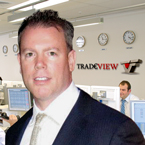
In today’s Executive interview Forex Magnates speaks with Tim Furey, Founder and CEO of Tradeview Ltd., a worldwide forex brokerage firm based in New York City, following nearly two decades of experience in trading.
1. How did you enter the Forex industry and was this always a passion of yours?
I’ve always had a passion for the markets. Over the last 20 years, I've been involved in various capacities in futures, equities and now Forex trading. My entry into Forex was the natural next step in my professional evolution. If my career has one underlying theme, it’s that I have always gone “where the action is.”
By way of background, I started my career as a commodity broker in the early 90's when Guns and Roses was the craze, MC hammer was in and Vanilla Ice was cool. Unlike Vanilla Ice I got my lucky break when I landed a job with Merrill Lynch in their Futures Division. I may not have had the best pedigree when I started, but I had the tenacity that the job required. I was the youngest guy in this old-timer group where I learned the commodity business from some real industry legends, and before long I was one of the top producing brokers nationally. However, after hearing their glory stories I figured that there was more to the job than hitting the phones every day. So I leveraged my growing network to get a spot as a floor trader on the Chicago Board of Trade.
The open outcry commodities pits – although very exciting – was a vicious place to work. My first day, I walked into the pit and walked out within one minute. I think I even called my mom to tell her I wanted to quit! Later that day though, I got the courage to go back in and hung around for a few years.
Just as I was becoming successful though, open outcry markets were becoming more electronic. Seeing the writing on the wall, I made the transition from the floor to the screen, and moved on to trading equities at Schonfeld Securities, one of the largest proprietary trading shops at the time. However by 2004, the opportunities in equities, relative to what I was used to were diminishing, whereas Forex was really heating up. So I moved back to New York City and began work as a Director with ODL Securities, which eventually was sold to FXCM. I built up a book of business at ODL, and then moved onto a few other firms to start sales operations, which gave me some great perspective about what works and what doesn’t in terms of building a great company culture (more on that later). I started to realize there were things that I could do better than what I was seeing in the industry. When the opportunity came along to start Tradeview and put my ideas to work, I pounced on the opportunity.
2. Has founding Tradeview changed your perspective on the Forex industry?
3. How does Tradeview maintain a competitive edge relative to competitors?
I think the corporate culture of Tradeview is our biggest strength. The best companies in any industry survive over time because of a strong culture. My core staff has been with me for over eight years now, and you cannot buy that continuity. We have always been passionate about the industry, serving our clients and growing with our clients as they evolve into IBs, white label providers and money managers. This is still a fairly young industry and clients come to us because of our expertise. We have the knowledge and background to empower our clients and partners.
I also give my staff the flexibility to make decisions and cater deals that fit the client needs so they don't have to go through multiple levels of red tape and nonsense to get the job done. In life you get what you tolerate. What makes Tradeview successful is I have no choke holds. When other companies are having breakdowns, we are having breakthroughs. Tradeview's guiding principle is to "add more value than anyone else." We're proud of how we do business, which we believe constantly creates “raving fan customers” and a strong culture. Our mission is simple and straight forward yet exceptionally powerful – we never forget that our traders are our clients!
4. What are the prospects for your company expanding in upcoming years?
I’ve developed somewhat of a Gladiator mentality and have passionate energy about the upcoming years. I view the Tradeview team as a band of soldiers arriving on an island, burning the boats, taking the hill, storming the city, seizing the treasure, and returning home victorious! I know that image might sound very Hollywood and somewhat crass to the financial establishment, but I don’t come to work every day just to hang out and shoot the breeze. I come every day looking to build something.
I believe companies most responsive to change are the ones that are going to THRIVE. I plan on growing Tradeview into a full-service brokerage offering more world-class products and value added services. This year I plan to hire over 100 new employees globally and will only hire the people I believe are the top 20 percent of the available talent pool (which can be read in more detail here). While the top 20 percent sounds like a big pool, it’s harder than you think to access. Talented people usually have a lot of options.
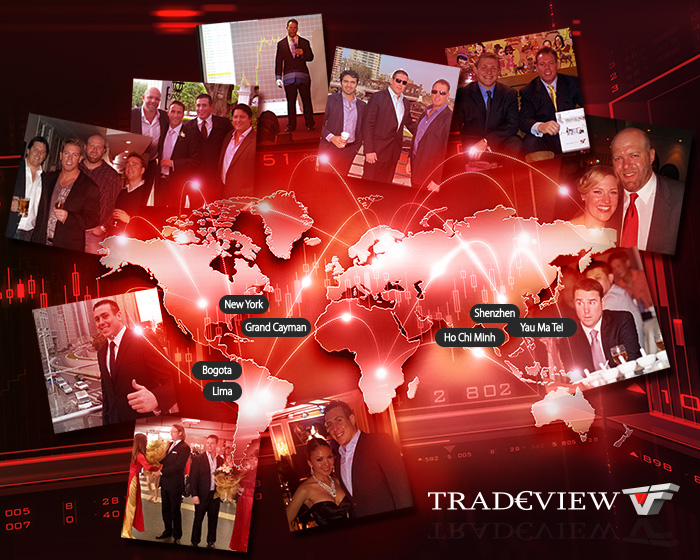
In terms of where I want to grow, South America has been great for us and we will continue to expand there. It was a big challenge for me eight years ago to penetrate that market, and it all really started because I got very lucky and married the most beautiful South American woman! Soon after we met, she took me down there to visit her country and of course meet her very big family. While visiting, the entrepreneur in me would sneak off and meet with people in our industry. I started to develop many great relationships, and some of those relationships have become our most loyal clients today. Tradeview now has two offices in South America and I just opened a new office in the growing city of Lima, Peru – I also live for part of the year in Bogota.
My overall goal for Tradeview is to have 75% revenue growth this year and 300% in the next three years. My road map is drawn. I am committed to make this happen and come out victorious!
5. What has been your most interesting experience during your time with Tradeview?
We could probably make a movie on what happened to me in Macau a few years ago. I was invited to be a speaker at a few over-the-top 1,500 person seminars there. I had no idea what to expect once my two colleagues and I landed. It ended up being non-stop work and entertainment. The social environment in Asia is definitely more “who you know” than “what you know,” and were fortunate to be introduced to a good friend of our client named Johnny, a high roller and apparently the type for whom rules did not apply.
Johnny loved to gamble, have fun and let everyone know that he was someone. Even though he knew only about 20 words of English, somehow a friendship blossomed and we painted the city red! We didn't wait in one line, and we attended every major event every night we were there.
After a week or so, my colleagues flew off to China for a few days and left me alone in Macau. Johnny called me and in his limited English said,“Four Seasons lobby, party party, VIP, dress nice, at 4pm.” I go and he says "Come on, fun fun.” So I get in his limo, and we pull up to the Grand Opening of the Conrad Hotel & Casino across the street. (We could have walked, of course!) There were 30 employees waiting to greet just him! The paparazzi were taking pictures and I am walking into this private event with essentially "The Man of Macau.” I felt like a rock star. He then starts introducing me to his friends. One was none other than the gaming mogul Sheldon Adelson, not to mention some very famous Asian celebrates. Next of course, was the ceremonious ribbon cutting. I was right there with the group cutting this ribbon on TV and in all the glossy pictures! During all of this I kept thinking, "This is CRAZY! What the heck am I doing here?!" The fun and business continued. They asked us to stay longer. What was supposed to be a one-week trip turned into TWO MONTHS! These were not the type of people you say no to.
1. How did you enter the Forex industry and was this always a passion of yours?
I’ve always had a passion for the markets. Over the last 20 years, I've been involved in various capacities in futures, equities and now Forex trading. My entry into Forex was the natural next step in my professional evolution. If my career has one underlying theme, it’s that I have always gone “where the action is.”
By way of background, I started my career as a commodity broker in the early 90's when Guns and Roses was the craze, MC hammer was in and Vanilla Ice was cool. Unlike Vanilla Ice I got my lucky break when I landed a job with Merrill Lynch in their Futures Division. I may not have had the best pedigree when I started, but I had the tenacity that the job required. I was the youngest guy in this old-timer group where I learned the commodity business from some real industry legends, and before long I was one of the top producing brokers nationally. However, after hearing their glory stories I figured that there was more to the job than hitting the phones every day. So I leveraged my growing network to get a spot as a floor trader on the Chicago Board of Trade.
The open outcry commodities pits – although very exciting – was a vicious place to work. My first day, I walked into the pit and walked out within one minute. I think I even called my mom to tell her I wanted to quit! Later that day though, I got the courage to go back in and hung around for a few years.
Just as I was becoming successful though, open outcry markets were becoming more electronic. Seeing the writing on the wall, I made the transition from the floor to the screen, and moved on to trading equities at Schonfeld Securities, one of the largest proprietary trading shops at the time. However by 2004, the opportunities in equities, relative to what I was used to were diminishing, whereas Forex was really heating up. So I moved back to New York City and began work as a Director with ODL Securities, which eventually was sold to FXCM. I built up a book of business at ODL, and then moved onto a few other firms to start sales operations, which gave me some great perspective about what works and what doesn’t in terms of building a great company culture (more on that later). I started to realize there were things that I could do better than what I was seeing in the industry. When the opportunity came along to start Tradeview and put my ideas to work, I pounced on the opportunity.
2. Has founding Tradeview changed your perspective on the Forex industry?
3. How does Tradeview maintain a competitive edge relative to competitors?
I think the corporate culture of Tradeview is our biggest strength. The best companies in any industry survive over time because of a strong culture. My core staff has been with me for over eight years now, and you cannot buy that continuity. We have always been passionate about the industry, serving our clients and growing with our clients as they evolve into IBs, white label providers and money managers. This is still a fairly young industry and clients come to us because of our expertise. We have the knowledge and background to empower our clients and partners.
I also give my staff the flexibility to make decisions and cater deals that fit the client needs so they don't have to go through multiple levels of red tape and nonsense to get the job done. In life you get what you tolerate. What makes Tradeview successful is I have no choke holds. When other companies are having breakdowns, we are having breakthroughs. Tradeview's guiding principle is to "add more value than anyone else." We're proud of how we do business, which we believe constantly creates “raving fan customers” and a strong culture. Our mission is simple and straight forward yet exceptionally powerful – we never forget that our traders are our clients!
4. What are the prospects for your company expanding in upcoming years?
I’ve developed somewhat of a Gladiator mentality and have passionate energy about the upcoming years. I view the Tradeview team as a band of soldiers arriving on an island, burning the boats, taking the hill, storming the city, seizing the treasure, and returning home victorious! I know that image might sound very Hollywood and somewhat crass to the financial establishment, but I don’t come to work every day just to hang out and shoot the breeze. I come every day looking to build something.
I believe companies most responsive to change are the ones that are going to THRIVE. I plan on growing Tradeview into a full-service brokerage offering more world-class products and value added services. This year I plan to hire over 100 new employees globally and will only hire the people I believe are the top 20 percent of the available talent pool (which can be read in more detail here). While the top 20 percent sounds like a big pool, it’s harder than you think to access. Talented people usually have a lot of options.
In terms of where I want to grow, South America has been great for us and we will continue to expand there. It was a big challenge for me eight years ago to penetrate that market, and it all really started because I got very lucky and married the most beautiful South American woman! Soon after we met, she took me down there to visit her country and of course meet her very big family. While visiting, the entrepreneur in me would sneak off and meet with people in our industry. I started to develop many great relationships, and some of those relationships have become our most loyal clients today. Tradeview now has two offices in South America and I just opened a new office in the growing city of Lima, Peru – I also live for part of the year in Bogota.
My overall goal for Tradeview is to have 75% revenue growth this year and 300% in the next three years. My road map is drawn. I am committed to make this happen and come out victorious!
5. What has been your most interesting experience during your time with Tradeview?
We could probably make a movie on what happened to me in Macau a few years ago. I was invited to be a speaker at a few over-the-top 1,500 person seminars there. I had no idea what to expect once my two colleagues and I landed. It ended up being non-stop work and entertainment. The social environment in Asia is definitely more “who you know” than “what you know,” and were fortunate to be introduced to a good friend of our client named Johnny, a high roller and apparently the type for whom rules did not apply.
Johnny loved to gamble, have fun and let everyone know that he was someone. Even though he knew only about 20 words of English, somehow a friendship blossomed and we painted the city red! We didn't wait in one line, and we attended every major event every night we were there.
After a week or so, my colleagues flew off to China for a few days and left me alone in Macau. Johnny called me and in his limited English said,“Four Seasons lobby, party party, VIP, dress nice, at 4pm.” I go and he says "Come on, fun fun.” So I get in his limo, and we pull up to the Grand Opening of the Conrad Hotel & Casino across the street. (We could have walked, of course!) There were 30 employees waiting to greet just him! The paparazzi were taking pictures and I am walking into this private event with essentially "The Man of Macau.” I felt like a rock star. He then starts introducing me to his friends. One was none other than the gaming mogul Sheldon Adelson, not to mention some very famous Asian celebrates. Next of course, was the ceremonious ribbon cutting. I was right there with the group cutting this ribbon on TV and in all the glossy pictures! During all of this I kept thinking, "This is CRAZY! What the heck am I doing here?!" The fun and business continued. They asked us to stay longer. What was supposed to be a one-week trip turned into TWO MONTHS! These were not the type of people you say no to.
SEC Defines Crypto Rules - Here’s How Industry is Responding
Featured Videos
CMC Markets’ Artur Delijergijevs on Metals Demand, Volatility, & Stable Execution
CMC Markets’ Artur Delijergijevs on Metals Demand, Volatility, & Stable Execution
CMC Markets’ Artur Delijergijevs on Metals Demand, Volatility, & Stable Execution
CMC Markets’ Artur Delijergijevs on Metals Demand, Volatility, & Stable Execution
In this exclusive Executive Interview, Finance Magnates speaks with Artur Delijergijevs, Head of Systematic Market Making at CMC Markets, about the current state of metals demand and market volatility.
Delijergijevs offers a desk-level view on:
- Metals Demand: Why metals are seeing the strongest demand from both retail and institutional clients right now.
- The Safe-Haven Debate: Questioning whether gold still fits the classic safe-haven definition given large daily price movements.
- Volatile Market Prep: How a market-making desk prepares its systems and pricing for stressed market conditions and high-impact economic events.
- Hybrid Execution: Why the best execution model combines electronic speed with human relationship support, especially during volatility.
- AI in Workflow: Where CMC Markets is integrating machine learning for risk management and pricing, and the limitations of AI during stressed markets.
- Dubai's Role: The strategic importance of Dubai’s location for covering global trading sessions across Asia, Europe, and the US.
Watch to understand how CMC Markets maintains stable pricing and reliable execution quality in high-volatility environments.
#CMCmarkets #forex #metals #gold #trading #volatility #MarketMaking #iFXDubai #FinanceMagnates #Finance #Fintech #Execution #AlgorithmicTrading #RiskManagement
In this exclusive Executive Interview, Finance Magnates speaks with Artur Delijergijevs, Head of Systematic Market Making at CMC Markets, about the current state of metals demand and market volatility.
Delijergijevs offers a desk-level view on:
- Metals Demand: Why metals are seeing the strongest demand from both retail and institutional clients right now.
- The Safe-Haven Debate: Questioning whether gold still fits the classic safe-haven definition given large daily price movements.
- Volatile Market Prep: How a market-making desk prepares its systems and pricing for stressed market conditions and high-impact economic events.
- Hybrid Execution: Why the best execution model combines electronic speed with human relationship support, especially during volatility.
- AI in Workflow: Where CMC Markets is integrating machine learning for risk management and pricing, and the limitations of AI during stressed markets.
- Dubai's Role: The strategic importance of Dubai’s location for covering global trading sessions across Asia, Europe, and the US.
Watch to understand how CMC Markets maintains stable pricing and reliable execution quality in high-volatility environments.
#CMCmarkets #forex #metals #gold #trading #volatility #MarketMaking #iFXDubai #FinanceMagnates #Finance #Fintech #Execution #AlgorithmicTrading #RiskManagement
In this exclusive Executive Interview, Finance Magnates speaks with Artur Delijergijevs, Head of Systematic Market Making at CMC Markets, about the current state of metals demand and market volatility.
Delijergijevs offers a desk-level view on:
- Metals Demand: Why metals are seeing the strongest demand from both retail and institutional clients right now.
- The Safe-Haven Debate: Questioning whether gold still fits the classic safe-haven definition given large daily price movements.
- Volatile Market Prep: How a market-making desk prepares its systems and pricing for stressed market conditions and high-impact economic events.
- Hybrid Execution: Why the best execution model combines electronic speed with human relationship support, especially during volatility.
- AI in Workflow: Where CMC Markets is integrating machine learning for risk management and pricing, and the limitations of AI during stressed markets.
- Dubai's Role: The strategic importance of Dubai’s location for covering global trading sessions across Asia, Europe, and the US.
Watch to understand how CMC Markets maintains stable pricing and reliable execution quality in high-volatility environments.
#CMCmarkets #forex #metals #gold #trading #volatility #MarketMaking #iFXDubai #FinanceMagnates #Finance #Fintech #Execution #AlgorithmicTrading #RiskManagement
In this exclusive Executive Interview, Finance Magnates speaks with Artur Delijergijevs, Head of Systematic Market Making at CMC Markets, about the current state of metals demand and market volatility.
Delijergijevs offers a desk-level view on:
- Metals Demand: Why metals are seeing the strongest demand from both retail and institutional clients right now.
- The Safe-Haven Debate: Questioning whether gold still fits the classic safe-haven definition given large daily price movements.
- Volatile Market Prep: How a market-making desk prepares its systems and pricing for stressed market conditions and high-impact economic events.
- Hybrid Execution: Why the best execution model combines electronic speed with human relationship support, especially during volatility.
- AI in Workflow: Where CMC Markets is integrating machine learning for risk management and pricing, and the limitations of AI during stressed markets.
- Dubai's Role: The strategic importance of Dubai’s location for covering global trading sessions across Asia, Europe, and the US.
Watch to understand how CMC Markets maintains stable pricing and reliable execution quality in high-volatility environments.
#CMCmarkets #forex #metals #gold #trading #volatility #MarketMaking #iFXDubai #FinanceMagnates #Finance #Fintech #Execution #AlgorithmicTrading #RiskManagement
Finance Magnates Awards 2026 – Nominations Now Open
Finance Magnates Awards 2026 – Nominations Now Open
Finance Magnates Awards 2026 – Nominations Now Open
Finance Magnates Awards 2026 – Nominations Now Open
Finance Magnates Awards 2026 – Nominations Now Open
Finance Magnates Awards 2026 – Nominations Now Open
The Finance Magnates Awards 2026 nominations are now open. 🏆
From fintech innovators to leading brokers, this is where the finance industry celebrates its biggest achievements.
Winners will be announced at the Cyprus Gala Dinner on November 6, 2026.
Nominate your brand now.
https://awards.financemagnates.com/?utm_source=linkedin&utm_medium=video&utm_campaign=nominations-open
#FMAwards #FinanceMagnates #FintechAwards #Fintech #FinanceIndustry
The Finance Magnates Awards 2026 nominations are now open. 🏆
From fintech innovators to leading brokers, this is where the finance industry celebrates its biggest achievements.
Winners will be announced at the Cyprus Gala Dinner on November 6, 2026.
Nominate your brand now.
https://awards.financemagnates.com/?utm_source=linkedin&utm_medium=video&utm_campaign=nominations-open
#FMAwards #FinanceMagnates #FintechAwards #Fintech #FinanceIndustry
The Finance Magnates Awards 2026 nominations are now open. 🏆
From fintech innovators to leading brokers, this is where the finance industry celebrates its biggest achievements.
Winners will be announced at the Cyprus Gala Dinner on November 6, 2026.
Nominate your brand now.
https://awards.financemagnates.com/?utm_source=linkedin&utm_medium=video&utm_campaign=nominations-open
#FMAwards #FinanceMagnates #FintechAwards #Fintech #FinanceIndustry
The Finance Magnates Awards 2026 nominations are now open. 🏆
From fintech innovators to leading brokers, this is where the finance industry celebrates its biggest achievements.
Winners will be announced at the Cyprus Gala Dinner on November 6, 2026.
Nominate your brand now.
https://awards.financemagnates.com/?utm_source=linkedin&utm_medium=video&utm_campaign=nominations-open
#FMAwards #FinanceMagnates #FintechAwards #Fintech #FinanceIndustry
The Finance Magnates Awards 2026 nominations are now open. 🏆
From fintech innovators to leading brokers, this is where the finance industry celebrates its biggest achievements.
Winners will be announced at the Cyprus Gala Dinner on November 6, 2026.
Nominate your brand now.
https://awards.financemagnates.com/?utm_source=linkedin&utm_medium=video&utm_campaign=nominations-open
#FMAwards #FinanceMagnates #FintechAwards #Fintech #FinanceIndustry
The Finance Magnates Awards 2026 nominations are now open. 🏆
From fintech innovators to leading brokers, this is where the finance industry celebrates its biggest achievements.
Winners will be announced at the Cyprus Gala Dinner on November 6, 2026.
Nominate your brand now.
https://awards.financemagnates.com/?utm_source=linkedin&utm_medium=video&utm_campaign=nominations-open
#FMAwards #FinanceMagnates #FintechAwards #Fintech #FinanceIndustry
Finance Magnates Awards 2026 | Nominations Now Open 🏆#Fintech #FMAwards #TradingIndustry
Finance Magnates Awards 2026 | Nominations Now Open 🏆#Fintech #FMAwards #TradingIndustry
Finance Magnates Awards 2026 | Nominations Now Open 🏆#Fintech #FMAwards #TradingIndustry
Finance Magnates Awards 2026 | Nominations Now Open 🏆#Fintech #FMAwards #TradingIndustry
Finance Magnates Awards 2026 | Nominations Now Open 🏆#Fintech #FMAwards #TradingIndustry
Finance Magnates Awards 2026 | Nominations Now Open 🏆#Fintech #FMAwards #TradingIndustry
Lights on. Cameras ready. 🎬
Finance Magnates Awards 2026 nominations are now open. 🏆
#FMAwards #FinanceMagnates #FintechAwards #Fintech
Lights on. Cameras ready. 🎬
Finance Magnates Awards 2026 nominations are now open. 🏆
#FMAwards #FinanceMagnates #FintechAwards #Fintech
Lights on. Cameras ready. 🎬
Finance Magnates Awards 2026 nominations are now open. 🏆
#FMAwards #FinanceMagnates #FintechAwards #Fintech
Lights on. Cameras ready. 🎬
Finance Magnates Awards 2026 nominations are now open. 🏆
#FMAwards #FinanceMagnates #FintechAwards #Fintech
Lights on. Cameras ready. 🎬
Finance Magnates Awards 2026 nominations are now open. 🏆
#FMAwards #FinanceMagnates #FintechAwards #Fintech
Lights on. Cameras ready. 🎬
Finance Magnates Awards 2026 nominations are now open. 🏆
#FMAwards #FinanceMagnates #FintechAwards #Fintech
Exness sees trust as the key theme for growth in MENA Trading Growth for 2026
Exness sees trust as the key theme for growth in MENA Trading Growth for 2026
Exness sees trust as the key theme for growth in MENA Trading Growth for 2026
Exness sees trust as the key theme for growth in MENA Trading Growth for 2026
Exness sees trust as the key theme for growth in MENA Trading Growth for 2026
Exness sees trust as the key theme for growth in MENA Trading Growth for 2026
Mohammad Amer, Regional Commercial Director at Exness, sits down to discuss the booming MENA financial trading market. Find out why Dubai is key to the company's growth strategy, how a mobile-first generation is changing expectations, and why trust will be the defining theme for traders in 2026.
In this interview, you'll learn:
* Why Dubai and the MENA region are critical growth markets for fintech and online trading.
* How Exness is addressing the demands of mobile-first, younger traders through engineering, platform stability, and transparent conditions.
* The essential role local talent plays in providing a culturally relevant and compliant user experience.
* Mohammad Amer's outlook on the future of the online trading industry and why stronger controls and systems are necessary.
* Why "trust" isn't just a brand value, but has commercial value—and why he predicts 2026 will be the "Year of Trust."
Key Takeaways:
➡️ The MENA region is rapidly shaping global financial markets.
➡️ New traders expect stability, precise execution, and transparency.
➡️ Local expertise is key to regulatory compliance and user experience.
➡️ Future success belongs to firms capable of meeting rising standards across regulation and platform consistency.
Read the full article at: https://www.financemagnates.com/thought-leadership/exness-sees-trust-as-the-key-theme-for-growth-in-mena-trading-growth-for-2026/
#Exness #MENA #Trading #FinTech #Dubai #OnlineTrading #FinanceMagnates #MohammadAmer #Trust #MobileTrading
Mohammad Amer, Regional Commercial Director at Exness, sits down to discuss the booming MENA financial trading market. Find out why Dubai is key to the company's growth strategy, how a mobile-first generation is changing expectations, and why trust will be the defining theme for traders in 2026.
In this interview, you'll learn:
* Why Dubai and the MENA region are critical growth markets for fintech and online trading.
* How Exness is addressing the demands of mobile-first, younger traders through engineering, platform stability, and transparent conditions.
* The essential role local talent plays in providing a culturally relevant and compliant user experience.
* Mohammad Amer's outlook on the future of the online trading industry and why stronger controls and systems are necessary.
* Why "trust" isn't just a brand value, but has commercial value—and why he predicts 2026 will be the "Year of Trust."
Key Takeaways:
➡️ The MENA region is rapidly shaping global financial markets.
➡️ New traders expect stability, precise execution, and transparency.
➡️ Local expertise is key to regulatory compliance and user experience.
➡️ Future success belongs to firms capable of meeting rising standards across regulation and platform consistency.
Read the full article at: https://www.financemagnates.com/thought-leadership/exness-sees-trust-as-the-key-theme-for-growth-in-mena-trading-growth-for-2026/
#Exness #MENA #Trading #FinTech #Dubai #OnlineTrading #FinanceMagnates #MohammadAmer #Trust #MobileTrading
Mohammad Amer, Regional Commercial Director at Exness, sits down to discuss the booming MENA financial trading market. Find out why Dubai is key to the company's growth strategy, how a mobile-first generation is changing expectations, and why trust will be the defining theme for traders in 2026.
In this interview, you'll learn:
* Why Dubai and the MENA region are critical growth markets for fintech and online trading.
* How Exness is addressing the demands of mobile-first, younger traders through engineering, platform stability, and transparent conditions.
* The essential role local talent plays in providing a culturally relevant and compliant user experience.
* Mohammad Amer's outlook on the future of the online trading industry and why stronger controls and systems are necessary.
* Why "trust" isn't just a brand value, but has commercial value—and why he predicts 2026 will be the "Year of Trust."
Key Takeaways:
➡️ The MENA region is rapidly shaping global financial markets.
➡️ New traders expect stability, precise execution, and transparency.
➡️ Local expertise is key to regulatory compliance and user experience.
➡️ Future success belongs to firms capable of meeting rising standards across regulation and platform consistency.
Read the full article at: https://www.financemagnates.com/thought-leadership/exness-sees-trust-as-the-key-theme-for-growth-in-mena-trading-growth-for-2026/
#Exness #MENA #Trading #FinTech #Dubai #OnlineTrading #FinanceMagnates #MohammadAmer #Trust #MobileTrading
Mohammad Amer, Regional Commercial Director at Exness, sits down to discuss the booming MENA financial trading market. Find out why Dubai is key to the company's growth strategy, how a mobile-first generation is changing expectations, and why trust will be the defining theme for traders in 2026.
In this interview, you'll learn:
* Why Dubai and the MENA region are critical growth markets for fintech and online trading.
* How Exness is addressing the demands of mobile-first, younger traders through engineering, platform stability, and transparent conditions.
* The essential role local talent plays in providing a culturally relevant and compliant user experience.
* Mohammad Amer's outlook on the future of the online trading industry and why stronger controls and systems are necessary.
* Why "trust" isn't just a brand value, but has commercial value—and why he predicts 2026 will be the "Year of Trust."
Key Takeaways:
➡️ The MENA region is rapidly shaping global financial markets.
➡️ New traders expect stability, precise execution, and transparency.
➡️ Local expertise is key to regulatory compliance and user experience.
➡️ Future success belongs to firms capable of meeting rising standards across regulation and platform consistency.
Read the full article at: https://www.financemagnates.com/thought-leadership/exness-sees-trust-as-the-key-theme-for-growth-in-mena-trading-growth-for-2026/
#Exness #MENA #Trading #FinTech #Dubai #OnlineTrading #FinanceMagnates #MohammadAmer #Trust #MobileTrading
Mohammad Amer, Regional Commercial Director at Exness, sits down to discuss the booming MENA financial trading market. Find out why Dubai is key to the company's growth strategy, how a mobile-first generation is changing expectations, and why trust will be the defining theme for traders in 2026.
In this interview, you'll learn:
* Why Dubai and the MENA region are critical growth markets for fintech and online trading.
* How Exness is addressing the demands of mobile-first, younger traders through engineering, platform stability, and transparent conditions.
* The essential role local talent plays in providing a culturally relevant and compliant user experience.
* Mohammad Amer's outlook on the future of the online trading industry and why stronger controls and systems are necessary.
* Why "trust" isn't just a brand value, but has commercial value—and why he predicts 2026 will be the "Year of Trust."
Key Takeaways:
➡️ The MENA region is rapidly shaping global financial markets.
➡️ New traders expect stability, precise execution, and transparency.
➡️ Local expertise is key to regulatory compliance and user experience.
➡️ Future success belongs to firms capable of meeting rising standards across regulation and platform consistency.
Read the full article at: https://www.financemagnates.com/thought-leadership/exness-sees-trust-as-the-key-theme-for-growth-in-mena-trading-growth-for-2026/
#Exness #MENA #Trading #FinTech #Dubai #OnlineTrading #FinanceMagnates #MohammadAmer #Trust #MobileTrading
Mohammad Amer, Regional Commercial Director at Exness, sits down to discuss the booming MENA financial trading market. Find out why Dubai is key to the company's growth strategy, how a mobile-first generation is changing expectations, and why trust will be the defining theme for traders in 2026.
In this interview, you'll learn:
* Why Dubai and the MENA region are critical growth markets for fintech and online trading.
* How Exness is addressing the demands of mobile-first, younger traders through engineering, platform stability, and transparent conditions.
* The essential role local talent plays in providing a culturally relevant and compliant user experience.
* Mohammad Amer's outlook on the future of the online trading industry and why stronger controls and systems are necessary.
* Why "trust" isn't just a brand value, but has commercial value—and why he predicts 2026 will be the "Year of Trust."
Key Takeaways:
➡️ The MENA region is rapidly shaping global financial markets.
➡️ New traders expect stability, precise execution, and transparency.
➡️ Local expertise is key to regulatory compliance and user experience.
➡️ Future success belongs to firms capable of meeting rising standards across regulation and platform consistency.
Read the full article at: https://www.financemagnates.com/thought-leadership/exness-sees-trust-as-the-key-theme-for-growth-in-mena-trading-growth-for-2026/
#Exness #MENA #Trading #FinTech #Dubai #OnlineTrading #FinanceMagnates #MohammadAmer #Trust #MobileTrading
Paytiko CEO Razi Salih on Why Payment Orchestration is a MUST-HAVE for Brokers in 2026
Paytiko CEO Razi Salih on Why Payment Orchestration is a MUST-HAVE for Brokers in 2026
Paytiko CEO Razi Salih on Why Payment Orchestration is a MUST-HAVE for Brokers in 2026
Paytiko CEO Razi Salih on Why Payment Orchestration is a MUST-HAVE for Brokers in 2026
Paytiko CEO Razi Salih on Why Payment Orchestration is a MUST-HAVE for Brokers in 2026
Paytiko CEO Razi Salih on Why Payment Orchestration is a MUST-HAVE for Brokers in 2026
At iFX Expo Dubai, Finance Magnates spoke with Razi Salih, CEO at Paytiko, about the evolution of the payments ecosystem and why payment orchestration has shifted from an option to a necessity for brokers, prop firms, and exchanges.
Mr. Salih explains how global expansion, the need for deep localisation, and the sheer number of new payment methods, from instant banking to stablecoins, are driving this critical infrastructure shift.
#PaymentOrchestration #Fintech #Brokerage #TradingPayments #RaziSalih #Paytiko #iFXExpoDubai #Stablecoins #AIinFintech
At iFX Expo Dubai, Finance Magnates spoke with Razi Salih, CEO at Paytiko, about the evolution of the payments ecosystem and why payment orchestration has shifted from an option to a necessity for brokers, prop firms, and exchanges.
Mr. Salih explains how global expansion, the need for deep localisation, and the sheer number of new payment methods, from instant banking to stablecoins, are driving this critical infrastructure shift.
#PaymentOrchestration #Fintech #Brokerage #TradingPayments #RaziSalih #Paytiko #iFXExpoDubai #Stablecoins #AIinFintech
At iFX Expo Dubai, Finance Magnates spoke with Razi Salih, CEO at Paytiko, about the evolution of the payments ecosystem and why payment orchestration has shifted from an option to a necessity for brokers, prop firms, and exchanges.
Mr. Salih explains how global expansion, the need for deep localisation, and the sheer number of new payment methods, from instant banking to stablecoins, are driving this critical infrastructure shift.
#PaymentOrchestration #Fintech #Brokerage #TradingPayments #RaziSalih #Paytiko #iFXExpoDubai #Stablecoins #AIinFintech
At iFX Expo Dubai, Finance Magnates spoke with Razi Salih, CEO at Paytiko, about the evolution of the payments ecosystem and why payment orchestration has shifted from an option to a necessity for brokers, prop firms, and exchanges.
Mr. Salih explains how global expansion, the need for deep localisation, and the sheer number of new payment methods, from instant banking to stablecoins, are driving this critical infrastructure shift.
#PaymentOrchestration #Fintech #Brokerage #TradingPayments #RaziSalih #Paytiko #iFXExpoDubai #Stablecoins #AIinFintech
At iFX Expo Dubai, Finance Magnates spoke with Razi Salih, CEO at Paytiko, about the evolution of the payments ecosystem and why payment orchestration has shifted from an option to a necessity for brokers, prop firms, and exchanges.
Mr. Salih explains how global expansion, the need for deep localisation, and the sheer number of new payment methods, from instant banking to stablecoins, are driving this critical infrastructure shift.
#PaymentOrchestration #Fintech #Brokerage #TradingPayments #RaziSalih #Paytiko #iFXExpoDubai #Stablecoins #AIinFintech
At iFX Expo Dubai, Finance Magnates spoke with Razi Salih, CEO at Paytiko, about the evolution of the payments ecosystem and why payment orchestration has shifted from an option to a necessity for brokers, prop firms, and exchanges.
Mr. Salih explains how global expansion, the need for deep localisation, and the sheer number of new payment methods, from instant banking to stablecoins, are driving this critical infrastructure shift.
#PaymentOrchestration #Fintech #Brokerage #TradingPayments #RaziSalih #Paytiko #iFXExpoDubai #Stablecoins #AIinFintech