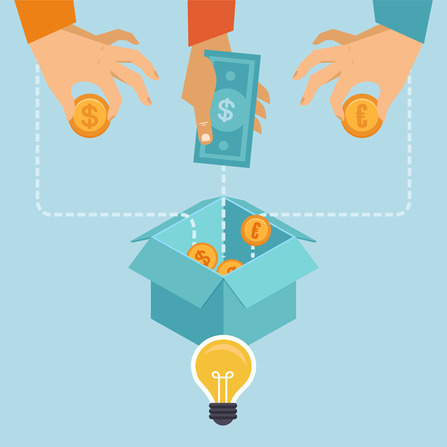
2014 was a great year for the P2P lending sector, highlighted by LendingClub's multi-billion IPO. But the market may only be getting started as borrowers and banks realize the benefits and come on board.
When it comes to robo advising, the sector got a boost with the entrance of Charles Schwab into the field with their competing product Schwab Intelligent Portfolio. A growing market, despite Schwab’s arrival, incumbents believe they will benefit long term due to increased recognition of investors for robo advising that Schwab’s involvement will bring. However, entering the market may become harder for new smaller players, as Schwab’s entrance is has triggered a higher level of competition between players in the sector.
The story for digital based equity crowdfunding is also progressing smoothly for 2015. During the year, the amount of firms using Swarm Corp to launch digital equity continues to rise, while Ethereum is set to launch in the coming months. Elsewhere, Counterparty continues to innovate, with its lead developers launching Symbiont, allowing for trading of smart securities using the Counterparty protocol.
Marketplace lending
One trend that has been discussed quite often on our pages, but wasn’t included in the Fintech trends for 2015 is marketplace lending. It’s not that marketplace lending was expected to experience a slowdown in 2015. On the contrary, after a strong 2014 which saw the IPO of LendingClub and numerous other peer to peer (P2P) lenders boasting triple digit growth, the sector was well on our radars. However, several positive forces have led us to believe that the sector will remain a hot market for the foreseeable future.
Dominated by P2P lending, marketplace lending also includes crowdfunded real estate, equity crowdfunding, and single institution backed lending platforms like Kabbage and OnDeck Capital. Using technology to match investors and borrowers, marketplace lending platforms are able to provide favorable rates to users of each side of the loan. As a result, after initially being viewed as a fintech solution to provide access to capital for the unbanked or those without meaningful credit histories, favorable terms form marketplace lenders have begun to also attract borrowers who are able to source loans from traditional banks or mortgage firms.
Marketplace efficiency creates investor demand
Two forces creating the shift towards marketplace lending are low interest rates and banks reducing their exposure to loans following the 2008/09 global financial crisis. As a result of the record low interest rates around the globe, fixed income investors such as pension funds are limited in the upside when allocating funds to traditional income generating securities like government bonds, bank CDs, or high quality corporate debt.
Finding an alternative in loans, marketplace lenders have been able to appeal to fixed income investors who are able to achieve higher rates of return on their funds. Among the technological attributes of the marketplace lending sector is the use of non-credit score ratings to rank borrowers, such as their social graphs and buying habits. By analyzing this information, borrowers that might not fit the mold of traditional credit score metrics can also be found to be solid bets to pay back loans. As a result, for investors this information allows them to better understand potential risks of their loans to potentially gain better rates of returns.
Additionally, investors benefit with marketplace platforms as it removes several layers of the lending process. Rather than a bank acting as a counterparty to both their borrowers and depositors, while also hedging their risk by securitizing and selling loans, marketplace lending platforms are able to improve both time and cost efficiency by matching investors and borrowers directly.
Due to the advantages for investors, demand to fund such loans is believed to be outstripping borrower interest four fold. As such, in Europe (including the UK) where combined consumer and business P2P lending reached nearly $2.5 billion in 2014, the market has room to grow to $10 billion in lending volume this year without borrower demand driving rates higher.
Borrower demand around the corner?
With funding available and marketplace lending having proven itself to investors already in 2014 and earlier, what is left to be accomplished is for P2P lending and similar platforms to become readily accepted by borrowers. In this regards, like other fintech sectors, marketplace lenders are tasked at disrupting an existing ‘way of doing business’, in this case, borrowing from a bank. Already connected to their client base, banks represent the easiest path to car and home improvement loans, mortgages, and credit lines. They may not be the most cost effective solution for every customer, but they have a competitive advantage to alternative finance providers by already being in front of their client base.
For P2P lenders, acquiring customers can thereby be a costly experience as they compete not only against fellow marketplace lenders, but against traditional banks. Nonetheless, the force in the favor of marketplace lenders could ultimately be the banks themselves.
In 2014, this trend began to take place but has since gotten stronger in 2015 as RBS announced in January that it was partnering with multiple P2P lenders to refer SME clients that didn’t meet their lending criteria. This deal followed a similar one between FundingCircle and Santander that was established in 2014.
Overall for banks, marketplace lending represents a catch 22 for them. On one hand, there is an opportunity to partner with P2P lenders to monetize portions of their client base that they may not be able to service as well. On the other hand, the more accepted alternative lenders become in the eyes of borrowers, it will allow marketplace lenders to gain more traction in areas which are dominated by banks and are important revenue generators for them.
A happy future?
Ultimately, money speaks, and as long as marketplace lending can provide more attractive rates than terms from banks, the sector will continue to gain market share from traditional lenders. Nonetheless, although this means that banks with even the widest ‘moats’ to their lending business are ripe for disruption, it doesn’t mean they can’t participate in the P2P future.
Firstly, as mentioned above, banks have an opportunity to generate revenues from referrals to P2P lenders. Secondly, and less discussed, banks themselves could begin to allocate their capital to invest in marketplace lenders. In this scenario, although they would have to compete for loans with other investors, they would be in position to source revenues from the same P2P sector that is disrupting them.
While seemingly not a move expected to be made by banks, there is precedence for them to participate in such a marketplace structure. Also being disrupted due to the global financial crisis was the financial swaps and derivatives trading industry due to Dodd-Frank regulations being put in place. As a result of the new rules, portions of the US swap industry became mandated to be traded on Swap Execution Facilities (SEFs), which are in essence, miniature centralized exchanges. For banks with large swap trading desks, the move to SEFs meant that they would need to become swap dealers and compete against other banks, instead of servicing clients directly.
While migration of trades to SEFs by banks was a federally mandated move, a monetary based motive could ultimately drive them towards becoming players on marketplace lending platforms.
When it comes to robo advising, the sector got a boost with the entrance of Charles Schwab into the field with their competing product Schwab Intelligent Portfolio. A growing market, despite Schwab’s arrival, incumbents believe they will benefit long term due to increased recognition of investors for robo advising that Schwab’s involvement will bring. However, entering the market may become harder for new smaller players, as Schwab’s entrance is has triggered a higher level of competition between players in the sector.
The story for digital based equity crowdfunding is also progressing smoothly for 2015. During the year, the amount of firms using Swarm Corp to launch digital equity continues to rise, while Ethereum is set to launch in the coming months. Elsewhere, Counterparty continues to innovate, with its lead developers launching Symbiont, allowing for trading of smart securities using the Counterparty protocol.
Marketplace lending
One trend that has been discussed quite often on our pages, but wasn’t included in the Fintech trends for 2015 is marketplace lending. It’s not that marketplace lending was expected to experience a slowdown in 2015. On the contrary, after a strong 2014 which saw the IPO of LendingClub and numerous other peer to peer (P2P) lenders boasting triple digit growth, the sector was well on our radars. However, several positive forces have led us to believe that the sector will remain a hot market for the foreseeable future.
Dominated by P2P lending, marketplace lending also includes crowdfunded real estate, equity crowdfunding, and single institution backed lending platforms like Kabbage and OnDeck Capital. Using technology to match investors and borrowers, marketplace lending platforms are able to provide favorable rates to users of each side of the loan. As a result, after initially being viewed as a fintech solution to provide access to capital for the unbanked or those without meaningful credit histories, favorable terms form marketplace lenders have begun to also attract borrowers who are able to source loans from traditional banks or mortgage firms.
Marketplace efficiency creates investor demand
Two forces creating the shift towards marketplace lending are low interest rates and banks reducing their exposure to loans following the 2008/09 global financial crisis. As a result of the record low interest rates around the globe, fixed income investors such as pension funds are limited in the upside when allocating funds to traditional income generating securities like government bonds, bank CDs, or high quality corporate debt.
Finding an alternative in loans, marketplace lenders have been able to appeal to fixed income investors who are able to achieve higher rates of return on their funds. Among the technological attributes of the marketplace lending sector is the use of non-credit score ratings to rank borrowers, such as their social graphs and buying habits. By analyzing this information, borrowers that might not fit the mold of traditional credit score metrics can also be found to be solid bets to pay back loans. As a result, for investors this information allows them to better understand potential risks of their loans to potentially gain better rates of returns.
Additionally, investors benefit with marketplace platforms as it removes several layers of the lending process. Rather than a bank acting as a counterparty to both their borrowers and depositors, while also hedging their risk by securitizing and selling loans, marketplace lending platforms are able to improve both time and cost efficiency by matching investors and borrowers directly.
Due to the advantages for investors, demand to fund such loans is believed to be outstripping borrower interest four fold. As such, in Europe (including the UK) where combined consumer and business P2P lending reached nearly $2.5 billion in 2014, the market has room to grow to $10 billion in lending volume this year without borrower demand driving rates higher.
Borrower demand around the corner?
With funding available and marketplace lending having proven itself to investors already in 2014 and earlier, what is left to be accomplished is for P2P lending and similar platforms to become readily accepted by borrowers. In this regards, like other fintech sectors, marketplace lenders are tasked at disrupting an existing ‘way of doing business’, in this case, borrowing from a bank. Already connected to their client base, banks represent the easiest path to car and home improvement loans, mortgages, and credit lines. They may not be the most cost effective solution for every customer, but they have a competitive advantage to alternative finance providers by already being in front of their client base.
For P2P lenders, acquiring customers can thereby be a costly experience as they compete not only against fellow marketplace lenders, but against traditional banks. Nonetheless, the force in the favor of marketplace lenders could ultimately be the banks themselves.
In 2014, this trend began to take place but has since gotten stronger in 2015 as RBS announced in January that it was partnering with multiple P2P lenders to refer SME clients that didn’t meet their lending criteria. This deal followed a similar one between FundingCircle and Santander that was established in 2014.
Overall for banks, marketplace lending represents a catch 22 for them. On one hand, there is an opportunity to partner with P2P lenders to monetize portions of their client base that they may not be able to service as well. On the other hand, the more accepted alternative lenders become in the eyes of borrowers, it will allow marketplace lenders to gain more traction in areas which are dominated by banks and are important revenue generators for them.
A happy future?
Ultimately, money speaks, and as long as marketplace lending can provide more attractive rates than terms from banks, the sector will continue to gain market share from traditional lenders. Nonetheless, although this means that banks with even the widest ‘moats’ to their lending business are ripe for disruption, it doesn’t mean they can’t participate in the P2P future.
Firstly, as mentioned above, banks have an opportunity to generate revenues from referrals to P2P lenders. Secondly, and less discussed, banks themselves could begin to allocate their capital to invest in marketplace lenders. In this scenario, although they would have to compete for loans with other investors, they would be in position to source revenues from the same P2P sector that is disrupting them.
While seemingly not a move expected to be made by banks, there is precedence for them to participate in such a marketplace structure. Also being disrupted due to the global financial crisis was the financial swaps and derivatives trading industry due to Dodd-Frank regulations being put in place. As a result of the new rules, portions of the US swap industry became mandated to be traded on Swap Execution Facilities (SEFs), which are in essence, miniature centralized exchanges. For banks with large swap trading desks, the move to SEFs meant that they would need to become swap dealers and compete against other banks, instead of servicing clients directly.
While migration of trades to SEFs by banks was a federally mandated move, a monetary based motive could ultimately drive them towards becoming players on marketplace lending platforms.
Robinhood Takes a Curated Approach to Prediction Markets, Avoiding High-Risk Contracts
Featured Videos
TradingPro Winner Spotlight 🏆 | Global Best Overall Broker 2025
TradingPro Winner Spotlight 🏆 | Global Best Overall Broker 2025
TradingPro Winner Spotlight 🏆 | Global Best Overall Broker 2025
TradingPro Winner Spotlight 🏆 | Global Best Overall Broker 2025
TradingPro takes the spotlight as Global Best Overall Broker 2025 at the Finance Magnates Awards.
Yusna Yusman, Head of Global Marketing, describes the night as inspiring, elegant, and full of energy.
She also shares a message of appreciation to the clients and community whose support made this achievement possible.
👉 Be part of FM Awards 2026.
#FinanceMagnatesAwards #TradingPro #Trading #Fintech #Broker #WinnerSpotlight #Shorts
TradingPro takes the spotlight as Global Best Overall Broker 2025 at the Finance Magnates Awards.
Yusna Yusman, Head of Global Marketing, describes the night as inspiring, elegant, and full of energy.
She also shares a message of appreciation to the clients and community whose support made this achievement possible.
👉 Be part of FM Awards 2026.
#FinanceMagnatesAwards #TradingPro #Trading #Fintech #Broker #WinnerSpotlight #Shorts
TradingPro takes the spotlight as Global Best Overall Broker 2025 at the Finance Magnates Awards.
Yusna Yusman, Head of Global Marketing, describes the night as inspiring, elegant, and full of energy.
She also shares a message of appreciation to the clients and community whose support made this achievement possible.
👉 Be part of FM Awards 2026.
#FinanceMagnatesAwards #TradingPro #Trading #Fintech #Broker #WinnerSpotlight #Shorts
TradingPro takes the spotlight as Global Best Overall Broker 2025 at the Finance Magnates Awards.
Yusna Yusman, Head of Global Marketing, describes the night as inspiring, elegant, and full of energy.
She also shares a message of appreciation to the clients and community whose support made this achievement possible.
👉 Be part of FM Awards 2026.
#FinanceMagnatesAwards #TradingPro #Trading #Fintech #Broker #WinnerSpotlight #Shorts
In this video, we review @deriv an online broker offering CFDs and options across a wide range of markets, including forex, stocks, indices, commodities, cryptocurrencies, and derived indices.
We cover the broker’s overall offering, including its multi-jurisdiction regulatory structure, platform ecosystem, and range of account types. We also explore key features such as product availability, funding options, and trading conditions.
Watch the full video to see if Deriv fits your trading needs.
#Deriv #ForexBroker #CFDTrading #FinanceMagnates #Trading #BrokerReview #OnlineTrading
In this video, we review @deriv an online broker offering CFDs and options across a wide range of markets, including forex, stocks, indices, commodities, cryptocurrencies, and derived indices.
We cover the broker’s overall offering, including its multi-jurisdiction regulatory structure, platform ecosystem, and range of account types. We also explore key features such as product availability, funding options, and trading conditions.
Watch the full video to see if Deriv fits your trading needs.
#Deriv #ForexBroker #CFDTrading #FinanceMagnates #Trading #BrokerReview #OnlineTrading
In this video, we review @deriv an online broker offering CFDs and options across a wide range of markets, including forex, stocks, indices, commodities, cryptocurrencies, and derived indices.
We cover the broker’s overall offering, including its multi-jurisdiction regulatory structure, platform ecosystem, and range of account types. We also explore key features such as product availability, funding options, and trading conditions.
Watch the full video to see if Deriv fits your trading needs.
#Deriv #ForexBroker #CFDTrading #FinanceMagnates #Trading #BrokerReview #OnlineTrading
In this video, we review @deriv an online broker offering CFDs and options across a wide range of markets, including forex, stocks, indices, commodities, cryptocurrencies, and derived indices.
We cover the broker’s overall offering, including its multi-jurisdiction regulatory structure, platform ecosystem, and range of account types. We also explore key features such as product availability, funding options, and trading conditions.
Watch the full video to see if Deriv fits your trading needs.
#Deriv #ForexBroker #CFDTrading #FinanceMagnates #Trading #BrokerReview #OnlineTrading
In this video, we review @deriv an online broker offering CFDs and options across a wide range of markets, including forex, stocks, indices, commodities, cryptocurrencies, and derived indices.
We cover the broker’s overall offering, including its multi-jurisdiction regulatory structure, platform ecosystem, and range of account types. We also explore key features such as product availability, funding options, and trading conditions.
Watch the full video to see if Deriv fits your trading needs.
#Deriv #ForexBroker #CFDTrading #FinanceMagnates #Trading #BrokerReview #OnlineTrading
In this video, we review @deriv an online broker offering CFDs and options across a wide range of markets, including forex, stocks, indices, commodities, cryptocurrencies, and derived indices.
We cover the broker’s overall offering, including its multi-jurisdiction regulatory structure, platform ecosystem, and range of account types. We also explore key features such as product availability, funding options, and trading conditions.
Watch the full video to see if Deriv fits your trading needs.
#Deriv #ForexBroker #CFDTrading #FinanceMagnates #Trading #BrokerReview #OnlineTrading
Opening-Up eWallets’ Future: The Enduring Value of eWallets in the Trading Space ︳FM Talks x Paysafe
Opening-Up eWallets’ Future: The Enduring Value of eWallets in the Trading Space ︳FM Talks x Paysafe
Opening-Up eWallets’ Future: The Enduring Value of eWallets in the Trading Space ︳FM Talks x Paysafe
Opening-Up eWallets’ Future: The Enduring Value of eWallets in the Trading Space ︳FM Talks x Paysafe
Opening-Up eWallets’ Future: The Enduring Value of eWallets in the Trading Space ︳FM Talks x Paysafe
Opening-Up eWallets’ Future: The Enduring Value of eWallets in the Trading Space ︳FM Talks x Paysafe
eWallets aren’t just moving money anymore, they’re running the show.
In this episode of FM Talks, Adonis Adoni (News Editor at Finance Magnates) sits down with Paysafe 's:
•Bob Legters, Chief Product Officer
•Jeannie Lam, VP of Sales & Account Management for Forex & Financial Trading
to break down how wallets evolved from simple payment tools into core trading infrastructure.
💥 Inside the conversation:
•Why wallets now drive growth, retention, and global scale for brokers
•The hidden power behind deposit success, fraud prevention, and UX
•Stablecoins: hype, reality, and where they actually fit today
•AI in wallets: smarter flows vs rising fraud risks
•The rise of white-label wallets and full ecosystem control
•What the future looks like when wallets become your financial brain
🔗 Learn more about @PaysafeGroup : https://www.paysafe.com/en/optimize-forex-payments-for-growth-in-2026/fm/?utm_source=fm&utm_medium=podcast&utm_campaign=2026-q1-fx-demand-gen&utm_content=podcast
From fiat to crypto, payments to trading, everything is converging and wallets are right at the center of it.
#Fintech #eWallets #Trading #DigitalPayments #Stablecoins #Crypto #AIinFintech #FutureOfFinance #Paysafe #FMtalks
eWallets aren’t just moving money anymore, they’re running the show.
In this episode of FM Talks, Adonis Adoni (News Editor at Finance Magnates) sits down with Paysafe 's:
•Bob Legters, Chief Product Officer
•Jeannie Lam, VP of Sales & Account Management for Forex & Financial Trading
to break down how wallets evolved from simple payment tools into core trading infrastructure.
💥 Inside the conversation:
•Why wallets now drive growth, retention, and global scale for brokers
•The hidden power behind deposit success, fraud prevention, and UX
•Stablecoins: hype, reality, and where they actually fit today
•AI in wallets: smarter flows vs rising fraud risks
•The rise of white-label wallets and full ecosystem control
•What the future looks like when wallets become your financial brain
🔗 Learn more about @PaysafeGroup : https://www.paysafe.com/en/optimize-forex-payments-for-growth-in-2026/fm/?utm_source=fm&utm_medium=podcast&utm_campaign=2026-q1-fx-demand-gen&utm_content=podcast
From fiat to crypto, payments to trading, everything is converging and wallets are right at the center of it.
#Fintech #eWallets #Trading #DigitalPayments #Stablecoins #Crypto #AIinFintech #FutureOfFinance #Paysafe #FMtalks
eWallets aren’t just moving money anymore, they’re running the show.
In this episode of FM Talks, Adonis Adoni (News Editor at Finance Magnates) sits down with Paysafe 's:
•Bob Legters, Chief Product Officer
•Jeannie Lam, VP of Sales & Account Management for Forex & Financial Trading
to break down how wallets evolved from simple payment tools into core trading infrastructure.
💥 Inside the conversation:
•Why wallets now drive growth, retention, and global scale for brokers
•The hidden power behind deposit success, fraud prevention, and UX
•Stablecoins: hype, reality, and where they actually fit today
•AI in wallets: smarter flows vs rising fraud risks
•The rise of white-label wallets and full ecosystem control
•What the future looks like when wallets become your financial brain
🔗 Learn more about @PaysafeGroup : https://www.paysafe.com/en/optimize-forex-payments-for-growth-in-2026/fm/?utm_source=fm&utm_medium=podcast&utm_campaign=2026-q1-fx-demand-gen&utm_content=podcast
From fiat to crypto, payments to trading, everything is converging and wallets are right at the center of it.
#Fintech #eWallets #Trading #DigitalPayments #Stablecoins #Crypto #AIinFintech #FutureOfFinance #Paysafe #FMtalks
eWallets aren’t just moving money anymore, they’re running the show.
In this episode of FM Talks, Adonis Adoni (News Editor at Finance Magnates) sits down with Paysafe 's:
•Bob Legters, Chief Product Officer
•Jeannie Lam, VP of Sales & Account Management for Forex & Financial Trading
to break down how wallets evolved from simple payment tools into core trading infrastructure.
💥 Inside the conversation:
•Why wallets now drive growth, retention, and global scale for brokers
•The hidden power behind deposit success, fraud prevention, and UX
•Stablecoins: hype, reality, and where they actually fit today
•AI in wallets: smarter flows vs rising fraud risks
•The rise of white-label wallets and full ecosystem control
•What the future looks like when wallets become your financial brain
🔗 Learn more about @PaysafeGroup : https://www.paysafe.com/en/optimize-forex-payments-for-growth-in-2026/fm/?utm_source=fm&utm_medium=podcast&utm_campaign=2026-q1-fx-demand-gen&utm_content=podcast
From fiat to crypto, payments to trading, everything is converging and wallets are right at the center of it.
#Fintech #eWallets #Trading #DigitalPayments #Stablecoins #Crypto #AIinFintech #FutureOfFinance #Paysafe #FMtalks
eWallets aren’t just moving money anymore, they’re running the show.
In this episode of FM Talks, Adonis Adoni (News Editor at Finance Magnates) sits down with Paysafe 's:
•Bob Legters, Chief Product Officer
•Jeannie Lam, VP of Sales & Account Management for Forex & Financial Trading
to break down how wallets evolved from simple payment tools into core trading infrastructure.
💥 Inside the conversation:
•Why wallets now drive growth, retention, and global scale for brokers
•The hidden power behind deposit success, fraud prevention, and UX
•Stablecoins: hype, reality, and where they actually fit today
•AI in wallets: smarter flows vs rising fraud risks
•The rise of white-label wallets and full ecosystem control
•What the future looks like when wallets become your financial brain
🔗 Learn more about @PaysafeGroup : https://www.paysafe.com/en/optimize-forex-payments-for-growth-in-2026/fm/?utm_source=fm&utm_medium=podcast&utm_campaign=2026-q1-fx-demand-gen&utm_content=podcast
From fiat to crypto, payments to trading, everything is converging and wallets are right at the center of it.
#Fintech #eWallets #Trading #DigitalPayments #Stablecoins #Crypto #AIinFintech #FutureOfFinance #Paysafe #FMtalks
eWallets aren’t just moving money anymore, they’re running the show.
In this episode of FM Talks, Adonis Adoni (News Editor at Finance Magnates) sits down with Paysafe 's:
•Bob Legters, Chief Product Officer
•Jeannie Lam, VP of Sales & Account Management for Forex & Financial Trading
to break down how wallets evolved from simple payment tools into core trading infrastructure.
💥 Inside the conversation:
•Why wallets now drive growth, retention, and global scale for brokers
•The hidden power behind deposit success, fraud prevention, and UX
•Stablecoins: hype, reality, and where they actually fit today
•AI in wallets: smarter flows vs rising fraud risks
•The rise of white-label wallets and full ecosystem control
•What the future looks like when wallets become your financial brain
🔗 Learn more about @PaysafeGroup : https://www.paysafe.com/en/optimize-forex-payments-for-growth-in-2026/fm/?utm_source=fm&utm_medium=podcast&utm_campaign=2026-q1-fx-demand-gen&utm_content=podcast
From fiat to crypto, payments to trading, everything is converging and wallets are right at the center of it.
#Fintech #eWallets #Trading #DigitalPayments #Stablecoins #Crypto #AIinFintech #FutureOfFinance #Paysafe #FMtalks
FP Markets Review: Forex & CFD Broker Overview for Asia Traders | Finance Magnates
FP Markets Review: Forex & CFD Broker Overview for Asia Traders | Finance Magnates
FP Markets Review: Forex & CFD Broker Overview for Asia Traders | Finance Magnates
FP Markets Review: Forex & CFD Broker Overview for Asia Traders | Finance Magnates
FP Markets Review: Forex & CFD Broker Overview for Asia Traders | Finance Magnates
FP Markets Review: Forex & CFD Broker Overview for Asia Traders | Finance Magnates
In this video, we review @fpmarkets a multi-asset forex and CFDs broker operating across multiple regulated entities worldwide.
We cover the broker’s overall offering, including its regulatory structure, trading platforms, as well as its account types and product range. We also explore key considerations for traders in Asia, including entity differences, leverage, and market access.
Watch the full video to see if FP Markets fits your trading needs.
📣 Stay up to date with the latest in finance and trading. Follow Finance Magnates for industry news, insights, and global event coverage.
Connect with us:
🔗 LinkedIn: /financemagnates
👍 Facebook: /financemagnates
📸 Instagram: https://www.instagram.com/financemagnates
🐦 X: https://x.com/financemagnates
🎥 TikTok: https://www.tiktok.com/tag/financemagnates
▶️ YouTube: /@financemagnates_official
#FPMarkets #ForexBroker #CFDTrading #FinanceMagnates #Trading #Forex #BrokerReview
In this video, we review @fpmarkets a multi-asset forex and CFDs broker operating across multiple regulated entities worldwide.
We cover the broker’s overall offering, including its regulatory structure, trading platforms, as well as its account types and product range. We also explore key considerations for traders in Asia, including entity differences, leverage, and market access.
Watch the full video to see if FP Markets fits your trading needs.
📣 Stay up to date with the latest in finance and trading. Follow Finance Magnates for industry news, insights, and global event coverage.
Connect with us:
🔗 LinkedIn: /financemagnates
👍 Facebook: /financemagnates
📸 Instagram: https://www.instagram.com/financemagnates
🐦 X: https://x.com/financemagnates
🎥 TikTok: https://www.tiktok.com/tag/financemagnates
▶️ YouTube: /@financemagnates_official
#FPMarkets #ForexBroker #CFDTrading #FinanceMagnates #Trading #Forex #BrokerReview
In this video, we review @fpmarkets a multi-asset forex and CFDs broker operating across multiple regulated entities worldwide.
We cover the broker’s overall offering, including its regulatory structure, trading platforms, as well as its account types and product range. We also explore key considerations for traders in Asia, including entity differences, leverage, and market access.
Watch the full video to see if FP Markets fits your trading needs.
📣 Stay up to date with the latest in finance and trading. Follow Finance Magnates for industry news, insights, and global event coverage.
Connect with us:
🔗 LinkedIn: /financemagnates
👍 Facebook: /financemagnates
📸 Instagram: https://www.instagram.com/financemagnates
🐦 X: https://x.com/financemagnates
🎥 TikTok: https://www.tiktok.com/tag/financemagnates
▶️ YouTube: /@financemagnates_official
#FPMarkets #ForexBroker #CFDTrading #FinanceMagnates #Trading #Forex #BrokerReview
In this video, we review @fpmarkets a multi-asset forex and CFDs broker operating across multiple regulated entities worldwide.
We cover the broker’s overall offering, including its regulatory structure, trading platforms, as well as its account types and product range. We also explore key considerations for traders in Asia, including entity differences, leverage, and market access.
Watch the full video to see if FP Markets fits your trading needs.
📣 Stay up to date with the latest in finance and trading. Follow Finance Magnates for industry news, insights, and global event coverage.
Connect with us:
🔗 LinkedIn: /financemagnates
👍 Facebook: /financemagnates
📸 Instagram: https://www.instagram.com/financemagnates
🐦 X: https://x.com/financemagnates
🎥 TikTok: https://www.tiktok.com/tag/financemagnates
▶️ YouTube: /@financemagnates_official
#FPMarkets #ForexBroker #CFDTrading #FinanceMagnates #Trading #Forex #BrokerReview
In this video, we review @fpmarkets a multi-asset forex and CFDs broker operating across multiple regulated entities worldwide.
We cover the broker’s overall offering, including its regulatory structure, trading platforms, as well as its account types and product range. We also explore key considerations for traders in Asia, including entity differences, leverage, and market access.
Watch the full video to see if FP Markets fits your trading needs.
📣 Stay up to date with the latest in finance and trading. Follow Finance Magnates for industry news, insights, and global event coverage.
Connect with us:
🔗 LinkedIn: /financemagnates
👍 Facebook: /financemagnates
📸 Instagram: https://www.instagram.com/financemagnates
🐦 X: https://x.com/financemagnates
🎥 TikTok: https://www.tiktok.com/tag/financemagnates
▶️ YouTube: /@financemagnates_official
#FPMarkets #ForexBroker #CFDTrading #FinanceMagnates #Trading #Forex #BrokerReview
In this video, we review @fpmarkets a multi-asset forex and CFDs broker operating across multiple regulated entities worldwide.
We cover the broker’s overall offering, including its regulatory structure, trading platforms, as well as its account types and product range. We also explore key considerations for traders in Asia, including entity differences, leverage, and market access.
Watch the full video to see if FP Markets fits your trading needs.
📣 Stay up to date with the latest in finance and trading. Follow Finance Magnates for industry news, insights, and global event coverage.
Connect with us:
🔗 LinkedIn: /financemagnates
👍 Facebook: /financemagnates
📸 Instagram: https://www.instagram.com/financemagnates
🐦 X: https://x.com/financemagnates
🎥 TikTok: https://www.tiktok.com/tag/financemagnates
▶️ YouTube: /@financemagnates_official
#FPMarkets #ForexBroker #CFDTrading #FinanceMagnates #Trading #Forex #BrokerReview
FP Markets Winner Spotlight 🏆 | Global Broker of the Year 2025 #Trading #Broker #Innovation #Shorts
FP Markets Winner Spotlight 🏆 | Global Broker of the Year 2025 #Trading #Broker #Innovation #Shorts
FP Markets Winner Spotlight 🏆 | Global Broker of the Year 2025 #Trading #Broker #Innovation #Shorts
FP Markets Winner Spotlight 🏆 | Global Broker of the Year 2025 #Trading #Broker #Innovation #Shorts
FP Markets Winner Spotlight 🏆 | Global Broker of the Year 2025 #Trading #Broker #Innovation #Shorts
FP Markets Winner Spotlight 🏆 | Global Broker of the Year 2025 #Trading #Broker #Innovation #Shorts
FP Markets takes the spotlight as Global Broker of the Year 2025 at the Finance Magnates Awards.
Martin Stoilov, Head of Client Experience, shares that trust, innovation, and people played a key role in the company’s success, supported by a strong foundation of integrity and client-centricity.
Following this milestone, FP Markets continues to focus on growth, technology investment, and its core values of transparency and excellence.
👉 Be part of FM Awards 2026: https://awards.financemagnates.com/#nominate
FP Markets takes the spotlight as Global Broker of the Year 2025 at the Finance Magnates Awards.
Martin Stoilov, Head of Client Experience, shares that trust, innovation, and people played a key role in the company’s success, supported by a strong foundation of integrity and client-centricity.
Following this milestone, FP Markets continues to focus on growth, technology investment, and its core values of transparency and excellence.
👉 Be part of FM Awards 2026: https://awards.financemagnates.com/#nominate
FP Markets takes the spotlight as Global Broker of the Year 2025 at the Finance Magnates Awards.
Martin Stoilov, Head of Client Experience, shares that trust, innovation, and people played a key role in the company’s success, supported by a strong foundation of integrity and client-centricity.
Following this milestone, FP Markets continues to focus on growth, technology investment, and its core values of transparency and excellence.
👉 Be part of FM Awards 2026: https://awards.financemagnates.com/#nominate
FP Markets takes the spotlight as Global Broker of the Year 2025 at the Finance Magnates Awards.
Martin Stoilov, Head of Client Experience, shares that trust, innovation, and people played a key role in the company’s success, supported by a strong foundation of integrity and client-centricity.
Following this milestone, FP Markets continues to focus on growth, technology investment, and its core values of transparency and excellence.
👉 Be part of FM Awards 2026: https://awards.financemagnates.com/#nominate
FP Markets takes the spotlight as Global Broker of the Year 2025 at the Finance Magnates Awards.
Martin Stoilov, Head of Client Experience, shares that trust, innovation, and people played a key role in the company’s success, supported by a strong foundation of integrity and client-centricity.
Following this milestone, FP Markets continues to focus on growth, technology investment, and its core values of transparency and excellence.
👉 Be part of FM Awards 2026: https://awards.financemagnates.com/#nominate
FP Markets takes the spotlight as Global Broker of the Year 2025 at the Finance Magnates Awards.
Martin Stoilov, Head of Client Experience, shares that trust, innovation, and people played a key role in the company’s success, supported by a strong foundation of integrity and client-centricity.
Following this milestone, FP Markets continues to focus on growth, technology investment, and its core values of transparency and excellence.
👉 Be part of FM Awards 2026: https://awards.financemagnates.com/#nominate