Charlotte Bullock contrasts scale-ups with risk-averse corporates, highlighting agility and short decision loops.
Watch the full video interview from Finance Magnates London Summit 2025.
“There’s a much greater willingness for individuals to put
forward a good idea, get quick sign-off, build something—and accept that
sometimes it will fail.”
That observation, offered by Charlotte Bullock, Head of
Product at The Bank of London, captured a recurring tension at the Finance
Magnates London Summit 2025: how far banks can push speed and experimentation
without undermining the discipline on which financial services is built.
Speaking with Jonathan Fine, Content Strategist at Ultimate
Group, Bullock contrasted her experience at SAP—a global software group with
more than 100,000 employees—with her current role at one of the UK’s newest
principal clearing banks.
The difference, she said, is not simply scale but mindset.
In smaller institutions, leadership is accessible, approval chains are short,
and ideas can move quickly from concept to prototype. In large corporates, by
contrast, “the signoff hurdles are large,” and by the time projects begin, “the
use case or utility isn’t there.”
Scale Shapes Decision-Making
That cultural shift is shaping how The Bank of London
approaches innovation. Rather than treating new technologies as
isolated experiments, the bank is embedding them directly into its operating
model. Bullock pointed to artificial intelligence as an example, noting that
the focus has moved from experimentation to application.
“We’re really
embedding those use cases into our workflows,” she said, citing a production AI
assistant trained on the bank’s own APIs and internal data.
Bank of London is a banking, payments, and clearing
partner for businesses, providing secure and technologically advanced financial
solutions. According to the bank, it reduces the complexity of traditional
banking, offering faster, more flexible ways for clients to hold and move money
while supporting business operations.
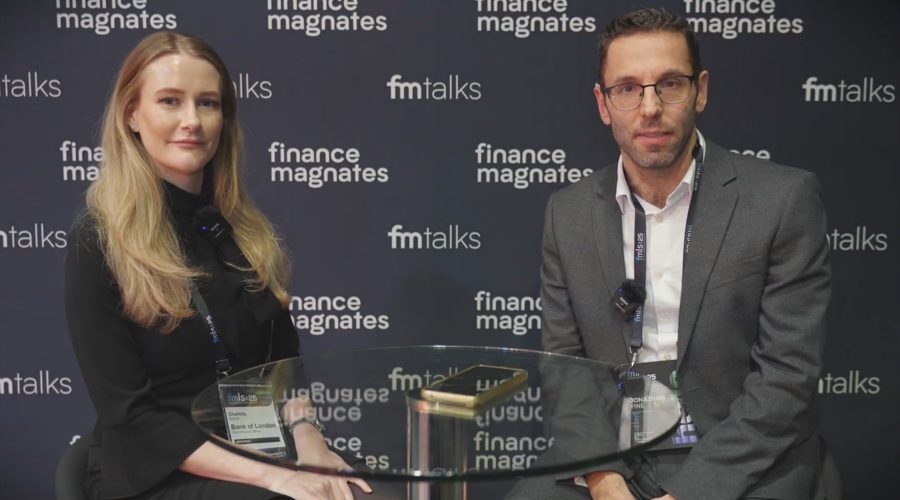
Charlotte Bullock (left) with Jonathan Fine at FMLS:25
From AI to Implementation
The assistant, she explained, supports clients during
integration by helping generate code and identify the right endpoints—part of
what she described as “that willingness to use new technology and tooling,”
combined with a tight feedback loop from clients on what they actually need.
Client Feedback Drives Product Choices
Tokenisation is another area where that feedback is shaping
priorities. Bullock described growing demand from clients for continuous,
round-the-clock access to capital.
Not all clients, however, are equally able to move at speed.
Bullock said innovation tends to start with “pathfinder” institutions,
particularly financial
firms serving emerging markets through remittances and cross-border
payments. These clients, she noted, are “really driving that change,” because
they need to move money quickly and operate across borders.
— Harrington Starr (@HarringtonStarr) May 19, 2025
Uneven Pace Across Markets
Their biggest constraint is often infrastructure rather than
ambition. Bullock contrasted the UK’s data-rich environment—where tools like
Companies House make it “incredibly simple” to validate ownership
structures—with markets
where similar information is fragmented or paper-based. “They want that smooth,
quick onboarding experience,” she said, but enhanced checks are often
unavoidable, creating delays.
Embedded banking, Bullock said, allows
clients to “offer the service to their customers,” while the bank provides the
underlying infrastructure.
Challenger Positioning in Banking
Looking ahead, the emphasis is less on spectacle than
execution. Bullock pointed to the continued evolution of the bank’s developer
studio and APIs, alongside further investment in
automation. The aim, she said, is “making that onboarding process as
seamless as possible.”
For an industry still balancing innovation with trust, her
message was pragmatic. Moving fast, in Bullock’s telling, is not about ignoring
risk—but about closing decision loops quickly enough to ensure that ideas still
matter by the time they reach the market.
“There’s a much greater willingness for individuals to put
forward a good idea, get quick sign-off, build something—and accept that
sometimes it will fail.”
That observation, offered by Charlotte Bullock, Head of
Product at The Bank of London, captured a recurring tension at the Finance
Magnates London Summit 2025: how far banks can push speed and experimentation
without undermining the discipline on which financial services is built.
Speaking with Jonathan Fine, Content Strategist at Ultimate
Group, Bullock contrasted her experience at SAP—a global software group with
more than 100,000 employees—with her current role at one of the UK’s newest
principal clearing banks.
The difference, she said, is not simply scale but mindset.
In smaller institutions, leadership is accessible, approval chains are short,
and ideas can move quickly from concept to prototype. In large corporates, by
contrast, “the signoff hurdles are large,” and by the time projects begin, “the
use case or utility isn’t there.”
Scale Shapes Decision-Making
That cultural shift is shaping how The Bank of London
approaches innovation. Rather than treating new technologies as
isolated experiments, the bank is embedding them directly into its operating
model. Bullock pointed to artificial intelligence as an example, noting that
the focus has moved from experimentation to application.
“We’re really
embedding those use cases into our workflows,” she said, citing a production AI
assistant trained on the bank’s own APIs and internal data.
Bank of London is a banking, payments, and clearing
partner for businesses, providing secure and technologically advanced financial
solutions. According to the bank, it reduces the complexity of traditional
banking, offering faster, more flexible ways for clients to hold and move money
while supporting business operations.
Charlotte Bullock (left) with Jonathan Fine at FMLS:25
From AI to Implementation
The assistant, she explained, supports clients during
integration by helping generate code and identify the right endpoints—part of
what she described as “that willingness to use new technology and tooling,”
combined with a tight feedback loop from clients on what they actually need.
Client Feedback Drives Product Choices
Tokenisation is another area where that feedback is shaping
priorities. Bullock described growing demand from clients for continuous,
round-the-clock access to capital.
Not all clients, however, are equally able to move at speed.
Bullock said innovation tends to start with “pathfinder” institutions,
particularly financial
firms serving emerging markets through remittances and cross-border
payments. These clients, she noted, are “really driving that change,” because
they need to move money quickly and operate across borders.
— Harrington Starr (@HarringtonStarr) May 19, 2025
Uneven Pace Across Markets
Their biggest constraint is often infrastructure rather than
ambition. Bullock contrasted the UK’s data-rich environment—where tools like
Companies House make it “incredibly simple” to validate ownership
structures—with markets
where similar information is fragmented or paper-based. “They want that smooth,
quick onboarding experience,” she said, but enhanced checks are often
unavoidable, creating delays.
Embedded banking, Bullock said, allows
clients to “offer the service to their customers,” while the bank provides the
underlying infrastructure.
Challenger Positioning in Banking
Looking ahead, the emphasis is less on spectacle than
execution. Bullock pointed to the continued evolution of the bank’s developer
studio and APIs, alongside further investment in
automation. The aim, she said, is “making that onboarding process as
seamless as possible.”
For an industry still balancing innovation with trust, her
message was pragmatic. Moving fast, in Bullock’s telling, is not about ignoring
risk—but about closing decision loops quickly enough to ensure that ideas still
matter by the time they reach the market.
Tareq is a financial writer with 15 years of experience covering global markets. His work spans technical analysis, forex broker reviews, and market sentiment, with a focus on topics relevant to retail traders. He joined Finance Magnates in 2023.
At Finance Magnates, he serves as News Editor, covering retail forex and CFD brokers, cryptocurrency exchanges, fintech firms, and regulatory developments shaping the trading industry. He holds an Honours degree in Information Technology from Anfell College, London.
Education:
Honours degree Information Technology, Anfell College, London
iForex posts its first annual results as a listed broker. Also ahead: CFI Financial secures a Brazil license, and prediction markets have a big week, with new ETF launches and fresh Polymarket loss data. It's Thursday, the thirtieth of April 2026. You're listening to the Finance Magnates Daily Brief.
FM Daily Brief - 29 April 2026
XTB and Robinhood both post first-quarter earnings. But the numbers point in very different directions. Also ahead: Capital.com pushes into three new markets and signals a move into payments.
It's Wednesday, the 29th of April 2026. You're listening to the Finance Magnates Daily Brief.
XTB and Robinhood both post first-quarter earnings. But the numbers point in very different directions. Also ahead: Capital.com pushes into three new markets and signals a move into payments.
It's Wednesday, the 29th of April 2026. You're listening to the Finance Magnates Daily Brief.
XTB and Robinhood both post first-quarter earnings. But the numbers point in very different directions. Also ahead: Capital.com pushes into three new markets and signals a move into payments.
It's Wednesday, the 29th of April 2026. You're listening to the Finance Magnates Daily Brief.
XTB and Robinhood both post first-quarter earnings. But the numbers point in very different directions. Also ahead: Capital.com pushes into three new markets and signals a move into payments.
It's Wednesday, the 29th of April 2026. You're listening to the Finance Magnates Daily Brief.
XTB and Robinhood both post first-quarter earnings. But the numbers point in very different directions. Also ahead: Capital.com pushes into three new markets and signals a move into payments.
It's Wednesday, the 29th of April 2026. You're listening to the Finance Magnates Daily Brief.
XTB and Robinhood both post first-quarter earnings. But the numbers point in very different directions. Also ahead: Capital.com pushes into three new markets and signals a move into payments.
It's Wednesday, the 29th of April 2026. You're listening to the Finance Magnates Daily Brief.
FM Daily Brief - 28 April 2026
Startrader posts three-point-one trillion dollars in first-quarter volume — up three hundred and forty percent from a year ago. Also ahead: Fintokei claims sub-second trader payouts, and eToro opens its premium subscription tier to all investors.
FM Daily Brief - 27 April 2026
Finance Magnates spoke with IG Group's MENA CEO. Also ahead: EC Markets posts a record five-point-one-three trillion dollar first quarter. Plus Hola Prime brings in Deloitte to audit prop firm payouts.