Steven Clausing is stepping down from his post as a member of the board and chief operating officer of Dutch online broker BinckBank , which was acquired by Saxo Bank over this summer.
BinckBank said it respects Clausing’s decision to leave the company, and confirms it was in connection with Saxo Bank’s offer . Since then, he has been working with BinckBank management to ensure a smooth and seamless transition until his departure next month.
“The tasks and responsibilities of Mr S.J. Clausing will for the time being be assigned to the other board members of BinckBank N.V. Mr.V. Germyns (CEO) and Mr. E.J.M. Kooistra (CFRO). BinckBank thanks Mr Clausing for the valuable dedication and commitment shown and wishes him all the best for the next step in his career," the company said in a statement.
Mr. Steven has served as COO and member of the executive board of BinckBank since 2015. He has originally joined the Dutch lender back in 2013 as head of
Risk Management
Risk Management
One of the most common terms utilized by brokers, risk management refers to the practice of identifying potential risks in advance. Most commonly, this also involves the analysis of risk and the undertaking of precautionary steps to both mitigate and prevent for such risk.Such efforts are essential for brokers and venues in the finance industry, given the potential for fallout in the face of unforeseen events or crises. Given a more tightly regulated environment across nearly every asset class, most brokers employ a risk management department tasked with analyzing the data and flow of the broker to mitigate the firm’s exposure to financial markets moves. Why Risk Management is a Fixture Among BrokersTraditionally the company is employing a risk management team that is monitoring the exposure of the brokerage and the performance of select clients which it deems risky for the business. Common financial risks also come in the form of high inflation, volatility across capital markets, recession, bankruptcy, and others.As a countermeasure to these issues, brokers have looked to minimize and control the exposure of investment to such risks.In the modern hybrid mode of operation, brokers are sending out the flows from the most profitable clients to liquidity providers and internalize the flows from customers.This is deemed less risky and are likely to incur losses on their positions.This in turn allowing the broker to increase its revenue capture. Several software solutions exist to assist brokers to manage risk more efficiently and as of 2018, most connectivity/bridge providers are integrating a risk-management module into their offerings. This aspect of running a brokerage is also one of the most crucial ones when it comes to employing the right kind of talent.
Read this Term . During his term, he was tasked with IT and product management and also had a prominent role in various sub-committees of the executive and supervisory boards.
Saxo Bank completes takeover deal Prior to BinckBank, he held several senior management positions in the areas of commerce, internal organization and audit and risk management at leading banks. Clausing started his career in the Royal Dutch Navy and then joined ABN AMRO Bank 1998 where he served in both commercial and internally focused posts. After a 10-year tenure with ABN, he moved to Royal Bank of Scotland in 2008.
Clausing is a graduate of the Eindhoven University of Technology also has masters in finance and internal auditing from Erasmus University, Rotterdam.
Saxo Bank announced earlier this month it has completed the acquisition of Dutch lender BinckBank and now owns nearly 98 percent in the online broker. BinckBank will be delisted from the Euronext Amsterdam as of September 26.
The two companies revealed they already started working on the integration of their technology infrastructure and plan to launch additional products and services to better compete in light of growing competing in the
Online Trading
Online Trading
Online trading represents the trading of fiat currencies, digital currencies, commodities, stocks and indices, where traders and investors intend to make a profit, via the purchase or sale of the aforementioned products. This is done through an electronic network, made accessible by brokers in the form of an online trading platform or hub.Online trading continues to see a rapid growth year on year, due to a number of reasons. Firstly, the number of brokers offering their services, with more money being spent on advertisements and sponsorships to attract potential traders. Secondly, more traders are aware of the ease in applying for online accounts; the low barrier to entry now means a trader only needs to deposit virtually as little as one wants in order to places trades. Thirdly, the improvement of financial technology, better performing hardware and software, leading to quick and consistent execution, which in turn is helped by higher liquidity, and reduced trading costs such spreads and commissions, have fueled the retail trading industry immensely. How to Trade Online?Before the emergence of the Internet, traders would have to place trades over the phone, which could be rather cumbersome, especially if one wanted to place multiple trades in a short space of time. Indeed, online trading has opened a new field of trading in the form of foreign exchange scalping, whether manually, or by way of automated trading robots. An example of online trading is the trading the foreign exchange market with a forex broker, using a platform which the broker will provide. The trader installs the platform on their computer, and they are given the information and tools needed to start trading. The most common online retail platform for forex trading is known as MetaTrader 4 (MT4).
Read this Term and investment sector.
Saxo said that their similar geographic footprint, products and customer bases meant the merger made sense and would also drive efficiencies.
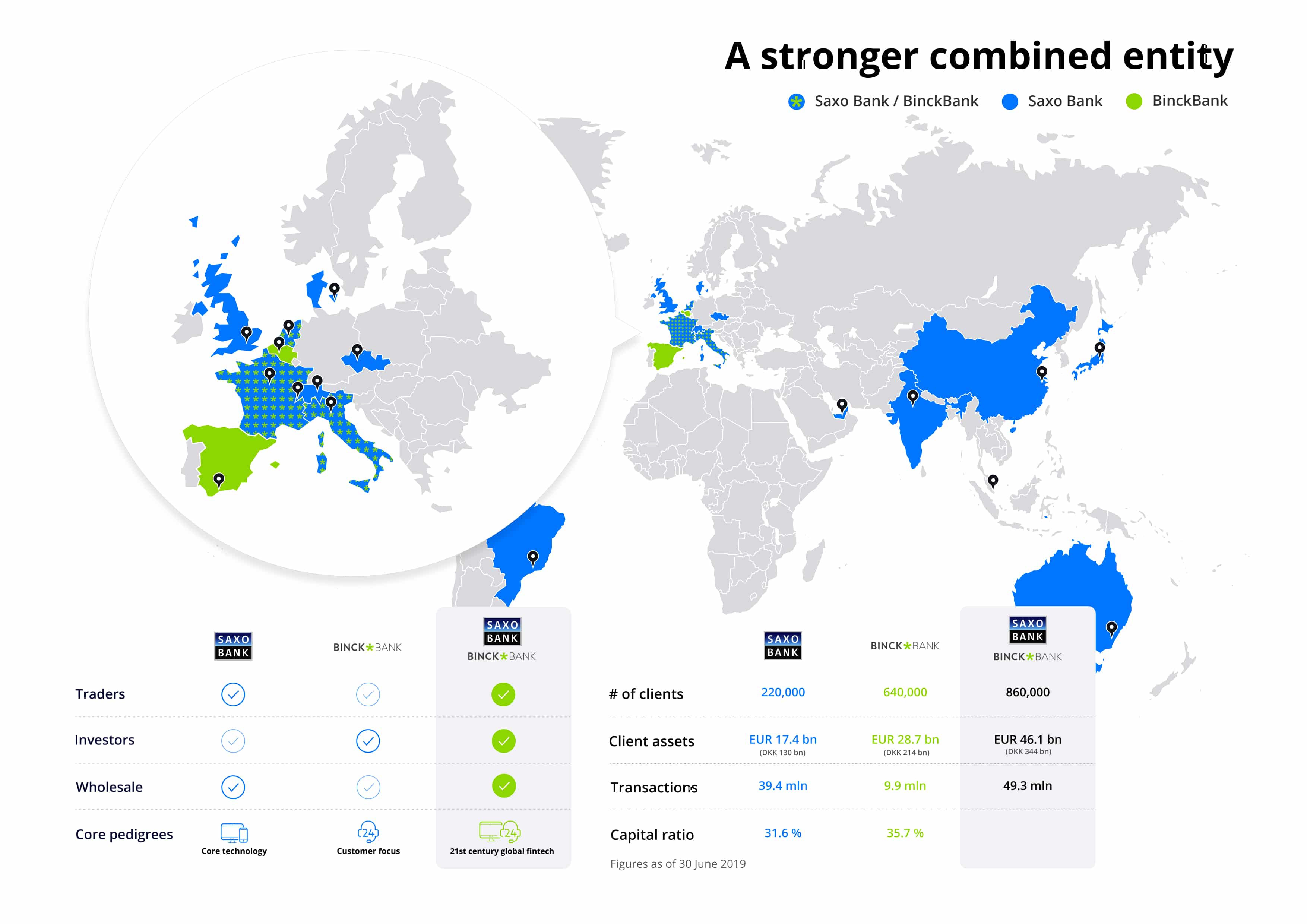
Saxo Bank and BinckBank
Steven Clausing is stepping down from his post as a member of the board and chief operating officer of Dutch online broker BinckBank , which was acquired by Saxo Bank over this summer.
BinckBank said it respects Clausing’s decision to leave the company, and confirms it was in connection with Saxo Bank’s offer . Since then, he has been working with BinckBank management to ensure a smooth and seamless transition until his departure next month.
“The tasks and responsibilities of Mr S.J. Clausing will for the time being be assigned to the other board members of BinckBank N.V. Mr.V. Germyns (CEO) and Mr. E.J.M. Kooistra (CFRO). BinckBank thanks Mr Clausing for the valuable dedication and commitment shown and wishes him all the best for the next step in his career," the company said in a statement.
Mr. Steven has served as COO and member of the executive board of BinckBank since 2015. He has originally joined the Dutch lender back in 2013 as head of
Risk Management
Risk Management
One of the most common terms utilized by brokers, risk management refers to the practice of identifying potential risks in advance. Most commonly, this also involves the analysis of risk and the undertaking of precautionary steps to both mitigate and prevent for such risk.Such efforts are essential for brokers and venues in the finance industry, given the potential for fallout in the face of unforeseen events or crises. Given a more tightly regulated environment across nearly every asset class, most brokers employ a risk management department tasked with analyzing the data and flow of the broker to mitigate the firm’s exposure to financial markets moves. Why Risk Management is a Fixture Among BrokersTraditionally the company is employing a risk management team that is monitoring the exposure of the brokerage and the performance of select clients which it deems risky for the business. Common financial risks also come in the form of high inflation, volatility across capital markets, recession, bankruptcy, and others.As a countermeasure to these issues, brokers have looked to minimize and control the exposure of investment to such risks.In the modern hybrid mode of operation, brokers are sending out the flows from the most profitable clients to liquidity providers and internalize the flows from customers.This is deemed less risky and are likely to incur losses on their positions.This in turn allowing the broker to increase its revenue capture. Several software solutions exist to assist brokers to manage risk more efficiently and as of 2018, most connectivity/bridge providers are integrating a risk-management module into their offerings. This aspect of running a brokerage is also one of the most crucial ones when it comes to employing the right kind of talent.
Read this Term . During his term, he was tasked with IT and product management and also had a prominent role in various sub-committees of the executive and supervisory boards.
Saxo Bank completes takeover deal Prior to BinckBank, he held several senior management positions in the areas of commerce, internal organization and audit and risk management at leading banks. Clausing started his career in the Royal Dutch Navy and then joined ABN AMRO Bank 1998 where he served in both commercial and internally focused posts. After a 10-year tenure with ABN, he moved to Royal Bank of Scotland in 2008.
Clausing is a graduate of the Eindhoven University of Technology also has masters in finance and internal auditing from Erasmus University, Rotterdam.
Saxo Bank announced earlier this month it has completed the acquisition of Dutch lender BinckBank and now owns nearly 98 percent in the online broker. BinckBank will be delisted from the Euronext Amsterdam as of September 26.
The two companies revealed they already started working on the integration of their technology infrastructure and plan to launch additional products and services to better compete in light of growing competing in the
Online Trading
Online Trading
Online trading represents the trading of fiat currencies, digital currencies, commodities, stocks and indices, where traders and investors intend to make a profit, via the purchase or sale of the aforementioned products. This is done through an electronic network, made accessible by brokers in the form of an online trading platform or hub.Online trading continues to see a rapid growth year on year, due to a number of reasons. Firstly, the number of brokers offering their services, with more money being spent on advertisements and sponsorships to attract potential traders. Secondly, more traders are aware of the ease in applying for online accounts; the low barrier to entry now means a trader only needs to deposit virtually as little as one wants in order to places trades. Thirdly, the improvement of financial technology, better performing hardware and software, leading to quick and consistent execution, which in turn is helped by higher liquidity, and reduced trading costs such spreads and commissions, have fueled the retail trading industry immensely. How to Trade Online?Before the emergence of the Internet, traders would have to place trades over the phone, which could be rather cumbersome, especially if one wanted to place multiple trades in a short space of time. Indeed, online trading has opened a new field of trading in the form of foreign exchange scalping, whether manually, or by way of automated trading robots. An example of online trading is the trading the foreign exchange market with a forex broker, using a platform which the broker will provide. The trader installs the platform on their computer, and they are given the information and tools needed to start trading. The most common online retail platform for forex trading is known as MetaTrader 4 (MT4).
Read this Term and investment sector.
Saxo said that their similar geographic footprint, products and customer bases meant the merger made sense and would also drive efficiencies.
Saxo Bank and BinckBank