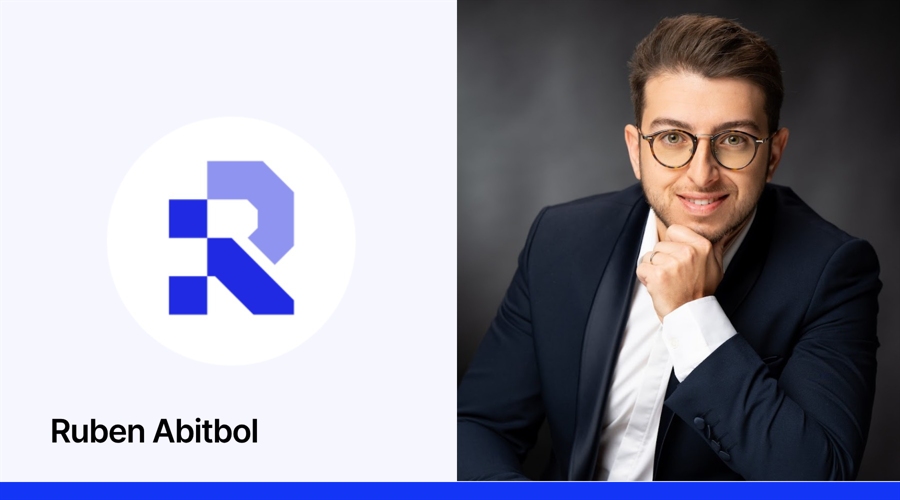
Ruben Abitbol has opened RUBIK Consulting, operating under a Risk Management as a Service model and aims to help prop firms stay on the market.
This is especially important, as at least 80 proprietary trading firms collapsed in 2024, revealing widespread weaknesses in cash-flow management.
In an interview with FinanceMagnates.com, he says that “most firms fail to grasp risk and that it will be crucial for their survival.”
Ruben Abitbol, the Founder of RUBIK Consulting for prop firms
Ruben
Abitbol, former Head of Trading and Risk at The5ers and most recently an
executive at PropFirmMatch, has launched RUBIK, a consulting practice focused
exclusively on risk management for proprietary trading firms.
The timing
reflects mounting pressure on the prop trading sector, where between 80 and 100
firms shut down in 2024 alone. Abitbol believes most failures stem from poor
cashflow management rather than malicious intent, with founders underestimating
the lag between revenue generation and payout obligations.
“The
revenue generated today will impact your payouts months later,” Abitbol
explained in an interview with FinanceMagnates.com. “As long as the
company grows, you don't feel it. But when growth stabilizes or drops, your
payout obligations catch up, and suddenly, your margins vanish.”
“Only
the largest players do,” Abitbol said. “Smaller firms often try to
handle it internally as part of operations, but that's a critical
mistake.”
RUBIK Consulting just went live
Unlike
traditional finance sectors where standardized practices exist, prop trading
operates without unified benchmarks or tools. Abitbol's service model allows
firms to access sophisticated risk infrastructure without building entire
departments, similar to how other financial services have moved toward
outsourced or co-sourced operational functions.
Abitbol
spent over five years developing risk methodologies at The5ers starting in
2021, when standardized practices didn't exist in the nascent prop trading
space. Before that, he traded commodity options at Futures First, giving him a
trader's perspective that he says differs from the brokerage-focused
backgrounds common among prop firm executives.
“I was
in a fortunate position at The5ers, where I led risk during the very early
stages of the industry, meaning nothing existed yet, and I had to build
everything from scratch: defining what to measure, which metrics to monitor,
and how to interpret them,” Abitbol said.
Although
the service has only just launched officially, Abitbol says he is already
working with more than a dozen companies at various stages of development,
though he is not disclosing their names.
RUBIK’s Three-Stage
Advisory Model
For
pre-launch companies, Abitbol helps build infrastructure from scratch,
including partner selection, challenge model design, pricing structures, and
rule frameworks that form what he calls “the foundation of proper risk
management in prop trading.”
For small
firms that have launched but lack data or experience, he implements processes
to improve sustainability. For larger operators, he provides external risk
audits with industry benchmarking, offering what he describes as “a fresh,
data-driven perspective” against industry standards.
The
practice focuses primarily on program balance and trading activity risk through
two layers: deep data analysis to build business intelligence infrastructure,
and continuous trading flow management to flag high-risk or toxic behavior.
Abitbol claims
several clients have improved margins by over 50% after implementing his
protocols. In one case, a small firm operating at a 50% payout ratio, which he
describes as dangerously high for smaller operations, was brought down to a
steady 25–30% after his intervention.
“They
were growing, but with no margin buffer,” Abitbol added. “After I
implemented my methodology, we brought the ratio down to a steady 25–30%
yearly, effectively saving them from collapse.”
Industry
data shows average payout ratios hover around 50%, consuming a massive portion
of total expenses. As competition intensifies and firms lower prices while
relaxing rules to attract traders, margins are being squeezed further. Abitbol
notes that traders are also becoming more sophisticated in exploiting system
weaknesses.
“Less
than 1% of traders can bankrupt a firm if not identified and handled
correctly,” he said. “Without advanced detection systems and
consistent review, these flows can destroy the business from within.”
No Standard Risk Model
Exists
Unlike the
forex brokerage world, where regulations, established technologies, and decades
of experience have created clear risk protocols, prop trading operates without
standardized practices. Every firm defines risk differently, creating what
Abitbol describes as both fascinating and chaotic conditions.
“In
Forex, you have all the cards on the table,” he said. “Prop trading,
on the other hand, is a completely new environment. There's no standard, no
unified benchmark, and every firm defines risk differently.”
Abitbol's
longer-term goal involves helping establish industry-wide benchmarks and
standards. He notes that some technology providers are attempting to build risk
engines for prop firms, but none are currently effective because they simply
can't apply brokerage systems to asymmetric prop firm risk structures.
Early-Stage Mistakes Prove
Costly
According
to Abitbol, firms in growth mode often prioritize traffic generation over risk
management, sometimes partnering with affiliates who bring in what he calls bad
actors. Revenue initially grows, but months later margins collapse as the firm
pays out twice what it earned to cover abuse-related damage.
“I
call this the ‘smoke revenue’ effect: you end up paying twice what you earned
to cover the damage caused by abusers,” Abitbol said. “When these
firms start implementing proper risk measures, their revenue often drops
because those bad actors stop coming, but that's a necessary correction.”
For mature
firms, mistakes tend to be analytical, with companies misinterpreting
cause-and-effect relationships in their data or underutilizing information
altogether. The cashflow lag issue hits hardest when growth plateaus. Abitbol
says the average trader requests a first payout roughly 2.5 months after
registration.
“The
number one reason for failure is misunderstanding cashflow lag,” he said.
“I truly believe most of these founders had good intentions. They entered
the industry thinking it was easy, that early growth meant long-term success,
but they misread the economics.”
Regulation Could
Strengthen Sector
Abitbol
favors tighter regulation, arguing it would strengthen the space by allowing
only sustainable operators to remain, benefiting both traders and firms.
“I'm
in favor of regulation,” Abitbol said. “It will strengthen the space
and allow only solid, sustainable players to remain, benefiting both traders
and firms.”
He
acknowledges that prop trading operates closer to gamified trading than
traditional market activity, since it functions in a closed environment with
defined rules rather than direct market exposure.
“But
that's exactly why having a solid risk framework and potential regulatory
oversight is so important,” he explained.
As
regulatory pressure increases and consolidation continues, Abitbol expects Risk
Management as a Service to shift from competitive advantage to survival
necessity. He already uses standardized benchmarks to assess whether firms are
operating sustainably or heading toward failure.
“In
time, Risk Management as a Service won't just be an advantage, it will be a
necessity for survival,” he concluded.
Ruben
Abitbol, former Head of Trading and Risk at The5ers and most recently an
executive at PropFirmMatch, has launched RUBIK, a consulting practice focused
exclusively on risk management for proprietary trading firms.
The timing
reflects mounting pressure on the prop trading sector, where between 80 and 100
firms shut down in 2024 alone. Abitbol believes most failures stem from poor
cashflow management rather than malicious intent, with founders underestimating
the lag between revenue generation and payout obligations.
“The
revenue generated today will impact your payouts months later,” Abitbol
explained in an interview with FinanceMagnates.com. “As long as the
company grows, you don't feel it. But when growth stabilizes or drops, your
payout obligations catch up, and suddenly, your margins vanish.”
“Only
the largest players do,” Abitbol said. “Smaller firms often try to
handle it internally as part of operations, but that's a critical
mistake.”
RUBIK Consulting just went live
Unlike
traditional finance sectors where standardized practices exist, prop trading
operates without unified benchmarks or tools. Abitbol's service model allows
firms to access sophisticated risk infrastructure without building entire
departments, similar to how other financial services have moved toward
outsourced or co-sourced operational functions.
Abitbol
spent over five years developing risk methodologies at The5ers starting in
2021, when standardized practices didn't exist in the nascent prop trading
space. Before that, he traded commodity options at Futures First, giving him a
trader's perspective that he says differs from the brokerage-focused
backgrounds common among prop firm executives.
“I was
in a fortunate position at The5ers, where I led risk during the very early
stages of the industry, meaning nothing existed yet, and I had to build
everything from scratch: defining what to measure, which metrics to monitor,
and how to interpret them,” Abitbol said.
Although
the service has only just launched officially, Abitbol says he is already
working with more than a dozen companies at various stages of development,
though he is not disclosing their names.
RUBIK’s Three-Stage
Advisory Model
For
pre-launch companies, Abitbol helps build infrastructure from scratch,
including partner selection, challenge model design, pricing structures, and
rule frameworks that form what he calls “the foundation of proper risk
management in prop trading.”
For small
firms that have launched but lack data or experience, he implements processes
to improve sustainability. For larger operators, he provides external risk
audits with industry benchmarking, offering what he describes as “a fresh,
data-driven perspective” against industry standards.
The
practice focuses primarily on program balance and trading activity risk through
two layers: deep data analysis to build business intelligence infrastructure,
and continuous trading flow management to flag high-risk or toxic behavior.
Abitbol claims
several clients have improved margins by over 50% after implementing his
protocols. In one case, a small firm operating at a 50% payout ratio, which he
describes as dangerously high for smaller operations, was brought down to a
steady 25–30% after his intervention.
“They
were growing, but with no margin buffer,” Abitbol added. “After I
implemented my methodology, we brought the ratio down to a steady 25–30%
yearly, effectively saving them from collapse.”
Industry
data shows average payout ratios hover around 50%, consuming a massive portion
of total expenses. As competition intensifies and firms lower prices while
relaxing rules to attract traders, margins are being squeezed further. Abitbol
notes that traders are also becoming more sophisticated in exploiting system
weaknesses.
“Less
than 1% of traders can bankrupt a firm if not identified and handled
correctly,” he said. “Without advanced detection systems and
consistent review, these flows can destroy the business from within.”
No Standard Risk Model
Exists
Unlike the
forex brokerage world, where regulations, established technologies, and decades
of experience have created clear risk protocols, prop trading operates without
standardized practices. Every firm defines risk differently, creating what
Abitbol describes as both fascinating and chaotic conditions.
“In
Forex, you have all the cards on the table,” he said. “Prop trading,
on the other hand, is a completely new environment. There's no standard, no
unified benchmark, and every firm defines risk differently.”
Abitbol's
longer-term goal involves helping establish industry-wide benchmarks and
standards. He notes that some technology providers are attempting to build risk
engines for prop firms, but none are currently effective because they simply
can't apply brokerage systems to asymmetric prop firm risk structures.
Early-Stage Mistakes Prove
Costly
According
to Abitbol, firms in growth mode often prioritize traffic generation over risk
management, sometimes partnering with affiliates who bring in what he calls bad
actors. Revenue initially grows, but months later margins collapse as the firm
pays out twice what it earned to cover abuse-related damage.
“I
call this the ‘smoke revenue’ effect: you end up paying twice what you earned
to cover the damage caused by abusers,” Abitbol said. “When these
firms start implementing proper risk measures, their revenue often drops
because those bad actors stop coming, but that's a necessary correction.”
For mature
firms, mistakes tend to be analytical, with companies misinterpreting
cause-and-effect relationships in their data or underutilizing information
altogether. The cashflow lag issue hits hardest when growth plateaus. Abitbol
says the average trader requests a first payout roughly 2.5 months after
registration.
“The
number one reason for failure is misunderstanding cashflow lag,” he said.
“I truly believe most of these founders had good intentions. They entered
the industry thinking it was easy, that early growth meant long-term success,
but they misread the economics.”
Regulation Could
Strengthen Sector
Abitbol
favors tighter regulation, arguing it would strengthen the space by allowing
only sustainable operators to remain, benefiting both traders and firms.
“I'm
in favor of regulation,” Abitbol said. “It will strengthen the space
and allow only solid, sustainable players to remain, benefiting both traders
and firms.”
He
acknowledges that prop trading operates closer to gamified trading than
traditional market activity, since it functions in a closed environment with
defined rules rather than direct market exposure.
“But
that's exactly why having a solid risk framework and potential regulatory
oversight is so important,” he explained.
As
regulatory pressure increases and consolidation continues, Abitbol expects Risk
Management as a Service to shift from competitive advantage to survival
necessity. He already uses standardized benchmarks to assess whether firms are
operating sustainably or heading toward failure.
“In
time, Risk Management as a Service won't just be an advantage, it will be a
necessity for survival,” he concluded.
Damian Chmiel is a Senior Analyst & Editor at Finance Magnates with more than 15 years of experience in the CFD and online trading industry. Active as both a trader and journalist since 2010, he focuses on broker coverage, fintech innovation, and regulatory developments across Europe, the Middle East, and Asia.
His work includes interviews with C-level leaders at major brokerages and fintech platforms, as well as co-authoring Finance Magnates’ quarterly industry benchmarking reports. Damian’s reporting is data-driven, market-aware, and grounded in direct industry engagement. His analysis and commentary have also been cited by external media outlets, including Investing.com, Binance, The Asset, Stockhead, and Dispatch.
Education:
MA in Finance and Accounting, Cracow University of Economics
EBC Financial’s UK CEO David Barrett Steps Down After Six Years
Featured Videos
FP Markets Winner Spotlight 🏆 | Global Broker of the Year 2025 #Trading #Broker #Innovation #Shorts
FP Markets Winner Spotlight 🏆 | Global Broker of the Year 2025 #Trading #Broker #Innovation #Shorts
FP Markets Winner Spotlight 🏆 | Global Broker of the Year 2025 #Trading #Broker #Innovation #Shorts
FP Markets Winner Spotlight 🏆 | Global Broker of the Year 2025 #Trading #Broker #Innovation #Shorts
FP Markets takes the spotlight as Global Broker of the Year 2025 at the Finance Magnates Awards.
Martin Stoilov, Head of Client Experience, shares that trust, innovation, and people played a key role in the company’s success, supported by a strong foundation of integrity and client-centricity.
Following this milestone, FP Markets continues to focus on growth, technology investment, and its core values of transparency and excellence.
👉 Be part of FM Awards 2026: https://awards.financemagnates.com/#nominate
FP Markets takes the spotlight as Global Broker of the Year 2025 at the Finance Magnates Awards.
Martin Stoilov, Head of Client Experience, shares that trust, innovation, and people played a key role in the company’s success, supported by a strong foundation of integrity and client-centricity.
Following this milestone, FP Markets continues to focus on growth, technology investment, and its core values of transparency and excellence.
👉 Be part of FM Awards 2026: https://awards.financemagnates.com/#nominate
FP Markets takes the spotlight as Global Broker of the Year 2025 at the Finance Magnates Awards.
Martin Stoilov, Head of Client Experience, shares that trust, innovation, and people played a key role in the company’s success, supported by a strong foundation of integrity and client-centricity.
Following this milestone, FP Markets continues to focus on growth, technology investment, and its core values of transparency and excellence.
👉 Be part of FM Awards 2026: https://awards.financemagnates.com/#nominate
FP Markets takes the spotlight as Global Broker of the Year 2025 at the Finance Magnates Awards.
Martin Stoilov, Head of Client Experience, shares that trust, innovation, and people played a key role in the company’s success, supported by a strong foundation of integrity and client-centricity.
Following this milestone, FP Markets continues to focus on growth, technology investment, and its core values of transparency and excellence.
👉 Be part of FM Awards 2026: https://awards.financemagnates.com/#nominate
In this video, we review @HolaPrimeMarketsOfficial, a multi-asset forex and CFDs broker offering different account types, trading platforms, and flexible trading conditions.
We cover the broker’s overall offering, including account options, trading environment, platforms like MT4 and MT5, and additional services such as managed accounts and fast withdrawals.
Watch the full video to see if Hola Prime Markets fits your trading needs.
📣 Stay up to date with the latest in finance and trading. Follow Finance Magnates for industry news, insights, and global event coverage.
Connect with us:
🔗 LinkedIn: /financemagnates
👍 Facebook: /financemagnates
📸 Instagram: https://www.instagram.com/financemagnates
🐦 X: https://x.com/financemagnates
🎥 TikTok: https://www.tiktok.com/tag/financemagnates
▶️ YouTube: /@financemagnates_official
#HolaPrime #ForexBroker #CFDTrading #FinanceMagnates #Trading #Forex #BrokerReview
In this video, we review @HolaPrimeMarketsOfficial, a multi-asset forex and CFDs broker offering different account types, trading platforms, and flexible trading conditions.
We cover the broker’s overall offering, including account options, trading environment, platforms like MT4 and MT5, and additional services such as managed accounts and fast withdrawals.
Watch the full video to see if Hola Prime Markets fits your trading needs.
📣 Stay up to date with the latest in finance and trading. Follow Finance Magnates for industry news, insights, and global event coverage.
Connect with us:
🔗 LinkedIn: /financemagnates
👍 Facebook: /financemagnates
📸 Instagram: https://www.instagram.com/financemagnates
🐦 X: https://x.com/financemagnates
🎥 TikTok: https://www.tiktok.com/tag/financemagnates
▶️ YouTube: /@financemagnates_official
#HolaPrime #ForexBroker #CFDTrading #FinanceMagnates #Trading #Forex #BrokerReview
In this video, we review @HolaPrimeMarketsOfficial, a multi-asset forex and CFDs broker offering different account types, trading platforms, and flexible trading conditions.
We cover the broker’s overall offering, including account options, trading environment, platforms like MT4 and MT5, and additional services such as managed accounts and fast withdrawals.
Watch the full video to see if Hola Prime Markets fits your trading needs.
📣 Stay up to date with the latest in finance and trading. Follow Finance Magnates for industry news, insights, and global event coverage.
Connect with us:
🔗 LinkedIn: /financemagnates
👍 Facebook: /financemagnates
📸 Instagram: https://www.instagram.com/financemagnates
🐦 X: https://x.com/financemagnates
🎥 TikTok: https://www.tiktok.com/tag/financemagnates
▶️ YouTube: /@financemagnates_official
#HolaPrime #ForexBroker #CFDTrading #FinanceMagnates #Trading #Forex #BrokerReview
In this video, we review @HolaPrimeMarketsOfficial, a multi-asset forex and CFDs broker offering different account types, trading platforms, and flexible trading conditions.
We cover the broker’s overall offering, including account options, trading environment, platforms like MT4 and MT5, and additional services such as managed accounts and fast withdrawals.
Watch the full video to see if Hola Prime Markets fits your trading needs.
📣 Stay up to date with the latest in finance and trading. Follow Finance Magnates for industry news, insights, and global event coverage.
Connect with us:
🔗 LinkedIn: /financemagnates
👍 Facebook: /financemagnates
📸 Instagram: https://www.instagram.com/financemagnates
🐦 X: https://x.com/financemagnates
🎥 TikTok: https://www.tiktok.com/tag/financemagnates
▶️ YouTube: /@financemagnates_official
#HolaPrime #ForexBroker #CFDTrading #FinanceMagnates #Trading #Forex #BrokerReview
In this video, we review @HolaPrimeMarketsOfficial, a multi-asset forex and CFDs broker offering different account types, trading platforms, and flexible trading conditions.
We cover the broker’s overall offering, including account options, trading environment, platforms like MT4 and MT5, and additional services such as managed accounts and fast withdrawals.
Watch the full video to see if Hola Prime Markets fits your trading needs.
📣 Stay up to date with the latest in finance and trading. Follow Finance Magnates for industry news, insights, and global event coverage.
Connect with us:
🔗 LinkedIn: /financemagnates
👍 Facebook: /financemagnates
📸 Instagram: https://www.instagram.com/financemagnates
🐦 X: https://x.com/financemagnates
🎥 TikTok: https://www.tiktok.com/tag/financemagnates
▶️ YouTube: /@financemagnates_official
#HolaPrime #ForexBroker #CFDTrading #FinanceMagnates #Trading #Forex #BrokerReview
In this video, we review @HolaPrimeMarketsOfficial, a multi-asset forex and CFDs broker offering different account types, trading platforms, and flexible trading conditions.
We cover the broker’s overall offering, including account options, trading environment, platforms like MT4 and MT5, and additional services such as managed accounts and fast withdrawals.
Watch the full video to see if Hola Prime Markets fits your trading needs.
📣 Stay up to date with the latest in finance and trading. Follow Finance Magnates for industry news, insights, and global event coverage.
Connect with us:
🔗 LinkedIn: /financemagnates
👍 Facebook: /financemagnates
📸 Instagram: https://www.instagram.com/financemagnates
🐦 X: https://x.com/financemagnates
🎥 TikTok: https://www.tiktok.com/tag/financemagnates
▶️ YouTube: /@financemagnates_official
#HolaPrime #ForexBroker #CFDTrading #FinanceMagnates #Trading #Forex #BrokerReview
Hola Prime Review: What You Need to Know | Full Breakdown by Finance Magnates
Hola Prime Review: What You Need to Know | Full Breakdown by Finance Magnates
Hola Prime Review: What You Need to Know | Full Breakdown by Finance Magnates
Hola Prime Review: What You Need to Know | Full Breakdown by Finance Magnates
Hola Prime Review: What You Need to Know | Full Breakdown by Finance Magnates
Hola Prime Review: What You Need to Know | Full Breakdown by Finance Magnates
In this video, we review @HolaPrime_Global, a proprietary trading firm offering evaluation programs and performance-based payouts in simulated market environments.
We cover how the challenge model works, including account types, profit splits (up to 95%), trading rules, and what it takes to reach a funded account. You’ll also learn about available platforms like MT4, MT5, cTrader, and more, along with insights into payouts, support, and trading conditions.
Watch the full video to see if Hola Prime fits your trading style.
📣 Stay up to date with the latest in finance and trading. Follow Finance Magnates for industry news, insights, and global event coverage.
Connect with us:
🔗 LinkedIn: /financemagnates
👍 Facebook: /financemagnates
📸 Instagram: https://www.instagram.com/financemagnates
🐦 X: https://x.com/financemagnates
🎥 TikTok: https://www.tiktok.com/tag/financemagnates
▶️ YouTube: /@financemagnates_official
#HolaPrime #PropFirm #Trading #FinanceMagnates #Forex #FuturesTrading #TradingReview #PropFirmReview
In this video, we review @HolaPrime_Global, a proprietary trading firm offering evaluation programs and performance-based payouts in simulated market environments.
We cover how the challenge model works, including account types, profit splits (up to 95%), trading rules, and what it takes to reach a funded account. You’ll also learn about available platforms like MT4, MT5, cTrader, and more, along with insights into payouts, support, and trading conditions.
Watch the full video to see if Hola Prime fits your trading style.
📣 Stay up to date with the latest in finance and trading. Follow Finance Magnates for industry news, insights, and global event coverage.
Connect with us:
🔗 LinkedIn: /financemagnates
👍 Facebook: /financemagnates
📸 Instagram: https://www.instagram.com/financemagnates
🐦 X: https://x.com/financemagnates
🎥 TikTok: https://www.tiktok.com/tag/financemagnates
▶️ YouTube: /@financemagnates_official
#HolaPrime #PropFirm #Trading #FinanceMagnates #Forex #FuturesTrading #TradingReview #PropFirmReview
In this video, we review @HolaPrime_Global, a proprietary trading firm offering evaluation programs and performance-based payouts in simulated market environments.
We cover how the challenge model works, including account types, profit splits (up to 95%), trading rules, and what it takes to reach a funded account. You’ll also learn about available platforms like MT4, MT5, cTrader, and more, along with insights into payouts, support, and trading conditions.
Watch the full video to see if Hola Prime fits your trading style.
📣 Stay up to date with the latest in finance and trading. Follow Finance Magnates for industry news, insights, and global event coverage.
Connect with us:
🔗 LinkedIn: /financemagnates
👍 Facebook: /financemagnates
📸 Instagram: https://www.instagram.com/financemagnates
🐦 X: https://x.com/financemagnates
🎥 TikTok: https://www.tiktok.com/tag/financemagnates
▶️ YouTube: /@financemagnates_official
#HolaPrime #PropFirm #Trading #FinanceMagnates #Forex #FuturesTrading #TradingReview #PropFirmReview
In this video, we review @HolaPrime_Global, a proprietary trading firm offering evaluation programs and performance-based payouts in simulated market environments.
We cover how the challenge model works, including account types, profit splits (up to 95%), trading rules, and what it takes to reach a funded account. You’ll also learn about available platforms like MT4, MT5, cTrader, and more, along with insights into payouts, support, and trading conditions.
Watch the full video to see if Hola Prime fits your trading style.
📣 Stay up to date with the latest in finance and trading. Follow Finance Magnates for industry news, insights, and global event coverage.
Connect with us:
🔗 LinkedIn: /financemagnates
👍 Facebook: /financemagnates
📸 Instagram: https://www.instagram.com/financemagnates
🐦 X: https://x.com/financemagnates
🎥 TikTok: https://www.tiktok.com/tag/financemagnates
▶️ YouTube: /@financemagnates_official
#HolaPrime #PropFirm #Trading #FinanceMagnates #Forex #FuturesTrading #TradingReview #PropFirmReview
In this video, we review @HolaPrime_Global, a proprietary trading firm offering evaluation programs and performance-based payouts in simulated market environments.
We cover how the challenge model works, including account types, profit splits (up to 95%), trading rules, and what it takes to reach a funded account. You’ll also learn about available platforms like MT4, MT5, cTrader, and more, along with insights into payouts, support, and trading conditions.
Watch the full video to see if Hola Prime fits your trading style.
📣 Stay up to date with the latest in finance and trading. Follow Finance Magnates for industry news, insights, and global event coverage.
Connect with us:
🔗 LinkedIn: /financemagnates
👍 Facebook: /financemagnates
📸 Instagram: https://www.instagram.com/financemagnates
🐦 X: https://x.com/financemagnates
🎥 TikTok: https://www.tiktok.com/tag/financemagnates
▶️ YouTube: /@financemagnates_official
#HolaPrime #PropFirm #Trading #FinanceMagnates #Forex #FuturesTrading #TradingReview #PropFirmReview
In this video, we review @HolaPrime_Global, a proprietary trading firm offering evaluation programs and performance-based payouts in simulated market environments.
We cover how the challenge model works, including account types, profit splits (up to 95%), trading rules, and what it takes to reach a funded account. You’ll also learn about available platforms like MT4, MT5, cTrader, and more, along with insights into payouts, support, and trading conditions.
Watch the full video to see if Hola Prime fits your trading style.
📣 Stay up to date with the latest in finance and trading. Follow Finance Magnates for industry news, insights, and global event coverage.
Connect with us:
🔗 LinkedIn: /financemagnates
👍 Facebook: /financemagnates
📸 Instagram: https://www.instagram.com/financemagnates
🐦 X: https://x.com/financemagnates
🎥 TikTok: https://www.tiktok.com/tag/financemagnates
▶️ YouTube: /@financemagnates_official
#HolaPrime #PropFirm #Trading #FinanceMagnates #Forex #FuturesTrading #TradingReview #PropFirmReview
Axi Winner Spotlight 🏆 | Global Most Innovative Broker 2025 #Innovation #Trading #Fintech #Broker
Axi Winner Spotlight 🏆 | Global Most Innovative Broker 2025 #Innovation #Trading #Fintech #Broker
Axi Winner Spotlight 🏆 | Global Most Innovative Broker 2025 #Innovation #Trading #Fintech #Broker
Axi Winner Spotlight 🏆 | Global Most Innovative Broker 2025 #Innovation #Trading #Fintech #Broker
Axi Winner Spotlight 🏆 | Global Most Innovative Broker 2025 #Innovation #Trading #Fintech #Broker
Axi Winner Spotlight 🏆 | Global Most Innovative Broker 2025 #Innovation #Trading #Fintech #Broker
Axi takes the spotlight at the Finance Magnates Awards, winning Global Most Innovative Broker 2025.
Olivia Xenofontos and Ivanna Openko share how the team will feel: proud, motivated, and ready to keep delivering.
They also describe the night as well-organized, focused, and enjoyable for all.
👉 Be part of FM Awards 2026.
Axi takes the spotlight at the Finance Magnates Awards, winning Global Most Innovative Broker 2025.
Olivia Xenofontos and Ivanna Openko share how the team will feel: proud, motivated, and ready to keep delivering.
They also describe the night as well-organized, focused, and enjoyable for all.
👉 Be part of FM Awards 2026.
Axi takes the spotlight at the Finance Magnates Awards, winning Global Most Innovative Broker 2025.
Olivia Xenofontos and Ivanna Openko share how the team will feel: proud, motivated, and ready to keep delivering.
They also describe the night as well-organized, focused, and enjoyable for all.
👉 Be part of FM Awards 2026.
Axi takes the spotlight at the Finance Magnates Awards, winning Global Most Innovative Broker 2025.
Olivia Xenofontos and Ivanna Openko share how the team will feel: proud, motivated, and ready to keep delivering.
They also describe the night as well-organized, focused, and enjoyable for all.
👉 Be part of FM Awards 2026.
Axi takes the spotlight at the Finance Magnates Awards, winning Global Most Innovative Broker 2025.
Olivia Xenofontos and Ivanna Openko share how the team will feel: proud, motivated, and ready to keep delivering.
They also describe the night as well-organized, focused, and enjoyable for all.
👉 Be part of FM Awards 2026.
Axi takes the spotlight at the Finance Magnates Awards, winning Global Most Innovative Broker 2025.
Olivia Xenofontos and Ivanna Openko share how the team will feel: proud, motivated, and ready to keep delivering.
They also describe the night as well-organized, focused, and enjoyable for all.
👉 Be part of FM Awards 2026.
Recognition that matters.
Built on transparency.
Driven by the industry.
The Finance Magnates Awards 2026.
Nominations are now open.
🔗 https://awards.financemagnates.com/?utm_source=SM&utm_medium=social&utm_campaign=recognition-matters
Recognition that matters.
Built on transparency.
Driven by the industry.
The Finance Magnates Awards 2026.
Nominations are now open.
🔗 https://awards.financemagnates.com/?utm_source=SM&utm_medium=social&utm_campaign=recognition-matters
Recognition that matters.
Built on transparency.
Driven by the industry.
The Finance Magnates Awards 2026.
Nominations are now open.
🔗 https://awards.financemagnates.com/?utm_source=SM&utm_medium=social&utm_campaign=recognition-matters
Recognition that matters.
Built on transparency.
Driven by the industry.
The Finance Magnates Awards 2026.
Nominations are now open.
🔗 https://awards.financemagnates.com/?utm_source=SM&utm_medium=social&utm_campaign=recognition-matters
Recognition that matters.
Built on transparency.
Driven by the industry.
The Finance Magnates Awards 2026.
Nominations are now open.
🔗 https://awards.financemagnates.com/?utm_source=SM&utm_medium=social&utm_campaign=recognition-matters
Recognition that matters.
Built on transparency.
Driven by the industry.
The Finance Magnates Awards 2026.
Nominations are now open.
🔗 https://awards.financemagnates.com/?utm_source=SM&utm_medium=social&utm_campaign=recognition-matters