Dogecoin price tests three-month lows, with Solana leading declines on Monday, February 24, 2025
Technical analysis suggests that the DOGE price could drop to $0.20.
But what are the Dogecoin price predictions for the rest of 2025?
Why Dogecoin price is surging today? Let's check current DOGE's price and predictions for 2025
On February
24, 2025, Dogecoin (DOGE), the popular memecoin, is experiencing a significant
price slump, currently trading at $0.2330.
A drop to
the lowest levels since early November—over three months—has traders wondering:
Will Dogecoin crash? In this article, we examine why the DOGE price is going
down and what the DOGE price predictions and technical analysis suggest about
its future.
The decline
aligns with broader market trends, particularly within the memecoin sector,
which has seen increased selling pressure. This is evident from the 24-hour
trading volume and market cap data, suggesting a bearish sentiment among
traders.
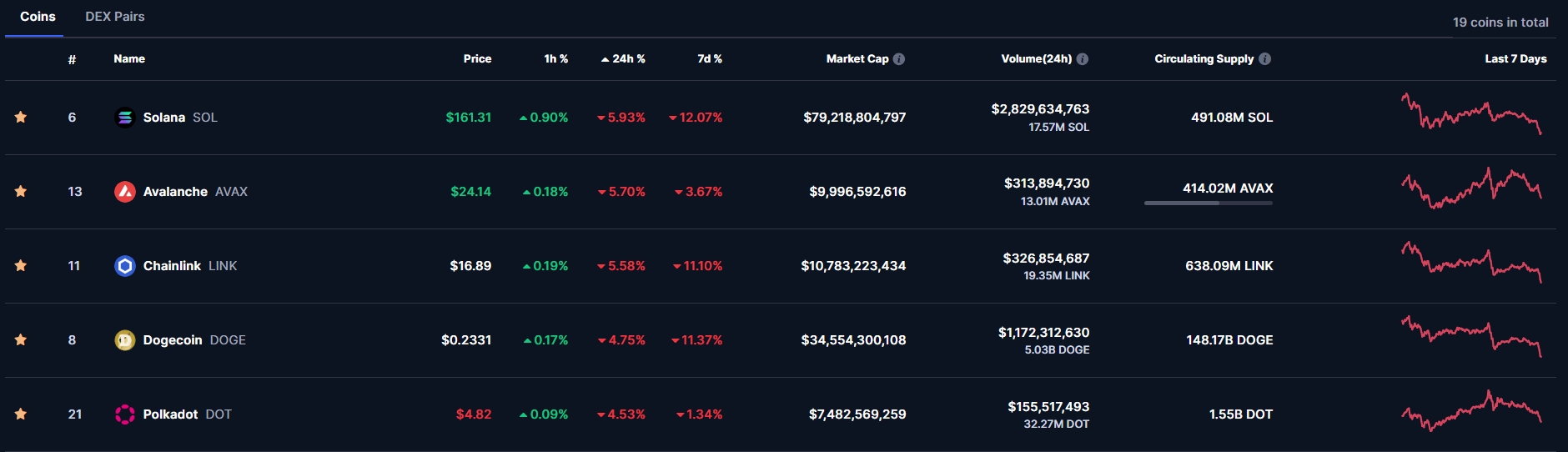
Over the
past 24 hours, the cryptocurrency market has been dominated by declines.
Leading the losses is Solana (SOL), down more than 6% to $161. Dogecoin is also
among the top decliners, dropping nearly 5%. Avalanche (AVAX), Chainlink
(LINK), and Polkadot (DOT) are also experiencing significant declines.
Dogecoin falls together with other altcoins. Source: CoinMarketCap
Why is Dogecoin Crashing: Analysis
of Price Drop Causes
The primary
driver behind DOGE's price drop is the recent failure of the LIBRA token, a
memecoin promoted
by Argentine President Javier Milei. This event saw LIBRA surge to a $4.5
billion valuation following Milei's endorsement before crashing by over 90%.
The crash was triggered by insiders cashing out $107 million and the
development team withdrawing $87 million from liquidity pools, leading to
allegations of a pump-and-dump scheme.
This
failure, occurring around February 15, 2025, has had a ripple effect across the
memecoin market. The LIBRA token's collapse triggered an intensive sell-off.
LIBRA fell strongly, influencing the meme coins market. Source: CoinMarketCap
Dogecoin Technical
Analysis: Next Downward Target at $0.20
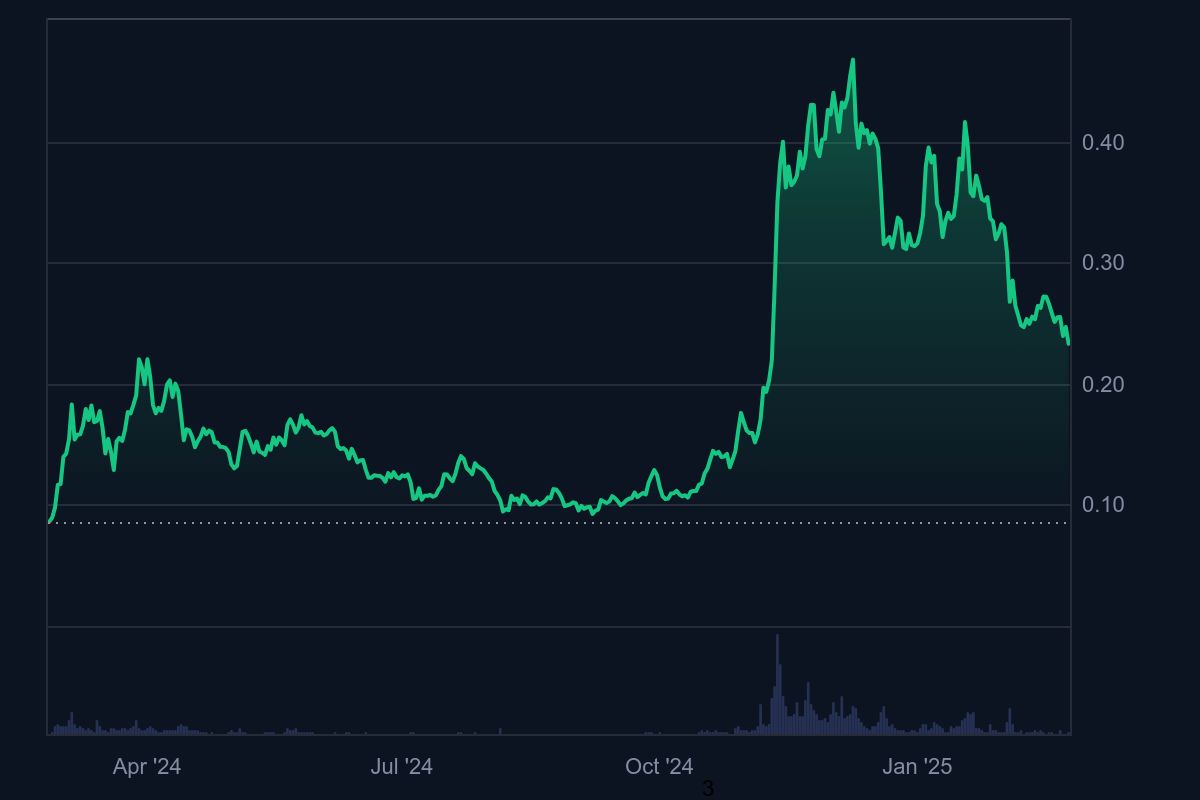
Looking at
Dogecoin's current technical chart, we can see that on Monday, the price formed
local lows at $0.2265. While the price dipped lower on February 3, briefly
reaching around $0.20, based on closing values, the current level marks the
lowest since early November—over three months ago.
At the
moment, the Dogecoin price is breaking below the support zone near $0.2418,
which was established by the early February lows. If the price closes Monday
below this level, it could pave the way for further depreciation, potentially
toward the psychological threshold of $0.20.
However,
zooming out and analyzing the chart from the first half of 2024, we can see
that the current lows around $0.23 align with the highs from late March. This
level may provide additional short-term support.
In my
opinion, the bulls will only be able to breathe a sigh of relief once
Dogecoin’s price returns to $0.30, where a key resistance zone is located.
These forecasts
highlight a spectrum of possibilities, from conservative growth to significant
increases, depending on factors like market adoption, technological
advancements, and community sentiment.
Will Dogecoin Crash? Conclusion
The current
slump in Dogecoin's price, trading at November lows on February 24, 2025, is
primarily driven by the LIBRA token failure, which has triggered a sell-off in
memecoins. This event, coupled with broader macroeconomic pressures, has led to
a bearish outlook in the short term.
However,
future predictions for 2025 suggest potential recovery, with some analysts
forecasting prices up to $1.07, offering hope for investors. As the market
evolves, stakeholders should monitor these trends closely, considering both the
risks and opportunities presented by DOGE's volatile nature.
Dogecoin News, FAQ
Why does Dogecoin keep
going down?
The
persistent decline in Dogecoin's value stems from a complex interplay of market
factors. The recent collapse of the LIBRA token, which saw a devastating 90%
crash after reaching a $4.5 billion valuation, has created widespread
skepticism in the memecoin sector. This event, coupled with significant
withdrawals by insiders totaling $107 million and development team extractions
of $87 million from liquidity pools, has triggered a broader market selloff.
Will Dogecoin ever go back
up?
While some
projections remain conservative, others suggest significant potential upside.
Technical analysis indicates that a breakthrough above the $0.30 resistance
level would be crucial for renewed bullish momentum. Market forecasts range
from modest estimates of $0.20 to more optimistic projections reaching $1.07 by
the end of 2025.
Why did DOGE crash?
The recent
market downturn for Dogecoin can be attributed to several converging factors.
The cryptocurrency has fallen victim to a broader market selloff, with major
altcoins like Solana experiencing substantial losses exceeding 6%. Technical
analysis reveals that DOGE has broken below critical support at $0.2418,
suggesting a potential further decline toward the $0.20 psychological threshold.
Should I sell my DOGE now?
Investment
decisions regarding Dogecoin require careful consideration of current market
conditions and individual risk tolerance. The cryptocurrency's current trading
level of $0.2330 represents a significant decline from recent highs, with
increased volatility evident in the 24-hour trading range. While some analysts
maintain optimistic long-term projections, the immediate technical outlook
suggests continued downward pressure.
On February
24, 2025, Dogecoin (DOGE), the popular memecoin, is experiencing a significant
price slump, currently trading at $0.2330.
A drop to
the lowest levels since early November—over three months—has traders wondering:
Will Dogecoin crash? In this article, we examine why the DOGE price is going
down and what the DOGE price predictions and technical analysis suggest about
its future.
The decline
aligns with broader market trends, particularly within the memecoin sector,
which has seen increased selling pressure. This is evident from the 24-hour
trading volume and market cap data, suggesting a bearish sentiment among
traders.
Over the
past 24 hours, the cryptocurrency market has been dominated by declines.
Leading the losses is Solana (SOL), down more than 6% to $161. Dogecoin is also
among the top decliners, dropping nearly 5%. Avalanche (AVAX), Chainlink
(LINK), and Polkadot (DOT) are also experiencing significant declines.
Dogecoin falls together with other altcoins. Source: CoinMarketCap
Why is Dogecoin Crashing: Analysis
of Price Drop Causes
The primary
driver behind DOGE's price drop is the recent failure of the LIBRA token, a
memecoin promoted
by Argentine President Javier Milei. This event saw LIBRA surge to a $4.5
billion valuation following Milei's endorsement before crashing by over 90%.
The crash was triggered by insiders cashing out $107 million and the
development team withdrawing $87 million from liquidity pools, leading to
allegations of a pump-and-dump scheme.
This
failure, occurring around February 15, 2025, has had a ripple effect across the
memecoin market. The LIBRA token's collapse triggered an intensive sell-off.
LIBRA fell strongly, influencing the meme coins market. Source: CoinMarketCap
Dogecoin Technical
Analysis: Next Downward Target at $0.20
Looking at
Dogecoin's current technical chart, we can see that on Monday, the price formed
local lows at $0.2265. While the price dipped lower on February 3, briefly
reaching around $0.20, based on closing values, the current level marks the
lowest since early November—over three months ago.
At the
moment, the Dogecoin price is breaking below the support zone near $0.2418,
which was established by the early February lows. If the price closes Monday
below this level, it could pave the way for further depreciation, potentially
toward the psychological threshold of $0.20.
However,
zooming out and analyzing the chart from the first half of 2024, we can see
that the current lows around $0.23 align with the highs from late March. This
level may provide additional short-term support.
In my
opinion, the bulls will only be able to breathe a sigh of relief once
Dogecoin’s price returns to $0.30, where a key resistance zone is located.
These forecasts
highlight a spectrum of possibilities, from conservative growth to significant
increases, depending on factors like market adoption, technological
advancements, and community sentiment.
Will Dogecoin Crash? Conclusion
The current
slump in Dogecoin's price, trading at November lows on February 24, 2025, is
primarily driven by the LIBRA token failure, which has triggered a sell-off in
memecoins. This event, coupled with broader macroeconomic pressures, has led to
a bearish outlook in the short term.
However,
future predictions for 2025 suggest potential recovery, with some analysts
forecasting prices up to $1.07, offering hope for investors. As the market
evolves, stakeholders should monitor these trends closely, considering both the
risks and opportunities presented by DOGE's volatile nature.
Dogecoin News, FAQ
Why does Dogecoin keep
going down?
The
persistent decline in Dogecoin's value stems from a complex interplay of market
factors. The recent collapse of the LIBRA token, which saw a devastating 90%
crash after reaching a $4.5 billion valuation, has created widespread
skepticism in the memecoin sector. This event, coupled with significant
withdrawals by insiders totaling $107 million and development team extractions
of $87 million from liquidity pools, has triggered a broader market selloff.
Will Dogecoin ever go back
up?
While some
projections remain conservative, others suggest significant potential upside.
Technical analysis indicates that a breakthrough above the $0.30 resistance
level would be crucial for renewed bullish momentum. Market forecasts range
from modest estimates of $0.20 to more optimistic projections reaching $1.07 by
the end of 2025.
Why did DOGE crash?
The recent
market downturn for Dogecoin can be attributed to several converging factors.
The cryptocurrency has fallen victim to a broader market selloff, with major
altcoins like Solana experiencing substantial losses exceeding 6%. Technical
analysis reveals that DOGE has broken below critical support at $0.2418,
suggesting a potential further decline toward the $0.20 psychological threshold.
Should I sell my DOGE now?
Investment
decisions regarding Dogecoin require careful consideration of current market
conditions and individual risk tolerance. The cryptocurrency's current trading
level of $0.2330 represents a significant decline from recent highs, with
increased volatility evident in the 24-hour trading range. While some analysts
maintain optimistic long-term projections, the immediate technical outlook
suggests continued downward pressure.
Damian Chmiel is a Senior Analyst & Editor at Finance Magnates with more than 15 years of experience in the CFD and online trading industry. Active as both a trader and journalist since 2010, he focuses on broker coverage, fintech innovation, and regulatory developments across Europe, the Middle East, and Asia.
His work includes interviews with C-level leaders at major brokerages and fintech platforms, as well as co-authoring Finance Magnates’ quarterly industry benchmarking reports. Damian’s reporting is data-driven, market-aware, and grounded in direct industry engagement. His analysis and commentary have also been cited by external media outlets, including Investing.com, Binance, The Asset, Stockhead, and Dispatch.
Education:
MA in Finance and Accounting, Cracow University of Economics
Kraken Steps Up Speed Race with New Equinix Colocation Service for Crypto Traders
Featured Videos
FP Markets Winner Spotlight 🏆 | Global Broker of the Year 2025 #Trading #Broker #Innovation #Shorts
FP Markets Winner Spotlight 🏆 | Global Broker of the Year 2025 #Trading #Broker #Innovation #Shorts
FP Markets Winner Spotlight 🏆 | Global Broker of the Year 2025 #Trading #Broker #Innovation #Shorts
FP Markets Winner Spotlight 🏆 | Global Broker of the Year 2025 #Trading #Broker #Innovation #Shorts
FP Markets takes the spotlight as Global Broker of the Year 2025 at the Finance Magnates Awards.
Martin Stoilov, Head of Client Experience, shares that trust, innovation, and people played a key role in the company’s success, supported by a strong foundation of integrity and client-centricity.
Following this milestone, FP Markets continues to focus on growth, technology investment, and its core values of transparency and excellence.
👉 Be part of FM Awards 2026: https://awards.financemagnates.com/#nominate
FP Markets takes the spotlight as Global Broker of the Year 2025 at the Finance Magnates Awards.
Martin Stoilov, Head of Client Experience, shares that trust, innovation, and people played a key role in the company’s success, supported by a strong foundation of integrity and client-centricity.
Following this milestone, FP Markets continues to focus on growth, technology investment, and its core values of transparency and excellence.
👉 Be part of FM Awards 2026: https://awards.financemagnates.com/#nominate
FP Markets takes the spotlight as Global Broker of the Year 2025 at the Finance Magnates Awards.
Martin Stoilov, Head of Client Experience, shares that trust, innovation, and people played a key role in the company’s success, supported by a strong foundation of integrity and client-centricity.
Following this milestone, FP Markets continues to focus on growth, technology investment, and its core values of transparency and excellence.
👉 Be part of FM Awards 2026: https://awards.financemagnates.com/#nominate
FP Markets takes the spotlight as Global Broker of the Year 2025 at the Finance Magnates Awards.
Martin Stoilov, Head of Client Experience, shares that trust, innovation, and people played a key role in the company’s success, supported by a strong foundation of integrity and client-centricity.
Following this milestone, FP Markets continues to focus on growth, technology investment, and its core values of transparency and excellence.
👉 Be part of FM Awards 2026: https://awards.financemagnates.com/#nominate
In this video, we review @HolaPrimeMarketsOfficial, a multi-asset forex and CFDs broker offering different account types, trading platforms, and flexible trading conditions.
We cover the broker’s overall offering, including account options, trading environment, platforms like MT4 and MT5, and additional services such as managed accounts and fast withdrawals.
Watch the full video to see if Hola Prime Markets fits your trading needs.
📣 Stay up to date with the latest in finance and trading. Follow Finance Magnates for industry news, insights, and global event coverage.
Connect with us:
🔗 LinkedIn: /financemagnates
👍 Facebook: /financemagnates
📸 Instagram: https://www.instagram.com/financemagnates
🐦 X: https://x.com/financemagnates
🎥 TikTok: https://www.tiktok.com/tag/financemagnates
▶️ YouTube: /@financemagnates_official
#HolaPrime #ForexBroker #CFDTrading #FinanceMagnates #Trading #Forex #BrokerReview
In this video, we review @HolaPrimeMarketsOfficial, a multi-asset forex and CFDs broker offering different account types, trading platforms, and flexible trading conditions.
We cover the broker’s overall offering, including account options, trading environment, platforms like MT4 and MT5, and additional services such as managed accounts and fast withdrawals.
Watch the full video to see if Hola Prime Markets fits your trading needs.
📣 Stay up to date with the latest in finance and trading. Follow Finance Magnates for industry news, insights, and global event coverage.
Connect with us:
🔗 LinkedIn: /financemagnates
👍 Facebook: /financemagnates
📸 Instagram: https://www.instagram.com/financemagnates
🐦 X: https://x.com/financemagnates
🎥 TikTok: https://www.tiktok.com/tag/financemagnates
▶️ YouTube: /@financemagnates_official
#HolaPrime #ForexBroker #CFDTrading #FinanceMagnates #Trading #Forex #BrokerReview
In this video, we review @HolaPrimeMarketsOfficial, a multi-asset forex and CFDs broker offering different account types, trading platforms, and flexible trading conditions.
We cover the broker’s overall offering, including account options, trading environment, platforms like MT4 and MT5, and additional services such as managed accounts and fast withdrawals.
Watch the full video to see if Hola Prime Markets fits your trading needs.
📣 Stay up to date with the latest in finance and trading. Follow Finance Magnates for industry news, insights, and global event coverage.
Connect with us:
🔗 LinkedIn: /financemagnates
👍 Facebook: /financemagnates
📸 Instagram: https://www.instagram.com/financemagnates
🐦 X: https://x.com/financemagnates
🎥 TikTok: https://www.tiktok.com/tag/financemagnates
▶️ YouTube: /@financemagnates_official
#HolaPrime #ForexBroker #CFDTrading #FinanceMagnates #Trading #Forex #BrokerReview
In this video, we review @HolaPrimeMarketsOfficial, a multi-asset forex and CFDs broker offering different account types, trading platforms, and flexible trading conditions.
We cover the broker’s overall offering, including account options, trading environment, platforms like MT4 and MT5, and additional services such as managed accounts and fast withdrawals.
Watch the full video to see if Hola Prime Markets fits your trading needs.
📣 Stay up to date with the latest in finance and trading. Follow Finance Magnates for industry news, insights, and global event coverage.
Connect with us:
🔗 LinkedIn: /financemagnates
👍 Facebook: /financemagnates
📸 Instagram: https://www.instagram.com/financemagnates
🐦 X: https://x.com/financemagnates
🎥 TikTok: https://www.tiktok.com/tag/financemagnates
▶️ YouTube: /@financemagnates_official
#HolaPrime #ForexBroker #CFDTrading #FinanceMagnates #Trading #Forex #BrokerReview
In this video, we review @HolaPrimeMarketsOfficial, a multi-asset forex and CFDs broker offering different account types, trading platforms, and flexible trading conditions.
We cover the broker’s overall offering, including account options, trading environment, platforms like MT4 and MT5, and additional services such as managed accounts and fast withdrawals.
Watch the full video to see if Hola Prime Markets fits your trading needs.
📣 Stay up to date with the latest in finance and trading. Follow Finance Magnates for industry news, insights, and global event coverage.
Connect with us:
🔗 LinkedIn: /financemagnates
👍 Facebook: /financemagnates
📸 Instagram: https://www.instagram.com/financemagnates
🐦 X: https://x.com/financemagnates
🎥 TikTok: https://www.tiktok.com/tag/financemagnates
▶️ YouTube: /@financemagnates_official
#HolaPrime #ForexBroker #CFDTrading #FinanceMagnates #Trading #Forex #BrokerReview
In this video, we review @HolaPrimeMarketsOfficial, a multi-asset forex and CFDs broker offering different account types, trading platforms, and flexible trading conditions.
We cover the broker’s overall offering, including account options, trading environment, platforms like MT4 and MT5, and additional services such as managed accounts and fast withdrawals.
Watch the full video to see if Hola Prime Markets fits your trading needs.
📣 Stay up to date with the latest in finance and trading. Follow Finance Magnates for industry news, insights, and global event coverage.
Connect with us:
🔗 LinkedIn: /financemagnates
👍 Facebook: /financemagnates
📸 Instagram: https://www.instagram.com/financemagnates
🐦 X: https://x.com/financemagnates
🎥 TikTok: https://www.tiktok.com/tag/financemagnates
▶️ YouTube: /@financemagnates_official
#HolaPrime #ForexBroker #CFDTrading #FinanceMagnates #Trading #Forex #BrokerReview
Hola Prime Review: What You Need to Know | Full Breakdown by Finance Magnates
Hola Prime Review: What You Need to Know | Full Breakdown by Finance Magnates
Hola Prime Review: What You Need to Know | Full Breakdown by Finance Magnates
Hola Prime Review: What You Need to Know | Full Breakdown by Finance Magnates
Hola Prime Review: What You Need to Know | Full Breakdown by Finance Magnates
Hola Prime Review: What You Need to Know | Full Breakdown by Finance Magnates
In this video, we review @HolaPrime_Global, a proprietary trading firm offering evaluation programs and performance-based payouts in simulated market environments.
We cover how the challenge model works, including account types, profit splits (up to 95%), trading rules, and what it takes to reach a funded account. You’ll also learn about available platforms like MT4, MT5, cTrader, and more, along with insights into payouts, support, and trading conditions.
Watch the full video to see if Hola Prime fits your trading style.
📣 Stay up to date with the latest in finance and trading. Follow Finance Magnates for industry news, insights, and global event coverage.
Connect with us:
🔗 LinkedIn: /financemagnates
👍 Facebook: /financemagnates
📸 Instagram: https://www.instagram.com/financemagnates
🐦 X: https://x.com/financemagnates
🎥 TikTok: https://www.tiktok.com/tag/financemagnates
▶️ YouTube: /@financemagnates_official
#HolaPrime #PropFirm #Trading #FinanceMagnates #Forex #FuturesTrading #TradingReview #PropFirmReview
In this video, we review @HolaPrime_Global, a proprietary trading firm offering evaluation programs and performance-based payouts in simulated market environments.
We cover how the challenge model works, including account types, profit splits (up to 95%), trading rules, and what it takes to reach a funded account. You’ll also learn about available platforms like MT4, MT5, cTrader, and more, along with insights into payouts, support, and trading conditions.
Watch the full video to see if Hola Prime fits your trading style.
📣 Stay up to date with the latest in finance and trading. Follow Finance Magnates for industry news, insights, and global event coverage.
Connect with us:
🔗 LinkedIn: /financemagnates
👍 Facebook: /financemagnates
📸 Instagram: https://www.instagram.com/financemagnates
🐦 X: https://x.com/financemagnates
🎥 TikTok: https://www.tiktok.com/tag/financemagnates
▶️ YouTube: /@financemagnates_official
#HolaPrime #PropFirm #Trading #FinanceMagnates #Forex #FuturesTrading #TradingReview #PropFirmReview
In this video, we review @HolaPrime_Global, a proprietary trading firm offering evaluation programs and performance-based payouts in simulated market environments.
We cover how the challenge model works, including account types, profit splits (up to 95%), trading rules, and what it takes to reach a funded account. You’ll also learn about available platforms like MT4, MT5, cTrader, and more, along with insights into payouts, support, and trading conditions.
Watch the full video to see if Hola Prime fits your trading style.
📣 Stay up to date with the latest in finance and trading. Follow Finance Magnates for industry news, insights, and global event coverage.
Connect with us:
🔗 LinkedIn: /financemagnates
👍 Facebook: /financemagnates
📸 Instagram: https://www.instagram.com/financemagnates
🐦 X: https://x.com/financemagnates
🎥 TikTok: https://www.tiktok.com/tag/financemagnates
▶️ YouTube: /@financemagnates_official
#HolaPrime #PropFirm #Trading #FinanceMagnates #Forex #FuturesTrading #TradingReview #PropFirmReview
In this video, we review @HolaPrime_Global, a proprietary trading firm offering evaluation programs and performance-based payouts in simulated market environments.
We cover how the challenge model works, including account types, profit splits (up to 95%), trading rules, and what it takes to reach a funded account. You’ll also learn about available platforms like MT4, MT5, cTrader, and more, along with insights into payouts, support, and trading conditions.
Watch the full video to see if Hola Prime fits your trading style.
📣 Stay up to date with the latest in finance and trading. Follow Finance Magnates for industry news, insights, and global event coverage.
Connect with us:
🔗 LinkedIn: /financemagnates
👍 Facebook: /financemagnates
📸 Instagram: https://www.instagram.com/financemagnates
🐦 X: https://x.com/financemagnates
🎥 TikTok: https://www.tiktok.com/tag/financemagnates
▶️ YouTube: /@financemagnates_official
#HolaPrime #PropFirm #Trading #FinanceMagnates #Forex #FuturesTrading #TradingReview #PropFirmReview
In this video, we review @HolaPrime_Global, a proprietary trading firm offering evaluation programs and performance-based payouts in simulated market environments.
We cover how the challenge model works, including account types, profit splits (up to 95%), trading rules, and what it takes to reach a funded account. You’ll also learn about available platforms like MT4, MT5, cTrader, and more, along with insights into payouts, support, and trading conditions.
Watch the full video to see if Hola Prime fits your trading style.
📣 Stay up to date with the latest in finance and trading. Follow Finance Magnates for industry news, insights, and global event coverage.
Connect with us:
🔗 LinkedIn: /financemagnates
👍 Facebook: /financemagnates
📸 Instagram: https://www.instagram.com/financemagnates
🐦 X: https://x.com/financemagnates
🎥 TikTok: https://www.tiktok.com/tag/financemagnates
▶️ YouTube: /@financemagnates_official
#HolaPrime #PropFirm #Trading #FinanceMagnates #Forex #FuturesTrading #TradingReview #PropFirmReview
In this video, we review @HolaPrime_Global, a proprietary trading firm offering evaluation programs and performance-based payouts in simulated market environments.
We cover how the challenge model works, including account types, profit splits (up to 95%), trading rules, and what it takes to reach a funded account. You’ll also learn about available platforms like MT4, MT5, cTrader, and more, along with insights into payouts, support, and trading conditions.
Watch the full video to see if Hola Prime fits your trading style.
📣 Stay up to date with the latest in finance and trading. Follow Finance Magnates for industry news, insights, and global event coverage.
Connect with us:
🔗 LinkedIn: /financemagnates
👍 Facebook: /financemagnates
📸 Instagram: https://www.instagram.com/financemagnates
🐦 X: https://x.com/financemagnates
🎥 TikTok: https://www.tiktok.com/tag/financemagnates
▶️ YouTube: /@financemagnates_official
#HolaPrime #PropFirm #Trading #FinanceMagnates #Forex #FuturesTrading #TradingReview #PropFirmReview
Axi Winner Spotlight 🏆 | Global Most Innovative Broker 2025 #Innovation #Trading #Fintech #Broker
Axi Winner Spotlight 🏆 | Global Most Innovative Broker 2025 #Innovation #Trading #Fintech #Broker
Axi Winner Spotlight 🏆 | Global Most Innovative Broker 2025 #Innovation #Trading #Fintech #Broker
Axi Winner Spotlight 🏆 | Global Most Innovative Broker 2025 #Innovation #Trading #Fintech #Broker
Axi Winner Spotlight 🏆 | Global Most Innovative Broker 2025 #Innovation #Trading #Fintech #Broker
Axi Winner Spotlight 🏆 | Global Most Innovative Broker 2025 #Innovation #Trading #Fintech #Broker
Axi takes the spotlight at the Finance Magnates Awards, winning Global Most Innovative Broker 2025.
Olivia Xenofontos and Ivanna Openko share how the team will feel: proud, motivated, and ready to keep delivering.
They also describe the night as well-organized, focused, and enjoyable for all.
👉 Be part of FM Awards 2026.
Axi takes the spotlight at the Finance Magnates Awards, winning Global Most Innovative Broker 2025.
Olivia Xenofontos and Ivanna Openko share how the team will feel: proud, motivated, and ready to keep delivering.
They also describe the night as well-organized, focused, and enjoyable for all.
👉 Be part of FM Awards 2026.
Axi takes the spotlight at the Finance Magnates Awards, winning Global Most Innovative Broker 2025.
Olivia Xenofontos and Ivanna Openko share how the team will feel: proud, motivated, and ready to keep delivering.
They also describe the night as well-organized, focused, and enjoyable for all.
👉 Be part of FM Awards 2026.
Axi takes the spotlight at the Finance Magnates Awards, winning Global Most Innovative Broker 2025.
Olivia Xenofontos and Ivanna Openko share how the team will feel: proud, motivated, and ready to keep delivering.
They also describe the night as well-organized, focused, and enjoyable for all.
👉 Be part of FM Awards 2026.
Axi takes the spotlight at the Finance Magnates Awards, winning Global Most Innovative Broker 2025.
Olivia Xenofontos and Ivanna Openko share how the team will feel: proud, motivated, and ready to keep delivering.
They also describe the night as well-organized, focused, and enjoyable for all.
👉 Be part of FM Awards 2026.
Axi takes the spotlight at the Finance Magnates Awards, winning Global Most Innovative Broker 2025.
Olivia Xenofontos and Ivanna Openko share how the team will feel: proud, motivated, and ready to keep delivering.
They also describe the night as well-organized, focused, and enjoyable for all.
👉 Be part of FM Awards 2026.
Recognition that matters.
Built on transparency.
Driven by the industry.
The Finance Magnates Awards 2026.
Nominations are now open.
🔗 https://awards.financemagnates.com/?utm_source=SM&utm_medium=social&utm_campaign=recognition-matters
Recognition that matters.
Built on transparency.
Driven by the industry.
The Finance Magnates Awards 2026.
Nominations are now open.
🔗 https://awards.financemagnates.com/?utm_source=SM&utm_medium=social&utm_campaign=recognition-matters
Recognition that matters.
Built on transparency.
Driven by the industry.
The Finance Magnates Awards 2026.
Nominations are now open.
🔗 https://awards.financemagnates.com/?utm_source=SM&utm_medium=social&utm_campaign=recognition-matters
Recognition that matters.
Built on transparency.
Driven by the industry.
The Finance Magnates Awards 2026.
Nominations are now open.
🔗 https://awards.financemagnates.com/?utm_source=SM&utm_medium=social&utm_campaign=recognition-matters
Recognition that matters.
Built on transparency.
Driven by the industry.
The Finance Magnates Awards 2026.
Nominations are now open.
🔗 https://awards.financemagnates.com/?utm_source=SM&utm_medium=social&utm_campaign=recognition-matters
Recognition that matters.
Built on transparency.
Driven by the industry.
The Finance Magnates Awards 2026.
Nominations are now open.
🔗 https://awards.financemagnates.com/?utm_source=SM&utm_medium=social&utm_campaign=recognition-matters