Major publicly traded Bitcoin mining companies reported decreased production in August compared to July.
Factors including increased network difficulty and power costs contributed to the decline.
Several
major publicly-traded Bitcoin (BTC) miners from Wall Street have reported
decreased production for August, highlighting ongoing challenges in the
cryptocurrency mining sector.
Wall Street Bitcoin Miners
Report Lower August Production
Argo
Blockchain (NASDAQ: ARBK) reported that it mined 38 Bitcoin in August, down
from 48 in July, due to more frequent economic curtailments and a lower hash
price. HIVE Digital Technologies (NASDAQ: HIVE) mined 112 Bitcoin, which is 4
less than the 116 Bitcoin reported the previous month.
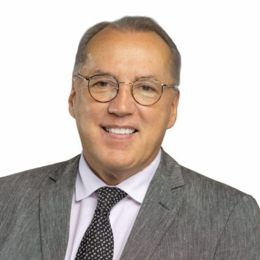
Frank Holmes, Executive Chairman of HIVE
“We remain focused on
our strategy of maintaining the lowest G&A expenses per Bitcoin mined,
maximizing cash flow return on invested capital, and achieving high revenue per
employee while minimizing share dilution,” commented Frank Holmes,
Executive Chairman of HIVE.
Meanwhile,
TeraWulf (NASDAQ: WULF) produced 184 Bitcoin at an average rate of 5.9 per day,
a decrease from the 155 reported in July. The company also noted an increase in
the energy costs for self-mined BTC to $36,346.
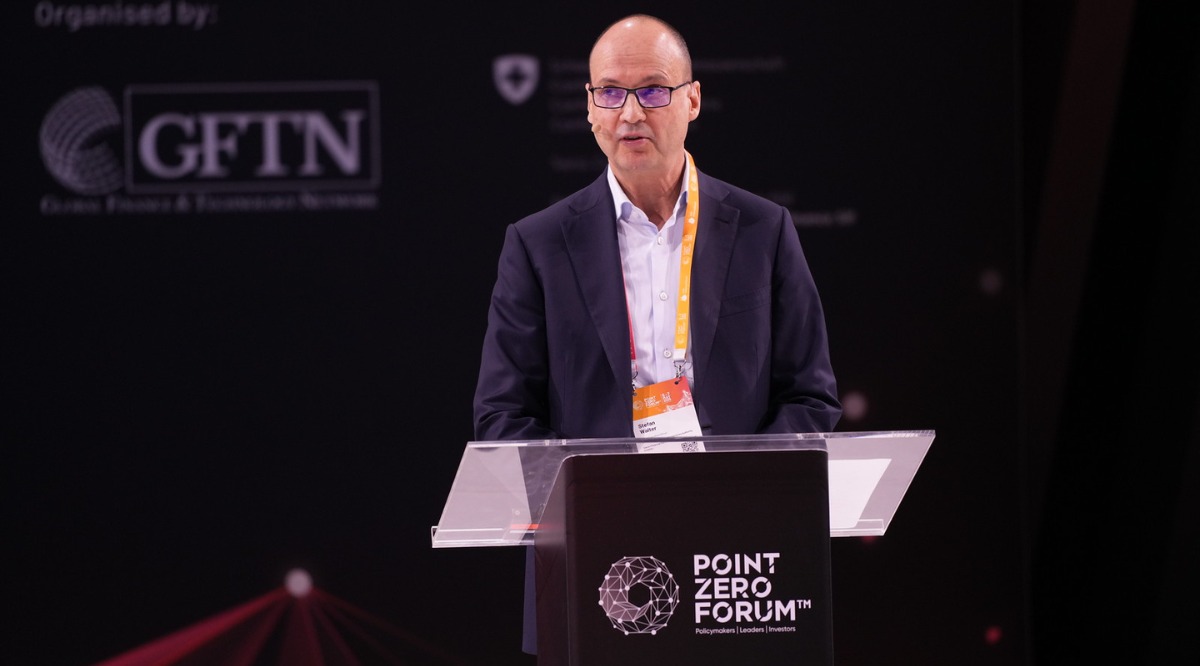
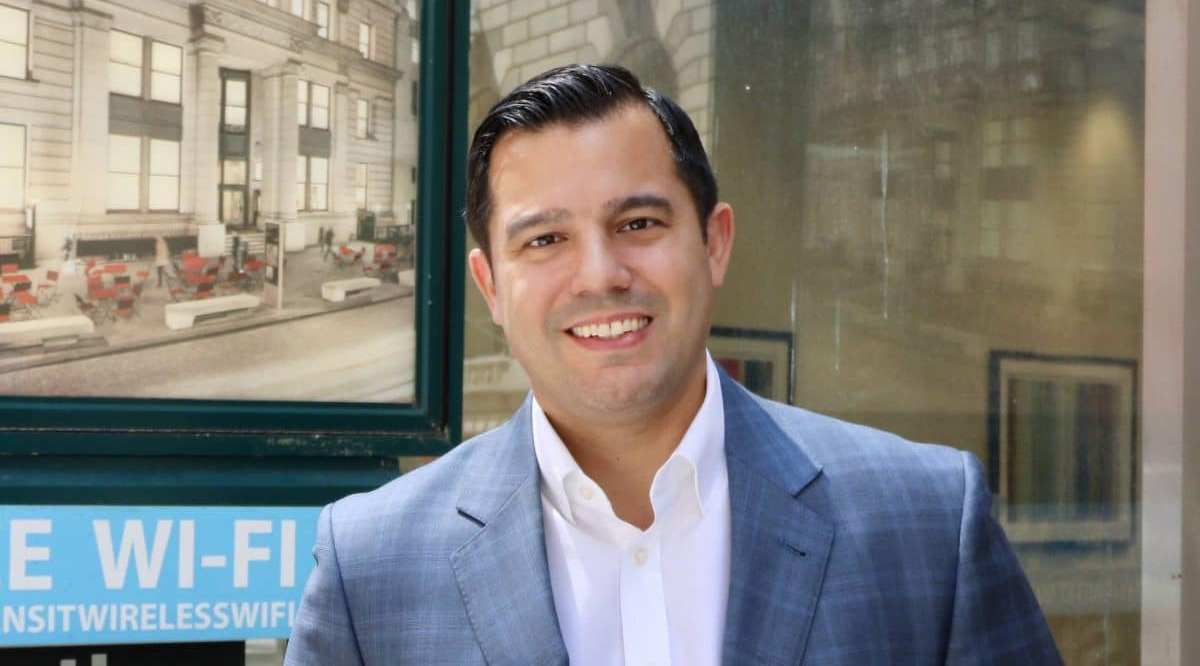
Fred Thiel, CEO, MARA, Source: LinkedIn
Marathon
Digital Holdings (NASDAQ: MARA), one of the largest publicly traded
Bitcoin miners, saw a 3% decrease in production, mining 673 Bitcoin in
August compared to 692 in July. The company's CEO, Fred Thiel, noted,
“Block wins during the month declined 2% from July while BTC production
decreased 3% to 673 BTC.”
Industry
experts attribute the production declines to several factors, including
increased network difficulty and higher power costs during the summer months.
The global Bitcoin mining difficulty reached an all-time high in August, making
it more challenging for miners to earn rewards.
This
corresponds with
data released earlier in the week by other publicly listed miners. CleanSpark
(NASDAQ: CLSK), which bills itself as “America's Bitcoin Miner,” saw
its Bitcoin production drop 3.2% from 494 in July to 478 in August. Similarly,
Bitfarms (NASDAQ: BITF) experienced a more significant 7.9% decline, mining 233
Bitcoin in August compared to 253 in July.
Less Bitcoin, Less Dollars
The
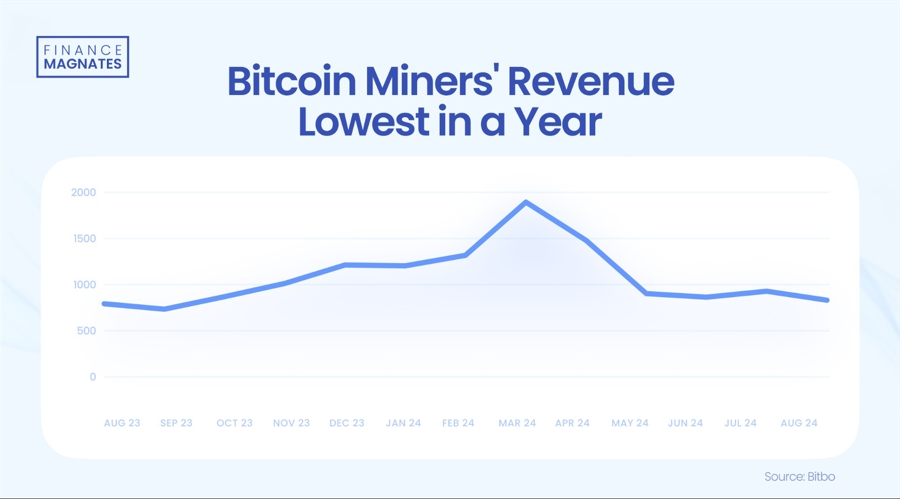
cryptocurrency mining sector faced a significant downturn in August 2024,
marking its least profitable month in recent years. Miners' earnings plummeted
to $828 million, the lowest since September 2023 and a stark 57% decline from
the peak earnings of nearly $2 billion recorded in March 2024.
Several
factors contributed to this challenging environment. The mining difficulty
reached an unprecedented 89.47 trillion in August, up from 86.87 trillion in
July. Simultaneously, the number of mined Bitcoins decreased from 14,725 in
July to 13,843 in August. This combination of increased difficulty and reduced
output has created a perfect storm for miners, squeezing profit margins and
necessitating adaptive measures.
In response
to these adverse trends, publicly listed Bitcoin mining companies are exploring
alternative revenue streams. Many are turning their attention to
high-performance computing (HPC) and artificial intelligence (AI) as potential
growth areas. Investment management firm VanEck predicts that this strategic
pivot could potentially unlock $38 billion in value for mining companies by
2027.
Several
major publicly-traded Bitcoin (BTC) miners from Wall Street have reported
decreased production for August, highlighting ongoing challenges in the
cryptocurrency mining sector.
Wall Street Bitcoin Miners
Report Lower August Production
Argo
Blockchain (NASDAQ: ARBK) reported that it mined 38 Bitcoin in August, down
from 48 in July, due to more frequent economic curtailments and a lower hash
price. HIVE Digital Technologies (NASDAQ: HIVE) mined 112 Bitcoin, which is 4
less than the 116 Bitcoin reported the previous month.
Frank Holmes, Executive Chairman of HIVE
“We remain focused on
our strategy of maintaining the lowest G&A expenses per Bitcoin mined,
maximizing cash flow return on invested capital, and achieving high revenue per
employee while minimizing share dilution,” commented Frank Holmes,
Executive Chairman of HIVE.
Meanwhile,
TeraWulf (NASDAQ: WULF) produced 184 Bitcoin at an average rate of 5.9 per day,
a decrease from the 155 reported in July. The company also noted an increase in
the energy costs for self-mined BTC to $36,346.
Fred Thiel, CEO, MARA, Source: LinkedIn
Marathon
Digital Holdings (NASDAQ: MARA), one of the largest publicly traded
Bitcoin miners, saw a 3% decrease in production, mining 673 Bitcoin in
August compared to 692 in July. The company's CEO, Fred Thiel, noted,
“Block wins during the month declined 2% from July while BTC production
decreased 3% to 673 BTC.”
Industry
experts attribute the production declines to several factors, including
increased network difficulty and higher power costs during the summer months.
The global Bitcoin mining difficulty reached an all-time high in August, making
it more challenging for miners to earn rewards.
This
corresponds with
data released earlier in the week by other publicly listed miners. CleanSpark
(NASDAQ: CLSK), which bills itself as “America's Bitcoin Miner,” saw
its Bitcoin production drop 3.2% from 494 in July to 478 in August. Similarly,
Bitfarms (NASDAQ: BITF) experienced a more significant 7.9% decline, mining 233
Bitcoin in August compared to 253 in July.
Less Bitcoin, Less Dollars
The
cryptocurrency mining sector faced a significant downturn in August 2024,
marking its least profitable month in recent years. Miners' earnings plummeted
to $828 million, the lowest since September 2023 and a stark 57% decline from
the peak earnings of nearly $2 billion recorded in March 2024.
Several
factors contributed to this challenging environment. The mining difficulty
reached an unprecedented 89.47 trillion in August, up from 86.87 trillion in
July. Simultaneously, the number of mined Bitcoins decreased from 14,725 in
July to 13,843 in August. This combination of increased difficulty and reduced
output has created a perfect storm for miners, squeezing profit margins and
necessitating adaptive measures.
In response
to these adverse trends, publicly listed Bitcoin mining companies are exploring
alternative revenue streams. Many are turning their attention to
high-performance computing (HPC) and artificial intelligence (AI) as potential
growth areas. Investment management firm VanEck predicts that this strategic
pivot could potentially unlock $38 billion in value for mining companies by
2027.
Damian Chmiel is a Senior Analyst & Editor at Finance Magnates with more than 15 years of experience in the CFD and online trading industry. Active as both a trader and journalist since 2010, he focuses on broker coverage, fintech innovation, and regulatory developments across Europe, the Middle East, and Asia.
His work includes interviews with C-level leaders at major brokerages and fintech platforms, as well as co-authoring Finance Magnates’ quarterly industry benchmarking reports. Damian’s reporting is data-driven, market-aware, and grounded in direct industry engagement. His analysis and commentary have also been cited by external media outlets, including Investing.com, Binance, The Asset, Stockhead, and Dispatch.
Education:
MA in Finance and Accounting, Cracow University of Economics
Kraken Steps Up Speed Race with New Equinix Colocation Service for Crypto Traders
FP Markets Winner Spotlight 🏆 | Global Broker of the Year 2025 #Trading #Broker #Innovation #Shorts
FP Markets Winner Spotlight 🏆 | Global Broker of the Year 2025 #Trading #Broker #Innovation #Shorts
FP Markets takes the spotlight as Global Broker of the Year 2025 at the Finance Magnates Awards.
Martin Stoilov, Head of Client Experience, shares that trust, innovation, and people played a key role in the company’s success, supported by a strong foundation of integrity and client-centricity.
Following this milestone, FP Markets continues to focus on growth, technology investment, and its core values of transparency and excellence.
👉 Be part of FM Awards 2026: https://awards.financemagnates.com/#nominate
FP Markets takes the spotlight as Global Broker of the Year 2025 at the Finance Magnates Awards.
Martin Stoilov, Head of Client Experience, shares that trust, innovation, and people played a key role in the company’s success, supported by a strong foundation of integrity and client-centricity.
Following this milestone, FP Markets continues to focus on growth, technology investment, and its core values of transparency and excellence.
👉 Be part of FM Awards 2026: https://awards.financemagnates.com/#nominate
In this video, we review @HolaPrimeMarketsOfficial, a multi-asset forex and CFDs broker offering different account types, trading platforms, and flexible trading conditions.
We cover the broker’s overall offering, including account options, trading environment, platforms like MT4 and MT5, and additional services such as managed accounts and fast withdrawals.
Watch the full video to see if Hola Prime Markets fits your trading needs.
📣 Stay up to date with the latest in finance and trading. Follow Finance Magnates for industry news, insights, and global event coverage.
Connect with us:
🔗 LinkedIn: /financemagnates
👍 Facebook: /financemagnates
📸 Instagram: https://www.instagram.com/financemagnates
🐦 X: https://x.com/financemagnates
🎥 TikTok: https://www.tiktok.com/tag/financemagnates
▶️ YouTube: /@financemagnates_official
#HolaPrime #ForexBroker #CFDTrading #FinanceMagnates #Trading #Forex #BrokerReview
In this video, we review @HolaPrimeMarketsOfficial, a multi-asset forex and CFDs broker offering different account types, trading platforms, and flexible trading conditions.
We cover the broker’s overall offering, including account options, trading environment, platforms like MT4 and MT5, and additional services such as managed accounts and fast withdrawals.
Watch the full video to see if Hola Prime Markets fits your trading needs.
📣 Stay up to date with the latest in finance and trading. Follow Finance Magnates for industry news, insights, and global event coverage.
Connect with us:
🔗 LinkedIn: /financemagnates
👍 Facebook: /financemagnates
📸 Instagram: https://www.instagram.com/financemagnates
🐦 X: https://x.com/financemagnates
🎥 TikTok: https://www.tiktok.com/tag/financemagnates
▶️ YouTube: /@financemagnates_official
#HolaPrime #ForexBroker #CFDTrading #FinanceMagnates #Trading #Forex #BrokerReview
Hola Prime Review: What You Need to Know | Full Breakdown by Finance Magnates
Hola Prime Review: What You Need to Know | Full Breakdown by Finance Magnates
In this video, we review @HolaPrime_Global, a proprietary trading firm offering evaluation programs and performance-based payouts in simulated market environments.
We cover how the challenge model works, including account types, profit splits (up to 95%), trading rules, and what it takes to reach a funded account. You’ll also learn about available platforms like MT4, MT5, cTrader, and more, along with insights into payouts, support, and trading conditions.
Watch the full video to see if Hola Prime fits your trading style.
📣 Stay up to date with the latest in finance and trading. Follow Finance Magnates for industry news, insights, and global event coverage.
Connect with us:
🔗 LinkedIn: /financemagnates
👍 Facebook: /financemagnates
📸 Instagram: https://www.instagram.com/financemagnates
🐦 X: https://x.com/financemagnates
🎥 TikTok: https://www.tiktok.com/tag/financemagnates
▶️ YouTube: /@financemagnates_official
#HolaPrime #PropFirm #Trading #FinanceMagnates #Forex #FuturesTrading #TradingReview #PropFirmReview
In this video, we review @HolaPrime_Global, a proprietary trading firm offering evaluation programs and performance-based payouts in simulated market environments.
We cover how the challenge model works, including account types, profit splits (up to 95%), trading rules, and what it takes to reach a funded account. You’ll also learn about available platforms like MT4, MT5, cTrader, and more, along with insights into payouts, support, and trading conditions.
Watch the full video to see if Hola Prime fits your trading style.
📣 Stay up to date with the latest in finance and trading. Follow Finance Magnates for industry news, insights, and global event coverage.
Connect with us:
🔗 LinkedIn: /financemagnates
👍 Facebook: /financemagnates
📸 Instagram: https://www.instagram.com/financemagnates
🐦 X: https://x.com/financemagnates
🎥 TikTok: https://www.tiktok.com/tag/financemagnates
▶️ YouTube: /@financemagnates_official
#HolaPrime #PropFirm #Trading #FinanceMagnates #Forex #FuturesTrading #TradingReview #PropFirmReview
Axi Winner Spotlight 🏆 | Global Most Innovative Broker 2025 #Innovation #Trading #Fintech #Broker
Axi Winner Spotlight 🏆 | Global Most Innovative Broker 2025 #Innovation #Trading #Fintech #Broker
Axi takes the spotlight at the Finance Magnates Awards, winning Global Most Innovative Broker 2025.
Olivia Xenofontos and Ivanna Openko share how the team will feel: proud, motivated, and ready to keep delivering.
They also describe the night as well-organized, focused, and enjoyable for all.
👉 Be part of FM Awards 2026.
Axi takes the spotlight at the Finance Magnates Awards, winning Global Most Innovative Broker 2025.
Olivia Xenofontos and Ivanna Openko share how the team will feel: proud, motivated, and ready to keep delivering.
They also describe the night as well-organized, focused, and enjoyable for all.
👉 Be part of FM Awards 2026.
Recognition that matters.
Built on transparency.
Driven by the industry.
The Finance Magnates Awards 2026.
Nominations are now open.
🔗 https://awards.financemagnates.com/?utm_source=SM&utm_medium=social&utm_campaign=recognition-matters
Recognition that matters.
Built on transparency.
Driven by the industry.
The Finance Magnates Awards 2026.
Nominations are now open.
🔗 https://awards.financemagnates.com/?utm_source=SM&utm_medium=social&utm_campaign=recognition-matters