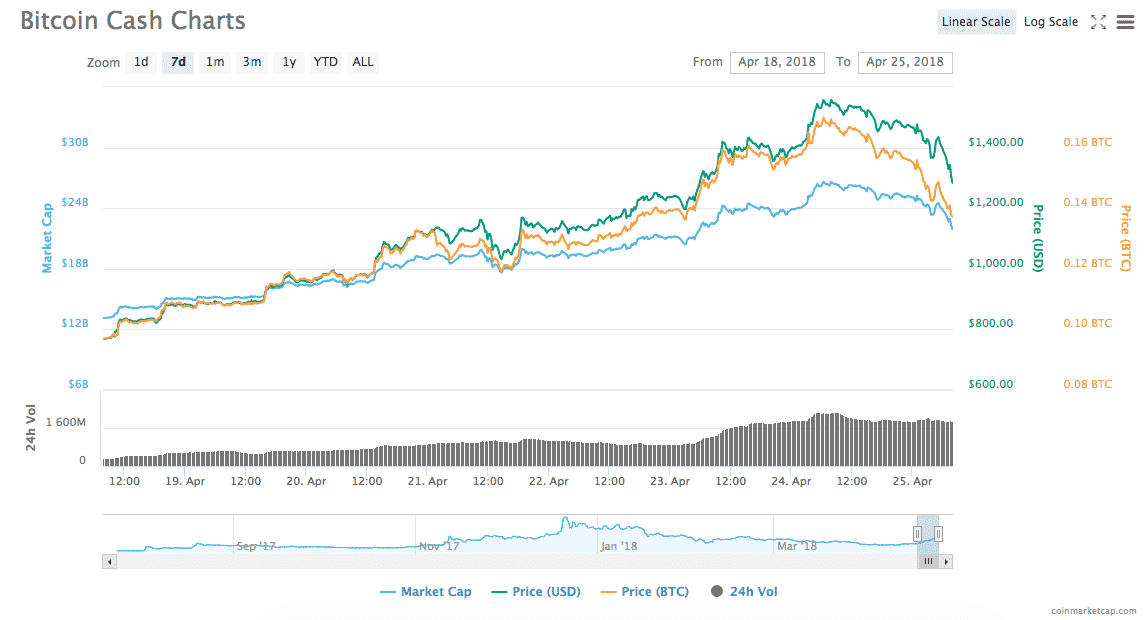
Despite this rise in valuation, BCH is still a far cry from its December heights of roughly $3,650. At the time, BCH fans were pushing for a “flippening” (for Bitcoin Cash to essentially “replace” Bitcoin). Now, Bitcoin is up to $9,272, and there isn’t much talk of replacing the BTC network at all.
The Upcoming Fork is Driving the Price of BCH Back Up
Indeed, the BCH community doesn’t seem to be pushing for major revolution; instead, Bitcoin Cash seems to have focused its efforts on becoming a network well-suited to everyday payments (something the Bitcoin network is not well-suited for.)
There are several reasons to point to when it comes to figuring out the cause of the recent rise in valuation. Some sources have cited South Korean trading; others point to signs of a larger market recovery. One factor that could uniquely be driving up the value of BCH is the upcoming hard fork that’s scheduled for the network on May 15.
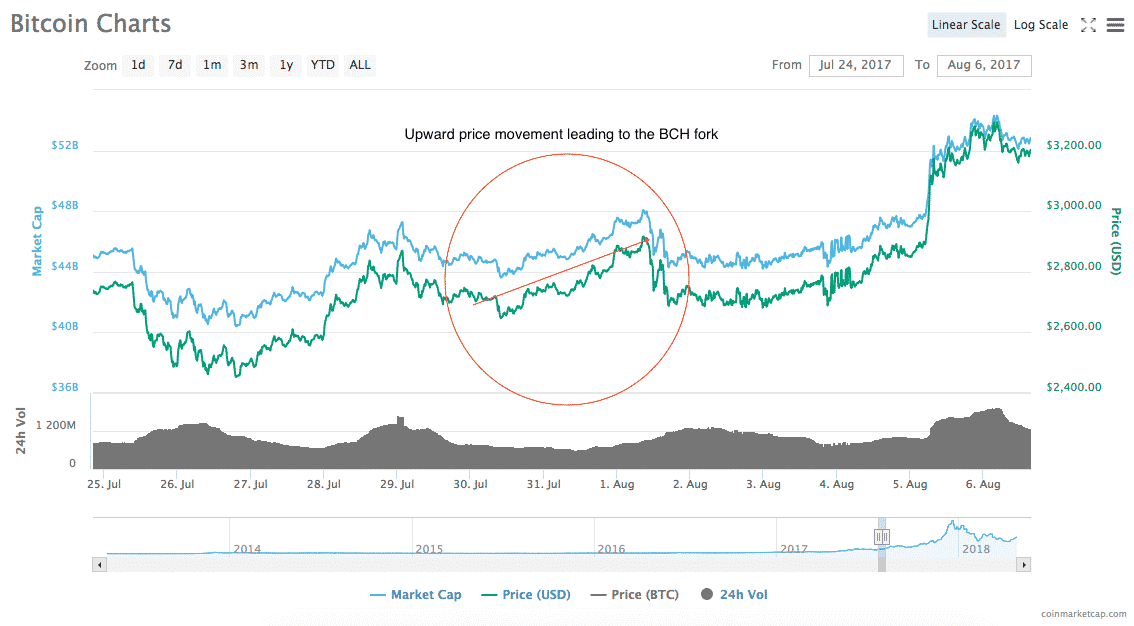
Anyone who holds any amount of a coin that goes through a hard fork is entitled to receive a corresponding amount of the new coin. Therefore, any cryptocurrency that will experience a hard fork generally tends to see upward price movement in the days and weeks leading up to it.
However, this hard fork is a bit different. Although (technically) there will be a new cryptocurrency created, the value of the old blockchain will be canceled. Therefore, for users, the hard fork will function more similarly to a 'soft fork', which is a software upgrade without the creation of a new blockchain.
Developers Want to Make BCH 'More Reliable, More Scalable'
The May fork is the result of a meeting of seven Bitcoin Cash developers that took place in London in November of 2017. The group, which is also known as Bitcoin ABC, said that functionality was their top priority for the BCH network.
A statement released by the group following the meeting reads: “our top priority for Bitcoin Cash is to keep improving it as a great form of money. We want to make it more reliable, more scalable, with low fees and ready for rapid growth. It should ‘just work,’ without complications or hassles. It should be ready for global adoption by mainstream users, and provide a solid foundation that businesses can rely on.”
Bitcoin Cash comes with new attitude this May. A second hard-fork in less than one year, (HF is how you upgrade) to ensure BCH remains on an upward trajectory to global utility. Scalability and Scripting (smart contracts in hype-speak)
FORK TIME: Just after Tue May 15 12:00 UTC pic.twitter.com/Z3tDpdXW9m
When Bitcoin Cash was created, it was intended as a “better” alternative to the Bitcoin network. The main issue that BCH was intended to improve was scalability (which, by the way, is still a big problem for Bitcoin.)
The Bitcoin network can only process an average of 3 or 4 transactions per second because of its small ‘block size’ (‘blocks’ are units of data in which transactions are confirmed.) Bitcoin’s blocks are limited to 1 megabyte each; as it stands now, Bitcoin Cash’s block size is limited to 8 megabytes, allowing the network to process as many as 61 transactions per second.
The larger block size also means that transactions on the Bitcoin Cash network are also generally less expensive, especially in times of high network traffic on the Bitcoin network.
Bitcoin Cash’s upcoming fork in May will further increase the Bitcoin Cash block size the 32 megabytes, which will significantly increase the number of transactions that the Bitcoin Cash network is capable of handling.
The Fork Could Establish Tokens on the BCH Network
According to a report from Stocks Gazette, the upcoming hard fork will reactivate some pieces of the original Bitcoin code that have lain dormant for quite some time. These include an opcode known as ‘OP_GROUP’ that could be used to establish tokens on the BCH network (similar to the way that ERC20 tokens function on the Ethereum network.)
If the implementation of OP_GROUP is successful, and a system for establishing tokens on Bitcoin Cash is created, the network could see a massive increase in value throughout Q2. According to AMB crypto, some of the other opcodes will lay the foundation for creating smart contracts.
The fork will also increase the upper turn size from 40 bytes to 220 bytes, a move that will allow users to add more data to the blockchain. This facilitates the creation of “colored coins” and using the blockchain to time-stamp data.
Bitcoin Cash underwent its first hard fork in fall of 2017 to improve problems with estimating mining difficulty (‘mining’ is the process by which computers on the BCH network confirm transactions.)
Bitcoin Cash Controversies and Conspiracy Theories
The Bitcoin Cash network has been the subject of much controversy and bad publicity since its inception, a fact that many in the crypto community believe to have been holding the network back.
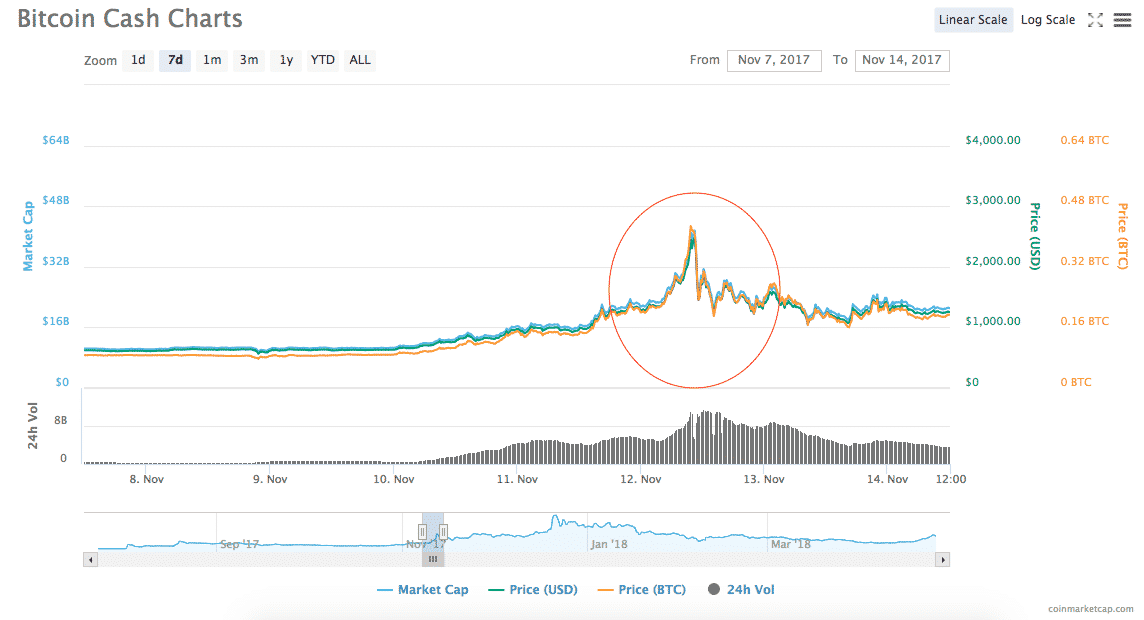
It all started in mid-November when Bitcoin Cash briefly spiked up to $2500 before crashing to nearly $1000 within 48 hours. Before the crash, former “Bitcoin Evangelist” Roger Ver and Bitcoin Developer Gavin Andresen were singing the praises of BCH over Twitter; after the crash, some voices in the crypto community suspected a massive pump-and-dump scheme.
I dont care how you slice it, this is INSIDER TRADING! Someone with alot of Bitcoin knew @coinbase would add Bitcoin Cash BCH and took one BIG chunk of profit from the #flippening. Whoever you are you are your making crypto look like wall st. Shame on you. pic.twitter.com/g9YU9jGm0T
Now, Bitcoin Cash has been associated with yet another suspected pump-and-dump. TheNextWeb reported that Antpool, a subsidiary of Bitmain, has been accused of artificially boosting the value of BCH.
Antpool announced on Friday that it has recently begun “burning” 12 percent of all BCH mining rewards. The reasons given for the practice were (essentially) that Antpool wants to strengthen the BCH network. A statement from the company reads:
“While having active users spending BCH is very important for the ecosystem, having investors who hold BCH is also a fundamental requirement for maintaining a strong economy. Without these holders, BCH’s exchange value loses significant support. We believe that they too should profit from the growth of BCH by their continued stake in the Bitcoin Cash ecosystem. The transaction fees earned by miners are an important growth indicator of the BCH ecosystem, and if a portion of the fees are burnt, it is effectively miners sharing revenue with the entire BCH network.
Members of the crypto community without strong ties to Bitcoin Cash are seeing the announcement as a way to manipulate the BCH market.
A Bright Future?
While the future of Bitcoin Cash may not be as clear as many of its supporters want it to be, it’s clear that the team of developers behind the network believe in their project, and are working hard to ensure its success.
Despite this rise in valuation, BCH is still a far cry from its December heights of roughly $3,650. At the time, BCH fans were pushing for a “flippening” (for Bitcoin Cash to essentially “replace” Bitcoin). Now, Bitcoin is up to $9,272, and there isn’t much talk of replacing the BTC network at all.
The Upcoming Fork is Driving the Price of BCH Back Up
Indeed, the BCH community doesn’t seem to be pushing for major revolution; instead, Bitcoin Cash seems to have focused its efforts on becoming a network well-suited to everyday payments (something the Bitcoin network is not well-suited for.)
There are several reasons to point to when it comes to figuring out the cause of the recent rise in valuation. Some sources have cited South Korean trading; others point to signs of a larger market recovery. One factor that could uniquely be driving up the value of BCH is the upcoming hard fork that’s scheduled for the network on May 15.
Anyone who holds any amount of a coin that goes through a hard fork is entitled to receive a corresponding amount of the new coin. Therefore, any cryptocurrency that will experience a hard fork generally tends to see upward price movement in the days and weeks leading up to it.
However, this hard fork is a bit different. Although (technically) there will be a new cryptocurrency created, the value of the old blockchain will be canceled. Therefore, for users, the hard fork will function more similarly to a 'soft fork', which is a software upgrade without the creation of a new blockchain.
Developers Want to Make BCH 'More Reliable, More Scalable'
The May fork is the result of a meeting of seven Bitcoin Cash developers that took place in London in November of 2017. The group, which is also known as Bitcoin ABC, said that functionality was their top priority for the BCH network.
A statement released by the group following the meeting reads: “our top priority for Bitcoin Cash is to keep improving it as a great form of money. We want to make it more reliable, more scalable, with low fees and ready for rapid growth. It should ‘just work,’ without complications or hassles. It should be ready for global adoption by mainstream users, and provide a solid foundation that businesses can rely on.”
Bitcoin Cash comes with new attitude this May. A second hard-fork in less than one year, (HF is how you upgrade) to ensure BCH remains on an upward trajectory to global utility. Scalability and Scripting (smart contracts in hype-speak)
FORK TIME: Just after Tue May 15 12:00 UTC pic.twitter.com/Z3tDpdXW9m
When Bitcoin Cash was created, it was intended as a “better” alternative to the Bitcoin network. The main issue that BCH was intended to improve was scalability (which, by the way, is still a big problem for Bitcoin.)
The Bitcoin network can only process an average of 3 or 4 transactions per second because of its small ‘block size’ (‘blocks’ are units of data in which transactions are confirmed.) Bitcoin’s blocks are limited to 1 megabyte each; as it stands now, Bitcoin Cash’s block size is limited to 8 megabytes, allowing the network to process as many as 61 transactions per second.
The larger block size also means that transactions on the Bitcoin Cash network are also generally less expensive, especially in times of high network traffic on the Bitcoin network.
Bitcoin Cash’s upcoming fork in May will further increase the Bitcoin Cash block size the 32 megabytes, which will significantly increase the number of transactions that the Bitcoin Cash network is capable of handling.
The Fork Could Establish Tokens on the BCH Network
According to a report from Stocks Gazette, the upcoming hard fork will reactivate some pieces of the original Bitcoin code that have lain dormant for quite some time. These include an opcode known as ‘OP_GROUP’ that could be used to establish tokens on the BCH network (similar to the way that ERC20 tokens function on the Ethereum network.)
If the implementation of OP_GROUP is successful, and a system for establishing tokens on Bitcoin Cash is created, the network could see a massive increase in value throughout Q2. According to AMB crypto, some of the other opcodes will lay the foundation for creating smart contracts.
The fork will also increase the upper turn size from 40 bytes to 220 bytes, a move that will allow users to add more data to the blockchain. This facilitates the creation of “colored coins” and using the blockchain to time-stamp data.
Bitcoin Cash underwent its first hard fork in fall of 2017 to improve problems with estimating mining difficulty (‘mining’ is the process by which computers on the BCH network confirm transactions.)
Bitcoin Cash Controversies and Conspiracy Theories
The Bitcoin Cash network has been the subject of much controversy and bad publicity since its inception, a fact that many in the crypto community believe to have been holding the network back.
It all started in mid-November when Bitcoin Cash briefly spiked up to $2500 before crashing to nearly $1000 within 48 hours. Before the crash, former “Bitcoin Evangelist” Roger Ver and Bitcoin Developer Gavin Andresen were singing the praises of BCH over Twitter; after the crash, some voices in the crypto community suspected a massive pump-and-dump scheme.
I dont care how you slice it, this is INSIDER TRADING! Someone with alot of Bitcoin knew @coinbase would add Bitcoin Cash BCH and took one BIG chunk of profit from the #flippening. Whoever you are you are your making crypto look like wall st. Shame on you. pic.twitter.com/g9YU9jGm0T
Now, Bitcoin Cash has been associated with yet another suspected pump-and-dump. TheNextWeb reported that Antpool, a subsidiary of Bitmain, has been accused of artificially boosting the value of BCH.
Antpool announced on Friday that it has recently begun “burning” 12 percent of all BCH mining rewards. The reasons given for the practice were (essentially) that Antpool wants to strengthen the BCH network. A statement from the company reads:
“While having active users spending BCH is very important for the ecosystem, having investors who hold BCH is also a fundamental requirement for maintaining a strong economy. Without these holders, BCH’s exchange value loses significant support. We believe that they too should profit from the growth of BCH by their continued stake in the Bitcoin Cash ecosystem. The transaction fees earned by miners are an important growth indicator of the BCH ecosystem, and if a portion of the fees are burnt, it is effectively miners sharing revenue with the entire BCH network.
Members of the crypto community without strong ties to Bitcoin Cash are seeing the announcement as a way to manipulate the BCH market.
A Bright Future?
While the future of Bitcoin Cash may not be as clear as many of its supporters want it to be, it’s clear that the team of developers behind the network believe in their project, and are working hard to ensure its success.
Rachel is a self-taught crypto geek and a passionate writer. She believes in the power that the written word has to educate, connect and empower individuals to make positive and powerful financial choices. She is the Podcast Host and a Cryptocurrency Editor at Finance Magnates.
Binance Launches Retail AI Assistant, Repackages Existing Trading Tools
Featured Videos
AvaTrade to Acquire Most of FXCM; NAGA Raises $8M
AvaTrade to Acquire Most of FXCM; NAGA Raises $8M
AvaTrade to Acquire Most of FXCM; NAGA Raises $8M
AvaTrade to Acquire Most of FXCM; NAGA Raises $8M
Today’s financial news recap covers AvaTrade agrees to acquire most of FXCM, NAGA secures eight million dollars in new financing, and Wise seeks a tax settlement in the UK.
Finance Magnates Daily Recap brings you the latest news from forex and CFD brokers, fintech, payments, cryptocurrency, digital assets, trading platforms, financial regulation and global markets.
Get the key company news, executive moves, deals, regulatory updates and market developments of the day, in just a few minutes. New episodes published every weekday.
Read more: https://www.financemagnates.com
#FinanceMagnates #ForexNews #FintechNews
Today’s financial news recap covers AvaTrade agrees to acquire most of FXCM, NAGA secures eight million dollars in new financing, and Wise seeks a tax settlement in the UK.
Finance Magnates Daily Recap brings you the latest news from forex and CFD brokers, fintech, payments, cryptocurrency, digital assets, trading platforms, financial regulation and global markets.
Get the key company news, executive moves, deals, regulatory updates and market developments of the day, in just a few minutes. New episodes published every weekday.
Read more: https://www.financemagnates.com
#FinanceMagnates #ForexNews #FintechNews
Today’s financial news recap covers AvaTrade agrees to acquire most of FXCM, NAGA secures eight million dollars in new financing, and Wise seeks a tax settlement in the UK.
Finance Magnates Daily Recap brings you the latest news from forex and CFD brokers, fintech, payments, cryptocurrency, digital assets, trading platforms, financial regulation and global markets.
Get the key company news, executive moves, deals, regulatory updates and market developments of the day, in just a few minutes. New episodes published every weekday.
Read more: https://www.financemagnates.com
#FinanceMagnates #ForexNews #FintechNews
Today’s financial news recap covers AvaTrade agrees to acquire most of FXCM, NAGA secures eight million dollars in new financing, and Wise seeks a tax settlement in the UK.
Finance Magnates Daily Recap brings you the latest news from forex and CFD brokers, fintech, payments, cryptocurrency, digital assets, trading platforms, financial regulation and global markets.
Get the key company news, executive moves, deals, regulatory updates and market developments of the day, in just a few minutes. New episodes published every weekday.
Read more: https://www.financemagnates.com
#FinanceMagnates #ForexNews #FintechNews
XTB Adds Overnight US Stock Trading; Nasdaq Ventures Invests in One Trading
XTB Adds Overnight US Stock Trading; Nasdaq Ventures Invests in One Trading
XTB Adds Overnight US Stock Trading; Nasdaq Ventures Invests in One Trading
XTB Adds Overnight US Stock Trading; Nasdaq Ventures Invests in One Trading
XTB Adds Overnight US Stock Trading; Nasdaq Ventures Invests in One Trading
XTB Adds Overnight US Stock Trading; Nasdaq Ventures Invests in One Trading
Today’s financial news recap covers XTB expands overnight US stock trading, Fortrade reports higher revenue, Nasdaq backs One Trading, and Vest Labs raises 13 million dollars.
Finance Magnates Daily Recap brings you the latest news from forex and CFD brokers, fintech, payments, cryptocurrency, digital assets, trading platforms, financial regulation and global markets.
Get the key company news, executive moves, deals, regulatory updates and market developments of the day, in just a few minutes. New episodes published every weekday.
Read more: https://www.financemagnates.com
#FinanceMagnates #ForexNews #FintechNews
Today’s financial news recap covers XTB expands overnight US stock trading, Fortrade reports higher revenue, Nasdaq backs One Trading, and Vest Labs raises 13 million dollars.
Finance Magnates Daily Recap brings you the latest news from forex and CFD brokers, fintech, payments, cryptocurrency, digital assets, trading platforms, financial regulation and global markets.
Get the key company news, executive moves, deals, regulatory updates and market developments of the day, in just a few minutes. New episodes published every weekday.
Read more: https://www.financemagnates.com
#FinanceMagnates #ForexNews #FintechNews
Today’s financial news recap covers XTB expands overnight US stock trading, Fortrade reports higher revenue, Nasdaq backs One Trading, and Vest Labs raises 13 million dollars.
Finance Magnates Daily Recap brings you the latest news from forex and CFD brokers, fintech, payments, cryptocurrency, digital assets, trading platforms, financial regulation and global markets.
Get the key company news, executive moves, deals, regulatory updates and market developments of the day, in just a few minutes. New episodes published every weekday.
Read more: https://www.financemagnates.com
#FinanceMagnates #ForexNews #FintechNews
Today’s financial news recap covers XTB expands overnight US stock trading, Fortrade reports higher revenue, Nasdaq backs One Trading, and Vest Labs raises 13 million dollars.
Finance Magnates Daily Recap brings you the latest news from forex and CFD brokers, fintech, payments, cryptocurrency, digital assets, trading platforms, financial regulation and global markets.
Get the key company news, executive moves, deals, regulatory updates and market developments of the day, in just a few minutes. New episodes published every weekday.
Read more: https://www.financemagnates.com
#FinanceMagnates #ForexNews #FintechNews
Today’s financial news recap covers XTB expands overnight US stock trading, Fortrade reports higher revenue, Nasdaq backs One Trading, and Vest Labs raises 13 million dollars.
Finance Magnates Daily Recap brings you the latest news from forex and CFD brokers, fintech, payments, cryptocurrency, digital assets, trading platforms, financial regulation and global markets.
Get the key company news, executive moves, deals, regulatory updates and market developments of the day, in just a few minutes. New episodes published every weekday.
Read more: https://www.financemagnates.com
#FinanceMagnates #ForexNews #FintechNews
Today’s financial news recap covers XTB expands overnight US stock trading, Fortrade reports higher revenue, Nasdaq backs One Trading, and Vest Labs raises 13 million dollars.
Finance Magnates Daily Recap brings you the latest news from forex and CFD brokers, fintech, payments, cryptocurrency, digital assets, trading platforms, financial regulation and global markets.
Get the key company news, executive moves, deals, regulatory updates and market developments of the day, in just a few minutes. New episodes published every weekday.
Read more: https://www.financemagnates.com
#FinanceMagnates #ForexNews #FintechNews
CMC Founder Downplays Volatility Hit; Devexperts Names CEO
CMC Founder Downplays Volatility Hit; Devexperts Names CEO
CMC Founder Downplays Volatility Hit; Devexperts Names CEO
CMC Founder Downplays Volatility Hit; Devexperts Names CEO
CMC Founder Downplays Volatility Hit; Devexperts Names CEO
CMC Founder Downplays Volatility Hit; Devexperts Names CEO
Today’s financial news recap covers low volatility pressures brokers, Devexperts names a new CEO, Saxo cuts onboarding time, and OKX reaches a 25 billion dollar valuation.
Finance Magnates Daily Recap brings you the latest news from forex and CFD brokers, fintech, payments, cryptocurrency, digital assets, trading platforms, financial regulation and global markets.
Get the key company news, executive moves, deals, regulatory updates and market developments of the day, in just a few minutes. New episodes published every weekday.
Read more: https://www.financemagnates.com
#FinanceMagnates #ForexNews #FintechNews
Today’s financial news recap covers low volatility pressures brokers, Devexperts names a new CEO, Saxo cuts onboarding time, and OKX reaches a 25 billion dollar valuation.
Finance Magnates Daily Recap brings you the latest news from forex and CFD brokers, fintech, payments, cryptocurrency, digital assets, trading platforms, financial regulation and global markets.
Get the key company news, executive moves, deals, regulatory updates and market developments of the day, in just a few minutes. New episodes published every weekday.
Read more: https://www.financemagnates.com
#FinanceMagnates #ForexNews #FintechNews
Today’s financial news recap covers low volatility pressures brokers, Devexperts names a new CEO, Saxo cuts onboarding time, and OKX reaches a 25 billion dollar valuation.
Finance Magnates Daily Recap brings you the latest news from forex and CFD brokers, fintech, payments, cryptocurrency, digital assets, trading platforms, financial regulation and global markets.
Get the key company news, executive moves, deals, regulatory updates and market developments of the day, in just a few minutes. New episodes published every weekday.
Read more: https://www.financemagnates.com
#FinanceMagnates #ForexNews #FintechNews
Today’s financial news recap covers low volatility pressures brokers, Devexperts names a new CEO, Saxo cuts onboarding time, and OKX reaches a 25 billion dollar valuation.
Finance Magnates Daily Recap brings you the latest news from forex and CFD brokers, fintech, payments, cryptocurrency, digital assets, trading platforms, financial regulation and global markets.
Get the key company news, executive moves, deals, regulatory updates and market developments of the day, in just a few minutes. New episodes published every weekday.
Read more: https://www.financemagnates.com
#FinanceMagnates #ForexNews #FintechNews
Today’s financial news recap covers low volatility pressures brokers, Devexperts names a new CEO, Saxo cuts onboarding time, and OKX reaches a 25 billion dollar valuation.
Finance Magnates Daily Recap brings you the latest news from forex and CFD brokers, fintech, payments, cryptocurrency, digital assets, trading platforms, financial regulation and global markets.
Get the key company news, executive moves, deals, regulatory updates and market developments of the day, in just a few minutes. New episodes published every weekday.
Read more: https://www.financemagnates.com
#FinanceMagnates #ForexNews #FintechNews
Today’s financial news recap covers low volatility pressures brokers, Devexperts names a new CEO, Saxo cuts onboarding time, and OKX reaches a 25 billion dollar valuation.
Finance Magnates Daily Recap brings you the latest news from forex and CFD brokers, fintech, payments, cryptocurrency, digital assets, trading platforms, financial regulation and global markets.
Get the key company news, executive moves, deals, regulatory updates and market developments of the day, in just a few minutes. New episodes published every weekday.
Read more: https://www.financemagnates.com
#FinanceMagnates #ForexNews #FintechNews
Today’s financial news recap covers Trade Nation buys FXCM's UK client book, Trading 212 reports higher revenue, the CFTC's move to allow perpetual index futures.
Finance Magnates Daily Recap brings you the latest news from forex and CFD brokers, fintech, payments, cryptocurrency, digital assets, trading platforms, financial regulation and global markets.
Get the key company news, executive moves, deals, regulatory updates and market developments of the day, in just a few minutes. New episodes published every weekday.
Read more: https://www.financemagnates.com
#FinanceMagnates #ForexNews #FintechNews
Today’s financial news recap covers Trade Nation buys FXCM's UK client book, Trading 212 reports higher revenue, the CFTC's move to allow perpetual index futures.
Finance Magnates Daily Recap brings you the latest news from forex and CFD brokers, fintech, payments, cryptocurrency, digital assets, trading platforms, financial regulation and global markets.
Get the key company news, executive moves, deals, regulatory updates and market developments of the day, in just a few minutes. New episodes published every weekday.
Read more: https://www.financemagnates.com
#FinanceMagnates #ForexNews #FintechNews
Today’s financial news recap covers Trade Nation buys FXCM's UK client book, Trading 212 reports higher revenue, the CFTC's move to allow perpetual index futures.
Finance Magnates Daily Recap brings you the latest news from forex and CFD brokers, fintech, payments, cryptocurrency, digital assets, trading platforms, financial regulation and global markets.
Get the key company news, executive moves, deals, regulatory updates and market developments of the day, in just a few minutes. New episodes published every weekday.
Read more: https://www.financemagnates.com
#FinanceMagnates #ForexNews #FintechNews
Today’s financial news recap covers Trade Nation buys FXCM's UK client book, Trading 212 reports higher revenue, the CFTC's move to allow perpetual index futures.
Finance Magnates Daily Recap brings you the latest news from forex and CFD brokers, fintech, payments, cryptocurrency, digital assets, trading platforms, financial regulation and global markets.
Get the key company news, executive moves, deals, regulatory updates and market developments of the day, in just a few minutes. New episodes published every weekday.
Read more: https://www.financemagnates.com
#FinanceMagnates #ForexNews #FintechNews
Today’s financial news recap covers Trade Nation buys FXCM's UK client book, Trading 212 reports higher revenue, the CFTC's move to allow perpetual index futures.
Finance Magnates Daily Recap brings you the latest news from forex and CFD brokers, fintech, payments, cryptocurrency, digital assets, trading platforms, financial regulation and global markets.
Get the key company news, executive moves, deals, regulatory updates and market developments of the day, in just a few minutes. New episodes published every weekday.
Read more: https://www.financemagnates.com
#FinanceMagnates #ForexNews #FintechNews
Today’s financial news recap covers Trade Nation buys FXCM's UK client book, Trading 212 reports higher revenue, the CFTC's move to allow perpetual index futures.
Finance Magnates Daily Recap brings you the latest news from forex and CFD brokers, fintech, payments, cryptocurrency, digital assets, trading platforms, financial regulation and global markets.
Get the key company news, executive moves, deals, regulatory updates and market developments of the day, in just a few minutes. New episodes published every weekday.
Read more: https://www.financemagnates.com
#FinanceMagnates #ForexNews #FintechNews
Your career isn’t a linear path.
Your career isn’t a linear path.
Your career isn’t a linear path.
Your career isn’t a linear path.
Your career isn’t a linear path.
Your career isn’t a linear path.
Roles change. Career goals change. Sometimes you want a completely new challenge.
But the skills and knowledge you build along the way can stay with you and give you something to build on.
For Jeff Patterson, that continued growth is key to long-term career development.
You bring the skills. FM Academy helps you build the knowledge.
#FMAcademy #FinanceMagnates #FinanceCareers #ProfessionalDevelopment #Fintech
Roles change. Career goals change. Sometimes you want a completely new challenge.
But the skills and knowledge you build along the way can stay with you and give you something to build on.
For Jeff Patterson, that continued growth is key to long-term career development.
You bring the skills. FM Academy helps you build the knowledge.
#FMAcademy #FinanceMagnates #FinanceCareers #ProfessionalDevelopment #Fintech
Roles change. Career goals change. Sometimes you want a completely new challenge.
But the skills and knowledge you build along the way can stay with you and give you something to build on.
For Jeff Patterson, that continued growth is key to long-term career development.
You bring the skills. FM Academy helps you build the knowledge.
#FMAcademy #FinanceMagnates #FinanceCareers #ProfessionalDevelopment #Fintech
Roles change. Career goals change. Sometimes you want a completely new challenge.
But the skills and knowledge you build along the way can stay with you and give you something to build on.
For Jeff Patterson, that continued growth is key to long-term career development.
You bring the skills. FM Academy helps you build the knowledge.
#FMAcademy #FinanceMagnates #FinanceCareers #ProfessionalDevelopment #Fintech
Roles change. Career goals change. Sometimes you want a completely new challenge.
But the skills and knowledge you build along the way can stay with you and give you something to build on.
For Jeff Patterson, that continued growth is key to long-term career development.
You bring the skills. FM Academy helps you build the knowledge.
#FMAcademy #FinanceMagnates #FinanceCareers #ProfessionalDevelopment #Fintech
Roles change. Career goals change. Sometimes you want a completely new challenge.
But the skills and knowledge you build along the way can stay with you and give you something to build on.
For Jeff Patterson, that continued growth is key to long-term career development.
You bring the skills. FM Academy helps you build the knowledge.
#FMAcademy #FinanceMagnates #FinanceCareers #ProfessionalDevelopment #Fintech