Democrats and Republicans are opposed on crypto, with Trump recently stating support for it.
Some Democrats recently broke ranks, voting against the SEC's crypto-hostile SAB 121 policy.
One selling point for Bitcoin is that it is politically neutral. After all, it's a ledger, decentralized, and wherever we each fall on the political spectrum, we all need to keep track of our own funds. That’s not to say everyone thinks Bitcoin is the best way to do this, but the neutrality of the technology itself looked like an area on which it was easy to find agreement.
But recently, that sense of being removed from political partisanship has been called into question in the United States, where increasingly, attitudes towards cryptocurrencies appear to be dividing along party lines as we head towards the presidential election. And what’s more, this might be shaping up to be the first US election in which crypto is a significant issue influencing voter decisions.
How Are Republicans and Democrats Opposed Over Crypto?
Recent events have seen the starkest divide yet open up between Republicans and Democrats on the subject of Bitcoin and crypto, evidenced most explicitly in comments made by Donald Trump at a meeting for holders of Trump Digital Trading Cards (an NFT collection first launched by the former president in 2022.)
Addressing the crowd, Trump offered a customary jibe at his opponent Biden’s expense, suggesting that the current president doesn’t know what crypto is, then directly stated that both Gary Gensler (Chair of the SEC) and the Democrats are “very much against it [crypto]”, before telling the crowd, “'if you’re in favor of crypto, you’d better vote for Trump”.
He also explained that crypto companies are leaving the US because of regulatory hostility, and expressed the view that “if we’re going to embrace it [crypto], we have to let them be here”.
This is a turnaround from in 2021, when Trump stated that Bitcoin “seems like a scam”, but it should also be noted that since those earlier comments, Trump has released his own crypto collectibles–the above-mentioned trading cards–on both the Ethereum and Bitcoin blockchains, and furthermore, on-chain records show that Trump is holding just under $9 million of crypto.
Democrat Hostility
In contrast to Trump’s recent pro-crypto statements, the Biden Administration has appeared to be on a crypto warpath, with Senator Elizabeth Warren going as far–in early 2023–as to tweet from her official account that she was assembling what she referred to as an “anti-crypto army”, a statement that sounds jarringly extreme when in various regions outside the US, there are moves to integrate crypto with traditional finance.
The SEC in the US has also, during the current administration’s time in office, been particularly hostile towards the crypto industry, and has been criticized for regulating through enforcement, rather than offering guidance to crypto companies.
On the whole, and for outwardly ambiguous reasons, the Democrats appear simply not to like crypto, a sentiment which is being communicated to voters. Much of the electorate may not have the time or the inclination to investigate underlying political motives, but in straightforward terms, one side of the political aisle is making openly pro-crypto statements, while the other is demonstrating through its actions that it is opposed.
What Is SAB 121?
There are, however, recent developments suggesting that a non-partisan approach to crypto is still viable. This became apparent this week when what may turn out to have been a critical vote took place in the Senate.
The issue at stake was the SEC’s proposed new SAB 121 accounting policy, which makes it difficult for banks to custody Bitcoin and other cryptocurrencies for clients. The Senate voted to overturn SAB 121 by a majority of 60 to 38, and notably, twelve Democrats joined the 48 Republicans voting against the policy.
However, President Biden previously stated that he intends to veto any attempt to kill the SEC policy, raising the question now of whether he will stick to that intent. If so, we might be looking at a split in attitudes within the Democratic Party itself, and the perception created may be that it is President Biden, Senator Warren, and perhaps Chair Gary Gensler at the SEC, who are opposed to crypto, while in the party as a whole there is a wider range of opinion.
Political Meme Coins Enter the Fray
The current crypto cycle has been heavily dominated by meme coins, and has seen a new category of token emerge within that niche: the political meme coin.
This category has seen the launch of multiple new tokens that take shots at politicians through caricature and deliberately misspelled names, featuring tickers such as BODEN and TREMP, while the current top political coin by market cap is the sincerely supportive (and unambiguously titled) TRUMP.
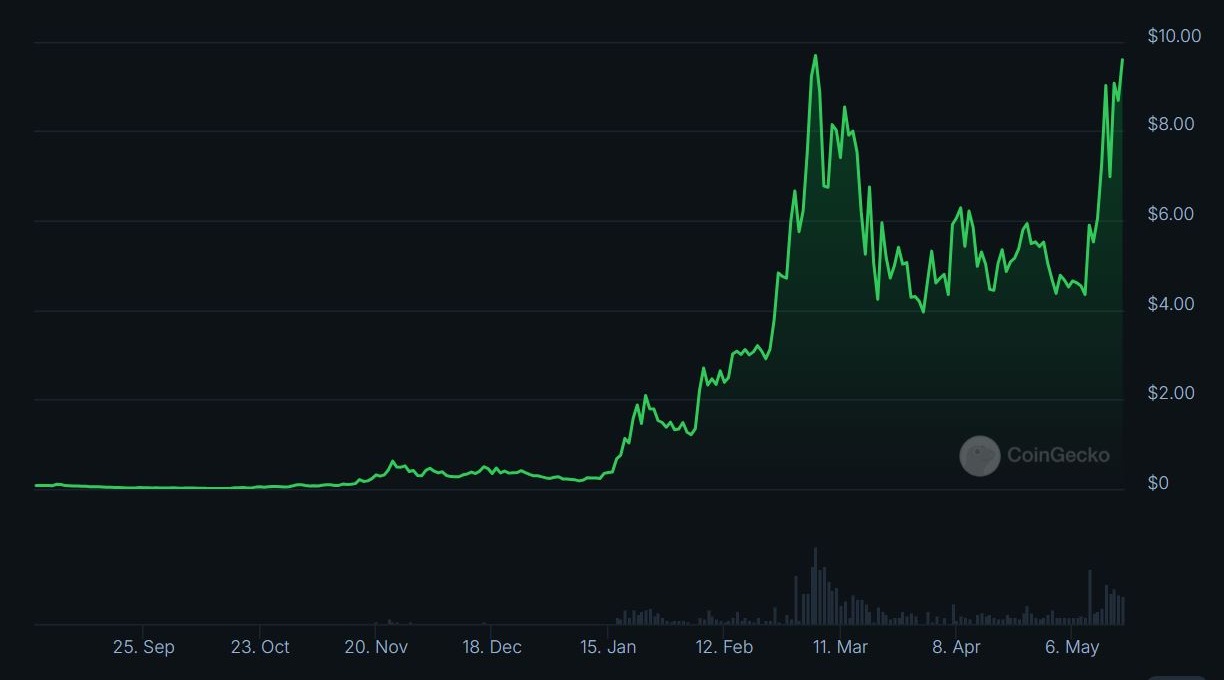
Trump token price chart from CoinGecko
Are these coins an indication that politics and crypto really are more closely entangled than ever before? Perhaps they measure cynically-expressed frustration with the political apparatus, and at the same time are a sign of the degree to which politics seems to have seeped into all corners of public life in recent years.
Or, on the other hand, political meme tokens may simply be nothing more than thrill-seeking crypto participants spinning up novel ways to profit in the blockchain casino. Still though, it seems telling, in an election year, that these politically-focused coins have gained a foothold in the crypto markets.
What Happens to Crypto After the Election?
Should Biden win, then it’s reasonable to expect–in the immediate term–more of the same: a Gensler-chaired SEC that continues to aggressively target crypto, an unwillingness from the authorities to take a break from hostilities and engage meaningfully with the industry, and ultimately, the gradual exclusion of crypto from the American economy.
On the other hand, a Trump victory is likely to act as a major boost for the crypto markets, and the industry would then actively press for regulatory clarity and changes at the SEC, both of which are plausible under a new administration.
However, these possible outcomes are predicated on Trump sticking to his stated openness towards crypto, and the Biden administration not wavering in its stance against crypto, and the latter of those is particularly questionable after Democrat Senators broke ranks from the president over SAB 121.
Regarding the quandary in which the Democratic Party has placed itself, Mike Novogratz–the founder and CEO of crypto firm Galaxy Digital–recently offered a neat description, explaining that the party’s current approach is “kind of like the Democrats went out and said ‘we don’t like dogs’. There are more crypto owners in America than there are dog owners."
From here until the election then, it looks likely that crypto will remain a pertinent issue, but it remains to be seen whether changes of direction are incoming.
One selling point for Bitcoin is that it is politically neutral. After all, it's a ledger, decentralized, and wherever we each fall on the political spectrum, we all need to keep track of our own funds. That’s not to say everyone thinks Bitcoin is the best way to do this, but the neutrality of the technology itself looked like an area on which it was easy to find agreement.
But recently, that sense of being removed from political partisanship has been called into question in the United States, where increasingly, attitudes towards cryptocurrencies appear to be dividing along party lines as we head towards the presidential election. And what’s more, this might be shaping up to be the first US election in which crypto is a significant issue influencing voter decisions.
How Are Republicans and Democrats Opposed Over Crypto?
Recent events have seen the starkest divide yet open up between Republicans and Democrats on the subject of Bitcoin and crypto, evidenced most explicitly in comments made by Donald Trump at a meeting for holders of Trump Digital Trading Cards (an NFT collection first launched by the former president in 2022.)
Addressing the crowd, Trump offered a customary jibe at his opponent Biden’s expense, suggesting that the current president doesn’t know what crypto is, then directly stated that both Gary Gensler (Chair of the SEC) and the Democrats are “very much against it [crypto]”, before telling the crowd, “'if you’re in favor of crypto, you’d better vote for Trump”.
He also explained that crypto companies are leaving the US because of regulatory hostility, and expressed the view that “if we’re going to embrace it [crypto], we have to let them be here”.
This is a turnaround from in 2021, when Trump stated that Bitcoin “seems like a scam”, but it should also be noted that since those earlier comments, Trump has released his own crypto collectibles–the above-mentioned trading cards–on both the Ethereum and Bitcoin blockchains, and furthermore, on-chain records show that Trump is holding just under $9 million of crypto.
Democrat Hostility
In contrast to Trump’s recent pro-crypto statements, the Biden Administration has appeared to be on a crypto warpath, with Senator Elizabeth Warren going as far–in early 2023–as to tweet from her official account that she was assembling what she referred to as an “anti-crypto army”, a statement that sounds jarringly extreme when in various regions outside the US, there are moves to integrate crypto with traditional finance.
The SEC in the US has also, during the current administration’s time in office, been particularly hostile towards the crypto industry, and has been criticized for regulating through enforcement, rather than offering guidance to crypto companies.
On the whole, and for outwardly ambiguous reasons, the Democrats appear simply not to like crypto, a sentiment which is being communicated to voters. Much of the electorate may not have the time or the inclination to investigate underlying political motives, but in straightforward terms, one side of the political aisle is making openly pro-crypto statements, while the other is demonstrating through its actions that it is opposed.
What Is SAB 121?
There are, however, recent developments suggesting that a non-partisan approach to crypto is still viable. This became apparent this week when what may turn out to have been a critical vote took place in the Senate.
The issue at stake was the SEC’s proposed new SAB 121 accounting policy, which makes it difficult for banks to custody Bitcoin and other cryptocurrencies for clients. The Senate voted to overturn SAB 121 by a majority of 60 to 38, and notably, twelve Democrats joined the 48 Republicans voting against the policy.
However, President Biden previously stated that he intends to veto any attempt to kill the SEC policy, raising the question now of whether he will stick to that intent. If so, we might be looking at a split in attitudes within the Democratic Party itself, and the perception created may be that it is President Biden, Senator Warren, and perhaps Chair Gary Gensler at the SEC, who are opposed to crypto, while in the party as a whole there is a wider range of opinion.
Political Meme Coins Enter the Fray
The current crypto cycle has been heavily dominated by meme coins, and has seen a new category of token emerge within that niche: the political meme coin.
This category has seen the launch of multiple new tokens that take shots at politicians through caricature and deliberately misspelled names, featuring tickers such as BODEN and TREMP, while the current top political coin by market cap is the sincerely supportive (and unambiguously titled) TRUMP.
Trump token price chart from CoinGecko
Are these coins an indication that politics and crypto really are more closely entangled than ever before? Perhaps they measure cynically-expressed frustration with the political apparatus, and at the same time are a sign of the degree to which politics seems to have seeped into all corners of public life in recent years.
Or, on the other hand, political meme tokens may simply be nothing more than thrill-seeking crypto participants spinning up novel ways to profit in the blockchain casino. Still though, it seems telling, in an election year, that these politically-focused coins have gained a foothold in the crypto markets.
What Happens to Crypto After the Election?
Should Biden win, then it’s reasonable to expect–in the immediate term–more of the same: a Gensler-chaired SEC that continues to aggressively target crypto, an unwillingness from the authorities to take a break from hostilities and engage meaningfully with the industry, and ultimately, the gradual exclusion of crypto from the American economy.
On the other hand, a Trump victory is likely to act as a major boost for the crypto markets, and the industry would then actively press for regulatory clarity and changes at the SEC, both of which are plausible under a new administration.
However, these possible outcomes are predicated on Trump sticking to his stated openness towards crypto, and the Biden administration not wavering in its stance against crypto, and the latter of those is particularly questionable after Democrat Senators broke ranks from the president over SAB 121.
Regarding the quandary in which the Democratic Party has placed itself, Mike Novogratz–the founder and CEO of crypto firm Galaxy Digital–recently offered a neat description, explaining that the party’s current approach is “kind of like the Democrats went out and said ‘we don’t like dogs’. There are more crypto owners in America than there are dog owners."
From here until the election then, it looks likely that crypto will remain a pertinent issue, but it remains to be seen whether changes of direction are incoming.
Sam White is a writer and journalist from the UK who covers cryptocurrencies and web3, with a particular interest in NFTs and the crossover between art and finance. His work, on a wide variety of topics, has appeared on platforms including The Spectator, Vice and Hacker Noon.
Kraken Steps Up Speed Race with New Equinix Colocation Service for Crypto Traders
FP Markets Winner Spotlight 🏆 | Global Broker of the Year 2025 #Trading #Broker #Innovation #Shorts
FP Markets Winner Spotlight 🏆 | Global Broker of the Year 2025 #Trading #Broker #Innovation #Shorts
FP Markets takes the spotlight as Global Broker of the Year 2025 at the Finance Magnates Awards.
Martin Stoilov, Head of Client Experience, shares that trust, innovation, and people played a key role in the company’s success, supported by a strong foundation of integrity and client-centricity.
Following this milestone, FP Markets continues to focus on growth, technology investment, and its core values of transparency and excellence.
👉 Be part of FM Awards 2026: https://awards.financemagnates.com/#nominate
FP Markets takes the spotlight as Global Broker of the Year 2025 at the Finance Magnates Awards.
Martin Stoilov, Head of Client Experience, shares that trust, innovation, and people played a key role in the company’s success, supported by a strong foundation of integrity and client-centricity.
Following this milestone, FP Markets continues to focus on growth, technology investment, and its core values of transparency and excellence.
👉 Be part of FM Awards 2026: https://awards.financemagnates.com/#nominate
In this video, we review @HolaPrimeMarketsOfficial, a multi-asset forex and CFDs broker offering different account types, trading platforms, and flexible trading conditions.
We cover the broker’s overall offering, including account options, trading environment, platforms like MT4 and MT5, and additional services such as managed accounts and fast withdrawals.
Watch the full video to see if Hola Prime Markets fits your trading needs.
📣 Stay up to date with the latest in finance and trading. Follow Finance Magnates for industry news, insights, and global event coverage.
Connect with us:
🔗 LinkedIn: /financemagnates
👍 Facebook: /financemagnates
📸 Instagram: https://www.instagram.com/financemagnates
🐦 X: https://x.com/financemagnates
🎥 TikTok: https://www.tiktok.com/tag/financemagnates
▶️ YouTube: /@financemagnates_official
#HolaPrime #ForexBroker #CFDTrading #FinanceMagnates #Trading #Forex #BrokerReview
In this video, we review @HolaPrimeMarketsOfficial, a multi-asset forex and CFDs broker offering different account types, trading platforms, and flexible trading conditions.
We cover the broker’s overall offering, including account options, trading environment, platforms like MT4 and MT5, and additional services such as managed accounts and fast withdrawals.
Watch the full video to see if Hola Prime Markets fits your trading needs.
📣 Stay up to date with the latest in finance and trading. Follow Finance Magnates for industry news, insights, and global event coverage.
Connect with us:
🔗 LinkedIn: /financemagnates
👍 Facebook: /financemagnates
📸 Instagram: https://www.instagram.com/financemagnates
🐦 X: https://x.com/financemagnates
🎥 TikTok: https://www.tiktok.com/tag/financemagnates
▶️ YouTube: /@financemagnates_official
#HolaPrime #ForexBroker #CFDTrading #FinanceMagnates #Trading #Forex #BrokerReview
Hola Prime Review: What You Need to Know | Full Breakdown by Finance Magnates
Hola Prime Review: What You Need to Know | Full Breakdown by Finance Magnates
In this video, we review @HolaPrime_Global, a proprietary trading firm offering evaluation programs and performance-based payouts in simulated market environments.
We cover how the challenge model works, including account types, profit splits (up to 95%), trading rules, and what it takes to reach a funded account. You’ll also learn about available platforms like MT4, MT5, cTrader, and more, along with insights into payouts, support, and trading conditions.
Watch the full video to see if Hola Prime fits your trading style.
📣 Stay up to date with the latest in finance and trading. Follow Finance Magnates for industry news, insights, and global event coverage.
Connect with us:
🔗 LinkedIn: /financemagnates
👍 Facebook: /financemagnates
📸 Instagram: https://www.instagram.com/financemagnates
🐦 X: https://x.com/financemagnates
🎥 TikTok: https://www.tiktok.com/tag/financemagnates
▶️ YouTube: /@financemagnates_official
#HolaPrime #PropFirm #Trading #FinanceMagnates #Forex #FuturesTrading #TradingReview #PropFirmReview
In this video, we review @HolaPrime_Global, a proprietary trading firm offering evaluation programs and performance-based payouts in simulated market environments.
We cover how the challenge model works, including account types, profit splits (up to 95%), trading rules, and what it takes to reach a funded account. You’ll also learn about available platforms like MT4, MT5, cTrader, and more, along with insights into payouts, support, and trading conditions.
Watch the full video to see if Hola Prime fits your trading style.
📣 Stay up to date with the latest in finance and trading. Follow Finance Magnates for industry news, insights, and global event coverage.
Connect with us:
🔗 LinkedIn: /financemagnates
👍 Facebook: /financemagnates
📸 Instagram: https://www.instagram.com/financemagnates
🐦 X: https://x.com/financemagnates
🎥 TikTok: https://www.tiktok.com/tag/financemagnates
▶️ YouTube: /@financemagnates_official
#HolaPrime #PropFirm #Trading #FinanceMagnates #Forex #FuturesTrading #TradingReview #PropFirmReview
Axi Winner Spotlight 🏆 | Global Most Innovative Broker 2025 #Innovation #Trading #Fintech #Broker
Axi Winner Spotlight 🏆 | Global Most Innovative Broker 2025 #Innovation #Trading #Fintech #Broker
Axi takes the spotlight at the Finance Magnates Awards, winning Global Most Innovative Broker 2025.
Olivia Xenofontos and Ivanna Openko share how the team will feel: proud, motivated, and ready to keep delivering.
They also describe the night as well-organized, focused, and enjoyable for all.
👉 Be part of FM Awards 2026.
Axi takes the spotlight at the Finance Magnates Awards, winning Global Most Innovative Broker 2025.
Olivia Xenofontos and Ivanna Openko share how the team will feel: proud, motivated, and ready to keep delivering.
They also describe the night as well-organized, focused, and enjoyable for all.
👉 Be part of FM Awards 2026.
Recognition that matters.
Built on transparency.
Driven by the industry.
The Finance Magnates Awards 2026.
Nominations are now open.
🔗 https://awards.financemagnates.com/?utm_source=SM&utm_medium=social&utm_campaign=recognition-matters
Recognition that matters.
Built on transparency.
Driven by the industry.
The Finance Magnates Awards 2026.
Nominations are now open.
🔗 https://awards.financemagnates.com/?utm_source=SM&utm_medium=social&utm_campaign=recognition-matters