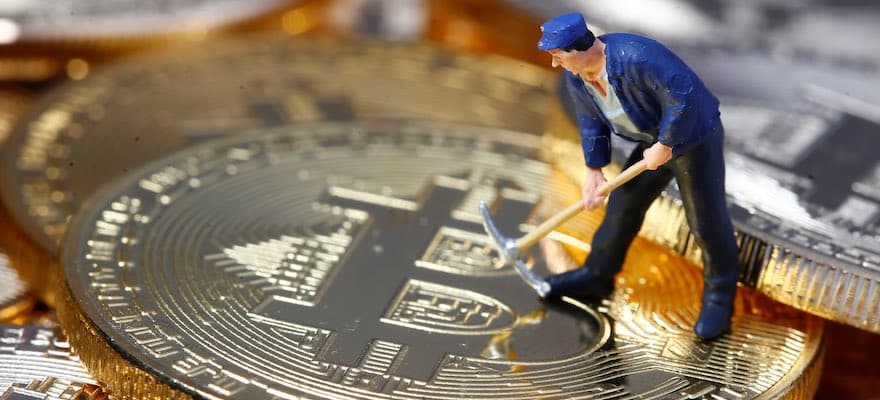
The ins and outs of the key function behind blockhain technology.
FM
What is a Smart Contract?
A smart contract is a computer protocol intended to digitally allow for the application of a transaction by verifying, and enforcing the negotiation or performance of a contract. Smart contracts allow the implementation of transactions without the need for any kind of third parties. Once a transaction has been made it can be easily tracked but cannot be reversed.
Smart contracts were first suggested in 1994 by Nick Szabo, an American computer scientist who created a virtual currency called "Bit Gold" in 1998, ten years before the invention of Bitcoin. It is often suggested that Szabo is the real Satoshi Nakamoto, the anonymous inventor of Bitcoin, a claim that he has denied.
Szabo looked at smart contracts as computerized transaction protocols which finalize terms of a contract. He desired to spread the functional nature of the transaction methods in the electronic sense, such as POS (point of sale), into the digital world.
Real Estate: With the aid of smart contracts, real estate transactions can be easy to monitor. The centralized registry for properties would let you purchase and sell real estate without intermediaries and to pass ownership rights within a minute. After a few clicks, you would find the property you desire, pay for it, and get the evidence that you’re the new owner. You do not even have to make a face-to-face meeting with the seller.
Games and Gambling: If a virtual casino utilizes smart contracts, you would have no reason to be worried about losing money or not being compensated for your reward: whenever you win you will receive your rewards, whenever you lose you will not be able to trick the system and keep your money. Gambling evolves into something which istransparent and honest. The same algorithm is used for any paid computer game and e-sports.
Are Smart Contracts Secure?
While the blockchain is secure by trade and normally one of the more secure aspects of online technology, smart contracts tend to suffer from the fact that the code that is used to develop them is naturally inclined to bugs. In June 2016, a hacker seized over $50 million worth of crypto by taking advantage of a bug in smart contract code and, even more recently, in July 2017 another bug was found in the code of a popular Ethereum wallet with $30 million of crypto being stolen in this instance.
The level of money available provides a highly lucrative reason for hackers to put in the time and resources required to find bugs and loopholes in the codes of smart contracts.
How Can I make a smart contract?
Creating smart contracts can be a complex issue which can be problematic in numerous ways. For starters, these contracts are in their infancy stage and still have a way to go before they become more effective. If you're an experienced individual who is looking to start and ICO, there are several ways of going about it.
First of all, you need a platform for writing the smart contracts. Ethereum is a good way to start. However, there are alternative platforms such as Script in Bitcoin, Automated Transactions, and NXT. These require certain programming languages such as Turing. You're given a platform with templates and ways of designing the contracts which can be simple to use but still require some understanding and expertise in the field of creating these devices.
There are also certain limitations in the smart contracts, which you may need to be aware of before creating them. Their biggest limitations is the fact that these have to be quite simple in the way so you can only complete a transaction in the form of, if "a then b." These should evolve in the future, but at the moment this is a relatively limited model.
In addition to this, these contracts can only provide solutions to problems which one can solve objectively. We need solid facts to create these contracts, and anything requiring subjectivity would be more problematic in this sense. There are also problems when one wants to be redirected to a third party server, so this issue is something that would need to be resolved when the programme evolves.
What is a Smart Contract?
A smart contract is a computer protocol intended to digitally allow for the application of a transaction by verifying, and enforcing the negotiation or performance of a contract. Smart contracts allow the implementation of transactions without the need for any kind of third parties. Once a transaction has been made it can be easily tracked but cannot be reversed.
Smart contracts were first suggested in 1994 by Nick Szabo, an American computer scientist who created a virtual currency called "Bit Gold" in 1998, ten years before the invention of Bitcoin. It is often suggested that Szabo is the real Satoshi Nakamoto, the anonymous inventor of Bitcoin, a claim that he has denied.
Szabo looked at smart contracts as computerized transaction protocols which finalize terms of a contract. He desired to spread the functional nature of the transaction methods in the electronic sense, such as POS (point of sale), into the digital world.
Real Estate: With the aid of smart contracts, real estate transactions can be easy to monitor. The centralized registry for properties would let you purchase and sell real estate without intermediaries and to pass ownership rights within a minute. After a few clicks, you would find the property you desire, pay for it, and get the evidence that you’re the new owner. You do not even have to make a face-to-face meeting with the seller.
Games and Gambling: If a virtual casino utilizes smart contracts, you would have no reason to be worried about losing money or not being compensated for your reward: whenever you win you will receive your rewards, whenever you lose you will not be able to trick the system and keep your money. Gambling evolves into something which istransparent and honest. The same algorithm is used for any paid computer game and e-sports.
Are Smart Contracts Secure?
While the blockchain is secure by trade and normally one of the more secure aspects of online technology, smart contracts tend to suffer from the fact that the code that is used to develop them is naturally inclined to bugs. In June 2016, a hacker seized over $50 million worth of crypto by taking advantage of a bug in smart contract code and, even more recently, in July 2017 another bug was found in the code of a popular Ethereum wallet with $30 million of crypto being stolen in this instance.
The level of money available provides a highly lucrative reason for hackers to put in the time and resources required to find bugs and loopholes in the codes of smart contracts.
How Can I make a smart contract?
Creating smart contracts can be a complex issue which can be problematic in numerous ways. For starters, these contracts are in their infancy stage and still have a way to go before they become more effective. If you're an experienced individual who is looking to start and ICO, there are several ways of going about it.
First of all, you need a platform for writing the smart contracts. Ethereum is a good way to start. However, there are alternative platforms such as Script in Bitcoin, Automated Transactions, and NXT. These require certain programming languages such as Turing. You're given a platform with templates and ways of designing the contracts which can be simple to use but still require some understanding and expertise in the field of creating these devices.
There are also certain limitations in the smart contracts, which you may need to be aware of before creating them. Their biggest limitations is the fact that these have to be quite simple in the way so you can only complete a transaction in the form of, if "a then b." These should evolve in the future, but at the moment this is a relatively limited model.
In addition to this, these contracts can only provide solutions to problems which one can solve objectively. We need solid facts to create these contracts, and anything requiring subjectivity would be more problematic in this sense. There are also problems when one wants to be redirected to a third party server, so this issue is something that would need to be resolved when the programme evolves.
Schwab Aims Crypto Custody at Its $5 Trillion Advisor Channel by 2027
Featured Videos
FM Daily Brief – 9 June 2026
Today’s Tuesday, the 9th of June 2026, and these are our main stories: eToro’s customer assets climbed back above $20 billion, Prop trading model in prediction markets, and Leverate launched a new AI assistant for brokers and traders.
War Stories: Lessons from 20 Years in Markets (the pain, the pitfalls and the profits)
The trades that taught me the most aren't the ones that worked. They're the ones that didn't — or the ones I almost caught and didn't have the nerve to ride. In this session, I'll tell you about the Brexit miss, the SNB shocker that nearly handed me a 5400% return, the BoJ surprise that punched me in the gut, and a few wins along the way. Each story carries a lesson, but the lessons aren't the point. Everyone who trades long enough collects a portfolio of moments like these; what separates the people who stay in the game is what they do with them.
The Engine and the Fuel: How AI & Data Drives African Future
If AI is the engine, data is the fuel. Without quality, accessible data, AI cannot work well; and without the right mindset, data remains just numbers instead of insight. In this session, leading experts will explore how AI and data are democratizing opportunities for businesses and personal growth. Discover practical ways to make AI accessible today, anticipate its transformative impact on African markets, and learn actionable steps to prepare for what's next. Let's talk about:
-How AI and data drive business efficiency and innovation in trading and fintech
-AI tools to elevate trading or business strategies
-How to access and maximise the power of data and AI
-Emerging AI and data trends in Africa and their economic ripple effects
If AI is the engine, data is the fuel. Without quality, accessible data, AI cannot work well; and without the right mindset, data remains just numbers instead of insight. In this session, leading experts will explore how AI and data are democratizing opportunities for businesses and personal growth. Discover practical ways to make AI accessible today, anticipate its transformative impact on African markets, and learn actionable steps to prepare for what's next. Let's talk about:
-How AI and data drive business efficiency and innovation in trading and fintech
-AI tools to elevate trading or business strategies
-How to access and maximise the power of data and AI
-Emerging AI and data trends in Africa and their economic ripple effects
If AI is the engine, data is the fuel. Without quality, accessible data, AI cannot work well; and without the right mindset, data remains just numbers instead of insight. In this session, leading experts will explore how AI and data are democratizing opportunities for businesses and personal growth. Discover practical ways to make AI accessible today, anticipate its transformative impact on African markets, and learn actionable steps to prepare for what's next. Let's talk about:
-How AI and data drive business efficiency and innovation in trading and fintech
-AI tools to elevate trading or business strategies
-How to access and maximise the power of data and AI
-Emerging AI and data trends in Africa and their economic ripple effects
If AI is the engine, data is the fuel. Without quality, accessible data, AI cannot work well; and without the right mindset, data remains just numbers instead of insight. In this session, leading experts will explore how AI and data are democratizing opportunities for businesses and personal growth. Discover practical ways to make AI accessible today, anticipate its transformative impact on African markets, and learn actionable steps to prepare for what's next. Let's talk about:
-How AI and data drive business efficiency and innovation in trading and fintech
-AI tools to elevate trading or business strategies
-How to access and maximise the power of data and AI
-Emerging AI and data trends in Africa and their economic ripple effects
If AI is the engine, data is the fuel. Without quality, accessible data, AI cannot work well; and without the right mindset, data remains just numbers instead of insight. In this session, leading experts will explore how AI and data are democratizing opportunities for businesses and personal growth. Discover practical ways to make AI accessible today, anticipate its transformative impact on African markets, and learn actionable steps to prepare for what's next. Let's talk about:
-How AI and data drive business efficiency and innovation in trading and fintech
-AI tools to elevate trading or business strategies
-How to access and maximise the power of data and AI
-Emerging AI and data trends in Africa and their economic ripple effects
If AI is the engine, data is the fuel. Without quality, accessible data, AI cannot work well; and without the right mindset, data remains just numbers instead of insight. In this session, leading experts will explore how AI and data are democratizing opportunities for businesses and personal growth. Discover practical ways to make AI accessible today, anticipate its transformative impact on African markets, and learn actionable steps to prepare for what's next. Let's talk about:
-How AI and data drive business efficiency and innovation in trading and fintech
-AI tools to elevate trading or business strategies
-How to access and maximise the power of data and AI
-Emerging AI and data trends in Africa and their economic ripple effects
Inside My Best Trade with Jimmy Moyaha
Most market post-mortems describe what happened to prices. Few describe what happened in the trading room while the position was open: the entry conviction, the moments that tested it, and the exit decision that closed the book.
This session brings one seasoned trader to the stage for an unfiltered account of the position that still defines how they think about markets.
Attendees will walk away with:
-A first-hand account of how a conviction trade is built, from thesis and entry through position management and exit
-Understanding of what turns a market observation into a live position, and what holds it when conditions shift
-Insight into how timing, execution quality, and market structure shaped the final result
-Perspective on what the trade revealed about edge, risk tolerance, and when to hold through a position moving against you
-Clarity on what separates a well-built trade from a well-timed one
Most market post-mortems describe what happened to prices. Few describe what happened in the trading room while the position was open: the entry conviction, the moments that tested it, and the exit decision that closed the book.
This session brings one seasoned trader to the stage for an unfiltered account of the position that still defines how they think about markets.
Attendees will walk away with:
-A first-hand account of how a conviction trade is built, from thesis and entry through position management and exit
-Understanding of what turns a market observation into a live position, and what holds it when conditions shift
-Insight into how timing, execution quality, and market structure shaped the final result
-Perspective on what the trade revealed about edge, risk tolerance, and when to hold through a position moving against you
-Clarity on what separates a well-built trade from a well-timed one
Most market post-mortems describe what happened to prices. Few describe what happened in the trading room while the position was open: the entry conviction, the moments that tested it, and the exit decision that closed the book.
This session brings one seasoned trader to the stage for an unfiltered account of the position that still defines how they think about markets.
Attendees will walk away with:
-A first-hand account of how a conviction trade is built, from thesis and entry through position management and exit
-Understanding of what turns a market observation into a live position, and what holds it when conditions shift
-Insight into how timing, execution quality, and market structure shaped the final result
-Perspective on what the trade revealed about edge, risk tolerance, and when to hold through a position moving against you
-Clarity on what separates a well-built trade from a well-timed one
Most market post-mortems describe what happened to prices. Few describe what happened in the trading room while the position was open: the entry conviction, the moments that tested it, and the exit decision that closed the book.
This session brings one seasoned trader to the stage for an unfiltered account of the position that still defines how they think about markets.
Attendees will walk away with:
-A first-hand account of how a conviction trade is built, from thesis and entry through position management and exit
-Understanding of what turns a market observation into a live position, and what holds it when conditions shift
-Insight into how timing, execution quality, and market structure shaped the final result
-Perspective on what the trade revealed about edge, risk tolerance, and when to hold through a position moving against you
-Clarity on what separates a well-built trade from a well-timed one
Most market post-mortems describe what happened to prices. Few describe what happened in the trading room while the position was open: the entry conviction, the moments that tested it, and the exit decision that closed the book.
This session brings one seasoned trader to the stage for an unfiltered account of the position that still defines how they think about markets.
Attendees will walk away with:
-A first-hand account of how a conviction trade is built, from thesis and entry through position management and exit
-Understanding of what turns a market observation into a live position, and what holds it when conditions shift
-Insight into how timing, execution quality, and market structure shaped the final result
-Perspective on what the trade revealed about edge, risk tolerance, and when to hold through a position moving against you
-Clarity on what separates a well-built trade from a well-timed one
Most market post-mortems describe what happened to prices. Few describe what happened in the trading room while the position was open: the entry conviction, the moments that tested it, and the exit decision that closed the book.
This session brings one seasoned trader to the stage for an unfiltered account of the position that still defines how they think about markets.
Attendees will walk away with:
-A first-hand account of how a conviction trade is built, from thesis and entry through position management and exit
-Understanding of what turns a market observation into a live position, and what holds it when conditions shift
-Insight into how timing, execution quality, and market structure shaped the final result
-Perspective on what the trade revealed about edge, risk tolerance, and when to hold through a position moving against you
-Clarity on what separates a well-built trade from a well-timed one
Agentic Inequality: Democratizing Financial Access Through AI & Blockchain
As crypto and CFD trading continue to expand across Africa, access to advanced tools and market insights remains uneven. This session explores how AI and blockchain can bridge that gap by empowering informal traders and underserved communities to participate more effectively in digital financial markets. The discussion will focus on practical applications of technology to improve accessibility, education, and investment outcomes in both formal and informal sectors.
In this discussion, we will explore:
-The role of AI in democratizing access to trading tools, insights, and strategy development
-How crypto and blockchain can enable broader participation beyond traditional financial systems
-Addressing access barriers: infrastructure, education, and affordability in underserved communities
-Opportunities for brokers and platforms to tap into the informal trading economy
As crypto and CFD trading continue to expand across Africa, access to advanced tools and market insights remains uneven. This session explores how AI and blockchain can bridge that gap by empowering informal traders and underserved communities to participate more effectively in digital financial markets. The discussion will focus on practical applications of technology to improve accessibility, education, and investment outcomes in both formal and informal sectors.
In this discussion, we will explore:
-The role of AI in democratizing access to trading tools, insights, and strategy development
-How crypto and blockchain can enable broader participation beyond traditional financial systems
-Addressing access barriers: infrastructure, education, and affordability in underserved communities
-Opportunities for brokers and platforms to tap into the informal trading economy
As crypto and CFD trading continue to expand across Africa, access to advanced tools and market insights remains uneven. This session explores how AI and blockchain can bridge that gap by empowering informal traders and underserved communities to participate more effectively in digital financial markets. The discussion will focus on practical applications of technology to improve accessibility, education, and investment outcomes in both formal and informal sectors.
In this discussion, we will explore:
-The role of AI in democratizing access to trading tools, insights, and strategy development
-How crypto and blockchain can enable broader participation beyond traditional financial systems
-Addressing access barriers: infrastructure, education, and affordability in underserved communities
-Opportunities for brokers and platforms to tap into the informal trading economy
As crypto and CFD trading continue to expand across Africa, access to advanced tools and market insights remains uneven. This session explores how AI and blockchain can bridge that gap by empowering informal traders and underserved communities to participate more effectively in digital financial markets. The discussion will focus on practical applications of technology to improve accessibility, education, and investment outcomes in both formal and informal sectors.
In this discussion, we will explore:
-The role of AI in democratizing access to trading tools, insights, and strategy development
-How crypto and blockchain can enable broader participation beyond traditional financial systems
-Addressing access barriers: infrastructure, education, and affordability in underserved communities
-Opportunities for brokers and platforms to tap into the informal trading economy
As crypto and CFD trading continue to expand across Africa, access to advanced tools and market insights remains uneven. This session explores how AI and blockchain can bridge that gap by empowering informal traders and underserved communities to participate more effectively in digital financial markets. The discussion will focus on practical applications of technology to improve accessibility, education, and investment outcomes in both formal and informal sectors.
In this discussion, we will explore:
-The role of AI in democratizing access to trading tools, insights, and strategy development
-How crypto and blockchain can enable broader participation beyond traditional financial systems
-Addressing access barriers: infrastructure, education, and affordability in underserved communities
-Opportunities for brokers and platforms to tap into the informal trading economy
As crypto and CFD trading continue to expand across Africa, access to advanced tools and market insights remains uneven. This session explores how AI and blockchain can bridge that gap by empowering informal traders and underserved communities to participate more effectively in digital financial markets. The discussion will focus on practical applications of technology to improve accessibility, education, and investment outcomes in both formal and informal sectors.
In this discussion, we will explore:
-The role of AI in democratizing access to trading tools, insights, and strategy development
-How crypto and blockchain can enable broader participation beyond traditional financial systems
-Addressing access barriers: infrastructure, education, and affordability in underserved communities
-Opportunities for brokers and platforms to tap into the informal trading economy