Dukascopy Stablecoin Now Pegged to Eight Fiat Currencies
- At launch, Dukascash was available as three separate tickers, with each token pegged to EUR, USD and CHF respectively.

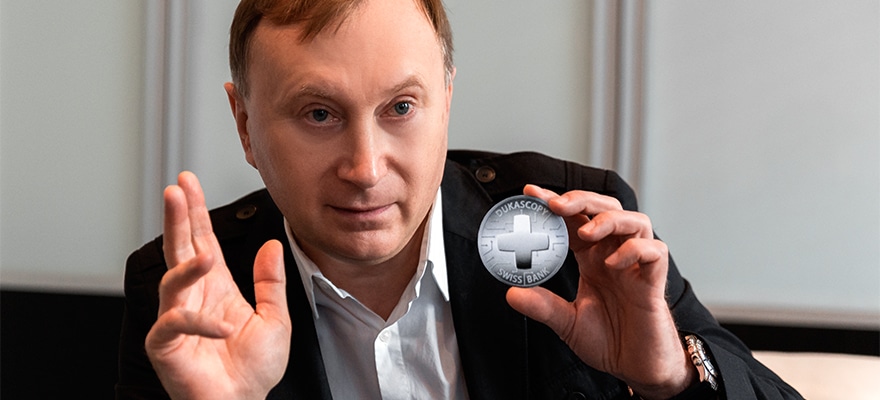
Switzerland’s Forex Forex Foreign exchange or forex is the act of converting one nation’s currency into another nation’s currency (that possesses a different currency); for example, the converting of British Pounds into US Dollars, and vice versa. The exchange of currencies can be done over a physical counter, such as at a Bureau de Change, or over the internet via broker platforms, where currency speculation takes place, known as forex trading.The foreign exchange market, by its very nature, is the world’s largest trading market by volume. According to the Bank of International Settlements (BIS) latest survey, the Forex market now turns over in excess of $5 trillion every day, with the most exchanges occurring between the US Dollar and the Euro (EUR/USD), followed by the US Dollar and the Japanese Yen (USD/JPY), then the US Dollar and Pound Sterling (GBP/USD). Ultimately, it is the very exchanging between currencies which causes a country’s currency to fluctuate in value in relation to another currency – this is known as the exchange rate. With regards to freely floating currencies, this is determined by supply and demand, such as imports and exports, and currency traders, such as banks and hedge funds. Emphasis on Retail Trading for ForexTrading the forex market for the purpose of financial gain was once the exclusive realm of financial institutions.But thanks to the invention of the internet and advances in financial technology from the 1990’s, almost anyone can now start trading this huge market. All one needs is a computer, an internet connection, and an account with a forex broker. Of course, before one starts to trade currencies, a certain level of knowledge and practice is essential. Once can gain some practice using demonstration accounts, i.e. place trades using demo money, before moving on to some real trading after attaining confidence. The main two fields of trading are known as technical analysis and fundamental analysis. Technical analysis refers to using mathematical tools and certain patterns to help decide whether to buy or sell a currency pair, and fundamental analysis refers to gauging the national and international events which may potentially affect a country’s currency value. Foreign exchange or forex is the act of converting one nation’s currency into another nation’s currency (that possesses a different currency); for example, the converting of British Pounds into US Dollars, and vice versa. The exchange of currencies can be done over a physical counter, such as at a Bureau de Change, or over the internet via broker platforms, where currency speculation takes place, known as forex trading.The foreign exchange market, by its very nature, is the world’s largest trading market by volume. According to the Bank of International Settlements (BIS) latest survey, the Forex market now turns over in excess of $5 trillion every day, with the most exchanges occurring between the US Dollar and the Euro (EUR/USD), followed by the US Dollar and the Japanese Yen (USD/JPY), then the US Dollar and Pound Sterling (GBP/USD). Ultimately, it is the very exchanging between currencies which causes a country’s currency to fluctuate in value in relation to another currency – this is known as the exchange rate. With regards to freely floating currencies, this is determined by supply and demand, such as imports and exports, and currency traders, such as banks and hedge funds. Emphasis on Retail Trading for ForexTrading the forex market for the purpose of financial gain was once the exclusive realm of financial institutions.But thanks to the invention of the internet and advances in financial technology from the 1990’s, almost anyone can now start trading this huge market. All one needs is a computer, an internet connection, and an account with a forex broker. Of course, before one starts to trade currencies, a certain level of knowledge and practice is essential. Once can gain some practice using demonstration accounts, i.e. place trades using demo money, before moving on to some real trading after attaining confidence. The main two fields of trading are known as technical analysis and fundamental analysis. Technical analysis refers to using mathematical tools and certain patterns to help decide whether to buy or sell a currency pair, and fundamental analysis refers to gauging the national and international events which may potentially affect a country’s currency value. Read this Term bank and broker, Dukascopy, is expanding the family of its fiat-pegged stablecoin ‘Dukascash’ with the addition of five new underlying currencies. The newly-listed tokens include CNY+, GBP+, JPY+, MXN+, and RUB+, which are pegged to Chinese Renminbi, UK Pound, Japanese Yen, Mexican Peso, and Russian Ruble, respectively.
At launch, Dukascash was available as three separate tickers, EUR+, USD+, and CHF+, each pegged to EUR, USD, and CHF respectively. Dukascopy hopes to increase the range of Dukascash’s fiat currencies suite to 23, all of which are currently available as a base currency for clients' accounts.
During the public testing phase of the project, which the forex broker has not yet revealed how long it will last, the minimum transaction size is set at 1000 tokens.
The new stablecoins can be minted and traded against Dukascoins or fiat currencies deposited by the client who wants to acquire Dukascash, with each token being pegged 1:1 for the currency it represents.
Dukascopy to offer custody service for Dukascash
The Swiss banking institution noted in the recently-published white paper that it will be releasing Dukascashs in tranches of roughly CHF 10 million and will only be issuing more based on the demand from consumers. The issued coins will be initially kept by the bank as “unreleased” tokens.
Dukascopy also plans to offer the custody service for Dukascash tokens, whilst it will accept Dukascash tokens from its clients, as a payment for its services, at the exchange rate of 1:1 to the fiat base currency.
Following its strategical decision of becoming a crypto friendly bank, Dukascopy has partnered earlier this year with Bitcoin Bitcoin Bitcoin is the world’s first digital currency that was created in 2009 by a mysterious entity named Satoshi Nakamoto. As a digital currency or cryptocurrency, Bitcoin operates without a central bank or single administrator. Instead, Bitcoin can be sent via a Peer-to-Peer (P2P) networking, devoid of intermediaries.Bitcoins are not issued or backed by any governments or banks, and Bitcoin is not considered to be legal tender, although they do have status as an acknowledged transfer of value in some jurisdictions. Rather than composing a physical currency, Bitcoins are pieces of code that can be sent and received across a kind of distributed ledger network called a blockchain. Transactions on the Bitcoin network are confirmed by a network of computers (or nodes) that solve a series of complex equations. This process is called mining. In exchange for mining, the computers receive rewards in the form of new Bitcoins. Mining grows increasingly difficult over time, and the rewards get smaller and smaller. There is a total of 21 million Bitcoins. As of May 2020, there are 18.3 million Bitcoins in circulation. This number changes approximately every 10 minutes when new blocks are mined. Presently, each new block adds 12.5 bitcoins into circulation.Since its inception, Bitcoin has remained the most popular and largest cryptocurrency in terms of market cap in the world. Bitcoin’s popularity has contributed significantly to the release of thousands of other cryptocurrencies, called “altcoins.” While the crypto market was originally hegemonic, today’s landscape features countless altcoins.Bitcoin ControversyBitcoin has been extremely controversial since its original launch. Given its mercurial nature, Bitcoin has been criticized for its use in illegal transactions and money laundering.As its impossible to trace, these attributes make Bitcoin the ideal vehicle for illicit behavior. Moreover, critics point to its high electricity consumption for mining, rampant price volatility, and thefts from exchanges. Bitcoin has been seen as a speculative bubble given its lack of oversight. The crypto has weathered multiple collapses and survived over a decade so far. Unlike its launch back in 2009, Bitcoin today is viewed far differently and is much more accepted by merchants and other entities. Bitcoin is the world’s first digital currency that was created in 2009 by a mysterious entity named Satoshi Nakamoto. As a digital currency or cryptocurrency, Bitcoin operates without a central bank or single administrator. Instead, Bitcoin can be sent via a Peer-to-Peer (P2P) networking, devoid of intermediaries.Bitcoins are not issued or backed by any governments or banks, and Bitcoin is not considered to be legal tender, although they do have status as an acknowledged transfer of value in some jurisdictions. Rather than composing a physical currency, Bitcoins are pieces of code that can be sent and received across a kind of distributed ledger network called a blockchain. Transactions on the Bitcoin network are confirmed by a network of computers (or nodes) that solve a series of complex equations. This process is called mining. In exchange for mining, the computers receive rewards in the form of new Bitcoins. Mining grows increasingly difficult over time, and the rewards get smaller and smaller. There is a total of 21 million Bitcoins. As of May 2020, there are 18.3 million Bitcoins in circulation. This number changes approximately every 10 minutes when new blocks are mined. Presently, each new block adds 12.5 bitcoins into circulation.Since its inception, Bitcoin has remained the most popular and largest cryptocurrency in terms of market cap in the world. Bitcoin’s popularity has contributed significantly to the release of thousands of other cryptocurrencies, called “altcoins.” While the crypto market was originally hegemonic, today’s landscape features countless altcoins.Bitcoin ControversyBitcoin has been extremely controversial since its original launch. Given its mercurial nature, Bitcoin has been criticized for its use in illegal transactions and money laundering.As its impossible to trace, these attributes make Bitcoin the ideal vehicle for illicit behavior. Moreover, critics point to its high electricity consumption for mining, rampant price volatility, and thefts from exchanges. Bitcoin has been seen as a speculative bubble given its lack of oversight. The crypto has weathered multiple collapses and survived over a decade so far. Unlike its launch back in 2009, Bitcoin today is viewed far differently and is much more accepted by merchants and other entities. Read this Term exchange Bitstamp to enable crypto funding on its platform. The bank’s customers can exchange US Dollars for bitcoins, in the same way, they would with any other currencies offered on the platform. They can also withdraw funds back to their cryptocurrency wallets in the form of bitcoins.
Switzerland’s Forex Forex Foreign exchange or forex is the act of converting one nation’s currency into another nation’s currency (that possesses a different currency); for example, the converting of British Pounds into US Dollars, and vice versa. The exchange of currencies can be done over a physical counter, such as at a Bureau de Change, or over the internet via broker platforms, where currency speculation takes place, known as forex trading.The foreign exchange market, by its very nature, is the world’s largest trading market by volume. According to the Bank of International Settlements (BIS) latest survey, the Forex market now turns over in excess of $5 trillion every day, with the most exchanges occurring between the US Dollar and the Euro (EUR/USD), followed by the US Dollar and the Japanese Yen (USD/JPY), then the US Dollar and Pound Sterling (GBP/USD). Ultimately, it is the very exchanging between currencies which causes a country’s currency to fluctuate in value in relation to another currency – this is known as the exchange rate. With regards to freely floating currencies, this is determined by supply and demand, such as imports and exports, and currency traders, such as banks and hedge funds. Emphasis on Retail Trading for ForexTrading the forex market for the purpose of financial gain was once the exclusive realm of financial institutions.But thanks to the invention of the internet and advances in financial technology from the 1990’s, almost anyone can now start trading this huge market. All one needs is a computer, an internet connection, and an account with a forex broker. Of course, before one starts to trade currencies, a certain level of knowledge and practice is essential. Once can gain some practice using demonstration accounts, i.e. place trades using demo money, before moving on to some real trading after attaining confidence. The main two fields of trading are known as technical analysis and fundamental analysis. Technical analysis refers to using mathematical tools and certain patterns to help decide whether to buy or sell a currency pair, and fundamental analysis refers to gauging the national and international events which may potentially affect a country’s currency value. Foreign exchange or forex is the act of converting one nation’s currency into another nation’s currency (that possesses a different currency); for example, the converting of British Pounds into US Dollars, and vice versa. The exchange of currencies can be done over a physical counter, such as at a Bureau de Change, or over the internet via broker platforms, where currency speculation takes place, known as forex trading.The foreign exchange market, by its very nature, is the world’s largest trading market by volume. According to the Bank of International Settlements (BIS) latest survey, the Forex market now turns over in excess of $5 trillion every day, with the most exchanges occurring between the US Dollar and the Euro (EUR/USD), followed by the US Dollar and the Japanese Yen (USD/JPY), then the US Dollar and Pound Sterling (GBP/USD). Ultimately, it is the very exchanging between currencies which causes a country’s currency to fluctuate in value in relation to another currency – this is known as the exchange rate. With regards to freely floating currencies, this is determined by supply and demand, such as imports and exports, and currency traders, such as banks and hedge funds. Emphasis on Retail Trading for ForexTrading the forex market for the purpose of financial gain was once the exclusive realm of financial institutions.But thanks to the invention of the internet and advances in financial technology from the 1990’s, almost anyone can now start trading this huge market. All one needs is a computer, an internet connection, and an account with a forex broker. Of course, before one starts to trade currencies, a certain level of knowledge and practice is essential. Once can gain some practice using demonstration accounts, i.e. place trades using demo money, before moving on to some real trading after attaining confidence. The main two fields of trading are known as technical analysis and fundamental analysis. Technical analysis refers to using mathematical tools and certain patterns to help decide whether to buy or sell a currency pair, and fundamental analysis refers to gauging the national and international events which may potentially affect a country’s currency value. Read this Term bank and broker, Dukascopy, is expanding the family of its fiat-pegged stablecoin ‘Dukascash’ with the addition of five new underlying currencies. The newly-listed tokens include CNY+, GBP+, JPY+, MXN+, and RUB+, which are pegged to Chinese Renminbi, UK Pound, Japanese Yen, Mexican Peso, and Russian Ruble, respectively.
At launch, Dukascash was available as three separate tickers, EUR+, USD+, and CHF+, each pegged to EUR, USD, and CHF respectively. Dukascopy hopes to increase the range of Dukascash’s fiat currencies suite to 23, all of which are currently available as a base currency for clients' accounts.
During the public testing phase of the project, which the forex broker has not yet revealed how long it will last, the minimum transaction size is set at 1000 tokens.
The new stablecoins can be minted and traded against Dukascoins or fiat currencies deposited by the client who wants to acquire Dukascash, with each token being pegged 1:1 for the currency it represents.
Dukascopy to offer custody service for Dukascash
The Swiss banking institution noted in the recently-published white paper that it will be releasing Dukascashs in tranches of roughly CHF 10 million and will only be issuing more based on the demand from consumers. The issued coins will be initially kept by the bank as “unreleased” tokens.
Dukascopy also plans to offer the custody service for Dukascash tokens, whilst it will accept Dukascash tokens from its clients, as a payment for its services, at the exchange rate of 1:1 to the fiat base currency.
Following its strategical decision of becoming a crypto friendly bank, Dukascopy has partnered earlier this year with Bitcoin Bitcoin Bitcoin is the world’s first digital currency that was created in 2009 by a mysterious entity named Satoshi Nakamoto. As a digital currency or cryptocurrency, Bitcoin operates without a central bank or single administrator. Instead, Bitcoin can be sent via a Peer-to-Peer (P2P) networking, devoid of intermediaries.Bitcoins are not issued or backed by any governments or banks, and Bitcoin is not considered to be legal tender, although they do have status as an acknowledged transfer of value in some jurisdictions. Rather than composing a physical currency, Bitcoins are pieces of code that can be sent and received across a kind of distributed ledger network called a blockchain. Transactions on the Bitcoin network are confirmed by a network of computers (or nodes) that solve a series of complex equations. This process is called mining. In exchange for mining, the computers receive rewards in the form of new Bitcoins. Mining grows increasingly difficult over time, and the rewards get smaller and smaller. There is a total of 21 million Bitcoins. As of May 2020, there are 18.3 million Bitcoins in circulation. This number changes approximately every 10 minutes when new blocks are mined. Presently, each new block adds 12.5 bitcoins into circulation.Since its inception, Bitcoin has remained the most popular and largest cryptocurrency in terms of market cap in the world. Bitcoin’s popularity has contributed significantly to the release of thousands of other cryptocurrencies, called “altcoins.” While the crypto market was originally hegemonic, today’s landscape features countless altcoins.Bitcoin ControversyBitcoin has been extremely controversial since its original launch. Given its mercurial nature, Bitcoin has been criticized for its use in illegal transactions and money laundering.As its impossible to trace, these attributes make Bitcoin the ideal vehicle for illicit behavior. Moreover, critics point to its high electricity consumption for mining, rampant price volatility, and thefts from exchanges. Bitcoin has been seen as a speculative bubble given its lack of oversight. The crypto has weathered multiple collapses and survived over a decade so far. Unlike its launch back in 2009, Bitcoin today is viewed far differently and is much more accepted by merchants and other entities. Bitcoin is the world’s first digital currency that was created in 2009 by a mysterious entity named Satoshi Nakamoto. As a digital currency or cryptocurrency, Bitcoin operates without a central bank or single administrator. Instead, Bitcoin can be sent via a Peer-to-Peer (P2P) networking, devoid of intermediaries.Bitcoins are not issued or backed by any governments or banks, and Bitcoin is not considered to be legal tender, although they do have status as an acknowledged transfer of value in some jurisdictions. Rather than composing a physical currency, Bitcoins are pieces of code that can be sent and received across a kind of distributed ledger network called a blockchain. Transactions on the Bitcoin network are confirmed by a network of computers (or nodes) that solve a series of complex equations. This process is called mining. In exchange for mining, the computers receive rewards in the form of new Bitcoins. Mining grows increasingly difficult over time, and the rewards get smaller and smaller. There is a total of 21 million Bitcoins. As of May 2020, there are 18.3 million Bitcoins in circulation. This number changes approximately every 10 minutes when new blocks are mined. Presently, each new block adds 12.5 bitcoins into circulation.Since its inception, Bitcoin has remained the most popular and largest cryptocurrency in terms of market cap in the world. Bitcoin’s popularity has contributed significantly to the release of thousands of other cryptocurrencies, called “altcoins.” While the crypto market was originally hegemonic, today’s landscape features countless altcoins.Bitcoin ControversyBitcoin has been extremely controversial since its original launch. Given its mercurial nature, Bitcoin has been criticized for its use in illegal transactions and money laundering.As its impossible to trace, these attributes make Bitcoin the ideal vehicle for illicit behavior. Moreover, critics point to its high electricity consumption for mining, rampant price volatility, and thefts from exchanges. Bitcoin has been seen as a speculative bubble given its lack of oversight. The crypto has weathered multiple collapses and survived over a decade so far. Unlike its launch back in 2009, Bitcoin today is viewed far differently and is much more accepted by merchants and other entities. Read this Term exchange Bitstamp to enable crypto funding on its platform. The bank’s customers can exchange US Dollars for bitcoins, in the same way, they would with any other currencies offered on the platform. They can also withdraw funds back to their cryptocurrency wallets in the form of bitcoins.