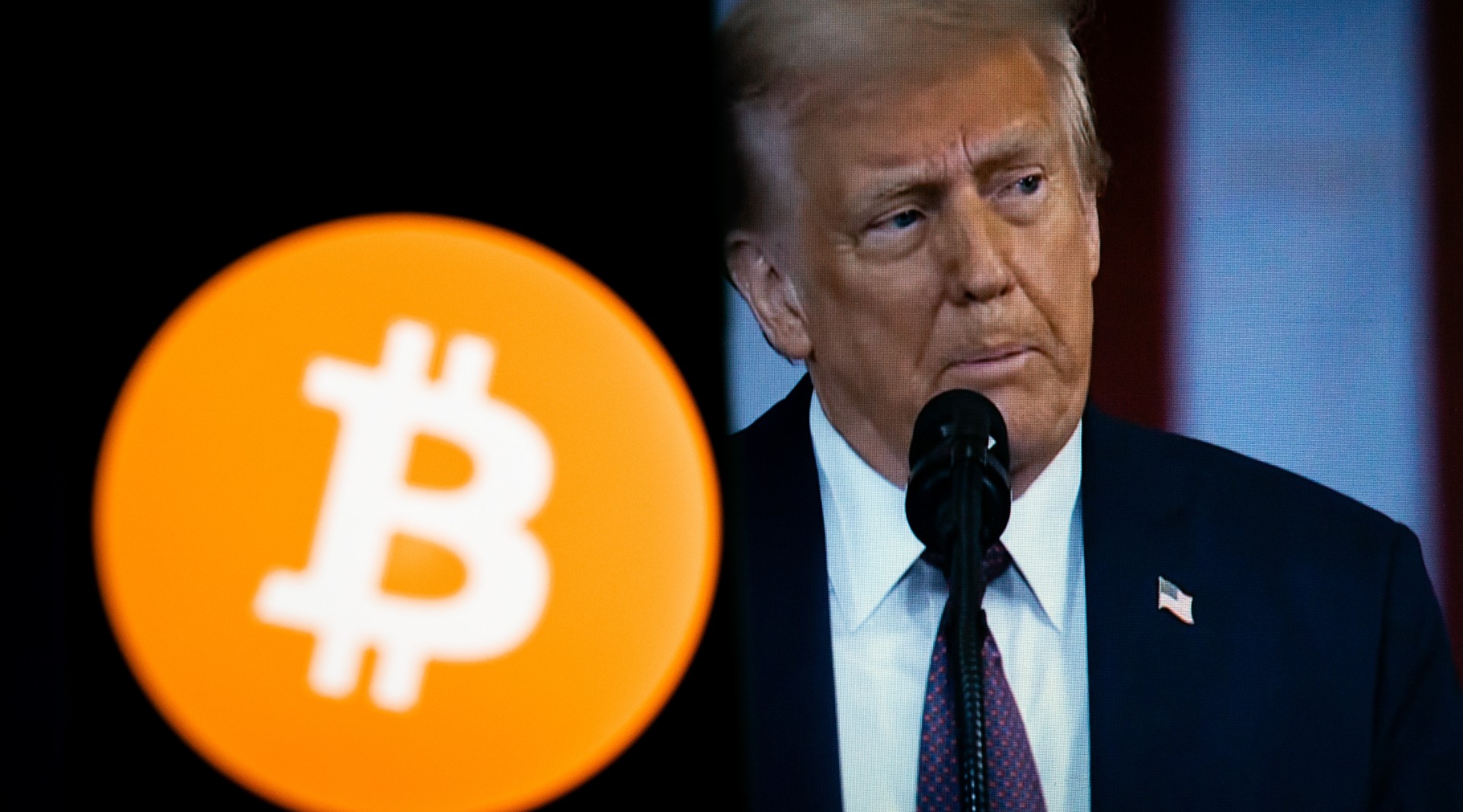
Trump’s tariffs, due to be unveiled on April 2, 2025, have pushed Bitcoin into a bearish channel with resistance at $87,000 and $92,000.
However, analysts see short-term pressure easing and long-term gains possible as tariffs may weaken the dollar and boost BTC.
Some of the newest predictions suggest that tariffs might be beneficial for Bitcoin, driving its price to $150,000.
As the
Donald Trump administration prepares to unveil its tariff strategy on what it
has dubbed “Liberation Day,” financial markets are bracing for impact, with
cryptocurrencies like Bitcoin (BTC) caught in the crosshairs.
The policy,
set to be detailed later today (Wednesday) at 10 PM CET, is expected to include
reciprocal tariffs targeting 15 countries—among them China, Canada, and
Mexico—that have imposed duties on U.S. goods.
While Wall
Street frets over economic fallout, analysts are divided on what this means for
Bitcoin, the world’s largest digital asset, which has already seen its price
slide from almost $110,000 earlier this year to $84,327 as of this morning, up
1% in the last 24 hours.
This above is an advertisement by Utip
How Trump’s Tariffs Could
Shape Bitcoin’s Price Trajectory
Yet, the
reality has been starkly different. Bitcoin’s value has trended downward
through much of March, reflecting broader market unease tied to macroeconomic
factors, including the looming tariffs.
Bitcoin price today, BTC moves in a consolidation. Source: Tradingview.com
Other major
digital currencies have followed suit, with Ethereum (ETH) currently near November
2023 lows at $1,863 and XRP, testing the key support level at $2.10 again.
Tariffs and Risk Appetite
The
introduction of tariffs—taxes levied on imported goods—has sparked concerns
about a global economic slowdown, prompting investors to retreat from assets
perceived as high-risk, including cryptocurrencies.
This shift
has deepened the correlation between crypto markets and traditional financial
instruments like stocks and bonds, which have also faced turbulence. Gold, by
contrast, has surged 18% year-to-date, cementing its status as a preferred
safe-haven asset amid the uncertainty.
The
tariffs, which include a proposed 25% levy on foreign-made cars announced last
week, are part of Trump’s broader trade agenda aimed at bolstering domestic
industries.
However,
they’ve raised fears of retaliatory measures from trading partners, potentially
disrupting global supply chains and fueling inflation. For Bitcoin, this has
translated into short-term selling pressure, as traders shy away from volatile
assets.
A Silver Lining for
Bitcoin?
Despite the
immediate headwinds, some experts argue that Trump’s tariff policies could
ultimately bolster Bitcoin’s long-term appeal. Omid Malekan, an adjunct
professor at Columbia Business School, suggests that cryptocurrency might
emerge as a viable alternative to traditional safe havens like gold.
Omid Malekan, an adjunct professor at Columbia Business School
“Some
people argue that crypto is just a risk-on tech asset and would sell off due to
tariffs,” Malekan said, quoted by CoinDesk. “But Bitcoin has found footing in
some circles as ‘digital gold’ and the physical variety is soaring on the
tariff news. So which will it be?”
This
perspective hinges on the idea that tariffs could erode the U.S. dollar’s
dominance in global trade. As trading partners seek alternatives to
dollar-based transactions, non-sovereign assets like Bitcoin could gain
traction.
Zach Pandl, Head of Research at Grayscale
Zach Pandl,
Head of Research at Grayscale, shares this optimism. “Tariffs will weaken the
dominant role of the dollar and create space for competitors including Bitcoin,”
he said. “The first few months of the Trump Administration have raised my
conviction in the longer term for Bitcoin as a global monetary asset.”
Pandl
estimates that tariffs have already shaved 2% off U.S. economic growth this
year, a drag that has weighed on crypto markets. Yet, he sees a potential
turning point with today’s announcement.
Will Bitcoin Price Go Down?
Liquidity Withdrawals Signal Potential Price Volatility
A recent
surge in Bitcoin withdrawals from active trading addresses could set the stage
for significant price movements, according to a new analysis by blockchain
researcher Dr. Kirill Kretov. The study, which examines over 50 months of
Bitcoin transaction data, reveals a pattern of liquidity reduction reminiscent
of conditions preceding the 2020–2021 bull run.
Kretov's
research, spanning from July 2020 to March 2025, identifies a notable wave of
large withdrawals beginning in late November 2024. This trend is particularly
pronounced among addresses transacting between 100 and 10,000 BTC, suggesting
involvement of institutional or high-net-worth participants.
The analysis of liquidity withdrawals. Source: Kretov
“Since
late November, we've seen a substantial outflow of BTC from active addresses,
particularly those transacting over 100 BTC,” Kretov noted. “This
volume level strongly suggests institutional or high-net-worth
participation—not retail.”
A negative
net value in the analysis indicates more Bitcoin sent than received, pointing
to liquidity withdrawal.
“With
so much liquidity withdrawn from active entities, the path of least resistance
appears to be upward—mechanically speaking. In a thinner market, even
moderately large buy orders can have an outsized impact on price,” added
Kretov.
While these
conditions could theoretically support a Bitcoin price of $150,000, Kretov
cautions that such moves in low-liquidity environments may lack stability.
“It's crucial to recognize that a price reached in a low-liquidity
environment is not necessarily stable or structurally supported,” he
warned.
The
researcher advises a cautious approach, particularly regarding margin trading
and leverage. “Personally, rather than targeting specific price levels,
I'm focusing on trading volatility: extracting profits from price swings while
closely monitoring liquidity flows,” Kretov said.
How does
the situation look from the perspective of technical analysis? Based on my
review of the BTC/USDT chart, it’s clear that since the all-time high in
January, we’ve been moving uninterruptedly within a bearish regression channel.
Bitcoin briefly attempted to break out of this channel earlier this month, but
the effort failed. The psychological support level of $80,000 was tested and
broken, and the price is currently moving sideways.
Where do I
think the next resistance lies if Bitcoin manages to break out of the current
supply formation? The first resistance would be the local peak of around $87,000,
which shouldn’t pose a significant challenge. A much more substantial
resistance is at $92,000, where the lows from December, January, and the first
half of February align.
Will Trump’s Tariffs Influence
Bitcoin?
For now,
the crypto community is watching closely as Trump’s tariff policy takes shape.
While the immediate outlook remains cloudy, the possibility of Bitcoin emerging
as a hedge against a fragmenting global financial system offers a glimmer of
hope.
As the
clock ticks toward this afternoon’s announcement, investors and analysts alike
are preparing for volatility—but also for the chance that Bitcoin could find
its footing in a shifting economic landscape.
For
more cryptocurrency analyses and forecasts for the biggest tokens, visit
FinanceMagnates.com.
As the
Donald Trump administration prepares to unveil its tariff strategy on what it
has dubbed “Liberation Day,” financial markets are bracing for impact, with
cryptocurrencies like Bitcoin (BTC) caught in the crosshairs.
The policy,
set to be detailed later today (Wednesday) at 10 PM CET, is expected to include
reciprocal tariffs targeting 15 countries—among them China, Canada, and
Mexico—that have imposed duties on U.S. goods.
While Wall
Street frets over economic fallout, analysts are divided on what this means for
Bitcoin, the world’s largest digital asset, which has already seen its price
slide from almost $110,000 earlier this year to $84,327 as of this morning, up
1% in the last 24 hours.
This above is an advertisement by Utip
How Trump’s Tariffs Could
Shape Bitcoin’s Price Trajectory
Yet, the
reality has been starkly different. Bitcoin’s value has trended downward
through much of March, reflecting broader market unease tied to macroeconomic
factors, including the looming tariffs.
Bitcoin price today, BTC moves in a consolidation. Source: Tradingview.com
Other major
digital currencies have followed suit, with Ethereum (ETH) currently near November
2023 lows at $1,863 and XRP, testing the key support level at $2.10 again.
Tariffs and Risk Appetite
The
introduction of tariffs—taxes levied on imported goods—has sparked concerns
about a global economic slowdown, prompting investors to retreat from assets
perceived as high-risk, including cryptocurrencies.
This shift
has deepened the correlation between crypto markets and traditional financial
instruments like stocks and bonds, which have also faced turbulence. Gold, by
contrast, has surged 18% year-to-date, cementing its status as a preferred
safe-haven asset amid the uncertainty.
The
tariffs, which include a proposed 25% levy on foreign-made cars announced last
week, are part of Trump’s broader trade agenda aimed at bolstering domestic
industries.
However,
they’ve raised fears of retaliatory measures from trading partners, potentially
disrupting global supply chains and fueling inflation. For Bitcoin, this has
translated into short-term selling pressure, as traders shy away from volatile
assets.
A Silver Lining for
Bitcoin?
Despite the
immediate headwinds, some experts argue that Trump’s tariff policies could
ultimately bolster Bitcoin’s long-term appeal. Omid Malekan, an adjunct
professor at Columbia Business School, suggests that cryptocurrency might
emerge as a viable alternative to traditional safe havens like gold.
Omid Malekan, an adjunct professor at Columbia Business School
“Some
people argue that crypto is just a risk-on tech asset and would sell off due to
tariffs,” Malekan said, quoted by CoinDesk. “But Bitcoin has found footing in
some circles as ‘digital gold’ and the physical variety is soaring on the
tariff news. So which will it be?”
This
perspective hinges on the idea that tariffs could erode the U.S. dollar’s
dominance in global trade. As trading partners seek alternatives to
dollar-based transactions, non-sovereign assets like Bitcoin could gain
traction.
Zach Pandl, Head of Research at Grayscale
Zach Pandl,
Head of Research at Grayscale, shares this optimism. “Tariffs will weaken the
dominant role of the dollar and create space for competitors including Bitcoin,”
he said. “The first few months of the Trump Administration have raised my
conviction in the longer term for Bitcoin as a global monetary asset.”
Pandl
estimates that tariffs have already shaved 2% off U.S. economic growth this
year, a drag that has weighed on crypto markets. Yet, he sees a potential
turning point with today’s announcement.
Will Bitcoin Price Go Down?
Liquidity Withdrawals Signal Potential Price Volatility
A recent
surge in Bitcoin withdrawals from active trading addresses could set the stage
for significant price movements, according to a new analysis by blockchain
researcher Dr. Kirill Kretov. The study, which examines over 50 months of
Bitcoin transaction data, reveals a pattern of liquidity reduction reminiscent
of conditions preceding the 2020–2021 bull run.
Kretov's
research, spanning from July 2020 to March 2025, identifies a notable wave of
large withdrawals beginning in late November 2024. This trend is particularly
pronounced among addresses transacting between 100 and 10,000 BTC, suggesting
involvement of institutional or high-net-worth participants.
The analysis of liquidity withdrawals. Source: Kretov
“Since
late November, we've seen a substantial outflow of BTC from active addresses,
particularly those transacting over 100 BTC,” Kretov noted. “This
volume level strongly suggests institutional or high-net-worth
participation—not retail.”
A negative
net value in the analysis indicates more Bitcoin sent than received, pointing
to liquidity withdrawal.
“With
so much liquidity withdrawn from active entities, the path of least resistance
appears to be upward—mechanically speaking. In a thinner market, even
moderately large buy orders can have an outsized impact on price,” added
Kretov.
While these
conditions could theoretically support a Bitcoin price of $150,000, Kretov
cautions that such moves in low-liquidity environments may lack stability.
“It's crucial to recognize that a price reached in a low-liquidity
environment is not necessarily stable or structurally supported,” he
warned.
The
researcher advises a cautious approach, particularly regarding margin trading
and leverage. “Personally, rather than targeting specific price levels,
I'm focusing on trading volatility: extracting profits from price swings while
closely monitoring liquidity flows,” Kretov said.
How does
the situation look from the perspective of technical analysis? Based on my
review of the BTC/USDT chart, it’s clear that since the all-time high in
January, we’ve been moving uninterruptedly within a bearish regression channel.
Bitcoin briefly attempted to break out of this channel earlier this month, but
the effort failed. The psychological support level of $80,000 was tested and
broken, and the price is currently moving sideways.
Where do I
think the next resistance lies if Bitcoin manages to break out of the current
supply formation? The first resistance would be the local peak of around $87,000,
which shouldn’t pose a significant challenge. A much more substantial
resistance is at $92,000, where the lows from December, January, and the first
half of February align.
Will Trump’s Tariffs Influence
Bitcoin?
For now,
the crypto community is watching closely as Trump’s tariff policy takes shape.
While the immediate outlook remains cloudy, the possibility of Bitcoin emerging
as a hedge against a fragmenting global financial system offers a glimmer of
hope.
As the
clock ticks toward this afternoon’s announcement, investors and analysts alike
are preparing for volatility—but also for the chance that Bitcoin could find
its footing in a shifting economic landscape.
For
more cryptocurrency analyses and forecasts for the biggest tokens, visit
FinanceMagnates.com.
Damian Chmiel is a Senior Analyst & Editor at Finance Magnates with more than 15 years of experience in the CFD and online trading industry. Active as both a trader and journalist since 2010, he focuses on broker coverage, fintech innovation, and regulatory developments across Europe, the Middle East, and Asia.
His work includes interviews with C-level leaders at major brokerages and fintech platforms, as well as co-authoring Finance Magnates’ quarterly industry benchmarking reports. Damian’s reporting is data-driven, market-aware, and grounded in direct industry engagement. His analysis and commentary have also been cited by external media outlets, including Investing.com, Binance, The Asset, Stockhead, and Dispatch.
Education:
MA in Finance and Accounting, Cracow University of Economics
Inside the Prediction Markets: $1.6B Institutional Inflow Meets a Federal Crackdown
FP Markets Winner Spotlight 🏆 | Global Broker of the Year 2025 #Trading #Broker #Innovation #Shorts
FP Markets Winner Spotlight 🏆 | Global Broker of the Year 2025 #Trading #Broker #Innovation #Shorts
FP Markets takes the spotlight as Global Broker of the Year 2025 at the Finance Magnates Awards.
Martin Stoilov, Head of Client Experience, shares that trust, innovation, and people played a key role in the company’s success, supported by a strong foundation of integrity and client-centricity.
Following this milestone, FP Markets continues to focus on growth, technology investment, and its core values of transparency and excellence.
👉 Be part of FM Awards 2026: https://awards.financemagnates.com/#nominate
FP Markets takes the spotlight as Global Broker of the Year 2025 at the Finance Magnates Awards.
Martin Stoilov, Head of Client Experience, shares that trust, innovation, and people played a key role in the company’s success, supported by a strong foundation of integrity and client-centricity.
Following this milestone, FP Markets continues to focus on growth, technology investment, and its core values of transparency and excellence.
👉 Be part of FM Awards 2026: https://awards.financemagnates.com/#nominate
In this video, we review @HolaPrimeMarketsOfficial, a multi-asset forex and CFDs broker offering different account types, trading platforms, and flexible trading conditions.
We cover the broker’s overall offering, including account options, trading environment, platforms like MT4 and MT5, and additional services such as managed accounts and fast withdrawals.
Watch the full video to see if Hola Prime Markets fits your trading needs.
📣 Stay up to date with the latest in finance and trading. Follow Finance Magnates for industry news, insights, and global event coverage.
Connect with us:
🔗 LinkedIn: /financemagnates
👍 Facebook: /financemagnates
📸 Instagram: https://www.instagram.com/financemagnates
🐦 X: https://x.com/financemagnates
🎥 TikTok: https://www.tiktok.com/tag/financemagnates
▶️ YouTube: /@financemagnates_official
#HolaPrime #ForexBroker #CFDTrading #FinanceMagnates #Trading #Forex #BrokerReview
In this video, we review @HolaPrimeMarketsOfficial, a multi-asset forex and CFDs broker offering different account types, trading platforms, and flexible trading conditions.
We cover the broker’s overall offering, including account options, trading environment, platforms like MT4 and MT5, and additional services such as managed accounts and fast withdrawals.
Watch the full video to see if Hola Prime Markets fits your trading needs.
📣 Stay up to date with the latest in finance and trading. Follow Finance Magnates for industry news, insights, and global event coverage.
Connect with us:
🔗 LinkedIn: /financemagnates
👍 Facebook: /financemagnates
📸 Instagram: https://www.instagram.com/financemagnates
🐦 X: https://x.com/financemagnates
🎥 TikTok: https://www.tiktok.com/tag/financemagnates
▶️ YouTube: /@financemagnates_official
#HolaPrime #ForexBroker #CFDTrading #FinanceMagnates #Trading #Forex #BrokerReview
Hola Prime Review: What You Need to Know | Full Breakdown by Finance Magnates
Hola Prime Review: What You Need to Know | Full Breakdown by Finance Magnates
In this video, we review @HolaPrime_Global, a proprietary trading firm offering evaluation programs and performance-based payouts in simulated market environments.
We cover how the challenge model works, including account types, profit splits (up to 95%), trading rules, and what it takes to reach a funded account. You’ll also learn about available platforms like MT4, MT5, cTrader, and more, along with insights into payouts, support, and trading conditions.
Watch the full video to see if Hola Prime fits your trading style.
📣 Stay up to date with the latest in finance and trading. Follow Finance Magnates for industry news, insights, and global event coverage.
Connect with us:
🔗 LinkedIn: /financemagnates
👍 Facebook: /financemagnates
📸 Instagram: https://www.instagram.com/financemagnates
🐦 X: https://x.com/financemagnates
🎥 TikTok: https://www.tiktok.com/tag/financemagnates
▶️ YouTube: /@financemagnates_official
#HolaPrime #PropFirm #Trading #FinanceMagnates #Forex #FuturesTrading #TradingReview #PropFirmReview
In this video, we review @HolaPrime_Global, a proprietary trading firm offering evaluation programs and performance-based payouts in simulated market environments.
We cover how the challenge model works, including account types, profit splits (up to 95%), trading rules, and what it takes to reach a funded account. You’ll also learn about available platforms like MT4, MT5, cTrader, and more, along with insights into payouts, support, and trading conditions.
Watch the full video to see if Hola Prime fits your trading style.
📣 Stay up to date with the latest in finance and trading. Follow Finance Magnates for industry news, insights, and global event coverage.
Connect with us:
🔗 LinkedIn: /financemagnates
👍 Facebook: /financemagnates
📸 Instagram: https://www.instagram.com/financemagnates
🐦 X: https://x.com/financemagnates
🎥 TikTok: https://www.tiktok.com/tag/financemagnates
▶️ YouTube: /@financemagnates_official
#HolaPrime #PropFirm #Trading #FinanceMagnates #Forex #FuturesTrading #TradingReview #PropFirmReview
Axi Winner Spotlight 🏆 | Global Most Innovative Broker 2025 #Innovation #Trading #Fintech #Broker
Axi Winner Spotlight 🏆 | Global Most Innovative Broker 2025 #Innovation #Trading #Fintech #Broker
Axi takes the spotlight at the Finance Magnates Awards, winning Global Most Innovative Broker 2025.
Olivia Xenofontos and Ivanna Openko share how the team will feel: proud, motivated, and ready to keep delivering.
They also describe the night as well-organized, focused, and enjoyable for all.
👉 Be part of FM Awards 2026.
Axi takes the spotlight at the Finance Magnates Awards, winning Global Most Innovative Broker 2025.
Olivia Xenofontos and Ivanna Openko share how the team will feel: proud, motivated, and ready to keep delivering.
They also describe the night as well-organized, focused, and enjoyable for all.
👉 Be part of FM Awards 2026.
Recognition that matters.
Built on transparency.
Driven by the industry.
The Finance Magnates Awards 2026.
Nominations are now open.
🔗 https://awards.financemagnates.com/?utm_source=SM&utm_medium=social&utm_campaign=recognition-matters
Recognition that matters.
Built on transparency.
Driven by the industry.
The Finance Magnates Awards 2026.
Nominations are now open.
🔗 https://awards.financemagnates.com/?utm_source=SM&utm_medium=social&utm_campaign=recognition-matters