Building a Multi-Channel Marketing Strategy for Fintech Brands

Tuesday, 17/03/2026 | 10:57 GMT by Finance Magnates
Disclaimer
  • From awareness to conversion and retention, consistent messaging, and channel roles that build trust and drive growth.
Building a Multi-Channel Marketing Strategy for Fintech Brands

Fintech marketing is not “run ads and hope.” Your buyers take time. They compare. They ask. They research. They check reviews. They look for proof that your brand is real, safe, and stable. A multi-channel marketing strategy solves this by keeping your brand present throughout the decision cycle. It also reduces risk: if one channel slows down, the rest continue to work.

This guide emphasises the marketing flow, detailing the sequence of actions and their rationale, while illustrating how to plan a cohesive campaign that enhances brand awareness, builds trust, and delivers results.

Why fintech brands need more than one channel

Fintech buyers (both B2B and trader audiences) have 3 common traits:

If you show up in only one place, you look smaller than you are. If you show up in many places with a clear, consistent message, you look established, and that changes how people perceive your brand.

The multi-channel marketing cycle

A good multi-channel plan follows a loop. Think of it as 6 stages:

Awareness → 2) Interest → 3) Trust → 4) Intent → 5) Conversion → 6) Retention & advocacy

Each stage serves a distinct purpose. Channels are essential tools that guide people to the next stage.

Below is a clean campaign flow you can utilise.

Stage 1: Awareness (get on the radar)

Goal: Reach the right people and create first recognition.

What works best here:

  • Short, clear messages that explain what you do in one short line

  • Repeated exposure (people rarely act on the first time they see you)

Channel roles (examples):

  • Display ads: fast reach and repeat visibility

  • Social media posts: fast distribution and sharing

  • PR/news mentions: adds credibility while also creating awareness

    Awareness is not about clicks. It’s about memory. Your goal is to become familiar.
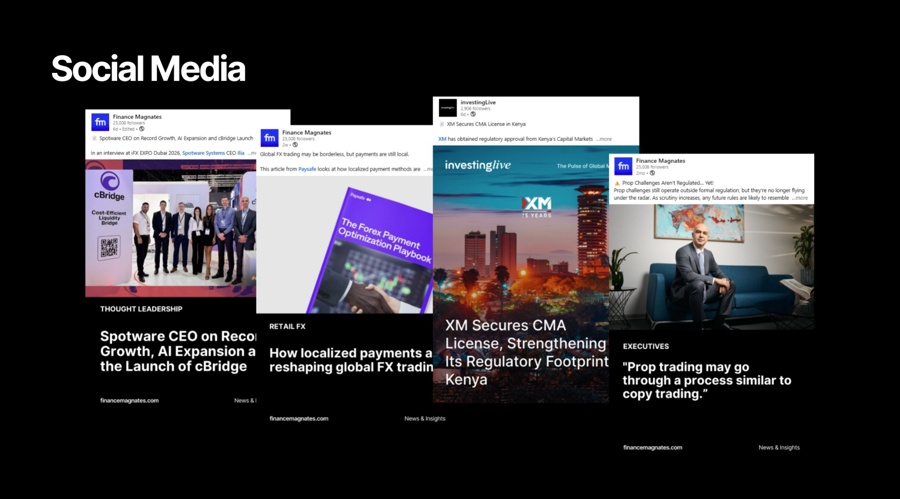
Multi-Channel Marketing Strategy for Fintech Brands - Social Media

What to measure:

  • Reach / impressions

  • Frequency (how many times the same person sees you)

  • Brand search lift (more people searching your brand name)

Stage 2: Interest (give them a reason to care)

Goal: Make the audience think: “This is relevant to me.”

At this stage, your content should be more informative than promotional:

  • A clear problem statement

  • A point of view (“here’s what we think is changing”)

  • A simple way to learn more

Channel roles (examples):

  • Articles and explainers: show expertise and build attention time

  • Short videos: explain a topic fast

  • Email (light touch): bring them back when they’re ready
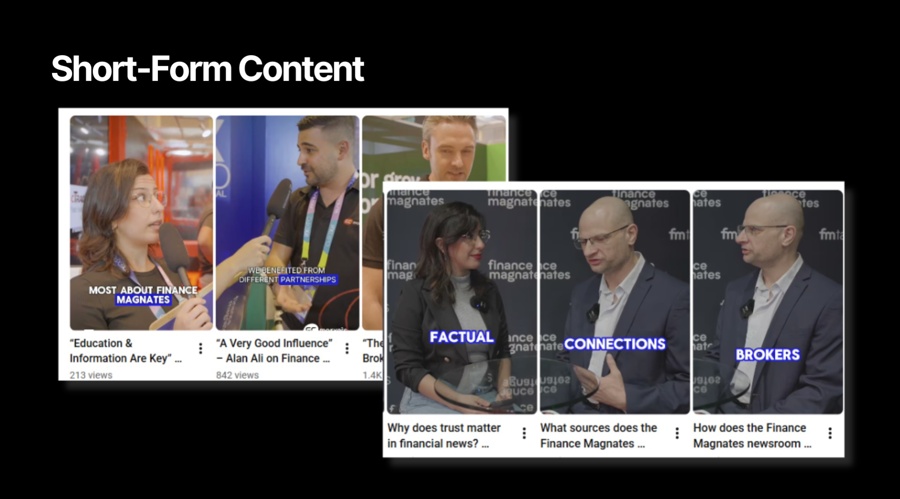
Multi-Channel Marketing Strategy for Fintech Brands - Short Form Content

What to measure:

  • Time on page/scroll depth

  • Video watch time

  • Return visitors

Stage 3: Trust (remove doubt)

Goal: Demonstrate that you are reliable, trustworthy, and deserving of a conversation.

In fintech, trust is built with:

  • Third-party signals (coverage, quotes, features)

  • Proof points (case studies, results, clear client types)

  • Leadership visibility (show the people behind the brand)

  • Consistency (same message, same quality, over time)

Channel roles (examples):

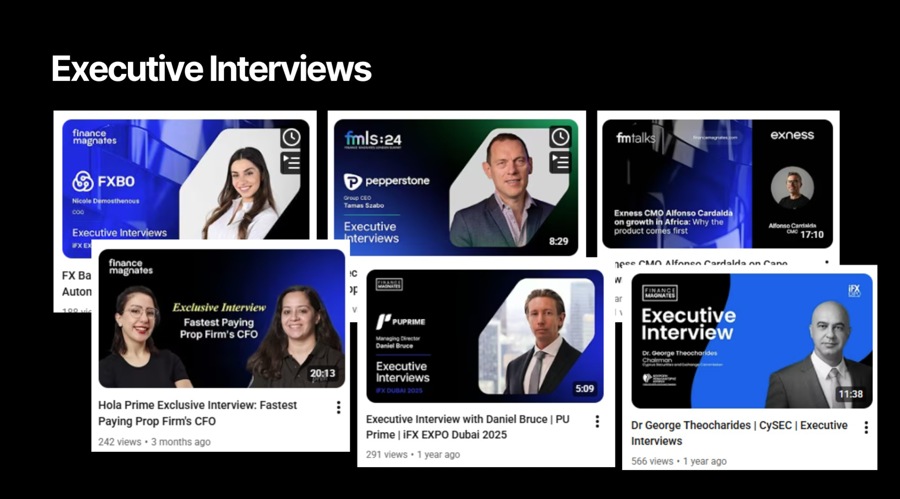
Multi-Channel Marketing Strategy for Fintech Brands - Executive Interviews

What to measure:

  • Growth in branded traffic

  • Direct traffic (people typing your site)

  • Sales feedback (“people mention they saw you”)

Stage 4: Intent (help them choose)

Goal: Support decision-making for people who are now comparing options.

At this stage, the buyer is looking for:

  • Clear differences (why you VS competitors)

  • Product details that match their needs

  • Pricing logic (even if you don’t show full pricing)

  • Risk and compliance comfort

Channel roles (examples):

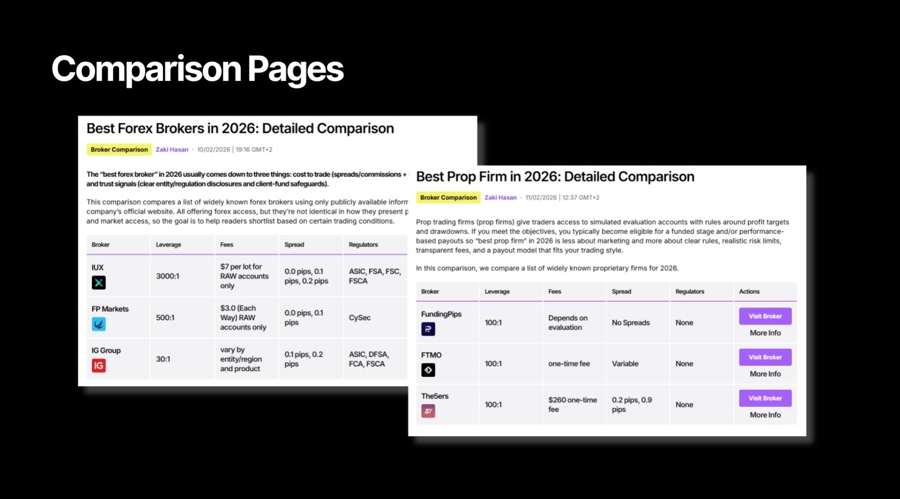
Multi-Channel Marketing Strategy for Fintech Brands - Comparison Pages

What to measure:

  • Clicks to “contact sales” / “book demo”

  • High-intent page views (pricing, demo, contact)

  • Attendance rate / Q&A volume

Stage 5: Conversion (turn intent into action)

Goal: Get the action that matters: demo, lead, account, trial, or deposit.

Conversion happens when you remove friction:

  • Simple forms

  • Clear CTA

  • Fast follow-up

  • Offer that matches the stage (don’t push “buy now” too early)

Channel roles (examples):

  • Email sequences (invite → reminder → follow-up)

  • Retargeting (bring back high-intent visitors)

  • Webinars with a clear next step

  • Sales enablement content (one-page PDF, deck, proof assets)

What to measure:

  • Conversion rate by channel

  • Cost per lead (paid channels)

  • Lead quality (sales accepted leads)

Stage 6: Retention and advocacy (keep them active and turn them into fans)

Goal: Reduce churn, increase usage, and create word-of-mouth.

In fintech, retention is marketing too:

  • Education content keeps users engaged

  • Updates build confidence (“this product is alive”)

  • Community builds habit

Channel roles (examples):

  • Newsletters for existing users

  • Product update emails

  • Education content and sessions

  • Community and social touchpoints

What to measure:

  • Repeat usage

  • Upgrade rate

  • Referrals and review volume

Why does multi-channel work better than single-channel

1) It matches real buyer behaviour

People don’t act in one place. Multi-channel meets them where they already are.

2) It builds trust faster

Repeated exposure across different formats is a trust signal by itself.

3) It improves performance in every channel

  • When your PR and content grow branded searches, your paid ads often get cheaper.

  • When your email list grows, you rely less on paid.

  • When your SEO pages rank, you get steady demand.

Channels support each other.

4) It reduces risk

If one channel declines, the system continues to operate.

A simple multi-channel campaign flow (example you can copy)

Here’s a clean flow you can run in 6–8 weeks:

    • 5–8 social posts

    • 2 short videos

    • 1 email invite

    • 1 landing page with a clear CTA

    4) Run awareness support for 2–3 weeks
    Light display and social distribution to build reach.

    5) Move into intent and conversion
    Webinar/demo push, retargeting, and follow-up emails.

    6) Close the loop
    Publish a recap, share results, and feed learnings into the next campaign.

This is how you turn “content” into an actual marketing engine.

How to plan your channel mix (quick rules)

  • If your goal is brand awareness, focus on reach, frequency and third-party signals

  • If your goal is leads: focus on one conversion event (e.g. webinar) and build the content around it

  • If your goal is trader sign-ups: focus on high-intent content (comparisons, reviews, clear “why us” pages)

  • If your goal is enterprise deals: focus on trust assets + proof + steady visibility over time

How Finance Magnates and investingLive can support a multi-channel campaign

Using Finance Magnates and investingLive together can help because they support two different parts of your reach:

  • Finance Magnates helps you stay visible to the industry side of the market (the people who plan, approve, and influence business decisions).

  • investingLive helps you stay visible to the market side of the market (the people who follow markets daily and take action as traders or investors).
Multi-channel marketing strategy for fintech brands

Where they fit in a multi-channel plan

1) When you need wide awareness: Finance Magnates and investingLive can place your brand next to relevant finance content, helping you reach the right audience more than once (which is how awareness is built).

2) When you need trust signals: Being present in established financial media settings fosters trust. In fintech, that “seen in the right places” feeling often reduces doubt and makes later steps easier.

3) When you need a demand that turns into action: When you combine visibility with clear next steps (a landing page, a webinar signup, a demo request, or a “learn more” page), you can move from “people noticed us” to “people engaged with us.”

4) When you need consistency across formats: A campaign usually needs more than one format (articles, email, display, social, video). Finance Magnates and investingLive can help you keep the same message repeated across formats, without copying and pasting the same content everywhere.

Let’s Plan Your Campaign

Are you ready to get results? Let’s build a campaign together that fits your goals and gets you in front of the right audience.

Fintech marketing is not “run ads and hope.” Your buyers take time. They compare. They ask. They research. They check reviews. They look for proof that your brand is real, safe, and stable. A multi-channel marketing strategy solves this by keeping your brand present throughout the decision cycle. It also reduces risk: if one channel slows down, the rest continue to work.

This guide emphasises the marketing flow, detailing the sequence of actions and their rationale, while illustrating how to plan a cohesive campaign that enhances brand awareness, builds trust, and delivers results.

Why fintech brands need more than one channel

Fintech buyers (both B2B and trader audiences) have 3 common traits:

If you show up in only one place, you look smaller than you are. If you show up in many places with a clear, consistent message, you look established, and that changes how people perceive your brand.

The multi-channel marketing cycle

A good multi-channel plan follows a loop. Think of it as 6 stages:

Awareness → 2) Interest → 3) Trust → 4) Intent → 5) Conversion → 6) Retention & advocacy

Each stage serves a distinct purpose. Channels are essential tools that guide people to the next stage.

Below is a clean campaign flow you can utilise.

Stage 1: Awareness (get on the radar)

Goal: Reach the right people and create first recognition.

What works best here:

  • Short, clear messages that explain what you do in one short line

  • Repeated exposure (people rarely act on the first time they see you)

Channel roles (examples):

  • Display ads: fast reach and repeat visibility

  • Social media posts: fast distribution and sharing

  • PR/news mentions: adds credibility while also creating awareness

    Awareness is not about clicks. It’s about memory. Your goal is to become familiar.
Multi-Channel Marketing Strategy for Fintech Brands - Social Media

What to measure:

  • Reach / impressions

  • Frequency (how many times the same person sees you)

  • Brand search lift (more people searching your brand name)

Stage 2: Interest (give them a reason to care)

Goal: Make the audience think: “This is relevant to me.”

At this stage, your content should be more informative than promotional:

  • A clear problem statement

  • A point of view (“here’s what we think is changing”)

  • A simple way to learn more

Channel roles (examples):

  • Articles and explainers: show expertise and build attention time

  • Short videos: explain a topic fast

  • Email (light touch): bring them back when they’re ready

Multi-Channel Marketing Strategy for Fintech Brands - Short Form Content

What to measure:

  • Time on page/scroll depth

  • Video watch time

  • Return visitors

Stage 3: Trust (remove doubt)

Goal: Demonstrate that you are reliable, trustworthy, and deserving of a conversation.

In fintech, trust is built with:

  • Third-party signals (coverage, quotes, features)

  • Proof points (case studies, results, clear client types)

  • Leadership visibility (show the people behind the brand)

  • Consistency (same message, same quality, over time)

Channel roles (examples):

Multi-Channel Marketing Strategy for Fintech Brands - Executive Interviews

What to measure:

  • Growth in branded traffic

  • Direct traffic (people typing your site)

  • Sales feedback (“people mention they saw you”)

Stage 4: Intent (help them choose)

Goal: Support decision-making for people who are now comparing options.

At this stage, the buyer is looking for:

  • Clear differences (why you VS competitors)

  • Product details that match their needs

  • Pricing logic (even if you don’t show full pricing)

  • Risk and compliance comfort

Channel roles (examples):

Multi-Channel Marketing Strategy for Fintech Brands - Comparison Pages

What to measure:

  • Clicks to “contact sales” / “book demo”

  • High-intent page views (pricing, demo, contact)

  • Attendance rate / Q&A volume

Stage 5: Conversion (turn intent into action)

Goal: Get the action that matters: demo, lead, account, trial, or deposit.

Conversion happens when you remove friction:

  • Simple forms

  • Clear CTA

  • Fast follow-up

  • Offer that matches the stage (don’t push “buy now” too early)

Channel roles (examples):

  • Email sequences (invite → reminder → follow-up)

  • Retargeting (bring back high-intent visitors)

  • Webinars with a clear next step

  • Sales enablement content (one-page PDF, deck, proof assets)

What to measure:

  • Conversion rate by channel

  • Cost per lead (paid channels)

  • Lead quality (sales accepted leads)

Stage 6: Retention and advocacy (keep them active and turn them into fans)

Goal: Reduce churn, increase usage, and create word-of-mouth.

In fintech, retention is marketing too:

  • Education content keeps users engaged

  • Updates build confidence (“this product is alive”)

  • Community builds habit

Channel roles (examples):

  • Newsletters for existing users

  • Product update emails

  • Education content and sessions

  • Community and social touchpoints

What to measure:

  • Repeat usage

  • Upgrade rate

  • Referrals and review volume

Why does multi-channel work better than single-channel

1) It matches real buyer behaviour

People don’t act in one place. Multi-channel meets them where they already are.

2) It builds trust faster

Repeated exposure across different formats is a trust signal by itself.

3) It improves performance in every channel

  • When your PR and content grow branded searches, your paid ads often get cheaper.

  • When your email list grows, you rely less on paid.

  • When your SEO pages rank, you get steady demand.

Channels support each other.

4) It reduces risk

If one channel declines, the system continues to operate.

A simple multi-channel campaign flow (example you can copy)

Here’s a clean flow you can run in 6–8 weeks:

    • 5–8 social posts

    • 2 short videos

    • 1 email invite

    • 1 landing page with a clear CTA

    4) Run awareness support for 2–3 weeks
    Light display and social distribution to build reach.

    5) Move into intent and conversion
    Webinar/demo push, retargeting, and follow-up emails.

    6) Close the loop
    Publish a recap, share results, and feed learnings into the next campaign.

This is how you turn “content” into an actual marketing engine.

How to plan your channel mix (quick rules)

  • If your goal is brand awareness, focus on reach, frequency and third-party signals

  • If your goal is leads: focus on one conversion event (e.g. webinar) and build the content around it

  • If your goal is trader sign-ups: focus on high-intent content (comparisons, reviews, clear “why us” pages)

  • If your goal is enterprise deals: focus on trust assets + proof + steady visibility over time

How Finance Magnates and investingLive can support a multi-channel campaign

Using Finance Magnates and investingLive together can help because they support two different parts of your reach:

  • Finance Magnates helps you stay visible to the industry side of the market (the people who plan, approve, and influence business decisions).

  • investingLive helps you stay visible to the market side of the market (the people who follow markets daily and take action as traders or investors).

Multi-channel marketing strategy for fintech brands

Where they fit in a multi-channel plan

1) When you need wide awareness: Finance Magnates and investingLive can place your brand next to relevant finance content, helping you reach the right audience more than once (which is how awareness is built).

2) When you need trust signals: Being present in established financial media settings fosters trust. In fintech, that “seen in the right places” feeling often reduces doubt and makes later steps easier.

3) When you need a demand that turns into action: When you combine visibility with clear next steps (a landing page, a webinar signup, a demo request, or a “learn more” page), you can move from “people noticed us” to “people engaged with us.”

4) When you need consistency across formats: A campaign usually needs more than one format (articles, email, display, social, video). Finance Magnates and investingLive can help you keep the same message repeated across formats, without copying and pasting the same content everywhere.

Let’s Plan Your Campaign

Are you ready to get results? Let’s build a campaign together that fits your goals and gets you in front of the right audience.

Disclaimer

Thought Leadership

!"#$%&'()*+,-./0123456789:;<=>?@ABCDEFGHIJKLMNOPQRSTUVWXYZ[\]^_`abcdefghijklmnopqrstuvwxyz{|} !"#$%&'()*+,-./0123456789:;<=>?@ABCDEFGHIJKLMNOPQRSTUVWXYZ[\]^_`abcdefghijklmnopqrstuvwxyz{|}