The local regulator finds the second-largest ASX futures trader failed to stop clients' dubious orders.
Penalty adds to string of enforcement actions targeting commodities market manipulation in Australia.
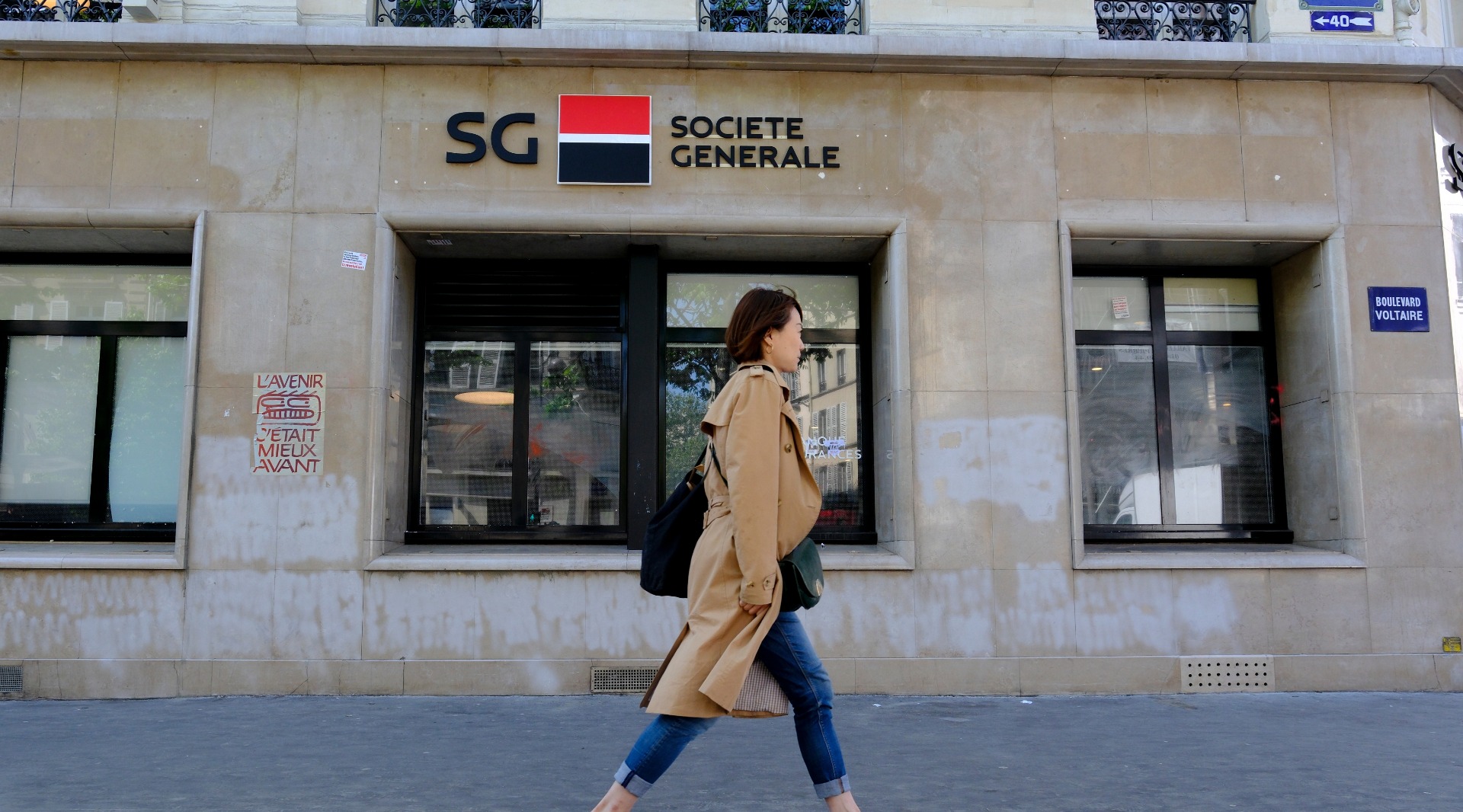
A woman walking in front of a Societe Generale branch
Australia's
securities regulator slapped Societe Generale Securities Australia
with a $3.88 million penalty for allowing clients to place
suspicious orders that may have manipulated electricity and
wheat futures prices.
The Markets
Disciplinary Panel found the French bank's local unit failed to
prevent two clients from submitting 33 questionable trades between May
2023 and February 2024. The orders were designed to influence
daily settlement prices just before market close, a practice
known as “marking the close.”
Societe
Generale's Australian Unit Hit with $3.9M Fine for Market
Surveillance Failures
Societe
Generale Securities was the second-largest participant in Australia's ASX
24 futures market as of June 2023, handling nearly 12% of total trading volume.
The company is owned by Societe Generale SA, which ranks as the
world's 19th largest bank by assets.
The penalty
comes during heightened scrutiny of Australia's commodities
markets. Global supply disruptions from the Russia-Ukraine
conflict created volatile conditions that some traders apparently
tried to exploit for profit.
Joe Longo, the Chairman of ASIC
“This
is about integrity and confidence in our markets that can have
real world impacts on electricity and wheat prices,” said Joe
Longo, the Chairman of the Australian Securities and Investments
Commission (ASIC).
This isn't
Societe Generale's first run-in with Australian regulators. In
2020, the bank's local division was also fined for client money violations
after improperly handling client funds between 2014 and 2017. The
earlier case involved withdrawing client money from segregated accounts
and depositing it with the bank's Hong Kong branch, which wasn't
an approved institution under Australian law.
ASIC
contacted Societe Generale five separate times in 2023 with notices,
questions and warnings about suspicious client activity.
Despite these alerts, the bank allowed additional questionable orders to
reach the market.
Pattern of Late-Session
Trading Raises Red Flags
The
problematic trades shared several characteristics that should have
triggered internal alarms, regulators said. All 33 orders were placed
within the final minute before market close, with some submitted
just seconds before trading ended.
Many of the
orders matched against existing bids that had been sitting in the
market for extended periods, suggesting they were placed to move prices
rather than execute genuine trades. The timing
consistently benefited the clients' existing positions, creating
mark-to-market gains ranging from about $37,000 to $745,000 per order.
One client
placed 16 electricity futures orders over two months, while another
submitted 17 wheat futures orders across two separate periods.
The price impacts ranged from 0.19% to 3.23% for electricity
contracts and 0.37% to 2.23% for wheat futures.
The
disciplinary panel found Societe Generale's conduct
became increasingly problematic over three
distinct periods. What started as “careless”
behavior in the first phase escalated to “reckless” conduct by
the final period, when the bank continued allowing suspicious
trades despite repeated regulatory warnings.
“Market
gatekeepers have a duty to keep our markets safe,” Longo
said. “Missing suspicious orders puts the entire
system at risk.”
Surveillance Systems
Failed to Catch Misconduct
The case
highlights weaknesses in Societe Generale's monitoring systems. The bank
uses NASDAQ's SMARTS platform to flag potential misconduct, but
staff reviewing the alerts lacked
sufficient understanding of electricity and wheat futures
markets to identify the suspicious patterns.
Five alerts
were triggered for the electricity futures orders, but all were closed
after initial review without escalation. Similarly, seven alerts related
to wheat futures orders were analyzed and dismissed without further
investigation.
The
disciplinary panel criticized the bank for not activating a specific
alert designed to catch closing-minute trades that could influence
settlement prices. When regulators raised concerns, Societe
Generale eventually turned on this “Entry of High
Closing Bid or Low Closing Ask” alert, but it proved ineffective
because staff reviewing the flags still lacked
proper expertise.
“SMARTS
is a tool that is only as good as its users' skills and
knowledge,” the panel noted in its decision.
The bank
eventually banned one client from trading in the final two minutes
before market close, but only after ASIC's investigation was
well underway. No similar restrictions were initially placed on
the second client.
Fifth Enforcement Action
in Energy Markets Crackdown
The Societe
Generale penalty represents ASIC's fifth major enforcement action
targeting alleged manipulation in electricity and wheat futures
over the past 15 months.
The
regulator's aggressive stance on commodities market manipulation has
intensified since making it an enforcement priority in 2022.
Recent cases highlight systemic issues with
market surveillance across major financial
institutions operating in Australia's futures markets.
Last
September, regulators
fined Macquarie Bank a record $4.995 million for similar gatekeeper
failures. The case involved three clients placing suspicious orders
in electricity futures markets. Notably, ASIC has since imposed
additional license conditions on Macquarie after discovering further
compliance failures, including 11 more instances of suspicious
electricity futures orders that occurred shortly after the
initial fine.
J.P. Morgan
Securities Australia paid
$775,000 in May 2024 for allowing suspicious wheat futures orders. That
case involved COFCO International Australia using J.P. Morgan's platform
to execute allegedly manipulative trades, which became the
subject of separate civil proceedings launched by ASIC against COFCO
in July 2024.
ASIC also
launched civil penalty proceedings against Delta Power & Energy
in June 2025 for allegedly manipulating electricity futures on 30
occasions in late 2022. The regulator claims Delta placed orders just before
market close to improperly influence daily settlement
prices, with internal documents showing board-level awareness of the
strategy.
The
regulator has made commodities market misconduct a priority as volatile
global conditions create opportunities for abuse. Settlement prices
for electricity and wheat futures can influence supplier funding
costs and ultimately affect consumer prices.
Societe
Generale did not contest the alleged rule violations and has paid the
penalty. Under Australia's infringement notice system, payment
does not constitute an admission of guilt, and the company is not
considered to have violated the law.
Australia's
securities regulator slapped Societe Generale Securities Australia
with a $3.88 million penalty for allowing clients to place
suspicious orders that may have manipulated electricity and
wheat futures prices.
The Markets
Disciplinary Panel found the French bank's local unit failed to
prevent two clients from submitting 33 questionable trades between May
2023 and February 2024. The orders were designed to influence
daily settlement prices just before market close, a practice
known as “marking the close.”
Societe
Generale's Australian Unit Hit with $3.9M Fine for Market
Surveillance Failures
Societe
Generale Securities was the second-largest participant in Australia's ASX
24 futures market as of June 2023, handling nearly 12% of total trading volume.
The company is owned by Societe Generale SA, which ranks as the
world's 19th largest bank by assets.
The penalty
comes during heightened scrutiny of Australia's commodities
markets. Global supply disruptions from the Russia-Ukraine
conflict created volatile conditions that some traders apparently
tried to exploit for profit.
Joe Longo, the Chairman of ASIC
“This
is about integrity and confidence in our markets that can have
real world impacts on electricity and wheat prices,” said Joe
Longo, the Chairman of the Australian Securities and Investments
Commission (ASIC).
This isn't
Societe Generale's first run-in with Australian regulators. In
2020, the bank's local division was also fined for client money violations
after improperly handling client funds between 2014 and 2017. The
earlier case involved withdrawing client money from segregated accounts
and depositing it with the bank's Hong Kong branch, which wasn't
an approved institution under Australian law.
ASIC
contacted Societe Generale five separate times in 2023 with notices,
questions and warnings about suspicious client activity.
Despite these alerts, the bank allowed additional questionable orders to
reach the market.
Pattern of Late-Session
Trading Raises Red Flags
The
problematic trades shared several characteristics that should have
triggered internal alarms, regulators said. All 33 orders were placed
within the final minute before market close, with some submitted
just seconds before trading ended.
Many of the
orders matched against existing bids that had been sitting in the
market for extended periods, suggesting they were placed to move prices
rather than execute genuine trades. The timing
consistently benefited the clients' existing positions, creating
mark-to-market gains ranging from about $37,000 to $745,000 per order.
One client
placed 16 electricity futures orders over two months, while another
submitted 17 wheat futures orders across two separate periods.
The price impacts ranged from 0.19% to 3.23% for electricity
contracts and 0.37% to 2.23% for wheat futures.
The
disciplinary panel found Societe Generale's conduct
became increasingly problematic over three
distinct periods. What started as “careless”
behavior in the first phase escalated to “reckless” conduct by
the final period, when the bank continued allowing suspicious
trades despite repeated regulatory warnings.
“Market
gatekeepers have a duty to keep our markets safe,” Longo
said. “Missing suspicious orders puts the entire
system at risk.”
Surveillance Systems
Failed to Catch Misconduct
The case
highlights weaknesses in Societe Generale's monitoring systems. The bank
uses NASDAQ's SMARTS platform to flag potential misconduct, but
staff reviewing the alerts lacked
sufficient understanding of electricity and wheat futures
markets to identify the suspicious patterns.
Five alerts
were triggered for the electricity futures orders, but all were closed
after initial review without escalation. Similarly, seven alerts related
to wheat futures orders were analyzed and dismissed without further
investigation.
The
disciplinary panel criticized the bank for not activating a specific
alert designed to catch closing-minute trades that could influence
settlement prices. When regulators raised concerns, Societe
Generale eventually turned on this “Entry of High
Closing Bid or Low Closing Ask” alert, but it proved ineffective
because staff reviewing the flags still lacked
proper expertise.
“SMARTS
is a tool that is only as good as its users' skills and
knowledge,” the panel noted in its decision.
The bank
eventually banned one client from trading in the final two minutes
before market close, but only after ASIC's investigation was
well underway. No similar restrictions were initially placed on
the second client.
Fifth Enforcement Action
in Energy Markets Crackdown
The Societe
Generale penalty represents ASIC's fifth major enforcement action
targeting alleged manipulation in electricity and wheat futures
over the past 15 months.
The
regulator's aggressive stance on commodities market manipulation has
intensified since making it an enforcement priority in 2022.
Recent cases highlight systemic issues with
market surveillance across major financial
institutions operating in Australia's futures markets.
Last
September, regulators
fined Macquarie Bank a record $4.995 million for similar gatekeeper
failures. The case involved three clients placing suspicious orders
in electricity futures markets. Notably, ASIC has since imposed
additional license conditions on Macquarie after discovering further
compliance failures, including 11 more instances of suspicious
electricity futures orders that occurred shortly after the
initial fine.
J.P. Morgan
Securities Australia paid
$775,000 in May 2024 for allowing suspicious wheat futures orders. That
case involved COFCO International Australia using J.P. Morgan's platform
to execute allegedly manipulative trades, which became the
subject of separate civil proceedings launched by ASIC against COFCO
in July 2024.
ASIC also
launched civil penalty proceedings against Delta Power & Energy
in June 2025 for allegedly manipulating electricity futures on 30
occasions in late 2022. The regulator claims Delta placed orders just before
market close to improperly influence daily settlement
prices, with internal documents showing board-level awareness of the
strategy.
The
regulator has made commodities market misconduct a priority as volatile
global conditions create opportunities for abuse. Settlement prices
for electricity and wheat futures can influence supplier funding
costs and ultimately affect consumer prices.
Societe
Generale did not contest the alleged rule violations and has paid the
penalty. Under Australia's infringement notice system, payment
does not constitute an admission of guilt, and the company is not
considered to have violated the law.
Damian Chmiel is a Senior Analyst & Editor at Finance Magnates with more than 15 years of experience in the CFD and online trading industry. Active as both a trader and journalist since 2010, he focuses on broker coverage, fintech innovation, and regulatory developments across Europe, the Middle East, and Asia.
His work includes interviews with C-level leaders at major brokerages and fintech platforms, as well as co-authoring Finance Magnates’ quarterly industry benchmarking reports. Damian’s reporting is data-driven, market-aware, and grounded in direct industry engagement. His analysis and commentary have also been cited by external media outlets, including Investing.com, Binance, The Asset, Stockhead, and Dispatch.
Education:
MA in Finance and Accounting, Cracow University of Economics
Singapore Independent Wealth Sector Has Less Than 10% Market Share, but Vast Room for Growth
FP Markets Winner Spotlight 🏆 | Global Broker of the Year 2025 #Trading #Broker #Innovation #Shorts
FP Markets Winner Spotlight 🏆 | Global Broker of the Year 2025 #Trading #Broker #Innovation #Shorts
FP Markets takes the spotlight as Global Broker of the Year 2025 at the Finance Magnates Awards.
Martin Stoilov, Head of Client Experience, shares that trust, innovation, and people played a key role in the company’s success, supported by a strong foundation of integrity and client-centricity.
Following this milestone, FP Markets continues to focus on growth, technology investment, and its core values of transparency and excellence.
👉 Be part of FM Awards 2026: https://awards.financemagnates.com/#nominate
FP Markets takes the spotlight as Global Broker of the Year 2025 at the Finance Magnates Awards.
Martin Stoilov, Head of Client Experience, shares that trust, innovation, and people played a key role in the company’s success, supported by a strong foundation of integrity and client-centricity.
Following this milestone, FP Markets continues to focus on growth, technology investment, and its core values of transparency and excellence.
👉 Be part of FM Awards 2026: https://awards.financemagnates.com/#nominate
In this video, we review @HolaPrimeMarketsOfficial, a multi-asset forex and CFDs broker offering different account types, trading platforms, and flexible trading conditions.
We cover the broker’s overall offering, including account options, trading environment, platforms like MT4 and MT5, and additional services such as managed accounts and fast withdrawals.
Watch the full video to see if Hola Prime Markets fits your trading needs.
📣 Stay up to date with the latest in finance and trading. Follow Finance Magnates for industry news, insights, and global event coverage.
Connect with us:
🔗 LinkedIn: /financemagnates
👍 Facebook: /financemagnates
📸 Instagram: https://www.instagram.com/financemagnates
🐦 X: https://x.com/financemagnates
🎥 TikTok: https://www.tiktok.com/tag/financemagnates
▶️ YouTube: /@financemagnates_official
#HolaPrime #ForexBroker #CFDTrading #FinanceMagnates #Trading #Forex #BrokerReview
In this video, we review @HolaPrimeMarketsOfficial, a multi-asset forex and CFDs broker offering different account types, trading platforms, and flexible trading conditions.
We cover the broker’s overall offering, including account options, trading environment, platforms like MT4 and MT5, and additional services such as managed accounts and fast withdrawals.
Watch the full video to see if Hola Prime Markets fits your trading needs.
📣 Stay up to date with the latest in finance and trading. Follow Finance Magnates for industry news, insights, and global event coverage.
Connect with us:
🔗 LinkedIn: /financemagnates
👍 Facebook: /financemagnates
📸 Instagram: https://www.instagram.com/financemagnates
🐦 X: https://x.com/financemagnates
🎥 TikTok: https://www.tiktok.com/tag/financemagnates
▶️ YouTube: /@financemagnates_official
#HolaPrime #ForexBroker #CFDTrading #FinanceMagnates #Trading #Forex #BrokerReview
Hola Prime Review: What You Need to Know | Full Breakdown by Finance Magnates
Hola Prime Review: What You Need to Know | Full Breakdown by Finance Magnates
In this video, we review @HolaPrime_Global, a proprietary trading firm offering evaluation programs and performance-based payouts in simulated market environments.
We cover how the challenge model works, including account types, profit splits (up to 95%), trading rules, and what it takes to reach a funded account. You’ll also learn about available platforms like MT4, MT5, cTrader, and more, along with insights into payouts, support, and trading conditions.
Watch the full video to see if Hola Prime fits your trading style.
📣 Stay up to date with the latest in finance and trading. Follow Finance Magnates for industry news, insights, and global event coverage.
Connect with us:
🔗 LinkedIn: /financemagnates
👍 Facebook: /financemagnates
📸 Instagram: https://www.instagram.com/financemagnates
🐦 X: https://x.com/financemagnates
🎥 TikTok: https://www.tiktok.com/tag/financemagnates
▶️ YouTube: /@financemagnates_official
#HolaPrime #PropFirm #Trading #FinanceMagnates #Forex #FuturesTrading #TradingReview #PropFirmReview
In this video, we review @HolaPrime_Global, a proprietary trading firm offering evaluation programs and performance-based payouts in simulated market environments.
We cover how the challenge model works, including account types, profit splits (up to 95%), trading rules, and what it takes to reach a funded account. You’ll also learn about available platforms like MT4, MT5, cTrader, and more, along with insights into payouts, support, and trading conditions.
Watch the full video to see if Hola Prime fits your trading style.
📣 Stay up to date with the latest in finance and trading. Follow Finance Magnates for industry news, insights, and global event coverage.
Connect with us:
🔗 LinkedIn: /financemagnates
👍 Facebook: /financemagnates
📸 Instagram: https://www.instagram.com/financemagnates
🐦 X: https://x.com/financemagnates
🎥 TikTok: https://www.tiktok.com/tag/financemagnates
▶️ YouTube: /@financemagnates_official
#HolaPrime #PropFirm #Trading #FinanceMagnates #Forex #FuturesTrading #TradingReview #PropFirmReview
Axi Winner Spotlight 🏆 | Global Most Innovative Broker 2025 #Innovation #Trading #Fintech #Broker
Axi Winner Spotlight 🏆 | Global Most Innovative Broker 2025 #Innovation #Trading #Fintech #Broker
Axi takes the spotlight at the Finance Magnates Awards, winning Global Most Innovative Broker 2025.
Olivia Xenofontos and Ivanna Openko share how the team will feel: proud, motivated, and ready to keep delivering.
They also describe the night as well-organized, focused, and enjoyable for all.
👉 Be part of FM Awards 2026.
Axi takes the spotlight at the Finance Magnates Awards, winning Global Most Innovative Broker 2025.
Olivia Xenofontos and Ivanna Openko share how the team will feel: proud, motivated, and ready to keep delivering.
They also describe the night as well-organized, focused, and enjoyable for all.
👉 Be part of FM Awards 2026.
Recognition that matters.
Built on transparency.
Driven by the industry.
The Finance Magnates Awards 2026.
Nominations are now open.
🔗 https://awards.financemagnates.com/?utm_source=SM&utm_medium=social&utm_campaign=recognition-matters
Recognition that matters.
Built on transparency.
Driven by the industry.
The Finance Magnates Awards 2026.
Nominations are now open.
🔗 https://awards.financemagnates.com/?utm_source=SM&utm_medium=social&utm_campaign=recognition-matters