HSBC disclosed that Swiss and French authorities are investigating its private bank over alleged misconduct involving historical banking relationships.
The bank also reported disappointing Q2 results with profit before tax falling 29% to $6.3 billion, and it announced a $3 billion share buyback.
HSBC's
Swiss private banking division is under investigation by law enforcement in
Switzerland and France over suspected money laundering activities, the British
banking giant disclosed Wednesday alongside its quarterly earnings that fell
short of analyst expectations.
HSBC Swiss Unit Faces
Money Laundering Probe by Two Countries
The probe
centers on what HSBC describes as “two historical banking
relationships” that caught the attention of authorities. While the bank
said the investigations remain in early stages, it cautioned that any eventual
penalties or sanctions could pack a serious financial punch.
HSBC didn't
sugarcoat the potential consequences. The bank told investors it's “not
practicable” to predict how this will play out, but warned the impact
“could be significant.” That kind of language typically signals
lawyers are preparing for substantial costs down the road.
Q2 Results Miss as Buyback
Softens Blow
The money
laundering disclosure came as HSBC delivered mixed second-quarter results that
fell short of analyst expectations. Europe's largest bank reported profit
before tax of $6.3 billion for the three months ending June, down 29% from the
same period last year and missing the consensus estimate of $6.99 billion.
Revenue
also disappointed, coming in at $16.5 billion against expectations of $16.67
billion. The shortfall stemmed partly from impairment charges related to a
Chinese bank and lost income from businesses the lender sold off in the first
half of 2024.
Source: HSBC
To cushion
the disappointment, HSBC announced a $3 billion share buyback program, though
it wasn't enough to prevent Hong Kong-listed shares from sliding 3.82% at the
close. Operating expenses jumped 10% year-over-year, driven by restructuring
costs and increased technology investments.
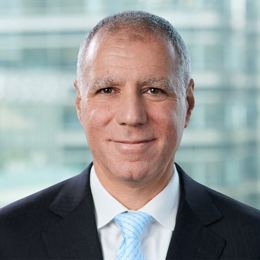
CEO Georges
Elhedery acknowledged the challenging environment, pointing to “structural
challenges” facing the global economy. He specifically called out
broad-based tariffs and fiscal vulnerabilities as sources of uncertainty that
are complicating inflation and interest rate outlooks.
HSBC CEO Georges Elhedery
“Even
before tariffs take effect, trade disruptions are reshaping the economic
landscape,” Elhedery said. The bank warned that while direct tariff
impacts on revenue should be modest, broader macroeconomic deterioration could
push its return on tangible equity below its mid-teens target range.
The
regulator found HSBC's private bank had botched basic due diligence on
high-risk accounts belonging to politically exposed persons—essentially
politicians, government officials, and their associates who pose higher
corruption risks. The violations involved more than $300 million in
transactions spanning 2002 to 2015.
FINMA
didn't pull punches in its assessment. The regulator said HSBC “failed to
carry out an adequate check of either the origins, purpose or background of the
assets involved” and couldn't properly document transactions to prove they
were legitimate.
The Swiss
penalty came with strings attached. HSBC had to conduct a comprehensive review
of its anti-money laundering systems and freeze new business with politically
exposed clients until the cleanup was complete.
HSBC's
troubles reflect a wider crackdown on financial crime compliance across the
banking sector. UK regulators alone have imposed over £250 million in
anti-money laundering fines since early 2024, with compliance experts expecting
the penalty parade to continue.
Recent
research suggests the problems run deep. A survey of UK bank compliance
officers found that 82% admit they don't always properly verify new individual
customers, while only 6% run daily checks on existing clients.
The
investigation puts fresh pressure on HSBC as it tries to rebuild its reputation
following years of regulatory troubles. The bank has faced repeated sanctions
and fines across multiple jurisdictions for compliance failures, making this
latest probe particularly unwelcome news for management and shareholders.
HSBC's
Swiss private banking division is under investigation by law enforcement in
Switzerland and France over suspected money laundering activities, the British
banking giant disclosed Wednesday alongside its quarterly earnings that fell
short of analyst expectations.
HSBC Swiss Unit Faces
Money Laundering Probe by Two Countries
The probe
centers on what HSBC describes as “two historical banking
relationships” that caught the attention of authorities. While the bank
said the investigations remain in early stages, it cautioned that any eventual
penalties or sanctions could pack a serious financial punch.
HSBC didn't
sugarcoat the potential consequences. The bank told investors it's “not
practicable” to predict how this will play out, but warned the impact
“could be significant.” That kind of language typically signals
lawyers are preparing for substantial costs down the road.
Q2 Results Miss as Buyback
Softens Blow
The money
laundering disclosure came as HSBC delivered mixed second-quarter results that
fell short of analyst expectations. Europe's largest bank reported profit
before tax of $6.3 billion for the three months ending June, down 29% from the
same period last year and missing the consensus estimate of $6.99 billion.
Revenue
also disappointed, coming in at $16.5 billion against expectations of $16.67
billion. The shortfall stemmed partly from impairment charges related to a
Chinese bank and lost income from businesses the lender sold off in the first
half of 2024.
Source: HSBC
To cushion
the disappointment, HSBC announced a $3 billion share buyback program, though
it wasn't enough to prevent Hong Kong-listed shares from sliding 3.82% at the
close. Operating expenses jumped 10% year-over-year, driven by restructuring
costs and increased technology investments.
CEO Georges
Elhedery acknowledged the challenging environment, pointing to “structural
challenges” facing the global economy. He specifically called out
broad-based tariffs and fiscal vulnerabilities as sources of uncertainty that
are complicating inflation and interest rate outlooks.
HSBC CEO Georges Elhedery
“Even
before tariffs take effect, trade disruptions are reshaping the economic
landscape,” Elhedery said. The bank warned that while direct tariff
impacts on revenue should be modest, broader macroeconomic deterioration could
push its return on tangible equity below its mid-teens target range.
The
regulator found HSBC's private bank had botched basic due diligence on
high-risk accounts belonging to politically exposed persons—essentially
politicians, government officials, and their associates who pose higher
corruption risks. The violations involved more than $300 million in
transactions spanning 2002 to 2015.
FINMA
didn't pull punches in its assessment. The regulator said HSBC “failed to
carry out an adequate check of either the origins, purpose or background of the
assets involved” and couldn't properly document transactions to prove they
were legitimate.
The Swiss
penalty came with strings attached. HSBC had to conduct a comprehensive review
of its anti-money laundering systems and freeze new business with politically
exposed clients until the cleanup was complete.
HSBC's
troubles reflect a wider crackdown on financial crime compliance across the
banking sector. UK regulators alone have imposed over £250 million in
anti-money laundering fines since early 2024, with compliance experts expecting
the penalty parade to continue.
Recent
research suggests the problems run deep. A survey of UK bank compliance
officers found that 82% admit they don't always properly verify new individual
customers, while only 6% run daily checks on existing clients.
The
investigation puts fresh pressure on HSBC as it tries to rebuild its reputation
following years of regulatory troubles. The bank has faced repeated sanctions
and fines across multiple jurisdictions for compliance failures, making this
latest probe particularly unwelcome news for management and shareholders.
Damian Chmiel is a Senior Analyst & Editor at Finance Magnates with more than 15 years of experience in the CFD and online trading industry. Active as both a trader and journalist since 2010, he focuses on broker coverage, fintech innovation, and regulatory developments across Europe, the Middle East, and Asia.
His work includes interviews with C-level leaders at major brokerages and fintech platforms, as well as co-authoring Finance Magnates’ quarterly industry benchmarking reports. Damian’s reporting is data-driven, market-aware, and grounded in direct industry engagement. His analysis and commentary have also been cited by external media outlets, including Investing.com, Binance, The Asset, Stockhead, and Dispatch.
Education:
MA in Finance and Accounting, Cracow University of Economics
Singapore Independent Wealth Sector Has Less Than 10% Market Share, but Vast Room for Growth
FP Markets Winner Spotlight 🏆 | Global Broker of the Year 2025 #Trading #Broker #Innovation #Shorts
FP Markets Winner Spotlight 🏆 | Global Broker of the Year 2025 #Trading #Broker #Innovation #Shorts
FP Markets takes the spotlight as Global Broker of the Year 2025 at the Finance Magnates Awards.
Martin Stoilov, Head of Client Experience, shares that trust, innovation, and people played a key role in the company’s success, supported by a strong foundation of integrity and client-centricity.
Following this milestone, FP Markets continues to focus on growth, technology investment, and its core values of transparency and excellence.
👉 Be part of FM Awards 2026: https://awards.financemagnates.com/#nominate
FP Markets takes the spotlight as Global Broker of the Year 2025 at the Finance Magnates Awards.
Martin Stoilov, Head of Client Experience, shares that trust, innovation, and people played a key role in the company’s success, supported by a strong foundation of integrity and client-centricity.
Following this milestone, FP Markets continues to focus on growth, technology investment, and its core values of transparency and excellence.
👉 Be part of FM Awards 2026: https://awards.financemagnates.com/#nominate
In this video, we review @HolaPrimeMarketsOfficial, a multi-asset forex and CFDs broker offering different account types, trading platforms, and flexible trading conditions.
We cover the broker’s overall offering, including account options, trading environment, platforms like MT4 and MT5, and additional services such as managed accounts and fast withdrawals.
Watch the full video to see if Hola Prime Markets fits your trading needs.
📣 Stay up to date with the latest in finance and trading. Follow Finance Magnates for industry news, insights, and global event coverage.
Connect with us:
🔗 LinkedIn: /financemagnates
👍 Facebook: /financemagnates
📸 Instagram: https://www.instagram.com/financemagnates
🐦 X: https://x.com/financemagnates
🎥 TikTok: https://www.tiktok.com/tag/financemagnates
▶️ YouTube: /@financemagnates_official
#HolaPrime #ForexBroker #CFDTrading #FinanceMagnates #Trading #Forex #BrokerReview
In this video, we review @HolaPrimeMarketsOfficial, a multi-asset forex and CFDs broker offering different account types, trading platforms, and flexible trading conditions.
We cover the broker’s overall offering, including account options, trading environment, platforms like MT4 and MT5, and additional services such as managed accounts and fast withdrawals.
Watch the full video to see if Hola Prime Markets fits your trading needs.
📣 Stay up to date with the latest in finance and trading. Follow Finance Magnates for industry news, insights, and global event coverage.
Connect with us:
🔗 LinkedIn: /financemagnates
👍 Facebook: /financemagnates
📸 Instagram: https://www.instagram.com/financemagnates
🐦 X: https://x.com/financemagnates
🎥 TikTok: https://www.tiktok.com/tag/financemagnates
▶️ YouTube: /@financemagnates_official
#HolaPrime #ForexBroker #CFDTrading #FinanceMagnates #Trading #Forex #BrokerReview
Hola Prime Review: What You Need to Know | Full Breakdown by Finance Magnates
Hola Prime Review: What You Need to Know | Full Breakdown by Finance Magnates
In this video, we review @HolaPrime_Global, a proprietary trading firm offering evaluation programs and performance-based payouts in simulated market environments.
We cover how the challenge model works, including account types, profit splits (up to 95%), trading rules, and what it takes to reach a funded account. You’ll also learn about available platforms like MT4, MT5, cTrader, and more, along with insights into payouts, support, and trading conditions.
Watch the full video to see if Hola Prime fits your trading style.
📣 Stay up to date with the latest in finance and trading. Follow Finance Magnates for industry news, insights, and global event coverage.
Connect with us:
🔗 LinkedIn: /financemagnates
👍 Facebook: /financemagnates
📸 Instagram: https://www.instagram.com/financemagnates
🐦 X: https://x.com/financemagnates
🎥 TikTok: https://www.tiktok.com/tag/financemagnates
▶️ YouTube: /@financemagnates_official
#HolaPrime #PropFirm #Trading #FinanceMagnates #Forex #FuturesTrading #TradingReview #PropFirmReview
In this video, we review @HolaPrime_Global, a proprietary trading firm offering evaluation programs and performance-based payouts in simulated market environments.
We cover how the challenge model works, including account types, profit splits (up to 95%), trading rules, and what it takes to reach a funded account. You’ll also learn about available platforms like MT4, MT5, cTrader, and more, along with insights into payouts, support, and trading conditions.
Watch the full video to see if Hola Prime fits your trading style.
📣 Stay up to date with the latest in finance and trading. Follow Finance Magnates for industry news, insights, and global event coverage.
Connect with us:
🔗 LinkedIn: /financemagnates
👍 Facebook: /financemagnates
📸 Instagram: https://www.instagram.com/financemagnates
🐦 X: https://x.com/financemagnates
🎥 TikTok: https://www.tiktok.com/tag/financemagnates
▶️ YouTube: /@financemagnates_official
#HolaPrime #PropFirm #Trading #FinanceMagnates #Forex #FuturesTrading #TradingReview #PropFirmReview
Axi Winner Spotlight 🏆 | Global Most Innovative Broker 2025 #Innovation #Trading #Fintech #Broker
Axi Winner Spotlight 🏆 | Global Most Innovative Broker 2025 #Innovation #Trading #Fintech #Broker
Axi takes the spotlight at the Finance Magnates Awards, winning Global Most Innovative Broker 2025.
Olivia Xenofontos and Ivanna Openko share how the team will feel: proud, motivated, and ready to keep delivering.
They also describe the night as well-organized, focused, and enjoyable for all.
👉 Be part of FM Awards 2026.
Axi takes the spotlight at the Finance Magnates Awards, winning Global Most Innovative Broker 2025.
Olivia Xenofontos and Ivanna Openko share how the team will feel: proud, motivated, and ready to keep delivering.
They also describe the night as well-organized, focused, and enjoyable for all.
👉 Be part of FM Awards 2026.
Recognition that matters.
Built on transparency.
Driven by the industry.
The Finance Magnates Awards 2026.
Nominations are now open.
🔗 https://awards.financemagnates.com/?utm_source=SM&utm_medium=social&utm_campaign=recognition-matters
Recognition that matters.
Built on transparency.
Driven by the industry.
The Finance Magnates Awards 2026.
Nominations are now open.
🔗 https://awards.financemagnates.com/?utm_source=SM&utm_medium=social&utm_campaign=recognition-matters