The collapse of SVB only makes the troubled bank's situation worse.
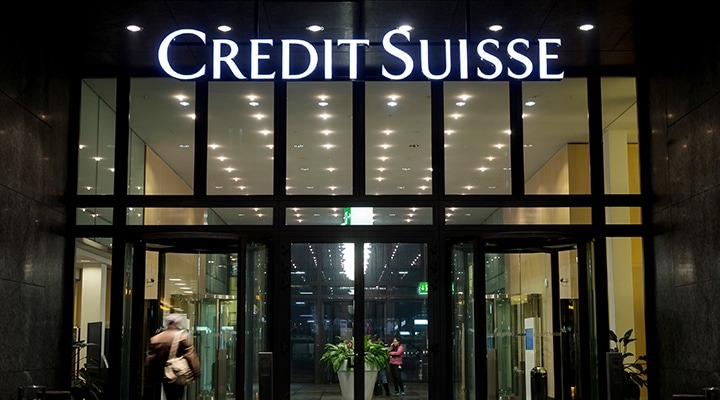
Credit Suisse
The Swiss
banking giant, Credit Suisse, has confirmed a yearly loss of CHF 7.3 billion in
a delayed report lodged in the United States. The filing was initially due to
appear last week, but its publication was postponed following the US Securities
and Exchange Commission (SEC) call regarding cash flow statements dating back
three years.
Credit Suisse Publishes
Delayed Financial Report
In its
latest regulatory filing, the Swiss lender highlights the "material weaknesses"
it has identified in its control and reporting processes over the past two
years, responding to questions from the US regulator from last week that led to
the delay in publication.
The
Zurich-based bank said on Tuesday that it intends to take steps to improve the
ineffective controls it currently has in place. However, the lender
acknowledged that the 2021 and 2022 statements fairly reflected information
about its financial health.
In addition, Credit
Suisse referred to the dynamic capital outflows seen in 2022, when assets
under management shrank by 20%. According to the institution, the dynamics of
the negative flows have been mitigated but "not yet reversed."
FINMA Monitors Credit
Suisse after SVB Collapse
The timing
of the US-based Silicon Valley Bank (SVB) collapse is arguably one of the worse
for Swiss Credit Suisse. The institution is struggling with its own problems,
and the panic caused by the bankruptcy of SVB has caused the Swiss bank's shares
to slide to new historic lows. To make matters worse, the cost of insuring the
giant's debt reached historic highs.
Credit Suisse Shares Test New All-Time Low. Source: Tradingview.com
FINMA, the
local financial markets regulator, is keeping a close eye on the fortunes of
Credit Suisse as it is concerned about the potential risk of contagion to domestic
banks and insurers after the collapse of SVB as well as Signature Bank in recent
days.
In early
February, Credit Suisse reported a net loss of CHF 7.3 billion in 2022,
compared to analysts' CHF 6.53 billion forecasts. The results were confirmed in
a delayed report filed with the SEC on Tuesday.
The fourth
quarter results fell short of projections and were a nail in the lender's
coffin. The net loss amounted to CHF 1.4 billion, CHF 800 million higher than
was forecasted. The problems faced by the lender resulted in a total of CHF
110.5 billion of capital outflow in 2022. Total assets under management
amounted to CHF 1.3 trillion at the end of the year, falling 20% from a year
earlier.
Credit Suisse Under
Restructuration
Credit Suisse's
problems began to make headlines back in 2022 when its results for the third quarter
showed a net loss of CHF 3.8 billion. At the time, the bank cited the need for
a "radical restructuring" in which it planned to lay off up to 9,000
employees, raise $4 billion in fresh capital and establish CS First Boston as an
independent investment entity in the US.
The first job cuts started in January and affected positions in European investment banking.
Further reductions in this sector, but in the Japanese market, were reported last week.
"From
today, we are taking a series of decisive actions to re-focus Credit Suisse
around the needs of our clients and stakeholders," Körner promised in
October.
While
Credit Suisse's plans are ambitious, the market conditions are becoming less
favorable each week. As the banking giant tries to steer clear of regulatory
controversy, FINMA is wrapping up an investigation in the $10 billion 'Greensill' case. The latest banking sector problems triggered by
SVB's collapse certainly make additional restructuring difficult, and some experts
wonder whether the Swiss bank will find itself on the brink of insolvency soon.
The Swiss
banking giant, Credit Suisse, has confirmed a yearly loss of CHF 7.3 billion in
a delayed report lodged in the United States. The filing was initially due to
appear last week, but its publication was postponed following the US Securities
and Exchange Commission (SEC) call regarding cash flow statements dating back
three years.
Credit Suisse Publishes
Delayed Financial Report
In its
latest regulatory filing, the Swiss lender highlights the "material weaknesses"
it has identified in its control and reporting processes over the past two
years, responding to questions from the US regulator from last week that led to
the delay in publication.
The
Zurich-based bank said on Tuesday that it intends to take steps to improve the
ineffective controls it currently has in place. However, the lender
acknowledged that the 2021 and 2022 statements fairly reflected information
about its financial health.
In addition, Credit
Suisse referred to the dynamic capital outflows seen in 2022, when assets
under management shrank by 20%. According to the institution, the dynamics of
the negative flows have been mitigated but "not yet reversed."
FINMA Monitors Credit
Suisse after SVB Collapse
The timing
of the US-based Silicon Valley Bank (SVB) collapse is arguably one of the worse
for Swiss Credit Suisse. The institution is struggling with its own problems,
and the panic caused by the bankruptcy of SVB has caused the Swiss bank's shares
to slide to new historic lows. To make matters worse, the cost of insuring the
giant's debt reached historic highs.
Credit Suisse Shares Test New All-Time Low. Source: Tradingview.com
FINMA, the
local financial markets regulator, is keeping a close eye on the fortunes of
Credit Suisse as it is concerned about the potential risk of contagion to domestic
banks and insurers after the collapse of SVB as well as Signature Bank in recent
days.
In early
February, Credit Suisse reported a net loss of CHF 7.3 billion in 2022,
compared to analysts' CHF 6.53 billion forecasts. The results were confirmed in
a delayed report filed with the SEC on Tuesday.
The fourth
quarter results fell short of projections and were a nail in the lender's
coffin. The net loss amounted to CHF 1.4 billion, CHF 800 million higher than
was forecasted. The problems faced by the lender resulted in a total of CHF
110.5 billion of capital outflow in 2022. Total assets under management
amounted to CHF 1.3 trillion at the end of the year, falling 20% from a year
earlier.
Credit Suisse Under
Restructuration
Credit Suisse's
problems began to make headlines back in 2022 when its results for the third quarter
showed a net loss of CHF 3.8 billion. At the time, the bank cited the need for
a "radical restructuring" in which it planned to lay off up to 9,000
employees, raise $4 billion in fresh capital and establish CS First Boston as an
independent investment entity in the US.
The first job cuts started in January and affected positions in European investment banking.
Further reductions in this sector, but in the Japanese market, were reported last week.
"From
today, we are taking a series of decisive actions to re-focus Credit Suisse
around the needs of our clients and stakeholders," Körner promised in
October.
While
Credit Suisse's plans are ambitious, the market conditions are becoming less
favorable each week. As the banking giant tries to steer clear of regulatory
controversy, FINMA is wrapping up an investigation in the $10 billion 'Greensill' case. The latest banking sector problems triggered by
SVB's collapse certainly make additional restructuring difficult, and some experts
wonder whether the Swiss bank will find itself on the brink of insolvency soon.
Damian Chmiel is a Senior Analyst & Editor at Finance Magnates with more than 15 years of experience in the CFD and online trading industry. Active as both a trader and journalist since 2010, he focuses on broker coverage, fintech innovation, and regulatory developments across Europe, the Middle East, and Asia.
His work includes interviews with C-level leaders at major brokerages and fintech platforms, as well as co-authoring Finance Magnates’ quarterly industry benchmarking reports. Damian’s reporting is data-driven, market-aware, and grounded in direct industry engagement. His analysis and commentary have also been cited by external media outlets, including Investing.com, Binance, The Asset, Stockhead, and Dispatch.
Education:
MA in Finance and Accounting, Cracow University of Economics
MetaTrader 5 Brokers Gain Direct Access to Vantage Liquidity via MetaQuotes’ Ultency
FP Markets Winner Spotlight 🏆 | Global Broker of the Year 2025 #Trading #Broker #Innovation #Shorts
FP Markets Winner Spotlight 🏆 | Global Broker of the Year 2025 #Trading #Broker #Innovation #Shorts
FP Markets takes the spotlight as Global Broker of the Year 2025 at the Finance Magnates Awards.
Martin Stoilov, Head of Client Experience, shares that trust, innovation, and people played a key role in the company’s success, supported by a strong foundation of integrity and client-centricity.
Following this milestone, FP Markets continues to focus on growth, technology investment, and its core values of transparency and excellence.
👉 Be part of FM Awards 2026: https://awards.financemagnates.com/#nominate
FP Markets takes the spotlight as Global Broker of the Year 2025 at the Finance Magnates Awards.
Martin Stoilov, Head of Client Experience, shares that trust, innovation, and people played a key role in the company’s success, supported by a strong foundation of integrity and client-centricity.
Following this milestone, FP Markets continues to focus on growth, technology investment, and its core values of transparency and excellence.
👉 Be part of FM Awards 2026: https://awards.financemagnates.com/#nominate
In this video, we review @HolaPrimeMarketsOfficial, a multi-asset forex and CFDs broker offering different account types, trading platforms, and flexible trading conditions.
We cover the broker’s overall offering, including account options, trading environment, platforms like MT4 and MT5, and additional services such as managed accounts and fast withdrawals.
Watch the full video to see if Hola Prime Markets fits your trading needs.
📣 Stay up to date with the latest in finance and trading. Follow Finance Magnates for industry news, insights, and global event coverage.
Connect with us:
🔗 LinkedIn: /financemagnates
👍 Facebook: /financemagnates
📸 Instagram: https://www.instagram.com/financemagnates
🐦 X: https://x.com/financemagnates
🎥 TikTok: https://www.tiktok.com/tag/financemagnates
▶️ YouTube: /@financemagnates_official
#HolaPrime #ForexBroker #CFDTrading #FinanceMagnates #Trading #Forex #BrokerReview
In this video, we review @HolaPrimeMarketsOfficial, a multi-asset forex and CFDs broker offering different account types, trading platforms, and flexible trading conditions.
We cover the broker’s overall offering, including account options, trading environment, platforms like MT4 and MT5, and additional services such as managed accounts and fast withdrawals.
Watch the full video to see if Hola Prime Markets fits your trading needs.
📣 Stay up to date with the latest in finance and trading. Follow Finance Magnates for industry news, insights, and global event coverage.
Connect with us:
🔗 LinkedIn: /financemagnates
👍 Facebook: /financemagnates
📸 Instagram: https://www.instagram.com/financemagnates
🐦 X: https://x.com/financemagnates
🎥 TikTok: https://www.tiktok.com/tag/financemagnates
▶️ YouTube: /@financemagnates_official
#HolaPrime #ForexBroker #CFDTrading #FinanceMagnates #Trading #Forex #BrokerReview
Hola Prime Review: What You Need to Know | Full Breakdown by Finance Magnates
Hola Prime Review: What You Need to Know | Full Breakdown by Finance Magnates
In this video, we review @HolaPrime_Global, a proprietary trading firm offering evaluation programs and performance-based payouts in simulated market environments.
We cover how the challenge model works, including account types, profit splits (up to 95%), trading rules, and what it takes to reach a funded account. You’ll also learn about available platforms like MT4, MT5, cTrader, and more, along with insights into payouts, support, and trading conditions.
Watch the full video to see if Hola Prime fits your trading style.
📣 Stay up to date with the latest in finance and trading. Follow Finance Magnates for industry news, insights, and global event coverage.
Connect with us:
🔗 LinkedIn: /financemagnates
👍 Facebook: /financemagnates
📸 Instagram: https://www.instagram.com/financemagnates
🐦 X: https://x.com/financemagnates
🎥 TikTok: https://www.tiktok.com/tag/financemagnates
▶️ YouTube: /@financemagnates_official
#HolaPrime #PropFirm #Trading #FinanceMagnates #Forex #FuturesTrading #TradingReview #PropFirmReview
In this video, we review @HolaPrime_Global, a proprietary trading firm offering evaluation programs and performance-based payouts in simulated market environments.
We cover how the challenge model works, including account types, profit splits (up to 95%), trading rules, and what it takes to reach a funded account. You’ll also learn about available platforms like MT4, MT5, cTrader, and more, along with insights into payouts, support, and trading conditions.
Watch the full video to see if Hola Prime fits your trading style.
📣 Stay up to date with the latest in finance and trading. Follow Finance Magnates for industry news, insights, and global event coverage.
Connect with us:
🔗 LinkedIn: /financemagnates
👍 Facebook: /financemagnates
📸 Instagram: https://www.instagram.com/financemagnates
🐦 X: https://x.com/financemagnates
🎥 TikTok: https://www.tiktok.com/tag/financemagnates
▶️ YouTube: /@financemagnates_official
#HolaPrime #PropFirm #Trading #FinanceMagnates #Forex #FuturesTrading #TradingReview #PropFirmReview
Axi Winner Spotlight 🏆 | Global Most Innovative Broker 2025 #Innovation #Trading #Fintech #Broker
Axi Winner Spotlight 🏆 | Global Most Innovative Broker 2025 #Innovation #Trading #Fintech #Broker
Axi takes the spotlight at the Finance Magnates Awards, winning Global Most Innovative Broker 2025.
Olivia Xenofontos and Ivanna Openko share how the team will feel: proud, motivated, and ready to keep delivering.
They also describe the night as well-organized, focused, and enjoyable for all.
👉 Be part of FM Awards 2026.
Axi takes the spotlight at the Finance Magnates Awards, winning Global Most Innovative Broker 2025.
Olivia Xenofontos and Ivanna Openko share how the team will feel: proud, motivated, and ready to keep delivering.
They also describe the night as well-organized, focused, and enjoyable for all.
👉 Be part of FM Awards 2026.
Recognition that matters.
Built on transparency.
Driven by the industry.
The Finance Magnates Awards 2026.
Nominations are now open.
🔗 https://awards.financemagnates.com/?utm_source=SM&utm_medium=social&utm_campaign=recognition-matters
Recognition that matters.
Built on transparency.
Driven by the industry.
The Finance Magnates Awards 2026.
Nominations are now open.
🔗 https://awards.financemagnates.com/?utm_source=SM&utm_medium=social&utm_campaign=recognition-matters