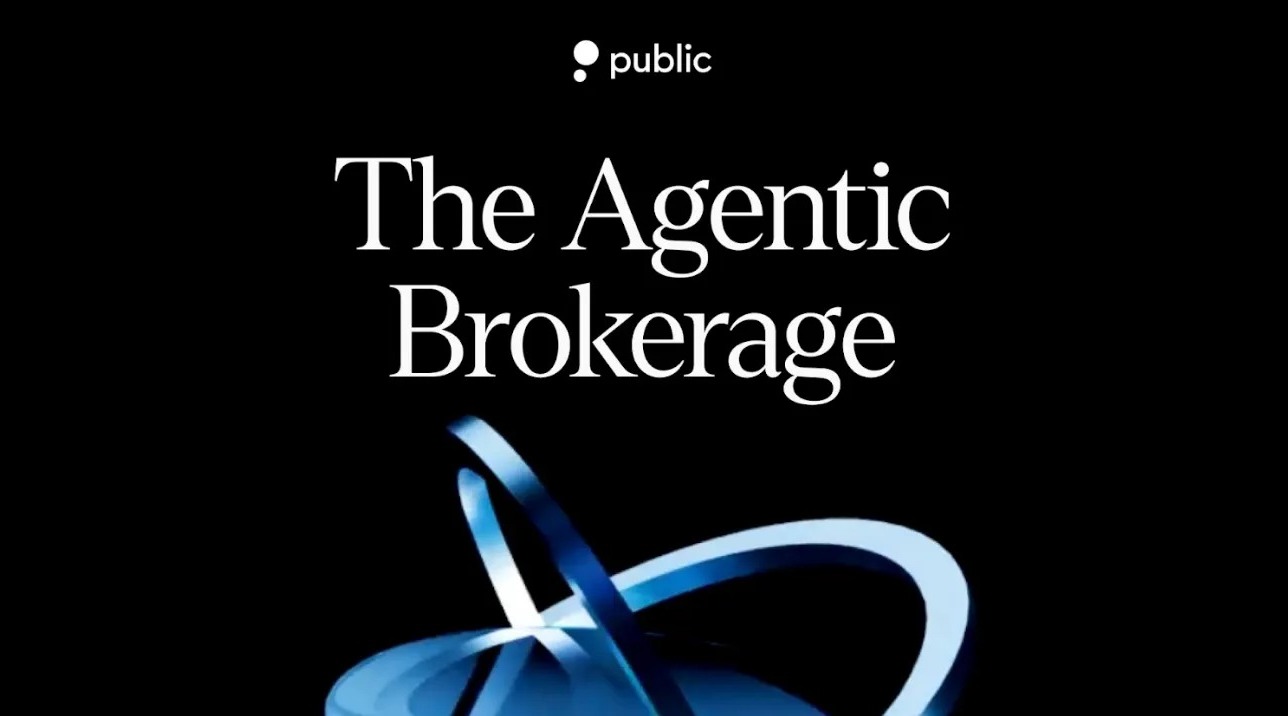
Online brokerage Public has launched what it calls an “Agentic Brokerage,” a three-part AI system that aims to let retail investors create custom stock indexes using plain-language commands and eventually manage their entire portfolios through automated agents.
The company, which began its AI push in 2023, is positioning the platform as a tool to level the playing field between institutional money managers with teams of analysts and individual investors juggling day jobs.
But whether users will trust AI agents to handle complex portfolio decisions remains an open question.
Retail Traders Get Public’s Index Creation Tools
The centerpiece of the rollout is “Generated Assets,” which went live today. Users type in an investment idea, like “companies with high revenue growth but thin margins that could benefit from AI” or “top-performing stocks from QQQ and SPY with double exposure to AI firms,” and Public's system deploys what it calls “evaluation agents” to scan thousands of stocks and build a custom index.
The platform automatically backtests each index against the S&P 500 and displays historical returns and drawdowns. Users can refine their indexes with additional prompts or invest immediately through Public's fractional share engine.
- Public Gains 85K Retail Accounts as Tornado Targets Institutional AI
- Public Joins Aston Martin Aramco F1; Launches Fractional Bond Trading
The company says future versions will include automatic rebalancing to keep portfolios aligned with the original investment thesis.
“AI is transforming every industry, including investing,” Leif Abraham, Co-CEO of Public, said in this week's announcement. “At Public, we’ve built an AI-native experience that reimagines what an investing platform can be.”
Public claims users have already created more than 2,500 Generated Assets in the past month. By comparison, fewer than 4,000 traditional ETFs have launched since the format was invented.
For Public, this is another upgrade to its AI tools, following the launch in May of its benchmark index generator tracking the S&P 500. The tool analyzes company filings and public data to recommend stocks that match traders’ profiles.
Cash Sweeps and Risk Management Coming in 2026
The AI research component, already available on the platform, includes tools that answer questions about individual stocks, scan earnings calls, and surface market insights. Public says the tools give retail investors access to analysis that used to require institutional resources.
The third pillar, portfolio action, won't arrive until early 2026. Public says users will eventually be able to give instructions like “trim 10% of my bank stocks and rotate into high-growth tech, but only if the Fed cuts rates,” or “sweep any cash over $2,000 from checking into my high-yield account.” The system will also support algorithmic trading strategies such as buying at the close and selling at the open.
Whether retail investors will feel comfortable handing over those decisions to AI agents is unclear. Automated portfolio management exists in the robo-advisor space, but letting an AI agent make conditional trades based on Federal Reserve policy or execute daily buy-sell strategies raises different questions about control and risk.
Fractional Shares Power the Engine
“Public Advisors,” the SEC-registered investment adviser behind the platform, provides advisory services, while “Open to the Public Investing” handles brokerage. Both charge fees, and the company notes in disclosures that Generated Assets output is “for general informational purposes only” and should not be treated as personalized investment advice.
Backtests displayed by the system are hypothetical and don't reflect actual returns. Public also cautions that features and functionality described for the Agentic Brokerage may change before launch.
The platform builds on Public's existing fractional share technology, which lets users buy portions of stocks and ETFs. That engine makes it possible to assemble and rebalance custom indexes without requiring users to buy whole shares of dozens or hundreds of companies.