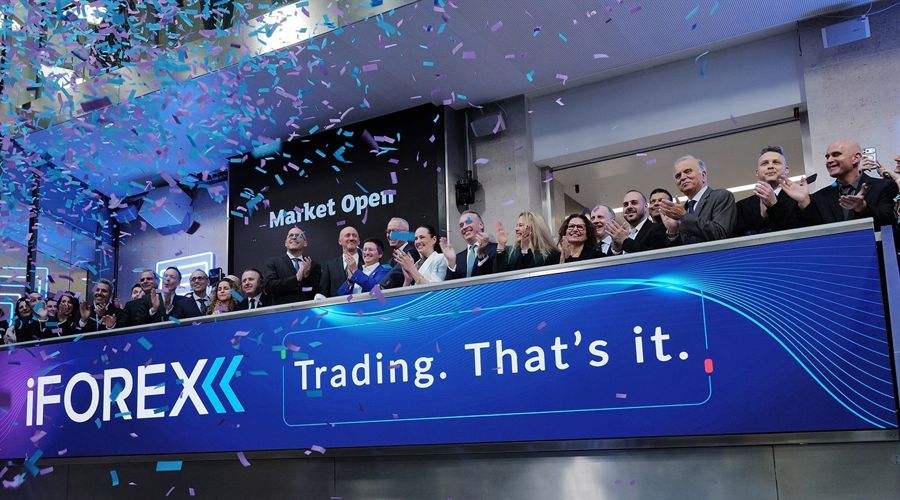
iFOREX jumps 6% on London Stock Exchange main market debut.
London-listed IG Group closes in on blue-chip FTSE 100 status.
CFD broker iFOREX debuts on London Stock Exchange Main Market, Source: X
ESMA clips perpetual futures with CFD limits
Europe’s top securities regulator warned that perpetual
futures and similar perpetual contracts popular in crypto trading are very likely covered by existing EU rules on contracts for differences (CFDs), no
matter how firms brand them.
The European Securities and Markets Authority (ESMA) said
investment firms must assess whether these products fall within the scope of
the bloc’s CFD product intervention regime.
If they do, firms must apply the full CFD rulebook,
including leverage limits, standardized risk warnings, margin close-out rules,
negative balance protection.
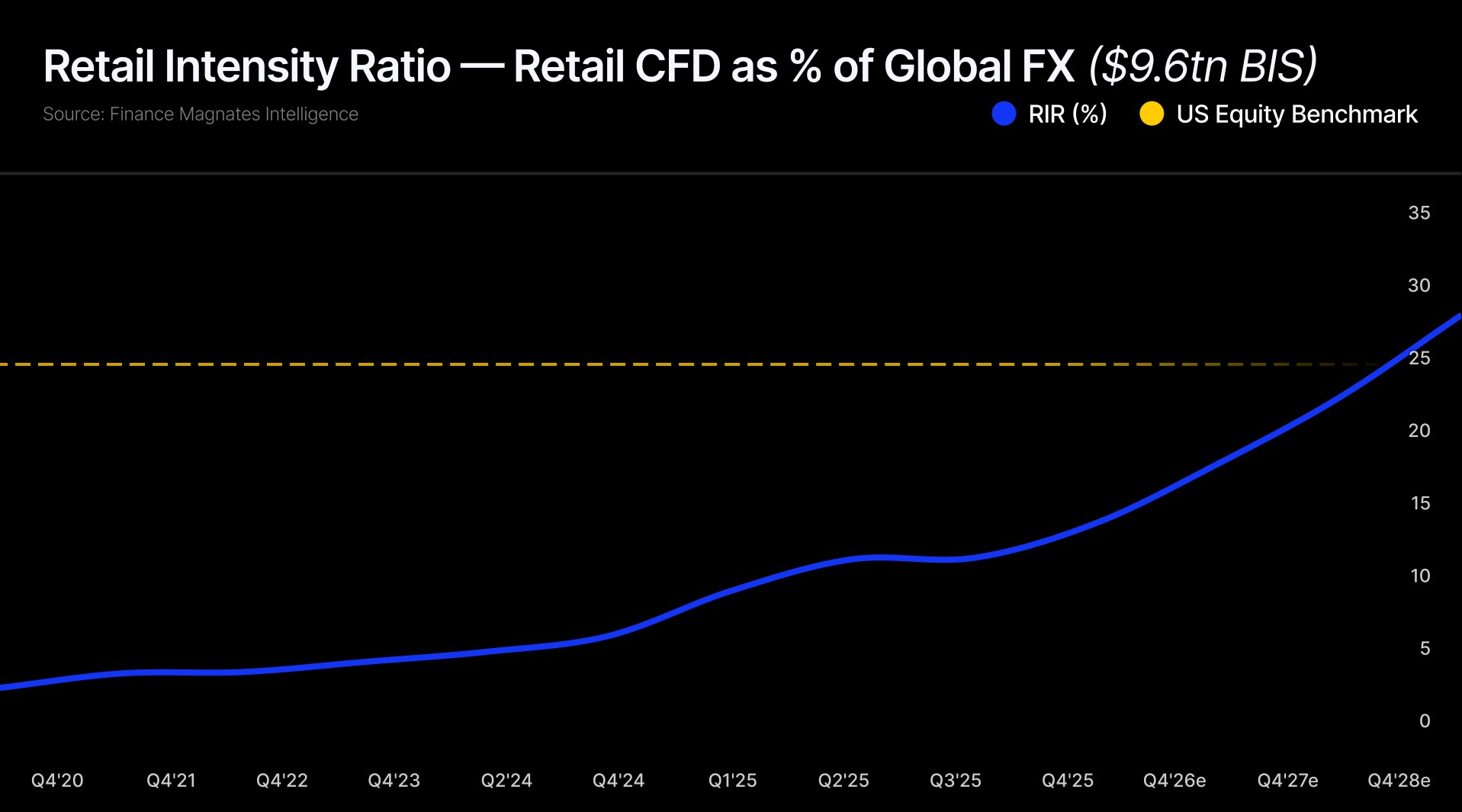
The study builds on the Bank for International Settlements’ 2025
Triennial Survey, which put average daily over-the-counter FX turnover at 9.6
trillion dollars in April 2025, a 28% jump from 7.5 trillion dollars in 2022.
The listing completes a process that began in May 2025 but
was temporarily paused as the broker worked through regulatory compliance
issues raised by authorities in the British Virgin Islands. With those concerns
now resolved, iFOREX has secured approval for the admission of its full share
capital, allowing around 22.2 million ordinary shares to trade freely in
London.
IG set to join FTSE 100
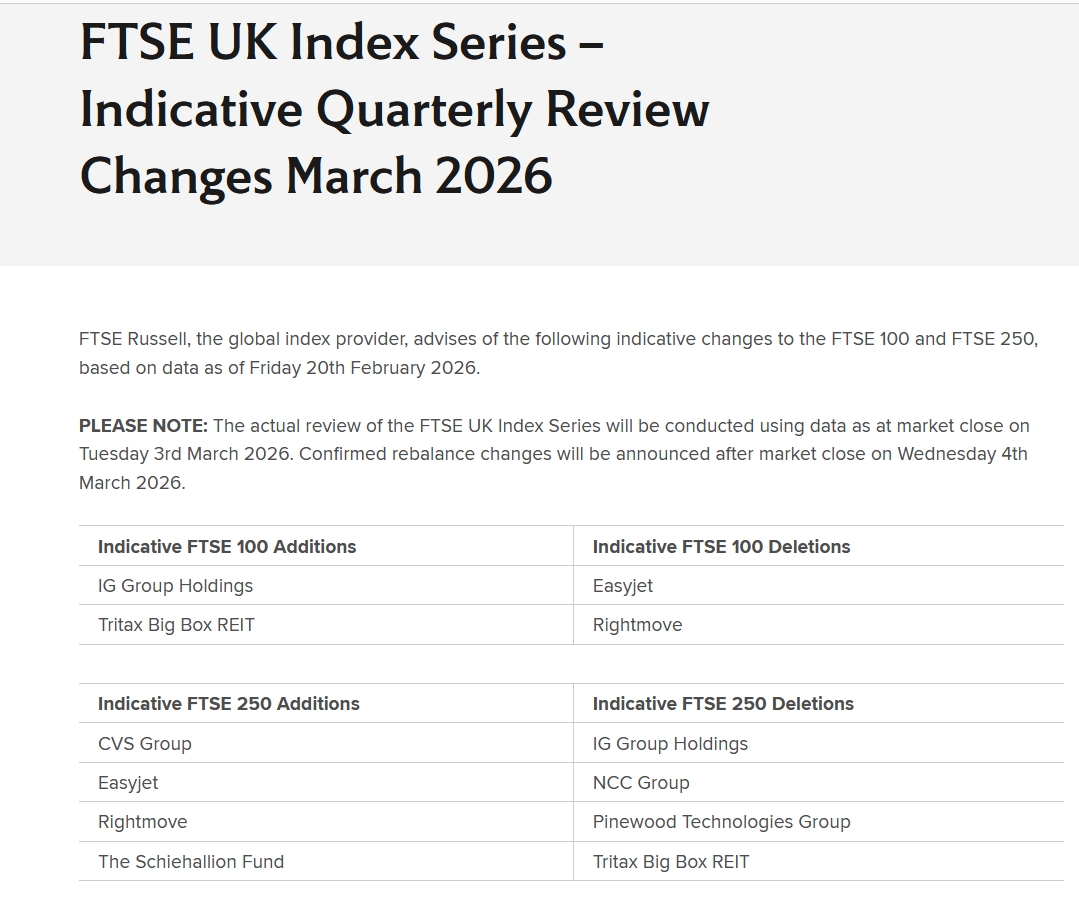
Still in the UK, IG is expected to enter the FTSE 100 index, based on changes FTSE Russell published ahead of its March 2026 quarterly review. The preliminary list is based on market data as of February 20, with the formal review to use closing prices on March 3 and confirmed changes to be announced after the market closes on March 4.
If the move is confirmed, IG Group will shift from the FTSE 250 into the FTSE 100 as part of the regular rebalance. Index-tracking funds and ETFs tied to the FTSE 100 would then add the stock, while vehicles benchmarked to the FTSE 250 would remove it, typically triggering trading as passive investors adjust their portfolios.
In Africa, the story looks different for the London-listed broker. IG closed its South Africa office and laid off its remaining local staff, after previously employing around 90 people there. The
move follows the broker’s decision to stop offering services under its South
African unit, while allowing clients to transfer their accounts to offshore
entities.
The broker had used the South Africa operation mainly as a
marketing hub, making the closure a final step in its exit from the local
market. IG also surrendered its South African ODP license, which is required to
offer CFD trading in the country.
74% of Capital.com gold closed within an hour
Capital.com reported that 73.8% of gold trades executed on its platform in 2025 were closed within one hour, and 95.9% were completed
within 24 hours. The broker noted that this concentration aligned with intraday
trading behavior observed during a period of heightened market volatility.
The broker ended 2025 with a total trading volume of $3.42
trillion, a 92.1% increase from the $1.78 trillion recorded the previous year.
Trading activity remained heavily concentrated in the Middle East, which
accounted for about half of the platform’s annual volume. Europe, the broker’s
second-largest market, also saw a 73% surge in volumes.
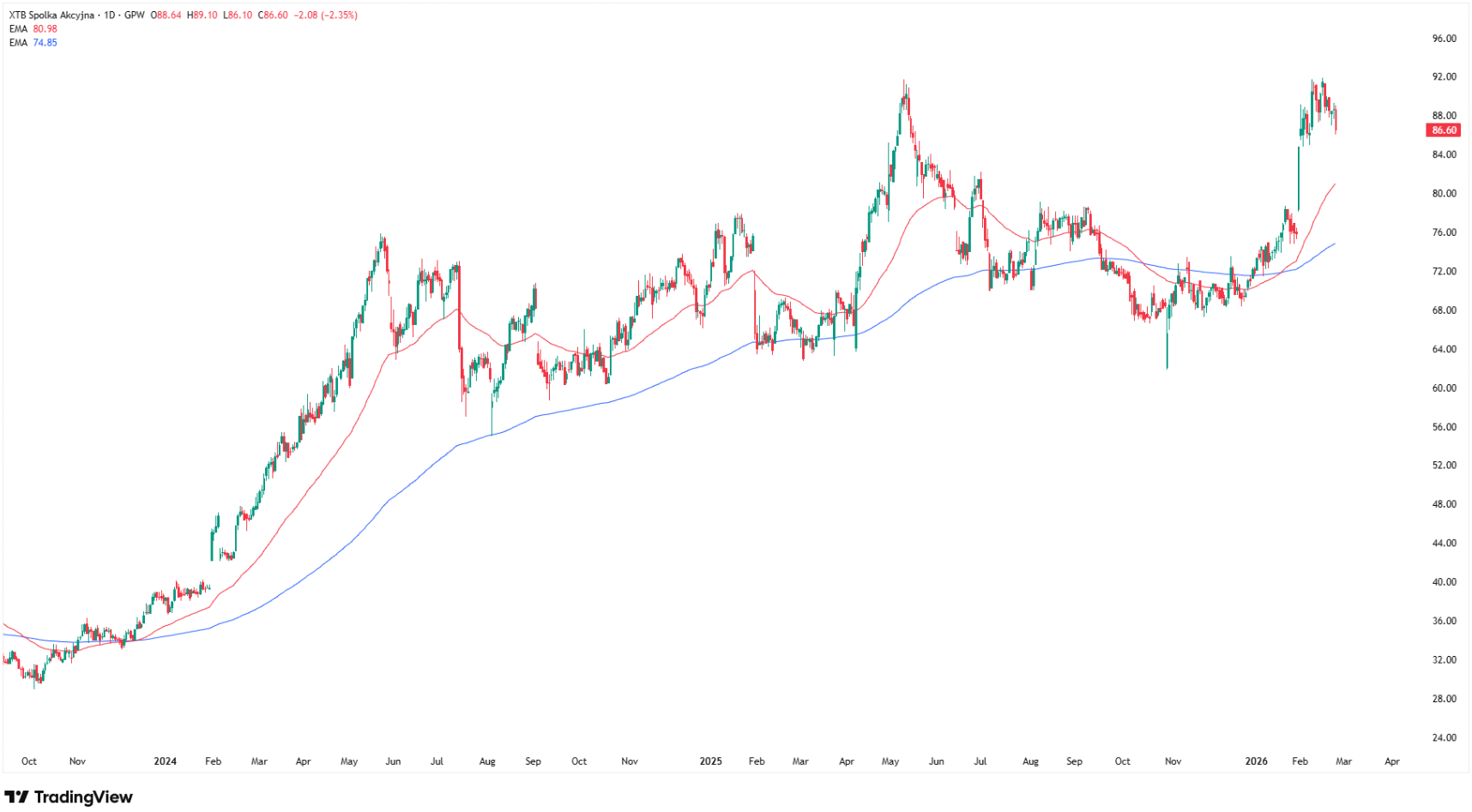
Arnaout noted that about 95% of XTB’s income currently comes
from CFD products, a concentration he said is increasingly frustrating.
Arnaout’s goal is to reduce that share to around 70% by expanding into spot
crypto and equity trading.
ASEAN's pivot from growth to dividends
ASEAN companies are drawing investors’ attention with rising
dividend payouts. Equities are shifting from a pure growth narrative to a more
income-oriented story as companies across the region deliver strong dividend
payouts.
The London Stock Exchange Group’s Miko Huang noted that the
FTSE ASEAN Index, which tracks large- and mid-cap firms from Singapore,
Malaysia, Indonesia, Thailand, and the Philippines has recorded a 10-year
average dividend yield of 3.57%.The region’s appeal for dividend-focused investors has strengthened as cash flow per share and dividend payout ratios have remained
resilient in recent years.
Prediction markets take center stage
Online brokerages have long evolved through successive waves of innovation, from spot forex to CFDs, the rise of retail equity trading, and the expansion into digital assets. Each transition was initially met with scepticism before becoming an industry standard, shaping how brokers retained and competed for market share.
The latest shift appears to centre on prediction markets, which are moving beyond their reputation for political and sports forecasting. Industry observers note a growing institutional interest, with prediction markets increasingly viewed as potential macroeconomic instruments rather than niche products, signalling their gradual integration into the broader trading ecosystem.
The link between spreads and market
The bid-offer spread has long served as a key indicator of market risk, compensating liquidity providers for holding inventory, managing
uncertainty, and bridging information gaps between buyers and sellers. Whether
set through dealer negotiations, brokered transactions, or electronic trading,
the spread traditionally widened during periods of volatility and narrowed as
conditions stabilized, acting as a visible measure of market stress.
That relationship has weakened in recent years. Across asset
classes and trading models, competitive pressure has compressed spreads to
levels detached from underlying risk. What began as a push toward greater
efficiency has, in many cases, produced distortion, with spreads no longer
performing their original role as reliable shock absorbers for market
uncertainty.
Wise reportedly curbs Coinbase transfers
Lastly, a LinkedIn post circulating online claims that Wise
has started blocking payroll transfers from Coinbase to employees’ Wise
accounts in the UK. According to the post, the move has disrupted some workers’
access to their wages and was described as “anti-competitive.”
Wise’s public Acceptable Use Policy prohibits customers from
using its platform to buy, sell, or trade cryptocurrencies directly. It also
states that the company may block or return payments linked to crypto-related
businesses based on its compliance checks and risk assessments.
ESMA clips perpetual futures with CFD limits
Europe’s top securities regulator warned that perpetual
futures and similar perpetual contracts popular in crypto trading are very likely covered by existing EU rules on contracts for differences (CFDs), no
matter how firms brand them.
The European Securities and Markets Authority (ESMA) said
investment firms must assess whether these products fall within the scope of
the bloc’s CFD product intervention regime.
If they do, firms must apply the full CFD rulebook,
including leverage limits, standardized risk warnings, margin close-out rules,
negative balance protection.
The study builds on the Bank for International Settlements’ 2025
Triennial Survey, which put average daily over-the-counter FX turnover at 9.6
trillion dollars in April 2025, a 28% jump from 7.5 trillion dollars in 2022.
The listing completes a process that began in May 2025 but
was temporarily paused as the broker worked through regulatory compliance
issues raised by authorities in the British Virgin Islands. With those concerns
now resolved, iFOREX has secured approval for the admission of its full share
capital, allowing around 22.2 million ordinary shares to trade freely in
London.
IG set to join FTSE 100
Still in the UK, IG is expected to enter the FTSE 100 index, based on changes FTSE Russell published ahead of its March 2026 quarterly review. The preliminary list is based on market data as of February 20, with the formal review to use closing prices on March 3 and confirmed changes to be announced after the market closes on March 4.
If the move is confirmed, IG Group will shift from the FTSE 250 into the FTSE 100 as part of the regular rebalance. Index-tracking funds and ETFs tied to the FTSE 100 would then add the stock, while vehicles benchmarked to the FTSE 250 would remove it, typically triggering trading as passive investors adjust their portfolios.
In Africa, the story looks different for the London-listed broker. IG closed its South Africa office and laid off its remaining local staff, after previously employing around 90 people there. The
move follows the broker’s decision to stop offering services under its South
African unit, while allowing clients to transfer their accounts to offshore
entities.
The broker had used the South Africa operation mainly as a
marketing hub, making the closure a final step in its exit from the local
market. IG also surrendered its South African ODP license, which is required to
offer CFD trading in the country.
74% of Capital.com gold closed within an hour
Capital.com reported that 73.8% of gold trades executed on its platform in 2025 were closed within one hour, and 95.9% were completed
within 24 hours. The broker noted that this concentration aligned with intraday
trading behavior observed during a period of heightened market volatility.
The broker ended 2025 with a total trading volume of $3.42
trillion, a 92.1% increase from the $1.78 trillion recorded the previous year.
Trading activity remained heavily concentrated in the Middle East, which
accounted for about half of the platform’s annual volume. Europe, the broker’s
second-largest market, also saw a 73% surge in volumes.
Arnaout noted that about 95% of XTB’s income currently comes
from CFD products, a concentration he said is increasingly frustrating.
Arnaout’s goal is to reduce that share to around 70% by expanding into spot
crypto and equity trading.
ASEAN's pivot from growth to dividends
ASEAN companies are drawing investors’ attention with rising
dividend payouts. Equities are shifting from a pure growth narrative to a more
income-oriented story as companies across the region deliver strong dividend
payouts.
The London Stock Exchange Group’s Miko Huang noted that the
FTSE ASEAN Index, which tracks large- and mid-cap firms from Singapore,
Malaysia, Indonesia, Thailand, and the Philippines has recorded a 10-year
average dividend yield of 3.57%.The region’s appeal for dividend-focused investors has strengthened as cash flow per share and dividend payout ratios have remained
resilient in recent years.
Prediction markets take center stage
Online brokerages have long evolved through successive waves of innovation, from spot forex to CFDs, the rise of retail equity trading, and the expansion into digital assets. Each transition was initially met with scepticism before becoming an industry standard, shaping how brokers retained and competed for market share.
The latest shift appears to centre on prediction markets, which are moving beyond their reputation for political and sports forecasting. Industry observers note a growing institutional interest, with prediction markets increasingly viewed as potential macroeconomic instruments rather than niche products, signalling their gradual integration into the broader trading ecosystem.
The link between spreads and market
The bid-offer spread has long served as a key indicator of market risk, compensating liquidity providers for holding inventory, managing
uncertainty, and bridging information gaps between buyers and sellers. Whether
set through dealer negotiations, brokered transactions, or electronic trading,
the spread traditionally widened during periods of volatility and narrowed as
conditions stabilized, acting as a visible measure of market stress.
That relationship has weakened in recent years. Across asset
classes and trading models, competitive pressure has compressed spreads to
levels detached from underlying risk. What began as a push toward greater
efficiency has, in many cases, produced distortion, with spreads no longer
performing their original role as reliable shock absorbers for market
uncertainty.
Wise reportedly curbs Coinbase transfers
Lastly, a LinkedIn post circulating online claims that Wise
has started blocking payroll transfers from Coinbase to employees’ Wise
accounts in the UK. According to the post, the move has disrupted some workers’
access to their wages and was described as “anti-competitive.”
Wise’s public Acceptable Use Policy prohibits customers from
using its platform to buy, sell, or trade cryptocurrencies directly. It also
states that the company may block or return payments linked to crypto-related
businesses based on its compliance checks and risk assessments.
Jared Kirui is an Editor at Finance Magnates with more than five years of experience in financial journalism. He covers online trading, fintech, payments, and crypto industries with a focus on companies, regulation and compliance, executive moves, trading technology, and market analysis.
His work has been featured in other media outlets, including Benzinga, ZyCrypto, The Distributed, and The Daily Hodl.
Education:
Bachelor of Commerce degree (Finance option), University of Nairobi
Retail Traders Can Now Access Prediction Markets Through Binance Wallet
Featured Videos
FP Markets Winner Spotlight 🏆 | Global Broker of the Year 2025 #Trading #Broker #Innovation #Shorts
FP Markets Winner Spotlight 🏆 | Global Broker of the Year 2025 #Trading #Broker #Innovation #Shorts
FP Markets Winner Spotlight 🏆 | Global Broker of the Year 2025 #Trading #Broker #Innovation #Shorts
FP Markets Winner Spotlight 🏆 | Global Broker of the Year 2025 #Trading #Broker #Innovation #Shorts
FP Markets takes the spotlight as Global Broker of the Year 2025 at the Finance Magnates Awards.
Martin Stoilov, Head of Client Experience, shares that trust, innovation, and people played a key role in the company’s success, supported by a strong foundation of integrity and client-centricity.
Following this milestone, FP Markets continues to focus on growth, technology investment, and its core values of transparency and excellence.
👉 Be part of FM Awards 2026: https://awards.financemagnates.com/#nominate
FP Markets takes the spotlight as Global Broker of the Year 2025 at the Finance Magnates Awards.
Martin Stoilov, Head of Client Experience, shares that trust, innovation, and people played a key role in the company’s success, supported by a strong foundation of integrity and client-centricity.
Following this milestone, FP Markets continues to focus on growth, technology investment, and its core values of transparency and excellence.
👉 Be part of FM Awards 2026: https://awards.financemagnates.com/#nominate
FP Markets takes the spotlight as Global Broker of the Year 2025 at the Finance Magnates Awards.
Martin Stoilov, Head of Client Experience, shares that trust, innovation, and people played a key role in the company’s success, supported by a strong foundation of integrity and client-centricity.
Following this milestone, FP Markets continues to focus on growth, technology investment, and its core values of transparency and excellence.
👉 Be part of FM Awards 2026: https://awards.financemagnates.com/#nominate
FP Markets takes the spotlight as Global Broker of the Year 2025 at the Finance Magnates Awards.
Martin Stoilov, Head of Client Experience, shares that trust, innovation, and people played a key role in the company’s success, supported by a strong foundation of integrity and client-centricity.
Following this milestone, FP Markets continues to focus on growth, technology investment, and its core values of transparency and excellence.
👉 Be part of FM Awards 2026: https://awards.financemagnates.com/#nominate
In this video, we review @HolaPrimeMarketsOfficial, a multi-asset forex and CFDs broker offering different account types, trading platforms, and flexible trading conditions.
We cover the broker’s overall offering, including account options, trading environment, platforms like MT4 and MT5, and additional services such as managed accounts and fast withdrawals.
Watch the full video to see if Hola Prime Markets fits your trading needs.
📣 Stay up to date with the latest in finance and trading. Follow Finance Magnates for industry news, insights, and global event coverage.
Connect with us:
🔗 LinkedIn: /financemagnates
👍 Facebook: /financemagnates
📸 Instagram: https://www.instagram.com/financemagnates
🐦 X: https://x.com/financemagnates
🎥 TikTok: https://www.tiktok.com/tag/financemagnates
▶️ YouTube: /@financemagnates_official
#HolaPrime #ForexBroker #CFDTrading #FinanceMagnates #Trading #Forex #BrokerReview
In this video, we review @HolaPrimeMarketsOfficial, a multi-asset forex and CFDs broker offering different account types, trading platforms, and flexible trading conditions.
We cover the broker’s overall offering, including account options, trading environment, platforms like MT4 and MT5, and additional services such as managed accounts and fast withdrawals.
Watch the full video to see if Hola Prime Markets fits your trading needs.
📣 Stay up to date with the latest in finance and trading. Follow Finance Magnates for industry news, insights, and global event coverage.
Connect with us:
🔗 LinkedIn: /financemagnates
👍 Facebook: /financemagnates
📸 Instagram: https://www.instagram.com/financemagnates
🐦 X: https://x.com/financemagnates
🎥 TikTok: https://www.tiktok.com/tag/financemagnates
▶️ YouTube: /@financemagnates_official
#HolaPrime #ForexBroker #CFDTrading #FinanceMagnates #Trading #Forex #BrokerReview
In this video, we review @HolaPrimeMarketsOfficial, a multi-asset forex and CFDs broker offering different account types, trading platforms, and flexible trading conditions.
We cover the broker’s overall offering, including account options, trading environment, platforms like MT4 and MT5, and additional services such as managed accounts and fast withdrawals.
Watch the full video to see if Hola Prime Markets fits your trading needs.
📣 Stay up to date with the latest in finance and trading. Follow Finance Magnates for industry news, insights, and global event coverage.
Connect with us:
🔗 LinkedIn: /financemagnates
👍 Facebook: /financemagnates
📸 Instagram: https://www.instagram.com/financemagnates
🐦 X: https://x.com/financemagnates
🎥 TikTok: https://www.tiktok.com/tag/financemagnates
▶️ YouTube: /@financemagnates_official
#HolaPrime #ForexBroker #CFDTrading #FinanceMagnates #Trading #Forex #BrokerReview
In this video, we review @HolaPrimeMarketsOfficial, a multi-asset forex and CFDs broker offering different account types, trading platforms, and flexible trading conditions.
We cover the broker’s overall offering, including account options, trading environment, platforms like MT4 and MT5, and additional services such as managed accounts and fast withdrawals.
Watch the full video to see if Hola Prime Markets fits your trading needs.
📣 Stay up to date with the latest in finance and trading. Follow Finance Magnates for industry news, insights, and global event coverage.
Connect with us:
🔗 LinkedIn: /financemagnates
👍 Facebook: /financemagnates
📸 Instagram: https://www.instagram.com/financemagnates
🐦 X: https://x.com/financemagnates
🎥 TikTok: https://www.tiktok.com/tag/financemagnates
▶️ YouTube: /@financemagnates_official
#HolaPrime #ForexBroker #CFDTrading #FinanceMagnates #Trading #Forex #BrokerReview
In this video, we review @HolaPrimeMarketsOfficial, a multi-asset forex and CFDs broker offering different account types, trading platforms, and flexible trading conditions.
We cover the broker’s overall offering, including account options, trading environment, platforms like MT4 and MT5, and additional services such as managed accounts and fast withdrawals.
Watch the full video to see if Hola Prime Markets fits your trading needs.
📣 Stay up to date with the latest in finance and trading. Follow Finance Magnates for industry news, insights, and global event coverage.
Connect with us:
🔗 LinkedIn: /financemagnates
👍 Facebook: /financemagnates
📸 Instagram: https://www.instagram.com/financemagnates
🐦 X: https://x.com/financemagnates
🎥 TikTok: https://www.tiktok.com/tag/financemagnates
▶️ YouTube: /@financemagnates_official
#HolaPrime #ForexBroker #CFDTrading #FinanceMagnates #Trading #Forex #BrokerReview
In this video, we review @HolaPrimeMarketsOfficial, a multi-asset forex and CFDs broker offering different account types, trading platforms, and flexible trading conditions.
We cover the broker’s overall offering, including account options, trading environment, platforms like MT4 and MT5, and additional services such as managed accounts and fast withdrawals.
Watch the full video to see if Hola Prime Markets fits your trading needs.
📣 Stay up to date with the latest in finance and trading. Follow Finance Magnates for industry news, insights, and global event coverage.
Connect with us:
🔗 LinkedIn: /financemagnates
👍 Facebook: /financemagnates
📸 Instagram: https://www.instagram.com/financemagnates
🐦 X: https://x.com/financemagnates
🎥 TikTok: https://www.tiktok.com/tag/financemagnates
▶️ YouTube: /@financemagnates_official
#HolaPrime #ForexBroker #CFDTrading #FinanceMagnates #Trading #Forex #BrokerReview
Hola Prime Review: What You Need to Know | Full Breakdown by Finance Magnates
Hola Prime Review: What You Need to Know | Full Breakdown by Finance Magnates
Hola Prime Review: What You Need to Know | Full Breakdown by Finance Magnates
Hola Prime Review: What You Need to Know | Full Breakdown by Finance Magnates
Hola Prime Review: What You Need to Know | Full Breakdown by Finance Magnates
Hola Prime Review: What You Need to Know | Full Breakdown by Finance Magnates
In this video, we review @HolaPrime_Global, a proprietary trading firm offering evaluation programs and performance-based payouts in simulated market environments.
We cover how the challenge model works, including account types, profit splits (up to 95%), trading rules, and what it takes to reach a funded account. You’ll also learn about available platforms like MT4, MT5, cTrader, and more, along with insights into payouts, support, and trading conditions.
Watch the full video to see if Hola Prime fits your trading style.
📣 Stay up to date with the latest in finance and trading. Follow Finance Magnates for industry news, insights, and global event coverage.
Connect with us:
🔗 LinkedIn: /financemagnates
👍 Facebook: /financemagnates
📸 Instagram: https://www.instagram.com/financemagnates
🐦 X: https://x.com/financemagnates
🎥 TikTok: https://www.tiktok.com/tag/financemagnates
▶️ YouTube: /@financemagnates_official
#HolaPrime #PropFirm #Trading #FinanceMagnates #Forex #FuturesTrading #TradingReview #PropFirmReview
In this video, we review @HolaPrime_Global, a proprietary trading firm offering evaluation programs and performance-based payouts in simulated market environments.
We cover how the challenge model works, including account types, profit splits (up to 95%), trading rules, and what it takes to reach a funded account. You’ll also learn about available platforms like MT4, MT5, cTrader, and more, along with insights into payouts, support, and trading conditions.
Watch the full video to see if Hola Prime fits your trading style.
📣 Stay up to date with the latest in finance and trading. Follow Finance Magnates for industry news, insights, and global event coverage.
Connect with us:
🔗 LinkedIn: /financemagnates
👍 Facebook: /financemagnates
📸 Instagram: https://www.instagram.com/financemagnates
🐦 X: https://x.com/financemagnates
🎥 TikTok: https://www.tiktok.com/tag/financemagnates
▶️ YouTube: /@financemagnates_official
#HolaPrime #PropFirm #Trading #FinanceMagnates #Forex #FuturesTrading #TradingReview #PropFirmReview
In this video, we review @HolaPrime_Global, a proprietary trading firm offering evaluation programs and performance-based payouts in simulated market environments.
We cover how the challenge model works, including account types, profit splits (up to 95%), trading rules, and what it takes to reach a funded account. You’ll also learn about available platforms like MT4, MT5, cTrader, and more, along with insights into payouts, support, and trading conditions.
Watch the full video to see if Hola Prime fits your trading style.
📣 Stay up to date with the latest in finance and trading. Follow Finance Magnates for industry news, insights, and global event coverage.
Connect with us:
🔗 LinkedIn: /financemagnates
👍 Facebook: /financemagnates
📸 Instagram: https://www.instagram.com/financemagnates
🐦 X: https://x.com/financemagnates
🎥 TikTok: https://www.tiktok.com/tag/financemagnates
▶️ YouTube: /@financemagnates_official
#HolaPrime #PropFirm #Trading #FinanceMagnates #Forex #FuturesTrading #TradingReview #PropFirmReview
In this video, we review @HolaPrime_Global, a proprietary trading firm offering evaluation programs and performance-based payouts in simulated market environments.
We cover how the challenge model works, including account types, profit splits (up to 95%), trading rules, and what it takes to reach a funded account. You’ll also learn about available platforms like MT4, MT5, cTrader, and more, along with insights into payouts, support, and trading conditions.
Watch the full video to see if Hola Prime fits your trading style.
📣 Stay up to date with the latest in finance and trading. Follow Finance Magnates for industry news, insights, and global event coverage.
Connect with us:
🔗 LinkedIn: /financemagnates
👍 Facebook: /financemagnates
📸 Instagram: https://www.instagram.com/financemagnates
🐦 X: https://x.com/financemagnates
🎥 TikTok: https://www.tiktok.com/tag/financemagnates
▶️ YouTube: /@financemagnates_official
#HolaPrime #PropFirm #Trading #FinanceMagnates #Forex #FuturesTrading #TradingReview #PropFirmReview
In this video, we review @HolaPrime_Global, a proprietary trading firm offering evaluation programs and performance-based payouts in simulated market environments.
We cover how the challenge model works, including account types, profit splits (up to 95%), trading rules, and what it takes to reach a funded account. You’ll also learn about available platforms like MT4, MT5, cTrader, and more, along with insights into payouts, support, and trading conditions.
Watch the full video to see if Hola Prime fits your trading style.
📣 Stay up to date with the latest in finance and trading. Follow Finance Magnates for industry news, insights, and global event coverage.
Connect with us:
🔗 LinkedIn: /financemagnates
👍 Facebook: /financemagnates
📸 Instagram: https://www.instagram.com/financemagnates
🐦 X: https://x.com/financemagnates
🎥 TikTok: https://www.tiktok.com/tag/financemagnates
▶️ YouTube: /@financemagnates_official
#HolaPrime #PropFirm #Trading #FinanceMagnates #Forex #FuturesTrading #TradingReview #PropFirmReview
In this video, we review @HolaPrime_Global, a proprietary trading firm offering evaluation programs and performance-based payouts in simulated market environments.
We cover how the challenge model works, including account types, profit splits (up to 95%), trading rules, and what it takes to reach a funded account. You’ll also learn about available platforms like MT4, MT5, cTrader, and more, along with insights into payouts, support, and trading conditions.
Watch the full video to see if Hola Prime fits your trading style.
📣 Stay up to date with the latest in finance and trading. Follow Finance Magnates for industry news, insights, and global event coverage.
Connect with us:
🔗 LinkedIn: /financemagnates
👍 Facebook: /financemagnates
📸 Instagram: https://www.instagram.com/financemagnates
🐦 X: https://x.com/financemagnates
🎥 TikTok: https://www.tiktok.com/tag/financemagnates
▶️ YouTube: /@financemagnates_official
#HolaPrime #PropFirm #Trading #FinanceMagnates #Forex #FuturesTrading #TradingReview #PropFirmReview
Axi Winner Spotlight 🏆 | Global Most Innovative Broker 2025 #Innovation #Trading #Fintech #Broker
Axi Winner Spotlight 🏆 | Global Most Innovative Broker 2025 #Innovation #Trading #Fintech #Broker
Axi Winner Spotlight 🏆 | Global Most Innovative Broker 2025 #Innovation #Trading #Fintech #Broker
Axi Winner Spotlight 🏆 | Global Most Innovative Broker 2025 #Innovation #Trading #Fintech #Broker
Axi Winner Spotlight 🏆 | Global Most Innovative Broker 2025 #Innovation #Trading #Fintech #Broker
Axi Winner Spotlight 🏆 | Global Most Innovative Broker 2025 #Innovation #Trading #Fintech #Broker
Axi takes the spotlight at the Finance Magnates Awards, winning Global Most Innovative Broker 2025.
Olivia Xenofontos and Ivanna Openko share how the team will feel: proud, motivated, and ready to keep delivering.
They also describe the night as well-organized, focused, and enjoyable for all.
👉 Be part of FM Awards 2026.
Axi takes the spotlight at the Finance Magnates Awards, winning Global Most Innovative Broker 2025.
Olivia Xenofontos and Ivanna Openko share how the team will feel: proud, motivated, and ready to keep delivering.
They also describe the night as well-organized, focused, and enjoyable for all.
👉 Be part of FM Awards 2026.
Axi takes the spotlight at the Finance Magnates Awards, winning Global Most Innovative Broker 2025.
Olivia Xenofontos and Ivanna Openko share how the team will feel: proud, motivated, and ready to keep delivering.
They also describe the night as well-organized, focused, and enjoyable for all.
👉 Be part of FM Awards 2026.
Axi takes the spotlight at the Finance Magnates Awards, winning Global Most Innovative Broker 2025.
Olivia Xenofontos and Ivanna Openko share how the team will feel: proud, motivated, and ready to keep delivering.
They also describe the night as well-organized, focused, and enjoyable for all.
👉 Be part of FM Awards 2026.
Axi takes the spotlight at the Finance Magnates Awards, winning Global Most Innovative Broker 2025.
Olivia Xenofontos and Ivanna Openko share how the team will feel: proud, motivated, and ready to keep delivering.
They also describe the night as well-organized, focused, and enjoyable for all.
👉 Be part of FM Awards 2026.
Axi takes the spotlight at the Finance Magnates Awards, winning Global Most Innovative Broker 2025.
Olivia Xenofontos and Ivanna Openko share how the team will feel: proud, motivated, and ready to keep delivering.
They also describe the night as well-organized, focused, and enjoyable for all.
👉 Be part of FM Awards 2026.
Recognition that matters.
Built on transparency.
Driven by the industry.
The Finance Magnates Awards 2026.
Nominations are now open.
🔗 https://awards.financemagnates.com/?utm_source=SM&utm_medium=social&utm_campaign=recognition-matters
Recognition that matters.
Built on transparency.
Driven by the industry.
The Finance Magnates Awards 2026.
Nominations are now open.
🔗 https://awards.financemagnates.com/?utm_source=SM&utm_medium=social&utm_campaign=recognition-matters
Recognition that matters.
Built on transparency.
Driven by the industry.
The Finance Magnates Awards 2026.
Nominations are now open.
🔗 https://awards.financemagnates.com/?utm_source=SM&utm_medium=social&utm_campaign=recognition-matters
Recognition that matters.
Built on transparency.
Driven by the industry.
The Finance Magnates Awards 2026.
Nominations are now open.
🔗 https://awards.financemagnates.com/?utm_source=SM&utm_medium=social&utm_campaign=recognition-matters
Recognition that matters.
Built on transparency.
Driven by the industry.
The Finance Magnates Awards 2026.
Nominations are now open.
🔗 https://awards.financemagnates.com/?utm_source=SM&utm_medium=social&utm_campaign=recognition-matters
Recognition that matters.
Built on transparency.
Driven by the industry.
The Finance Magnates Awards 2026.
Nominations are now open.
🔗 https://awards.financemagnates.com/?utm_source=SM&utm_medium=social&utm_campaign=recognition-matters