The popular app has evolved into a vital retail trader platform, offering real-time signals.
A recent earthquake in prop trading showcased Discord's criticality for conveying key updates like halts and migrations.
Long gone
are the days when Discord was dismissed as yet another communication tool for your
kid bonding over Minecraft servers. The platform has rapidly emerged as the
hottest virtual hangout for an entirely different crowd, throngs of retail FX/CFDs
and crypto traders gathering to exchange ideas, share signals, and ride market
waves together.
Discord
offers them a virtual trading floor minus the shouting and chaos. Here, they can
chat over desktop or mobile in real-time as markets move. In many
ways, it is unlocking retail trading's true potential to become social. And, this digital gathering force can no longer be ignored as new converts keep
pouring in.
What Is Discord?
Discord is
a free voice, video, and text communication platform that allows users to
interact in real-time. Initially created for gamers to chat while playing,
Discord has evolved far beyond gaming communities.
The service
revolves around the concept of servers. A Discord server is essentially a
virtual space where groups of friends, communities, businesses, and more can
come together. Users can join existing public Discord servers through invite
links or create their own private servers.
Once inside
a server, members can access various text and voice channels for
communicating and collaborating. Text channels allow seamless chat messaging
between server members. Voice channels facilitate conversations, meetings, or
casual hangouts using voice chat features.
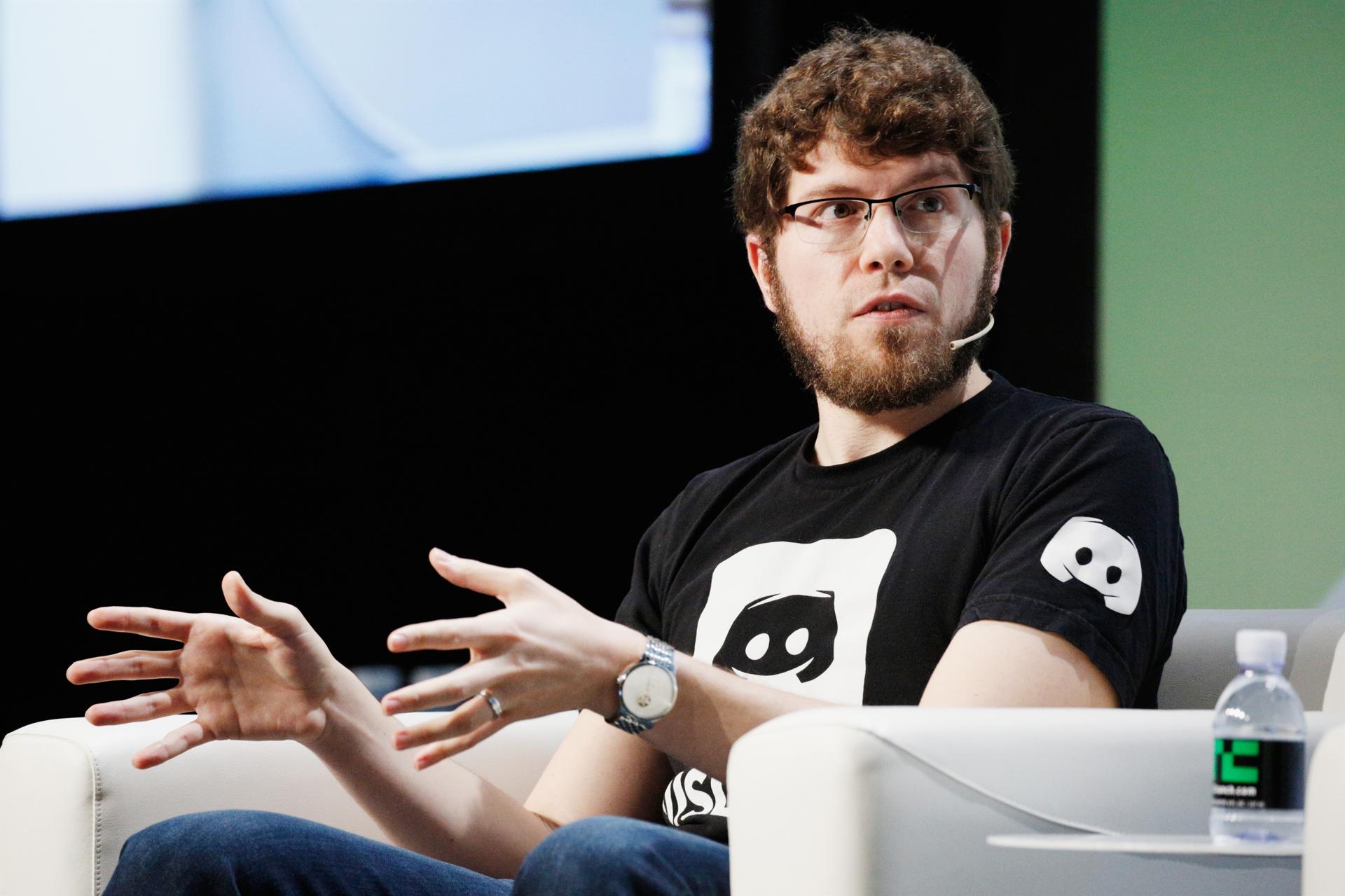
Discord Co-Founder and CEO Jason Citron
Servers
also support other forms of communication like video calls and screen sharing.
This makes Discord an ideal platform for gaming and friend groups, remote work teams, online classes, clubs, and more.
An
easy-to-use permissions system enables server admins to control access and
functionality within their servers. Individual channels can be tweaked to
only allow certain members. This allows large servers to create intricate
platforms comprising multiple topic-specific chat rooms.
Safety is a critical part of our work at Discord.
Our latest Transparency Report covers our work from October through December 2023. These reports provide information and resources about our work to make Discord the best place to hang out with friends.
According
to BankMyCell, in 2016, the platform had 25 million users; in 2020, this number
grew to 300 million, and currently, it stands at 614 million.
The Explosive Growth of
Forex and Prop Trading Servers on Discord
According
to Yohay Elam, the Product Manager at FxStreet, there are four main reasons why retail traders opt for Discord.
“First,
many of them have been used to seeking advice – and commiseration – in online
forums, and Discord provides an upgraded experience thanks to its ease of use,”
Elam commented. “Secondly, there is a significant overlap between the gaming
world, where Discord originated, and the trader world. The users share many of
the characteristics. Retail traders became familiar with Discord via gaming,
and using the platform in their community was a smooth transition.”
Third, the
cryptosphere embraced Discord before it became dominant as a community
platform. While crypto and FX/CFD traders have a limited overlap, the use of
Discord propagated. And, finally fourth, FXStreet’s data shows that “most
traders have a day job at an office. The growing use of Slack – which has a
remarkably similar interface to Discord – is another factor making the
transition easier.”
Discord,
similar to Telegram, has emerged as a hub for services offering trading
signals. According to the website Discord.me, there are over a thousand servers
tagged as "Forex" and more than 1,500 tagged as "Crypto." An
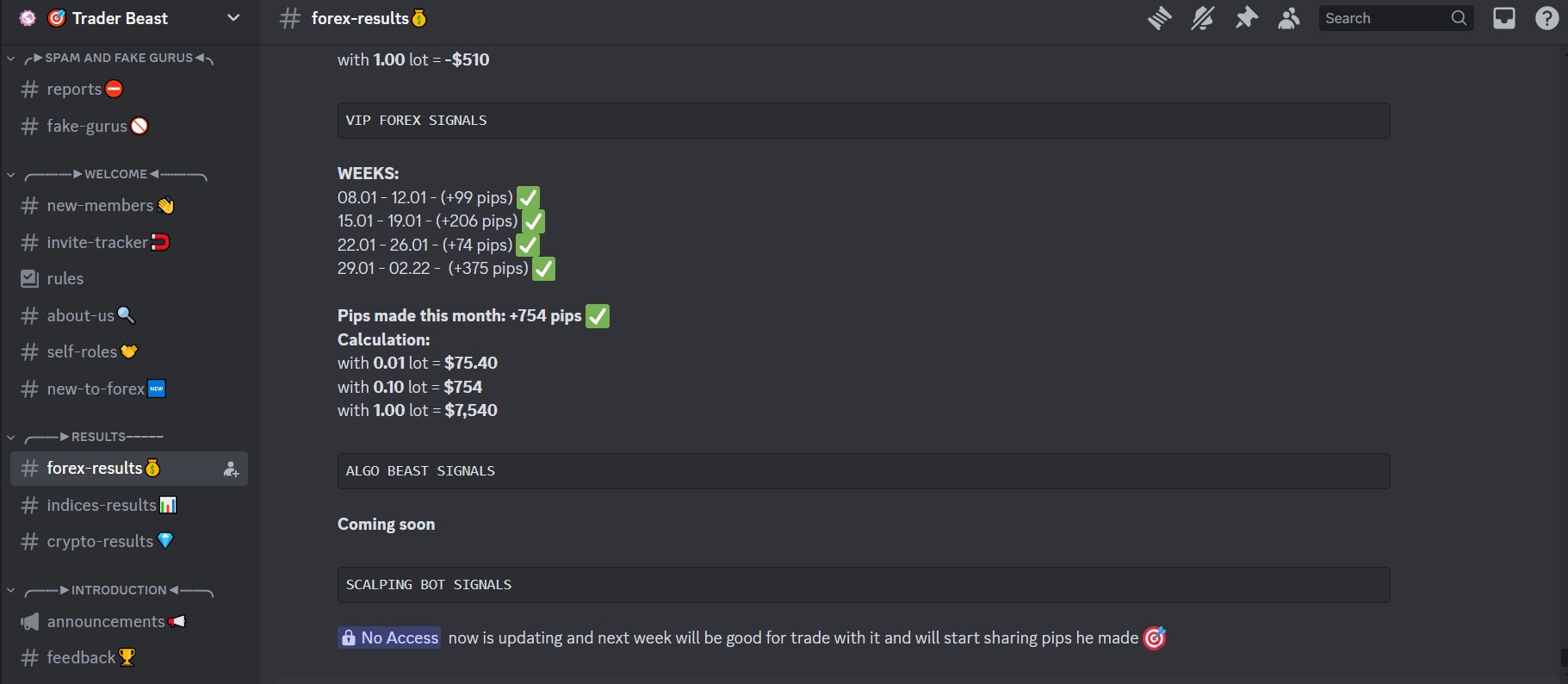
example of such a group is Trader Beast, which has over 10,000 registered users,
with hundreds online at any given time of the day, utilizing automatically
generated signals by trading bots.
Trader Beast's Discord Server
It turns
out that Discord is highly popular among retail proprietary trading
and trader funding firms, where the numbers are even larger. For
instance, MyFundedFX, which recently faced regulatory issues, gathers over
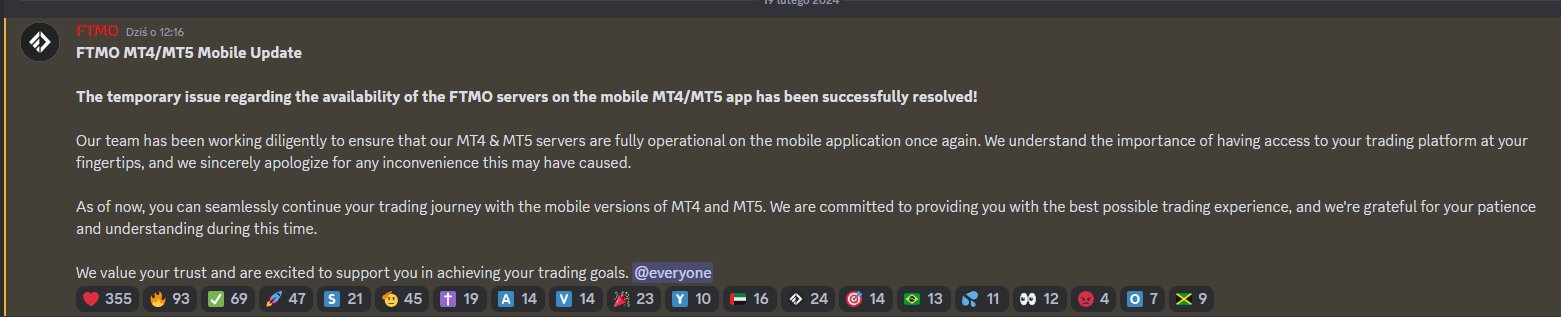
120,000 people on Discord. The recent earthquake in the industry, which began in February, showed how important Discord is in prop trading. Many pieces of information about suspending operations or planned server migrations appeared first and foremost on the Discord servers of various companies, or appeared there exclusively. This demonstrates that today, without Discord, a trader may not have access to all the necessary information.
The experts we spoke with stated that Discord possesses several important advantages, allowing for collaborative learning, rapid information sharing, and vetting of ideas. We have compiled the most important ones for retail trading in the form of an infographic.
The
anonymity and private channels of Discord enable trading schemes on the
shady side. The platform has become notorious for pump-and-dump schemes where
influencers build hype around low-volume assets before dumping their positions
once prices spike.
U.S. SEC SAYS IT CHARGES EIGHT SOCIAL MEDIA INFLUENCERS IN $100 MILLION STOCK MANIPULATION SCHEME PROMOTED ON DISCORD AND TWITTER
Scammers directly target naive traders by sharing phony screenshots of their
account balances to peddle get-rich-quick services. Without oversight, Discord
allows potential manipulation along with the spread of misinformation not
grounded in facts.
Even
well-intentioned trading advice on Discord can steer newcomers down wayward
paths if the mentor needs more proper expertise. Always verifying credibility is key
before following signals blindly.
“What we
and our users find lacking is Discord’s broadcasting capabilities,” said the
Project Manager of FxStreet, commenting on Discord’s cons. “While holding a
webinar or a live market coverage works well for most users, occasional sound
and video lapses when using the desktop browser version of Discord caused us to
pause a full migration of events to the platform.”
What Discord Means for You
and Your Company
For
brokerages and fintech firms, the rise of Discord trading channels marks a
vital shift in social media preference among retail investors. Maintaining an
active presence on Discord has become crucial for customer engagement, brand
building, and understanding client needs.
While
signal groups and trading bots are popular on Discord, trading platforms and
brokers themselves rarely have their own servers there. But, maybe it is time to
change that?
“Brokers
are generally more conservative in their choice of communication channels, but
as they have eventually embraced advertising on mobile phones, they are
gradually warming up to Discord. Brokers go where traders are, especially when
it comes to acquiring customers,” said Elam.
Firms can
directly address customer feedback and complaints on their own Discord servers.
And, monitoring wider trading conversations grants valuable perspective on
investor sentiment, pain points, and which offerings excite users most.
While
Discord currently lacks oversight around market manipulation and
misinformation, its meteoric rise among traders is inevitable. As more retail
investors establish footholds on the platform, retail trading firms should
follow.
I almost forgot the most important thing that instantly will make you install this booming app. On Discord, you can raise your virtual pets!
Long gone
are the days when Discord was dismissed as yet another communication tool for your
kid bonding over Minecraft servers. The platform has rapidly emerged as the
hottest virtual hangout for an entirely different crowd, throngs of retail FX/CFDs
and crypto traders gathering to exchange ideas, share signals, and ride market
waves together.
Discord
offers them a virtual trading floor minus the shouting and chaos. Here, they can
chat over desktop or mobile in real-time as markets move. In many
ways, it is unlocking retail trading's true potential to become social. And, this digital gathering force can no longer be ignored as new converts keep
pouring in.
What Is Discord?
Discord is
a free voice, video, and text communication platform that allows users to
interact in real-time. Initially created for gamers to chat while playing,
Discord has evolved far beyond gaming communities.
The service
revolves around the concept of servers. A Discord server is essentially a
virtual space where groups of friends, communities, businesses, and more can
come together. Users can join existing public Discord servers through invite
links or create their own private servers.
Once inside
a server, members can access various text and voice channels for
communicating and collaborating. Text channels allow seamless chat messaging
between server members. Voice channels facilitate conversations, meetings, or
casual hangouts using voice chat features.
Discord Co-Founder and CEO Jason Citron
Servers
also support other forms of communication like video calls and screen sharing.
This makes Discord an ideal platform for gaming and friend groups, remote work teams, online classes, clubs, and more.
An
easy-to-use permissions system enables server admins to control access and
functionality within their servers. Individual channels can be tweaked to
only allow certain members. This allows large servers to create intricate
platforms comprising multiple topic-specific chat rooms.
Safety is a critical part of our work at Discord.
Our latest Transparency Report covers our work from October through December 2023. These reports provide information and resources about our work to make Discord the best place to hang out with friends.
According
to BankMyCell, in 2016, the platform had 25 million users; in 2020, this number
grew to 300 million, and currently, it stands at 614 million.
The Explosive Growth of
Forex and Prop Trading Servers on Discord
According
to Yohay Elam, the Product Manager at FxStreet, there are four main reasons why retail traders opt for Discord.
“First,
many of them have been used to seeking advice – and commiseration – in online
forums, and Discord provides an upgraded experience thanks to its ease of use,”
Elam commented. “Secondly, there is a significant overlap between the gaming
world, where Discord originated, and the trader world. The users share many of
the characteristics. Retail traders became familiar with Discord via gaming,
and using the platform in their community was a smooth transition.”
Third, the
cryptosphere embraced Discord before it became dominant as a community
platform. While crypto and FX/CFD traders have a limited overlap, the use of
Discord propagated. And, finally fourth, FXStreet’s data shows that “most
traders have a day job at an office. The growing use of Slack – which has a
remarkably similar interface to Discord – is another factor making the
transition easier.”
Discord,
similar to Telegram, has emerged as a hub for services offering trading
signals. According to the website Discord.me, there are over a thousand servers
tagged as "Forex" and more than 1,500 tagged as "Crypto." An
example of such a group is Trader Beast, which has over 10,000 registered users,
with hundreds online at any given time of the day, utilizing automatically
generated signals by trading bots.
Trader Beast's Discord Server
It turns
out that Discord is highly popular among retail proprietary trading
and trader funding firms, where the numbers are even larger. For
instance, MyFundedFX, which recently faced regulatory issues, gathers over
120,000 people on Discord. The recent earthquake in the industry, which began in February, showed how important Discord is in prop trading. Many pieces of information about suspending operations or planned server migrations appeared first and foremost on the Discord servers of various companies, or appeared there exclusively. This demonstrates that today, without Discord, a trader may not have access to all the necessary information.
The experts we spoke with stated that Discord possesses several important advantages, allowing for collaborative learning, rapid information sharing, and vetting of ideas. We have compiled the most important ones for retail trading in the form of an infographic.
The
anonymity and private channels of Discord enable trading schemes on the
shady side. The platform has become notorious for pump-and-dump schemes where
influencers build hype around low-volume assets before dumping their positions
once prices spike.
U.S. SEC SAYS IT CHARGES EIGHT SOCIAL MEDIA INFLUENCERS IN $100 MILLION STOCK MANIPULATION SCHEME PROMOTED ON DISCORD AND TWITTER
Scammers directly target naive traders by sharing phony screenshots of their
account balances to peddle get-rich-quick services. Without oversight, Discord
allows potential manipulation along with the spread of misinformation not
grounded in facts.
Even
well-intentioned trading advice on Discord can steer newcomers down wayward
paths if the mentor needs more proper expertise. Always verifying credibility is key
before following signals blindly.
“What we
and our users find lacking is Discord’s broadcasting capabilities,” said the
Project Manager of FxStreet, commenting on Discord’s cons. “While holding a
webinar or a live market coverage works well for most users, occasional sound
and video lapses when using the desktop browser version of Discord caused us to
pause a full migration of events to the platform.”
What Discord Means for You
and Your Company
For
brokerages and fintech firms, the rise of Discord trading channels marks a
vital shift in social media preference among retail investors. Maintaining an
active presence on Discord has become crucial for customer engagement, brand
building, and understanding client needs.
While
signal groups and trading bots are popular on Discord, trading platforms and
brokers themselves rarely have their own servers there. But, maybe it is time to
change that?
“Brokers
are generally more conservative in their choice of communication channels, but
as they have eventually embraced advertising on mobile phones, they are
gradually warming up to Discord. Brokers go where traders are, especially when
it comes to acquiring customers,” said Elam.
Firms can
directly address customer feedback and complaints on their own Discord servers.
And, monitoring wider trading conversations grants valuable perspective on
investor sentiment, pain points, and which offerings excite users most.
While
Discord currently lacks oversight around market manipulation and
misinformation, its meteoric rise among traders is inevitable. As more retail
investors establish footholds on the platform, retail trading firms should
follow.
I almost forgot the most important thing that instantly will make you install this booming app. On Discord, you can raise your virtual pets!
Damian Chmiel is a Senior Analyst & Editor at Finance Magnates with more than 15 years of experience in the CFD and online trading industry. Active as both a trader and journalist since 2010, he focuses on broker coverage, fintech innovation, and regulatory developments across Europe, the Middle East, and Asia.
His work includes interviews with C-level leaders at major brokerages and fintech platforms, as well as co-authoring Finance Magnates’ quarterly industry benchmarking reports. Damian’s reporting is data-driven, market-aware, and grounded in direct industry engagement. His analysis and commentary have also been cited by external media outlets, including Investing.com, Binance, The Asset, Stockhead, and Dispatch.
Education:
MA in Finance and Accounting, Cracow University of Economics
Retail Traders Can Now Access Prediction Markets Through Binance Wallet
Featured Videos
FP Markets Winner Spotlight 🏆 | Global Broker of the Year 2025 #Trading #Broker #Innovation #Shorts
FP Markets Winner Spotlight 🏆 | Global Broker of the Year 2025 #Trading #Broker #Innovation #Shorts
FP Markets Winner Spotlight 🏆 | Global Broker of the Year 2025 #Trading #Broker #Innovation #Shorts
FP Markets Winner Spotlight 🏆 | Global Broker of the Year 2025 #Trading #Broker #Innovation #Shorts
FP Markets takes the spotlight as Global Broker of the Year 2025 at the Finance Magnates Awards.
Martin Stoilov, Head of Client Experience, shares that trust, innovation, and people played a key role in the company’s success, supported by a strong foundation of integrity and client-centricity.
Following this milestone, FP Markets continues to focus on growth, technology investment, and its core values of transparency and excellence.
👉 Be part of FM Awards 2026: https://awards.financemagnates.com/#nominate
FP Markets takes the spotlight as Global Broker of the Year 2025 at the Finance Magnates Awards.
Martin Stoilov, Head of Client Experience, shares that trust, innovation, and people played a key role in the company’s success, supported by a strong foundation of integrity and client-centricity.
Following this milestone, FP Markets continues to focus on growth, technology investment, and its core values of transparency and excellence.
👉 Be part of FM Awards 2026: https://awards.financemagnates.com/#nominate
FP Markets takes the spotlight as Global Broker of the Year 2025 at the Finance Magnates Awards.
Martin Stoilov, Head of Client Experience, shares that trust, innovation, and people played a key role in the company’s success, supported by a strong foundation of integrity and client-centricity.
Following this milestone, FP Markets continues to focus on growth, technology investment, and its core values of transparency and excellence.
👉 Be part of FM Awards 2026: https://awards.financemagnates.com/#nominate
FP Markets takes the spotlight as Global Broker of the Year 2025 at the Finance Magnates Awards.
Martin Stoilov, Head of Client Experience, shares that trust, innovation, and people played a key role in the company’s success, supported by a strong foundation of integrity and client-centricity.
Following this milestone, FP Markets continues to focus on growth, technology investment, and its core values of transparency and excellence.
👉 Be part of FM Awards 2026: https://awards.financemagnates.com/#nominate
In this video, we review @HolaPrimeMarketsOfficial, a multi-asset forex and CFDs broker offering different account types, trading platforms, and flexible trading conditions.
We cover the broker’s overall offering, including account options, trading environment, platforms like MT4 and MT5, and additional services such as managed accounts and fast withdrawals.
Watch the full video to see if Hola Prime Markets fits your trading needs.
📣 Stay up to date with the latest in finance and trading. Follow Finance Magnates for industry news, insights, and global event coverage.
Connect with us:
🔗 LinkedIn: /financemagnates
👍 Facebook: /financemagnates
📸 Instagram: https://www.instagram.com/financemagnates
🐦 X: https://x.com/financemagnates
🎥 TikTok: https://www.tiktok.com/tag/financemagnates
▶️ YouTube: /@financemagnates_official
#HolaPrime #ForexBroker #CFDTrading #FinanceMagnates #Trading #Forex #BrokerReview
In this video, we review @HolaPrimeMarketsOfficial, a multi-asset forex and CFDs broker offering different account types, trading platforms, and flexible trading conditions.
We cover the broker’s overall offering, including account options, trading environment, platforms like MT4 and MT5, and additional services such as managed accounts and fast withdrawals.
Watch the full video to see if Hola Prime Markets fits your trading needs.
📣 Stay up to date with the latest in finance and trading. Follow Finance Magnates for industry news, insights, and global event coverage.
Connect with us:
🔗 LinkedIn: /financemagnates
👍 Facebook: /financemagnates
📸 Instagram: https://www.instagram.com/financemagnates
🐦 X: https://x.com/financemagnates
🎥 TikTok: https://www.tiktok.com/tag/financemagnates
▶️ YouTube: /@financemagnates_official
#HolaPrime #ForexBroker #CFDTrading #FinanceMagnates #Trading #Forex #BrokerReview
In this video, we review @HolaPrimeMarketsOfficial, a multi-asset forex and CFDs broker offering different account types, trading platforms, and flexible trading conditions.
We cover the broker’s overall offering, including account options, trading environment, platforms like MT4 and MT5, and additional services such as managed accounts and fast withdrawals.
Watch the full video to see if Hola Prime Markets fits your trading needs.
📣 Stay up to date with the latest in finance and trading. Follow Finance Magnates for industry news, insights, and global event coverage.
Connect with us:
🔗 LinkedIn: /financemagnates
👍 Facebook: /financemagnates
📸 Instagram: https://www.instagram.com/financemagnates
🐦 X: https://x.com/financemagnates
🎥 TikTok: https://www.tiktok.com/tag/financemagnates
▶️ YouTube: /@financemagnates_official
#HolaPrime #ForexBroker #CFDTrading #FinanceMagnates #Trading #Forex #BrokerReview
In this video, we review @HolaPrimeMarketsOfficial, a multi-asset forex and CFDs broker offering different account types, trading platforms, and flexible trading conditions.
We cover the broker’s overall offering, including account options, trading environment, platforms like MT4 and MT5, and additional services such as managed accounts and fast withdrawals.
Watch the full video to see if Hola Prime Markets fits your trading needs.
📣 Stay up to date with the latest in finance and trading. Follow Finance Magnates for industry news, insights, and global event coverage.
Connect with us:
🔗 LinkedIn: /financemagnates
👍 Facebook: /financemagnates
📸 Instagram: https://www.instagram.com/financemagnates
🐦 X: https://x.com/financemagnates
🎥 TikTok: https://www.tiktok.com/tag/financemagnates
▶️ YouTube: /@financemagnates_official
#HolaPrime #ForexBroker #CFDTrading #FinanceMagnates #Trading #Forex #BrokerReview
In this video, we review @HolaPrimeMarketsOfficial, a multi-asset forex and CFDs broker offering different account types, trading platforms, and flexible trading conditions.
We cover the broker’s overall offering, including account options, trading environment, platforms like MT4 and MT5, and additional services such as managed accounts and fast withdrawals.
Watch the full video to see if Hola Prime Markets fits your trading needs.
📣 Stay up to date with the latest in finance and trading. Follow Finance Magnates for industry news, insights, and global event coverage.
Connect with us:
🔗 LinkedIn: /financemagnates
👍 Facebook: /financemagnates
📸 Instagram: https://www.instagram.com/financemagnates
🐦 X: https://x.com/financemagnates
🎥 TikTok: https://www.tiktok.com/tag/financemagnates
▶️ YouTube: /@financemagnates_official
#HolaPrime #ForexBroker #CFDTrading #FinanceMagnates #Trading #Forex #BrokerReview
In this video, we review @HolaPrimeMarketsOfficial, a multi-asset forex and CFDs broker offering different account types, trading platforms, and flexible trading conditions.
We cover the broker’s overall offering, including account options, trading environment, platforms like MT4 and MT5, and additional services such as managed accounts and fast withdrawals.
Watch the full video to see if Hola Prime Markets fits your trading needs.
📣 Stay up to date with the latest in finance and trading. Follow Finance Magnates for industry news, insights, and global event coverage.
Connect with us:
🔗 LinkedIn: /financemagnates
👍 Facebook: /financemagnates
📸 Instagram: https://www.instagram.com/financemagnates
🐦 X: https://x.com/financemagnates
🎥 TikTok: https://www.tiktok.com/tag/financemagnates
▶️ YouTube: /@financemagnates_official
#HolaPrime #ForexBroker #CFDTrading #FinanceMagnates #Trading #Forex #BrokerReview
Hola Prime Review: What You Need to Know | Full Breakdown by Finance Magnates
Hola Prime Review: What You Need to Know | Full Breakdown by Finance Magnates
Hola Prime Review: What You Need to Know | Full Breakdown by Finance Magnates
Hola Prime Review: What You Need to Know | Full Breakdown by Finance Magnates
Hola Prime Review: What You Need to Know | Full Breakdown by Finance Magnates
Hola Prime Review: What You Need to Know | Full Breakdown by Finance Magnates
In this video, we review @HolaPrime_Global, a proprietary trading firm offering evaluation programs and performance-based payouts in simulated market environments.
We cover how the challenge model works, including account types, profit splits (up to 95%), trading rules, and what it takes to reach a funded account. You’ll also learn about available platforms like MT4, MT5, cTrader, and more, along with insights into payouts, support, and trading conditions.
Watch the full video to see if Hola Prime fits your trading style.
📣 Stay up to date with the latest in finance and trading. Follow Finance Magnates for industry news, insights, and global event coverage.
Connect with us:
🔗 LinkedIn: /financemagnates
👍 Facebook: /financemagnates
📸 Instagram: https://www.instagram.com/financemagnates
🐦 X: https://x.com/financemagnates
🎥 TikTok: https://www.tiktok.com/tag/financemagnates
▶️ YouTube: /@financemagnates_official
#HolaPrime #PropFirm #Trading #FinanceMagnates #Forex #FuturesTrading #TradingReview #PropFirmReview
In this video, we review @HolaPrime_Global, a proprietary trading firm offering evaluation programs and performance-based payouts in simulated market environments.
We cover how the challenge model works, including account types, profit splits (up to 95%), trading rules, and what it takes to reach a funded account. You’ll also learn about available platforms like MT4, MT5, cTrader, and more, along with insights into payouts, support, and trading conditions.
Watch the full video to see if Hola Prime fits your trading style.
📣 Stay up to date with the latest in finance and trading. Follow Finance Magnates for industry news, insights, and global event coverage.
Connect with us:
🔗 LinkedIn: /financemagnates
👍 Facebook: /financemagnates
📸 Instagram: https://www.instagram.com/financemagnates
🐦 X: https://x.com/financemagnates
🎥 TikTok: https://www.tiktok.com/tag/financemagnates
▶️ YouTube: /@financemagnates_official
#HolaPrime #PropFirm #Trading #FinanceMagnates #Forex #FuturesTrading #TradingReview #PropFirmReview
In this video, we review @HolaPrime_Global, a proprietary trading firm offering evaluation programs and performance-based payouts in simulated market environments.
We cover how the challenge model works, including account types, profit splits (up to 95%), trading rules, and what it takes to reach a funded account. You’ll also learn about available platforms like MT4, MT5, cTrader, and more, along with insights into payouts, support, and trading conditions.
Watch the full video to see if Hola Prime fits your trading style.
📣 Stay up to date with the latest in finance and trading. Follow Finance Magnates for industry news, insights, and global event coverage.
Connect with us:
🔗 LinkedIn: /financemagnates
👍 Facebook: /financemagnates
📸 Instagram: https://www.instagram.com/financemagnates
🐦 X: https://x.com/financemagnates
🎥 TikTok: https://www.tiktok.com/tag/financemagnates
▶️ YouTube: /@financemagnates_official
#HolaPrime #PropFirm #Trading #FinanceMagnates #Forex #FuturesTrading #TradingReview #PropFirmReview
In this video, we review @HolaPrime_Global, a proprietary trading firm offering evaluation programs and performance-based payouts in simulated market environments.
We cover how the challenge model works, including account types, profit splits (up to 95%), trading rules, and what it takes to reach a funded account. You’ll also learn about available platforms like MT4, MT5, cTrader, and more, along with insights into payouts, support, and trading conditions.
Watch the full video to see if Hola Prime fits your trading style.
📣 Stay up to date with the latest in finance and trading. Follow Finance Magnates for industry news, insights, and global event coverage.
Connect with us:
🔗 LinkedIn: /financemagnates
👍 Facebook: /financemagnates
📸 Instagram: https://www.instagram.com/financemagnates
🐦 X: https://x.com/financemagnates
🎥 TikTok: https://www.tiktok.com/tag/financemagnates
▶️ YouTube: /@financemagnates_official
#HolaPrime #PropFirm #Trading #FinanceMagnates #Forex #FuturesTrading #TradingReview #PropFirmReview
In this video, we review @HolaPrime_Global, a proprietary trading firm offering evaluation programs and performance-based payouts in simulated market environments.
We cover how the challenge model works, including account types, profit splits (up to 95%), trading rules, and what it takes to reach a funded account. You’ll also learn about available platforms like MT4, MT5, cTrader, and more, along with insights into payouts, support, and trading conditions.
Watch the full video to see if Hola Prime fits your trading style.
📣 Stay up to date with the latest in finance and trading. Follow Finance Magnates for industry news, insights, and global event coverage.
Connect with us:
🔗 LinkedIn: /financemagnates
👍 Facebook: /financemagnates
📸 Instagram: https://www.instagram.com/financemagnates
🐦 X: https://x.com/financemagnates
🎥 TikTok: https://www.tiktok.com/tag/financemagnates
▶️ YouTube: /@financemagnates_official
#HolaPrime #PropFirm #Trading #FinanceMagnates #Forex #FuturesTrading #TradingReview #PropFirmReview
In this video, we review @HolaPrime_Global, a proprietary trading firm offering evaluation programs and performance-based payouts in simulated market environments.
We cover how the challenge model works, including account types, profit splits (up to 95%), trading rules, and what it takes to reach a funded account. You’ll also learn about available platforms like MT4, MT5, cTrader, and more, along with insights into payouts, support, and trading conditions.
Watch the full video to see if Hola Prime fits your trading style.
📣 Stay up to date with the latest in finance and trading. Follow Finance Magnates for industry news, insights, and global event coverage.
Connect with us:
🔗 LinkedIn: /financemagnates
👍 Facebook: /financemagnates
📸 Instagram: https://www.instagram.com/financemagnates
🐦 X: https://x.com/financemagnates
🎥 TikTok: https://www.tiktok.com/tag/financemagnates
▶️ YouTube: /@financemagnates_official
#HolaPrime #PropFirm #Trading #FinanceMagnates #Forex #FuturesTrading #TradingReview #PropFirmReview
Axi Winner Spotlight 🏆 | Global Most Innovative Broker 2025 #Innovation #Trading #Fintech #Broker
Axi Winner Spotlight 🏆 | Global Most Innovative Broker 2025 #Innovation #Trading #Fintech #Broker
Axi Winner Spotlight 🏆 | Global Most Innovative Broker 2025 #Innovation #Trading #Fintech #Broker
Axi Winner Spotlight 🏆 | Global Most Innovative Broker 2025 #Innovation #Trading #Fintech #Broker
Axi Winner Spotlight 🏆 | Global Most Innovative Broker 2025 #Innovation #Trading #Fintech #Broker
Axi Winner Spotlight 🏆 | Global Most Innovative Broker 2025 #Innovation #Trading #Fintech #Broker
Axi takes the spotlight at the Finance Magnates Awards, winning Global Most Innovative Broker 2025.
Olivia Xenofontos and Ivanna Openko share how the team will feel: proud, motivated, and ready to keep delivering.
They also describe the night as well-organized, focused, and enjoyable for all.
👉 Be part of FM Awards 2026.
Axi takes the spotlight at the Finance Magnates Awards, winning Global Most Innovative Broker 2025.
Olivia Xenofontos and Ivanna Openko share how the team will feel: proud, motivated, and ready to keep delivering.
They also describe the night as well-organized, focused, and enjoyable for all.
👉 Be part of FM Awards 2026.
Axi takes the spotlight at the Finance Magnates Awards, winning Global Most Innovative Broker 2025.
Olivia Xenofontos and Ivanna Openko share how the team will feel: proud, motivated, and ready to keep delivering.
They also describe the night as well-organized, focused, and enjoyable for all.
👉 Be part of FM Awards 2026.
Axi takes the spotlight at the Finance Magnates Awards, winning Global Most Innovative Broker 2025.
Olivia Xenofontos and Ivanna Openko share how the team will feel: proud, motivated, and ready to keep delivering.
They also describe the night as well-organized, focused, and enjoyable for all.
👉 Be part of FM Awards 2026.
Axi takes the spotlight at the Finance Magnates Awards, winning Global Most Innovative Broker 2025.
Olivia Xenofontos and Ivanna Openko share how the team will feel: proud, motivated, and ready to keep delivering.
They also describe the night as well-organized, focused, and enjoyable for all.
👉 Be part of FM Awards 2026.
Axi takes the spotlight at the Finance Magnates Awards, winning Global Most Innovative Broker 2025.
Olivia Xenofontos and Ivanna Openko share how the team will feel: proud, motivated, and ready to keep delivering.
They also describe the night as well-organized, focused, and enjoyable for all.
👉 Be part of FM Awards 2026.
Recognition that matters.
Built on transparency.
Driven by the industry.
The Finance Magnates Awards 2026.
Nominations are now open.
🔗 https://awards.financemagnates.com/?utm_source=SM&utm_medium=social&utm_campaign=recognition-matters
Recognition that matters.
Built on transparency.
Driven by the industry.
The Finance Magnates Awards 2026.
Nominations are now open.
🔗 https://awards.financemagnates.com/?utm_source=SM&utm_medium=social&utm_campaign=recognition-matters
Recognition that matters.
Built on transparency.
Driven by the industry.
The Finance Magnates Awards 2026.
Nominations are now open.
🔗 https://awards.financemagnates.com/?utm_source=SM&utm_medium=social&utm_campaign=recognition-matters
Recognition that matters.
Built on transparency.
Driven by the industry.
The Finance Magnates Awards 2026.
Nominations are now open.
🔗 https://awards.financemagnates.com/?utm_source=SM&utm_medium=social&utm_campaign=recognition-matters
Recognition that matters.
Built on transparency.
Driven by the industry.
The Finance Magnates Awards 2026.
Nominations are now open.
🔗 https://awards.financemagnates.com/?utm_source=SM&utm_medium=social&utm_campaign=recognition-matters
Recognition that matters.
Built on transparency.
Driven by the industry.
The Finance Magnates Awards 2026.
Nominations are now open.
🔗 https://awards.financemagnates.com/?utm_source=SM&utm_medium=social&utm_campaign=recognition-matters