The French regulator proposes expanded ESMA powers to tackle supervisory inconsistencies across member states.
The AMF Chairwoman warns that the current system "hinders competitiveness" and limits investor protection
France's
financial markets regulator is pushing for substantial changes to European
capital market supervision, arguing that the current fragmented
system undermines investor protection and limits the competitiveness of EU
financial markets.
France Pushes for
"Unified" European Capital Market Supervision
The Autorité
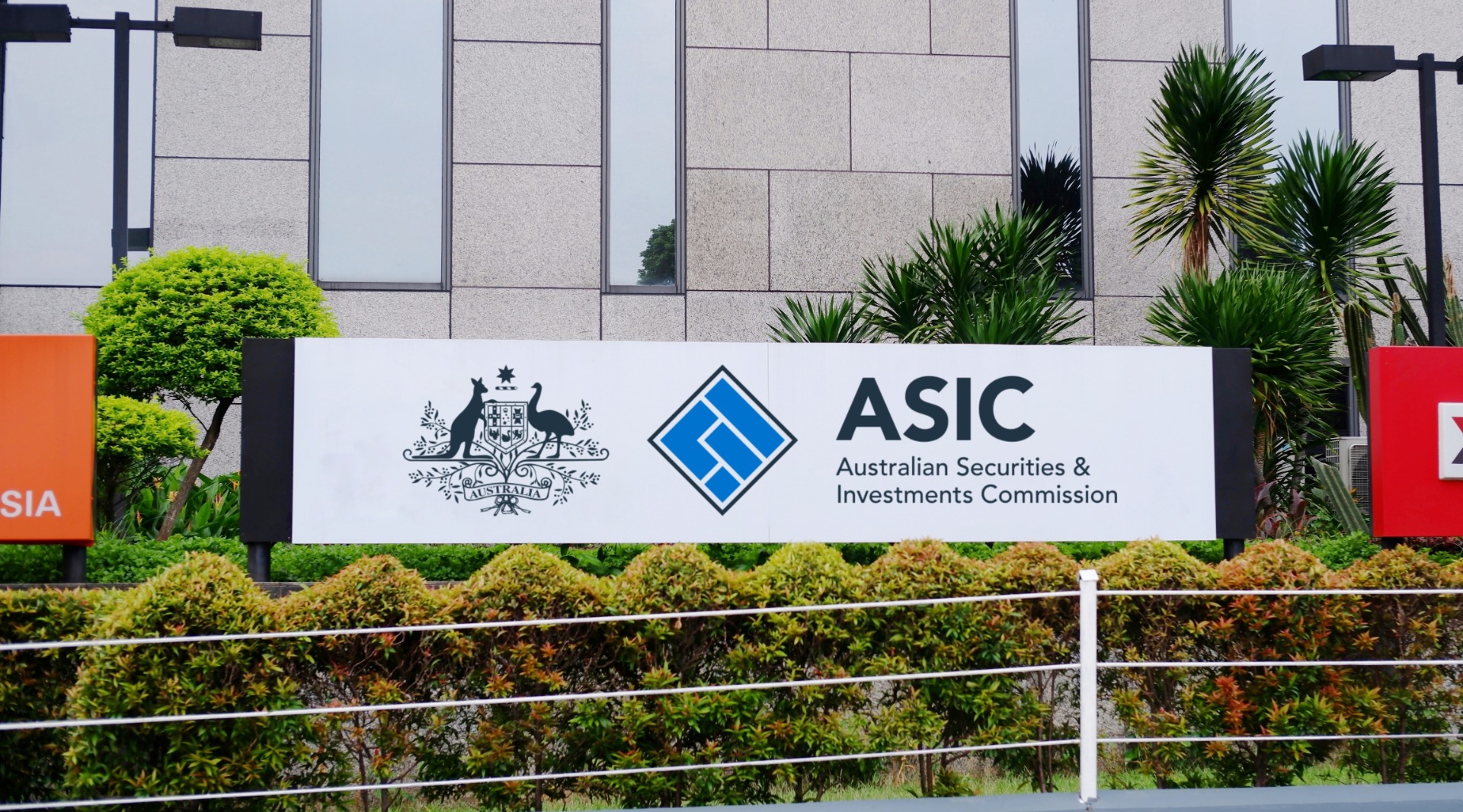
des Marchés Financiers (AMF) published
its response to the European Commission's consultation on the Savings and
Investments Union, advocating for an enhanced role for the European
Securities and Markets Authority (ESMA) in overseeing cross-border financial
activities.
The French
regulator highlighted significant gaps in the current supervisory
framework, where mechanisms remain largely national despite progress
toward market integration. This creates what the AMF describes as
differences in regulatory application, supervisory weaknesses, and additional
costs for market participants.
"The
fragmentation of financial market supervision in Europe is a
major obstacle to deepening the integration of European capital
markets," the AMF stated
in its consultation response.
Under the
AMF's proposal, ESMA would assume direct supervision of large, cross-border
entities including pan-European market infrastructures, global
crypto-asset service providers, and major asset management groups.
The French
regulator recently collaborated with Austrian and Italian authorities to call
for urgent ESMA supervision of major crypto-asset service providers,
following recommendations from an ESMA report published in spring 2024.
Smaller entities
operating primarily in national markets would continue under national
authority jurisdiction through a delegation arrangement organized by ESMA
using an indirect supervision model.
Currently,
each country operates rather independently and fights financial market problems
on its own. For example, the
AMF alone closed 181 fraudulent investment sites in 2024, and local fraud
victims lost an average of 30 thousand euros each.
The AMF
outlined specific governance changes for ESMA to accommodate expanded
supervisory responsibilities. The proposal includes creating a board of
supervisors comprising the 27 chairs of national competent authorities,
responsible for regulatory consistency.
A smaller
executive committee made up of qualified independent individuals would handle
operational supervisory decisions under this structure.
Marie-Anne Barbat-Layani
"It's
time to resolutely embark on this essential change in order to develop the
European capital markets," said AMF Chair Marie-Anne Barbat-Layani.
"Only unified, consistent and robust supervision will enable the European
Union to consolidate financial stability, effectively simplify the
regulatory framework while ensuring better protection for investors, and
build a single market for financial services that lives up to its
ambitions".
Market Transformation
Drives Reform Push
The AMF
emphasized that profound market transformation and the
growing importance of private finance and crypto-assets make more
integrated capital market supervision essential. The regulator argued that
current implementation divergences need to end, drawing parallels to the
banking sector's single supervisory mechanism.
The
proposal comes as the European Commission pursues its Savings
and Investments Union strategy, which aims to create better financial
opportunities for EU citizens while enhancing the financial system's
capability to connect savings with productive investments.
The
Commission estimates that Europe needs an additional €750-800 billion per
year by 2030 to address challenges including climate change,
technological shifts, and geopolitical dynamics.
France's
financial markets regulator is pushing for substantial changes to European
capital market supervision, arguing that the current fragmented
system undermines investor protection and limits the competitiveness of EU
financial markets.
France Pushes for
"Unified" European Capital Market Supervision
The Autorité
des Marchés Financiers (AMF) published
its response to the European Commission's consultation on the Savings and
Investments Union, advocating for an enhanced role for the European
Securities and Markets Authority (ESMA) in overseeing cross-border financial
activities.
The French
regulator highlighted significant gaps in the current supervisory
framework, where mechanisms remain largely national despite progress
toward market integration. This creates what the AMF describes as
differences in regulatory application, supervisory weaknesses, and additional
costs for market participants.
"The
fragmentation of financial market supervision in Europe is a
major obstacle to deepening the integration of European capital
markets," the AMF stated
in its consultation response.
Under the
AMF's proposal, ESMA would assume direct supervision of large, cross-border
entities including pan-European market infrastructures, global
crypto-asset service providers, and major asset management groups.
The French
regulator recently collaborated with Austrian and Italian authorities to call
for urgent ESMA supervision of major crypto-asset service providers,
following recommendations from an ESMA report published in spring 2024.
Smaller entities
operating primarily in national markets would continue under national
authority jurisdiction through a delegation arrangement organized by ESMA
using an indirect supervision model.
Currently,
each country operates rather independently and fights financial market problems
on its own. For example, the
AMF alone closed 181 fraudulent investment sites in 2024, and local fraud
victims lost an average of 30 thousand euros each.
The AMF
outlined specific governance changes for ESMA to accommodate expanded
supervisory responsibilities. The proposal includes creating a board of
supervisors comprising the 27 chairs of national competent authorities,
responsible for regulatory consistency.
A smaller
executive committee made up of qualified independent individuals would handle
operational supervisory decisions under this structure.
Marie-Anne Barbat-Layani
"It's
time to resolutely embark on this essential change in order to develop the
European capital markets," said AMF Chair Marie-Anne Barbat-Layani.
"Only unified, consistent and robust supervision will enable the European
Union to consolidate financial stability, effectively simplify the
regulatory framework while ensuring better protection for investors, and
build a single market for financial services that lives up to its
ambitions".
Market Transformation
Drives Reform Push
The AMF
emphasized that profound market transformation and the
growing importance of private finance and crypto-assets make more
integrated capital market supervision essential. The regulator argued that
current implementation divergences need to end, drawing parallels to the
banking sector's single supervisory mechanism.
The
proposal comes as the European Commission pursues its Savings
and Investments Union strategy, which aims to create better financial
opportunities for EU citizens while enhancing the financial system's
capability to connect savings with productive investments.
The
Commission estimates that Europe needs an additional €750-800 billion per
year by 2030 to address challenges including climate change,
technological shifts, and geopolitical dynamics.
Damian Chmiel is a Senior Analyst & Editor at Finance Magnates with more than 15 years of experience in the CFD and online trading industry. Active as both a trader and journalist since 2010, he focuses on broker coverage, fintech innovation, and regulatory developments across Europe, the Middle East, and Asia.
His work includes interviews with C-level leaders at major brokerages and fintech platforms, as well as co-authoring Finance Magnates’ quarterly industry benchmarking reports. Damian’s reporting is data-driven, market-aware, and grounded in direct industry engagement. His analysis and commentary have also been cited by external media outlets, including Investing.com, Binance, The Asset, Stockhead, and Dispatch.
Education:
MA in Finance and Accounting, Cracow University of Economics
Italy’s Consob Tightens Net on AI-Fueled Scams With Fresh Website Bans
FP Markets Winner Spotlight 🏆 | Global Broker of the Year 2025 #Trading #Broker #Innovation #Shorts
FP Markets Winner Spotlight 🏆 | Global Broker of the Year 2025 #Trading #Broker #Innovation #Shorts
FP Markets takes the spotlight as Global Broker of the Year 2025 at the Finance Magnates Awards.
Martin Stoilov, Head of Client Experience, shares that trust, innovation, and people played a key role in the company’s success, supported by a strong foundation of integrity and client-centricity.
Following this milestone, FP Markets continues to focus on growth, technology investment, and its core values of transparency and excellence.
👉 Be part of FM Awards 2026: https://awards.financemagnates.com/#nominate
FP Markets takes the spotlight as Global Broker of the Year 2025 at the Finance Magnates Awards.
Martin Stoilov, Head of Client Experience, shares that trust, innovation, and people played a key role in the company’s success, supported by a strong foundation of integrity and client-centricity.
Following this milestone, FP Markets continues to focus on growth, technology investment, and its core values of transparency and excellence.
👉 Be part of FM Awards 2026: https://awards.financemagnates.com/#nominate
In this video, we review @HolaPrimeMarketsOfficial, a multi-asset forex and CFDs broker offering different account types, trading platforms, and flexible trading conditions.
We cover the broker’s overall offering, including account options, trading environment, platforms like MT4 and MT5, and additional services such as managed accounts and fast withdrawals.
Watch the full video to see if Hola Prime Markets fits your trading needs.
📣 Stay up to date with the latest in finance and trading. Follow Finance Magnates for industry news, insights, and global event coverage.
Connect with us:
🔗 LinkedIn: /financemagnates
👍 Facebook: /financemagnates
📸 Instagram: https://www.instagram.com/financemagnates
🐦 X: https://x.com/financemagnates
🎥 TikTok: https://www.tiktok.com/tag/financemagnates
▶️ YouTube: /@financemagnates_official
#HolaPrime #ForexBroker #CFDTrading #FinanceMagnates #Trading #Forex #BrokerReview
In this video, we review @HolaPrimeMarketsOfficial, a multi-asset forex and CFDs broker offering different account types, trading platforms, and flexible trading conditions.
We cover the broker’s overall offering, including account options, trading environment, platforms like MT4 and MT5, and additional services such as managed accounts and fast withdrawals.
Watch the full video to see if Hola Prime Markets fits your trading needs.
📣 Stay up to date with the latest in finance and trading. Follow Finance Magnates for industry news, insights, and global event coverage.
Connect with us:
🔗 LinkedIn: /financemagnates
👍 Facebook: /financemagnates
📸 Instagram: https://www.instagram.com/financemagnates
🐦 X: https://x.com/financemagnates
🎥 TikTok: https://www.tiktok.com/tag/financemagnates
▶️ YouTube: /@financemagnates_official
#HolaPrime #ForexBroker #CFDTrading #FinanceMagnates #Trading #Forex #BrokerReview
Hola Prime Review: What You Need to Know | Full Breakdown by Finance Magnates
Hola Prime Review: What You Need to Know | Full Breakdown by Finance Magnates
In this video, we review @HolaPrime_Global, a proprietary trading firm offering evaluation programs and performance-based payouts in simulated market environments.
We cover how the challenge model works, including account types, profit splits (up to 95%), trading rules, and what it takes to reach a funded account. You’ll also learn about available platforms like MT4, MT5, cTrader, and more, along with insights into payouts, support, and trading conditions.
Watch the full video to see if Hola Prime fits your trading style.
📣 Stay up to date with the latest in finance and trading. Follow Finance Magnates for industry news, insights, and global event coverage.
Connect with us:
🔗 LinkedIn: /financemagnates
👍 Facebook: /financemagnates
📸 Instagram: https://www.instagram.com/financemagnates
🐦 X: https://x.com/financemagnates
🎥 TikTok: https://www.tiktok.com/tag/financemagnates
▶️ YouTube: /@financemagnates_official
#HolaPrime #PropFirm #Trading #FinanceMagnates #Forex #FuturesTrading #TradingReview #PropFirmReview
In this video, we review @HolaPrime_Global, a proprietary trading firm offering evaluation programs and performance-based payouts in simulated market environments.
We cover how the challenge model works, including account types, profit splits (up to 95%), trading rules, and what it takes to reach a funded account. You’ll also learn about available platforms like MT4, MT5, cTrader, and more, along with insights into payouts, support, and trading conditions.
Watch the full video to see if Hola Prime fits your trading style.
📣 Stay up to date with the latest in finance and trading. Follow Finance Magnates for industry news, insights, and global event coverage.
Connect with us:
🔗 LinkedIn: /financemagnates
👍 Facebook: /financemagnates
📸 Instagram: https://www.instagram.com/financemagnates
🐦 X: https://x.com/financemagnates
🎥 TikTok: https://www.tiktok.com/tag/financemagnates
▶️ YouTube: /@financemagnates_official
#HolaPrime #PropFirm #Trading #FinanceMagnates #Forex #FuturesTrading #TradingReview #PropFirmReview
Axi Winner Spotlight 🏆 | Global Most Innovative Broker 2025 #Innovation #Trading #Fintech #Broker
Axi Winner Spotlight 🏆 | Global Most Innovative Broker 2025 #Innovation #Trading #Fintech #Broker
Axi takes the spotlight at the Finance Magnates Awards, winning Global Most Innovative Broker 2025.
Olivia Xenofontos and Ivanna Openko share how the team will feel: proud, motivated, and ready to keep delivering.
They also describe the night as well-organized, focused, and enjoyable for all.
👉 Be part of FM Awards 2026.
Axi takes the spotlight at the Finance Magnates Awards, winning Global Most Innovative Broker 2025.
Olivia Xenofontos and Ivanna Openko share how the team will feel: proud, motivated, and ready to keep delivering.
They also describe the night as well-organized, focused, and enjoyable for all.
👉 Be part of FM Awards 2026.
Recognition that matters.
Built on transparency.
Driven by the industry.
The Finance Magnates Awards 2026.
Nominations are now open.
🔗 https://awards.financemagnates.com/?utm_source=SM&utm_medium=social&utm_campaign=recognition-matters
Recognition that matters.
Built on transparency.
Driven by the industry.
The Finance Magnates Awards 2026.
Nominations are now open.
🔗 https://awards.financemagnates.com/?utm_source=SM&utm_medium=social&utm_campaign=recognition-matters