The regulator reported $17.9 billion in total monetary relief, though the adjusted figure after exclusions drops to roughly $2.7 billion.
Chairman Paul Atkins and the current Commission labeled the prior administration's approach a "misallocation of resources."
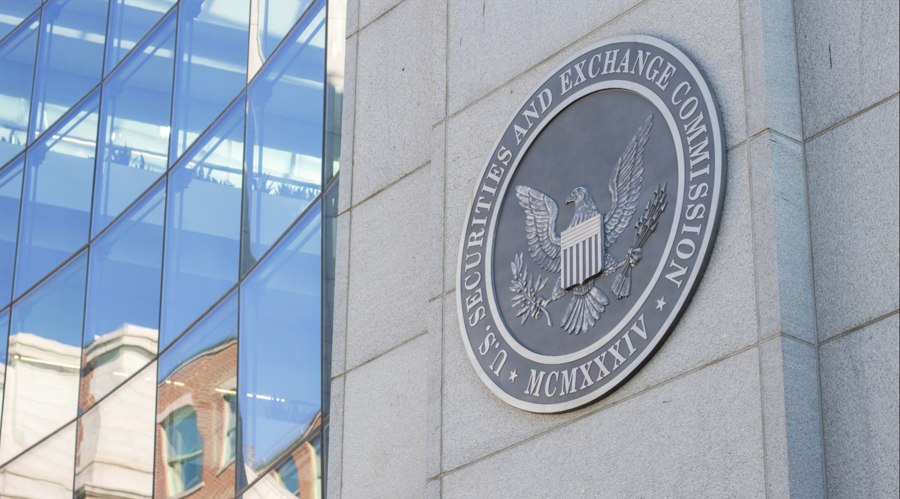
The seal of the United States SEC seen at its headquarters in Washington, DC
The U.S.
Securities and Exchange Commission (SEC) on Monday released its enforcement
results for the fiscal year ending September 30, 2025, disclosing 456 total
actions, including 303 standalone cases, and $17.9 billion in monetary relief
ordered against defendants.
The
disclosure of that adjusted figure is itself unusual. The SEC noted that
"deemed satisfied" amounts "historically had not been broken out
or excluded in annual Commission statistics," suggesting the current
leadership is deliberately drawing a contrast with the prior regime's reporting
practices.
Atkins Calls Prior
Enforcement a "Misallocation of Resources"
The fiscal
year 2025 results arrived with language rarely seen in an SEC annual
enforcement summary. Chairman Paul Atkins, who took the helm after being
confirmed by the Senate in April 2025, used the release to publicly disown much
of his predecessor's enforcement record.
SEC Chairman Paul Atkins
"Over
the past year, the Commission has put a stop to regulation by enforcement and
recentered its enforcement program on the Commission's core mission by
prioritizing cases that provide meaningful investor protection and strengthen
market integrity," Atkins said in the agency's statement.
The
sharpest criticism targeted two categories of enforcement actions brought under
former Chair Gary Gensler. First, the SEC pointed to 95 actions and $2.3
billion in penalties levied against financial firms since fiscal year 2022 for failing to preserve off-channel
communications,
primarily employee messages on platforms like WhatsApp and personal text
messages.
Second, the
agency flagged seven crypto firm registration cases and six "definition of
a dealer" enforcement actions. In both categories, the current Commission
said the cases "identified no direct investor harm," "produced
no investor benefit or protection," and amounted to a "bias for
volume of cases brought versus matters of investor protection."
Mark Uyeda, Source: LinkedIn
Commissioner
Mark T. Uyeda, who served as acting chairman before Atkins was confirmed,
echoed the sentiment. "I fully support the move away from using
enforcement as a tool for policymaking, and the return to the Commission's
historical norms," Uyeda said.
The WhatsApp Crackdown Era
Winds Down
The
off-channel communications enforcement campaign was one of the most visible and
expensive compliance events for Wall Street firms in recent years. Starting
with JPMorgan's $200 million fine in December 2021 for failing to monitor
employee use of WhatsApp and iMessage, the SEC and CFTC together levied over $2 billion in combined
penalties against
dozens of broker-dealers and investment advisers through multiple rounds of
enforcement.
With the
current Commission now characterizing these actions as a
"misinterpretation of the federal securities laws," the enforcement
pipeline for similar cases appears to have closed. Atkins had already signaled this shift in a Financial
Times interview
last year, criticizing the formulaic nature of penalties under his predecessor
and saying the prior SEC "would shoot first and then ask questions
later."
The SEC's
crypto enforcement reversal was equally blunt. The agency confirmed it
dismissed seven enforcement actions brought under the prior Commission between
February and May 2025, including cases against Coinbase, Binance, Cumberland
DRW, Consensys, Payward (Kraken's parent company), Dragonchain and Balina.
The Coinbase dismissal in February 2025 and the Binance case pause that preceded it had already
signaled the direction of travel. Both cases had been filed in 2023 under
Gensler's leadership, and both were dropped after the formation of the SEC's
Crypto Task Force under Commissioner Hester Peirce.
Still, the
SEC did bring several crypto-related fraud cases during the fiscal year,
including charges against Unicoin and four of its executives for alleged false
statements, a $198 million crypto and forex scheme allegedly run by PGI Global
founder Ramil Palafox, and charges against the founder of AI company Nate, Inc.
for allegedly raising more than $42 million through fraudulent solicitation.
What It Means Going
Forward
The fiscal
year 2025 report reads less like a standard annual enforcement summary and more
like a policy manifesto. By publicly labeling large portions of the prior
Commission's enforcement record as misguided, the Atkins SEC has effectively
redrawn the boundaries of what the agency considers appropriate use of its
enforcement authority.
The CFTC has moved in a parallel
direction under its
own new leadership, dropping proposals and aligning with the SEC on crypto
oversight. Both agencies are now emphasizing fraud-focused enforcement over
what the prior administrations treated as registration and compliance
violations.
The 1,095
investigations that were opened and closed without action during the fiscal
year, a figure the SEC disclosed but did not elaborate on, hint at the volume
of activity happening below the surface. Whether the current Commission's more
selective approach produces better outcomes for investors remains to be seen in
future enforcement cycles.
The U.S.
Securities and Exchange Commission (SEC) on Monday released its enforcement
results for the fiscal year ending September 30, 2025, disclosing 456 total
actions, including 303 standalone cases, and $17.9 billion in monetary relief
ordered against defendants.
The
disclosure of that adjusted figure is itself unusual. The SEC noted that
"deemed satisfied" amounts "historically had not been broken out
or excluded in annual Commission statistics," suggesting the current
leadership is deliberately drawing a contrast with the prior regime's reporting
practices.
Atkins Calls Prior
Enforcement a "Misallocation of Resources"
The fiscal
year 2025 results arrived with language rarely seen in an SEC annual
enforcement summary. Chairman Paul Atkins, who took the helm after being
confirmed by the Senate in April 2025, used the release to publicly disown much
of his predecessor's enforcement record.
SEC Chairman Paul Atkins
"Over
the past year, the Commission has put a stop to regulation by enforcement and
recentered its enforcement program on the Commission's core mission by
prioritizing cases that provide meaningful investor protection and strengthen
market integrity," Atkins said in the agency's statement.
The
sharpest criticism targeted two categories of enforcement actions brought under
former Chair Gary Gensler. First, the SEC pointed to 95 actions and $2.3
billion in penalties levied against financial firms since fiscal year 2022 for failing to preserve off-channel
communications,
primarily employee messages on platforms like WhatsApp and personal text
messages.
Second, the
agency flagged seven crypto firm registration cases and six "definition of
a dealer" enforcement actions. In both categories, the current Commission
said the cases "identified no direct investor harm," "produced
no investor benefit or protection," and amounted to a "bias for
volume of cases brought versus matters of investor protection."
Mark Uyeda, Source: LinkedIn
Commissioner
Mark T. Uyeda, who served as acting chairman before Atkins was confirmed,
echoed the sentiment. "I fully support the move away from using
enforcement as a tool for policymaking, and the return to the Commission's
historical norms," Uyeda said.
The WhatsApp Crackdown Era
Winds Down
The
off-channel communications enforcement campaign was one of the most visible and
expensive compliance events for Wall Street firms in recent years. Starting
with JPMorgan's $200 million fine in December 2021 for failing to monitor
employee use of WhatsApp and iMessage, the SEC and CFTC together levied over $2 billion in combined
penalties against
dozens of broker-dealers and investment advisers through multiple rounds of
enforcement.
With the
current Commission now characterizing these actions as a
"misinterpretation of the federal securities laws," the enforcement
pipeline for similar cases appears to have closed. Atkins had already signaled this shift in a Financial
Times interview
last year, criticizing the formulaic nature of penalties under his predecessor
and saying the prior SEC "would shoot first and then ask questions
later."
The SEC's
crypto enforcement reversal was equally blunt. The agency confirmed it
dismissed seven enforcement actions brought under the prior Commission between
February and May 2025, including cases against Coinbase, Binance, Cumberland
DRW, Consensys, Payward (Kraken's parent company), Dragonchain and Balina.
The Coinbase dismissal in February 2025 and the Binance case pause that preceded it had already
signaled the direction of travel. Both cases had been filed in 2023 under
Gensler's leadership, and both were dropped after the formation of the SEC's
Crypto Task Force under Commissioner Hester Peirce.
Still, the
SEC did bring several crypto-related fraud cases during the fiscal year,
including charges against Unicoin and four of its executives for alleged false
statements, a $198 million crypto and forex scheme allegedly run by PGI Global
founder Ramil Palafox, and charges against the founder of AI company Nate, Inc.
for allegedly raising more than $42 million through fraudulent solicitation.
What It Means Going
Forward
The fiscal
year 2025 report reads less like a standard annual enforcement summary and more
like a policy manifesto. By publicly labeling large portions of the prior
Commission's enforcement record as misguided, the Atkins SEC has effectively
redrawn the boundaries of what the agency considers appropriate use of its
enforcement authority.
The CFTC has moved in a parallel
direction under its
own new leadership, dropping proposals and aligning with the SEC on crypto
oversight. Both agencies are now emphasizing fraud-focused enforcement over
what the prior administrations treated as registration and compliance
violations.
The 1,095
investigations that were opened and closed without action during the fiscal
year, a figure the SEC disclosed but did not elaborate on, hint at the volume
of activity happening below the surface. Whether the current Commission's more
selective approach produces better outcomes for investors remains to be seen in
future enforcement cycles.
Damian Chmiel is a Senior Analyst & Editor at Finance Magnates with more than 15 years of experience in the CFD and online trading industry. Active as both a trader and journalist since 2010, he focuses on broker coverage, fintech innovation, and regulatory developments across Europe, the Middle East, and Asia.
His work includes interviews with C-level leaders at major brokerages and fintech platforms, as well as co-authoring Finance Magnates’ quarterly industry benchmarking reports. Damian’s reporting is data-driven, market-aware, and grounded in direct industry engagement. His analysis and commentary have also been cited by external media outlets, including Investing.com, Binance, The Asset, Stockhead, and Dispatch.
Education:
MA in Finance and Accounting, Cracow University of Economics
Devexperts Updates DXcharts With AI Tool That Converts English Prompts to Indicators
Featured Videos
Hola Prime Review: What You Need to Know | Full Breakdown by Finance Magnates
Hola Prime Review: What You Need to Know | Full Breakdown by Finance Magnates
Hola Prime Review: What You Need to Know | Full Breakdown by Finance Magnates
Hola Prime Review: What You Need to Know | Full Breakdown by Finance Magnates
In this video, we review @HolaPrime_Global, a proprietary trading firm offering evaluation programs and performance-based payouts in simulated market environments.
We cover how the challenge model works, including account types, profit splits (up to 95%), trading rules, and what it takes to reach a funded account. You’ll also learn about available platforms like MT4, MT5, cTrader, and more, along with insights into payouts, support, and trading conditions.
Watch the full video to see if Hola Prime fits your trading style.
📣 Stay up to date with the latest in finance and trading. Follow Finance Magnates for industry news, insights, and global event coverage.
Connect with us:
🔗 LinkedIn: /financemagnates
👍 Facebook: /financemagnates
📸 Instagram: https://www.instagram.com/financemagnates
🐦 X: https://x.com/financemagnates
🎥 TikTok: https://www.tiktok.com/tag/financemagnates
▶️ YouTube: /@financemagnates_official
#HolaPrime #PropFirm #Trading #FinanceMagnates #Forex #FuturesTrading #TradingReview #PropFirmReview
In this video, we review @HolaPrime_Global, a proprietary trading firm offering evaluation programs and performance-based payouts in simulated market environments.
We cover how the challenge model works, including account types, profit splits (up to 95%), trading rules, and what it takes to reach a funded account. You’ll also learn about available platforms like MT4, MT5, cTrader, and more, along with insights into payouts, support, and trading conditions.
Watch the full video to see if Hola Prime fits your trading style.
📣 Stay up to date with the latest in finance and trading. Follow Finance Magnates for industry news, insights, and global event coverage.
Connect with us:
🔗 LinkedIn: /financemagnates
👍 Facebook: /financemagnates
📸 Instagram: https://www.instagram.com/financemagnates
🐦 X: https://x.com/financemagnates
🎥 TikTok: https://www.tiktok.com/tag/financemagnates
▶️ YouTube: /@financemagnates_official
#HolaPrime #PropFirm #Trading #FinanceMagnates #Forex #FuturesTrading #TradingReview #PropFirmReview
In this video, we review @HolaPrime_Global, a proprietary trading firm offering evaluation programs and performance-based payouts in simulated market environments.
We cover how the challenge model works, including account types, profit splits (up to 95%), trading rules, and what it takes to reach a funded account. You’ll also learn about available platforms like MT4, MT5, cTrader, and more, along with insights into payouts, support, and trading conditions.
Watch the full video to see if Hola Prime fits your trading style.
📣 Stay up to date with the latest in finance and trading. Follow Finance Magnates for industry news, insights, and global event coverage.
Connect with us:
🔗 LinkedIn: /financemagnates
👍 Facebook: /financemagnates
📸 Instagram: https://www.instagram.com/financemagnates
🐦 X: https://x.com/financemagnates
🎥 TikTok: https://www.tiktok.com/tag/financemagnates
▶️ YouTube: /@financemagnates_official
#HolaPrime #PropFirm #Trading #FinanceMagnates #Forex #FuturesTrading #TradingReview #PropFirmReview
In this video, we review @HolaPrime_Global, a proprietary trading firm offering evaluation programs and performance-based payouts in simulated market environments.
We cover how the challenge model works, including account types, profit splits (up to 95%), trading rules, and what it takes to reach a funded account. You’ll also learn about available platforms like MT4, MT5, cTrader, and more, along with insights into payouts, support, and trading conditions.
Watch the full video to see if Hola Prime fits your trading style.
📣 Stay up to date with the latest in finance and trading. Follow Finance Magnates for industry news, insights, and global event coverage.
Connect with us:
🔗 LinkedIn: /financemagnates
👍 Facebook: /financemagnates
📸 Instagram: https://www.instagram.com/financemagnates
🐦 X: https://x.com/financemagnates
🎥 TikTok: https://www.tiktok.com/tag/financemagnates
▶️ YouTube: /@financemagnates_official
#HolaPrime #PropFirm #Trading #FinanceMagnates #Forex #FuturesTrading #TradingReview #PropFirmReview
Axi Winner Spotlight 🏆 | Global Most Innovative Broker 2025 #Innovation #Trading #Fintech #Broker
Axi Winner Spotlight 🏆 | Global Most Innovative Broker 2025 #Innovation #Trading #Fintech #Broker
Axi Winner Spotlight 🏆 | Global Most Innovative Broker 2025 #Innovation #Trading #Fintech #Broker
Axi Winner Spotlight 🏆 | Global Most Innovative Broker 2025 #Innovation #Trading #Fintech #Broker
Axi Winner Spotlight 🏆 | Global Most Innovative Broker 2025 #Innovation #Trading #Fintech #Broker
Axi Winner Spotlight 🏆 | Global Most Innovative Broker 2025 #Innovation #Trading #Fintech #Broker
Axi takes the spotlight at the Finance Magnates Awards, winning Global Most Innovative Broker 2025.
Olivia Xenofontos and Ivanna Openko share how the team will feel: proud, motivated, and ready to keep delivering.
They also describe the night as well-organized, focused, and enjoyable for all.
👉 Be part of FM Awards 2026.
Axi takes the spotlight at the Finance Magnates Awards, winning Global Most Innovative Broker 2025.
Olivia Xenofontos and Ivanna Openko share how the team will feel: proud, motivated, and ready to keep delivering.
They also describe the night as well-organized, focused, and enjoyable for all.
👉 Be part of FM Awards 2026.
Axi takes the spotlight at the Finance Magnates Awards, winning Global Most Innovative Broker 2025.
Olivia Xenofontos and Ivanna Openko share how the team will feel: proud, motivated, and ready to keep delivering.
They also describe the night as well-organized, focused, and enjoyable for all.
👉 Be part of FM Awards 2026.
Axi takes the spotlight at the Finance Magnates Awards, winning Global Most Innovative Broker 2025.
Olivia Xenofontos and Ivanna Openko share how the team will feel: proud, motivated, and ready to keep delivering.
They also describe the night as well-organized, focused, and enjoyable for all.
👉 Be part of FM Awards 2026.
Axi takes the spotlight at the Finance Magnates Awards, winning Global Most Innovative Broker 2025.
Olivia Xenofontos and Ivanna Openko share how the team will feel: proud, motivated, and ready to keep delivering.
They also describe the night as well-organized, focused, and enjoyable for all.
👉 Be part of FM Awards 2026.
Axi takes the spotlight at the Finance Magnates Awards, winning Global Most Innovative Broker 2025.
Olivia Xenofontos and Ivanna Openko share how the team will feel: proud, motivated, and ready to keep delivering.
They also describe the night as well-organized, focused, and enjoyable for all.
👉 Be part of FM Awards 2026.
Recognition that matters.
Built on transparency.
Driven by the industry.
The Finance Magnates Awards 2026.
Nominations are now open.
🔗 https://awards.financemagnates.com/?utm_source=SM&utm_medium=social&utm_campaign=recognition-matters
Recognition that matters.
Built on transparency.
Driven by the industry.
The Finance Magnates Awards 2026.
Nominations are now open.
🔗 https://awards.financemagnates.com/?utm_source=SM&utm_medium=social&utm_campaign=recognition-matters
Recognition that matters.
Built on transparency.
Driven by the industry.
The Finance Magnates Awards 2026.
Nominations are now open.
🔗 https://awards.financemagnates.com/?utm_source=SM&utm_medium=social&utm_campaign=recognition-matters
Recognition that matters.
Built on transparency.
Driven by the industry.
The Finance Magnates Awards 2026.
Nominations are now open.
🔗 https://awards.financemagnates.com/?utm_source=SM&utm_medium=social&utm_campaign=recognition-matters
Recognition that matters.
Built on transparency.
Driven by the industry.
The Finance Magnates Awards 2026.
Nominations are now open.
🔗 https://awards.financemagnates.com/?utm_source=SM&utm_medium=social&utm_campaign=recognition-matters
Recognition that matters.
Built on transparency.
Driven by the industry.
The Finance Magnates Awards 2026.
Nominations are now open.
🔗 https://awards.financemagnates.com/?utm_source=SM&utm_medium=social&utm_campaign=recognition-matters
Tickmill Winner Spotlight | Broker of the Year 2025 (LATAM) 🏆 | Finance Magnates Awards #Trading
Tickmill Winner Spotlight | Broker of the Year 2025 (LATAM) 🏆 | Finance Magnates Awards #Trading
Tickmill Winner Spotlight | Broker of the Year 2025 (LATAM) 🏆 | Finance Magnates Awards #Trading
Tickmill Winner Spotlight | Broker of the Year 2025 (LATAM) 🏆 | Finance Magnates Awards #Trading
Tickmill Winner Spotlight | Broker of the Year 2025 (LATAM) 🏆 | Finance Magnates Awards #Trading
Tickmill Winner Spotlight | Broker of the Year 2025 (LATAM) 🏆 | Finance Magnates Awards #Trading
What helped Tickmill stand out this year?
In this Winner Spotlight, Johnny Khalil, Executive Director at Tickmill Europe, shares how listening closely to clients and delivering strong trading conditions made the difference.
A big thank you to the community whose support continues to drive progress every day.
👉 Think your brand has what it takes? Nominate for the 2026 Finance Magnates Awards: https://awards.financemagnates.com/#nominate
What helped Tickmill stand out this year?
In this Winner Spotlight, Johnny Khalil, Executive Director at Tickmill Europe, shares how listening closely to clients and delivering strong trading conditions made the difference.
A big thank you to the community whose support continues to drive progress every day.
👉 Think your brand has what it takes? Nominate for the 2026 Finance Magnates Awards: https://awards.financemagnates.com/#nominate
What helped Tickmill stand out this year?
In this Winner Spotlight, Johnny Khalil, Executive Director at Tickmill Europe, shares how listening closely to clients and delivering strong trading conditions made the difference.
A big thank you to the community whose support continues to drive progress every day.
👉 Think your brand has what it takes? Nominate for the 2026 Finance Magnates Awards: https://awards.financemagnates.com/#nominate
What helped Tickmill stand out this year?
In this Winner Spotlight, Johnny Khalil, Executive Director at Tickmill Europe, shares how listening closely to clients and delivering strong trading conditions made the difference.
A big thank you to the community whose support continues to drive progress every day.
👉 Think your brand has what it takes? Nominate for the 2026 Finance Magnates Awards: https://awards.financemagnates.com/#nominate
What helped Tickmill stand out this year?
In this Winner Spotlight, Johnny Khalil, Executive Director at Tickmill Europe, shares how listening closely to clients and delivering strong trading conditions made the difference.
A big thank you to the community whose support continues to drive progress every day.
👉 Think your brand has what it takes? Nominate for the 2026 Finance Magnates Awards: https://awards.financemagnates.com/#nominate
What helped Tickmill stand out this year?
In this Winner Spotlight, Johnny Khalil, Executive Director at Tickmill Europe, shares how listening closely to clients and delivering strong trading conditions made the difference.
A big thank you to the community whose support continues to drive progress every day.
👉 Think your brand has what it takes? Nominate for the 2026 Finance Magnates Awards: https://awards.financemagnates.com/#nominate
CMC Markets’ Artur Delijergijevs on Metals Demand, Volatility, & Stable Execution
CMC Markets’ Artur Delijergijevs on Metals Demand, Volatility, & Stable Execution
CMC Markets’ Artur Delijergijevs on Metals Demand, Volatility, & Stable Execution
CMC Markets’ Artur Delijergijevs on Metals Demand, Volatility, & Stable Execution
CMC Markets’ Artur Delijergijevs on Metals Demand, Volatility, & Stable Execution
CMC Markets’ Artur Delijergijevs on Metals Demand, Volatility, & Stable Execution
In this exclusive Executive Interview, Finance Magnates speaks with Artur Delijergijevs, Head of Systematic Market Making at CMC Markets, about the current state of metals demand and market volatility.
Delijergijevs offers a desk-level view on:
- Metals Demand: Why metals are seeing the strongest demand from both retail and institutional clients right now.
- The Safe-Haven Debate: Questioning whether gold still fits the classic safe-haven definition given large daily price movements.
- Volatile Market Prep: How a market-making desk prepares its systems and pricing for stressed market conditions and high-impact economic events.
- Hybrid Execution: Why the best execution model combines electronic speed with human relationship support, especially during volatility.
- AI in Workflow: Where CMC Markets is integrating machine learning for risk management and pricing, and the limitations of AI during stressed markets.
- Dubai's Role: The strategic importance of Dubai’s location for covering global trading sessions across Asia, Europe, and the US.
Watch to understand how CMC Markets maintains stable pricing and reliable execution quality in high-volatility environments.
#CMCmarkets #forex #metals #gold #trading #volatility #MarketMaking #iFXDubai #FinanceMagnates #Finance #Fintech #Execution #AlgorithmicTrading #RiskManagement
In this exclusive Executive Interview, Finance Magnates speaks with Artur Delijergijevs, Head of Systematic Market Making at CMC Markets, about the current state of metals demand and market volatility.
Delijergijevs offers a desk-level view on:
- Metals Demand: Why metals are seeing the strongest demand from both retail and institutional clients right now.
- The Safe-Haven Debate: Questioning whether gold still fits the classic safe-haven definition given large daily price movements.
- Volatile Market Prep: How a market-making desk prepares its systems and pricing for stressed market conditions and high-impact economic events.
- Hybrid Execution: Why the best execution model combines electronic speed with human relationship support, especially during volatility.
- AI in Workflow: Where CMC Markets is integrating machine learning for risk management and pricing, and the limitations of AI during stressed markets.
- Dubai's Role: The strategic importance of Dubai’s location for covering global trading sessions across Asia, Europe, and the US.
Watch to understand how CMC Markets maintains stable pricing and reliable execution quality in high-volatility environments.
#CMCmarkets #forex #metals #gold #trading #volatility #MarketMaking #iFXDubai #FinanceMagnates #Finance #Fintech #Execution #AlgorithmicTrading #RiskManagement
In this exclusive Executive Interview, Finance Magnates speaks with Artur Delijergijevs, Head of Systematic Market Making at CMC Markets, about the current state of metals demand and market volatility.
Delijergijevs offers a desk-level view on:
- Metals Demand: Why metals are seeing the strongest demand from both retail and institutional clients right now.
- The Safe-Haven Debate: Questioning whether gold still fits the classic safe-haven definition given large daily price movements.
- Volatile Market Prep: How a market-making desk prepares its systems and pricing for stressed market conditions and high-impact economic events.
- Hybrid Execution: Why the best execution model combines electronic speed with human relationship support, especially during volatility.
- AI in Workflow: Where CMC Markets is integrating machine learning for risk management and pricing, and the limitations of AI during stressed markets.
- Dubai's Role: The strategic importance of Dubai’s location for covering global trading sessions across Asia, Europe, and the US.
Watch to understand how CMC Markets maintains stable pricing and reliable execution quality in high-volatility environments.
#CMCmarkets #forex #metals #gold #trading #volatility #MarketMaking #iFXDubai #FinanceMagnates #Finance #Fintech #Execution #AlgorithmicTrading #RiskManagement
In this exclusive Executive Interview, Finance Magnates speaks with Artur Delijergijevs, Head of Systematic Market Making at CMC Markets, about the current state of metals demand and market volatility.
Delijergijevs offers a desk-level view on:
- Metals Demand: Why metals are seeing the strongest demand from both retail and institutional clients right now.
- The Safe-Haven Debate: Questioning whether gold still fits the classic safe-haven definition given large daily price movements.
- Volatile Market Prep: How a market-making desk prepares its systems and pricing for stressed market conditions and high-impact economic events.
- Hybrid Execution: Why the best execution model combines electronic speed with human relationship support, especially during volatility.
- AI in Workflow: Where CMC Markets is integrating machine learning for risk management and pricing, and the limitations of AI during stressed markets.
- Dubai's Role: The strategic importance of Dubai’s location for covering global trading sessions across Asia, Europe, and the US.
Watch to understand how CMC Markets maintains stable pricing and reliable execution quality in high-volatility environments.
#CMCmarkets #forex #metals #gold #trading #volatility #MarketMaking #iFXDubai #FinanceMagnates #Finance #Fintech #Execution #AlgorithmicTrading #RiskManagement
In this exclusive Executive Interview, Finance Magnates speaks with Artur Delijergijevs, Head of Systematic Market Making at CMC Markets, about the current state of metals demand and market volatility.
Delijergijevs offers a desk-level view on:
- Metals Demand: Why metals are seeing the strongest demand from both retail and institutional clients right now.
- The Safe-Haven Debate: Questioning whether gold still fits the classic safe-haven definition given large daily price movements.
- Volatile Market Prep: How a market-making desk prepares its systems and pricing for stressed market conditions and high-impact economic events.
- Hybrid Execution: Why the best execution model combines electronic speed with human relationship support, especially during volatility.
- AI in Workflow: Where CMC Markets is integrating machine learning for risk management and pricing, and the limitations of AI during stressed markets.
- Dubai's Role: The strategic importance of Dubai’s location for covering global trading sessions across Asia, Europe, and the US.
Watch to understand how CMC Markets maintains stable pricing and reliable execution quality in high-volatility environments.
#CMCmarkets #forex #metals #gold #trading #volatility #MarketMaking #iFXDubai #FinanceMagnates #Finance #Fintech #Execution #AlgorithmicTrading #RiskManagement
In this exclusive Executive Interview, Finance Magnates speaks with Artur Delijergijevs, Head of Systematic Market Making at CMC Markets, about the current state of metals demand and market volatility.
Delijergijevs offers a desk-level view on:
- Metals Demand: Why metals are seeing the strongest demand from both retail and institutional clients right now.
- The Safe-Haven Debate: Questioning whether gold still fits the classic safe-haven definition given large daily price movements.
- Volatile Market Prep: How a market-making desk prepares its systems and pricing for stressed market conditions and high-impact economic events.
- Hybrid Execution: Why the best execution model combines electronic speed with human relationship support, especially during volatility.
- AI in Workflow: Where CMC Markets is integrating machine learning for risk management and pricing, and the limitations of AI during stressed markets.
- Dubai's Role: The strategic importance of Dubai’s location for covering global trading sessions across Asia, Europe, and the US.
Watch to understand how CMC Markets maintains stable pricing and reliable execution quality in high-volatility environments.
#CMCmarkets #forex #metals #gold #trading #volatility #MarketMaking #iFXDubai #FinanceMagnates #Finance #Fintech #Execution #AlgorithmicTrading #RiskManagement