Finance Magnates sat down to talk with Mr Tzah Druker, the head of the Israeli Trading Arena Association, which represents the industry in its dealings with the regulator, to hear how he expects the process to continue. Showcasing the state of despair, this is how he described his role: “My job is to make sure there will be companies left in the market after the regulations will come into effect.”
Tzah Druker will take part in the panel "Financial Regulation in Israel – Where Next?" at the Finance Magnates Tel Aviv Conference, June 29th 2016. To join the new world of online trading, fintech and marketing register now.
Big Hurdles
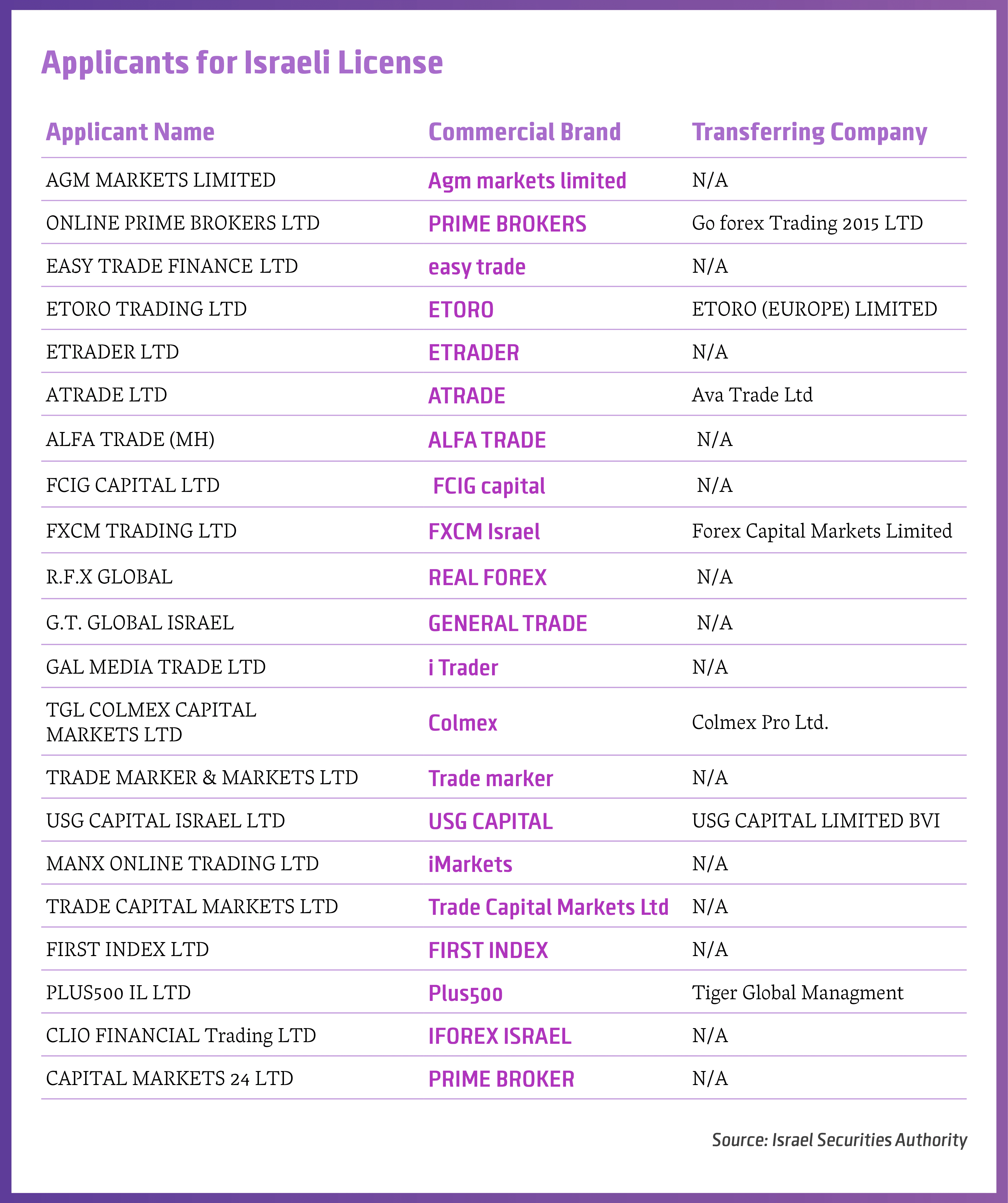
Druker says that due to the way the ISA chooses to interpret capital requirements, brokers will find it very hard to comply, and out of the 21 firms that started the licensing process (see chart at the bottom of the article) only a handful will remain at the end.
“Companies that expected to raise funds after they get the license discovered that will not happen as the ISA demands they have all the capital before the regulating process ends – without knowing if they will get the license or not. Especially some of the companies that were operating before the regulations won’t be able to gather all the funds and will become distressed. For this reason, we can expect that soon the ISA will announce that these companies will not get licensed.
At the moment, after three binary companies are no longer in the processes, the case of UTrade, and three other companies that withdrew their applications, so only 14 companies are left. About another four to six companies are in a process of wrapping up their operations – looking to be bought out or just shut down.
Not all companies will be able to clear the regulatory hurdles erected by the ISA. For example, companies that have clients abroad will need to let the ISA know how much funds they hold in order to set their capital requirements (above the minimum) and not all will be able to bridge that gap. I expect that in the end only around five companies will remain.”
He said that this will hurt clients’ safety, and not just the firms. “When coming to regulate a new market it is not familiar with the ISA might want to limit the amount of players in the field so that there will only be a few big firms it can easily deal with. However, in this case it will cause the amount of clients to shrink too – so that the firms remaining will not be stable and might depend on a few high net worth clients.”
Unfair Handicaps
However, Druker said: “What will determine the size of the market is not how many companies will stay in operation, but what will the companies be able to offer.” Here he is referring to the ISA’s crippling limitations on CFDs.
The Israeli regulator has issued specific demands on calculating CFDs and displaying the information in a way that no other regulator in the world has. In order to offer non-expiring CFDs, they must be based on a weighted average of futures contracts and not a specific one that can be followed. By demanding that CFDs follow a single transparent contract, the ISA is making sure that Israeli brokers will need to operate in a way that is different to all other brokers – and this has costs.
This all leads to what Druker sees as the worst effect of the new regulations – making the Israeli brokers non-competitive. Israeli citizens are free to trade with foreign brokers and the ISA will not do anything to stop this despite putting handicaps on local operators.
After the licenses are finally given, a trader will face this question: should he choose an Israeli broker offering piece of mind with the knowledge that he can turn to the ISA in case of a problem, or should he choose a broker licensed by the FCA or CySEC that offers many more CFDs and currency pairs, as well as the lower costs that go with not having to comply with the Israeli regulations? According to Druker, enough companies think that the choice will not be favorable to the Israeli license holders.
No More Options
Regarding the banning of binary options, Druker thinks that it will achieve the opposite of the intended goal: “The Israeli public came to the ISA and asked it to regulate the binary options market so that traders will be safer. What happened is that the ISA said we can’t effectively regulate this market. As a result, Israeli traders will become less safe - they will have to turn to offshore brokers, as regulated brokers in Cyprus or the UK might reject them because they don’t have an Israeli license but unregulated firms will welcome them.”
He explains that the Israeli binary options firms decided not to fight this decision because it is not worth the effort. It’s a very small market for international firms, and Israelis are considered to be very demanding clients in terms of support which costs manpower, and it was not worth the trouble.
The full list of applicants for the Israeli License. Source: Finance Magnates
Finance Magnates sat down to talk with Mr Tzah Druker, the head of the Israeli Trading Arena Association, which represents the industry in its dealings with the regulator, to hear how he expects the process to continue. Showcasing the state of despair, this is how he described his role: “My job is to make sure there will be companies left in the market after the regulations will come into effect.”
Tzah Druker will take part in the panel "Financial Regulation in Israel – Where Next?" at the Finance Magnates Tel Aviv Conference, June 29th 2016. To join the new world of online trading, fintech and marketing register now.
Big Hurdles
Druker says that due to the way the ISA chooses to interpret capital requirements, brokers will find it very hard to comply, and out of the 21 firms that started the licensing process (see chart at the bottom of the article) only a handful will remain at the end.
“Companies that expected to raise funds after they get the license discovered that will not happen as the ISA demands they have all the capital before the regulating process ends – without knowing if they will get the license or not. Especially some of the companies that were operating before the regulations won’t be able to gather all the funds and will become distressed. For this reason, we can expect that soon the ISA will announce that these companies will not get licensed.
At the moment, after three binary companies are no longer in the processes, the case of UTrade, and three other companies that withdrew their applications, so only 14 companies are left. About another four to six companies are in a process of wrapping up their operations – looking to be bought out or just shut down.
Not all companies will be able to clear the regulatory hurdles erected by the ISA. For example, companies that have clients abroad will need to let the ISA know how much funds they hold in order to set their capital requirements (above the minimum) and not all will be able to bridge that gap. I expect that in the end only around five companies will remain.”
He said that this will hurt clients’ safety, and not just the firms. “When coming to regulate a new market it is not familiar with the ISA might want to limit the amount of players in the field so that there will only be a few big firms it can easily deal with. However, in this case it will cause the amount of clients to shrink too – so that the firms remaining will not be stable and might depend on a few high net worth clients.”
Unfair Handicaps
However, Druker said: “What will determine the size of the market is not how many companies will stay in operation, but what will the companies be able to offer.” Here he is referring to the ISA’s crippling limitations on CFDs.
The Israeli regulator has issued specific demands on calculating CFDs and displaying the information in a way that no other regulator in the world has. In order to offer non-expiring CFDs, they must be based on a weighted average of futures contracts and not a specific one that can be followed. By demanding that CFDs follow a single transparent contract, the ISA is making sure that Israeli brokers will need to operate in a way that is different to all other brokers – and this has costs.
This all leads to what Druker sees as the worst effect of the new regulations – making the Israeli brokers non-competitive. Israeli citizens are free to trade with foreign brokers and the ISA will not do anything to stop this despite putting handicaps on local operators.
After the licenses are finally given, a trader will face this question: should he choose an Israeli broker offering piece of mind with the knowledge that he can turn to the ISA in case of a problem, or should he choose a broker licensed by the FCA or CySEC that offers many more CFDs and currency pairs, as well as the lower costs that go with not having to comply with the Israeli regulations? According to Druker, enough companies think that the choice will not be favorable to the Israeli license holders.
No More Options
Regarding the banning of binary options, Druker thinks that it will achieve the opposite of the intended goal: “The Israeli public came to the ISA and asked it to regulate the binary options market so that traders will be safer. What happened is that the ISA said we can’t effectively regulate this market. As a result, Israeli traders will become less safe - they will have to turn to offshore brokers, as regulated brokers in Cyprus or the UK might reject them because they don’t have an Israeli license but unregulated firms will welcome them.”
He explains that the Israeli binary options firms decided not to fight this decision because it is not worth the effort. It’s a very small market for international firms, and Israelis are considered to be very demanding clients in terms of support which costs manpower, and it was not worth the trouble.
The full list of applicants for the Israeli License. Source: Finance Magnates
Most Axi Clients Now Trade on MetaTrader 5 as Broker Rolls Out MetaQuotes' Order Engine
Featured Videos
AvaTrade to Acquire Most of FXCM; NAGA Raises $8M
AvaTrade to Acquire Most of FXCM; NAGA Raises $8M
AvaTrade to Acquire Most of FXCM; NAGA Raises $8M
AvaTrade to Acquire Most of FXCM; NAGA Raises $8M
Today’s financial news recap covers AvaTrade agrees to acquire most of FXCM, NAGA secures eight million dollars in new financing, and Wise seeks a tax settlement in the UK.
Finance Magnates Daily Recap brings you the latest news from forex and CFD brokers, fintech, payments, cryptocurrency, digital assets, trading platforms, financial regulation and global markets.
Get the key company news, executive moves, deals, regulatory updates and market developments of the day, in just a few minutes. New episodes published every weekday.
Read more: https://www.financemagnates.com
#FinanceMagnates #ForexNews #FintechNews
Today’s financial news recap covers AvaTrade agrees to acquire most of FXCM, NAGA secures eight million dollars in new financing, and Wise seeks a tax settlement in the UK.
Finance Magnates Daily Recap brings you the latest news from forex and CFD brokers, fintech, payments, cryptocurrency, digital assets, trading platforms, financial regulation and global markets.
Get the key company news, executive moves, deals, regulatory updates and market developments of the day, in just a few minutes. New episodes published every weekday.
Read more: https://www.financemagnates.com
#FinanceMagnates #ForexNews #FintechNews
Today’s financial news recap covers AvaTrade agrees to acquire most of FXCM, NAGA secures eight million dollars in new financing, and Wise seeks a tax settlement in the UK.
Finance Magnates Daily Recap brings you the latest news from forex and CFD brokers, fintech, payments, cryptocurrency, digital assets, trading platforms, financial regulation and global markets.
Get the key company news, executive moves, deals, regulatory updates and market developments of the day, in just a few minutes. New episodes published every weekday.
Read more: https://www.financemagnates.com
#FinanceMagnates #ForexNews #FintechNews
Today’s financial news recap covers AvaTrade agrees to acquire most of FXCM, NAGA secures eight million dollars in new financing, and Wise seeks a tax settlement in the UK.
Finance Magnates Daily Recap brings you the latest news from forex and CFD brokers, fintech, payments, cryptocurrency, digital assets, trading platforms, financial regulation and global markets.
Get the key company news, executive moves, deals, regulatory updates and market developments of the day, in just a few minutes. New episodes published every weekday.
Read more: https://www.financemagnates.com
#FinanceMagnates #ForexNews #FintechNews
XTB Adds Overnight US Stock Trading; Nasdaq Ventures Invests in One Trading
XTB Adds Overnight US Stock Trading; Nasdaq Ventures Invests in One Trading
XTB Adds Overnight US Stock Trading; Nasdaq Ventures Invests in One Trading
XTB Adds Overnight US Stock Trading; Nasdaq Ventures Invests in One Trading
XTB Adds Overnight US Stock Trading; Nasdaq Ventures Invests in One Trading
XTB Adds Overnight US Stock Trading; Nasdaq Ventures Invests in One Trading
Today’s financial news recap covers XTB expands overnight US stock trading, Fortrade reports higher revenue, Nasdaq backs One Trading, and Vest Labs raises 13 million dollars.
Finance Magnates Daily Recap brings you the latest news from forex and CFD brokers, fintech, payments, cryptocurrency, digital assets, trading platforms, financial regulation and global markets.
Get the key company news, executive moves, deals, regulatory updates and market developments of the day, in just a few minutes. New episodes published every weekday.
Read more: https://www.financemagnates.com
#FinanceMagnates #ForexNews #FintechNews
Today’s financial news recap covers XTB expands overnight US stock trading, Fortrade reports higher revenue, Nasdaq backs One Trading, and Vest Labs raises 13 million dollars.
Finance Magnates Daily Recap brings you the latest news from forex and CFD brokers, fintech, payments, cryptocurrency, digital assets, trading platforms, financial regulation and global markets.
Get the key company news, executive moves, deals, regulatory updates and market developments of the day, in just a few minutes. New episodes published every weekday.
Read more: https://www.financemagnates.com
#FinanceMagnates #ForexNews #FintechNews
Today’s financial news recap covers XTB expands overnight US stock trading, Fortrade reports higher revenue, Nasdaq backs One Trading, and Vest Labs raises 13 million dollars.
Finance Magnates Daily Recap brings you the latest news from forex and CFD brokers, fintech, payments, cryptocurrency, digital assets, trading platforms, financial regulation and global markets.
Get the key company news, executive moves, deals, regulatory updates and market developments of the day, in just a few minutes. New episodes published every weekday.
Read more: https://www.financemagnates.com
#FinanceMagnates #ForexNews #FintechNews
Today’s financial news recap covers XTB expands overnight US stock trading, Fortrade reports higher revenue, Nasdaq backs One Trading, and Vest Labs raises 13 million dollars.
Finance Magnates Daily Recap brings you the latest news from forex and CFD brokers, fintech, payments, cryptocurrency, digital assets, trading platforms, financial regulation and global markets.
Get the key company news, executive moves, deals, regulatory updates and market developments of the day, in just a few minutes. New episodes published every weekday.
Read more: https://www.financemagnates.com
#FinanceMagnates #ForexNews #FintechNews
Today’s financial news recap covers XTB expands overnight US stock trading, Fortrade reports higher revenue, Nasdaq backs One Trading, and Vest Labs raises 13 million dollars.
Finance Magnates Daily Recap brings you the latest news from forex and CFD brokers, fintech, payments, cryptocurrency, digital assets, trading platforms, financial regulation and global markets.
Get the key company news, executive moves, deals, regulatory updates and market developments of the day, in just a few minutes. New episodes published every weekday.
Read more: https://www.financemagnates.com
#FinanceMagnates #ForexNews #FintechNews
Today’s financial news recap covers XTB expands overnight US stock trading, Fortrade reports higher revenue, Nasdaq backs One Trading, and Vest Labs raises 13 million dollars.
Finance Magnates Daily Recap brings you the latest news from forex and CFD brokers, fintech, payments, cryptocurrency, digital assets, trading platforms, financial regulation and global markets.
Get the key company news, executive moves, deals, regulatory updates and market developments of the day, in just a few minutes. New episodes published every weekday.
Read more: https://www.financemagnates.com
#FinanceMagnates #ForexNews #FintechNews
CMC Founder Downplays Volatility Hit; Devexperts Names CEO
CMC Founder Downplays Volatility Hit; Devexperts Names CEO
CMC Founder Downplays Volatility Hit; Devexperts Names CEO
CMC Founder Downplays Volatility Hit; Devexperts Names CEO
CMC Founder Downplays Volatility Hit; Devexperts Names CEO
CMC Founder Downplays Volatility Hit; Devexperts Names CEO
Today’s financial news recap covers low volatility pressures brokers, Devexperts names a new CEO, Saxo cuts onboarding time, and OKX reaches a 25 billion dollar valuation.
Finance Magnates Daily Recap brings you the latest news from forex and CFD brokers, fintech, payments, cryptocurrency, digital assets, trading platforms, financial regulation and global markets.
Get the key company news, executive moves, deals, regulatory updates and market developments of the day, in just a few minutes. New episodes published every weekday.
Read more: https://www.financemagnates.com
#FinanceMagnates #ForexNews #FintechNews
Today’s financial news recap covers low volatility pressures brokers, Devexperts names a new CEO, Saxo cuts onboarding time, and OKX reaches a 25 billion dollar valuation.
Finance Magnates Daily Recap brings you the latest news from forex and CFD brokers, fintech, payments, cryptocurrency, digital assets, trading platforms, financial regulation and global markets.
Get the key company news, executive moves, deals, regulatory updates and market developments of the day, in just a few minutes. New episodes published every weekday.
Read more: https://www.financemagnates.com
#FinanceMagnates #ForexNews #FintechNews
Today’s financial news recap covers low volatility pressures brokers, Devexperts names a new CEO, Saxo cuts onboarding time, and OKX reaches a 25 billion dollar valuation.
Finance Magnates Daily Recap brings you the latest news from forex and CFD brokers, fintech, payments, cryptocurrency, digital assets, trading platforms, financial regulation and global markets.
Get the key company news, executive moves, deals, regulatory updates and market developments of the day, in just a few minutes. New episodes published every weekday.
Read more: https://www.financemagnates.com
#FinanceMagnates #ForexNews #FintechNews
Today’s financial news recap covers low volatility pressures brokers, Devexperts names a new CEO, Saxo cuts onboarding time, and OKX reaches a 25 billion dollar valuation.
Finance Magnates Daily Recap brings you the latest news from forex and CFD brokers, fintech, payments, cryptocurrency, digital assets, trading platforms, financial regulation and global markets.
Get the key company news, executive moves, deals, regulatory updates and market developments of the day, in just a few minutes. New episodes published every weekday.
Read more: https://www.financemagnates.com
#FinanceMagnates #ForexNews #FintechNews
Today’s financial news recap covers low volatility pressures brokers, Devexperts names a new CEO, Saxo cuts onboarding time, and OKX reaches a 25 billion dollar valuation.
Finance Magnates Daily Recap brings you the latest news from forex and CFD brokers, fintech, payments, cryptocurrency, digital assets, trading platforms, financial regulation and global markets.
Get the key company news, executive moves, deals, regulatory updates and market developments of the day, in just a few minutes. New episodes published every weekday.
Read more: https://www.financemagnates.com
#FinanceMagnates #ForexNews #FintechNews
Today’s financial news recap covers low volatility pressures brokers, Devexperts names a new CEO, Saxo cuts onboarding time, and OKX reaches a 25 billion dollar valuation.
Finance Magnates Daily Recap brings you the latest news from forex and CFD brokers, fintech, payments, cryptocurrency, digital assets, trading platforms, financial regulation and global markets.
Get the key company news, executive moves, deals, regulatory updates and market developments of the day, in just a few minutes. New episodes published every weekday.
Read more: https://www.financemagnates.com
#FinanceMagnates #ForexNews #FintechNews
Today’s financial news recap covers Trade Nation buys FXCM's UK client book, Trading 212 reports higher revenue, the CFTC's move to allow perpetual index futures.
Finance Magnates Daily Recap brings you the latest news from forex and CFD brokers, fintech, payments, cryptocurrency, digital assets, trading platforms, financial regulation and global markets.
Get the key company news, executive moves, deals, regulatory updates and market developments of the day, in just a few minutes. New episodes published every weekday.
Read more: https://www.financemagnates.com
#FinanceMagnates #ForexNews #FintechNews
Today’s financial news recap covers Trade Nation buys FXCM's UK client book, Trading 212 reports higher revenue, the CFTC's move to allow perpetual index futures.
Finance Magnates Daily Recap brings you the latest news from forex and CFD brokers, fintech, payments, cryptocurrency, digital assets, trading platforms, financial regulation and global markets.
Get the key company news, executive moves, deals, regulatory updates and market developments of the day, in just a few minutes. New episodes published every weekday.
Read more: https://www.financemagnates.com
#FinanceMagnates #ForexNews #FintechNews
Today’s financial news recap covers Trade Nation buys FXCM's UK client book, Trading 212 reports higher revenue, the CFTC's move to allow perpetual index futures.
Finance Magnates Daily Recap brings you the latest news from forex and CFD brokers, fintech, payments, cryptocurrency, digital assets, trading platforms, financial regulation and global markets.
Get the key company news, executive moves, deals, regulatory updates and market developments of the day, in just a few minutes. New episodes published every weekday.
Read more: https://www.financemagnates.com
#FinanceMagnates #ForexNews #FintechNews
Today’s financial news recap covers Trade Nation buys FXCM's UK client book, Trading 212 reports higher revenue, the CFTC's move to allow perpetual index futures.
Finance Magnates Daily Recap brings you the latest news from forex and CFD brokers, fintech, payments, cryptocurrency, digital assets, trading platforms, financial regulation and global markets.
Get the key company news, executive moves, deals, regulatory updates and market developments of the day, in just a few minutes. New episodes published every weekday.
Read more: https://www.financemagnates.com
#FinanceMagnates #ForexNews #FintechNews
Today’s financial news recap covers Trade Nation buys FXCM's UK client book, Trading 212 reports higher revenue, the CFTC's move to allow perpetual index futures.
Finance Magnates Daily Recap brings you the latest news from forex and CFD brokers, fintech, payments, cryptocurrency, digital assets, trading platforms, financial regulation and global markets.
Get the key company news, executive moves, deals, regulatory updates and market developments of the day, in just a few minutes. New episodes published every weekday.
Read more: https://www.financemagnates.com
#FinanceMagnates #ForexNews #FintechNews
Today’s financial news recap covers Trade Nation buys FXCM's UK client book, Trading 212 reports higher revenue, the CFTC's move to allow perpetual index futures.
Finance Magnates Daily Recap brings you the latest news from forex and CFD brokers, fintech, payments, cryptocurrency, digital assets, trading platforms, financial regulation and global markets.
Get the key company news, executive moves, deals, regulatory updates and market developments of the day, in just a few minutes. New episodes published every weekday.
Read more: https://www.financemagnates.com
#FinanceMagnates #ForexNews #FintechNews
Your career isn’t a linear path.
Your career isn’t a linear path.
Your career isn’t a linear path.
Your career isn’t a linear path.
Your career isn’t a linear path.
Your career isn’t a linear path.
Roles change. Career goals change. Sometimes you want a completely new challenge.
But the skills and knowledge you build along the way can stay with you and give you something to build on.
For Jeff Patterson, that continued growth is key to long-term career development.
You bring the skills. FM Academy helps you build the knowledge.
#FMAcademy #FinanceMagnates #FinanceCareers #ProfessionalDevelopment #Fintech
Roles change. Career goals change. Sometimes you want a completely new challenge.
But the skills and knowledge you build along the way can stay with you and give you something to build on.
For Jeff Patterson, that continued growth is key to long-term career development.
You bring the skills. FM Academy helps you build the knowledge.
#FMAcademy #FinanceMagnates #FinanceCareers #ProfessionalDevelopment #Fintech
Roles change. Career goals change. Sometimes you want a completely new challenge.
But the skills and knowledge you build along the way can stay with you and give you something to build on.
For Jeff Patterson, that continued growth is key to long-term career development.
You bring the skills. FM Academy helps you build the knowledge.
#FMAcademy #FinanceMagnates #FinanceCareers #ProfessionalDevelopment #Fintech
Roles change. Career goals change. Sometimes you want a completely new challenge.
But the skills and knowledge you build along the way can stay with you and give you something to build on.
For Jeff Patterson, that continued growth is key to long-term career development.
You bring the skills. FM Academy helps you build the knowledge.
#FMAcademy #FinanceMagnates #FinanceCareers #ProfessionalDevelopment #Fintech
Roles change. Career goals change. Sometimes you want a completely new challenge.
But the skills and knowledge you build along the way can stay with you and give you something to build on.
For Jeff Patterson, that continued growth is key to long-term career development.
You bring the skills. FM Academy helps you build the knowledge.
#FMAcademy #FinanceMagnates #FinanceCareers #ProfessionalDevelopment #Fintech
Roles change. Career goals change. Sometimes you want a completely new challenge.
But the skills and knowledge you build along the way can stay with you and give you something to build on.
For Jeff Patterson, that continued growth is key to long-term career development.
You bring the skills. FM Academy helps you build the knowledge.
#FMAcademy #FinanceMagnates #FinanceCareers #ProfessionalDevelopment #Fintech