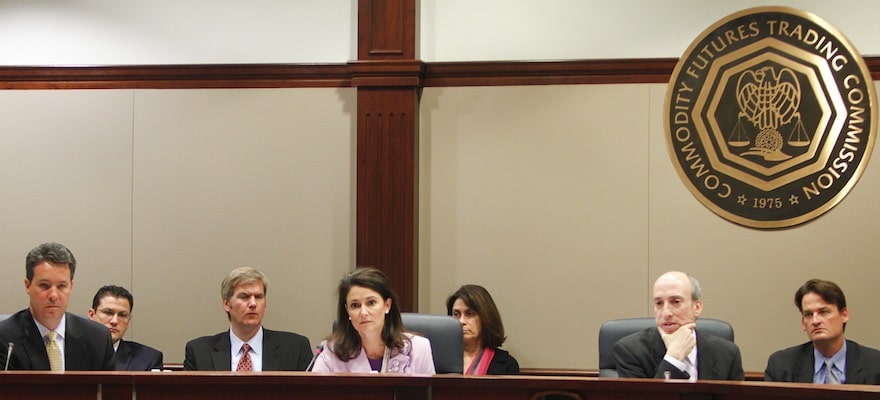
AGC reached a $300k settlement with the CFTC after one of its traders engaged in copper spoofing in 2016.
Bloomberg
Proprietary trading firm Arab Global Commodities DMCC (AGC) has just settled spoofing charges with the Commodity Futures Trading Commission (CFTC). The CFTC action centered on spoofing activity carried out by one of its employees engaging in copper futures trading during 2016.
The charges focused on a trader at Dubai-headquartered AGC, who had been accused of spoofing copper futures contracts traded on the Commodity Exchange , Inc. (COMEX). Between March and August 2016, the trader had been engaging in after-hours trading from home, exercising disruptive trading practices for illegal gain.
These actions have resulted in a $300,000 civil monetary penalty for AGC as well as a cease and desist order for the group. Spoofing is a prevalent issue, often taking the form of disruptive algorithmic trading, whereby traders can outpace other market participants to manipulate commodity markets.
In particular, one of AGC’s traders had succeeded in habitually spoofing copper futures by placing multiple large orders (often in excess of 100 contracts) on one side of the book. In tandem, he had utilized a small resting order on the opposite side of the book – the larger order would be promptly cancelled when his small order was filled.
The practice is illegal and designated as spoofing, as outlined under Section 4c(a)(5)(C) of the Commodity Exchange Act. As such, traders are prohibited from entering into multiple bids or offers on a registered entity with the intent to cancel the bids or offers before Execution.
James McDonald
The situation was more convoluted given that the trader had also succeeded in using another employee’s account to mask his own behavior. The unnamed trader has since had his employment terminated at AGC. On its part, AGC was cooperative with the CFTC, settling charges and immediately accepting responsibility for the trader’s misconduct, also taking internal measures to curb this behavior.
James McDonald, the CFTC’s Director of Enforcement, commented on the settlement: “This case demonstrates our continued commitment to rooting out disruptive trade practices like spoofing in our markets. We will continue to work together with our regulatory and law enforcement partners in pursuit of that goal.”
Proprietary trading firm Arab Global Commodities DMCC (AGC) has just settled spoofing charges with the Commodity Futures Trading Commission (CFTC). The CFTC action centered on spoofing activity carried out by one of its employees engaging in copper futures trading during 2016.
The charges focused on a trader at Dubai-headquartered AGC, who had been accused of spoofing copper futures contracts traded on the Commodity Exchange , Inc. (COMEX). Between March and August 2016, the trader had been engaging in after-hours trading from home, exercising disruptive trading practices for illegal gain.
These actions have resulted in a $300,000 civil monetary penalty for AGC as well as a cease and desist order for the group. Spoofing is a prevalent issue, often taking the form of disruptive algorithmic trading, whereby traders can outpace other market participants to manipulate commodity markets.
In particular, one of AGC’s traders had succeeded in habitually spoofing copper futures by placing multiple large orders (often in excess of 100 contracts) on one side of the book. In tandem, he had utilized a small resting order on the opposite side of the book – the larger order would be promptly cancelled when his small order was filled.
The practice is illegal and designated as spoofing, as outlined under Section 4c(a)(5)(C) of the Commodity Exchange Act. As such, traders are prohibited from entering into multiple bids or offers on a registered entity with the intent to cancel the bids or offers before Execution.
James McDonald
The situation was more convoluted given that the trader had also succeeded in using another employee’s account to mask his own behavior. The unnamed trader has since had his employment terminated at AGC. On its part, AGC was cooperative with the CFTC, settling charges and immediately accepting responsibility for the trader’s misconduct, also taking internal measures to curb this behavior.
James McDonald, the CFTC’s Director of Enforcement, commented on the settlement: “This case demonstrates our continued commitment to rooting out disruptive trade practices like spoofing in our markets. We will continue to work together with our regulatory and law enforcement partners in pursuit of that goal.”
Webull Spent Big to Hit Record Revenue, and the Bill Is in the Fine Print
FP Markets Winner Spotlight 🏆 | Global Broker of the Year 2025 #Trading #Broker #Innovation #Shorts
FP Markets Winner Spotlight 🏆 | Global Broker of the Year 2025 #Trading #Broker #Innovation #Shorts
FP Markets takes the spotlight as Global Broker of the Year 2025 at the Finance Magnates Awards.
Martin Stoilov, Head of Client Experience, shares that trust, innovation, and people played a key role in the company’s success, supported by a strong foundation of integrity and client-centricity.
Following this milestone, FP Markets continues to focus on growth, technology investment, and its core values of transparency and excellence.
👉 Be part of FM Awards 2026: https://awards.financemagnates.com/#nominate
FP Markets takes the spotlight as Global Broker of the Year 2025 at the Finance Magnates Awards.
Martin Stoilov, Head of Client Experience, shares that trust, innovation, and people played a key role in the company’s success, supported by a strong foundation of integrity and client-centricity.
Following this milestone, FP Markets continues to focus on growth, technology investment, and its core values of transparency and excellence.
👉 Be part of FM Awards 2026: https://awards.financemagnates.com/#nominate
In this video, we review @HolaPrimeMarketsOfficial, a multi-asset forex and CFDs broker offering different account types, trading platforms, and flexible trading conditions.
We cover the broker’s overall offering, including account options, trading environment, platforms like MT4 and MT5, and additional services such as managed accounts and fast withdrawals.
Watch the full video to see if Hola Prime Markets fits your trading needs.
📣 Stay up to date with the latest in finance and trading. Follow Finance Magnates for industry news, insights, and global event coverage.
Connect with us:
🔗 LinkedIn: /financemagnates
👍 Facebook: /financemagnates
📸 Instagram: https://www.instagram.com/financemagnates
🐦 X: https://x.com/financemagnates
🎥 TikTok: https://www.tiktok.com/tag/financemagnates
▶️ YouTube: /@financemagnates_official
#HolaPrime #ForexBroker #CFDTrading #FinanceMagnates #Trading #Forex #BrokerReview
In this video, we review @HolaPrimeMarketsOfficial, a multi-asset forex and CFDs broker offering different account types, trading platforms, and flexible trading conditions.
We cover the broker’s overall offering, including account options, trading environment, platforms like MT4 and MT5, and additional services such as managed accounts and fast withdrawals.
Watch the full video to see if Hola Prime Markets fits your trading needs.
📣 Stay up to date with the latest in finance and trading. Follow Finance Magnates for industry news, insights, and global event coverage.
Connect with us:
🔗 LinkedIn: /financemagnates
👍 Facebook: /financemagnates
📸 Instagram: https://www.instagram.com/financemagnates
🐦 X: https://x.com/financemagnates
🎥 TikTok: https://www.tiktok.com/tag/financemagnates
▶️ YouTube: /@financemagnates_official
#HolaPrime #ForexBroker #CFDTrading #FinanceMagnates #Trading #Forex #BrokerReview
Hola Prime Review: What You Need to Know | Full Breakdown by Finance Magnates
Hola Prime Review: What You Need to Know | Full Breakdown by Finance Magnates
In this video, we review @HolaPrime_Global, a proprietary trading firm offering evaluation programs and performance-based payouts in simulated market environments.
We cover how the challenge model works, including account types, profit splits (up to 95%), trading rules, and what it takes to reach a funded account. You’ll also learn about available platforms like MT4, MT5, cTrader, and more, along with insights into payouts, support, and trading conditions.
Watch the full video to see if Hola Prime fits your trading style.
📣 Stay up to date with the latest in finance and trading. Follow Finance Magnates for industry news, insights, and global event coverage.
Connect with us:
🔗 LinkedIn: /financemagnates
👍 Facebook: /financemagnates
📸 Instagram: https://www.instagram.com/financemagnates
🐦 X: https://x.com/financemagnates
🎥 TikTok: https://www.tiktok.com/tag/financemagnates
▶️ YouTube: /@financemagnates_official
#HolaPrime #PropFirm #Trading #FinanceMagnates #Forex #FuturesTrading #TradingReview #PropFirmReview
In this video, we review @HolaPrime_Global, a proprietary trading firm offering evaluation programs and performance-based payouts in simulated market environments.
We cover how the challenge model works, including account types, profit splits (up to 95%), trading rules, and what it takes to reach a funded account. You’ll also learn about available platforms like MT4, MT5, cTrader, and more, along with insights into payouts, support, and trading conditions.
Watch the full video to see if Hola Prime fits your trading style.
📣 Stay up to date with the latest in finance and trading. Follow Finance Magnates for industry news, insights, and global event coverage.
Connect with us:
🔗 LinkedIn: /financemagnates
👍 Facebook: /financemagnates
📸 Instagram: https://www.instagram.com/financemagnates
🐦 X: https://x.com/financemagnates
🎥 TikTok: https://www.tiktok.com/tag/financemagnates
▶️ YouTube: /@financemagnates_official
#HolaPrime #PropFirm #Trading #FinanceMagnates #Forex #FuturesTrading #TradingReview #PropFirmReview
Axi Winner Spotlight 🏆 | Global Most Innovative Broker 2025 #Innovation #Trading #Fintech #Broker
Axi Winner Spotlight 🏆 | Global Most Innovative Broker 2025 #Innovation #Trading #Fintech #Broker
Axi takes the spotlight at the Finance Magnates Awards, winning Global Most Innovative Broker 2025.
Olivia Xenofontos and Ivanna Openko share how the team will feel: proud, motivated, and ready to keep delivering.
They also describe the night as well-organized, focused, and enjoyable for all.
👉 Be part of FM Awards 2026.
Axi takes the spotlight at the Finance Magnates Awards, winning Global Most Innovative Broker 2025.
Olivia Xenofontos and Ivanna Openko share how the team will feel: proud, motivated, and ready to keep delivering.
They also describe the night as well-organized, focused, and enjoyable for all.
👉 Be part of FM Awards 2026.
Recognition that matters.
Built on transparency.
Driven by the industry.
The Finance Magnates Awards 2026.
Nominations are now open.
🔗 https://awards.financemagnates.com/?utm_source=SM&utm_medium=social&utm_campaign=recognition-matters
Recognition that matters.
Built on transparency.
Driven by the industry.
The Finance Magnates Awards 2026.
Nominations are now open.
🔗 https://awards.financemagnates.com/?utm_source=SM&utm_medium=social&utm_campaign=recognition-matters