Niv sees prop trading as expanding the trading market, despite being “mathematically unsound” in many current forms.
Watch the full video interview from Finance Magnates London Summit 2025.
“(Prop trading) value proposition to the client is
such that this has attracted a large number of users who never considered FX
and CFD trading before” Drew Niv, the Chief Strategy Officer at ATFX Connect,
shared when asked whether prop trading is good for the industry.
Speaking to Jonathan Fine, Content Strategist at Ultimate
Group, Niv, a long-time industry expert, defended proprietary trading as a
force for market expansion, even as he warned brokers to brace for a looming
wave of competition from neobanks and fintech giants.
He admitted that prop trading remains “mathematically
unsound” in many of its current forms, yet argued it has become a
crucial gateway for new entrants into the online trading world.
Niv acknowledged the model’s flaws, high churn rates,
inconsistent performance metrics, and patchy risk controls, but sees gradual
maturation. Early prop challenges, he explained, were driven “99.99% by luck,”
yet are now evolving toward more realistic trading conditions and skill-based
evaluation.
“But the problem was that initially the qualifying
rules of ‘you won and you qualify for a quote unquote real account.’ Those rules
were too loose,” he added. “And people essentially won by a lot. They're still too loose,
but they're getting tighter. The leverage restrictions are getting more.”
He likened today’s prop trading phase to the “wild
west” period preceding the rise of regulated retail FX two decades ago. The end
result, he suggested, will again be positive: “Just as retail FX expanded the
market 25 years ago, prop trading will bring in a fresh generation of traders.”
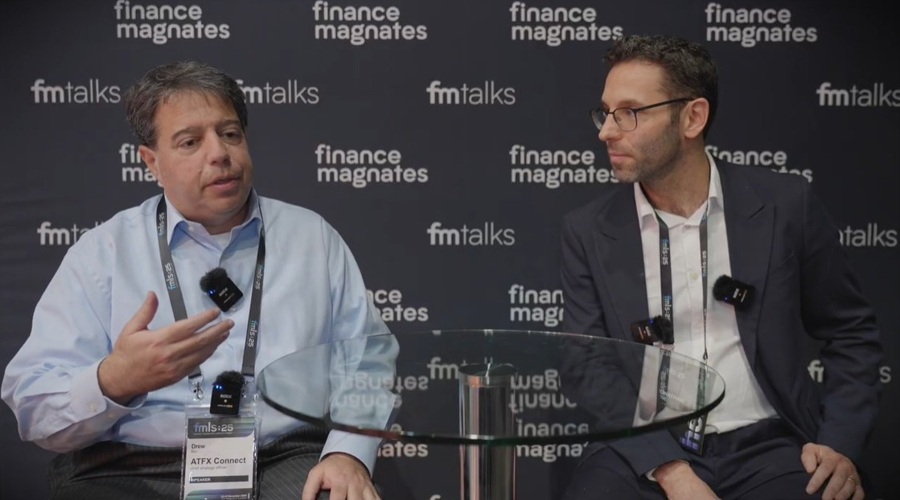
Drew Niv (left) during an interview with Jonathan Fine
Neobanks and the Threat of Scale
Niv struck a more cautionary tone when the
conversation shifted to neobanks like Revolut and Monzo entering the trading
arena. Drawing on FXCM’s experience in Japan, where internet
conglomerates like Rakuten and GMO wiped out hundreds of brokers, he warned
that the same dynamic could now play out in Europe.
“And what happened around those years is that the
large, essentially the Rakuten, which is like the Amazon of Japan, GMO. So you
look at all these Internet giants who had an endless amount of inventory from
online advertising, all of the stuff that they do. And a user base,” he pointed out.
“And therefore, they had a user base and a massive
brand. And their cost of acquisition was tiny. And they had to essentially say,
oh, if you open an account with us, you know, like Rakuten is a good example,” he shared.
“Most FX and CFD brokers are self-funded,” he observed. “They
make some money, they keep it. They don't need external investors until IPO,
but until really when you have to compete on a much grander scale, and you're
going to need a much larger scale.”
“These firms have the advantages that when they're not
profitable, they can easily raise money and large sums of money in bulk,” he added.
“Because they do not have the earnings volatility of a B-book pure shop.”
Shifting Geographies and New Frontiers
The conversation also touched on emerging markets,
which Niv described as “where the action is shifting.” Once overlooked, he said
regions like Southeast Asia, Africa, and the Levant now boast real wealth and
rising trading participation.
“Who would have thought 15 years ago Africa would be a
hot market? Who would have thought, you know, outside of South Africa, which
always was. But the other countries were definitely not,” he pointed out.
“Who would have thought that sort of the non-GCC
Middle East would be a hot market. Jordan, all these places. ATFX is the second
largest office, if I'm not mistaken. So that 15 years ago, you'd call me crazy.
It never would have happened,” he emphasized. “Today, it's a real place with real income, with real,
you know, wealth.”
Niv predicted that global financial “supermarkets”
would eventually buy their way into these growth regions. “It’s not happening
tomorrow, but sooner than most people think,” he warned. “Look at Kraken acquiring NinjaTrader – if that weren’t an American firm, its first target
would’ve been one of the top 10 FX brokers.”
Industry Reflections: Convergence and Focus
Reflecting on the broader discussions at the summit,
Niv said the line between institutional and retail trading remains less blurred
than some suggest, though convergence is clearly accelerating. What he values
most, he added, is perspective.
“I was not of the opinion, given my experience, that
the retail industry and institutional business is converging,” he explained. “I think other
people's experience is definitely different. But I think that's something that
that would be a cool debate.”
“I think that's something that is a very
big deal.” When asked whether he expected to win his upcoming debate on whether
prop trading is good for the industry, Niv laughed: “I rigged it – I picked the
favorable side. It’s a biased room.”
“(Prop trading) value proposition to the client is
such that this has attracted a large number of users who never considered FX
and CFD trading before” Drew Niv, the Chief Strategy Officer at ATFX Connect,
shared when asked whether prop trading is good for the industry.
Speaking to Jonathan Fine, Content Strategist at Ultimate
Group, Niv, a long-time industry expert, defended proprietary trading as a
force for market expansion, even as he warned brokers to brace for a looming
wave of competition from neobanks and fintech giants.
He admitted that prop trading remains “mathematically
unsound” in many of its current forms, yet argued it has become a
crucial gateway for new entrants into the online trading world.
Niv acknowledged the model’s flaws, high churn rates,
inconsistent performance metrics, and patchy risk controls, but sees gradual
maturation. Early prop challenges, he explained, were driven “99.99% by luck,”
yet are now evolving toward more realistic trading conditions and skill-based
evaluation.
“But the problem was that initially the qualifying
rules of ‘you won and you qualify for a quote unquote real account.’ Those rules
were too loose,” he added. “And people essentially won by a lot. They're still too loose,
but they're getting tighter. The leverage restrictions are getting more.”
He likened today’s prop trading phase to the “wild
west” period preceding the rise of regulated retail FX two decades ago. The end
result, he suggested, will again be positive: “Just as retail FX expanded the
market 25 years ago, prop trading will bring in a fresh generation of traders.”
Drew Niv (left) during an interview with Jonathan Fine
Neobanks and the Threat of Scale
Niv struck a more cautionary tone when the
conversation shifted to neobanks like Revolut and Monzo entering the trading
arena. Drawing on FXCM’s experience in Japan, where internet
conglomerates like Rakuten and GMO wiped out hundreds of brokers, he warned
that the same dynamic could now play out in Europe.
“And what happened around those years is that the
large, essentially the Rakuten, which is like the Amazon of Japan, GMO. So you
look at all these Internet giants who had an endless amount of inventory from
online advertising, all of the stuff that they do. And a user base,” he pointed out.
“And therefore, they had a user base and a massive
brand. And their cost of acquisition was tiny. And they had to essentially say,
oh, if you open an account with us, you know, like Rakuten is a good example,” he shared.
“Most FX and CFD brokers are self-funded,” he observed. “They
make some money, they keep it. They don't need external investors until IPO,
but until really when you have to compete on a much grander scale, and you're
going to need a much larger scale.”
“These firms have the advantages that when they're not
profitable, they can easily raise money and large sums of money in bulk,” he added.
“Because they do not have the earnings volatility of a B-book pure shop.”
Shifting Geographies and New Frontiers
The conversation also touched on emerging markets,
which Niv described as “where the action is shifting.” Once overlooked, he said
regions like Southeast Asia, Africa, and the Levant now boast real wealth and
rising trading participation.
“Who would have thought 15 years ago Africa would be a
hot market? Who would have thought, you know, outside of South Africa, which
always was. But the other countries were definitely not,” he pointed out.
“Who would have thought that sort of the non-GCC
Middle East would be a hot market. Jordan, all these places. ATFX is the second
largest office, if I'm not mistaken. So that 15 years ago, you'd call me crazy.
It never would have happened,” he emphasized. “Today, it's a real place with real income, with real,
you know, wealth.”
Niv predicted that global financial “supermarkets”
would eventually buy their way into these growth regions. “It’s not happening
tomorrow, but sooner than most people think,” he warned. “Look at Kraken acquiring NinjaTrader – if that weren’t an American firm, its first target
would’ve been one of the top 10 FX brokers.”
Industry Reflections: Convergence and Focus
Reflecting on the broader discussions at the summit,
Niv said the line between institutional and retail trading remains less blurred
than some suggest, though convergence is clearly accelerating. What he values
most, he added, is perspective.
“I was not of the opinion, given my experience, that
the retail industry and institutional business is converging,” he explained. “I think other
people's experience is definitely different. But I think that's something that
that would be a cool debate.”
“I think that's something that is a very
big deal.” When asked whether he expected to win his upcoming debate on whether
prop trading is good for the industry, Niv laughed: “I rigged it – I picked the
favorable side. It’s a biased room.”
Jared Kirui is an Editor at Finance Magnates with more than five years of experience in financial journalism. He covers online trading, fintech, payments, and crypto industries with a focus on companies, regulation and compliance, executive moves, trading technology, and market analysis.
His work has been featured in other media outlets, including Benzinga, ZyCrypto, The Distributed, and The Daily Hodl.
Education:
Bachelor of Commerce degree (Finance option), University of Nairobi
Retail Traders Can Now Access Prediction Markets Through Binance Wallet
Featured Videos
FP Markets Winner Spotlight 🏆 | Global Broker of the Year 2025 #Trading #Broker #Innovation #Shorts
FP Markets Winner Spotlight 🏆 | Global Broker of the Year 2025 #Trading #Broker #Innovation #Shorts
FP Markets Winner Spotlight 🏆 | Global Broker of the Year 2025 #Trading #Broker #Innovation #Shorts
FP Markets Winner Spotlight 🏆 | Global Broker of the Year 2025 #Trading #Broker #Innovation #Shorts
FP Markets takes the spotlight as Global Broker of the Year 2025 at the Finance Magnates Awards.
Martin Stoilov, Head of Client Experience, shares that trust, innovation, and people played a key role in the company’s success, supported by a strong foundation of integrity and client-centricity.
Following this milestone, FP Markets continues to focus on growth, technology investment, and its core values of transparency and excellence.
👉 Be part of FM Awards 2026: https://awards.financemagnates.com/#nominate
FP Markets takes the spotlight as Global Broker of the Year 2025 at the Finance Magnates Awards.
Martin Stoilov, Head of Client Experience, shares that trust, innovation, and people played a key role in the company’s success, supported by a strong foundation of integrity and client-centricity.
Following this milestone, FP Markets continues to focus on growth, technology investment, and its core values of transparency and excellence.
👉 Be part of FM Awards 2026: https://awards.financemagnates.com/#nominate
FP Markets takes the spotlight as Global Broker of the Year 2025 at the Finance Magnates Awards.
Martin Stoilov, Head of Client Experience, shares that trust, innovation, and people played a key role in the company’s success, supported by a strong foundation of integrity and client-centricity.
Following this milestone, FP Markets continues to focus on growth, technology investment, and its core values of transparency and excellence.
👉 Be part of FM Awards 2026: https://awards.financemagnates.com/#nominate
FP Markets takes the spotlight as Global Broker of the Year 2025 at the Finance Magnates Awards.
Martin Stoilov, Head of Client Experience, shares that trust, innovation, and people played a key role in the company’s success, supported by a strong foundation of integrity and client-centricity.
Following this milestone, FP Markets continues to focus on growth, technology investment, and its core values of transparency and excellence.
👉 Be part of FM Awards 2026: https://awards.financemagnates.com/#nominate
In this video, we review @HolaPrimeMarketsOfficial, a multi-asset forex and CFDs broker offering different account types, trading platforms, and flexible trading conditions.
We cover the broker’s overall offering, including account options, trading environment, platforms like MT4 and MT5, and additional services such as managed accounts and fast withdrawals.
Watch the full video to see if Hola Prime Markets fits your trading needs.
📣 Stay up to date with the latest in finance and trading. Follow Finance Magnates for industry news, insights, and global event coverage.
Connect with us:
🔗 LinkedIn: /financemagnates
👍 Facebook: /financemagnates
📸 Instagram: https://www.instagram.com/financemagnates
🐦 X: https://x.com/financemagnates
🎥 TikTok: https://www.tiktok.com/tag/financemagnates
▶️ YouTube: /@financemagnates_official
#HolaPrime #ForexBroker #CFDTrading #FinanceMagnates #Trading #Forex #BrokerReview
In this video, we review @HolaPrimeMarketsOfficial, a multi-asset forex and CFDs broker offering different account types, trading platforms, and flexible trading conditions.
We cover the broker’s overall offering, including account options, trading environment, platforms like MT4 and MT5, and additional services such as managed accounts and fast withdrawals.
Watch the full video to see if Hola Prime Markets fits your trading needs.
📣 Stay up to date with the latest in finance and trading. Follow Finance Magnates for industry news, insights, and global event coverage.
Connect with us:
🔗 LinkedIn: /financemagnates
👍 Facebook: /financemagnates
📸 Instagram: https://www.instagram.com/financemagnates
🐦 X: https://x.com/financemagnates
🎥 TikTok: https://www.tiktok.com/tag/financemagnates
▶️ YouTube: /@financemagnates_official
#HolaPrime #ForexBroker #CFDTrading #FinanceMagnates #Trading #Forex #BrokerReview
In this video, we review @HolaPrimeMarketsOfficial, a multi-asset forex and CFDs broker offering different account types, trading platforms, and flexible trading conditions.
We cover the broker’s overall offering, including account options, trading environment, platforms like MT4 and MT5, and additional services such as managed accounts and fast withdrawals.
Watch the full video to see if Hola Prime Markets fits your trading needs.
📣 Stay up to date with the latest in finance and trading. Follow Finance Magnates for industry news, insights, and global event coverage.
Connect with us:
🔗 LinkedIn: /financemagnates
👍 Facebook: /financemagnates
📸 Instagram: https://www.instagram.com/financemagnates
🐦 X: https://x.com/financemagnates
🎥 TikTok: https://www.tiktok.com/tag/financemagnates
▶️ YouTube: /@financemagnates_official
#HolaPrime #ForexBroker #CFDTrading #FinanceMagnates #Trading #Forex #BrokerReview
In this video, we review @HolaPrimeMarketsOfficial, a multi-asset forex and CFDs broker offering different account types, trading platforms, and flexible trading conditions.
We cover the broker’s overall offering, including account options, trading environment, platforms like MT4 and MT5, and additional services such as managed accounts and fast withdrawals.
Watch the full video to see if Hola Prime Markets fits your trading needs.
📣 Stay up to date with the latest in finance and trading. Follow Finance Magnates for industry news, insights, and global event coverage.
Connect with us:
🔗 LinkedIn: /financemagnates
👍 Facebook: /financemagnates
📸 Instagram: https://www.instagram.com/financemagnates
🐦 X: https://x.com/financemagnates
🎥 TikTok: https://www.tiktok.com/tag/financemagnates
▶️ YouTube: /@financemagnates_official
#HolaPrime #ForexBroker #CFDTrading #FinanceMagnates #Trading #Forex #BrokerReview
In this video, we review @HolaPrimeMarketsOfficial, a multi-asset forex and CFDs broker offering different account types, trading platforms, and flexible trading conditions.
We cover the broker’s overall offering, including account options, trading environment, platforms like MT4 and MT5, and additional services such as managed accounts and fast withdrawals.
Watch the full video to see if Hola Prime Markets fits your trading needs.
📣 Stay up to date with the latest in finance and trading. Follow Finance Magnates for industry news, insights, and global event coverage.
Connect with us:
🔗 LinkedIn: /financemagnates
👍 Facebook: /financemagnates
📸 Instagram: https://www.instagram.com/financemagnates
🐦 X: https://x.com/financemagnates
🎥 TikTok: https://www.tiktok.com/tag/financemagnates
▶️ YouTube: /@financemagnates_official
#HolaPrime #ForexBroker #CFDTrading #FinanceMagnates #Trading #Forex #BrokerReview
In this video, we review @HolaPrimeMarketsOfficial, a multi-asset forex and CFDs broker offering different account types, trading platforms, and flexible trading conditions.
We cover the broker’s overall offering, including account options, trading environment, platforms like MT4 and MT5, and additional services such as managed accounts and fast withdrawals.
Watch the full video to see if Hola Prime Markets fits your trading needs.
📣 Stay up to date with the latest in finance and trading. Follow Finance Magnates for industry news, insights, and global event coverage.
Connect with us:
🔗 LinkedIn: /financemagnates
👍 Facebook: /financemagnates
📸 Instagram: https://www.instagram.com/financemagnates
🐦 X: https://x.com/financemagnates
🎥 TikTok: https://www.tiktok.com/tag/financemagnates
▶️ YouTube: /@financemagnates_official
#HolaPrime #ForexBroker #CFDTrading #FinanceMagnates #Trading #Forex #BrokerReview
Hola Prime Review: What You Need to Know | Full Breakdown by Finance Magnates
Hola Prime Review: What You Need to Know | Full Breakdown by Finance Magnates
Hola Prime Review: What You Need to Know | Full Breakdown by Finance Magnates
Hola Prime Review: What You Need to Know | Full Breakdown by Finance Magnates
Hola Prime Review: What You Need to Know | Full Breakdown by Finance Magnates
Hola Prime Review: What You Need to Know | Full Breakdown by Finance Magnates
In this video, we review @HolaPrime_Global, a proprietary trading firm offering evaluation programs and performance-based payouts in simulated market environments.
We cover how the challenge model works, including account types, profit splits (up to 95%), trading rules, and what it takes to reach a funded account. You’ll also learn about available platforms like MT4, MT5, cTrader, and more, along with insights into payouts, support, and trading conditions.
Watch the full video to see if Hola Prime fits your trading style.
📣 Stay up to date with the latest in finance and trading. Follow Finance Magnates for industry news, insights, and global event coverage.
Connect with us:
🔗 LinkedIn: /financemagnates
👍 Facebook: /financemagnates
📸 Instagram: https://www.instagram.com/financemagnates
🐦 X: https://x.com/financemagnates
🎥 TikTok: https://www.tiktok.com/tag/financemagnates
▶️ YouTube: /@financemagnates_official
#HolaPrime #PropFirm #Trading #FinanceMagnates #Forex #FuturesTrading #TradingReview #PropFirmReview
In this video, we review @HolaPrime_Global, a proprietary trading firm offering evaluation programs and performance-based payouts in simulated market environments.
We cover how the challenge model works, including account types, profit splits (up to 95%), trading rules, and what it takes to reach a funded account. You’ll also learn about available platforms like MT4, MT5, cTrader, and more, along with insights into payouts, support, and trading conditions.
Watch the full video to see if Hola Prime fits your trading style.
📣 Stay up to date with the latest in finance and trading. Follow Finance Magnates for industry news, insights, and global event coverage.
Connect with us:
🔗 LinkedIn: /financemagnates
👍 Facebook: /financemagnates
📸 Instagram: https://www.instagram.com/financemagnates
🐦 X: https://x.com/financemagnates
🎥 TikTok: https://www.tiktok.com/tag/financemagnates
▶️ YouTube: /@financemagnates_official
#HolaPrime #PropFirm #Trading #FinanceMagnates #Forex #FuturesTrading #TradingReview #PropFirmReview
In this video, we review @HolaPrime_Global, a proprietary trading firm offering evaluation programs and performance-based payouts in simulated market environments.
We cover how the challenge model works, including account types, profit splits (up to 95%), trading rules, and what it takes to reach a funded account. You’ll also learn about available platforms like MT4, MT5, cTrader, and more, along with insights into payouts, support, and trading conditions.
Watch the full video to see if Hola Prime fits your trading style.
📣 Stay up to date with the latest in finance and trading. Follow Finance Magnates for industry news, insights, and global event coverage.
Connect with us:
🔗 LinkedIn: /financemagnates
👍 Facebook: /financemagnates
📸 Instagram: https://www.instagram.com/financemagnates
🐦 X: https://x.com/financemagnates
🎥 TikTok: https://www.tiktok.com/tag/financemagnates
▶️ YouTube: /@financemagnates_official
#HolaPrime #PropFirm #Trading #FinanceMagnates #Forex #FuturesTrading #TradingReview #PropFirmReview
In this video, we review @HolaPrime_Global, a proprietary trading firm offering evaluation programs and performance-based payouts in simulated market environments.
We cover how the challenge model works, including account types, profit splits (up to 95%), trading rules, and what it takes to reach a funded account. You’ll also learn about available platforms like MT4, MT5, cTrader, and more, along with insights into payouts, support, and trading conditions.
Watch the full video to see if Hola Prime fits your trading style.
📣 Stay up to date with the latest in finance and trading. Follow Finance Magnates for industry news, insights, and global event coverage.
Connect with us:
🔗 LinkedIn: /financemagnates
👍 Facebook: /financemagnates
📸 Instagram: https://www.instagram.com/financemagnates
🐦 X: https://x.com/financemagnates
🎥 TikTok: https://www.tiktok.com/tag/financemagnates
▶️ YouTube: /@financemagnates_official
#HolaPrime #PropFirm #Trading #FinanceMagnates #Forex #FuturesTrading #TradingReview #PropFirmReview
In this video, we review @HolaPrime_Global, a proprietary trading firm offering evaluation programs and performance-based payouts in simulated market environments.
We cover how the challenge model works, including account types, profit splits (up to 95%), trading rules, and what it takes to reach a funded account. You’ll also learn about available platforms like MT4, MT5, cTrader, and more, along with insights into payouts, support, and trading conditions.
Watch the full video to see if Hola Prime fits your trading style.
📣 Stay up to date with the latest in finance and trading. Follow Finance Magnates for industry news, insights, and global event coverage.
Connect with us:
🔗 LinkedIn: /financemagnates
👍 Facebook: /financemagnates
📸 Instagram: https://www.instagram.com/financemagnates
🐦 X: https://x.com/financemagnates
🎥 TikTok: https://www.tiktok.com/tag/financemagnates
▶️ YouTube: /@financemagnates_official
#HolaPrime #PropFirm #Trading #FinanceMagnates #Forex #FuturesTrading #TradingReview #PropFirmReview
In this video, we review @HolaPrime_Global, a proprietary trading firm offering evaluation programs and performance-based payouts in simulated market environments.
We cover how the challenge model works, including account types, profit splits (up to 95%), trading rules, and what it takes to reach a funded account. You’ll also learn about available platforms like MT4, MT5, cTrader, and more, along with insights into payouts, support, and trading conditions.
Watch the full video to see if Hola Prime fits your trading style.
📣 Stay up to date with the latest in finance and trading. Follow Finance Magnates for industry news, insights, and global event coverage.
Connect with us:
🔗 LinkedIn: /financemagnates
👍 Facebook: /financemagnates
📸 Instagram: https://www.instagram.com/financemagnates
🐦 X: https://x.com/financemagnates
🎥 TikTok: https://www.tiktok.com/tag/financemagnates
▶️ YouTube: /@financemagnates_official
#HolaPrime #PropFirm #Trading #FinanceMagnates #Forex #FuturesTrading #TradingReview #PropFirmReview
Axi Winner Spotlight 🏆 | Global Most Innovative Broker 2025 #Innovation #Trading #Fintech #Broker
Axi Winner Spotlight 🏆 | Global Most Innovative Broker 2025 #Innovation #Trading #Fintech #Broker
Axi Winner Spotlight 🏆 | Global Most Innovative Broker 2025 #Innovation #Trading #Fintech #Broker
Axi Winner Spotlight 🏆 | Global Most Innovative Broker 2025 #Innovation #Trading #Fintech #Broker
Axi Winner Spotlight 🏆 | Global Most Innovative Broker 2025 #Innovation #Trading #Fintech #Broker
Axi Winner Spotlight 🏆 | Global Most Innovative Broker 2025 #Innovation #Trading #Fintech #Broker
Axi takes the spotlight at the Finance Magnates Awards, winning Global Most Innovative Broker 2025.
Olivia Xenofontos and Ivanna Openko share how the team will feel: proud, motivated, and ready to keep delivering.
They also describe the night as well-organized, focused, and enjoyable for all.
👉 Be part of FM Awards 2026.
Axi takes the spotlight at the Finance Magnates Awards, winning Global Most Innovative Broker 2025.
Olivia Xenofontos and Ivanna Openko share how the team will feel: proud, motivated, and ready to keep delivering.
They also describe the night as well-organized, focused, and enjoyable for all.
👉 Be part of FM Awards 2026.
Axi takes the spotlight at the Finance Magnates Awards, winning Global Most Innovative Broker 2025.
Olivia Xenofontos and Ivanna Openko share how the team will feel: proud, motivated, and ready to keep delivering.
They also describe the night as well-organized, focused, and enjoyable for all.
👉 Be part of FM Awards 2026.
Axi takes the spotlight at the Finance Magnates Awards, winning Global Most Innovative Broker 2025.
Olivia Xenofontos and Ivanna Openko share how the team will feel: proud, motivated, and ready to keep delivering.
They also describe the night as well-organized, focused, and enjoyable for all.
👉 Be part of FM Awards 2026.
Axi takes the spotlight at the Finance Magnates Awards, winning Global Most Innovative Broker 2025.
Olivia Xenofontos and Ivanna Openko share how the team will feel: proud, motivated, and ready to keep delivering.
They also describe the night as well-organized, focused, and enjoyable for all.
👉 Be part of FM Awards 2026.
Axi takes the spotlight at the Finance Magnates Awards, winning Global Most Innovative Broker 2025.
Olivia Xenofontos and Ivanna Openko share how the team will feel: proud, motivated, and ready to keep delivering.
They also describe the night as well-organized, focused, and enjoyable for all.
👉 Be part of FM Awards 2026.
Recognition that matters.
Built on transparency.
Driven by the industry.
The Finance Magnates Awards 2026.
Nominations are now open.
🔗 https://awards.financemagnates.com/?utm_source=SM&utm_medium=social&utm_campaign=recognition-matters
Recognition that matters.
Built on transparency.
Driven by the industry.
The Finance Magnates Awards 2026.
Nominations are now open.
🔗 https://awards.financemagnates.com/?utm_source=SM&utm_medium=social&utm_campaign=recognition-matters
Recognition that matters.
Built on transparency.
Driven by the industry.
The Finance Magnates Awards 2026.
Nominations are now open.
🔗 https://awards.financemagnates.com/?utm_source=SM&utm_medium=social&utm_campaign=recognition-matters
Recognition that matters.
Built on transparency.
Driven by the industry.
The Finance Magnates Awards 2026.
Nominations are now open.
🔗 https://awards.financemagnates.com/?utm_source=SM&utm_medium=social&utm_campaign=recognition-matters
Recognition that matters.
Built on transparency.
Driven by the industry.
The Finance Magnates Awards 2026.
Nominations are now open.
🔗 https://awards.financemagnates.com/?utm_source=SM&utm_medium=social&utm_campaign=recognition-matters
Recognition that matters.
Built on transparency.
Driven by the industry.
The Finance Magnates Awards 2026.
Nominations are now open.
🔗 https://awards.financemagnates.com/?utm_source=SM&utm_medium=social&utm_campaign=recognition-matters