

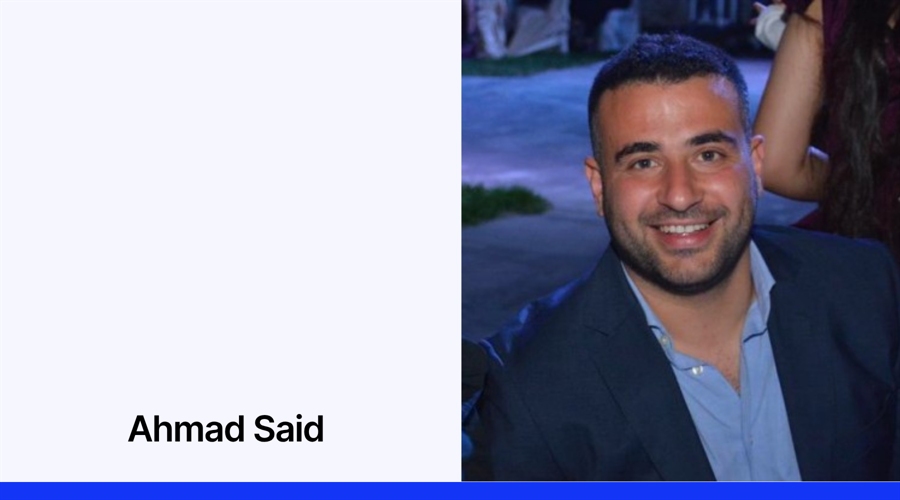
Ahmad Said has a particular way of explaining what's wrong with most trading platforms. "Deployed in the cloud isn't the same as cloud-native," he told FinanceMagnates.com. "Most platforms in this space were adapted to the cloud. Helio was built from day one as active/active, multi-region infrastructure, no failover dependency, no single point of failure, and zero-downtime deployments as standard."
Singapore Summit: Meet the largest APAC brokers you know (and those you still don't!)
That distinction, between adaptation and original design, is the founding argument of Fintake, Said's Cyprus-based broker technology startup. The company launched Helio, its first cloud-native trading platform for CFD, OTC, and crypto brokers, this month. Competitors covered the announcement as a product launch. The more interesting story is what Said built it from.
The 2 AM Architecture Decision
Said spent four years at Pepperstone, where he joined as the first engineering hire in Cyprus and built a team of more than 20 engineers. The work included one of the first large-scale TradingView broker integrations, Pepperstone's proprietary trading platform, and its mobile app.
By the time he left in 2024, he was Head of Engineering for the EMEA region. "I've spent years running high-volume trading systems, including one of the largest integrations with TradingView," he said. "I've seen where platforms break because I've been the one fixing them at 2 AM. Helio was built to make that call unnecessary."
- Retail Trading Demand Hits Record in Early 2026, Up 25% From Prior Peak
- Exclusive: CFD Industry Tops 6 Million Accounts — Can the Momentum Hold in 2026?
- "The Global CFD Broker Market Will Be Disrupted by DeFi" in 5 Years, Says Ostium CEO
That operational experience shaped every architectural decision in Helio. Both of the platform's geographic regions run simultaneously, not in a primary/secondary configuration where one waits for the other to fail. Updates deploy mid-session, during live trading, without interruption.
"Both regions are live simultaneously," Said said. When Said first announced Fintake at the end of 2024, he described the problem plainly: "Many brokers I know feel trapped in a 'marriage of inconvenience' with their providers, staying only because better options don't exist." Helio is his answer to that.
Selling Resilience With the Power Off
Fintake's approach to sales is unusual. Rather than pointing brokers at uptime statistics or SLA documentation, Said shuts things down and lets prospects watch. "We provide contractual SLAs, but we don't rely on PDFs alone," he adderd. "We run live chaos testing, including killing availability zones and entire regions, to show brokers exactly how the platform behaves under stress, in real time. That includes deploying mid-session, during live trading, without interruption."
The approach is partly commercial, partly regulatory. More than a year after DORA came into force, many brokers are still playing catch-up with the EU's Digital Operational Resilience Act, which requires firms to demonstrate, not just document, their ability to withstand ICT disruptions.
Said says Helio was designed around that requirement from the start. "DORA is about proving resilience, not just documenting it," he said. "Helio gives brokers audit-ready visibility, built-in security, SSO, 2FA, and the ability to demonstrate how their platform performs under failure scenarios, not just claim it."
A Crowded Market Moving in the Same Direction
The trading platform market in 2026 remains dominated by MT5, cTrader, and DXtrade, with newer entrants pressing hard for share. Match-Trader reported a 290% increase in server clients since January 2024, reflecting the appetite among brokers for alternatives to the MetaQuotes ecosystem.
DXtrade and cTrader have been competing aggressively on mobile and prop trading features, with both platforms releasing updates within days of each other earlier this year, while Devexperts has been building out a full prop-ready stack around DXtrade through third-party integrations.
The scale of what Fintake is entering should not be understated. MT5 now runs on roughly 68% of global brokerages, having finally surpassed MT4 in trading volume in Q1 2025 after two decades of MT4 dominance. Alternative platforms, including cTrader, DXtrade, and Match-Trader, collectively grew their share to around 27% by Q1 2025, with Match-Trader alone reporting a 290% jump in server clients since January 2024.
Said sees that movement as validation but thinks it stops short. "Connectivity and execution hubs are building trading platforms and APIs," he said publicly before the Helio launch. "Trading platform vendors are building their own liquidity hubs. Everyone is chasing more control, more agility, and fewer dependencies."
His argument is that chasing control on top of adapted architecture still leaves the original fragility intact. The platform's API-first, front-end agnostic design means brokers can connect their own interfaces or use Helio's own, without being locked into a vendor front-end.
With a growing share of CFD brokers now looking at multi-asset and futures pivots under pressure from regulators and US competition, Fintake enters the market at a point when brokers are actively questioning their existing infrastructure choices.
Pricing competition is also intensifying at the entry level. Leverate recently moved to a free-to-start model for CFD brokerage technology, targeting firms hesitant about switching costs, a sign that even established vendors feel pressure to remove barriers for new or migrating clients.
The Integration Nobody's Named Yet
One of the more closely watched elements of Fintake's roadmap is an unannounced social trading partnership, currently in what Said described as final testing.
"It's a major global ecosystem, designed to drive acquisition and engagement for brokers on the platform," he said. "The integration is deep and native, not a widget layer. Currently in final testing phases."
He confirmed Fintake will name the partner within weeks. TradingView has become the most sought-after front-end integration in the sector, with brokers of all sizes racing to connect their back-end infrastructure to TradingView's charting and social layer, though Fintake did not confirm whether its unnamed partner is TradingView.
The platform's broader roadmap includes crypto spot trading, on-chain liquidity access, and updated web and mobile interfaces, all built as native extensions of the multi-asset framework rather than separate product lines.
On traction, Said kept it brief. "We're currently in pilot with a small number of brokers and will share more detail soon," he said, declining to name any of the firms involved.


