30 years of market reputation wasn't enough to stay afloat in the competitive retail trading industry.
FTMO gained know-how, regulatory approvals, and licenses and may change the established rules of the market.
The recent acquisition of OANDA by FTMO marks a significant shift in the retail trading industry. It highlights how traditional brokers who fail to innovate risk losing market dominance. This unprecedented move represents the first instance of a prop trading firm acquiring a major retail broker, inverting the usual industry pattern.
OANDA Legacy vs. FTMO
Innovation
OANDA, once a powerhouse in the retail trading space due to its strong regulatory standing across seven Tier-1 jurisdictions, gradually lost market momentum under CVC's ownership. Despite maintaining high trust among retail traders, the broker struggled to keep pace with evolving market demands, particularly in pricing competitiveness.
Since 1996,
OANDA has been considered one of the leaders and pioneers in online trading,
including CFDs. In 2018, it was acquired by CVC Capital Partners, a fund
managing nearly $200 billion. Although initially it was suggested that there
would be no changes in the company's leadership, the then-CEO Vatsa Narasimha
was demoted to Non-Executive Director, ultimately leaving the company in
January 2020.
What was once one of the top three brokerage firms worldwide was reportedly weakened by the fund’s management. Coupled with rising competition, this resulted in the firm’s gradual decline. The company attempted to save itself by acquiring TMS, Poland's second-largest broker, in 2020, which was finalized in 2021. However, this did not provide sufficient momentum for further growth, especially since XTB had become the dominant player in the local market.
Ryan Nettles, the Director and Head of Advisory at Guru Capital.
FTMO's
acquisition strategy appears well-calculated, targeting OANDA's robust
regulatory framework while planning to operate it as a standalone business.
"Prop
firms are a good sales channel for CFD brokers. So, OANDA will be able to
leverage the FTMO business to drive new traders into their brokerage,”
commented Ryan Nettles, the Director and Head of Advisory at Guru Capital.
"We will continue to see more prop trading firms acquiring,
establishing or partnering with CFD brokers as prop trading firms are good
sales channels for brokers."
Finance Magnates has learned through insider discussions that this move isn't
about acquiring a brand, but rather about securing established regulations and
the expertise of people who know how to manage these regulations. OANDA holds
licenses in the USA, where obtaining local market licenses is notably
challenging.
Kathy Lien from BKTraders
"By
acquiring OANDA, FTMO basically gains access to a team that knows how to
navigate a lot of these challenges—regulation, getting licenses—it's like
having a seasoned guide in one of the trickiest markets in the world,"
commented Kathy Lien from BKTraders.
A key
factor could also be the intention to attract clients from other markets.
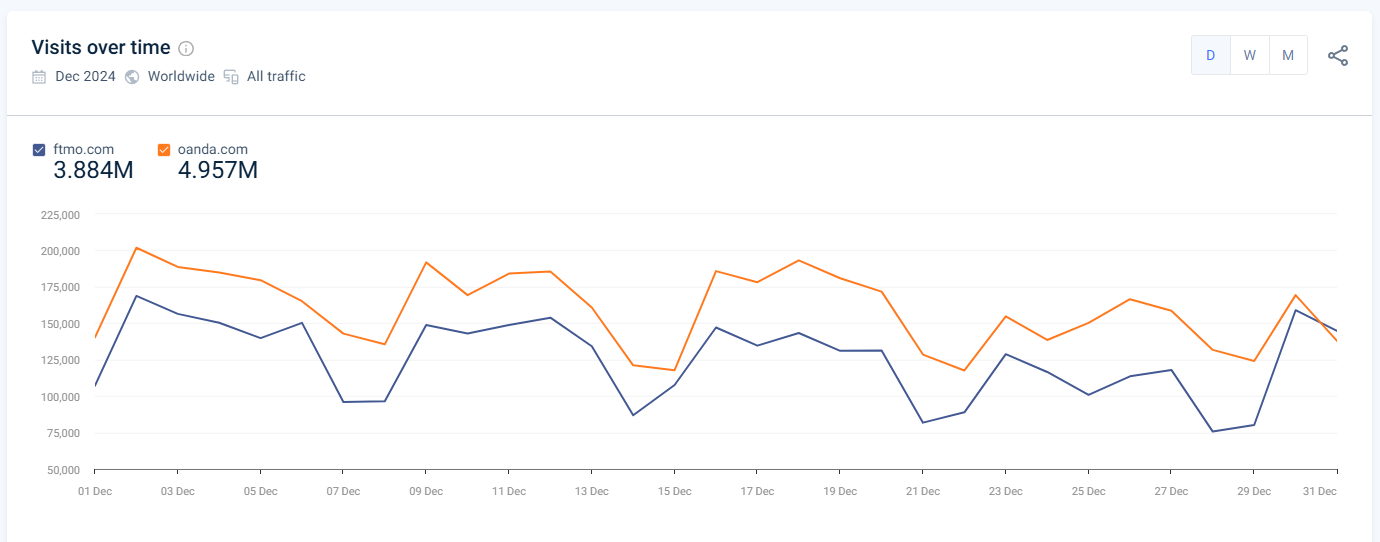
Similar Web data, which may not be entirely precise but can still indicate
general trends, show that a significant portion of OANDA’s traffic comes from
the United States (91% for OANDA vs. 9% for FTMO). Moreover,
monthly traffic figures suggest that OANDA remains a slightly more popular
brand than FTMO, by a margin of roughly 30% in favor of the broker.
Source: Similar Web
Adam Button, Chief Currency Analyst at Forexlive
"OANDA is a highly-respected name in the United States and Canada," commented Adam Button, the Chief Currency Analyst at Forexlive. "It's one of the few firms that were able to navigate the shifting regulations through the Swiss National Bank crisis and the many changes in the broker landscape since."
Prop Trading Industry's
Pain Points in 2024
Traders are
becoming increasingly successful, generating substantial costs for prop trading
firms, which has led to the downfall of many such companies. In 2024 alone, 40
such businesses have ceased operations. OANDA's infrastructure and direct
market access could help FTMO hedge trades directly, thereby reducing the risk
of large-scale payouts destabilizing the firm's financial stability.
“One of the
biggest challenges for prop firms is handling their top traders who
consistently hit the profit targets,” added Lien. “Without solid risk
management and experience, this can expose the firms to significant financial
strains.”
It's no
coincidence that as prop trading has become increasingly popular in recent
months, many FX/CFD brokers have started joining this trend. For them, running
a prop trading business is both easier and more cost-effective. OANDA itself
recognized this opportunity and launched its OANDA Prop Trader brand over a
year ago.
Additionally,
the Czech firm reported that the number of open trading accounts exceeded 2.3
million in 2024—a 33% increase from the previous year. It also noted an 80%
rise in total payouts to traders in the first seven months of 2024 compared to
the same period the previous year.
"FTMO should focus on what it does best—marketing. The company can continue collecting challenge fees consistently," said Brian Griffin, the Chief Executive Officer at Fuze Traders. "Any customer who starts a challenge with FTMO would automatically receive a live account with Oanda. Additionally, copy trading should be enabled between the customer’s challenge account and their live account if funded."
As Griffin
added, from now on, FTMO needs to stop using the term "DEMO trading"
on its website and in its materials and all clients, upon signing up, should be
moved directly to the live OANDA servers.
The OANDA
transaction also signals a broader trend toward industry consolidation and demonstrates how prop trading firms,
traditionally seen as market disruptors, are now becoming major institutional
players.
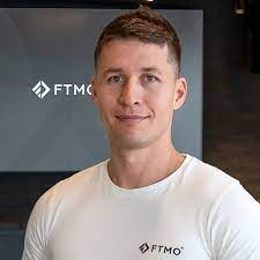
Otakar Suffner, Co-founder and CEO at FTMO
"The industry is probably going to stabilize between say 2-3 players which will take 70-80% of the market," Otakar Suffner, the Co-Founder of FTMO commented during FMLS:23.
How Much Could FTMO Have
Paid for OANDA
While the
financial terms of the deal weren't disclosed, CVC purchased OANDA in 2018 for
$175 million. At that time, the company claimed to have approximately 100,000
active traders worldwide.
Assuming
the company's valuation remained stable, the acquisition cost per OANDA client
for FTMO would amount to $1,750. However, these are merely estimates, and the
final cost per client could be significantly different, especially considering
OANDA's structural changes and diversification under CVC ownership in recent
years.
The recent acquisition of OANDA by FTMO marks a significant shift in the retail trading industry. It highlights how traditional brokers who fail to innovate risk losing market dominance. This unprecedented move represents the first instance of a prop trading firm acquiring a major retail broker, inverting the usual industry pattern.
OANDA Legacy vs. FTMO
Innovation
OANDA, once a powerhouse in the retail trading space due to its strong regulatory standing across seven Tier-1 jurisdictions, gradually lost market momentum under CVC's ownership. Despite maintaining high trust among retail traders, the broker struggled to keep pace with evolving market demands, particularly in pricing competitiveness.
Since 1996,
OANDA has been considered one of the leaders and pioneers in online trading,
including CFDs. In 2018, it was acquired by CVC Capital Partners, a fund
managing nearly $200 billion. Although initially it was suggested that there
would be no changes in the company's leadership, the then-CEO Vatsa Narasimha
was demoted to Non-Executive Director, ultimately leaving the company in
January 2020.
What was once one of the top three brokerage firms worldwide was reportedly weakened by the fund’s management. Coupled with rising competition, this resulted in the firm’s gradual decline. The company attempted to save itself by acquiring TMS, Poland's second-largest broker, in 2020, which was finalized in 2021. However, this did not provide sufficient momentum for further growth, especially since XTB had become the dominant player in the local market.
Ryan Nettles, the Director and Head of Advisory at Guru Capital.
FTMO's
acquisition strategy appears well-calculated, targeting OANDA's robust
regulatory framework while planning to operate it as a standalone business.
"Prop
firms are a good sales channel for CFD brokers. So, OANDA will be able to
leverage the FTMO business to drive new traders into their brokerage,”
commented Ryan Nettles, the Director and Head of Advisory at Guru Capital.
"We will continue to see more prop trading firms acquiring,
establishing or partnering with CFD brokers as prop trading firms are good
sales channels for brokers."
Finance Magnates has learned through insider discussions that this move isn't
about acquiring a brand, but rather about securing established regulations and
the expertise of people who know how to manage these regulations. OANDA holds
licenses in the USA, where obtaining local market licenses is notably
challenging.
Kathy Lien from BKTraders
"By
acquiring OANDA, FTMO basically gains access to a team that knows how to
navigate a lot of these challenges—regulation, getting licenses—it's like
having a seasoned guide in one of the trickiest markets in the world,"
commented Kathy Lien from BKTraders.
A key
factor could also be the intention to attract clients from other markets.
Similar Web data, which may not be entirely precise but can still indicate
general trends, show that a significant portion of OANDA’s traffic comes from
the United States (91% for OANDA vs. 9% for FTMO). Moreover,
monthly traffic figures suggest that OANDA remains a slightly more popular
brand than FTMO, by a margin of roughly 30% in favor of the broker.
Source: Similar Web
Adam Button, Chief Currency Analyst at Forexlive
"OANDA is a highly-respected name in the United States and Canada," commented Adam Button, the Chief Currency Analyst at Forexlive. "It's one of the few firms that were able to navigate the shifting regulations through the Swiss National Bank crisis and the many changes in the broker landscape since."
Prop Trading Industry's
Pain Points in 2024
Traders are
becoming increasingly successful, generating substantial costs for prop trading
firms, which has led to the downfall of many such companies. In 2024 alone, 40
such businesses have ceased operations. OANDA's infrastructure and direct
market access could help FTMO hedge trades directly, thereby reducing the risk
of large-scale payouts destabilizing the firm's financial stability.
“One of the
biggest challenges for prop firms is handling their top traders who
consistently hit the profit targets,” added Lien. “Without solid risk
management and experience, this can expose the firms to significant financial
strains.”
It's no
coincidence that as prop trading has become increasingly popular in recent
months, many FX/CFD brokers have started joining this trend. For them, running
a prop trading business is both easier and more cost-effective. OANDA itself
recognized this opportunity and launched its OANDA Prop Trader brand over a
year ago.
Additionally,
the Czech firm reported that the number of open trading accounts exceeded 2.3
million in 2024—a 33% increase from the previous year. It also noted an 80%
rise in total payouts to traders in the first seven months of 2024 compared to
the same period the previous year.
"FTMO should focus on what it does best—marketing. The company can continue collecting challenge fees consistently," said Brian Griffin, the Chief Executive Officer at Fuze Traders. "Any customer who starts a challenge with FTMO would automatically receive a live account with Oanda. Additionally, copy trading should be enabled between the customer’s challenge account and their live account if funded."
As Griffin
added, from now on, FTMO needs to stop using the term "DEMO trading"
on its website and in its materials and all clients, upon signing up, should be
moved directly to the live OANDA servers.
The OANDA
transaction also signals a broader trend toward industry consolidation and demonstrates how prop trading firms,
traditionally seen as market disruptors, are now becoming major institutional
players.
Otakar Suffner, Co-founder and CEO at FTMO
"The industry is probably going to stabilize between say 2-3 players which will take 70-80% of the market," Otakar Suffner, the Co-Founder of FTMO commented during FMLS:23.
How Much Could FTMO Have
Paid for OANDA
While the
financial terms of the deal weren't disclosed, CVC purchased OANDA in 2018 for
$175 million. At that time, the company claimed to have approximately 100,000
active traders worldwide.
Assuming
the company's valuation remained stable, the acquisition cost per OANDA client
for FTMO would amount to $1,750. However, these are merely estimates, and the
final cost per client could be significantly different, especially considering
OANDA's structural changes and diversification under CVC ownership in recent
years.
Damian Chmiel is a Senior Analyst & Editor at Finance Magnates with more than 15 years of experience in the CFD and online trading industry. Active as both a trader and journalist since 2010, he focuses on broker coverage, fintech innovation, and regulatory developments across Europe, the Middle East, and Asia.
His work includes interviews with C-level leaders at major brokerages and fintech platforms, as well as co-authoring Finance Magnates’ quarterly industry benchmarking reports. Damian’s reporting is data-driven, market-aware, and grounded in direct industry engagement. His analysis and commentary have also been cited by external media outlets, including Investing.com, Binance, The Asset, Stockhead, and Dispatch.
Education:
MA in Finance and Accounting, Cracow University of Economics
Today’s financial news recap covers AvaTrade agrees to acquire most of FXCM, NAGA secures eight million dollars in new financing, and Wise seeks a tax settlement in the UK.
Finance Magnates Daily Recap brings you the latest news from forex and CFD brokers, fintech, payments, cryptocurrency, digital assets, trading platforms, financial regulation and global markets.
Get the key company news, executive moves, deals, regulatory updates and market developments of the day, in just a few minutes. New episodes published every weekday.
Read more: https://www.financemagnates.com
#FinanceMagnates #ForexNews #FintechNews
Today’s financial news recap covers AvaTrade agrees to acquire most of FXCM, NAGA secures eight million dollars in new financing, and Wise seeks a tax settlement in the UK.
Finance Magnates Daily Recap brings you the latest news from forex and CFD brokers, fintech, payments, cryptocurrency, digital assets, trading platforms, financial regulation and global markets.
Get the key company news, executive moves, deals, regulatory updates and market developments of the day, in just a few minutes. New episodes published every weekday.
Read more: https://www.financemagnates.com
#FinanceMagnates #ForexNews #FintechNews
Today’s financial news recap covers AvaTrade agrees to acquire most of FXCM, NAGA secures eight million dollars in new financing, and Wise seeks a tax settlement in the UK.
Finance Magnates Daily Recap brings you the latest news from forex and CFD brokers, fintech, payments, cryptocurrency, digital assets, trading platforms, financial regulation and global markets.
Get the key company news, executive moves, deals, regulatory updates and market developments of the day, in just a few minutes. New episodes published every weekday.
Read more: https://www.financemagnates.com
#FinanceMagnates #ForexNews #FintechNews
Today’s financial news recap covers AvaTrade agrees to acquire most of FXCM, NAGA secures eight million dollars in new financing, and Wise seeks a tax settlement in the UK.
Finance Magnates Daily Recap brings you the latest news from forex and CFD brokers, fintech, payments, cryptocurrency, digital assets, trading platforms, financial regulation and global markets.
Get the key company news, executive moves, deals, regulatory updates and market developments of the day, in just a few minutes. New episodes published every weekday.
Read more: https://www.financemagnates.com
#FinanceMagnates #ForexNews #FintechNews
XTB Adds Overnight US Stock Trading; Nasdaq Ventures Invests in One Trading
XTB Adds Overnight US Stock Trading; Nasdaq Ventures Invests in One Trading
XTB Adds Overnight US Stock Trading; Nasdaq Ventures Invests in One Trading
XTB Adds Overnight US Stock Trading; Nasdaq Ventures Invests in One Trading
XTB Adds Overnight US Stock Trading; Nasdaq Ventures Invests in One Trading
XTB Adds Overnight US Stock Trading; Nasdaq Ventures Invests in One Trading
Today’s financial news recap covers XTB expands overnight US stock trading, Fortrade reports higher revenue, Nasdaq backs One Trading, and Vest Labs raises 13 million dollars.
Finance Magnates Daily Recap brings you the latest news from forex and CFD brokers, fintech, payments, cryptocurrency, digital assets, trading platforms, financial regulation and global markets.
Get the key company news, executive moves, deals, regulatory updates and market developments of the day, in just a few minutes. New episodes published every weekday.
Read more: https://www.financemagnates.com
#FinanceMagnates #ForexNews #FintechNews
Today’s financial news recap covers XTB expands overnight US stock trading, Fortrade reports higher revenue, Nasdaq backs One Trading, and Vest Labs raises 13 million dollars.
Finance Magnates Daily Recap brings you the latest news from forex and CFD brokers, fintech, payments, cryptocurrency, digital assets, trading platforms, financial regulation and global markets.
Get the key company news, executive moves, deals, regulatory updates and market developments of the day, in just a few minutes. New episodes published every weekday.
Read more: https://www.financemagnates.com
#FinanceMagnates #ForexNews #FintechNews
Today’s financial news recap covers XTB expands overnight US stock trading, Fortrade reports higher revenue, Nasdaq backs One Trading, and Vest Labs raises 13 million dollars.
Finance Magnates Daily Recap brings you the latest news from forex and CFD brokers, fintech, payments, cryptocurrency, digital assets, trading platforms, financial regulation and global markets.
Get the key company news, executive moves, deals, regulatory updates and market developments of the day, in just a few minutes. New episodes published every weekday.
Read more: https://www.financemagnates.com
#FinanceMagnates #ForexNews #FintechNews
Today’s financial news recap covers XTB expands overnight US stock trading, Fortrade reports higher revenue, Nasdaq backs One Trading, and Vest Labs raises 13 million dollars.
Finance Magnates Daily Recap brings you the latest news from forex and CFD brokers, fintech, payments, cryptocurrency, digital assets, trading platforms, financial regulation and global markets.
Get the key company news, executive moves, deals, regulatory updates and market developments of the day, in just a few minutes. New episodes published every weekday.
Read more: https://www.financemagnates.com
#FinanceMagnates #ForexNews #FintechNews
Today’s financial news recap covers XTB expands overnight US stock trading, Fortrade reports higher revenue, Nasdaq backs One Trading, and Vest Labs raises 13 million dollars.
Finance Magnates Daily Recap brings you the latest news from forex and CFD brokers, fintech, payments, cryptocurrency, digital assets, trading platforms, financial regulation and global markets.
Get the key company news, executive moves, deals, regulatory updates and market developments of the day, in just a few minutes. New episodes published every weekday.
Read more: https://www.financemagnates.com
#FinanceMagnates #ForexNews #FintechNews
Today’s financial news recap covers XTB expands overnight US stock trading, Fortrade reports higher revenue, Nasdaq backs One Trading, and Vest Labs raises 13 million dollars.
Finance Magnates Daily Recap brings you the latest news from forex and CFD brokers, fintech, payments, cryptocurrency, digital assets, trading platforms, financial regulation and global markets.
Get the key company news, executive moves, deals, regulatory updates and market developments of the day, in just a few minutes. New episodes published every weekday.
Read more: https://www.financemagnates.com
#FinanceMagnates #ForexNews #FintechNews
CMC Founder Downplays Volatility Hit; Devexperts Names CEO
CMC Founder Downplays Volatility Hit; Devexperts Names CEO
CMC Founder Downplays Volatility Hit; Devexperts Names CEO
CMC Founder Downplays Volatility Hit; Devexperts Names CEO
CMC Founder Downplays Volatility Hit; Devexperts Names CEO
CMC Founder Downplays Volatility Hit; Devexperts Names CEO
Today’s financial news recap covers low volatility pressures brokers, Devexperts names a new CEO, Saxo cuts onboarding time, and OKX reaches a 25 billion dollar valuation.
Finance Magnates Daily Recap brings you the latest news from forex and CFD brokers, fintech, payments, cryptocurrency, digital assets, trading platforms, financial regulation and global markets.
Get the key company news, executive moves, deals, regulatory updates and market developments of the day, in just a few minutes. New episodes published every weekday.
Read more: https://www.financemagnates.com
#FinanceMagnates #ForexNews #FintechNews
Today’s financial news recap covers low volatility pressures brokers, Devexperts names a new CEO, Saxo cuts onboarding time, and OKX reaches a 25 billion dollar valuation.
Finance Magnates Daily Recap brings you the latest news from forex and CFD brokers, fintech, payments, cryptocurrency, digital assets, trading platforms, financial regulation and global markets.
Get the key company news, executive moves, deals, regulatory updates and market developments of the day, in just a few minutes. New episodes published every weekday.
Read more: https://www.financemagnates.com
#FinanceMagnates #ForexNews #FintechNews
Today’s financial news recap covers low volatility pressures brokers, Devexperts names a new CEO, Saxo cuts onboarding time, and OKX reaches a 25 billion dollar valuation.
Finance Magnates Daily Recap brings you the latest news from forex and CFD brokers, fintech, payments, cryptocurrency, digital assets, trading platforms, financial regulation and global markets.
Get the key company news, executive moves, deals, regulatory updates and market developments of the day, in just a few minutes. New episodes published every weekday.
Read more: https://www.financemagnates.com
#FinanceMagnates #ForexNews #FintechNews
Today’s financial news recap covers low volatility pressures brokers, Devexperts names a new CEO, Saxo cuts onboarding time, and OKX reaches a 25 billion dollar valuation.
Finance Magnates Daily Recap brings you the latest news from forex and CFD brokers, fintech, payments, cryptocurrency, digital assets, trading platforms, financial regulation and global markets.
Get the key company news, executive moves, deals, regulatory updates and market developments of the day, in just a few minutes. New episodes published every weekday.
Read more: https://www.financemagnates.com
#FinanceMagnates #ForexNews #FintechNews
Today’s financial news recap covers low volatility pressures brokers, Devexperts names a new CEO, Saxo cuts onboarding time, and OKX reaches a 25 billion dollar valuation.
Finance Magnates Daily Recap brings you the latest news from forex and CFD brokers, fintech, payments, cryptocurrency, digital assets, trading platforms, financial regulation and global markets.
Get the key company news, executive moves, deals, regulatory updates and market developments of the day, in just a few minutes. New episodes published every weekday.
Read more: https://www.financemagnates.com
#FinanceMagnates #ForexNews #FintechNews
Today’s financial news recap covers low volatility pressures brokers, Devexperts names a new CEO, Saxo cuts onboarding time, and OKX reaches a 25 billion dollar valuation.
Finance Magnates Daily Recap brings you the latest news from forex and CFD brokers, fintech, payments, cryptocurrency, digital assets, trading platforms, financial regulation and global markets.
Get the key company news, executive moves, deals, regulatory updates and market developments of the day, in just a few minutes. New episodes published every weekday.
Read more: https://www.financemagnates.com
#FinanceMagnates #ForexNews #FintechNews
Today’s financial news recap covers Trade Nation buys FXCM's UK client book, Trading 212 reports higher revenue, the CFTC's move to allow perpetual index futures.
Finance Magnates Daily Recap brings you the latest news from forex and CFD brokers, fintech, payments, cryptocurrency, digital assets, trading platforms, financial regulation and global markets.
Get the key company news, executive moves, deals, regulatory updates and market developments of the day, in just a few minutes. New episodes published every weekday.
Read more: https://www.financemagnates.com
#FinanceMagnates #ForexNews #FintechNews
Today’s financial news recap covers Trade Nation buys FXCM's UK client book, Trading 212 reports higher revenue, the CFTC's move to allow perpetual index futures.
Finance Magnates Daily Recap brings you the latest news from forex and CFD brokers, fintech, payments, cryptocurrency, digital assets, trading platforms, financial regulation and global markets.
Get the key company news, executive moves, deals, regulatory updates and market developments of the day, in just a few minutes. New episodes published every weekday.
Read more: https://www.financemagnates.com
#FinanceMagnates #ForexNews #FintechNews
Today’s financial news recap covers Trade Nation buys FXCM's UK client book, Trading 212 reports higher revenue, the CFTC's move to allow perpetual index futures.
Finance Magnates Daily Recap brings you the latest news from forex and CFD brokers, fintech, payments, cryptocurrency, digital assets, trading platforms, financial regulation and global markets.
Get the key company news, executive moves, deals, regulatory updates and market developments of the day, in just a few minutes. New episodes published every weekday.
Read more: https://www.financemagnates.com
#FinanceMagnates #ForexNews #FintechNews
Today’s financial news recap covers Trade Nation buys FXCM's UK client book, Trading 212 reports higher revenue, the CFTC's move to allow perpetual index futures.
Finance Magnates Daily Recap brings you the latest news from forex and CFD brokers, fintech, payments, cryptocurrency, digital assets, trading platforms, financial regulation and global markets.
Get the key company news, executive moves, deals, regulatory updates and market developments of the day, in just a few minutes. New episodes published every weekday.
Read more: https://www.financemagnates.com
#FinanceMagnates #ForexNews #FintechNews
Today’s financial news recap covers Trade Nation buys FXCM's UK client book, Trading 212 reports higher revenue, the CFTC's move to allow perpetual index futures.
Finance Magnates Daily Recap brings you the latest news from forex and CFD brokers, fintech, payments, cryptocurrency, digital assets, trading platforms, financial regulation and global markets.
Get the key company news, executive moves, deals, regulatory updates and market developments of the day, in just a few minutes. New episodes published every weekday.
Read more: https://www.financemagnates.com
#FinanceMagnates #ForexNews #FintechNews
Today’s financial news recap covers Trade Nation buys FXCM's UK client book, Trading 212 reports higher revenue, the CFTC's move to allow perpetual index futures.
Finance Magnates Daily Recap brings you the latest news from forex and CFD brokers, fintech, payments, cryptocurrency, digital assets, trading platforms, financial regulation and global markets.
Get the key company news, executive moves, deals, regulatory updates and market developments of the day, in just a few minutes. New episodes published every weekday.
Read more: https://www.financemagnates.com
#FinanceMagnates #ForexNews #FintechNews
Your career isn’t a linear path.
Your career isn’t a linear path.
Your career isn’t a linear path.
Your career isn’t a linear path.
Your career isn’t a linear path.
Your career isn’t a linear path.
Roles change. Career goals change. Sometimes you want a completely new challenge.
But the skills and knowledge you build along the way can stay with you and give you something to build on.
For Jeff Patterson, that continued growth is key to long-term career development.
You bring the skills. FM Academy helps you build the knowledge.
#FMAcademy #FinanceMagnates #FinanceCareers #ProfessionalDevelopment #Fintech
Roles change. Career goals change. Sometimes you want a completely new challenge.
But the skills and knowledge you build along the way can stay with you and give you something to build on.
For Jeff Patterson, that continued growth is key to long-term career development.
You bring the skills. FM Academy helps you build the knowledge.
#FMAcademy #FinanceMagnates #FinanceCareers #ProfessionalDevelopment #Fintech
Roles change. Career goals change. Sometimes you want a completely new challenge.
But the skills and knowledge you build along the way can stay with you and give you something to build on.
For Jeff Patterson, that continued growth is key to long-term career development.
You bring the skills. FM Academy helps you build the knowledge.
#FMAcademy #FinanceMagnates #FinanceCareers #ProfessionalDevelopment #Fintech
Roles change. Career goals change. Sometimes you want a completely new challenge.
But the skills and knowledge you build along the way can stay with you and give you something to build on.
For Jeff Patterson, that continued growth is key to long-term career development.
You bring the skills. FM Academy helps you build the knowledge.
#FMAcademy #FinanceMagnates #FinanceCareers #ProfessionalDevelopment #Fintech
Roles change. Career goals change. Sometimes you want a completely new challenge.
But the skills and knowledge you build along the way can stay with you and give you something to build on.
For Jeff Patterson, that continued growth is key to long-term career development.
You bring the skills. FM Academy helps you build the knowledge.
#FMAcademy #FinanceMagnates #FinanceCareers #ProfessionalDevelopment #Fintech
Roles change. Career goals change. Sometimes you want a completely new challenge.
But the skills and knowledge you build along the way can stay with you and give you something to build on.
For Jeff Patterson, that continued growth is key to long-term career development.
You bring the skills. FM Academy helps you build the knowledge.
#FMAcademy #FinanceMagnates #FinanceCareers #ProfessionalDevelopment #Fintech