

Activism Versus Apathy Defines UK/US Investor Split
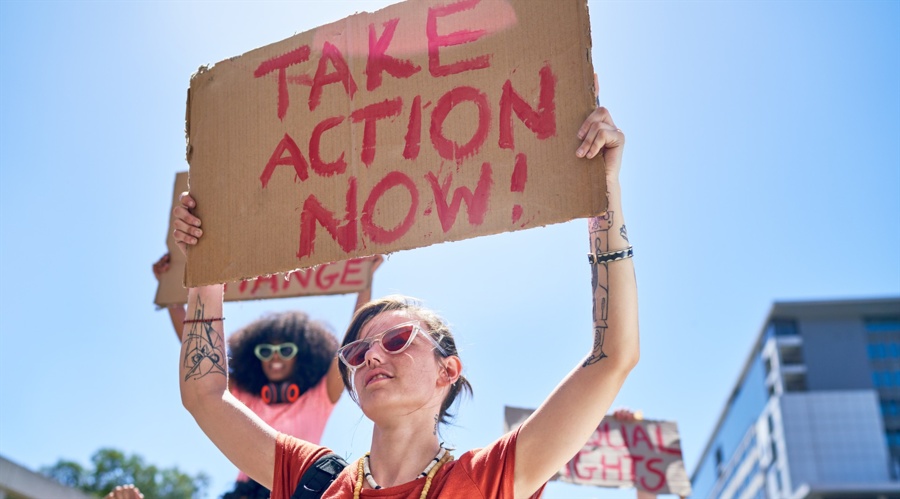
Shareholder activism hit a new global high in 2025, with 255 campaigns launched worldwide - surpassing the previous record set in 2018 - according to Barclays’ investment banking shareholder advisory team’s latest review.
Driven by strong M&A activity, higher market volatility, and favourable financing conditions, US campaigns rose by a quarter and accounted for more than half of global activity, while Japan recorded its second consecutive year of record campaigns.
It appears that more investors than ever view shareholder activism as a tool to force change and release value at public companies, providing alpha to active managers at a time when traditional stock-picking continues to lose ground to passive investors and indexing. First-time activists accounted for 28 per cent of all campaign initiations in 2025.
However, the upward trend did not extend to all regions. Shareholder activism in Europe fell by almost one-fifth last year and is now at its lowest level in a decade.
#ShareholderActivism surged to record highs in 2025, with activist campaigns reshaping boardrooms and corporate strategies at targets across the globe.
— Barclays Investment Bank (@BarclaysCIB) January 16, 2026
This finding is particularly interesting in the context of new research from the UK’s Association of Investment Companies (AIC), which shows that trusts with more individual shareholders have lower turnouts than those with higher institutional ownership.
Analysis of shareholder voting patterns at the AGMs of 245 investment trusts found that where more than a quarter of the shares were held by self-directed private investors, the average voting turnout was 35 per cent. For trusts where these retail investors held less than a quarter of the shares, the average turnout was 52 per cent.
The AIC’s chief executive said these figures underline the risk that the interests of smaller investors will be ignored because they fail to vote their shares. He urged these investors to use their vote or be prepared to see the fate of their investment trust decided by larger investors whose interests may not be aligned with their own.
Retail investors in UK equity income, global, commodities and natural resources, and debt trusts were the least active.
- New Year, New UK? Can Britain’s IPO Market Finally Turn
- Does the Kraken–Deutsche Börse Deal Simplify Crypto, or Complicate It Further?
- As the Year Turns: A Market Reckoning for 2025
Will Bitcoin Succumb to the Bears?
An interesting discussion around Bitcoin took place online earlier this month when the listing manager of a cryptocurrency exchange pointed out that in 2025, the year after a Bitcoin halving, closed in the red for the first time.
He noted that Bitcoin’s cycles had previously been highly consistent, with the cryptocurrency usually ending the halving year higher, the following year pushing further up, and that strength eventually leading to a peak followed by a sharp bear market.
Read about Bitcoin price movement: Why Bitcoin Is Falling? Losses Extend to 6th Day and BTC Price Prediction Signals 40% Slump to $50K
A crypto consultant referred to a “crazy year”, marked by a high level of liquidations in the crypto market, and suggested that Bitcoin would need to move comfortably above the $100,000 mark to even consider further upside.
The suggestion that relying too heavily on old cycle models may be becoming increasingly risky was challenged by one trader. He warned of the danger of attaching statistical significance to small data sets, where “the first time ever” refers to only four previous occasions, and added that the probability of one of those years ending in the red was above 68 per cent.
Others observed that 2025 served as a reminder that liquidity and participant mix can override historical patterns. Meanwhile, the CEO of a stablecoin payment provider claimed that Bitcoin is destined to be the MySpace of digital currencies, in that it created the market but may eventually be left behind.
He argued that the future lies in digital currencies that can scale to handle every daily transaction worldwide. Not a million transactions a day, but millions of transactions per second, with zero transaction fees, no need for wallet software, and settlement times measured in milliseconds.
Looking Back to Move Forward
In his 1905 book The Life of Reason, philosopher George Santayana suggested that those who cannot remember the past are condemned to repeat it.
“Those who cannot remember the past are condemned to repeat it.”
— Saganism (@Saganismm) January 2, 2026
— George Santayana pic.twitter.com/12g9hmkgaH
Santayana may have used this phrase to support his view that reason is an evolutionary development, emerging from instinct and rooted in the natural world, rather than as a warning to investors not to ignore past events. Even so, the point still stands.
In a recent interview with T Rowe Price, financial historian Niall Ferguson observed that one of the main reasons so many people were blindsided by the Federal Reserve’s actions during the 2008 financial crisis was that they were only looking at a narrow slice of market history.
“They used models that typically had just five to ten years of data,” he said. “But if you are only working with a decade or less of data, you are going to have a very skewed sense of plausible scenarios.”
Ferguson suggested that if more investors had been aware that then Fed chair Ben Bernanke was an expert on the Great Depression, and had been strongly influenced by Milton Friedman and Anna Schwartz’s book A Monetary History of the United States, the Fed’s later actions would have been far less surprising.
“Many people trading and managing billions of dollars didn’t really have an idea of what Bernanke was doing,” he said. “But if they had read that book, they would have had a better sense of what was worrying him and how he was likely to respond.”
Ferguson went on to argue that there is no single signal that clearly shows when a market phase is about to change. However, he added that it pays to watch for unusual market moves, especially in the currency and bond markets. In simple terms, if bond prices and the dollar are moving in the same direction, investors should pay close attention.


