


“The most notable structural shift is that market growth is now being driven by reactivation of dormant traders rather than new entrant acquisition,” said Lorenzo Vignati, Research Director at Investment Trends.
Singapore Summit: Meet the largest APAC brokers you know (and those you still don't!).
Singapore’s leverage trading market is showing increasing signs of maturity, with growth shifting from new client acquisition to returning users, according to Investment Trends’ latest research.
In a conversation ahead of the Singapore Summit, Vignati said the number of reactivated traders rose to 6,900, up from 5,700 a year earlier. Over the same period, the number of new traders placing their first-ever leverage trade declined from 6,000 to 5,500. He added that the trend reflects a maturing market where “the easier growth from first-timers is tapering,” placing greater emphasis on retention and re-engagement strategies.
Across asset classes, US equities remain the dominant underlying instrument for leverage traders in Singapore, continuing to serve as the primary reference point. However, the research indicates increasing diversification beyond equities.
Crypto Adoption Exceeds 40% as Use Case Changes
Crypto has surpassed a 40% adoption rate among leverage traders, marking a threshold level of engagement. The data suggests that participation is increasingly driven by portfolio diversification and longer-term growth considerations rather than speculative activity.
- Singapore Independent Wealth Sector Has Less Than 10% Market Share, but Vast Room for Growth
- “A Modest but Steady Expansion”: Dual-Listing Plans and ETF Inflows Lift Singapore’s Equity Market
- “Little Margin for Error”: Firms See MAS Enforcement as Market-Wide Lesson
“What strikes me is the motivation behind it – it is overwhelmingly driven by diversification and long-term growth, not speculation,” Vignati said, pointing to a shift in how crypto is positioned within trading strategies.
Mobile Execution Rises While Desktop Remains Key for Analysis
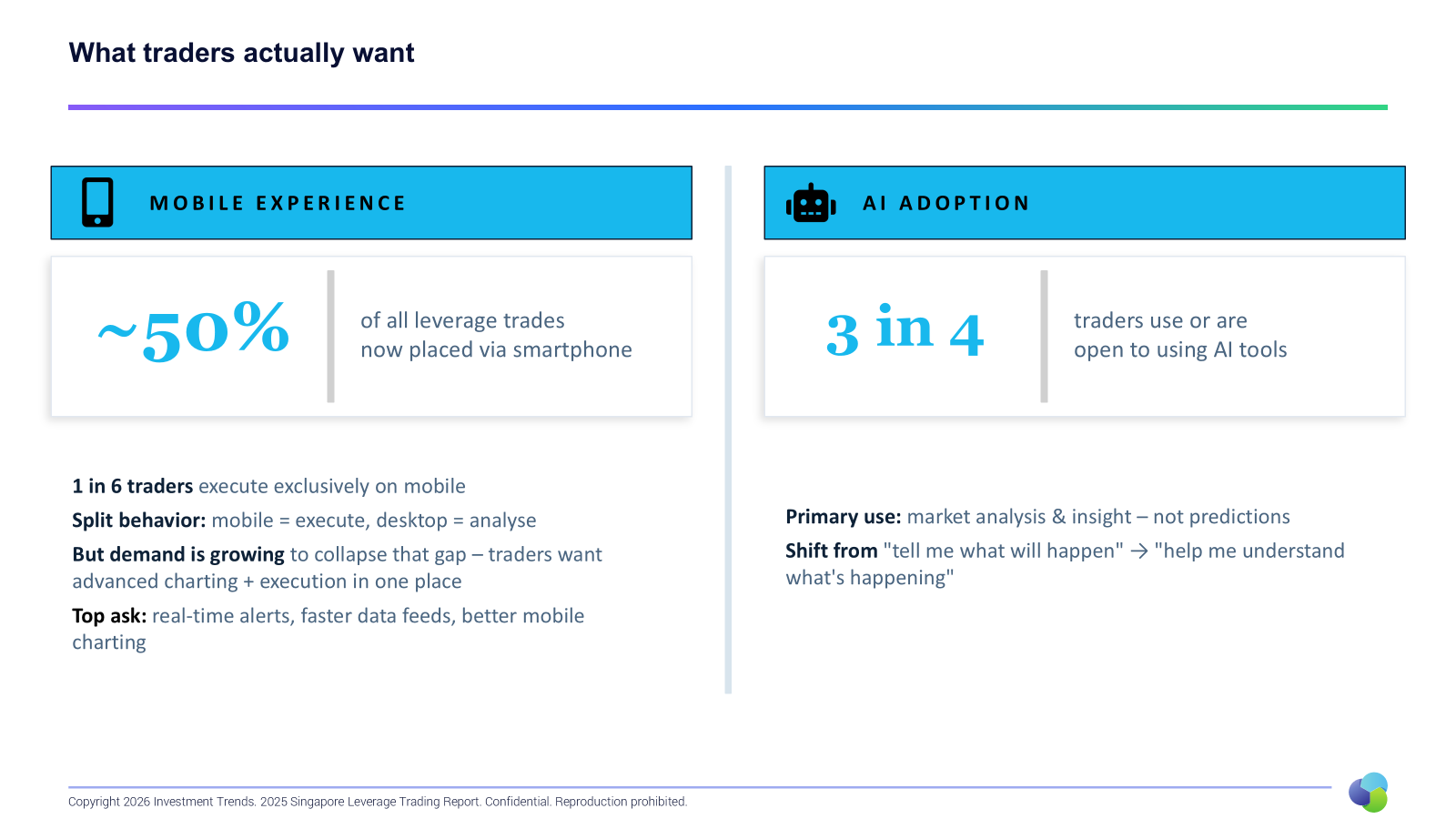
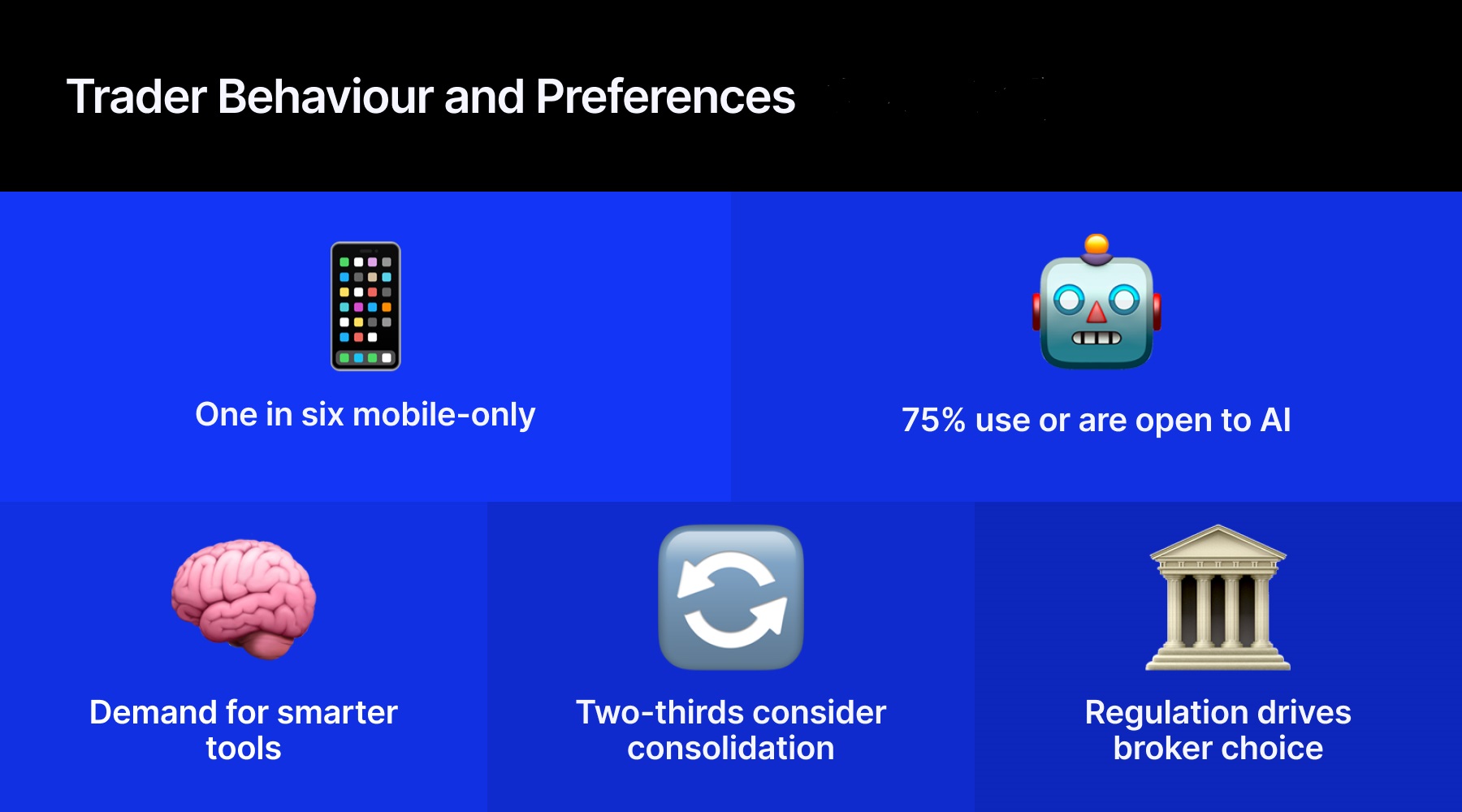
Trading behaviour also reflects a clear divergence in platform usage. Approximately half of all leverage trades are now executed via mobile devices, while one in six traders operates exclusively on mobile. Desktop platforms, however, remain central to charting and analytical tasks.
“Mobile is for execution, desktop is for charting and analysis,” he said. He added that traders are increasingly seeking improvements in mobile functionality, including faster execution , real-time data feeds, and more advanced charting capabilities within mobile environments.
Demand Grows for Decision-Support and Trading Tools
The research further highlights a gap between the importance of decision-support tools and current levels of user satisfaction. Features such as algorithmic trading tools, trade signals, and platform functionality were identified as key drivers of broker advocacy, but also as areas where satisfaction consistently lags behind importance.
“The traders are telling us they want their platforms to help them think, not just execute,” Vignati said, indicating demand for more advanced analytical and decision-support capabilities.
AI Adoption Expands Across Leverage Traders
Artificial intelligence is also gaining traction among leverage traders. According to the findings, approximately three in four traders either already use AI tools or are open to adopting them. The primary use case is centred on market analysis and insight generation rather than prediction.
“There’s been a subtle but important shift away from ‘tell me what will happen’ toward ‘help me understand what’s happening,’” he said, describing AI’s role as increasingly aligned with interpretation and learning.
Traders Signal Willingness to Consolidate Providers
The data also points to potential consolidation trends within the broker landscape. Around two-thirds of traders indicated they would consider moving their trading activity to a single provider, provided that provider offers access to all the asset classes they trade.
Regulation Emerges as Primary Broker Selection Factor
At the same time, regulatory standing remains the most influential factor in broker selection. According to the research, it ranks ahead of cost, platform quality, and product range as a primary decision driver.
“Regulatory standing is the single most influential selection driver we measure,” Vignati said, highlighting the role of trust in shaping competitive dynamics.
The findings form part of Investment Trends’ latest Singapore Leverage Trading research, which examines trader behaviour, platform preferences, and competitive positioning across brokers operating in the market.


