How AI Overload Affects Retail Traders’ Behaviour, Decisions, and Churn

Wednesday, 13/05/2026 | 09:35 GMT by Oded Shefer
  • Human attention remains limited despite AI expanding access to market analysis, signals, and recommendations.
  • In AI-driven markets, decision quality depends on how traders process information, not just the volume of data available.
trading retail

In reference to Rupert Osborne’s article: “Everyone Talks About AI’s Power. Few Ask What It Does to Financial Decisions” from May 4th, 2026.

Singapore Summit: Meet the largest APAC brokers you know (and those you still don't!).

The article raises an important question: what does AI actually do to financial decision-making? It is a question that deserves more attention, particularly when viewed through the lens of the end user—the retail trader, and is important for brokers who employ either A book or B book models

The financial industry is in the midst of an AI-driven transformation. From back-office automation to market analytics and marketing engines, brokers and traders now have access to an unprecedented range of tools, data, and insights. On the surface, this looks like clear progress. However, there is a less discussed consequence of this rapid evolution: cognitive overload.

The Trader’s First Experience: A Cognitive Bottleneck

Consider a new trader logging into a trading platform for the first time. Within seconds, they are expected to make a series of complex decisions: which asset to trade, when to enter or exit, how much capital to allocate, and what level of leverage to use.

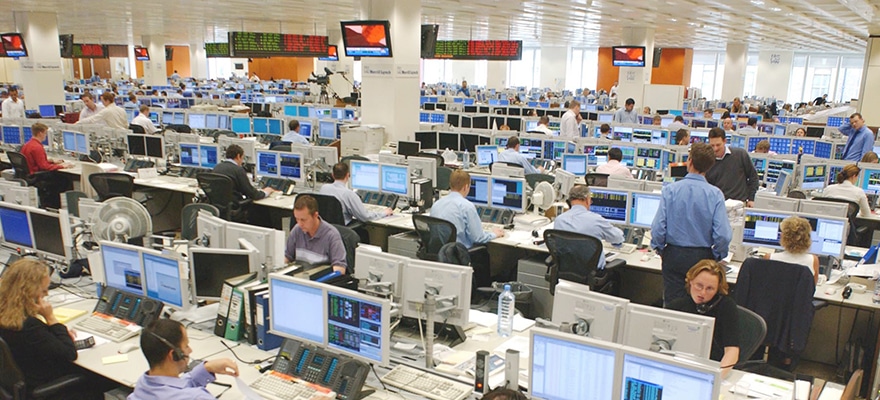
At the same time, they are exposed to a constant stream of stimuli: promotional banners, pop-ups, trading signals and alerts, market analysis, data feeds, and notifications across multiple channels. AI tools can surface thousands of assets and opportunities instantly, but traders still need to process a significant amount of information per time unit.

They need to decide which information is most relevant and reliable and which information is fake or irrelevant for every decision. The overwhelming stimulation and information processing may impair their ability to perform.

An “opportunity-rich environment” can quickly feel like entering a candy store while being asked to make high-stakes financial decisions. Layered onto this is the natural psychological state of a beginner—uncertainty, fear of loss, and lack of confidence.

The result is often the opposite of what brokers intend: doubt, confusion, and reduced decision quality, which can ultimately lead to higher churn rates. According to CPattern’s data, 32% of traders make less than 10 trades before quitting.

AI as Both Solution and Amplifier

AI is frequently positioned as a solution to complexity and, in many ways, it is. However, AI is also a major driver of information inflation: more chatbots, more signals, more insights, more recommendations, more content. The assumption is that more information leads to better decisions, but behavioral science suggests otherwise.

Human attention is limited because cognitive resources are finite. When overwhelmed, individuals do not necessarily become more rational—they become more confused, more reactive, more hesitant, or disengaged altogether. This leads to an important shift in perspective:

The bottleneck in trading is not only access to information, but the ability to process and prioritise it.

Traders’ Attention is the New Currency

In this environment, attention becomes the most valuable—and scarce—resource. Every alert, banner, or recommendation competes for it. As attention is spread across a large number of stimuli, clarity of thought becomes more difficult, and the ability to make high-quality decisions deteriorates, along with the ability to cope with stress, losses, and disappointment.

For traders, especially less experienced ones, this can result in hesitation, missed opportunities, overtrading driven by noise, reduced confidence, and faster churn rates. Traders’ ability to direct their attention needs to remain as free as possible to function properly.

From Information Abundance to Decision Clarity

Decision-making is not a “buy/sell” click, but rather a process of information processing. Brokers should not take responsibility for traders’ decisions or their outcomes, but rather provide each trader with the best environment for making the right decision for themselves.

The next phase of innovation in trading platforms should therefore focus less on increasing information volume and more on improving the ease of processing it. This requires a shift from generic, feature-driven design to behaviour-aware personalization.

In that context, brokers are challenged to maintain a balance between protecting traders from “too much information” and still allowing them to explore data at their own discretion. Delivering the right information at the right time, in the right context, for the right user is not trivial. It requires a strong understanding of cognitive theory and decision-making models, applied in real time to brokers’ data.

The Business Case for Clarity

Traders who are able to gather information responsibly, integrate it, and make informed decisions tend to remain active longer than those who consume data without control or structure. Brokers who can provide an optimal trading environment—personalised and “noise-free”—can create conditions for consistency in trading, enable learning from past decisions, build confidence over time, and ultimately resilience.

In other words, clarity is directly linked to survivability and churn rates. This reframes personalisation from a UX feature into a core business issue. Data from CPattern shows a 75% increase in survivability rate when traders are given the right personalised information—highlighting its significance for both brokers and traders.

Conclusion: Less Noise, Better Decisions

The AI revolution will continue to increase the volume of available information. The central issue will not be who generates more data, but who helps traders make sense of it.

In trading, as in many other domains, higher trading activity does not come from more inputs, but from better information processing, clearer thinking, and stronger focus—while also managing the often-overlooked emotional dimensions of trading, such as fear of loss, excitement, and stress.

In reference to Rupert Osborne’s article: “Everyone Talks About AI’s Power. Few Ask What It Does to Financial Decisions” from May 4th, 2026.

Singapore Summit: Meet the largest APAC brokers you know (and those you still don't!).

The article raises an important question: what does AI actually do to financial decision-making? It is a question that deserves more attention, particularly when viewed through the lens of the end user—the retail trader, and is important for brokers who employ either A book or B book models

The financial industry is in the midst of an AI-driven transformation. From back-office automation to market analytics and marketing engines, brokers and traders now have access to an unprecedented range of tools, data, and insights. On the surface, this looks like clear progress. However, there is a less discussed consequence of this rapid evolution: cognitive overload.

The Trader’s First Experience: A Cognitive Bottleneck

Consider a new trader logging into a trading platform for the first time. Within seconds, they are expected to make a series of complex decisions: which asset to trade, when to enter or exit, how much capital to allocate, and what level of leverage to use.

At the same time, they are exposed to a constant stream of stimuli: promotional banners, pop-ups, trading signals and alerts, market analysis, data feeds, and notifications across multiple channels. AI tools can surface thousands of assets and opportunities instantly, but traders still need to process a significant amount of information per time unit.

They need to decide which information is most relevant and reliable and which information is fake or irrelevant for every decision. The overwhelming stimulation and information processing may impair their ability to perform.

An “opportunity-rich environment” can quickly feel like entering a candy store while being asked to make high-stakes financial decisions. Layered onto this is the natural psychological state of a beginner—uncertainty, fear of loss, and lack of confidence.

The result is often the opposite of what brokers intend: doubt, confusion, and reduced decision quality, which can ultimately lead to higher churn rates. According to CPattern’s data, 32% of traders make less than 10 trades before quitting.

AI as Both Solution and Amplifier

AI is frequently positioned as a solution to complexity and, in many ways, it is. However, AI is also a major driver of information inflation: more chatbots, more signals, more insights, more recommendations, more content. The assumption is that more information leads to better decisions, but behavioral science suggests otherwise.

Human attention is limited because cognitive resources are finite. When overwhelmed, individuals do not necessarily become more rational—they become more confused, more reactive, more hesitant, or disengaged altogether. This leads to an important shift in perspective:

The bottleneck in trading is not only access to information, but the ability to process and prioritise it.

Traders’ Attention is the New Currency

In this environment, attention becomes the most valuable—and scarce—resource. Every alert, banner, or recommendation competes for it. As attention is spread across a large number of stimuli, clarity of thought becomes more difficult, and the ability to make high-quality decisions deteriorates, along with the ability to cope with stress, losses, and disappointment.

For traders, especially less experienced ones, this can result in hesitation, missed opportunities, overtrading driven by noise, reduced confidence, and faster churn rates. Traders’ ability to direct their attention needs to remain as free as possible to function properly.

From Information Abundance to Decision Clarity

Decision-making is not a “buy/sell” click, but rather a process of information processing. Brokers should not take responsibility for traders’ decisions or their outcomes, but rather provide each trader with the best environment for making the right decision for themselves.

The next phase of innovation in trading platforms should therefore focus less on increasing information volume and more on improving the ease of processing it. This requires a shift from generic, feature-driven design to behaviour-aware personalization.

In that context, brokers are challenged to maintain a balance between protecting traders from “too much information” and still allowing them to explore data at their own discretion. Delivering the right information at the right time, in the right context, for the right user is not trivial. It requires a strong understanding of cognitive theory and decision-making models, applied in real time to brokers’ data.

The Business Case for Clarity

Traders who are able to gather information responsibly, integrate it, and make informed decisions tend to remain active longer than those who consume data without control or structure. Brokers who can provide an optimal trading environment—personalised and “noise-free”—can create conditions for consistency in trading, enable learning from past decisions, build confidence over time, and ultimately resilience.

In other words, clarity is directly linked to survivability and churn rates. This reframes personalisation from a UX feature into a core business issue. Data from CPattern shows a 75% increase in survivability rate when traders are given the right personalised information—highlighting its significance for both brokers and traders.

Conclusion: Less Noise, Better Decisions

The AI revolution will continue to increase the volume of available information. The central issue will not be who generates more data, but who helps traders make sense of it.

In trading, as in many other domains, higher trading activity does not come from more inputs, but from better information processing, clearer thinking, and stronger focus—while also managing the often-overlooked emotional dimensions of trading, such as fear of loss, excitement, and stress.

About the Author: Oded Shefer
Oded Shefer
  • 14 Articles
  • 6 Followers
About the Author: Oded Shefer
Oded Shefer is the CEO of CPattern. Oded Shefer (MSc) Industrial Psychology is the CEO and founder of CPattern - provider of the Guardian Angel + AI solution that helps CFD brokers build traders' LTV over time. Mr. Shefer is an expert for over 15 years in psychology, technology and business.
  • 14 Articles
  • 6 Followers

More from the Author

Retail FX

!"#$%&'()*+,-./0123456789:;<=>?@ABCDEFGHIJKLMNOPQRSTUVWXYZ[\]^_`abcdefghijklmnopqrstuvwxyz{|} !"#$%&'()*+,-./0123456789:;<=>?@ABCDEFGHIJKLMNOPQRSTUVWXYZ[\]^_`abcdefghijklmnopqrstuvwxyz{|}